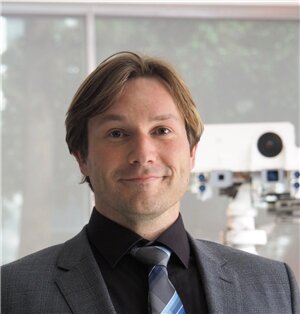
Dawn Y. Sumner is a Professor in the Department of Earth and Planetary Sciences at the University of California, Davis. Her research focuses on geobiology, paleobiology, and planetary science, particularly reconstructing ancient environments on Earth and Mars. She is a key member of NASA’s Mars Science Laboratory team, contributing to the Curiosity rover’s exploration of Gale Crater on Mars. Sumner’s work integrates field studies, lab analyses, and interdisciplinary approaches to understand microbial life’s role in shaping Earth’s history and potential habitability on other planets. Education: Ph.D., Massachusetts Institute of Technology (1995). Research interests include microbialite formation, Antarctic lake ecosystems, and the evolution of oxygenic photosynthesis. She investigates modern microbial communities in ice-covered lakes (e.g., Lake Vanda) to understand ancient environments and their biosignatures. Her scientific awards include the California Academy of Sciences Academy Fellow (2020) and Geological Society of America Fellow (2014). Sumner emphasizes inclusive education and supports student success in STEM through feminist research practices. Labs/Teams: W.M. Keck Center for Active Visualization in the Earth Sciences (KeckCAVES), Antarctic Lake Research Group.
John F. Rudge is a Professor of Geodynamics at the Bullard Laboratories, Department of Earth Sciences, University of Cambridge , and a Fellow and Dean of Trinity College. His research focuses on the dynamics of Earth's interior, including mantle convection, magma transport, and the geochemical evolution of the planet. He employs continuum mechanics, numerical analysis, and statistical methods to address questions about melt dynamics, mantle heterogeneity, and the surface expressions of geophysical processes. Education includes a mathematics undergraduate degree and a PhD in Earth Sciences and Applied Mathematics from Cambridge. He held postdoctoral positions at institutions like ETH Zürich, Yale, and Columbia University before joining Cambridge as a University Lecturer in 2010 and being promoted to Professor in 2022. Key research areas include: Transport of melts and volatiles in the mantle Evolution of Earth's interior from accretion to present Dynamic topography and inner core dynamics Publications span over two decades, with recent works addressing melt rheology, mantle mineralogy, and interdisciplinary applications in oncology. He has supervised numerous PhD students and postdocs, including David Rees Jones, Isarapong Eksinchol, and Laura Alisic. Awards include the Philip Leverhulme Prize and Geological Society President’s Award. Teaching responsibilities include courses on geophysics, magma dynamics, and supervisions in Natural Sciences at Trinity College. Research tools include finite element modeling and collaborations with computational scientists.
Moira Jardine is Professor of Astronomy at the University of St Andrews School of Physics and Astronomy, where she became the first female physics professor in 2010. Education: Ph.D. Applied Mathematics, University of St Andrews B.Sc. Astronomy and Astrophysics, University of St Andrews Research investigates stellar magnetic activity to understand planetary habitability and solar system evolution. Uses magnetic field measurements to model stellar winds, coronal X-ray emissions, and their impact on planetary atmospheres. Work supports exoplanet detection initiatives including JWST, GAIA, and WFIRST. Publications focus on stellar coronae, magnetic confinement processes, star-planet interactions, and coronal rain dynamics. Current projects model magnetic interactions in systems like AB Dor and HD 189733. Collaborates with international consortia including MagIcS and Bcool for stellar magnetic field surveys. Awards: Fellow of the Royal Society of Edinburgh and Suffrage Science Award (2019).
Oliver Shorttle is a Professor of Natural Philosophy at the University of Cambridge, holding a joint position between the Department of Earth Sciences and the Institute of Astronomy. His research focuses on planetary evolution, extrasolar planets, and geochemical cycling, integrating geological and astronomical perspectives. He explores topics such as exoplanet habitability, volcanic processes on distant worlds, and the role of volatiles in planetary systems. Education and Career: Shorttle earned his undergraduate degree in Natural Sciences from Cambridge, followed by a PhD in Earth Sciences. He held postdoctoral positions at Caltech and as a JSPS fellow in Japan before returning to Cambridge as faculty. Research Themes: His work spans planetary chemistry, magma dynamics, and the interplay between planetary interiors and atmospheres. Key projects include analyzing protoplanetary disks, simulating volcanic activity on exoplanets, and investigating phosphorus’s role in prebiotic chemistry. Collaborations: Leads the Planetary Chemistry group, collaborating across disciplines at Cambridge and internationally. Current projects involve modeling exoplanet atmospheres, studying mantle melting processes, and developing geochemical methods to probe planetary formation. Labs/Teams: Directs the Planetary Chemistry research group, fostering interdisciplinary research between geology and astronomy. Active in fieldwork, lab analysis, and computational modeling.
Paul Withers is a Professor and Chair of the Department of Astronomy at Boston University. He leads research on planetary atmospheres and ionospheres, with a focus on Mars and Venus, and serves as Principal Investigator on multiple NASA-funded research projects. Education: B.A. in Physics, 1998, Queens' College, Cambridge University M.S. in Physics, 1998, Queens' College, Cambridge University M.A., 2001, Queens' College, Cambridge University Ph.D. in Planetary Science, 2003, University of Arizona Professor Withers' research focuses on the upper atmospheres and ionospheres of terrestrial planets, particularly Mars and Venus. His work involves analyzing spacecraft data and developing theoretical models to understand how solar flux, neutral atmospheres, magnetic fields, and ionospheres interact under unique planetary conditions. He has made significant contributions to understanding the response of the Martian ionosphere to solar flares, the structure of the Venus ionosphere, and meteoric plasma layers in planetary ionospheres. His research often involves multi-instrument campaigns and coordinated observations across different spacecraft missions including Mars Express, MAVEN, and Venus Express. Analysis of Professor Withers' recent publications reveals a strong emphasis on Martian ionospheric dynamics, particularly its response to solar activity and its variability under different conditions. His work frequently combines data from multiple missions to create comprehensive models of planetary upper atmospheres. He has developed important methods for analyzing radio occultation data and reconstructing atmospheric properties from entry, descent, and landing measurements. Major Funded Projects: "Characterizing the topside bulge in the ionosphere of Mars" (NASA Mars Data Analysis Program, 2014, $144K) "Integration of MAVEN neutral and plasma observations" (NASA MAVEN Participating Scientist Program, 2013, $284K) "Radio occultation studies at Mars" (NASA Early Career Fellowship Program, 2013, $99K) "EDL reconstruction for MSL" (NASA, JPL contract, 2012, $199K) "Meteoric plasma layers on Venus and Mars" (NASA Planetary Atmospheres Program, 2012, $232K) Professor Withers has been actively involved in mentoring students and collaborating with international researchers. He serves as a key member of the Mars Upper Atmosphere Network (MUAN) and has contributed to community white papers for planetary science decadal surveys. His work supports future Mars landers through atmospheric modeling and surface pressure prediction, with direct applications to mission planning and execution. He has presented his research at numerous international conferences including the American Geophysical Union meetings, Division for Planetary Sciences meetings, and European Planetary Science Congress. His work has important implications for understanding planetary climate evolution, space weather effects on technological systems, and the search for habitable environments beyond Earth.
Marc HON is an Assistant Professor at the National University of Singapore (NUS) under the NUS Presidential Young Professorship, specializing in time-domain astronomy and machine learning applications for NASA missions including Kepler, TESS, and the Roman Space Telescope. His work focuses on characterizing stellar populations and discovering novel astrophysical phenomena through data-driven methodologies. His research spans asteroseismology for probing stellar interiors and Galactic archaeology to map the Milky Way's evolution using variable stars, alongside exoplanetary science investigations into planetary system evolution, habitable worlds, and James Webb Space Telescope atmospheric characterization. A core methodology involves developing machine learning frameworks like deep learning classifiers and generative models for large-scale astronomical datasets. HON's publication trends (2018-2024) reveal consistent innovation at the astrophysics-ML intersection, with emphases on red giant asteroseismology, exoplanet dynamics, and scalable analysis pipelines for space telescope data. Key contributions include flow-based stellar evolution emulators, deep learning oscillation detectors, and large-scale TESS Galactic archaeology studies. Scientific recognition includes: NASA Hubble Fellowship (2020) He actively contributes to major international collaborations as a member of both the TESS and Kepler Asteroseismic Science Consortia, with direct involvement in MIT's TESS mission operations and data pipelines.
Chuanfei Dong is an Assistant Professor of Astronomy at Boston University's College of Arts & Sciences and of Electrical and Computer Engineering at the College of Engineering. His research focuses on understanding plasma physics and its applications to space science, planetary atmospheres, and fusion energy. Dong joined BU in January 2023 after working as a staff scientist at the Princeton Plasma Physics Laboratory. Education: B.S. in Space Science from University of Science and Technology of China M.S. in Earth and Atmospheric Sciences from Georgia Institute of Technology M.S.E. in Nuclear Engineering and Radiological Sciences from University of Michigan M.S. in Planetary and Space Sciences from University of Michigan Ph.D. in Scientific Computing from University of Michigan Research Interests: Dr. Dong's research spans multiple disciplines within space physics and plasma science. His primary interests include Star-Terrestrial Planet Interactions in our Solar System and beyond, magnetic reconnection and turbulence phenomena, wave-particle interactions in space plasmas, and applications of physics-informed machine learning to plasma problems. He also investigates high-intensity laser-plasma interactions with applications to fusion energy research. His work bridges the gap between theoretical plasma physics and observational space science, with particular focus on planetary atmospheres, solar wind interactions, and exoplanet habitability. Dong's interdisciplinary approach combines computational modeling, observational data analysis, and theoretical frameworks to address fundamental questions in space physics. Research Trends: Dong's recent publications demonstrate a strong focus on applying advanced computational techniques to space plasma physics problems. His work spans solar system bodies including Earth, Mars, Mercury, and the Moon, with increasing attention to exoplanet systems. A notable trend is the integration of machine learning approaches with traditional plasma physics modeling, particularly for complex phenomena like Landau damping and magnetic reconnection. His research has significant implications for understanding atmospheric evolution, space weather, and potential habitability of planetary bodies. Scientific Awards: DOE Early Career Research Award (2023) - $875,000 grant for plasma turbulence research Alfred P. Sloan Research Fellow (2024) Metcalf Travel Award Advising and Grants: Dr. Dong mentors undergraduate research assistants and plans to expand his research group with the support of his DOE Early Career Award, which will fund a graduate student and postdoctoral researcher. His research is supported by the Department of Energy and has connections to NASA missions including MAVEN (Mars) and BepiColombo (Mercury). Dong is also involved with the Mauve telescope project as BU institutional PI. His work has been featured in numerous media outlets including Phys.org, Science Daily, and German TV program zdf/3sat. Labs and Teams: Dr. Dong leads a research group focused on computational plasma physics at Boston University. He collaborates with researchers at Princeton Plasma Physics Laboratory and is involved with multiple NASA missions. His team develops advanced computational models to simulate space plasma phenomena, with particular expertise in magnetohydrodynamics (MHD), particle-in-cell methods, and physics-informed machine learning approaches. Dong is also affiliated with BU's Hariri Institute for Computing.
Craig O'Neill is an Associate Professor in Geophysics/Remote Sensing at the School of Earth & Atmospheric Sciences, Faculty of Science, Queensland University of Technology (QUT). His research spans geodynamics, planetary science, geophysics, and engineering geology, with a strong focus on understanding Earth and planetary evolution through computational modeling and geophysical data analysis. His research interests include Geophysics, Geodynamics, Remote Sensing, Planetary Science, Engineering Geology, Geochemistry, and Geology . He applies advanced numerical methods to model planetary interiors, tectonic processes, and geohazards, with recent work exploring early Earth crust formation, Venusian core dynamics, exoplanet thermal evolution, and applied geophysical techniques for engineering and environmental monitoring. The trend in his recent publications shows a strong interdisciplinary focus, combining computational geophysics with planetary science and Earth systems analysis. His work appears in leading journals such as Nature , Science Advances , and Geophysical Research Letters , covering topics from asteroid impacts and craton formation to ambient noise tomography and groundwater response to climate change. Professional Memberships: Australian Society of Exploration Geophysicists American Geophysical Union Australian Geomechanics Society Craig O'Neill supervises research students in areas such as lunar seismology and planetary geodynamics. While no specific grants are listed in the provided text, his extensive publication record and active research programs suggest ongoing funding support. He has developed open-source tools like Planet_LB for lattice-Boltzmann modeling of planetary systems. He is actively involved in the geophysics community, with scholarly profiles on ORCID, Google Scholar, and Scopus, and shares his research via X (formerly Twitter). His work bridges fundamental planetary science with practical geophysical applications.
Giovanna Tinetti is a Professor of Astrophysics and Vice Dean (Research) at King's College London's Faculty of Natural, Mathematical & Engineering Sciences. She leads the European Space Agency's Ariel mission, a space telescope surveying exoplanet atmospheres, set to launch in 2029. As co-founder of the London Centre for Space Exochemistry Data and Blue Skies Space Ltd, she pioneers satellite technology for scientific data collection. She holds a PhD in Theoretical Physics from the University of Turin, with prior affiliations at Caltech/JPL, the Institute of Astrophysics in Paris, and University College London (UCL), where she was a Royal Society University Research Fellow. Her research focuses on exoplanetary atmospheres, molecular spectroscopy, and advanced data science techniques. With over 300 publications, her 2019 paper on water vapor in K2-18b's atmosphere achieved the highest altmetric score in Physical Sciences that year. She has delivered over 350 international talks and lectures. Education: PhD in Theoretical Physics (University of Turin) Affiliations: King's College London, UCL (past), ESA's Ariel Mission, Blue Skies Space Ltd Research Interests: Exoplanet atmospheres, molecular spectroscopy, space science, data-driven analysis methodologies, and atmospheric modeling. Her work bridges observational astronomy with computational chemistry to interpret exoplanet compositions and climates. Awards: Royal Society University Research Fellow Highest Altmetric Score (2019 Physical Sciences) Grants & Projects: Principal Investigator for ESA's Ariel mission Co-leader of the Ariel Data Challenge 2025 Labs/Teams: London Centre for Space Exochemistry Data, Blue Skies Space Ltd technical team, and the international Ariel collaboration network.
Dr. Éric Hébrard is a Senior Lecturer in Astrophysics at the University of Exeter since 2018, with prior academic roles including NASA Goddard Senior Research Fellow and CNRS Research Associate. His work bridges planetary atmospheres, astrochemistry, and combustion modeling with expertise in 3D chemical simulations. PhD in Physics and Chemistry of Planetary Atmospheres, Université Paris 7 (2006) Magna cum laude Magistère Interuniversitaire de Chimie, ENS Paris (2003) Research focuses on: Exoplanetary atmosphere modeling (hot Jupiters, TRAPPIST-1e) Photochemical kinetics and UV absorption Coupling of atmospheric circulation and chemistry Cross-disciplinary combustion-atmosphere analogs Chemical validation strategies for model accuracy Scientific contributions include: NASA-funded research on organic-rich habitable zones Development of KIDA kinetic database for astrochemistry STFC Consolidated Grant for multi-dimensional chemical models Quantum chemistry integration for Titan atmosphere studies Awards: Higher Education Academy Fellowship (ASPIRE program) NASA Postdoctoral Fellowship (2015-2017) CNES Postdoctoral Fellowship (2007-2009)
Catherine Neish is an Associate Professor in the Department of Earth Sciences at The University of Western Ontario. She serves as the Associate Director of Research for Western Space and is a Co-Investigator on NASA's Dragonfly mission to Titan. Her research focuses on planetary radar observations, impact cratering processes, and the geological evolution of planetary surfaces, particularly on the Moon, Titan, and other Solar System bodies. Ph.D. in Planetary Sciences, University of Arizona (2008) B.Sc. in Combined Honours Physics and Astronomy, University of British Columbia (2004) Her recent publications highlight studies on lunar impact crater thermophysics, Titan's impact melt dynamics, and radar-based analyses of planetary surfaces. She has contributed to missions including Lunar Reconnaissance Orbiter (Mini-RF), Cassini RADAR, and Dragonfly. Scientific Awards: College of New Scholars, Royal Society of Canada (2021) Early Researcher Award, Ontario (2017) Minor Planet 16972 Neish (2017) AGU Ron Greeley Award (2014) NASA Postdoctoral Fellowship (2012) NASA Group Achievement Award (2010) NSERC Postgraduate Scholarship (2005-2008) Julie Payette-NSERC Research Scholarship (2004-2005) Dr. Neish supervises a dynamic lab with current and former students investigating planetary geology, impact cratering, and remote sensing. Her work bridges field studies (e.g., Earth analogs), laboratory experiments, and spacecraft data analysis.
Jost-Diedrich Graf Von Hardenberg is a Full Professor in the Department of Environmental, Land and Infrastructure Engineering (DIATI) at the Polytechnic University of Turin. He serves as the Energy and Climate Change Area Coordinator and is a Scientific Advisor of the HPC-AI Advisory Council. His research focuses on climate science and geophysical fluid dynamics, with significant contributions to understanding climate change impacts and Earth system modeling. Professor Von Hardenberg's research interests span multiple areas of climate science, including climate dynamics, geophysical fluid mechanics, hydrological cycle analysis, numerical climate modeling, and precipitation downscaling. His work particularly emphasizes climate tipping points and extremes, Rayleigh-Bénard convection in geophysical contexts, high-resolution Earth-system climate modeling, and stochastic approaches to precipitation downscaling. His research integrates theoretical, computational, and observational approaches to address fundamental questions about climate system behavior and change. His recent publications demonstrate a strong focus on Atlantic Meridional Overturning Circulation (AMOC) dynamics, climate extremes in Alpine regions, urban climate effects, and interdisciplinary applications of climate science to ecological and conservation challenges. His work bridges fundamental climate dynamics with practical applications for climate adaptation and environmental management. Among his notable recognitions are the Research in Paris award from the Maire de Paris (2009) and Fellowships at the London School of Economics and Political Science (2001-2002, 2004-2006). He has participated in numerous research networks including the European Geosciences Union section 'Nonlinear Processes in Geophysics' (2004-2012), the EC-Earth Consortium (2012-present), and COST Action ES0805 TERRABITES 'The terrestrial biosphere in the earth system' (2010-2014). Professor Von Hardenberg actively supervises PhD students including Marianna Albanese, Maria Clara Corda, Sara Filippini, and Jacopo Grassi, among others. He leads multiple significant research projects such as ROTurb (Resolving Ocean Macroscale Turbulence), LocClima (Impact of LOCal conditions on Italian microCLIMAtes), CRAWL (Carbon Release in A Warming cLimate), and CliMOC (Climate Impacts of the Atlantic Meridional Overturning Circulation), with funding from EU, national programs, and commercial contracts. He is a member of the Interdepartmental Center SmartData@PoliTO - Big Data and Data Science Laboratory, where he contributes expertise in climate data analysis and modeling. His collaborative work extends to multiple institutions through non-commercial agreements with the National Research Council and various international research consortia focused on climate system understanding.
Marysa Laguë is an Assistant Professor in the Department of Geography within the Faculty of Arts at the University of British Columbia. She is a climate scientist specializing in understanding how terrestrial processes impact the atmosphere and surface climate across scales from individual plants to entire planets. Her research focuses on how changes in the land surface modify energy and water fluxes between the land and atmosphere, and how these changes subsequently affect atmospheric dynamics and climate both locally and remotely. Dr. Laguë serves as a member of the Graduate and Postdoctoral Studies program at UBC. Dr. Laguë earned her PhD in Atmospheric Sciences and MSc degrees in both Atmospheric Sciences and Applied Mathematics from the University of Washington. Her educational background provides her with strong theoretical and modeling expertise that informs her comprehensive research approach. Her research can be broadly categorized into three interconnected areas: understanding land-atmosphere interactions in the modern climate system, exploring fundamental physical connections between terrestrial and planetary processes using idealized models, and climate model development. She studies how changes in vegetation impact cloud formation, temperatures, water vapor, and atmospheric circulation in ways that can feed back on surface climate. On the idealized side, she investigates how continental configurations fundamentally alter global-scale climate patterns. Her work often involves developing and using numerical models of varying complexity to quantify land's role in the coupled Earth System. She is particularly interested in understanding where the atmosphere cares about changes in the land surface, and what particular properties of the land surface it is that the atmosphere cares about. Dr. Laguë's recent publications demonstrate a consistent focus on land-atmosphere interactions, with particular emphasis on how terrestrial evaporation, surface albedo, and vegetation properties influence climate dynamics. Her research spans from local-scale processes to planetary-scale phenomena, including studies of exoplanet climates. She frequently employs both complex Earth system models like the Community Earth System Model and idealized modeling frameworks to isolate specific mechanisms. A recurring theme across her work is the development and application of the Simple Land Interface Model (SLIM), which allows researchers to test how individual land-surface properties modify energy and water fluxes to the atmosphere. Dr. Laguë is actively involved in mentoring graduate students and is interested in supervising Master's students, Doctoral students, and Postdoctoral Fellows. She supports interdisciplinary research collaborations and is open to supervising students interested in public scholarship through the Public Scholars Initiative. She also encourages experiential learning opportunities like internships for her graduate students and emphasizes the importance of interdisciplinary research approaches. She is the lead scientific developer of the Simple Land Interface Model (SLIM), an idealized land surface model that couples with the Community Earth System Model. This tool allows researchers to isolate the effects of individual land surface properties on the Earth system. Her work has significant implications for understanding climate change impacts, land management strategies, and even the potential habitability of exoplanets. Her research methodology includes using climate models, Earth system models, numerical Earth system models, Python, Jupyter, the Coupled Model Intercomparison Project (CMIP), and Fortran programming for climate model development.
Amy Bonsor is an Official Fellow and Director of Studies in Natural Sciences (Physical) at Queens' College, University of Cambridge. Her academic work focuses on the intersection of astronomy and planetary science, particularly examining the composition and evolution of planetary systems through the lens of white dwarf pollution. Dr. Bonsor's research primarily centers on understanding the composition of exoplanetary material by studying polluted white dwarfs. Her work combines observational astronomy with theoretical modeling to investigate planetary debris disks, tidal interactions, and the geochemical signatures of accreted planetary material. She has made significant contributions to understanding how white dwarfs can serve as cosmic laboratories for studying the bulk composition of exoplanetesimals, including their differentiation processes and volatile content. Her recent publications reveal a strong emphasis on the chemical analysis of planetary material through white dwarf spectroscopy, with particular attention to mineralogy, elemental abundances, and the implications for planetary formation and evolution. She has pioneered approaches combining machine learning with traditional astronomical techniques to categorize and interpret white dwarf spectral data at scale. As Director of Studies in Natural Sciences at Queens' College, Dr. Bonsor plays a key role in undergraduate education within the Physical Sciences track of Cambridge's renowned Natural Sciences Tripos. Her leadership position indicates her standing within the Cambridge academic community and her commitment to nurturing the next generation of scientists.
Siegfried Eggl is an Assistant Professor in the Department of Aerospace Engineering at the University of Illinois at Urbana-Champaign , with additional affiliations as an Affiliate Faculty in the Department of Astronomy (2022–present) and the National Center for Supercomputing Applications (NCSA) (2021–present). His research bridges astrodynamics, planetary defense, and celestial navigation, focusing on spacecraft trajectory optimization, asteroid deflection, and autonomous navigation systems. Education: B.S., Astrophysics, University of Vienna (2005) M.S., Astrophysics, University of Vienna (2008) M.S., Computational Physics, University of Vienna (2009) Ph.D., Astrophysics, University of Vienna (2013) Research Interests: Eggl investigates astrodynamics for planetary defense, including momentum transfer in asteroid impacts (e.g., NASA’s DART mission). He develops algorithms for celestial navigation using variable stars and studies space domain awareness to address satellite constellation interference. His work also explores dynamical systems in binary star environments and computation/data-driven approaches to orbital mechanics. Recent Publications highlight advancements in planetary defense simulations , celestial navigation algorithms , and asteroid impact dynamics . Topics include state transition matrix computation , ejecta momentum analysis , and binary asteroid system modeling . Scientific Awards: LSST Architect Award (2021) Space Foundation 2023 Space Achievement Award (DART Team) AIAA Award for Engineering Excellence (DART Team, 2023) Asteroid 2000 GT167 named 'Eggl' (2023) 2024 Engineering Council Outstanding Advisors Best paper award at AIAA Guidance, Navigation, and Control Conference (2024) Eggl contributes to professional societies such as the AIAA , American Astronomical Society (Division on Dynamical Astronomy) , and International Astronomical Union , where he co-leads the Centre for the Protection of the Dark and Quiet Sky. His APEX research group at UIUC focuses on planetary defense and astrodynamics.