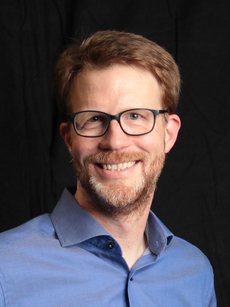
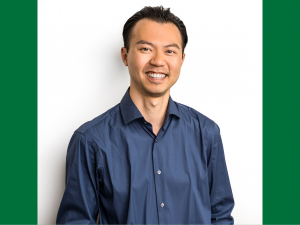
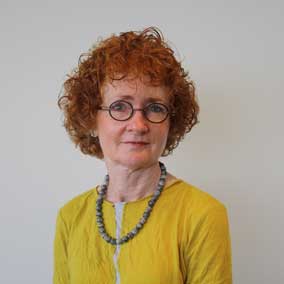
William James Craigen, M.D., Ph.D. is a Professor at Baylor College of Medicine affiliated with the Department of Molecular and Human Genetics and Department of Pediatrics . He serves as Director of the Metabolic Clinic and Medical Director of Baylor Genetics . Education: BS, University of Texas at Austin (1981) BA, University of Texas at Austin (1981) PhD, Baylor College of Medicine (1987) MD, Baylor College of Medicine (1988) Residency and Clinical Fellowship at Baylor College of Medicine Affiliate Hospitals Research Interests focus on mitochondrial function, particularly: Regulation of cellular energy metabolism VDAC isoform roles in apoptosis and metabolism Mouse models of metabolic diseases Human metabolic disorders linked to phospholipid/fatty acid metabolism Genetic mechanisms of mitochondrial respiratory chain defects Scientific Contributions include: Groundbreaking work on VDAC2's anti-apoptotic role via BAK binding Development of mouse models for glycogen storage disorders Advancements in mitochondrial DNA mutation diagnostics Honors and Memberships: Member, American Society of Human Genetics Member, Society for the Study of Inborn Errors of Metabolism Member, American Society for the Advancement of Science Member, The Biophysical Society Member, Society for Inherited Metabolic Disorders Leadership Roles include: Director, Metabolic Clinic Medical Director, Baylor Genetics Member, Dan L Duncan Comprehensive Cancer Center
Professor Adrian Esterman is the Foundation Chair of Biostatistics at the University of South Australia , with over 20 years of service. He holds a BSc (Hons) in Statistics from the University of Bath, an MSc in Medical Statistics from the London School of Hygiene and Tropical Medicine, and a PhD in Epidemiology from Flinders University. Research Focus : Generalist biostatistics and epidemiology, spanning health and medicine with recent emphasis on COVID-19 , mental health tools like the Needs in Recovery Assessment (NiRA) , and public health disparities. Publications : Over 400 peer-reviewed papers, including peer-reviewed articles on risk prediction models for Barrett's esophagus, mental health needs assessment, and tobacco use in Indigenous populations. Scientific Recognition : Ranked among Stanford University's top 2% scientists (h-index 78). Recipient of Life Membership of the Australasian Epidemiological Association . Media & Education : Regular contributor to The Conversation and author of Supervising Doctoral Students , a textbook on PhD supervision. His collaborative work extends to SA Health , World Health Organization , and institutions like Baylor College of Medicine . Current projects include digital health interventions for asthma and dementia risk modeling in First Nations populations.
Dr. Guo-Zhang Zhu is a faculty member at the Marshall University in the College of Science , Department of Biological Sciences . He earned a Ph.D. in Molecular Biology from the Shanghai Institute of Biochemistry and Cell Biology (1997) and a B.S. in Pharmacy from Fudan University (1992). Ph.D., Molecular Biology (1997), Shanghai Institute of Biochemistry and Cell Biology, Chinese Academy of Sciences B.S., Pharmacy (1992), School of Pharmacy, Fudan University, China His research spans multiple domains: (1) Molecular mechanisms of mammalian fertilization and embryonic development, focusing on genes like Ptchd3 , Pten , and Ptip , (2) Role of PITX2 in organ development and cancer progression, particularly thyroid carcinogenesis, and (3) Investigation of PIWIL proteins as potential cancer biomarkers. Techniques include gene knockout, RNA interference, and molecular/cellular biology assays. Recent publications highlight studies on transcription factors in cancer ( Cyclin D2 , PIWIL4 ), stem cell differentiation via Na/K-ATPase motifs, and gametogenesis mechanisms. Collaborations involve institutions like the National Institutes of Health and National Science Foundation . Dr. Zhu mentors students through courses like BSC 452: Molecular Biology Lab Techniques and BSC 485/BSC 491 (independent study/research). His lab engages undergraduates and graduates in projects related to reproductive biology and cancer.
Dr. Lisa Laumen is a postdoctoral researcher at Forschungszentrum Jülich's Institute of Fusion Energy and Nuclear Waste Management (IFN) , specializing in Nuclear Waste Management (IFN-2) . Her research focuses on the intersection of nuclear safeguards, data science, and satellite imagery analysis, leveraging machine learning and artificial intelligence for advanced nuclear safety and monitoring applications. Contact: +49 2461/61-85692 | +49 2461/61-2450 | Profile Link
Giorgos Pyrowolakis serves as a Junior Group Leader (equivalent to Assistant Professor) at the Institute of Biology I within the Faculty of Biology, University of Freiburg , and is an active member of the BIOSS Centre for Biological Signalling Studies . His research program centers on fundamental mechanisms of morphogen signaling during animal development, utilizing Drosophila melanogaster as a primary model organism to dissect BMP/Dpp gradient formation and interpretation. Dr. Pyrowolakis investigates how long-range morphogen gradients regulate organ patterning and growth through three interconnected research pillars: (1) gradient establishment mechanisms including novel regulators like Pentagone that control glypican-mediated trafficking; (2) transcriptional interpretation systems involving cis-regulatory motifs that decode graded signaling; and (3) cross-pathway coordination between BMP and EGFR signaling for epithelial patterning. His laboratory has demonstrated that gradient establishment and interpretation constitute tightly coupled processes , challenging traditional sequential models of morphogen action. Analysis of his publication record (2003-2016) reveals consistent innovation in morphogen gradient dynamics , with recurring themes including gradient scaling mechanisms (Expansion-Repression model), transcriptional repression cascades, and evolutionary conservation of BMP targets. His work integrates Drosophila genetics with molecular, biochemical, and quantitative approaches to address universal principles of developmental signaling. Dr. Pyrowolakis leads the "Cell Communication in Development" research group housed in Freiburg's Signalhaus facility—a dedicated research building for signaling studies. His team contributes to the university's strong tradition in developmental biology through collaborations within the BIOSS excellence cluster and participation in joint initiatives like the CIBSS/BIOSS Open Day.
Prof. Dr. Dr. Sascha Venturelli is a Professor at the University of Hohenheim , where he serves as Director of the Department of Nutritional Biochemistry (140c) within the Institute of Nutritional Sciences. He holds concurrent appointments in translational research and clinical oncology, with prior leadership roles at the University Hospital Tübingen and the Peter MacCallum Cancer Centre in Melbourne. Education : Biology diploma (2002, Albert-Ludwigs University of Freiburg) Medical degree (2008, Eberhard Karls University Tübingen) Research Focus : Epigenetic regulation in cancer Nutritional biochemistry and oncology Antioxidant mechanisms in tumor therapy Age-related disease prevention via biofactors Scientific Contributions : Identified novel cancer therapeutics (patented at University Hospital Tübingen) Established epigenetics-nutrition research group under Tübingen's Excellence Initiative DFG-funded research at Peter MacCallum Cancer Centre (2011-2012)
Prof. Dr. Ulrich Husemann is a Professor of Experimental Particle Physics at the Institute of Experimental Particle Physics (ETP) of the Karlsruhe Institute of Technology (KIT) . He leads research in CERN's CMS experiment , focusing on top quark physics , Higgs boson coupling measurements , and dark matter detection using machine learning techniques. His work also explores medical applications of semiconductor detectors for radiotherapy. 2024: Co-convener of the Physics Preparatory Group for the European Strategy for Particle Physics 2024: Organizer of the German Physical Society Spring Meeting on Particle Physics 2023: KIT Senate member 2021–2023: Vice Dean at KIT Department of Physics His research spans detector system development and data analysis for hadron colliders, including contributions to the CMS Phase-1 Pixel Detector Upgrade (2017) and Phase-2 Silicon Strip Tracker for the High-Luminosity LHC. Medical applications include evaluating HV-CMOS technology for beam monitoring in ion therapy with Heidelberg Ion Beam Therapy Center. Recent publications focus on ttH/tH production rates (2025), ttbb cross-section measurements (2024), and machine learning integration in particle physics (2024). Earlier works (2005–2018) address rare top quark decays, silicon detector radiation effects, and LHC/HL-LHC sensitivity projections. He teaches courses on Computer-Guided Data Analysis , Accelerators and Detectors , and Modern Experimental Physics . As of spring 2025, he has supervised 20 doctoral theses, 50 Master's theses, and over 90 Bachelor's theses. Contact: ulrich.husemann@kit.edu | Office: Building 401, Room 407 (Campus North) and Building 30.23, Room 8-19 (Campus South).
Taiwanese-American pianist Brian Hsu is an Associate Professor of Piano at the University of Oregon School of Music and Dance. He previously served as an associate professor at Loyola University New Orleans and as an adjunct professor at Siena Heights University. A graduate of The Juilliard School (BM, MM), Yale University (Artist Diploma), and the University of Michigan (DMA), Mr. Hsu has performed globally with orchestras such as the Philadelphia Orchestra and Sendai Philharmonic, and participated in festivals including the Amalfi Coast Music Festival and Banff Festival of the Arts. Education Bachelor’s and Master’s Degrees – The Juilliard School Artist Diploma – Yale University Doctoral of Musical Arts (DMA) – University of Michigan His research interests focus on keyboard performance , opera transcriptions for piano, and diversity initiatives in music. He co-founded Key 2 Inclusion , an intercollegiate project promoting piano works by African-American and minority composers. Mr. Hsu has released solo recordings like Night at the Opera: Part I (2018) and collaborated on recordings such as Paul Schoenfeld’s Piano Quintet (2014) and Logan Skeleton’s Letters to Santa (2016). Brian Hsu’s accolades include awards from Juilliard, Yale, and Michigan during his studies, as well as competition successes in the U.S. and Asia. He has held roles as accompanist, chamber music coach, and masterclass instructor at institutions such as Eastern Music Festival and Blue Lake Fine Arts Camp. His teaching and performance activities span the U.S. and Asia, with frequent engagements as a jury member for competitions like the New Orleans International Piano Competition. Mr. Hsu has been associated with ensembles including Ensemble Peri and the Pro Arte Quartet. His career spans solo performances, chamber collaborations, and academic leadership in piano pedagogy and inclusive programming.
Professor Sandra Schwindenhammer serves as University Professor and Chair of Social Science Sustainability Research with a focus on Sustainable Food Systems at Justus Liebig University Giessen's Faculty of Social Sciences and Cultural Studies, Department of Sociology. She is actively engaged in groundbreaking research on food system transformation, particularly examining the intersection of political science, sustainability, and agri-food governance. Her academic leadership extends to multiple institutional roles including Spokesperson of the GGS-Sektion 'Normen und Wandel in der Weltpolitik', Member of the Zentrum für Nachhaltige Ernährungssysteme (ZNE), and Official Representative of Justus Liebig University at the European Consortium for Political Research (ECPR). Professor Schwindenhammer's research focuses on sustainability transformation in urban food systems, global norm contestation (particularly Sustainable Development Goals), political authority of private organizations, and the dynamics of politicization and depoliticization in food policy. She specializes in the integration of wastewater treatment and food production through nutrient recovery, leading the BMBF-funded SUSKULT project which develops sustainable cultivation systems for resilient metropolitan regions. Her methodological approach emphasizes inter- and transdisciplinary research, qualitative and participatory methods to address norm contestation, power imbalances, and social exclusion in sustainability transitions. Her recent publications demonstrate a strong trajectory in examining the political dimensions of sustainable food systems, with particular focus on urban agriculture, circular economy approaches, nutrient recovery technologies, and the implementation challenges of sustainability norms in global governance frameworks. The research shows increasing engagement with practical policy applications and transdisciplinary knowledge integration. Wolfgang-Mittermaier-Preis für herausragende Leistungen in der akademischen Lehre, Justus-Liebig-Universität Gießen (2017) Stipendium VolkswagenStiftung, Winter School 'Limits to Growth Revisited' (2012) Professor Schwindenhammer currently leads the BMBF-funded SUSKULT-2 project (2025-2028) as part of the 'Agricultural Systems of the Future' initiative, building on her previous leadership of the SUSKULT project (2019-2024) and TANNRE project (2017-2021). She supervises students across multiple programs including BA Social Sciences, teacher training programs, and MA programs with a focus on environmental justice and sustainability. Her teaching covers sustainability transformation, food democracy, and environmental justice, with several courses offered in English through international programs. As head of the SUSKULT Research Group (http://www.suskult.de), Professor Schwindenhammer oversees a transdisciplinary team working on circular urban food systems that connect wastewater treatment with food production. The research group collaborates with numerous institutional partners including Fraunhofer UMSICHT, DFKI, and multiple universities across Germany and internationally. The group regularly organizes events like the SUSKULT Nachwuchscamp to foster networking and knowledge exchange among early-career researchers in sustainability science.
Dr. Jialing Lin is a Research Fellow at the International Centre for Future Health Systems (ICFHS) , University of New South Wales (UNSW) . With a PhD in Primary Care, Health Policy, and Epidemiology, MMed in Epidemiology and Biostatistics, and BMed in Preventive Medicine, she leads research projects focused on improving healthcare services delivery and health outcomes through evidence-based models. PhD (Primary Care, Health Policy, Epidemiology) MMed (Epidemiology and Biostatistics) BMed (Preventive Medicine) Her research interests span health services utilization , primary care reform , cardiometabolic health , vaccination uptake , and mental health systems . Current projects include: Integrating digital health application data into electronic medical record systems Evaluating effectiveness of multidisciplinary care models Analyzing impacts of healthcare policy changes on service utilization She specializes in big data analysis using claims-based data, electronic medical records, and survey data. Her work on Pharmacoepidemiology focuses on medication utilization and outcomes, particularly for cardiometabolic conditions. She has also conducted molecular epidemiology studies on antibiotic-resistant bacteria in vulnerable populations. Dr. Lin actively supervises HDR candidates in areas including multidisciplinary primary care models , vaccination interventions , and cardiometabolic health . She serves on the UNSW Health Systems Research Theme and the Early Career Academic Network (ECAN) committees, and contributes as an academic editor for Plos One and editorial board member for BMC Primary Care .
Tzia Ming Onn serves as an Assistant Professor in Energy Technologies at the University of Cambridge, conducting research at the intersection of materials science and sustainable energy systems. His work addresses critical industrial challenges through nanoscale engineering and catalytic innovation. Research focuses on three interconnected pillars: engineering stable nanoscale interfaces using self-assembly and atomic-scale techniques for materials like perovskite films and metal-supported oxides; developing electrotuneable catalysts where electron modulation enhances activity and selectivity; and converting CO 2 and CH 4 emissions into valuable fuels through circular economy principles. The work targets practical industrial applications requiring stability, activity, and selectivity in catalytic systems for energy conversion. Dr. Onn teaches undergraduate Heat and Mass Transfer courses and graduate Renewable Energy programs while operating the Onn Lab (https://onnlab.eng.cam.ac.uk/home) for experimental validation of fuel cells, electrolysers, and engine systems. Details regarding student advising and grant funding were not specified in available materials.
Dr Dianne Lauraine Carey is a Researcher at The Kirby Institute within UNSW Sydney . Her work focuses on Clinical Sciences , with a particular emphasis on HIV/AIDS , influenza , and COVID-19 . She holds qualifications in pharmacy (BPharm), public health (MPH), and a PhD, positioning her at the intersection of clinical pharmacology and infectious disease research. Research Interests: Treatment and adverse effects of antiretroviral therapy, human viral infections including influenza and SARS-CoV-2. Professional Memberships: Australasian Society of HIV Medicine (ASHM), International AIDS Society (IAS), Society of Hospital Pharmacists of Australia. Location: Wallace Wurth Building, UNSW Sydney, NSW 2052. Contact details include phone numbers +61 (2) 9385 0908 and +61 2 9385 0910 . Her ORCID is 0000-0003-0156-8143 .
Bridger Ehli is an Assistant Professor in the Indiana University Bloomington Department of Philosophy within the College of Arts & Sciences. He earned his Ph.D. in Philosophy (2023), MA (2021), and MPhil (2021) from Yale University . Research Focus Ehli specializes in the intersection of philosophy of mind and epistemology during the early modern period (17th-18th century), with particular emphasis on: Hume's conceptual skepticism and limitations of human cognition Applications of early modern theories to contemporary epistemological questions Historical analysis of causal reasoning and perception theories Publication Trends His scholarly output demonstrates strong engagement with: Core Themes: Skepticism, perception, conceptual frameworks, and epistemological limitations Historical Focus: David Hume, John Locke, and Gottfried Wilhelm Leibniz Methodological Approaches: Philosophical text analysis, historical context reconstruction, and conceptual mapping Professional Context Contact: behli@iu.edu | Office: Sycamore Hall 115 | Office Hours: Tuesday 2-4pm, Thursday 9-10am
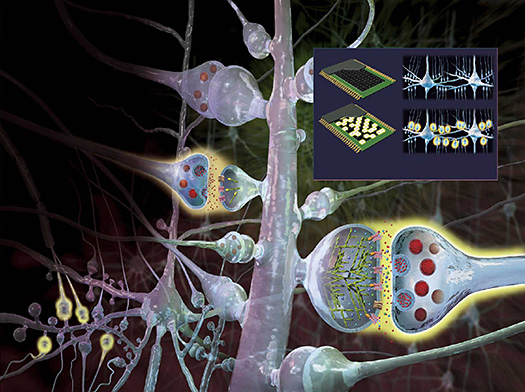
Haruo Kasai, M.D., Ph.D., is a Principal Investigator and Project Professor at the International Research Center for Neurointelligence (IRCN) , University of Tokyo, with a distinguished career spanning multiple institutions. His research focuses on dendritic spines as fundamental units of memory and cognition, utilizing two-photon microscopy to dissect their structural and functional dynamics. Education : Graduated from University of Tokyo School of Medicine Humboldt Fellow at Max-Planck Institute, Germany Key discoveries include: Demonstration of spine enlargement as the basis for long-term potentiation Elucidation of dopamine modulation of dendritic spines in learning Development of synaptic chemogenetics (SYNCit) for circuit manipulation Identification of mechanical synaptic transmission mechanisms Recent publications highlight his lab's work on prefrontal cortex sleep regulation , mechanical spine actions , and intrinsic synaptic dynamics , with implications for mental disorders and AI development. Scientific Recognition : Imperial Prize (2022) Japan Academy Prize (2022) Consistent F1000 Recommendations for key papers Current work explores synaptic basis for mental disorders and neuroAI algorithms , supported by grants from AMED Brain/MIND 2 . The lab actively recruits graduate students and postdocs, as evidenced by 2024 team expansions.
Aleh Cherp is a Professor at the Central European University (CEU) in the Department of Environmental Sciences and Policy. He is currently on sabbatical leave for the 2023-24 and 2024-25 academic years. Cherp co-leads the MESPOM Erasmus Mundus Masters program in Environmental Sciences, Policy, and Management, a collaboration between CEU, Lund University, the University of Manchester, and the University of the Aegean. Education: PhD and MSc in Environmental Sciences (University of Manchester, 2000 and 1992), MSc in Applied Physics and Mathematics (Moscow Institute of Physics and Technology, 1991) His research focuses on the feasibility of energy transitions, climate strategies, and energy security. He has contributed to major projects like the Global Energy Assessment (2008-2012) and the ENGAGE project (2019-present). Cherp is also a member of the Scoping Group for the Seventh Assessment Report of the Intergovernmental Panel on Climate Change (IPCC). Cherp has published extensively in leading journals such as Nature Energy , Nature Climate Change , and Energy Policy . He co-leads the inter-university research group POLET and holds a professorship at Lund University's International Institute for Industrial Environmental Economics. Scientific Awards: Stanford/Elsevier's Top 2% Scientist Rankings (2024) Cherp has served on editorial boards, including Energy Research and Social Science , and has undertaken professional work for the European Research Council (ERC), European Commission, European Environment Agency (EEA), and international organizations like UNDP, WHO, and the World Bank.