Peyman Soltani is a Guest Researcher at the Leiden Institute of Physics (LION) within Leiden University's Faculty of Science. His work focuses on quantum matter and optics, particularly in the context of low-temperature physics and quantum materials. He is affiliated with the De Dood Lab, contributing to research in experimental condensed matter physics. Contact: Phone 071 5275680 | Room 921B, Niels Bohrweg 2, 2333 CA Leiden
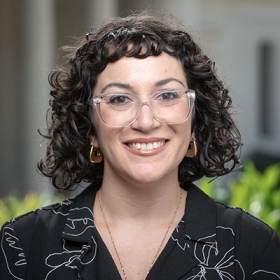
Nadia Elghobashi-Meinhardt is a Lecturer/Assistant Professor at the School of Chemistry, University College Dublin, holding an Ad Astra Fellowship. She earned her BSc in Chemistry from Stanford University (1999), followed by an MSc (2001) and PhD (2005) in Theoretical Chemistry at the Free University Berlin. Her postdoctoral work includes theoretical chemistry at the Fritz Haber Institute (2006) and computational biophysics at Heidelberg University (2007-2009). She later led a junior research group at the Free University Berlin (2011) and studied metalloenzyme catalysis at Technical University Berlin (2019). Her research focuses on computational biophysics , combining quantum mechanics (QM), molecular mechanics (MM), hybrid QM/MM, and machine learning to decipher structure-function relationships in biological systems. Key areas include biocatalysis in metalloenzymes, lysosomal protein dynamics in sterol homeostasis, and applications of computational methods to diseases like Niemann-Pick Type C (NPC). Her work bridges structural biology and quantum chemistry, with implications for clean energy and therapeutic development. Recent studies examine TRPML2 ion channels (2025), phosphatidylserine synthase regulation of SREBP pathways (2025), and transaminase-driven cascades for chiral N-heterocycles (2025). She also investigates sialin transporters (2024) and vitamin-K-dependent enzymes (2024), contributing to understanding lysosomal and metabolic disorders. Scientific Awards Ad Astra Fellowship (2023) Member of the Royal Society of Chemistry (2024) At UCD, she teaches Symmetry and Computational Chemistry (CHEM30230), Applied Introductory and Physical Chemistry (CHEM10130), and Scientific Enquiry (SCI10010), while coordinating Advanced Topics in Physical Chemistry (CHEM41430). She supervises PhD students in projects involving lysosomal proteins, nitrogenase mechanisms, and computational approaches to disease-related pathways.
Cristina Awadalla is an Assistant Professor in the Department of Latino/a and Latin American Studies at Occidental College . Appointed in 2024, she focuses on interdisciplinary sociology, with teaching expertise in Central American politics, Latin American feminisms, women’s labor, and research methods. Education: B.A., M.A., Ph.D. from the University of California, Santa Barbara Research Interests: Explore the intersections of gender conservatism, populism, and authoritarianism, with a focus on the Frente Sandinista de Liberación Nacional (FSLN) of Nicaragua and its relationship to the women’s movement. Contact: Office hours: Wednesdays 11:00 AM–1:00 PM (and Zoom options), Fridays 1:00 PM–2:00 PM; email awadalla@oxy.edu
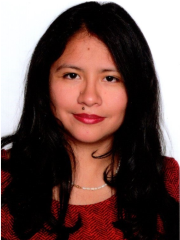
Dr. Giannina Passuni Saldana is a Postdoctoral Researcher in Marine Ecosystem Dynamics and Management at the University of Hamburg, Faculty of Mathematics, Computer Science and Natural Sciences, Department of Biology, Institute of Marine Ecosystem and Fisheries Sciences. She works within the Biological Oceanography division and is actively involved in the international "Humboldt tipping" project focused on regime shifts in the Humboldt Current System. Education: Ph.D. in Biology and Ecosystems (2013-2016), Doctoral School of Integrated Systems in Biology, Agronomy, Geosciences, Hydrosciences, Environment, University of Montpellier, France M.Sc. Oceanography with specialization in Biology and Marine Ecology (2011-2012), University Aix Marseille 2, France BSc. Biology with specialization in Zoology (2002-2007), University San Marcos, Lima, Peru Dr. Passuni Saldana's research focuses on the relationships between biological and environmental components across various time periods (seasonal, interannual, and decadal). She evaluates the resilience and stability of Humboldt system components during regime shifts, with the goal of providing recommendations for resource management and conservation of ecologically and economically important species. Her work combines ecological modeling with field observations to understand complex marine ecosystem dynamics. Her publication record demonstrates consistent focus on Peruvian marine ecosystems, particularly examining seabird population dynamics in relation to environmental variability and fisheries impacts. Her research employs advanced statistical methods including random forest approaches to quantify environmental effects on marine species. Currently, she is actively contributing to the "Humboldt tipping" project (https://humboldt-tipping.org/en), which investigates regime shifts in the Humboldt Current System in response to climatic, biological, and anthropogenic fluctuations. The University of Hamburg's work focuses on pressure-state relationships and fish production in the Humboldt Upwelling System, aiming to identify connections between environmental factors and marine resource productivity. Dr. Passuni Saldana previously held a postdoctoral position at Nelson Mandela University, South Africa (2017-2019), working on the bottom-up influence of climate change on endangered marine top predators through trophic coupling, with funding from the National Research Foundation - Scarce Skills Postdoctoral Fellowships.
Dr. Esther Diekhof is a Junior Research Group Leader at the University of Hamburg , affiliated with the Faculty of Mathematics, Computer Science and Natural Sciences and the Department of Biology within the Institute of Animal Cell and Systems Biology . Her work bridges neuroendocrinology , cognitive neuroscience , and evolutionary psychology , focusing on hormonal influences on human behavior and brain function. PhD in Theoretical Medicine (Dr. rer. med.) from University of Saarland Magisterstudium in Anthropology from University of Hamburg Her research explores how steroid hormones like estradiol and testosterone modulate gender differences in behavior (e.g., impulsivity, dominance) and neural activity patterns. She employs interdisciplinary methods including fMRI , EEG , eye tracking , and salivary hormone assays , often in collaboration with institutions like the Institute for Systemic Neuroscience at UKE . Recent studies investigate neuroimmune responses to contagion cues and VR-induced immune activation . Publications demonstrate expertise in behavioral immunology , hormonal contraception effects , and pedophilia's neural correlates . Scientific accolades include multiple Trainee Abstract Awards from the Organization for Human Brain Mapping and scholarships from the DAAD and DFG . She has mentored advisees indirectly through collaborative projects and supervised teams in bio-behavioral labs at Biozentrum Grindel.
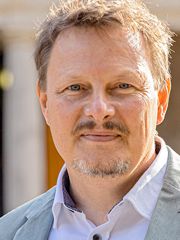
Prof. Dr. Christian Lohr serves as a Deputy Head of the Department of Neurophysiology within the University of Hamburg 's Faculty of Mathematics, Computer Science and Natural Sciences. His research focuses on neurophysiological mechanisms in both invertebrate and mammalian systems, with an emphasis on ion transport, calcium dynamics, and astrocyte function. Education: Diploma in Biology (1995), Doctorate in Biology (1998), Habilitation in Zoology and Neurobiology (2005) Academic Leadership: W2 Professorship (2010), Head of Developmental Neurobiology (2005-2008), Head of Intracellular Calcium Dynamics group (2008-2010) His research program spans three major areas: (1) Neurophysiology of ion transporters investigating Na,K-ATPase β-subunits in insect development and septate junction formation; (2) Astrocyte signaling mechanisms examining purinergic receptors and cAMP pathways in neurological diseases; and (3) Mechanotransduction studying Piezo channels in Drosophila nephrocytes. Recent publications demonstrate his interdisciplinary approach combining molecular biology with biomedical engineering. Key article trends show: Cell biology of membrane transporters (2023-2025) Neuroinflammatory signaling pathways (2023) Computational imaging applications (2024) Comparative physiology between insects and mammals (2023-2025)
Tharanga Nanayakkara is a Researcher at the Center for Functional Nanomaterials at Brookhaven National Laboratory. Education : Ph.D. from Georgia State University, M.Sc. from Clark Atlanta University, B.Sc. from University of Colombo His research focuses on quantum transport phenomena , superconducting nanodevices , and graphene synthesis . Key areas include: Microwave-driven nonequilibrium transport in 2D electron systems Superconducting materials (PtSi, CoSi 2 ) for quantum devices Strain relaxation and substrate engineering in 2D materials Fractional quantum Hall effect under extreme magnetic field conditions Recent publications highlight trends in quantum device fabrication (2024), superconducting silicide electronics (2023-2024), and graphene-based heterostructures (2022-2024). Studies span low-temperature magnetotransport, catalytic surface modifications, and microwave/photoexcitation effects.
Daniel Weiss, M.D., Ph.D. , holds the rank of Professor of Medicine at the Larner College of Medicine , University of Vermont. He is a leading expert in pulmonary and critical care medicine, with a research focus on stem cell therapies, lung bioengineering, and respiratory diseases. Education: M.D. and Ph.D. in Pharmacology/Biomedical Sciences from Mount Sinai School of Medicine B.A. in Anatomy and Physiology/Biology from Cornell University Research Interests: In vivo and ex vivo lung regeneration using decellularized scaffolds Mesenchymal stromal cell (MSC) therapies for COPD, asthma, and cystic fibrosis Gene therapy and immunomodulation in respiratory diseases His peer-reviewed publications span stem cell biology, lung tissue engineering, and MSC-based treatments for acute and chronic pulmonary conditions. Recent work explores SARS-CoV-2 interactions with lung glycosaminoglycans and innovative 3D bioprinting techniques. He has secured numerous grants from the NIH, American Lung Association, and industry partners to advance these therapies. Honors include the New York State Regent’s Scholarship, Cum Laude distinction at Cornell, and the Doctoral Dissertation Award for “Thesis of Unusual Distinction.” He leads the Weiss Laboratory , directing interdisciplinary teams in translational research and clinical trials, including a placebo-controlled MSC trial for COPD .
Dr. Øystein Marøy is an Associate Professor in the Department of Mathematical Sciences at the Norwegian University of Science and Technology (NTNU) . His academic role focuses on teaching physics to engineering preparatory students and advancing research at the intersection of quantum cryptography and educational innovation. Key Affiliations: Faculty of Information Technology and Electrical Engineering, NTNU Contact: oystein.maroy@ntnu.no Marøy’s research spans two distinct domains: quantum cryptography , where he has contributed to secure quantum communication protocols and attack countermeasures since 2008, and physics education , with recent work on enhancing student reflection and scaling active learning in large engineering courses. His pedagogical research emphasizes digital learning environments and collaborative educational technology. Recent publications highlight his dual focus: (1) quantum security advancements (2010–2017), including error correction and detector optimization, and (2) education-focused studies (2020–2024) addressing interdisciplinary learning transfer, scalable teaching designs, and EdTech-driven collaborative work. Marøy actively engages in outreach through academic lectures, including presentations on quantum hacking at Peking University (2010) and educational design at NTNU (2020). He teaches foundational physics courses for engineering students ( TFOR0117 , TFOR0112 ).
Ketaki Ganti is an Assistant Professor in the Department of Microbiology and Immunology at Stony Brook University. She earned her Ph.D. in Life Sciences from ICGEB (The Open University) in 2015. Her research program focuses on viral pathogenesis mechanisms, particularly influenza A virus (IAV) transmission dynamics and host adaptation. Contact: Ketaki.GantiWiser@stonybrook.edu | Lab: gantilab.com . Research Focus: Dr. Ganti's laboratory investigates novel modes of viral propagation, including tunneling nanotube-mediated cell-cell spread of influenza viruses and the impact of prior immunity on viral reassortment. Her work employs super-resolution imaging, proteomics, and transmission models to study: Rab11a-mediated viral genome transport Within-host evolution of avian-mammalian influenza reassortants SARS-CoV-2 exposure timing effects Host-specific viral replication mechanisms Publication Trends: Her 15 most recent articles (2013-2023) demonstrate consistent focus on viral transmission mechanisms, with evolving emphasis from papillomavirus oncoproteins to influenza reassortment and SARS-CoV-2 dynamics. Key methodologies include proteomics, genetic sequencing, and animal models.
Dr. Sylke Bakker is a faculty member at the Institute for English and American Studies within the School of Linguistics and Cultural Studies at the University of Oldenburg. She teaches multiple courses for the 2025/2026 winter term, including Current issues in ELT , Doing Research in Didactics , and Teaching Literature in the EFL Classroom . Her role involves both theoretical instruction and practical supervision of student teachers through courses like Preparation for the English Subject Practicum at the Gymnasium level. Dr. Bakker's research focuses on English Language Teaching with particular emphasis on assessment practices, teacher education, and digital learning environments. Her work explores how reflective practice can be sustained among language teachers, the integration of blogging for diversity in EFL classrooms, and the challenges of assessment literacy in competency-based English instruction. She has made significant contributions to understanding diagnostic culture in foreign language teaching and the development of professional identity among language educators. Analysis of Dr. Bakker's publication record reveals a consistent focus on assessment practices in language education, with increasing attention to digital learning environments in recent years. Her work bridges theory and practice, particularly in the context of teacher education. She has published extensively on reflective practice, assessment literacy, and the challenges of implementing competency-based approaches in English language teaching. Her research increasingly addresses the intersection of technology and language education, with several recent publications focusing on digital tools and bilingual religious education. Dr. Bakker provides consultation during term via video chat at https://meeting.uol.de/b/syl-74p-pqt and offers telephone consultations outside of term upon email request. Her office is located at A06-2-203 at the University of Oldenburg.
Robert Krauthgamer is the Harry Weinrebe Professor of Computer Science and currently serves as Department Head in the Department of Computer Science & Applied Mathematics at the Weizmann Institute of Science , within the Faculty of Mathematics and Computer Science . He is a leading researcher in theoretical computer science, particularly in the analysis of algorithms. Research Interests: His research focuses on Analysis of Algorithms , with deep expertise in Data Analysis and Massive Data Sets , Combinatorial Optimization , Approximation Algorithms , Hardness of Approximation , Embeddings of Finite Metrics , and Routing and Peer to Peer Networks . He also maintains a broad interest in Discrete Mathematics and High-Dimensional Geometry . His recent publications highlight work in graph algorithms, parameterized complexity, streaming algorithms, and metric embeddings. Publication Trends: His most recent work, including papers from SODA 2016, demonstrates a strong trend in the design and analysis of efficient algorithms for fundamental problems in graph theory, optimization, and data streams. Key themes include kernelization and sampling techniques for dynamic graph streams, subexponential parameterized algorithms, deterministic derandomization of the polynomial method, and structural results for graph modification problems. His research often bridges theoretical insights with applications in computational biology and network science. Service and Recognition: Journal Editorial: Editor-in-Chief of SIAM Journal on Computing (2019–2025), Associate Editor (2012–2017); Managing Editor of Theory of Computing (2007–2018), and current Editorial Board Member. Conference Leadership: Program Committee Chair for SODA 2016 and HALG 2018; Steering Committee member for SODA, ESA, and HALG; and committee member for the Gödel Prize (2019–2021). Workshops: Organizer of numerous workshops on sublinear algorithms, fine-grained complexity, and high-dimensional data. Teaching and Mentorship: He regularly teaches advanced courses such as Randomized Algorithms and Sublinear Time and Space Algorithms . He advises a large group of MSc and PhD students and hosts postdoctoral researchers, demonstrating a strong commitment to training the next generation of computer scientists. His former students have gone on to successful academic and research careers. Laboratories and Research Groups: He is a key member of the Foundations of Computer Science (theory) seminar at Weizmann and has organized the TheoryLunch and Reading Group in Algorithms, fostering a vibrant research community within the department.
Helena Svaleryd is a Professor at the Department of Economics , Uppsala University. Her research spans Labor Economics , Public Economics , Health Economics , and Family Economics , with a focus on empirical analyses of social policies and their impacts. Research Themes: Child well-being, SARS-CoV-2 pandemic effects on education, market reforms in teaching, governance in organizations, and political competition. Affiliations: Uppsala Center for Labour Studies (UCLS) and Uppsala Center for Fiscal Studies (UCFS). Recent Publications (2024–2008) explore topics like school closures, remote learning, parental unemployment, and corruption. These works highlight interdisciplinary trends in Public Health , Education Policy , and Corporate Governance . Teaching: Microeconomics (Course 2NE474), with leadership as Director of Undergraduate Studies at Uppsala University. Collaborations include Jonas Vlachos, Evelina Björkegren, and Eva Mörk, reflecting her engagement in team-based research across Sweden and international networks.
Gina Burkart, Ed.D., is a Lecturer and Director of Learning Services with over 20 years of experience in higher education. She specializes in teaching writing, literature, and learning strategies to support student success, focusing on college reading, critical thinking, and time management. Ed.D. in Curriculum & Instruction, Post-Secondary Literacy (University of Northern Iowa) MA in Literature (University of Northern Iowa) BA in Literature (Loras College) Her research interests span literacy education , student success strategies , and metacognition , particularly in the context of college readiness. She has authored four books and collaborated on the award-winning journal Improve with Metacognition , emphasizing metacognitive practices in education.
Manuel Chica Serrano is a Senior Researcher at the University of Newcastle (Australia) and a Ramon y Cajal Senior Researcher at the University of Granada (Spain). He holds an Adjunct Lecturer position at the School of Information and Physical Sciences, University of Newcastle, where he conducted an Endeavour Research Fellowship (2016-2017). His interdisciplinary work bridges artificial intelligence , agent-based simulation , and marketing analytics . Education : BSc/MSc in Computer Science (University of Granada), PhD cum laude (University of Granada 2011) Research Areas : Metaheuristics, Machine Learning, Complex Systems, Agent-Based Modeling, Multiobjective Optimization With over 100 JCR publications (40+ Q1 journals) and 1.4k+ Google Scholar citations (h=20), his work focuses on evolutionary game theory applications in tourism sustainability, tax fraud detection, and maritime decarbonization. Recent studies include WPT retrofit modeling , startup user retention , and tax fraud dynamics . He supervises five PhD students and co-invented two international patents in AI applications. Scientific Contributions : CTO of ZIO Analytics , commercializing AI solutions Principal Investigator for €3M+ in R&D projects (including 2 EU-funded) 2017 Best Paper Award (IEEE CEC track) 2-year postdoctoral at four international institutions

-260x260.jpg)