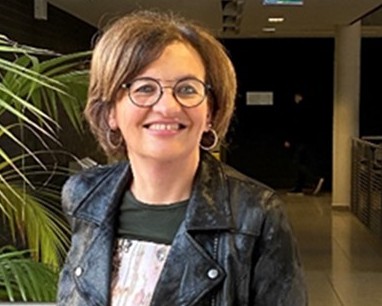
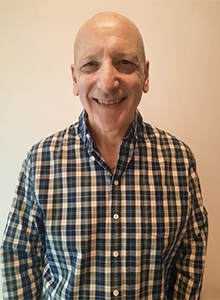
Prof. Dr. Michaela Schmitz is a faculty member at Hochschule Bonn-Rhein-Sieg's Faculty of Agriculture Soest, where she directs the BSc. Sustainable Food Systems program. She teaches courses in food analytics, environmental chemistry, food technology, and food law. Her research integrates sustainable packaging development, plant stress physiology (particularly apple replant disease), and bioactive compound characterization. Research interests emphasize: Sustainable Resource Use: Extraction of bioactive compounds from plant waste for packaging additives Food Safety: Dynamics of allergens (Mal d 1) in apples under storage/processing Analytical Innovation: Advanced HPLC/GC-MS methods for food/environmental analysis Plant Health: Physiological responses to biotic/abiotic stressors in crops She leads a laboratory equipped with cutting-edge analytical instrumentation, supporting research in food quality and environmental sustainability. Collaborative projects include interdisciplinary consortia like BonaRes, addressing soil fatigue in orchards.
Nicolas Touzet is a Lecturer and Principal Investigator in the Department of Environmental Science at the Institute of Technology Sligo, Ireland. His research focuses on marine ecology, water quality, microalgal biotechnology, and harmful algal blooms, with particular emphasis on Irish coastal and freshwater systems. His primary research interests include: Phycoremediation of wastewater using microalgae Molecular identification of toxic phytoplankton species Bioactive compound production from microalgae Climate change impacts on aquatic ecosystems Development of molecular detection methods for harmful algal blooms Dr. Touzet leads the SFI-funded METALGAE project (€389,000) focused on "Physiology and molecular biology of microalgae for the biorefining of valuable metabolites." His publication record demonstrates consistent research output in microalgal applications for bioremediation and high-value metabolite production, with recent work emphasizing LED lighting optimization for pigment production and antioxidant bioprospecting from Irish marine heterokonts. His scientific contributions include: Development of molecular detection methods for toxic algae Advancement of microarray technology for phytoplankton monitoring Landmark studies on Alexandrium species in Irish waters Applications of microalgae for landfill leachate treatment Dr. Touzet has supervised multiple research projects and collaborated extensively with institutions across Ireland and Europe, particularly on harmful algal bloom monitoring and microalgal biotechnology applications. His laboratory at IT Sligo focuses on advancing microalgal applications for environmental and industrial purposes.
Dr. Maiju Myllys is a Scientific Associate in the Intravital Toxicology department at the Leibniz Research Centre for Working Environment and Human Factors in Dortmund, Germany. She works under the leadership of Prof. Dr. Jan G. Hengstler, Head of Department, and maintains an active research position with contact information listed as myllys@ifado.de and +49 231 1084-216. Her research focuses on liver toxicology, bile acid metabolism, and drug-induced liver injury using advanced intravital imaging techniques. Dr. Myllys's primary research interests center on liver-kidney axis interactions , species differences in drug metabolism , and mechanisms of hepatotoxicity . Her work integrates intravital imaging with biochemical analysis to understand the spatio-temporal dynamics of toxins in living organisms. She has made significant contributions to understanding bile acid transport mechanisms, acetaminophen toxicity pathways, ochratoxin A metabolism, and liver fibrosis development. Her research methodology emphasizes real-time observation of toxic processes in vivo, providing insights that traditional in vitro methods cannot capture. Analysis of Dr. Myllys's publication record from 2019-2025 reveals a strong focus on translational toxicology with emphasis on interspecies differences, liver-kidney interactions, and advanced imaging techniques. Her work frequently involves multi-institutional collaborations, as evidenced by her numerous co-authored publications. Key research themes include the development of fluorescent probes for real-time bile acid tracking, investigation of albumin's role in toxin distribution, and exploration of compensatory mechanisms in liver disease. Her 2025 publication on liver macrophages and synthetic mRNA translation represents cutting-edge work at the intersection of nanomedicine and toxicology. Dr. Myllys is an integral member of the Intravital Toxicology team led by Prof. Hengstler, contributing to a research environment that bridges basic science with potential clinical applications. The team's work has significant implications for pharmaceutical development, risk assessment of environmental toxins, and understanding mechanisms of drug-induced organ damage. Her research on bile acid transporters has direct relevance to treating cholestatic liver diseases, while her investigations into species differences help improve translation of preclinical findings to human applications.
Domenico Caridi is an Associate Professor of Chemistry in the First Year College at Victoria University with over two decades of experience in chemistry education and research leadership. He spearheaded the successful implementation of block-mode chemistry curriculum for Years 1-2 undergraduate programs during 2018-2019 and pioneered innovative laboratory pedagogy for qualitative organic analysis and pharmaceutical testing. His educational credentials include: BAppSc FIT BScHons LaTrobe PhD LaTrobe GradDipSecEd VicMelb Caridi's research bridges educational innovation and analytical science. His educational scholarship focuses on pedagogy, curriculum design, and student learning within block-mode and laboratory environments, with current international collaborations examining STEM education models. His applied research centers on Analytical Chemistry and Separation Science, developing sensitive phytohormone detection methods for agricultural biostimulants and plant growth efficacy studies. This dual focus creates synergies between food chemistry analysis and pedagogical advancement. Publication analysis reveals two dominant trajectories: chemistry education innovations (block-mode curriculum design and laboratory instruction) and analytical food chemistry (vitamin/phytochemical quantification). The educational works demonstrate expertise in restructuring STEM delivery, while the analytical publications showcase advanced chromatographic and electrophoretic techniques for complex matrices like milk, onions, and broccoli. His recognition includes: Vice Chancellor’s Peak Award for Engagement (2012) Caridi maintains an extensive supervision record with 1 current PhD and 1 MSc candidate, having previously guided 5 PhD, 1 MSc, and 30 Honours students while co-supervising 2 additional graduate researchers. His research is funded by significant grants including $1,034,112 in internal teaching/research grants (2006-2019), $398,000 in university engagement funding (2008-2017), and $158,000 from Shimadzu Scientific Instruments for analytical instrumentation projects. He actively collaborates with international block-mode institutions on STEM education frameworks and leads agricultural chemistry initiatives developing phytohormone analysis protocols for biostimulant efficacy testing in plant systems.
Per Sjöberg is a Senior Lecturer/Associate Professor in Analytical Chemistry at the Department of Chemistry - BMC, Uppsala University. His research focuses on the development and application of advanced analytical techniques, particularly in the areas of mass spectrometry and chromatography for environmental analysis. His main research interests include: Environmental analysis of phosphorus compounds and dissolved organic matter Development of novel mass spectrometry techniques, particularly electrospray ionization Chromatographic separation methods for complex environmental samples Electrochemistry coupled with mass spectrometry Phosphorus speciation in aquatic environments Professor Sjöberg's recent publications demonstrate a strong focus on environmental chemistry, with particular emphasis on phosphorus cycling in aquatic systems and the characterization of dissolved organic matter. His work combines fundamental method development with practical environmental applications, contributing significantly to our understanding of biogeochemical processes. His research spans from the molecular characterization of complex organic matter to ecosystem-level nutrient cycling studies. His scientific contributions include: Development of methods for analyzing inositol phosphates in environmental samples Studies on the isomeric complexity of dissolved organic matter Applications of advanced mass spectrometry for environmental analysis Investigation of phosphorus speciation in the Baltic Sea Sjöberg has been actively collaborating with researchers across disciplines, including environmental scientists, microbiologists, and animal nutrition specialists. His work has implications for understanding nutrient cycling in aquatic ecosystems, addressing eutrophication issues, and developing sustainable analytical methodologies for environmental monitoring.
Claus Cornett is an Associate Professor in the Department of Pharmacy at the Faculty of Pharmaceutical Sciences, University of Copenhagen. He has been serving in this role since 1992 and maintains an active research program in pharmaceutical analytical chemistry. His educational background includes a Master of Science in Chemistry from 1986 and a PhD (Pharm) from 1992. Prior to his current position, he served as an Assistant Professor at the Department of Organic Chemistry at The Pharmaceutical University of Denmark starting in 1988. Professor Cornett's research focuses on advanced analytical techniques, particularly NMR spectroscopy applications in pharmaceutical analysis. His primary research areas include structure elucidation of small molecules and drug metabolites, hyphenation of NMR with other analytical techniques (HPLC, CZE, MS), flow injection NMR, and chemometric methods for data processing. He has made significant contributions to near-infrared imaging of pharmaceutical products and medicinal cannabis research. His recent publications (2021-2025) demonstrate a strong focus on pharmaceutical analytical methods, with particular emphasis on patient-tailored drug products, antidepressant medications, and cannabis-based therapeutics. These works span analytical chemistry, pharmaceutical technology, and clinical pharmacology, showing interdisciplinary applications of his core expertise in spectroscopic methods. Professor Cornett has served as a reviewer and editorial board member for numerous prestigious journals including Journal of Pharmaceutical Analysis, Journal of Proteome Research, and Phytochemical Analysis, demonstrating his standing in the scientific community. His teaching portfolio includes Instrumental Analytical Chemistry, Advanced Analytical Chemistry, and Choice and Validation of Analytical Methods. He has also assessed qualifications for multiple assistant and associate professor positions at his institution.
Kenneth Thermann Kongstad is an Assistant Professor at the Department of Drug Design and Pharmacology within the Faculty of Health and Medicinal Sciences at the University of Copenhagen. His research spans interdisciplinary projects at the intersection of analytical chemistry, spectroscopy, biochemistry, and pharmacology. He has established an endophyte research lab focused on discovering novel drug leads from microorganisms living within plants, a largely unexplored area in natural product research with significant potential. His work bridges analytical science with pharmacological applications through collaborations with the Pharmacotherapy Research section and other departments. Dr. Kongstad's educational background includes: PhD from the Faculty of Pharmaceutical Sciences at University of Copenhagen, supervised by Prof. Jerzy W. Jaroszewski (deceased) and Dr. Manfred Spraul MSc. Eng. from Technical University of Denmark (DTU), with research conducted at University of Queensland, Australia under Prof. Rob Capon His primary research interests focus on the discovery of future drug leads from endophytic fungi, quantitative analysis of opioids for pharmacokinetic studies, and chemical characterization of bioengineered organisms. Dr. Kongstad specializes in advanced hyphenated NMR techniques ($$\text{HPLC-PDA-HRMS-SPE-NMR}$$) for natural product research and pharmaceutical applications. His work has developed innovative screening methodologies for semi-high-throughput analysis of plant extracts and identification of bioactive metabolites responsible for antifungal activity. He maintains active collaborations with research groups at Department of Plant and Environmental Sciences (KU), Department of Bioengineering and Biomedicine (DTU) and various departments within KU. Analysis of Dr. Kongstad's recent publications reveals a strong focus on applying advanced analytical techniques to identify bioactive compounds with therapeutic potential. His work spans diabetes research (particularly $$\alpha$$-glucosidase inhibitors), cancer research (multidrug resistance reversal), and pain management (opioid pharmacokinetics). A common thread is the integration of sophisticated analytical methodologies with biological activity screening to accelerate drug discovery from natural sources, especially endophytic fungi and plant extracts. Dr. Kongstad has received professional recognition including: Teacher of the Year (2019) He has established significant research collaborations across multiple institutions and has been involved in multiple funded research projects, including the DSF-funded 'FungalFight' project and collaborative efforts to develop cell factories for producing carminic acid. His endophyte research lab serves as a hub for interdisciplinary research, bringing together expertise in natural product chemistry, pharmacology, and analytical science. He has also filed two patents related to cell factory development for carminic acid production. His laboratory focuses on chemical and biological characterization of endophytic fungi, with particular attention to compounds with antifungal, antidiabetic, and other therapeutic properties. The lab integrates advanced analytical techniques with biological screening to identify bioactive metabolites. Dr. Kongstad's team collaborates extensively with researchers specializing in pharmacokinetic modeling, contributing to the development of personalized medicine approaches. He has also maintained editorial roles for journals including Natural Product Research, Analytical Methods, and Journal of Separation Science.
Christine Ingersoll serves as Professor of Chemistry and Director of the Interdisciplinary Science Program at Muhlenberg College, where she bridges analytical chemistry with biological and neuroscientific research through active collaborations with faculty and industry partners. Academic Background: Ph.D. in Chemistry from State University of New York at Buffalo B.S. in Chemistry, magna cum laude, from State University of New York, College at Oswego Her research program emphasizes cross-disciplinary analytical problem-solving, utilizing HPLC, LC-MS, and GC-MS to investigate plant-insect interactions with biologist Richard Niesenbaum and GABAA receptor modulation with neuroscientist Jeremy Teissere. Industry partnerships with Johnson & Johnson and The Mentholatum Company focus on cell culture media analysis and pharmaceutical degradation studies, demonstrating real-world applicability of her method development expertise. Teaching remains central to her mission, with specialization in analytical chemistry sequences and instrumentation courses that integrate industry laboratory visits. Publication trends reveal sustained innovation in analytical methodology across ecological, pharmaceutical, and educational domains since 1996, consistently featuring undergraduate co-authors. Her work shows particular strength in fluorescence spectroscopy applications and sol-gel sensor development, with recent emphasis on mass spectrometry techniques for complex biological systems. Scientific Recognition: American Chemical Society Women Chemists Committee Rising Star Award (2012) Open Educational Resources Grant (2017-2018) Six Faculty Summer Research Grants spanning 1999-2018 Donald B. Hoffman Research Fellowship (2009-2010) Mentorship defines her academic impact, with eight named undergraduate research students co-authoring publications across plant biochemistry, environmental analysis, and biosensor development. Her grant portfolio supports both summer research programs and curriculum innovation, including automation integration in teaching laboratories. As Director of the Interdisciplinary Science Program, she cultivates collaborative research environments where students gain hands-on experience with industry-standard instrumentation while contributing to peer-reviewed publications. Laboratory operations center on advanced chromatography and mass spectrometry facilities, maintained through ongoing industry partnerships that provide students with exposure to pharmaceutical and environmental testing protocols. Current projects with neuroscience colleagues explore herbal extract characterization for neurological applications, extending her analytical expertise into emerging therapeutic domains.
Dr. Bin Su is a Professor at Cleveland State University, affiliated with the Center for Gene Regulation in Health and Disease (GRHD). His research is focused on drug development for cancer treatment and parasitic diseases, particularly African trypanosomiasis. He maintains his laboratory at the Science and Research Building, Room 327, and can be reached at (216) 687-9219. Dr. Su's primary research interests center on anti-cancer and anti-trypanosome drug development. His laboratory has made significant contributions in two major areas: Hsp27 inhibitor development for overcoming cancer drug resistance, and selective tubulin inhibitors for treating African sleeping sickness. Through innovative approaches including biotinylated small molecular probes, affinity chromatography, and proteomic techniques, his team has identified promising drug candidates that have been screened by the National Cancer Institute against 60 human cancer cell lines. Analysis of Dr. Su's recent publications reveals a strong focus on molecular targeting strategies in cancer therapeutics, particularly for glioblastoma and breast cancer. His work demonstrates expertise in HSP27 inhibition, tubulin targeting, and receptor modulation (including androgen receptor, HER2, and EphA2). A consistent theme across his publications is the optimization of drug candidates for improved efficacy and pharmacokinetic properties, with several studies focusing on brain delivery for glioblastoma treatment. Dr. Su actively mentors graduate students, with Fatma Salem listed as a Ph.D. student in his laboratory. His research has resulted in numerous peer-reviewed publications in high-impact journals including Journal of Medicinal Chemistry, ACS Infectious Diseases, and Bioorganic & Medicinal Chemistry. He also holds multiple patents related to cancer treatment, including 'Amide Derivatives of Benzene-Sulfonanilide, Pharmaceutical Composition Thereof and Method for Cancer Treatment Using the Same' (US 12/906,315). Dr. Su's laboratory employs a multidisciplinary approach, combining medicinal chemistry, molecular biology, and pharmacological techniques to develop novel therapeutics. His collaborative work with Dr. Bibo Li at BGES has been particularly fruitful in identifying selective compounds that target parasite tubulin without affecting mammalian cells, offering promising avenues for treating African trypanosomiasis.