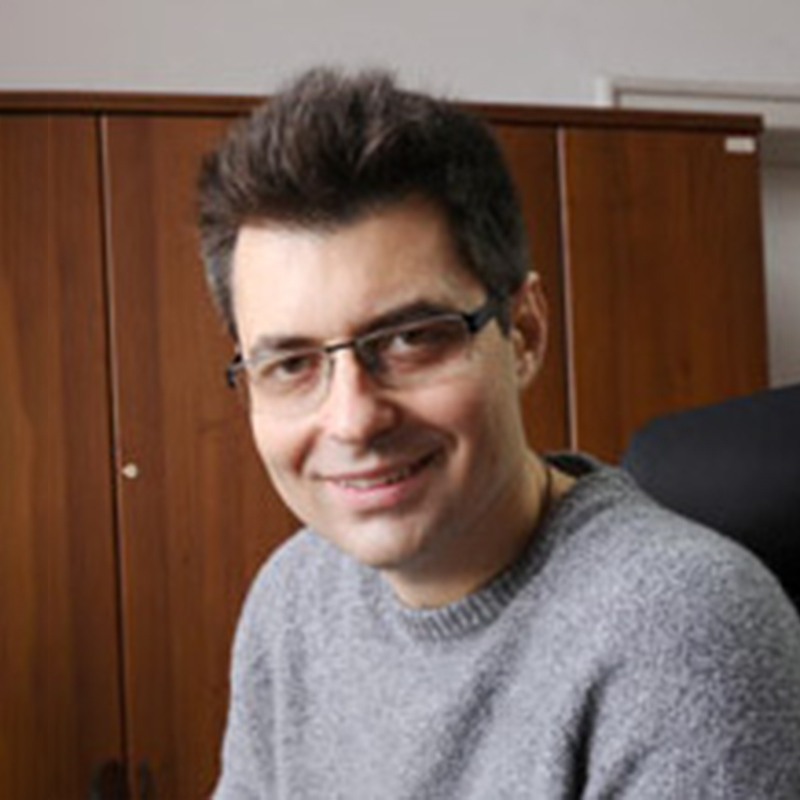
Sharyn Marks is a Professor of Zoology and Department Chair at the Department of Biological Sciences, California Polytechnic Humboldt State University. She earned a BA from the University of Chicago (1987) and a PhD from the University of California, Berkeley (1995). Her research focuses on Herpetology , Conservation Biology , and Evolutionary Developmental Biology , integrating ecological studies with natural resource management to address global declines in amphibian and reptile biodiversity. She investigates factors regulating amphibian activities, species distribution modeling, and life-cycle habitat requirements. Recent publications emphasize Herpetological ecology Conservation strategies Evolutionary genetics Ecological niche modeling Forest and desert habitat studies Hydrological impacts on wildlife and have been published in journals like Herpetological Conservation and Biology and Molecular Ecology . She has mentored numerous graduate and undergraduate students, including current advisees Sabrina Horrack, Mary Mackey, and Stacie Nunes. Her work has secured funding for student projects and received recognition, such as the 2013 Best Student Paper in Herpetology by Copeia for co-authored research on Western Pond Turtles.
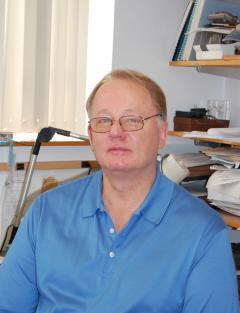
Dr Nic Freeman is a Lecturer in Applied Probability and Programme Leader for Financial Mathematics at the School of Mathematical and Physical Sciences, University of Sheffield. He holds an academic position within the Department of Mathematics and is a member of the Probability research group. His research focuses on probability theory, stochastic processes, random geometry, fractals, and applications to population genetics and financial mathematics. Dr Freeman teaches courses such as MAS350 Measure and Probability, MAS352 Stochastic Processes and Finance, MAS451 Measure and Probability, and MAS452 Stochastic Processes and Finance. His work integrates theoretical probability with practical applications, including the study of preferential attachment models, coalescent processes, and spatial stochastic systems. He is affiliated with the Hicks Building, located in Room I20. Research interests span topics such as tightness criteria for random processes, Brownian web/net structures, and cluster dynamics in network models. His recent publications explore foundational aspects of stochastic processes and their convergence properties, contributing to both pure and applied probability theory. Dr Freeman collaborates within interdisciplinary teams and maintains an active research profile in mathematical probability.
Erik Dietzenbacher is a Full Professor of Interindustry Economics at the University of Groningen's Faculty of Economics and Business. He specializes in input-output analysis, climate change, and regional economics. He holds honorary positions at institutions like the University of the Chinese Academy of Sciences and has been a visiting professor at Rutgers University and UIBE in Beijing. Education: MSc in Econometrics (1982) and PhD in Economics (1991) from the University of Groningen. His academic career spans over three decades, with leadership roles including Chair of the Board of Examiners at FEB and former President of the International Input-Output Association (2013-2018). Research focuses on global value chains, environmental impacts of trade, and structural decomposition analysis. He coordinates large projects like the WIOD (World Input-Output Database), funded by the EU. Notable awards include the Ricardo Torres Gaitán Chair (2023), Officer in the Order of Orange-Nassau (2021), and An Zijie International Trade Research Award (2014). Teaching contributions include pioneering courses on academic writing and research methodology. He has supervised 15 PhD students and developed modular courses on input-output analysis worldwide. His work bridges academia and policy, influencing EU trade and climate policies through frameworks like the FIGARO MRIO database. Leadership roles include Chair of the University Committee for Academic Practice and past Head of the Global Economics and Management department. His research extends to ecological economics and sustainability, with over 100 refereed articles and 15 books, reflecting a H-index of 30 (Web of Science) and 48 (Google Scholar).
Eric Lamb is a Professor in the Department of Plant Sciences at the University of Saskatchewan, affiliated with the College of Agriculture and Bioresources. He is also the Curator of the WP Fraser Herbarium. His research focuses on plant ecology, fire ecology, and grassland conservation. He holds a Ph.D. from the University of Alberta, an M.Sc. from Lakehead University, and a B.Sc. from the University of British Columbia. Dr. Lamb teaches undergraduate courses including Plant Ecology, Grassland Soils and Vegetation, and Advanced Plant Ecology, as well as graduate courses in statistical and experimental analysis methods. His research explores ecosystem services, invasive species impacts, soil microbiology, and fire management strategies in grassland ecosystems. Key Research Themes: Fire effects on plant communities, microbial interactions in root systems, and conservation strategies for grassland biodiversity. Notable Contributions: Pioneering studies on prescribed fire reintroduction, microbial community dynamics during invasions, and the ecological impacts of grazing regimes. His recent publications emphasize global grassland drought vulnerabilities, Arctic soil biodiversity under climate change, and the role of microbial networks in ecosystem resilience. Dr. Lamb collaborates widely on interdisciplinary projects bridging ecology, conservation, and land management. Lab/Team Activities: Active in the WP Fraser Herbarium’s specimen curation and fieldwork initiatives, focusing on Saskatchewan’s endemic plant species and Arctic tundra restoration.
Francisco Dini-Andreote serves as Associate Professor of Plant Science at Penn State University's College of Agricultural Sciences and holds the endowed Huck Early Career Chair in Microbial Community Ecology. His research integrates microbiome science, plant-microbe interactions, and ecological theory to advance sustainable agriculture. Affiliations include the Huck Institutes' Microbiome Center, Center for Root and Rhizosphere Biology, and Center for Infectious Disease Dynamics. Research focuses on: Microbiome assembly in response to environmental gradients (e.g., urbanization, climate change) Engineering rhizosphere communities for crop resilience against drought and pathogens Soil health restoration via anaerobic disinfestation techniques Recent publications (2024-2025) reveal strong emphasis on: Ecological processes governing microbial coalescence and food web dynamics Molecular mechanisms of plant-microbe signaling under stress Cross-kingdom synthetic communities for agricultural applications Awards include the Dorothy Foehr Huck and J. Lloyd Huck Early Career Chair (2024). Grant leadership encompasses USDA-funded projects ($1M+) optimizing organic farming through microbiome manipulation. Actively advises graduate students and leads the Dini-Andreote Lab, which collaborates with international teams to study soil-plant-microbe interfaces.
Marko Djordjevic is an Associate Professor at the Faculty of Biology, University of Belgrade. His research spans computational biology of infectious diseases, bacterial immune systems (CRISPR/Cas and restriction-modification systems), and quantitative understanding of infection progression with applications to SARS-CoV-2 and computational physics of quark-gluon plasma. Diploma in Physics, Faculty of Physics, University of Belgrade, Serbia. PhD in Biophysics and Bioinformatics, Department of Physics, Columbia University, USA. Postdoctoral training at the Mathematical Biosciences Institute, Ohio State University, USA. Djordjevic's research focuses on nonlinear regulatory dynamics of bacterial immune systems, their role in horizontal gene transfer, and modeling infection progression under social mitigation measures. His secondary interest in computational physics examines quark-gluon plasma dynamics via high-p⊥ observables and tomography. His recent publications address CRISPR/Cas regulation, restriction-modification systems, and SARS-CoV-2 transmissibility drivers. Grants from the Serbian Ministry of Science, Science Fund of Serbia, EU Marie Curie IRG, and Swiss National Science Foundation support his work.
Fabio Boschetti is an Adjunct Research Fellow at the University of Western Australia's Oceans Institute, focusing on marine ecology, computational modeling, and environmental policy. His research bridges complex decision-making in natural resource management with social-ecological systems. Research interests include sustainable offshore Blue Economy, ecological connectivity, climate change impacts, and stakeholder engagement in marine environments. He employs computational models and data-driven frameworks to address environmental challenges. His 15 most recent articles (2022–2017) emphasize marine conservation, policy-driven resource management, social license dynamics, and innovative modeling techniques. Key themes include biodiversity assessment, sustainability certification, and adaptive strategies for coastal ecosystems. As a computational modeler, he explores mental models of climate change, urban resilience, and scenario planning for future environmental governance. His work integrates qualitative and quantitative methods to enhance decision-making processes.
Anders Forsman is a Professor in the Department of Biology and Environmental Science at Linnaeus University's Faculty of Health and Life Sciences. He serves as the subject coordinator for doctoral education in Ecology, demonstrating his leadership role in academic training. His research spans evolutionary ecology, population dynamics, and conservation biology with a focus on understanding how evolutionary processes contribute to biodiversity across various taxa including insects, fish, amphibians, and mammals. Forsman's research interests center on evolutionary processes that generate diversity in form, color, function, and behavior among living organisms. He investigates how individual variation in functionally important traits affects ecological success of populations and species in changing environments. His work combines behavioral studies, experiments, genetic markers, and theoretical modeling to address fundamental biological questions with applications for conservation biology and sustainable resource management. His research has significant implications for developing more sustainable agricultural, fishing, and forestry practices in the face of climate change. Analysis of Forsman's recent publications reveals a strong focus on climate change impacts across multiple ecosystems. His work spans terrestrial systems (oak forests, moth populations), freshwater environments (riverine fish, pike ecology), and marine contexts (Baltic Sea microbiomes). A recurring theme is examining how biodiversity responds to environmental stressors, with particular attention to spatial patterns, adaptive capacity, and conservation implications. His methodological approach integrates field observations, experimental manipulations, and molecular techniques to provide comprehensive insights into ecological and evolutionary processes. Forsman leads multiple research initiatives including the Evolutionary Ecology group, Fish Ecology research focusing on Baltic coastal predatory fish, and the Linnaeus University Centre for Ecology and Evolution in Microbial model Systems (EEMiS). His current projects address critical environmental challenges such as climate change impacts on coastal ecosystems, adaptation of forest ecosystems to changing conditions, and effects of river fragmentation on fish populations. His collaborative approach is evident in numerous co-authored publications across diverse ecological topics, demonstrating his ability to bridge disciplinary boundaries to address complex environmental questions.
Susan Ariel Aaronson is a Research Professor of International Affairs at George Washington University (GWU) and Director of the Digital Trade and Data Governance Hub. She leads research on AI governance, data governance, and digital trade policies as co-PI of the NSF-NIST TRAILS initiative. Her work focuses on global challenges like AI nationalism, data accuracy, and extended reality (XR). Aaronson is a GWU Public Interest Technology Scholar (2024) and Cross-Disciplinary Scholar (2017). Education: Ph.D., Johns Hopkins University. Research areas include international trade, human rights, and the governance of AI/data-driven technologies. She explores topics like AI protectionism, cross-border data flows, and the ethical implications of generative AI. Her op-eds appear in Barron’s and Fortune , and she contributes to media outlets like NPR and the BBC. Key Projects: Digital Trade Hub (mapping global data governance), TRAILS (AI governance research) Funded by: Ford Foundation, Minderoo Foundation Publications span peer-reviewed journals ( Oxford Review of Economic Policy ), policy briefs ( CIGI Papers ), and op-eds. Recent work highlights the need for rethinking trade policies to address digital-era challenges and fostering trust through inclusive governance frameworks. Awards: GWU Public Interest Technology Scholar, Cross-Disciplinary Scholar Grants: NSF-NIST TRAILS, Ford Foundation, Minderoo Foundation Labs/Teams: Leads the Digital Trade and Data Governance Hub, a global research initiative addressing data governance and AI policy.
Dani Boix Masafret is a Senior Professor in the Department of Environmental Sciences and a leading researcher at the Institute of Aquatic Ecology, University of Girona. With a career spanning since 2010, he focuses on aquatic community ecology, particularly Mediterranean temporary ponds, analyzing biotic-abiotic interactions, trophic networks, and biodiversity drivers. Education: PhD in Environmental Sciences (2000) and MSc in Biology (1992) from the University of Girona. His research emphasizes metacommunity resilience, environmental restoration, and conservation of Mediterranean wetlands. Key projects include Horizon 2020’s PONDERFUL and national initiatives on coastal system recovery. Recent publications highlight zooplankton network complexity, invasive species modeling, and climate change impacts on temporary ponds. He serves as Associate Editor for Annales de Limnologie and Hydrobiologia , and has co-edited special volumes on pond ecology. Boix has directed 7 PhD theses, including studies on trophic networks, biodiversity in man-made wetlands, and invasive species dynamics. His work bridges ecological theory, applied restoration, and multi-taxa conservation strategies.
Raphael Didham is a Professor at the School of Biological Sciences, The University of Western Australia. His research focuses on community ecology, entomology, and global environmental change, particularly addressing habitat fragmentation and restoration ecology challenges. His work contributes to UN Sustainable Development Goals related to life on land and climate action. He leads major grants including a CSIRO-funded project on global change impacts on biodiversity and biosecurity (2018–2025), and has collaborated on initiatives like dung beetle ecosystem engineering projects. His research spans tropical forest dynamics, insect conservation, and the ecological impacts of land use changes. Didham has published over 150 peer-reviewed articles, including high-impact works in Nature , Nature Ecology and Evolution , and Global Ecology and Biogeography . His datasets, such as LandFrag and FragSAD, are widely used in biodiversity studies. He supervises research projects on topics like insect declines, forest fragmentation effects, and restoration strategies. His grants include funding from organizations like the Forrest Research Foundation and Meat & Livestock Australia, reflecting interdisciplinary collaborations between academia and applied conservation sectors. Key projects address insect trait ecology, dung beetle ecological roles, and ecosystem resilience in fragmented landscapes. Didham's lab and collaborative networks focus on synthesizing field data with global datasets to inform conservation policies. Current research emphasizes understanding biodiversity loss mechanisms and developing actionable solutions for sustainable land management.
Dr Sarah Munks is a Research Fellow in the Department of Zoology at the University of Tasmania, with an adjunct role in Biological Sciences (2017-2024). Her career spans over 30 years in research and natural resource management, focusing on wildlife and habitat conservation. Field of Expertise: Wildlife and habitat management, Terrestrial ecology, Conservation and biodiversity Education: PhD in Zoology (University of Tasmania, 1986-1990), BSc (Hons) in Zoology (UCNW, 1981-1983) Dr Munks has led and co-supervised numerous projects on threatened species, freshwater habitats, and forest fauna. Her work bridges ecological research with policy implementation in agricultural and forestry sectors. Her funded research spans 2004-2010, covering topics like bat ecology, platypus energetics, and possum physiology. She has co-supervised 21 higher-degree students and delivered annual lectures to third-year Tasmanian Fauna students (2000-2019). She serves as a referee for scientific journals and sub-editor for Australian Forestry , affiliated with the CRC for Forestry and Centre for Forest Value. Her supervision includes 9 doctoral and master's students in conservation, ecology, and wildlife management.
Calvin Ralph is a Senior Lecturer in Mechanical Engineering at the School of Engineering, Ulster University, Belfast campus. His research focuses on composite materials and their mechanical behavior under impact loading, with a particular emphasis on novel 3D woven structures and natural/synthetic fibre hybrids. Key research areas include: 3D Woven Composite Architecture Basalt and Carbon Fibre Reinforcement Impact Resistance and Energy Absorption Sustainable Textile Supply Chains Smart Composite Manufacturing Recent work explores biomimetic design principles for composite optimization and green manufacturing initiatives in Northern Ireland. His projects often involve collaboration with industry partners and government agencies.
William Bachovchin is a Professor in Developmental, Molecular and Chemical Biology at Tufts University School of Medicine. His research focuses on serine protease mechanisms, drug discovery for cancer and metabolic disorders, and structural biology collaborations. He holds a PhD from the California Institute of Technology (1976) and has been at Tufts since 1979. Research interests include: mechanistic studies of serine proteases using NMR and mutagenesis, development of protease inhibitors for diseases like cancer, and enzyme-activated prodrugs targeting fibroblast activation protein (FAP). His lab has pioneered FAP-targeted radiotheranostics and inhibitors for DPP8/9 and DPP4. Recent work emphasizes FAP's role in tumor microenvironments and fibrotic diseases, with applications in radioimaging (e.g., PNT6555) and therapeutic agents. Key innovations include enzyme-cleavable prodrugs and boronic acid-based inhibitors. Grants: Multiple NIH-funded projects (e.g., FAP-targeted cancer therapies, DASH enzyme inhibitors) and industry collaborations with Bach Biosciences and Arisaph Pharmaceuticals. Teaching: Courses in graduate biochemistry, drug design, and neuroscientific biochemistry. Labs/Teams: Active collaborations in structural biology, cancer therapeutics, and enzyme inhibition technologies.
Natalia Komarova is an Adjunct Professor in the Department of Mathematics at the University of California, Irvine. Her research focuses on applying mathematical and computational methods to biological systems, particularly in evolutionary dynamics, cancer modeling, and viral infections. She holds a faculty position in the mathematics department with affiliations spanning applied mathematics, computational biology, and complex social phenomena modeling. Her academic work integrates mathematical modeling with empirical data to address questions in virology, oncology, and ecology. Notable research interests include the evolutionary spread of advantageous variants in epidemics, spatial population structures, and the role of aspirin in cancer chemoprevention mechanisms. Her studies often involve interdisciplinary collaborations, combining computational simulations with experimental data analysis. Recent publications highlight investigations into HIV persistence, biofilm dispersal mechanisms, and the impact of spatial dynamics on mutant evolution. Her work on viral recombination, cell-to-cell transmission, and cancer stem cell regulation demonstrates a commitment to translating mathematical insights into biomedical applications. Dr. Komarova has contributed to understanding the role of hot zones in SARS-CoV-2 transmission dynamics and developed models for predicting viral strain evolution under human behavioral interventions. Her research bridges abstract mathematical frameworks with concrete biological phenomena, yielding insights into both fundamental science and applied health challenges.