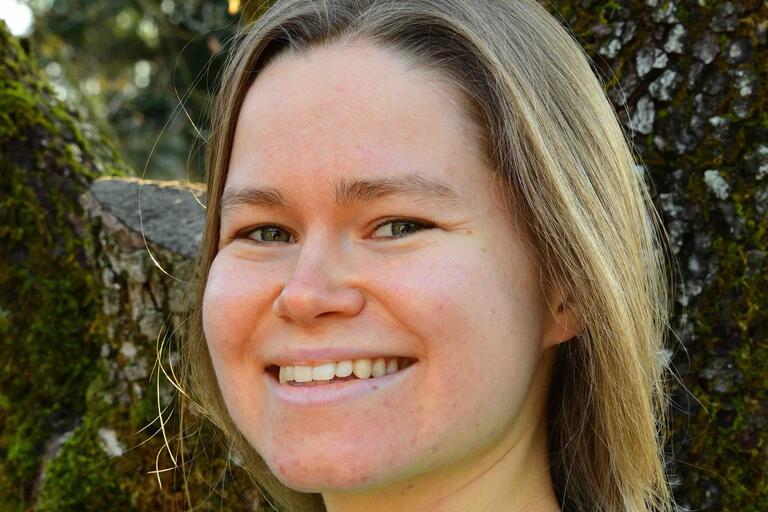
Vassilis Zikas is an Associate Professor at the School of Cybersecurity and Privacy and holds a courtesy appointment in the School of Computer Science at Georgia Tech. He previously held positions at Purdue University, the University of Edinburgh, and Rensselaer Polytechnic Institute (RPI). His research focuses on cryptography, blockchain technologies, cryptocurrencies, game theory, and distributed computing. He leads the Blockchain Lab at Georgia Tech and serves as Chief Scientist at Sunday Group, where he contributes to the Mobby blockchain architecture. His work is supported by the NSF, DoD, Swiss NSF, and industry partners like Sunday Group and Algorand Foundation. He has organized major conferences including PKC 2020 and has served on program committees for EUROCRYPT, CRYPTO, and TCC. He advises PhD students in cryptography and related fields and has mentored postdocs and master’s students. Zikas’ publications span topics like secure multi-party computation (MPC), blockchain security, and cryptographic protocol design. His recent work includes advancements in privacy-preserving protocols, adaptive security frameworks, and composability in blockchain systems. Notable awards include the 2023 Leadership Award from Purdue College of Science and an AnlytiXIN Fellowship. He actively contributes to both theoretical and applied aspects of cybersecurity and privacy through academic and industrial collaborations.
Ignacio Ojea Quintana serves as Assistant Professor at Ludwig Maximilian University of Munich's Faculty of Philosophy, Philosophy of Science and Religious Studies within the Chair of Philosophy of Science. He joined LMU in 2022 after a three-year research fellowship at the Australian National University's School of Philosophy. His academic foundation includes a PhD in Philosophy from Columbia University (2019), supervised by Philip Kitcher with focus on formal social epistemology, and prior Masters/BA degrees in Philosophical Logic from the University of Buenos Aires where he collaborated with the Buenos Aires Logic Group. Ojea Quintana's research employs formal methodologies to examine digital technologies' impact on knowledge organization across scientific and public spheres. His work intersects Social Epistemology , Philosophy of Data Science , and Autonomous Systems Ethics , with significant contributions to social media network analysis of controversial movements. Current projects analyze Twitter dynamics in racial justice movements, ethical constraints in AI decision systems, and consensus formation in scientific modeling. His 2021-2022 publications reveal an interdisciplinary trajectory bridging philosophy, computer science, and social sciences. Key trends include computational analysis of online discourse, formal modeling of group rationality under uncertainty, and ethical frameworks for AI systems. Works appear in high-impact venues including Nature Humanities and Social Sciences Communications and the AAAI/ACM Conference on AI, Ethics, and Society. Ojea Quintana maintains active collaborations with the "Humanising Machine Intelligence" initiative (formerly at ANU) and the Buenos Aires Logic Group. His research program demonstrates sustained engagement with technology's societal implications through formal modeling approaches and empirical digital trace analysis.
James Glass is a Senior Research Scientist at the Massachusetts Institute of Technology (MIT) and heads the Spoken Language Systems Group within MIT's Computer Science and Artificial Intelligence Laboratory (CSAIL). He is also affiliated with the Harvard-MIT Division of Health Sciences and Technology. His research spans automatic speech recognition, multimodal learning, and spoken language understanding, with applications in healthcare and video analysis. Education: SM and PhD in Electrical Engineering and Computer Science from MIT His work focuses on paralinguistic speech analysis, health markers in speech, and the intersection of speech and natural language processing. Recent trends emphasize audio-visual alignment, recursive reasoning, and AI applications in cognitive disorder diagnosis. Scientific awards include IEEE Fellow, ISCA Fellow, and Associate Editor for IEEE Transactions on Pattern Analysis and Machine Intelligence. His group explores unsupervised learning, speaker verification, and social text analysis. James leads the Spoken Language Systems Group at CSAIL, collaborating with institutions like IBM and Harvard-MIT Division of Health Sciences and Technology. His research integrates vision-language models, neural audio codecs, and self-supervised frameworks.
Prof. Dr. Oliver Reiser is a full Professor at the Institute of Organic Chemistry within the Faculty of Chemistry and Pharmacy at the University of Regensburg. His research group focuses on cutting-edge developments in organic synthesis, particularly in the areas of photocatalysis and visible light chemistry. He leads the Collaborative Research Centre CRC 325 on "Assembly Controlled Chemical Photocatalysis," which aims to develop new frontiers in photocatalysis for organic synthesis through designed control of catalyst-substrate interactions. University of Hamburg (PhD, 1989) IBM Research Center (Postdoc) Harvard University (Postdoc) University of Göttingen (Habilitation, 1995) Prof. Reiser's research spans multiple interconnected fields with a strong emphasis on sustainable chemistry. His group extensively utilizes modern techniques for organic synthesis including flow reactors, microwaves, and high-pressure systems. The primary research thrusts include catalysis (both metal and organocatalysts), unnatural amino acids and peptide foldamers, and natural product synthesis. His work on visible light photocatalysis has been particularly influential, with numerous publications in high-impact journals like Angewandte Chemie and Nature Catalysis. The group's research integrates experimental, spectroscopic, and computational techniques to analyze catalyst-substrate interactions for more rational design of photochemical reactions. Analysis of Prof. Reiser's recent publications (2023-2025) reveals a strong focus on copper-based photocatalysis, sustainable chemistry using earth-abundant metals, and innovative approaches to heterocycle synthesis. His work demonstrates a clear trend toward developing more efficient and environmentally friendly catalytic processes, with particular emphasis on visible light activation, catalyst immobilization for recyclability, and applications in medicinal chemistry. The research spans from fundamental mechanistic studies to practical applications in synthesis. German Academic Scholarship Foundation Minerva Foundation NATO Fellowship German Research Foundation Support Karl Winnacker Foundation Prof. Reiser has supervised numerous doctoral students, with recent PhD theses focusing on copper photoredox catalysis, magnetic nanoparticle-supported catalysts, and the synthesis of bioactive compounds. His research is supported by multiple collaborative projects, including the Collaborative Research Centre CRC 325, and involves extensive national and international collaborations with institutions such as the University of Kansas, the National Institute of Chemistry in Pune, the Institut Chimie de Coordination du CNRS in Toulouse, and the University of Zaragoza. The group maintains strong ties with pharmaceutical research through collaborations with Prof. A. Beck-Sickinger in Leipzig on neuropeptide ligands. The research group operates well-equipped laboratories with capabilities for advanced organic synthesis and characterization. They have developed specialized expertise in flow chemistry, high-pressure techniques, and magnetic nanoparticle-based catalyst systems. The CRC 325 initiative has provided significant infrastructure for collaborative research in photocatalysis, bringing together multiple research groups with complementary expertise in organic synthesis, spectroscopy, and computational chemistry.
Susan J. Simkins is a Professor of Psychology at The Pennsylvania State University, where she serves as Lead of the CTSI-Team Science Core and is based in Moore Building at University Park. Her contact details include email sxm40@psu.edu and phone (814) 863-7387. Education Ph.D., Ohio State University, 1996 Research Interests Dr. Simkins' research centers on effective teamwork and performance through three interconnected streams: team composition/diversity (examining demographic, cognitive, and personality-based diversity within contingency frameworks), team cognition/mental models (focusing on shared understanding of tasks and teamwork dynamics), and temporal integration in teams (investigating time-based diversity, temporal leadership, and pacing styles). Her work emphasizes individual differences, cognitive processes, and temporal dynamics as critical determinants of team effectiveness in organizational contexts. Publication Trends Her 2013-2017 publications reveal a strong focus on temporal dimensions of teamwork, including polychronicity diversity, temporal conflict in specialized teams (e.g., culinary environments), and time-sensitive mental models. Key methodological approaches involve multilevel analysis and contingency frameworks, with applications spanning leadership theory, decision-making diversity, and climate interactions. Work appears consistently in top organizational psychology journals like Journal of Applied Psychology and Organizational Behavior and Human Decision Processes. Scientific Awards No scientific awards were documented in the provided text. Advising and Grants While the text confirms her faculty role and research leadership, specific details about graduate student advising, grant funding, or sponsored projects were not included in the source material. Labs and Teams Dr. Simkins leads the CTSI-Team Science Core, an initiative dedicated to advancing methodologies for studying team-based research structures and improving collaborative effectiveness in scientific and organizational settings.
Astrid Wagner is a Senior Scientist and Deputy Director at the Institute of Philosophy (IFS) of the Spanish National Research Council (CSIC) in Madrid. She holds a PhD in Philosophy from Technische Universität Berlin, recognized by the National University of Distance Education (UNED), and previously served as professor for 20 years at TU Berlin. Her research focuses on philosophy of culture, science epistemology, and digital society challenges. Key interests include philosophy of language, perception phenomenology, pragmatism, and ethical implications of digital transformation. Recent work examines uncertainty dynamics, trust frameworks, post-truth phenomena, infodemics, conspiracy theories, cognitive vulnerability, and digital citizenship. Wagner leads major research initiatives including the INconRES project on ethical-epistemological keys to digital social dynamics (2021-2025), the ORTEGA-CM interdisciplinary innovation consortium on José Ortega y Gasset's legacy (2024-2026), and previously directed the RESPONTRUST project combating COVID-19 disinformation (2021-2023). She co-leads the DESTERRA project analyzing disinformation's societal foundations (2022-2025) and participates in UCM's Rationality, Knowledge and Action research group. She serves on Spain's Committee of Experts for National Security against disinformation, advises the Congressional Science Office, and holds editorial positions at the Journal of Ortega Studies. Wagner contributes to GENET Association's Gender Studies Network and juries for the Princess of Asturias Award and Javier Muguerza Philosophy Prize.
Prof. Igors Gorbovickis is an Associate Professor of Mathematics at the Department of Mathematics, School of Computer Science and Engineering, Constructor University (formerly Jacobs University Bremen). His research focuses on complex dynamical systems, including topics such as renormalization theory, bifurcation analysis, Julia sets, and applications to mathematical physics. He also contributes to discrete geometry, particularly exploring conjectures like the Kneser-Poulsen problem. His work bridges pure mathematics with interdisciplinary applications, emphasizing rigorous analysis of nonlinear systems and geometric configurations. Key areas of investigation include critical point accumulations, Hausdorff dimension estimates, and equidistribution phenomena in parameter spaces. Recent publications highlight advancements in understanding chaotic systems, circle maps, and the interplay between algebraic structures and dynamical behavior. Prof. Gorbovickis collaborates internationally, with co-authored papers appearing in journals like Advances in Mathematics , Ergodic Theory and Dynamical Systems , and Nonlinearity . His office is located at Research I, Room 128 on the Constructor University campus in Bremen, Germany.
Prof. Dr. Philipp Habegger is a faculty member at the University of Basel's Department of Mathematics and Computer Science . His research focuses on Number Theory , specifically Diophantine Geometry, heights on abelian varieties, unlikely intersections, and algebraic number theory. He leads the Research Group in Number Theory and participates in collaborative seminars like the Number Theory Web Seminar with Mike Bennett and Alina Ostafe. Contact : philipp.habegger@unibas.ch | +41 61 207 26 98 Office : Spiegelgasse 1, 4051 Basel, Switzerland Academic Role : Research and teaching in number theory and Diophantine problems Research Overview Habegger's work addresses fundamental questions about the distribution of special points on algebraic varieties and the arithmetic properties of polynomial dynamics. His recent publications analyze degeneracy loci in abelian families, canonical heights, and the geometric Bogomolov conjecture. The 15 most recent articles reflect a focus on number theory, algebraic geometry, and effective bounds in Diophantine problems. Scientific Collaborations Collaborated with Ziyang Gao, Harry Schmidt, Umberto Zannier, and others Contributed to journals: Annals of Mathematics , Forum of Mathematics, Sigma , Compositio Mathematica Key themes: Abelian varieties , Heights , Unlikely intersections , CM jacobians
Benjamin Born serves as Professor of Macroeconomics at Frankfurt School of Finance & Management and Research Director at the ifo Institute. He is a Research Fellow at CEPR and CESifo, advises the European Commission's DG ECFIN, serves on the European Parliament's Expert Group on Monetary Policy, and sits on the CEPR–EABCN Euro Area Business Cycle Dating Committee. Starting in September 2025, he will join the University of Bonn as Professor of Macroeconomics. Education PhD in Economics, 2011, University of Bonn, Germany MSc in Econometrics and Economics, 2007, University of York, UK BA/MA in Economics, 2006, University of Siegen, Germany Professor Born's research focuses on business cycles, fiscal and monetary policy, heterogeneous agent models, and empirical methods in macroeconomics. His work bridges theoretical modeling with empirical analysis, often using innovative data sources including firm surveys and social media data. He has made significant contributions to understanding how monetary policy affects different segments of the economy, how fiscal policy transmits through various channels, and how firms form expectations about the future. His recent publications reveal a strong trend toward analyzing heterogeneous effects in macroeconomics, particularly examining how different groups (firms, workers, consumers) respond differently to economic shocks and policies. His work increasingly incorporates social media data and novel survey methodologies to capture real-time economic behavior. A significant portion of his research addresses policy responses to the COVID-19 pandemic, including fiscal stimulus packages and lockdown effects. Professor Born is actively involved in the academic community, serving on the editorial boards of the Journal of Monetary Economics and the European Economic Review. He regularly organizes major academic conferences including the BASEforHANK Winterschool and the ifo Conference on Macroeconomics and Survey Data. Teaching and Supervision Currently teaches Macroeconomics II (first-year Ph.D. course at BGSE) Has taught Macroeconomics and Econometrics at all levels Supervises theses in macroeconomics and applied econometrics
Professor Nick Chater is a leading figure in the field of Behavioural Science, affiliated with the University of Warwick at Warwick Business School since 2010. He has held previous chairs in psychology at Warwick and UCL. His research spans cognitive and social foundations of rationality, with applications to business and public policy, and he has authored over 200 papers and six books. He is a fellow of the British Academy, Cognitive Science Society, and Association for Psychological Science. His research interests include cognitive science, behavioral economics, decision making, and computational psychology, with a focus on reasoning, language, and mathematical modeling of mental processes. He has been recognized with prestigious awards such as the Spearman Medal, Experimental Psychology Society Prize, and the David E Rumelhart Prize for lifetime achievement in cognitive science. His work extends to practical applications through co-founding Decision Technology and advising the UK government's Climate Change Committee and the Behavioural Insight Team. Recent publications highlight his interdisciplinary approach, bridging economics, cognitive science, computational modeling, and behavioral public policy. Topics include thermal macroeconomic theory, Bayesian sampling, paradoxes in cognition, and language emergence via social interaction. These works emphasize probability judgments, moral cognition, and computational limitations in human inference. British Psychological Society's Spearman Medal (1996) Experimental Psychology Society Prize (1997) David E Rumelhart Prize (2023) PROSE Award (2019) Chater's academic contributions include collaborations with researchers like Adam N. Sanborn, Hossam Zeitoun, and Morten H. Christiansen, focusing on Bayesian inference, behavioral public policy, and cognitive modeling. He has also been a resident scientist on BBC Radio 4's The Human Zoo.
Prof. Dr. Andreas Butz is a Full Professor and Chair for Human-Computer Interaction at the Department for Informatics, Ludwig-Maximilians-Universität München (LMU Munich). He leads the Media Informatics Group, focusing on innovative interaction techniques and interfaces in immersive environments like VR/AR, automotive systems, and smart spaces. His research emphasizes perceptual user interfaces, social robotics, and designing systems that balance invisibility with transparency. Key research areas include: Virtual/Augmented Reality interfaces for productivity and social interaction AI-driven decision support in safety-critical domains (aviation, healthcare) Haptic and wearable interaction technologies Automotive UI design for driver assistance systems Principles of explainable AI and human-AI collaboration His work bridges theory and practice through projects like: VR-based movement training systems AI trust calibration mechanisms Multi-modal interaction frameworks for automotive environments Systems for analyzing long-term music listening behavior Recent articles explore topics ranging from AI support in pilot decision-making to haptic wearables and creative writing interfaces. His team collaborates with industry partners on electric vehicle information systems and in-car interaction challenges.
Simon Reginald Barker is a Lecturer in Philosophy at the University of Tartu's Institute of Philosophy and Semiotics within the Faculty of Arts and Humanities. He has held visiting and adjunct roles at institutions including the University of Sheffield, Tallinn University, and the University of Iceland. His academic background includes a PhD in Philosophy from the University of Sheffield (2020), supervised by Miranda Fricker and others, focusing on disagreement and self-trust, and a PhD in Classics from Royal Holloway, University of London (2008), examining Stoic and Epicurean ethics. His research interests span epistemology, ethics, metaphysics, and the intersection of mental health with philosophical inquiry. Notable work includes exploring epistemic self-trust in contexts of bipolar disorder and analyzing epistemic norms in deep disagreement scenarios. He has contributed to journals like Synthese and Episteme , and his interdisciplinary work includes studies on cultural practices like breakdancing. Barker's academic trajectory reflects a commitment to bridging theoretical philosophy with applied ethical and social questions. His recent publications highlight the epistemic dimensions of mental health crises in academia and the philosophical implications of conspiracy theories.
Hannah K. Larson is an Assistant Professor in the Department of Mathematics at the University of California, Berkeley. She is also a Clay Research Fellow (2022-2027) and recipient of the 2024 Maryam Mirzakhani New Frontiers Prize. University: University of California, Berkeley Academic Rank: Assistant Professor Clay Research Fellow: 2022-2027 Educational Background: PhD in Mathematics from Stanford University (2022), advised by Ravi Vakil Research Interests focus on algebraic geometry and intersection theory , particularly moduli spaces of curves, tautological rings, and Chow rings. Her work investigates cohomological structures of moduli spaces and extends Brill-Noether theory to special curve classes. Publications trend emphasizes moduli spaces , Chow rings , and tautological structures across 15 recent articles. Collaborators include Samir Canning, Sam Payne, and Ravi Vakil. Scientific Awards: 2024 Maryam Mirzakhani New Frontiers Prize Hertz Thesis Prize (2022) Advising and Grants: She has no listed advisees but collaborates extensively. The Clay Research Fellowship (2022-2027) supports her research. Labs and Teams: She participates in the Berkeley mathematics community and collaborates with institutions like Harvard Society of Fellows and ETH Zürich researchers.
Jiang Wang is the Mizuho Financial Group Professor at the MIT Sloan School of Management, where he has been a faculty member since 1990, progressing from Assistant Professor to his current named professorship. He holds appointments in the Finance department and maintains an active research program in financial economics. Massachusetts Institute of Technology, Sloan School of Management (2005-present) MIT Sloan School of Management: Assistant Professor (1990-1994), Associate Professor (1994-1998), Professor (1998-1999), NTU Professor (1999-2005) Wang's research focuses on financial economics, asset pricing, market liquidity, trading volume, and financial market microstructure , with significant contributions to understanding information dynamics in markets. His work bridges theoretical models with empirical analysis, particularly in Chinese capital markets. Wang has developed influential theories on liquidity, trading volume, and market efficiency that have shaped modern financial economics. His recent publications demonstrate continued scholarly productivity, with research spanning market uncertainty, circuit breakers, repo markets, and Chinese financial markets. Wang's work integrates theoretical modeling with empirical validation, maintaining relevance to both academic discourse and practical market concerns. China Economics Prizes (2018) Smith Breeden Prize (2007, 2006) New York Stock Exchange Award FAME Research Prize (2004) Trefftz Award, Western Finance Association (1990) Wang has advised numerous doctoral students and supervised significant research projects, though specific student names aren't listed in the available materials. His extensive grant history includes multiple NSF awards and industry-sponsored research. Wang has held leadership positions including President of the Western Finance Association (2017-2018) and Director of the China Center for Financial Research at Tsinghua University (2002-2014). His academic service includes editorial roles for major finance journals and advisory positions with institutions including the Federal Reserve Bank of New York, Nasdaq Stock Market, and China Securities Regulatory Commission.
Harry R. Lloyd is an Assistant Professor of Philosophy at the University of North Carolina at Chapel Hill, serving as Core Faculty for the PPE Program and Research Affiliate at the Center for AI Safety. He joined UNC Chapel Hill in Fall 2025 after completing his PhD at Yale University, where his dissertation examined moral uncertainty and bargaining under Shelly Kagan. His academic foundation includes a Ph.D. in Philosophy from Yale University (2020-2025) and a first-class B.A. in Philosophy, Politics, and Economics from the University of Oxford's Lady Margaret Hall (2016-2019), where he graduated top of his cohort and won multiple prizes including the Hicks/Webb Medley Prize and Uehiro Essay Prize. He attended Monmouth Comprehensive School (2009-2016), becoming the first comprehensive school student to win Trinity College Cambridge's Philosophy Essay Prize. Lloyd's research integrates Ethics, Political Philosophy, and Philosophy of AI through innovative frameworks for moral uncertainty and bargaining theory. His work bridges abstract theory with urgent real-world applications in AI alignment, distributive justice, and urban policy. He critically examines how normative disagreement should be resolved in AI systems, challenges conventional views on gentrification's moral dimensions, and develops resource-rational approaches to contractualism in animal ethics and intergenerational justice. His publication trajectory reveals a cohesive intellectual project: advancing bargaining-theoretic solutions to moral uncertainty while applying these frameworks across AI safety, political philosophy, and bioethics. Recent work in Philosophical Studies and Ergo establishes novel connections between moral uncertainty and collective decision-making, while his Journal of Urban Affairs article redefines gentrification's ethical analysis beyond displacement metrics. Awarded significant fellowships and prizes including the Rocky Mountain Ethics Congress Young Ethicist Prize (2024) and Global Priorities Institute Essay Prize (2021), his honors demonstrate impact across multiple domains: Institute for Humane Studies Junior Fellowship (2025) Forethought Foundation Global Priorities Fellowship (2022-2024) Rocky Mountain Ethics Congress Young Ethicist Prize (2024) Global Priorities Institute Early Career Conference Programme (2022) Research funding includes the Global Priorities Fellowship (2022-2024) and Institute for Humane Studies Junior Fellowship (2025). He actively shapes academic discourse through peer review for journals including Philosophical Studies and Journal of Applied Philosophy, and co-organizes the Yale Moral Philosophy Working Group. Though newly appointed, his teaching portfolio spans Environmental Ethics, PPE Capstone, and Philosophy of Technology, building on Yale teaching experience where he served as primary instructor for Philosophy and Technology. Lloyd maintains active research affiliations with the Center for AI Safety and previously contributed as a Resident Fellow at Yale's Information Society Project (2023-2025). His collaborative networks extend to the Global Priorities Institute at Oxford and Happier Lives Institute, driving interdisciplinary work at the AI-society interface through regular presentations at PPE Society meetings and ethics conferences.