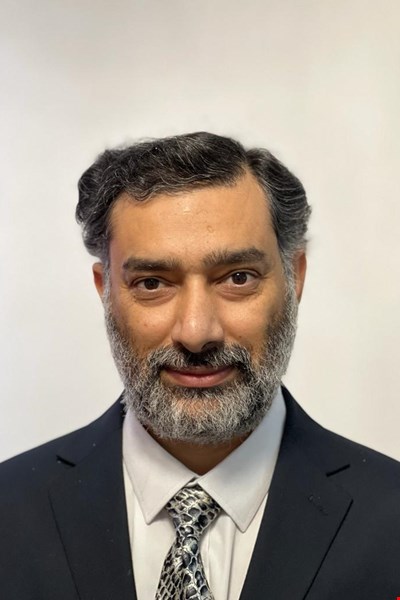
Dr. Matloob Khushi serves as a Senior Lecturer in Computer Science at Brunel University London's College of Engineering, Design and Physical Sciences. With over 25 years of combined academic and industry experience, his work bridges theoretical AI advancements with practical applications in finance, healthcare, and public health domains. His research has established significant collaborations with international banks, healthcare institutions, and technology startups. Dr. Khushi earned his PhD in AI and Data Science from the University of Sydney, developing novel algorithms for genomic data analysis. His postdoctoral research at the Children's Medical Research Institute (2014-2017) pioneered AI-based diagnostic tools for medical condition detection. More recently, he developed bioinformatics tools for environmental assessment under a UKRI NEC grant. Research Focus FinTech Innovation : Creator of the SS Ratio (incorporating volatility and drawdown sensitivities), advanced portfolio optimization models, and synthetic data generation techniques for fraud detection and credit risk assessment Bioinformatics Leadership : Developer of AI tools for genomic analysis and early cancer detection, featured in SBS News and The Daily Telegraph Public Health NLP : Architect of systems for vaccine misinformation detection, mental health monitoring, and health surveillance on social media His publication portfolio shows consistent growth from foundational bioinformatics work to current multimodal AI applications, with increasing interdisciplinary collaboration across finance and healthcare sectors. Awards and Recognition Ranked among Stanford/Elsevier's top 2% of global AI scientists Recipient of Best Paper Awards from IEEE Transactions on Computational Social Systems and PeerJ Media recognition for cancer detection research by major news outlets Mentorship and Teaching Dr. Khushi has supervised six PhD candidates to completion and over 100 postgraduate dissertations. He teaches CS3002 Artificial Intelligence and mentors students in Final Year Projects. His supervision focuses on Deep Learning/NLP for FinTech prediction and Public Health Surveillance applications, emphasizing practical implementation of theoretical concepts.
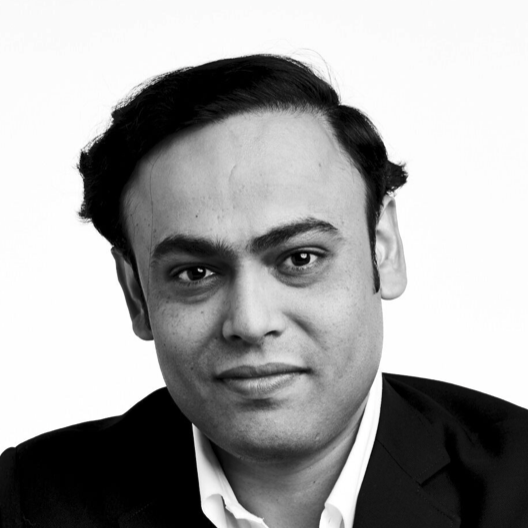
Saurabh Amin is a Professor in the Department of Civil and Environmental Engineering at the Massachusetts Institute of Technology (MIT), where he also serves as the Edmund K. Turner Professor and Undergraduate Officer. He is a Principal Investigator at the Laboratory of Information and Decision Systems and holds affiliations with the Operations Research Center and the Center for Computational Science and Engineering. His educational background includes: B.Tech. 2002, Indian Institute of Technology (IIT) Roorkee M.S. 2004, University of Texas (UT) Austin Ph.D. 2011, University of California (UC) Berkeley Saurabh Amin's research focuses on the design and control of infrastructure systems using game theory and optimization in networks. His work spans three main areas: resilient network control, information systems and incentive design, and optimal resource allocation in large-scale infrastructure systems. By concentrating on critical infrastructure domains including highway transportation, electric power distribution, and urban water networks, his research develops innovative theory and tools to enhance system performance against both stochastic and adversarial disruptions. His approach involves modeling cyber-physical interactions in infrastructures to assess vulnerabilities, developing detection and response tools for failures at various scales, and designing economic incentive schemes that improve aggregate public good while accounting for dependencies and private information among strategic entities. Amin's work bridges mathematical systems theory with practical civil engineering applications, creating a rigorous theoretical foundation for infrastructure resilience that addresses diverse failure mechanisms from natural disasters to deliberate malicious actions. His recent publications demonstrate a strong focus on decarbonization of energy systems, resilient infrastructure planning under climate uncertainty, optimization methods for complex networked systems, and game-theoretic approaches to sustainable infrastructure management. His work increasingly integrates artificial intelligence and machine learning techniques with traditional control theory to address contemporary challenges in infrastructure resilience and sustainability. The research shows a clear trajectory toward addressing climate change impacts on infrastructure systems while maintaining economic efficiency and operational reliability. Professor Amin has received numerous prestigious awards and honors: Common Ground Excellence in Teaching Award, 2025 HSCC Test-of-Time Award, 2024 MIT CEE, Distinguished Service and Leadership Award, 2023 Samuel M. Seegal Prize (SoE) – inspiring students in pursuing and achieving excellence, 2022 Earll M. Murman for Excellence in Undergraduate Advising, 2022 C3.ai Digital Transformation Institute Research Award, 2020 MIT, Ole Madsen Mentoring Award, 2020 MIT, Energy Initiative Research Award, 2020 National Academy of Engineering, China-America Frontiers of Engineering Symposium speaker, 2019 MIT, Robert N. Noyce Career Development Professor, 2015-2018 Google Faculty Research Award, 2015 National Science Foundation CAREER Award, 2015 Siebel Energy Institute Research Award, 2015 MIT, Solomon Buchsbaum AT&T Research Fund Award, 2012 Professor Amin has been actively involved in significant research projects including the C3.ai DTI project on Causal Reasoning for Real-Time Attack Identification in Cyber-Physical Systems and another on Learning in Routing Games for Sustainable Electromobility. He serves as the chief scientist on multi-institutional NSF grants, including the $9 million Foundations of Resilient Cyber-Physical Systems (CPS) project. His teaching portfolio includes courses such as 1.008 Engineering for a Sustainable World, 1.104 Sensing and Intelligent Systems, 1.020 Engineering Sustainability: Analysis and Design, and 1.208 Resilient Networks. As Undergraduate Officer, he plays a key role in shaping the educational experience for civil and environmental engineering students at MIT. Professor Amin leads the Resilient Infrastructure Networks Lab at MIT, where his team develops theoretical foundations and practical tools for infrastructure resilience. The lab focuses on the intersection of control theory, game theory, and optimization applied to cyber-physical infrastructure systems. Current research directions include pandemic-resilient urban mobility and hurricane-resilient smart grid operations, reflecting the lab's commitment to addressing pressing societal challenges through rigorous systems engineering approaches.
Dhruv Shah is an Incoming Assistant Professor of Electrical and Computer Engineering at Princeton University starting January 2026 and currently serves as a Senior Research Scientist at Google DeepMind. He is also an Associated Faculty member in Princeton's Center for Statistics and Machine Learning, focusing on the convergence of machine learning and robotics for real-world deployment. His academic credentials include a Ph.D. and M.S. in Electrical Engineering and Computer Sciences from the University of California, Berkeley (2024) and a B.Tech. (Honors) in Computer Science and Engineering from the Indian Institute of Technology, Bombay (2019). Shah's research pioneers foundation models for robotics, emphasizing large-scale robot learning, out-of-distribution generalization, and long-horizon reasoning. His group adopts a full-stack methodology spanning algorithmic innovation to system design, drawing from cognitive science to develop physical AI systems at the perception-learning-control interface. Key focus areas include reinforcement learning, human-robot interaction, and continual learning for challenging environments. Analysis of his 15 most recent publications reveals dominant trends in foundation models for visual navigation, language-conditioned policies, and multi-agent systems. His work increasingly integrates multimodal inputs (vision, language) while addressing generalization gaps in real-world settings, with strong emphasis on efficient data curation and scalable robot learning frameworks. His accolades feature the Microsoft Future Leaders in Robotics & AI Fellowship (2024), two IEEE ICRA Best Conference Paper Awards (2024), multiple ICRA finalist awards across cognitive robotics and manipulation categories, and the Berkeley Fellowship (2019-2024). Shah will recruit PhD students for Princeton's upcoming admissions cycle, establishing a research group dedicated to full-stack robotics development. While specific grant details aren't provided, his trajectory indicates significant funding for AI-robotics convergence projects, particularly in foundation model development and real-world deployment challenges. His laboratory at Princeton will integrate algorithmic innovation with system design, focusing on physical AI systems that bridge perception, learning, and control while maintaining strong ties to cognitive science principles for human-aligned robotic intelligence.
Zsolt Kira serves as an Assistant Professor in the School of Interactive Computing at Georgia Institute of Technology's College of Computing, with additional affiliations at the Georgia Tech Research Institute and as Associate Director of ML@GT. He leads the Robotics Perception and Learning (RIPL) Lab, driving research at the intersection of machine learning and robotics. Dr. Kira earned his Ph.D. in 2010 under Professor Ron Arkin, establishing foundational expertise in robotics and AI before transitioning to his current academic role after industry experience at SRI International Sarnoff. His research pioneers beyond supervised learning through unsupervised, semi-supervised, self-supervised, and continual/lifelong learning frameworks, while advancing distributed perception via multi-modal fusion and cross-robot information integration. This dual focus addresses core challenges in robotic autonomy and sensor processing. Analysis of his 15 most recent publications reveals dominant trends in embodied AI systems, robust foundation model adaptation, and multimodal learning architectures. Key themes include neural radiance field applications, reinforcement learning for locomotion, and novel benchmarks for memory evaluation in agents. While specific advisees and grants aren't documented in the source material, his RIPL Lab leadership implies active graduate mentorship and research funding acquisition. The lab's work directly enables next-generation robotic systems through algorithmic innovation in perception and learning. The RIPL Lab operates as a hub for developing machine learning techniques that solve difficult perception problems in robotics, with particular emphasis on unsupervised learning paradigms and distributed multi-robot systems that push the boundaries of autonomous operation.
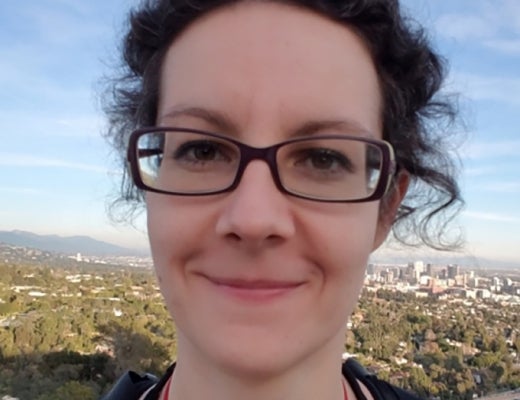
Soojin Oh Park is an Assistant Professor in the Learning Sciences & Human Development department at the University of Washington College of Education. Her research focuses on equity-driven improvements in early childhood education, family literacy engagement with Dual Language Learners (DLLs), and culturally grounded parenting practices. Ed.D., Human Development and Education, Harvard University M.Ed., Educational Policy and Analysis, Harvard University M.S.Ed., Learning, Teaching, and Literacies, University of Pennsylvania B.A., Psychology, University of Pennsylvania Park’s interdisciplinary work combines qualitative, quantitative, and mixed-methods approaches to address gaps in early childhood education (ECE) and parenting, emphasizing: Family literacy engagement for DLLs’ language and literacy development Culturally sustaining pedagogy to amplify family strengths Equity-oriented reforms in ECE systems and policies Her publications span topics like heritage language maintenance, culturally responsive assessment, and the impact of immigration policy on child development, often utilizing advanced methodologies such as machine learning. Awards include the SRCD Federal Policy Fellowship and Best Article of the Year from the Journal of School Psychology. Outstanding Research Paper Award (Korean American Educational Research Association) Distinguished Paper Award (Washington Educational Research Association) Best Article of the Year Award (Journal of School Psychology) Emerging Scholar Fellowship (National Research Center on Hispanic Children and Families) Park leads projects such as FAMILY (Fathers And Mothers Investing in Learning of Young Children) and BASECAMP (Bolstering Asian Students in Early Childhood by Advancing Multilingual Pedagogies). She teaches courses on language and literacy learning, bilingual development, and parenting impacts on early education.
Dr. Hilde Kuehne is a Professor at the University of Tuebingen and a key researcher at the Tuebingen AI Center. She holds affiliations with MIT-IBM Watson AI Lab and Goethe University Frankfurt, with a focus on computer vision, multimodal learning, and explainable AI. Her work bridges vision-language models, audio-visual alignment, and self-supervised methods. Co-organizer of the New Frontiers in Associative Memories workshop @ ICLR 2025 Member of the Scientific Advisory Board of the Carl-Zeiss-Foundation Contributor to CVPR 2025's UTD dataset for unbiased video benchmarks Her research addresses critical challenges in: Explainability for Vision Transformers (LeGrad) Fine-grained audio-visual alignment (CAV-MAE Sync) Zero-shot visual recognition automation (Meta-Prompting) Spatio-temporal grounding without annotations Recent collaborative work spans 15+ publications across CVPR, NeurIPS, ICCV, and ICLR, with emphasis on multimodal foundation models, dataset bias mitigation, and differentiable logic networks. She actively contributes to workshop organization and peer review as evidenced by her involvement in CVPR 2025 and ICLR 2025 program committees.
Andrew McCallum is a Distinguished Professor and Director of the Center for Data Science at the University of Massachusetts Amherst. He holds a PhD in Computer Science from the University of Rochester (1995) and a BS from Dartmouth College (1989). His research focuses on machine learning, natural language processing, and information extraction, with applications to scientific literature and knowledge base construction. He has pioneered work on conditional random fields and probabilistic databases, and led the development of systems like Rexa, an advanced research paper search engine. Affiliations: Center for Data Science, Center for Intelligent Information Retrieval, Computational Social Science Institute Key Projects: OpenReview.net, Unified Information Extraction, Automated Knowledge Base Construction His work emphasizes extracting actionable knowledge from unstructured text, with contributions to social network analysis, entity resolution, and semi-supervised learning. McCallum has over 300 publications and has received awards including the NSF ITR Grant, IBM Faculty Partnership Awards, and ACM/AAAI Fellowships. He has advised numerous students and served as ICML General Chair (2012). Recent Research Trends: Probabilistic box embeddings, case-based reasoning for knowledge bases, scalable clustering algorithms, and applications in biomedical informatics.
Aylin Caliskan is an Assistant Professor at The Information School at the University of Washington, with a courtesy appointment at the Paul G. Allen School of Computer Science & Engineering. She co-directs the Tech Policy Lab and is a faculty affiliate at the UW NLP RAISE and VSD Lab. Her research focuses on AI ethics, bias detection, and human-centered AI, with a particular emphasis on how biases from human society propagate into machine learning models. University of Washington – Assistant Professor Tech Policy Lab – Co-Director UW NLP RAISE – Faculty Affiliate VSD Lab – Faculty Affiliate Brookings Institution – Nonresident Fellow in Governance Her research explores the mechanisms by which human society’s biases are encoded into AI systems, particularly in language and vision-language models. She develops evaluation techniques, transparency methods, and bias mitigation strategies to address these issues. Her work has been published in top-tier venues such as Science, PNAS, ACL, EMNLP, AAAI, and ACM FAccT. She has also advised and collaborated with numerous students and researchers, including Kyra Wilson, Mattea Sim, Gandalf Nicolas, and Kshitish Ghate. Her recent and accepted publications focus on generative AI’s societal impacts, including bias amplification in AI models, gender and race bias in resume screening, and the propagation of stereotypes through multimodal systems. These studies often analyze how biases encoded in AI can influence human decision-making and societal norms. Scientific Awards: NSF CAREER Award (2024) 100 Brilliant Women in AI Ethics (2023) IJCAI Early Career Spotlight (2023) She teaches courses on Generative AI and has delivered talks at institutions such as Stanford, NYU, and Howard University. Her work also intersects with law and policy, as seen in her Brookings Institution publications and service.
Kayvon Fatahalian is an Associate Professor in the Department of Computer Science at Stanford University. His research focuses on real-time graphics, high-efficiency simulation engines for entertainment and AI, and large-scale image/video analysis platforms. He explores intersections of computer graphics, machine learning, and high-performance computing to advance systems for interactive applications and AI-driven tasks. His work includes innovations in rendering pipelines, embodied AI simulations, and generative models for 3D content creation. Recent projects address challenges in multi-agent systems, motion synthesis, and scalable rendering architectures. Fatahalian’s contributions span technical systems, algorithmic frameworks, and foundational research in graphics and AI. Notable areas of exploration include: Real-time rendering optimizations for complex scenes AI-driven motion and style generation from sparse inputs Efficient simulation frameworks for deep reinforcement learning Weak supervision techniques for rare category detection His publications emphasize practical systems with theoretical grounding, often bridging hardware/software co-design principles with modern AI methodologies. Current work includes developing agile hardware accelerators and scalable architectures for next-generation interactive systems.
Dr. Jerry K. Hoepner serves as Professor and Assistant Chair in the Department of Communication Sciences and Disorders at the University of Wisconsin - Eau Claire's College of Health and Human Sciences, where he has taught full-time since 2007 after beginning part-time in 2003. His roles include Student Engagement Coordinator and CSD Ambassadors Advisor, with clinical supervision remaining integral to his work. His educational foundation includes a Ph.D. in Communication Sciences and Disorders from the University of Wisconsin - Madison, an M.S. in Communication Sciences and Disorders from UWEC, a B.S. in Psychology from Minnesota State University - Mankato, and an A.A. from Bethany Lutheran College. He holds ASHA Certification (CCC-SLP) and Wisconsin State Licensure. Dr. Hoepner's research pioneers video self-modeling interventions, counseling methodologies, and healthcare perceptions for individuals with acquired cognitive-communication disorders, particularly traumatic brain injury (TBI) and aphasia. His innovative work encompasses the Chippewa Valley Aphasia Camp, Thursday Night Poets collective, and TBIconneCT/FUNconneCT social communication interventions. As co-founder of ASHA SIG20 for Counseling in CSD and the UWEC CSD SoTL Lab, he bridges scholarship with clinical practice while editing Teaching and Learning in Communication Sciences and Disorders . His publication trajectory reveals intensifying focus on qualitative analysis of patient experiences, project-based rehabilitation techniques, and counseling integration within SLP practice, with recent work examining poetry interventions, telehealth delivery, and sociolinguistic assessment frameworks. His distinguished recognition includes: ASHA Fellow designation (2021) UW System Regent's Teaching Excellence Award (2020) CAPCSD Distinguished Contribution Award (2023) Aphasia Access President's Award (2023) Multiple mentoring and scholarly honors Dr. Hoepner has mentored countless undergraduate research projects and graduate committees while securing federal TBI grants. His clinical leadership extends through Aphasia Access podcast contributions and statewide intervention programs that transform rehabilitation paradigms. His laboratory initiatives—including the SoTL Lab and project-based brain injury groups—embody his commitment to experiential learning, where students engage in camp immersion, clinical apprenticeships, and community-driven research that reshapes neurorehabilitation practices.
Adriana I. Kovashka is an Associate Professor in the Department of Computer Science at the University of Pittsburgh's School of Computing and Information. She serves as Chair of the Department of Computer Science. Her research focuses on computer vision, machine learning, and their intersections with human-machine communication and visual rhetoric analysis. Kovashka earned her BA in Computer Science and Media Studies from Pomona College (2008) and her PhD in Computer Science from the University of Texas at Austin (2014). She joined Pitt in 2015. Her work emphasizes improving image retrieval systems through semantic attributes, human-in-the-loop feedback, and crowd-sourced data. Notable projects include analyzing advertisements' persuasive strategies, developing object detection models resilient to domain shifts, and exploring multimodal learning with linguistic and visual inputs. She has secured significant grants, including NSF awards for geographic diversity in object detection (2023), CAREER funding for weak supervision methods (2021), and multiple Google Faculty Research Awards. Kovashka advises PhD students on topics ranging from multimodal intent modeling to domain generalization. She has organized workshops on advertising understanding and subjective attributes in vision conferences. Her lab's datasets, such as the 64,832-image ad repository and video ad collections, are widely used in vision research. Recent efforts include quantifying perceptual diversity in multilingual systems and mitigating bias in CNNs through shape regularization. Awards and recognitions include the NSF CAREER Award, Pitt's CRDF grants, and leadership roles in CVPR and WACV conferences. Her research bridges technical innovation with societal impact, addressing challenges in visual communication, ethical AI, and educational robotics.
Tariq Iqbal is an Assistant Professor at the University of Virginia , with joint appointments in the Department of Systems and Information Engineering and Department of Computer Science . He leads the Collaborative Robotics Lab (CRL) , specializing in human-robot teams and embodied AI . Previously, he was a Postdoctoral Associate at MIT's CSAIL , advised by Prof. Julie Shah , and earned his Ph.D. in Computer Science from University of California San Diego (UCSD) under Prof. Laurel Riek . Ph.D. in Computer Science, University of California San Diego (2017) M.S. in Computer Science, University of Texas at El Paso (2012) B.S. in Computer Science and Engineering, Bangladesh University of Engineering and Technology (2007) His research lies at the intersection of artificial intelligence and robotics , focusing on human-robot collaboration in dynamic environments. Key areas include motion prediction , multimodal fusion , trust modeling , and collaborative learning . His work integrates cognitive science and deep learning to enhance robotic fluency in naturalistic settings. Recent publications (2023–2025) highlight advancements in human-robot team dynamics , multimodal dataset creation , and motion prediction algorithms . Notable works include Energy-Based Transformers for scalable AI, PoseTron for motion prediction, and Accessible Navigation Mapping for assistive robotics. These contributions span trust modeling , cloud robotic infrastructure , and safety in close-proximity collaboration . National Science Foundation (NSF) CAREER Award Air Force Office of Scientific Research (AFOSR) Young Investigator Program (YIP) Award Commonwealth Center for Advanced Manufacturing (CCAM) Innovation Award As faculty, he has secured grants from NSF and AFOSR , mentored research students, and taught courses like Stochastic Modeling I (SYS 6005) and Robots and Humans (SYS 4582/6465, ECE 4502/6465, CS 6465) . His prior industry roles at IBM Watson Lab and Grameenphone Ltd. inform his applied research in telecom infrastructure and cognitive robotics . He leads the Collaborative Robotics Lab (CRL) at UVA, which develops multimodal datasets , real-time coordination algorithms , and adaptive pathfinding systems . Current projects explore human motion prediction , team synchrony , and embodied question-answering , reflecting his commitment to advancing human-robot fluency and contextual AI .
Erik Velldal is a Professor in the Language Technology Group (LTG) at the Section for Machine Learning , Department of Informatics, University of Oslo . With over 25 years of experience in machine learning and natural language processing (NLP), he leads the SANT project focused on sentiment analysis and contributes to major research initiatives including MediaFutures , NorwAI , and Integreat (Norwegian Center for AI Research). His work bridges linguistic theory and computational methods, emphasizing semantic modeling and uncertainty detection. Research interests include sentiment analysis , language modeling , event extraction , and machine learning applications to NLP. Recent publications address cross-domain sentiment classification , generative event analysis , and multilingual model adaptation . He co-developed the Norwegian Review Corpus (NoReC) and Norwegian Anaphora Resolution Corpus (NARC) , foundational resources for Norwegian NLP. His projects often involve collaboration with international institutions, reflected in publications at venues like ACL, COLING, and EMNLP. Current efforts focus on entity-level sentiment analysis , diagnostic datasets for Norwegian , and evaluating compositional generalization in language models. No public record of scientific awards or part-time appointments exists.
Ke Xu is a Professor in the Department of Computer Science at Tsinghua University's School of Information Science and Technology. With extensive research contributions in network security, privacy-preserving technologies, and machine learning applications for networking, Professor Xu has established himself as a leading researcher in computer science. Professor Xu's research interests span network security, privacy-preserving technologies, machine learning for networking, federated learning, internet protocols, encrypted traffic analysis, blockchain applications, and AI in networking. His work bridges theoretical foundations with practical implementations, focusing on real-world security challenges and network optimization problems. He has developed novel frameworks for secure network operations, privacy-preserving data sharing, and efficient AI deployment in distributed environments. Professor Xu's publication record shows a clear trend toward integrating artificial intelligence with traditional networking challenges. His recent work explores federated learning security, encrypted traffic analysis using deep learning, and novel approaches to network security that leverage machine learning techniques. The interdisciplinary nature of his research spans computer networking, security, privacy, and artificial intelligence. Professor Xu has received recognition for his contributions to network security and privacy-preserving technologies through publications in top-tier venues including IEEE journals, ACM conferences, and security symposia. His work has appeared in IEEE Transactions on Dependable and Secure Computing, IEEE/ACM Transactions on Networking, and security conferences like CCS and NDSS. Professor Xu actively collaborates with researchers across institutions, supervising students and junior researchers in exploring cutting-edge problems in network security and AI. His research has been supported by significant grants focusing on network security, privacy, and intelligent networking infrastructure. He leads projects that address fundamental challenges in secure communication, privacy-preserving data analysis, and intelligent network management. Professor Xu is involved with research laboratories focusing on network security and intelligent systems at Tsinghua University. His team works on developing practical security solutions, privacy frameworks, and AI-enhanced networking protocols that address real-world challenges in today's increasingly connected world.
Petteri Nurmi is a Professor of Computer Science at the University of Helsinki, affiliated with the Department of Computer Science and the Helsinki Institute of Sustainability Science (HELSUS). His research focuses on IoT systems, environmental monitoring, AI-driven solutions, and sustainable computing. He leads projects such as the NordForsk-funded initiative (2024-2028) and the Team Finland Knowledge programme (2024-2026), emphasizing large-scale IoT deployments and quantum computing integration. Key research interests include drone-based air quality monitoring, low-cost sensor networks, and AI applications in environmental science. Nurmi has published extensively in top venues like IEEE IoT Journal and ACM workshops. His work bridges technical innovation with societal challenges, such as urban pollution reduction and sustainable resource management. He supervises doctoral students in the Computer Science program and collaborates internationally on projects like underwater plastic detection (SEAGULL) and smart city infrastructure. Nurmi’s contributions to edge computing and pervasive sensing have been recognized through grants totaling over €2M. His lab develops tools for data-intensive systems, including thermal imaging for energy efficiency analysis and AI-driven sensor fusion frameworks.