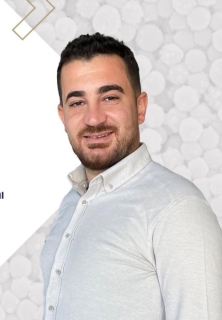
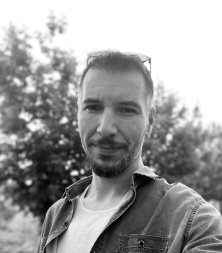
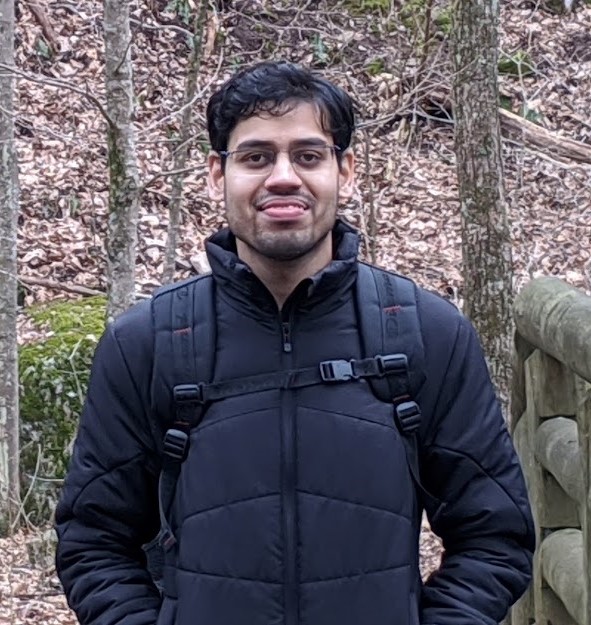
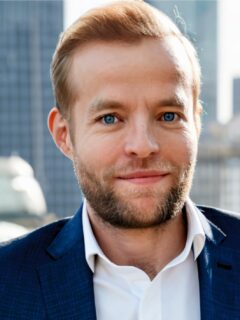
Andrej Kosir is a researcher at the University of Ljubljana's Faculty of Electrical Engineering, specializing in multimedia systems and human-computer interaction. His core research examines physiological signal analysis for affective computing applications, including advertising engagement measurement and cognitive load prediction in automotive interfaces. Research Focus: His work spans multimedia ad exposure modeling, physiological computing, and recommender systems. Recent studies analyze biometric responses to advertising content and develop metrics for evaluating user engagement through physiological signals like heart rate and pupillary response. Publication Trends: Kosir's 15 most recent publications (2010-2025) demonstrate consistent focus on affective computing applications. Earlier work centered on recommender systems and affective labeling, while recent publications emphasize physiological signal processing in automotive and advertising contexts. Methodologically, his work combines machine learning with psychophysiological measurement techniques.
Mert GÜRTÜRK is a Researcher at Adiyaman University's Faculty of Engineering, specializing in geospatial technologies and UAV applications. He holds a Doctorate in Geodesy and Photogrammetry Engineering from Yildiz Technical University (2016-2019), along with a Master's degree (2014-2016) and Bachelor's degree (2007-2012) in related fields from the same institution. His research focuses on cutting-edge geospatial technologies including UAV photogrammetry, precise positioning systems, LiDAR applications, and machine learning integration in geospatial data processing. His work spans various applications from transportation infrastructure assessment to public health monitoring through geospatial analysis. GÜRTÜRK's recent publications demonstrate a strong trend toward integrating advanced computational methods with traditional geospatial techniques, particularly in UAV-based mapping systems and precise positioning technologies. His work shows significant contributions to accuracy assessment methodologies in GNSS processing and UAV georeferencing. 2016-2019: Doctorate in Geodesy and Photogrammetry Engineering, Yildiz Technical University 2014-2016: Master's in Geodesy and Photogrammetry Engineering, Yildiz Technical University 2007-2012: Bachelor's in Surveying Engineering, Yildiz Technical University His current research projects include the DEVELOPMENT OF DOMESTIC SOFTWARE FOR SWARM UAV DEMONSTRATIONS (2024-present) and SWARM UAV SYSTEM AND SOFTWARE FOR DEMONSTRATION PURPOSES (2021-2023). GÜRTÜRK has also contributed to the analysis of university campus digitalization processes and precise kinematic point positioning research. His technical expertise spans English language proficiency and extensive experience with geospatial software systems.
Yalçın YILMAZ is a Researcher at Adıyaman University's Faculty of Engineering, Geotechnical Department. He holds a PhD in Geomatics from Yıldız Technical University (2024) and has been part of Adıyaman University since 2014, starting as a Research Assistant in the Geodesy Department. His academic journey includes a second bachelor's degree in Ancient Greek Language and Literature (Istanbul University, ongoing) alongside his engineering background. Education: Bachelor's in Surveying Engineering (Ondokuz Mayıs University, 2010) Master's in Geomatics (Yıldız Technical University, 2017) PhD in Geomatics (Yıldız Technical University, 2024) Second bachelor's in Ancient Greek Language and Literature (Istanbul University, 2019–present) Research focuses on infrastructure classification using machine learning, UAV-based mapping, and GPR applications. Key areas include: 3D point cloud analysis GNSS height transformations Subsurface utility detection His 8+ publications span topics like infrastructure classification algorithms, GPR utility detection, and UAV-LiDAR comparisons. Notable work includes the Best Poster Award (Science-Art Awards 2023) for GPR-based pipeline detection research. Professional experience includes roles as: Research Assistant, Geodesy Department (2014–present) Field Engineer in natural gas survey projects (2010–2011) Surveyor in municipal land registry processes (2012–2014) Current projects involve low-cost imaging systems for 3D modeling and Istanbul land registration analysis. Fluent in English (YÖKDİL B, YDS B) and Turkish.
Vishnu Dutt Sharma is a Robotics and Visual Computing Researcher at Nokia Bell Labs . His work focuses on robot perception, planning, and deep learning applications in autonomous systems. He holds a PhD in Robotics from the University of Maryland, College Park , advised by Dr. Pratap Tokekar, and earned his MTech and BTech in Electronics and Electrical Communication Engineering from IIT Kharagpur in 2017, with a minor in Computer Science. His research interests span reinforcement learning, computer vision, and interpretable AI, particularly in robotics and natural language processing. Before his PhD, he worked at American Express India on credit risk management using machine learning. He has interned at Nokia Bell Labs, Comcast, and FlytBase Labs. He received the Kulkarni Foundation Summer Research Fellowship in 2020 for his work at UMD. Key contributions include advancements in robot navigation, next-best-view planning, and generative communication in embodied agents. His interdisciplinary work bridges robotics, computer vision, and NLP, with applications in healthcare, autonomous systems, and security.
Dr. Michael Stelzig serves as a Researcher at the Institute of Microwaves and Photonics (LHFT) within the Department of Electrical-Electronic-Communication Engineering at Friedrich-Alexander University Erlangen-Nuremberg. His work focuses on advanced radar systems for environmental and extraterrestrial exploration. His research spans multiple high-impact domains: Development of ice-penetrating radar systems for glacial exploration UAV-based synthetic aperture radar (SAR) for subsurface imaging Radar signal processing for extraterrestrial applications Novel transponder technologies for radar calibration His recent publications demonstrate leadership in radar technology for both terrestrial glaciology and planetary science applications, particularly in Saturn's moon Enceladus exploration. His scientific contributions include: Design of hybrid radar-sonar systems for melting probes Lightweight radar platforms for glacial subsurface imaging Joint radar-communication waveform innovations Drone-based UHF-VHF radar systems for snow stratification analysis Stelzig's technical expertise bridges microwave engineering, signal processing, and field applications in extreme environments. His collaborative work with institutions like DLR (German Aerospace Center) highlights interdisciplinary approaches to complex exploration challenges.
Ankit Shah is a Postdoctoral Researcher at Brown University's Department of Computer Science, collaborating with Profs. Stefanie Tellex, George Konidaris, and Michael Littman. His research focuses on developing computational models that enable domain-experts to train autonomous agents as human apprentices. PhD in Autonomous Systems (2021), MIT SM in Aeronautics and Astronautics (2016), MIT B.Tech in Aerospace Engineering (2013), IIT Bombay His research interests center on Robotics , Machine Learning , Temporal Logic , and Human-Machine Interaction . He specializes in enabling domain-experts to directly train autonomous systems through demonstrations and criticism, emphasizing transparency and non-Markovian task specifications . His publications (2024-2020) demonstrate expertise in Temporal Logic , Bayesian Inference , Interactive Training , and Safe Motion Planning for robotics. Recent work explores large language models for command translation and safety constraints in LLM-driven agents. At Brown University, Shah actively contributes to robotics research, focusing on model transparency , manipulation planning , and specification learning through examples.
Fischer Andreas is a Professor at HES-SO (University of Applied Sciences and Arts Western Switzerland) , specifically affiliated with the School of Engineering and Architecture of Fribourg (HEIA-FR) . His research spans Pattern Recognition , Applied Machine Learning , Handwriting Recognition , and Graph-based Methods . He has secured significant grants from TAINA Technology , Swisscom , and the Hasler Foundation for projects including automatic handwriting recognition for tax forms , Swiss German translation , and graph-based keyword spotting in Vietnamese steles . Education : BSc in Computer Science from HEIA-FR. Research Highlights : Graph Neural Networks for Büchi automata classification Annotation-free alignment in historical documents Graph edit distance optimization for keyword spotting Hybrid deep learning for Vietnamese stele analysis Graph-based tumor budding analysis in digital pathology Collaborative Impact : Fischer's work bridges historical document analysis and medical imaging , demonstrated through frameworks like DIVA-DAF and tools like GammaFocus for histopathology. His 2024 conferences suggest ongoing exploration of LLM integration in document processing and OCR-free models for information extraction.
Kishan Panaganti Badrinath is a Postdoctoral Scholar Research Associate in the Computing and Mathematical Sciences department at the California Institute of Technology (Caltech), affiliated with the Division of Engineering and Applied Science. Hosted by Prof. Adam Wierman and Prof. Eric Mazumdar, his work focuses on theoretical foundations of reinforcement learning algorithms and bridging simulation-to-real-world performance gaps. Education: PhD in Electronics and Communication Engineering & Mathematical Optimization (2023) from Texas A&M University Masters in Communication and Networks (2018) from Indian Institute of Science (IISc) Bachelors in Electronics and Communication Engineering (2017) from PES University Research Interests: Kishan’s work spans reinforcement learning theory , addressing robustness in multi-agent systems , imitation learning , and human feedback integration . His expertise includes high-dimensional probability , optimization , and stochastic theory , with applications to autonomous solutions and environmental uncertainties . Recent Articles (2025): His recent publications focus on robust sequential decision-making , including KL-regularization privacy , multi-agent tractability via behavioral economics , and distributionally robust LLM alignment . These contributions reflect his emphasis on theoretical rigor and practical adaptability. Scientific Awards: PIMCO Postdoctoral Fellow in Data Science ML and Systems Rising Stars 2025 awardee (selected from 150+ applicants) Current Status: Kishan is actively seeking full-time faculty or core industrial research positions starting in 2025, with recent speaking engagements at IIT Bombay, Microsoft Research, and the Theory CS Winter School at IISc.
Russa Biswas is an Assistant Professor in the Department of Computer Science at Aalborg University, Denmark. Their research focuses on Large Language Models, Knowledge Graphs, and Natural Language Processing, with a particular emphasis on multilingual systems, cybersecurity implications, and improving LLM factuality. Biswas holds a PhD in Computer Science from the Karlsruhe Institute of Technology, a Master’s degree from Saarland University, and completed a postdoctoral fellowship at the Hasso Plattner Institute (2023-2024). Education: PhD in Computer Science, Karlsruhe Institute of Technology (Embedding Based Link Prediction for Knowledge Graph Completion) Master’s in Informatik, Saarland University Postdoctoral Research at Hasso Plattner Institute (2023-2024) Research interests include combating LLM hallucinations through knowledge-graph grounded evaluation (e.g., MultiHal dataset), quantifying LLM vulnerabilities, and enhancing factuality via scalable reasoning techniques. Their work addresses cross-lingual challenges, embedding inversion attacks, and typological analysis of linguistic systems. Recent publications explore topics like multilingual dataset creation, security implications of LLMs, and knowledge-graph completion. Biswas collaborates widely, with contributions to venues like AAAI, NAACL, and the Journal of Web Semantics.
Erika Johnson is a Lecturer in the Department of Languages and Literatures of Europe and the Americas at the University of Hawaiʻi. She specializes in Spanish language education, with research interests centered on pragmatics, language use, and second language acquisition. Her work also explores multilingualism and cultural adaptation among Nikkei Peruvian migrant communities globally. Dr. Johnson holds a Bachelor’s degree in Japanese (with honors) and Spanish, and a Master’s in Spanish from the University of Hawaiʻi. Her teaching philosophy emphasizes student-centered approaches to build communicative competence while grounding learners in essential grammatical structures. Her research focuses on how multilingualism influences language learning processes, particularly in diasporic contexts. Though no specific grants or publications are listed, her academic contributions reflect a commitment to bridging cultural and linguistic divides through education.
Dr Ylona Chun Tie is a senior academic and Associate Dean Research Education in the College of Healthcare Sciences at James Cook University. She specializes in critical care, mental health, and workforce well-being, with a focus on cultural competence and global healthcare systems. Research Leadership: Co-investigator in multiple projects and academic leader in the Clinical Psychedelic Research Lab . International Engagement: Extensive experience in cross-cultural healthcare delivery and integration of internationally qualified nurses. Academic Contributions: Peer reviewer for international journals and member of the ECR Editorial Advisory Board of the Journal of Clinical Nursing . Research Trends: Her recent publications (2015–2025) emphasize military mental health , nursing workforce well-being during pandemics , integration of culturally diverse nurses , and grounded theory methodologies . These works span qualitative frameworks, policy analysis, and health equity, with a recurring focus on Australia's healthcare systems. Scientific Involvement: No specific awards are mentioned in the provided text, but her editorial and leadership roles highlight significant academic influence.
Isok Kim is an Associate Professor at the University at Buffalo’s School of Social Work, specializing in trauma-informed, human rights-centered approaches to social work research and practice. His work emphasizes community-based participatory research, particularly with Asian American communities and refugees. He holds dual doctorates in Social Work and Psychology from the University of Michigan and is a licensed clinical social worker in New York State. His research focuses on discrimination’s impact on acculturation and mental health outcomes among Asian Americans, refugee resettlement challenges, and interprofessional education for culturally competent care. Education: PhD in Social Work and Psychology, University of Michigan (2012) MA in Psychology, University of Michigan (2008) MSW in Multi-Ethnic Practice, University of Washington (2000) BS in Psychology, University of Washington (1996) Research Interests: Refugee-related trauma, post-resettlement challenges, cultural competence in interprofessional education, and community-based participatory research. His current projects include developing community-based research with Burmese/Karen refugees in Buffalo and adapting health literacy tools for marginalized populations. Awards: Fahs-Beck Dissertation Research Fellowship (2011) Professional Experience: Prior to academia, Kim worked as a mental health clinician at Asian Counseling and Referral Service in Seattle and the Monsignor Carr Institute in Buffalo. He is active in professional organizations such as the Council on Social Work Education and the Society for Social Work and Research. Labs/Teams: Engaged in interdisciplinary collaborations to address social determinants of health through interprofessional education forums and culturally responsive service design.
Dr. Judah Axe serves as an Adjunct Professor in the Department of Behavior Analysis within Simmons University's College of Social Science, Policy, and Practice. Since joining Simmons in 2008, he has taught courses in verbal behavior and single-subject research design across on-ground and online master's and PhD programs, while supervising doctoral research in Applied Behavior Analysis (ABA) interventions for autism spectrum disorder. His educational background includes: PhD in Special Education and Applied Behavior Analysis from The Ohio State University (2008) MA in Special Education and Applied Behavior Analysis from The Ohio State University (2005) BS in Molecular Biology from University of Wisconsin-Madison (2000) Dr. Axe's research focuses on verbal behavior, problem solving, antecedent interventions for challenging behavior, social behavior, matrix training, and staff training . His work emphasizes evidence-based ABA applications to improve outcomes for individuals with autism, particularly through innovative teaching strategies and behavioral interventions. Current projects examine equivalence class formation, mand training techniques, and staff implementation fidelity. Analysis of his recent publications reveals a strong emphasis on methodological rigor in ABA research , with growing attention to technology-assisted interventions (2024-2025) and nuanced verbal behavior applications. His work bridges theoretical behavior analysis with practical classroom and clinical implementations, particularly for autism interventions. Professional recognition includes: Excellence in Teaching Verbal Behavior Award (Verbal Behavior SIG, 2021) Dean Faculty Research Fellowship (College of Social Science, Policy, and Practice, 2019) Distinguished Faculty Member award (Ohio State University Special Education Program, 2013) Dr. Axe actively supervises doctoral students in his research lab, with 10 documented advisees co-authoring publications on topics including motivating operations, equivalence classes, and social reinforcer development. His lab operates through continuous project cycles examining verbal behavior acquisition and intervention efficacy, though specific grant funding details aren't publicly documented. The research lab maintains active investigations across six core domains: verbal behavior acquisition, problem-solving strategy instruction, antecedent-based intervention for challenging behavior, social skills development, matrix training generalization, and staff training protocols - all focused on autism spectrum disorder populations.
Ilia Markov is an Assistant Professor at the Vrije Universiteit Amsterdam, affiliated with both the Faculty of Social Sciences and Humanities and the Network Institute. His research focuses on computational linguistics, natural language processing, and artificial intelligence, with particular emphasis on hate speech detection and counterspeech strategies. Education: PhD in Computer Science (with honors) from the National Polytechnic Institute, Mexico (2018) Dr. Markov's research aims to foster more inclusive and respectful online communication by mitigating online hate speech and developing context-aware, personalized counterspeech strategies tailored to authors' sociodemographic profiles. He also investigates cross-domain scalability and the reasoning capabilities of AI models. His work bridges computational linguistics with social computing, focusing on practical applications for creating safer online environments. His research demonstrates technical sophistication in developing novel computational methods while maintaining awareness of social implications. His publication record shows a clear trajectory from foundational work in authorship analysis and native language identification to current research on hate speech detection and counterspeech generation. Recent publications emphasize multimodal approaches that integrate text and image analysis, cross-lingual transfer learning techniques, and ethical considerations in deploying AI systems for social media moderation. His work increasingly addresses low-resource language scenarios and the challenges of adapting models across different social contexts. Scientific Awards and Recognition: Outstanding Academic Performance Award for PhD students at the National Polytechnic Institute Senior Area Chair for LREC-COLING 2024 Area Chair for LREC 2026 Dr. Markov has co-organized several international competitions on automatic authorship identification and serves in editorial roles for major conferences in computational linguistics. His collaborative work spans multiple institutions across Europe and Latin America, reflecting the international nature of his research community. He has published over 65 peer-reviewed papers in journals and conference proceedings, demonstrating consistent productivity and impact in his field. As part of the Network Institute at VU Amsterdam, Dr. Markov contributes to interdisciplinary research that combines computational methods with social science perspectives to address contemporary challenges in digital communication. His affiliation with this institute provides a rich environment for exploring the societal implications of his technical work while maintaining rigorous methodological standards.
Deborah Forteza is an Associate Professor of Spanish at Covenant College, where she has been on faculty since 2021. Her research focuses on Anglo-Spanish relations in Early Modern literature, the Protestant and Catholic Reformations, and the intersection of religion and literature. She holds a Ph.D. from the University of Notre Dame. Her academic work explores themes such as Spanish perceptions of the English Reformation, representations of Tudor figures in Spanish drama, and Cervantes' use of historical exemplarity. She has published a monograph and several peer-reviewed articles, including works on Lope de Vega, Calderón, and early modern hagiography. At Covenant College, she emphasizes experiential learning through partnerships with local Hispanic communities, offering students opportunities to apply Spanish in professional contexts like healthcare, education, and legal settings. Her recent conference presentations include discussions on English books in Spanish-Irish Catholic networks and the role of English martyrs in Spanish sainthood processes. She has no listed awards but is actively engaged in scholarship and pedagogy grounded in a Christian worldview. Outside academia, she enjoys water sports, photography, and traveling, reflecting her interest in cultural exploration and human connection.