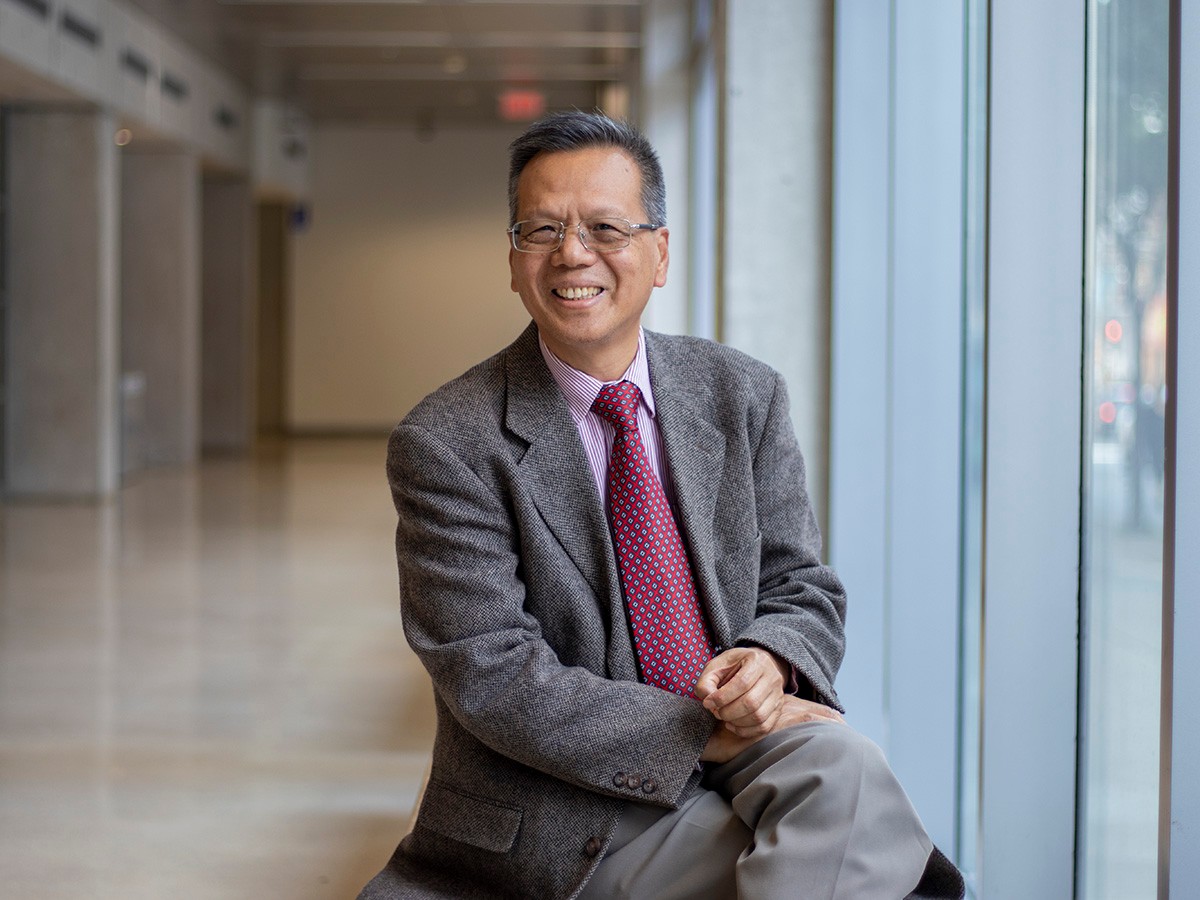
Dr. Richard Cheung is a Professor in the Department of Electrical, Computer, and Biomedical Engineering at Toronto Metropolitan University . With a 35-year career in power engineering, his expertise spans nuclear electricity generation, power system protection, energy efficiency, and cybersecurity. Education: PhD, MASc, BASc in Electrical Engineering from the University of Toronto His research focuses on power system stability , electric machines and drives , and substation security . Recent publications highlight his work in power system cybersecurity , distributed generation integration , and adaptive fault protection . He supervises students in the Laboratory of Electric Drives and Application Research (LEDAR) and consults for major nuclear power stations in Ontario.
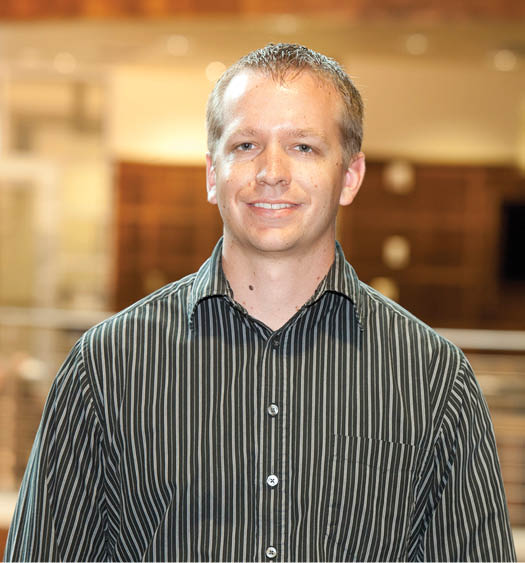
Yang Xu is a Post-doctoral researcher at the Max Planck Institute for Biogeochemistry in Jena, Germany, working within the Department of Biogeochemical Signals and the Airborne Trace Gas Measurements research group. His primary focus involves inversion modeling of greenhouse gas emissions, with specialized expertise in urban anthropogenic and biogenic flux quantification using integrated atmospheric measurement systems. His academic credentials include: Ph.D. in Geosciences from Université Paris-Saclay, France (2019-2023), thesis: "Analysis of atmospheric CO2 measurements in Mexico City" M.S. in Environmental Sciences from Peking University, China (2015-2018), thesis: "Evaluation of PM2.5 related health effects of the ban policy on beehive coke in China" B.S. in Statistics from Peking University, China (2012-2015) B.S. in Environmental Sciences from Peking University, China (2011-2015), thesis: "Reconstruction of PAHs emissions caused by beehive coke activities" Dr. Xu's research integrates ground-based and space-based remote sensing data to develop advanced inversion models for urban greenhouse gas flux estimation. His work in Mexico City has pioneered methodologies for reconciling satellite observations with in-situ measurements to quantify emission sources, while his earlier research in China established critical links between air pollution control policies and public health outcomes. This dual expertise positions him at the intersection of atmospheric chemistry, environmental policy, and climate science. His publication record (2017-2024) demonstrates consistent focus on urban greenhouse gas dynamics, particularly in Mexico City and Chinese metropolitan areas. Key contributions include reconciling asynchronous satellite measurements of CO2 and NO2 with mesoscale models, characterizing urban CO2 gradients using dense sensor networks, and quantifying health benefits from industrial emission controls. His methodologies bridge atmospheric physics, remote sensing technology, and environmental epidemiology. As a core researcher in Germany's Integrated Greenhouse Gas Monitoring System (ITMS) project, Dr. Xu contributes to national-scale emission verification frameworks. His current work involves operationalizing inversion modeling techniques for real-time emission monitoring across German urban centers, with no documented student supervision or external grant leadership beyond the ITMS initiative. He actively participates in the Airborne Trace Gas Measurements research group's field campaigns, which deploy advanced spectrometers for high-precision atmospheric sampling. The group's work supports both fundamental atmospheric science and practical climate policy development through rigorous emission quantification.
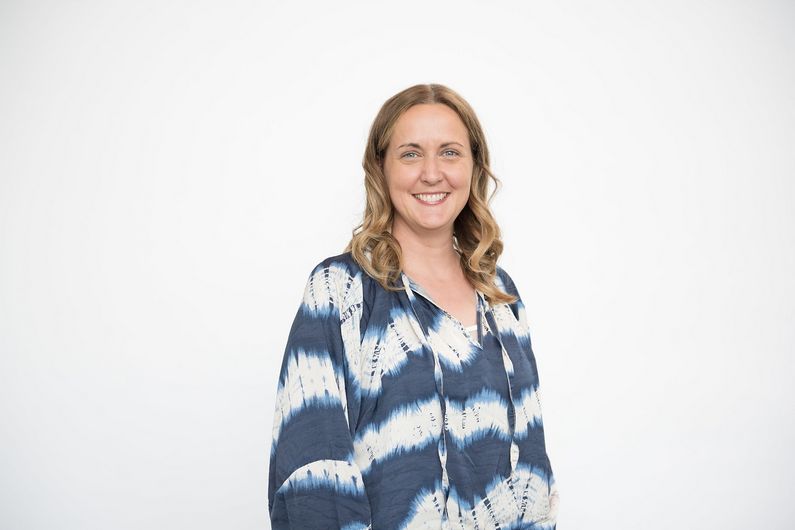
Nur Yazdani is a Professor of Civil Engineering at the University of Texas at Arlington , affiliated with the College of Engineering. Her research focuses on structural engineering, non-destructive evaluation (NDE), fiber-reinforced polymer (FRP) composites for infrastructure, and hazard mitigation in coastal and wind/flood-prone regions. Bridge Engineering Concrete Durability Fire and Corrosion Resilience Machine Learning for Structural Prediction Her recent work emphasizes machine learning models for concrete strength prediction, flood mitigation in residential coastal buildings, and hybrid applications of CFRP/GFRP laminates for retrofitting bridges and concrete components. She leads the NSRI Lab , addressing infrastructure resilience through experimental and numerical studies. Scientific Awards : NSF RET Program Evaluation She integrates interdisciplinary education into her research, including collaborations with biology and architecture in classroom implementations for bridge deck evaluation and coastal resilience.
Aleksander Skała serves as a Lecturer at the Department of Power Electronics and Automation of Energy Conversion Systems within the Faculty of Electrical Engineering, Automatics, Computer Science and Biomedical Engineering at AGH University of Science and Technology in Kraków, Poland. His academic position is based in room 19 on the ground floor of building B-1, with contact details including phone +48 12 617 28 11 and email aleksander.skala@agh.edu.pl. His research focuses on Power Electronics, Energy Conversion Systems, and Automation, emphasizing the design and control of power electronic converters, energy management for renewable integration, and automated systems for industrial applications. These areas are critical for advancing sustainable energy technologies and modern power infrastructure. No scientific awards, fellowships, or medals are documented in the available information. Similarly, there are no references to student advising activities, research grants, laboratory affiliations, or collaborative teams within the provided text.
Prof. Dr. Mehmet SALTAN is a faculty member at the Department of Civil Engineering within the College of Engineering and Natural Sciences at Suleyman Demirel University . With an H-index of 24 and over 1907 citations , his research focuses on pavement engineering , railway transportation , and innovative applications of fuzzy logic , artificial neural networks , and genetic algorithms in road infrastructure. Research Interests : Pavement Engineering, Railway Transportation, Fuzzy Logic, Artificial Neural Networks, Genetic Algorithms, Concrete Pavements Education : PhD in Civil Engineering (Suleyman Demirel University, 1999), MS in Civil Engineering (1994), BS in Civil Engineering (Akdeniz University, 1992) His recent publications highlight advancements in sustainable asphalt mixtures using waste materials (e.g., fluorescent lamp glass, waste tea), nano-silica modification for enhanced pavement performance, and innovative road visibility solutions . He has contributed to journal editorial roles and participated in TÜBİTAK 1005 projects focused on national railway sleeper geometry optimization.
Prof. Erkan Oterkus serves as Professor and Director of both the PeriDynamics Research Centre (PDRC) and Ocean Energy Research Unit (OERU) within the Department of Naval Architecture, Ocean and Marine Engineering at the University of Strathclyde. Previously a researcher at NASA Langley Research Center, he holds a PhD from the University of Arizona and maintains active supervision of PhD students while leading internationally recognized research initiatives in computational mechanics. Academic Background PhD, University of Arizona (USA) Research Focus His pioneering work centers on peridynamics and inverse Finite Element Method (iFEM) for computational mechanics of materials and structures. Key research thrusts include multiscale modeling of stress corrosion cracking, underwater shock response of marine composites, failure analysis of electronic packages, ship collision/grounding dynamics, and real-time structural monitoring. His methodology integrates artificial intelligence, multi-physics analysis, and high-performance computing to solve extreme loading scenarios in marine, aerospace, and energy systems. Recent publications demonstrate strong trends in applying peridynamics to ice-structure interactions and corrosion damage monitoring, reflecting urgent industry needs for predictive structural integrity assessment. Honors & Recognition Outstanding Graduate Student in Aerospace Engineering (2010) Research Leadership Prof. Oterkus has secured 41 major projects totaling £12.7M in funding from entities including the European Union, U.S. Air Force Research Laboratory, DSTL, Samsung Electronics, Lloyd's Register, and ORE Catapult. His 264 research outputs include the seminal book on peridynamics and editorial leadership as Editor-in-Chief of Sustainable Marine Structures. He actively supervises 16 graduate students while directing two research centers that bridge academia-industry gaps in marine renewable energy and structural health monitoring systems. Research Infrastructure He leads the PeriDynamics Research Centre (PDRC) and Ocean Energy Research Unit (OERU), which operate advanced computational laboratories for multi-scale fracture simulation, structural health monitoring validation, and marine renewable energy device testing. These facilities support collaborative projects with Ferguson Marine, Babcock, and QinetiQ on pipe stress analysis and gas phase ventilation systems.
John Cleary serves as Associate Professor and Chair of the Department of Civil, Coastal, and Environmental Engineering within the College of Engineering at the University of South Alabama. His leadership encompasses departmental administration, teaching core courses in structural analysis and design, and directing research on infrastructure resilience in coastal environments. His academic credentials include: Ph.D. in Civil Engineering from Case Western Reserve University M.S. in Civil Engineering from Cleveland State University Bachelor of Civil Engineering from Cleveland State University Dr. Cleary's research centers on structural engineering challenges in coastal zones, with emphasis on hurricane-induced damage, wave load effects on bridges, and forensic analysis of structural failures. He investigates concrete deterioration, construction vibrations from pile driving, and low-cost retrofit solutions for disaster resilience. His work bridges theoretical analysis with practical applications in Gulf Coast infrastructure. Publication trends (2013-2018) reveal concentrated work on hurricane impacts (Katrina and Harvey), pile-driving vibration monitoring, and coastal bridge engineering. His output spans journal articles, conference proceedings, and government reports for agencies like the Alabama Department of Transportation, demonstrating strong industry-academia collaboration on climate adaptation and infrastructure safety. As Faculty Advisor for Chi Epsilon Civil Engineering Honor Society, Dr. Cleary mentors high-achieving students. His research is supported through partnerships with the Alabama Center for Insurance Information and Research and state transportation departments, focusing on projects like Mobile River Bridge vibration monitoring and safe room retrofits.
Christine Genest is an Associate Professor ( professeure agrégée ) at the Faculty of Nursing (Faculté des sciences infirmières) at the Université de Montréal since 2020. She began her academic career in 2003 as a monitor and grader, progressed to teaching roles starting in 2008, and was appointed Assistant Professor following her exceptional doctoral thesis defense in December 2012. Dr. Genest is a regular researcher at the Centre d'étude sur le Trauma at the Centre de recherche de l'Institut universitaire de santé mentale de Montréal and actively contributes to CRISE (Centre de recherche et d'intervention sur le suicide) and RRISIQ. Her educational background includes: Doctorate in Nursing Science (2013) from Université de Montréal Master's in Nursing Science (2004) from Université de Montréal Postdoctoral studies (2018) in Nursing Science from McGill University Dr. Genest's research expertise focuses on suicide and its repercussions on bereaved individuals, exposure to potentially traumatic events among first responders, and nursing practice in mental health contexts with both adult and pediatric clients. Her work employs qualitative approaches to explore mental health promotion, suicide prevention, resilience, bereavement, family care, and adolescent psychiatry. She has developed significant clinical frameworks for suicide risk assessment in children under 12 and interventions supporting families after adolescent suicide. Analysis of her recent publications reveals a strong focus on family resilience following adolescent suicide, suicide risk assessment in children, and psychological impacts on first responders. Her research consistently employs grounded theory and qualitative methodologies to develop practical clinical tools, showing a clear progression toward evidence-based interventions that improve mental health outcomes in vulnerable populations. Dr. Genest's contributions have been recognized with: 2019 Rector's Award for Engagement from Université de Montréal Teaching Excellence Award from the Faculty of Nursing She has supervised over 15 master's students and 2 doctoral candidates through 2025, with research spanning suicide prevention, mental health care for adolescents with eating disorders, and nursing practice in pediatric psychiatry. Her work is supported by substantial funding from CIHR, SSHRC, FRQ, and MITACS, including major projects on psychological first aid for police officers (2024-2028) and suicide prevention for correctional officers (2022-2026). Dr. Genest collaborates with multiple research units including the Centre d'étude sur le Trauma, CRISE, and RRISIQ, working with multidisciplinary teams across Quebec and Canada. She serves on the boards of the Quebec Association of Mental Health Nurses and the Canadian Federation of Mental Health Nurses, and has developed innovative teaching approaches including documentaries, television excerpts, and simulated scenarios to enhance student learning about mental health care.
Professor Wassim Jabi is a Chair in Computational Methods in Architecture at the Welsh School of Architecture, Cardiff University . His work bridges computational design, digital fabrication, and sustainable building technologies, focusing on graph machine learning, non-manifold topology, and blockchain integration in architectural workflows. As a course leader for the MSc in Computational Methods in Architecture, he supervises postgraduate research and contributes to International Journal of Architectural Computing as an editorial board member. Research themes: Graph-based architectural modeling 3D printing with earthen materials Autism-informed design taxonomies Blockchain for decentralized design Machine learning in building performance Robotic fabrication workflows Recent publications analyze energy efficiency through graph ML , explore biomimetic façades for arid climates, and develop topological BIM frameworks . His team's VIRIS simulator combines architectural design with pandemic risk analysis. He serves as an external examiner at the University of Liverpool and University of East London.
Susanne Lunn is an Associate Professor at the Department of Psychology, University of Copenhagen, where she also serves as Coordinator of the Master Program in Clinical Psychology. She has been affiliated with the university since 1985, first as an Assistant Professor and then as Associate Professor since 1993. Her academic journey includes leadership roles such as Head of the University Clinic (1999-2007, 2009-2013) and President of the Danish Psychoanalytical Society (2010-2017). Her educational background includes: MSc in psychology (Cand. Psych.), University of Copenhagen (1978) Specialist in Psychotherapy and Supervision (1990) Certified group analytic psychotherapist (1985) Certified psychoanalyst (IPA) (1996) Certified training analyst (2002) Susanne Lunn's research focuses primarily on eating disorders and psychotherapy research. Her work on eating disorders encompasses theoretical, clinical, and empirical approaches, with special attention to personality characteristics, psychopathology, and the development of eating disorders. Her psychotherapy research centers on both effect and process: examining how different psychotherapies contribute to recovery from eating disorders, investigating non-specific factors like therapist and client characteristics (e.g., motivation and attachment patterns), and studying therapy relational patterns such as therapeutic alliance and therapist countertransference. Her research supports the hypothesis that one specific therapy does not suit all patients, indicating that the question 'which method is best' must be supplemented by 'what works for whom.' Her methodological approach combines both nomothetic and ideographic methods, exploring how quantitative and qualitative approaches contribute different kinds of knowledge. Her recent publications demonstrate continued focus on eating disorders, particularly bulimia nervosa, and psychotherapy process and outcome research. She frequently collaborates with Stig Poulsen and other colleagues in the Center for Psychotherapy Research. Her work spans clinical trials comparing different therapeutic approaches, investigations into attachment patterns and their impact on treatment, and explorations of mentalization in eating disorder treatment. The articles show a consistent trajectory of rigorous empirical work grounded in both psychoanalytic and cognitive-behavioral frameworks, with increasing methodological sophistication over time. Her scientific contributions have been recognized through research grants from prestigious organizations including: KU 2016, Governing obesity (DKK 750,000, 2014) The Egmont Fund (DKK 1,000,000, 2002) Danish Research Council for the Humanities (DKK 2,138,000, 2001) Multiple other grants totaling over DKK 3 million As an educator and mentor, Professor Lunn has supervised numerous PhD students including Louise Tækker, Sofie Folke, Karin Riber, Hannah Katznelson, Sarah I.F. Daniel, and Charlotte Sandros. She has coordinated external practicum programs and organized internal praxis teaching in clinical psychology for master students and postgraduate trainees. Her leadership extends to editorial roles, having served as Chief-editor of The Scandinavian Psychoanalytic Review (2002-2008) and Co-editor of Nordic Journal of Psychotherapy (1998-). Professor Lunn is actively involved in several research groups including the Center for Psychotherapy Research, the Bulimia Trial Research Group, and the Center of Psychoanalysis at the University of Copenhagen. She has organized numerous international conferences, including the Society for Psychotherapy Research international meeting in Copenhagen (2014) and the XXIII Nordic Psychoanalytic Congress (2012). Her current research projects include the Copenhagen Bulimia trial, identification of psychosocial factors affecting weight loss after surgery, historical studies of eating disorder diagnoses, and research on therapist responsiveness to clients.
Phillip S.K. Ooi is the Chair and Arthur N. L. Chiu Distinguished Professor in the Department of Civil, Environmental and Construction Engineering at the University of Hawaii at Manoa. His office is located in Holmes Hall 383 at 2540 Dole Street, with contact via phone (808-956-8512) or email (ooi@hawaii.edu). He holds professional engineering registration in geotechnical engineering since 1992. Education: Ph.D., Civil Engineering, Virginia Tech, 1991 M.S., Civil Engineering, MIT, 1984 B.Sc., Civil Engineering, University of Leeds (UK), 1983 Research Interests: Dr. Ooi specializes in geotechnical engineering with emphasis on soil-structure interaction, slope stability, landslide monitoring systems, geosynthetic-reinforced structures, recycled materials in construction, and advanced soil characterization techniques. His work integrates field instrumentation, laboratory testing, and numerical modeling to address transportation infrastructure challenges. Publication Trends: Recent articles (2011-2023) demonstrate a strong focus on practical geotechnical solutions for transportation systems, including landslide monitoring using InSAR, performance of geosynthetic-reinforced bridges, soil erosion modeling, and innovative testing methods for construction materials. Recurring themes include field validation of designs, tropical environment considerations, and sustainable material applications. Awards & Honors: Fulbright Research Grant (2019, 2022) Hi Chang Chai Excellence in Teaching Award (2008, 2014, 2024) Grants & Projects: As Principal Investigator, he secured over $3M+ in research funding from FHWA and Hawaii DOT, including: Landslide warning systems development GRS-IBS bridge performance monitoring Forensic analysis of pavement distress Recycled materials in highway applications Scour prediction in Hawaiian rivers Teaching (Recent): Courses include Geotechnical Engineering I/II, Deep Foundations, Earth Pressures, and Numerical Methods in Geotechnics, reflecting his technical specialization and educational leadership.
Jin Woo Song is an Associate Professor in the Department of Artificial Intelligence and Robotics at Sejong University's School of Intelligent Mechatronics Engineering. He has held academic positions at Seoul National University and Hoseo University prior to joining Sejong University in 2017. His professional experience also includes serving as CTO/COO at Microinfinity Co., Ltd. from 2004-2014. Currently, he holds multiple leadership roles including Director of Sejong Enterprise Support Foundation, Director of SW-AI Convergence Center, and Provost of Sejong University. Dr. Song received his B.S., M.S., and Ph.D. in Control and Instrumentation Engineering/Electrical Engineering from Seoul National University. His educational background laid the foundation for his expertise in navigation systems and control theory. Dr. Song's research focuses on navigation and sensor systems, control theory, and estimation theory with applications in unmanned systems. His work spans MEMS inertial sensor technologies, Kalman filtering techniques, optimal and robust control theories, and fault detection algorithms. His research has significant applications in unmanned aircraft systems, autonomous vehicles, robotics, and military intelligence systems. His recent publications (2023-2025) demonstrate continued innovation in navigation systems, with emphasis on fault tolerance, sensor fusion, and improved positioning accuracy in challenging environments. His work shows strong trends toward integrating multiple sensor modalities and developing robust algorithms for real-world navigation challenges. Best student paper award, NAECON2000 (IEEE, National Aerospace and Electronics Conference), USA, 2000 Ministry Award, 'IT R&D Engineer of the Year', Ministry of Information and Communication, Republic of Korea, 2005 Best Presentation Award, ICASS 2015, 2015 Best Paper Award, KIEE Conference, 2019 Distinguished Teaching Award, Sejong University, 2021 Distinguished Research Award, Sejong University, 2022 Distinguished Professor, Sejong University, 2024 Dr. Song has served as Editor-in-Chief for ICROS journal and holds editorial positions for multiple prestigious journals including the International Journal of Aeronautical and Space Sciences. He has been actively involved in numerous research grants and industry collaborations, including a recent academic-industrial partnership with Hanwha Systems. As Vice-President of The Institute of Control, Robotics and Systems (ICROS) and various other professional organizations, he plays a significant role in shaping research directions in his field. He leads the Intelligent Navigation and Control Systems Lab at Sejong University, where his team develops cutting-edge navigation sensors and systems, optimal controllers for autonomous systems, and embedded systems for reliable navigation and control. The lab's work has direct applications in unmanned aircraft systems, autonomous vehicles, robotics, and military intelligence systems.
M. Metin Yavuz is a Professor in the Department of Mechanical Engineering at Middle East Technical University (METU), Ankara. He leads the Fluid Mechanics Research Laboratory where his team investigates vortex dynamics, flow separation, and hemodynamics. His educational background includes a B.Sc. from METU (2001), and M.Sc. (2004) and Ph.D. (2006) from Lehigh University. Research Focus His laboratory specializes in: Experimental analysis of non-slender delta wing aerodynamics Active/passive flow control methodologies Cardiovascular flow dynamics related to arterial diseases Ground-effect aerodynamics and vortex-dominated separated flows Student Advising Notable supervised students: Diren Dikbaş (M.Sc., 2025) Cenk Çetin (Ph.D., 2025) Göktuğ Koçak (Ph.D. Thesis of the Year Award, 2024) Laboratory The Fluid Mechanics Research Laboratory at METU conducts experimental studies using advanced flow measurement techniques for aerospace and biomedical applications.
Giuseppe Oriolo is a Full Professor of Automatic Control and Robotics at the Department of Computer, Control and Management Engineering (DIAG) of Sapienza University of Rome, where he has been since 1994. He coordinates the DIAG Robotics Lab and has held teaching positions at the University of Siena, University of Cassino, and Roma Tre. Oriolo was a Visiting Scholar at the University of California, Santa Barbara, and serves on various editorial and program committees, including IEEE Transactions on Robotics and international conferences like ICRA and IROS. Education : Ph.D. in Systems Engineering (1992), Sapienza University of Rome His research focuses on robotics and control theory, particularly in robot control, motion planning, trajectory optimization, redundant robotic systems, control of underactuated systems, sensor-based localization, navigation for mobile robots, humanoid robots, and visual servoing. He has over 230 publications and contributes to advanced robotics frameworks. Recent publications highlight his work on Model Predictive Control (MPC) for humanoids and mobile robots, emphasizing robustness, singularity-free trajectories, and decentralized cooperation. His research addresses dynamic constraints, feasibility, and real-time adaptation in complex environments. Scientific Awards : 2017 IEEE Fellow, 2020 IEEE Robotics and Automation Magazine Best Paper Award, 2016 ANTS Best Paper Award, 2024 Human-Friendly Robotics Best Paper Award Oriolo's teaching includes Control Systems at Sapienza, with past roles in courses like Adaptive Systems, Nonholonomic Control, and Underactuated Robots. He has mentored numerous advisees through publications and lab activities. He leads the DIAG Robotics Lab, fostering innovation in humanoid robots, autonomous systems, and control theory.
Elena Umili is an Assistant Professor (RTD-A) at the Department of Computer, Control and Management Engineering (DIAG) of Sapienza University of Rome, specializing in Neurosymbolic AI research. Her work bridges deep learning with symbolic reasoning systems. She received her PhD in Engineering in Computer Science from Sapienza University of Rome in 2023 under the supervision of Prof. Giuseppe De Giacomo and Prof. Roberto Capobianco. Her doctoral thesis focused on 'Discovering Logical Knowledge in Non-Symbolic Domains'. Her research interests center on Neurosymbolic AI integration , particularly: Combining deep machine learning with symbolic reasoning Temporal logic specifications in neural systems Automata learning through neural relaxations Non-Markovian reinforcement learning tasks Visual grounding of logical specifications Analysis of her recent publications reveals a strong focus on neural-symbolic integration where she develops frameworks like DeepDFA and Neural Reward Machines. Her work consistently addresses the challenge of incorporating logical constraints into deep learning systems, with applications spanning robotics, sequence generation, and visual reasoning. The research demonstrates increasing sophistication in handling temporal logic specifications within neural architectures. She is an active member of research groups focused on Artificial Intelligence and Knowledge Representation, as well as Artificial Intelligence and Robotics at Sapienza University. While no formal advisees or major awards are currently documented in her public profile, her recent publications indicate significant contributions to the neurosymbolic AI field through top-tier conferences including ECAI, KR, and specialized workshops. Her work shows strong potential for future impact in bridging the gap between neural and symbolic AI paradigms.