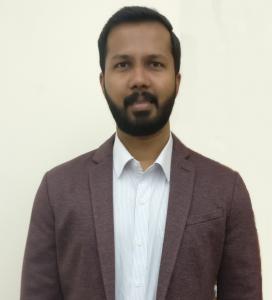
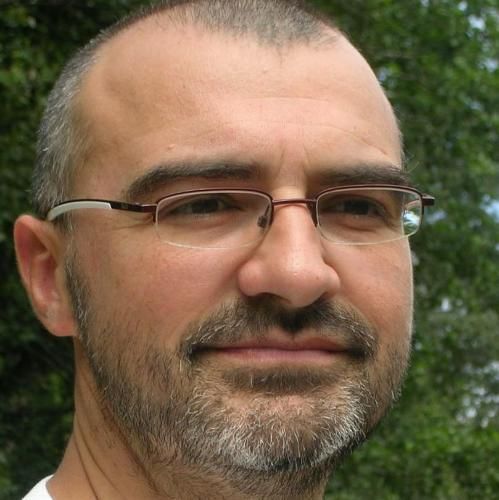
M. Yasin Akhtar Raja is a Professor of Physics and Optical Science at the University of North Carolina at Charlotte (UNC Charlotte), where he has served since 2004. He also holds an adjunct professorship in Electrical and Computer Engineering since 2011. As an undergraduate advisor, he plays a key role in student mentorship. Ph.D. in Optical Physics from the University of New Mexico (1988) M. Phil in Laser Physics from Quaid-i-Azam University (Pakistan) B.Sc. in Physics and Math from Punjab University (Lahore, Pakistan) His research focuses on optoelectronics, photonics, and optical communication networks, with expertise in VCSELs, optical amplifiers, and solar energy harvesting. He has authored over 170 publications and secured multiple patents, including foundational work on surface-emitting lasers (VCSELs). Raja has supervised 42 graduate students and chairs the undergraduate committee in his department. He co-founded the HONET-ICT international conference series and advises research initiatives in Pakistan. Notable achievements include his invention of the surface-emitting RPG laser (VCSEL), a Merit Scholarship from Pakistan, and contributions to fiber optic networks and smart grid technologies. His work spans theoretical and applied research, with applications in telecommunications, energy, and materials science.
Professor Simon J E Taylor is a Professor of Computer Science and Vice Dean Research at the College of Engineering, Design and Physical Sciences, Brunel University London. He is Co-Director of the Modelling and Simulation Research Group and Adjunct Director of the Smart Technology Advancements for Health and Rehabilitation (STAHR) Centre. Research Interests: Modelling & Simulation Digital Infrastructures and Services Cloud Computing International Development Open Science His research focuses on high-performance simulation infrastructures, AI-based optimization, and open science applications in healthcare and industry. He has led international projects improving digital infrastructure across Africa and contributed to standards in simulation interoperability. Scientific Contributions & Leadership: Co-founder and former Editor-in-Chief of the Journal of Simulation Chair of ACM SIGSIM (2005–2008) General Chair, IEEE/ACM 2025 Winter Simulation Conference Executive Chair, Simulation Exploration Experience (SEE) Member, Computer Simulation Archive steering committee PhD Supervision & Teaching: Professor Taylor has supervised over 20 doctoral students and examined more than 25 PhDs globally. He leads modules in distributed computing and has developed several postgraduate degrees. He is actively involved in undergraduate and postgraduate teaching, including NATCOR courses, and supports student internships. Research Grants & Projects: Framework Development of Simulation-Augmented Many Objective Optimization for Sustainable Supply Chains (MITRE Corporation, 2023) HIDALGO: HPC and Big Data Technologies for Global Systems (EU, 2018–2021) COLA: Cloud Orchestration at the Level of Application (EU, 2017–2019) CloudSME: Cloud-based simulation platform for manufacturing (EU, 2013–2015) Sci-GalA: Science Gateways and e-Infrastructures in Africa (EU, 2015–2017)
Nicholas Bambos is the R. Weiland Professor in the School of Engineering at Stanford University, holding a joint appointment in the Department of Electrical Engineering and the Department of Management Science & Engineering. He served as the Fortinet Founders Department Chair of the Management Science & Engineering Department from 2016 to 2020. His academic career spans over three decades, with previous positions as an assistant professor (1989-1995) and tenured associate professor (1995-1996) at UCLA before joining Stanford in 1996. Prof. Bambos's primary research interests focus on the architecture and high-performance engineering of computer systems and networks, along with data analytics emphasizing medical and health-care applications. His work spans multiple domains including networking and the Internet, cloud computing, multimedia streaming, computer security, and digital health. Methodologically, his contributions extend to network control, online task scheduling, routing and distributed processing, and machine learning and artificial intelligence. His research has resulted in over 300 peer-reviewed publications that demonstrate a strong interdisciplinary approach, bridging theoretical computer science with practical healthcare applications. The trajectory of Prof. Bambos's recent publications reveals a strategic expansion from traditional networking and systems research into healthcare analytics, particularly opioid use prediction and digital health monitoring. His work increasingly integrates machine learning techniques with domain-specific medical knowledge, showing a clear evolution toward solving complex societal challenges through technological innovation. Many publications demonstrate collaborative work across engineering, medical, and data science disciplines, reflecting the growing importance of interdisciplinary research in addressing modern healthcare challenges. His significant scientific achievements have been recognized through numerous prestigious awards: R. Weiland Professorship in Engineering (2016-present) Eugene L. Grant Teaching Award (2014) IBM Faculty Award (2002) Cisco Systems Faculty Scholar (1999-2003) National Young Investigator Award from NSF (1992-1997) Prof. Bambos has graduated over 40 doctoral students who have gone on to leadership positions in academia, Silicon Valley industries, technology startups, finance, and venture capital. His research has been supported by significant funding, including a $30 million Stanford Networking Research Center which he directed from 1999 to 2005. Beyond traditional academic roles, he has served on various editorial boards, scientific committees, and as a consultant and co-founder of technology startups, demonstrating his commitment to translating academic research into real-world impact. He leads the Computer Systems Performance Engineering Lab (Perf-Lab) at Stanford, which comprises doctoral students and industry visitors engaged in various research projects. His lab serves as an interdisciplinary hub connecting theoretical computer science with practical applications in healthcare, energy, and networking domains. The lab's collaborative environment fosters innovation across traditional academic boundaries, reflecting Prof. Bambos's broader research philosophy of addressing complex problems through integrated, multi-disciplinary approaches.
Ramakrishnan Durairajan is an Associate Professor in the School of Computer and Data Sciences at the University of Oregon, where he co-directs the Oregon Networking Research Group (ONRG). He holds a Ph.D. and M.S. in Computer Sciences from the University of Wisconsin-Madison and a B.Tech in Information Technology from Anna University. His research employs data-driven approaches to enhance internet robustness, focusing on: Network infrastructure measurement using AI/ML and statistical methods Mitigation of intrinsic threats (e.g., terabit-scale DDoS attacks) Resilience against extrinsic threats (e.g., climate disasters) Innovations in programmable optics and multi-cloud systems Recent publications explore satellite-based internet resilience, optical topology programming, and dynamic telemetry systems, reflecting a strong emphasis on cybersecurity and network efficiency in high-stakes environments. Notable scientific honors include: NSF CAREER Award and CRII Award Best Paper Awards at ACM CoNEXT/SIGCOMM Popular Science's 'Best of What's New in Security' Ripple Faculty Fellowship He leads federally and industry-funded research projects totaling over $5M, advises graduate/undergraduate researchers, and consults for startups on network security and cloud architecture challenges.
Federica Cappelluti is an Associate Professor in the Department of Electronics and Telecommunications (DET) at Politecnico di Torino (Polytechnic University of Turin) . She serves as the Director of the Open Science Study Center , a Member of the Coordinating Committee of the Polito for Social Affairs , and a Scientific Advisor for the European Open Science Cloud (EOSC) Association . Her academic roles include leadership in Non-commercial collaborative agreements (Italian Computing and Data Infrastructure, Italian Association for Open Science) Research projects funded by EU and national grants (FEDRA, CLAIRE, Skills4EOSC, MIRACLE, TFQD) Research Interests: Federica specializes in Nanophotonics , Optoelectronics , Photovoltaics , and Semiconductor Device Modeling . Her work focuses on Radiative cooling for solar cells Perovskite/silicon tandem solar cells High-speed semiconductor devices Applied photonics for energy efficiency Article Trends: Recent publications highlight her innovations in Photovoltaic radiative cooling using cement-based materials 3-terminal tandem solar cell architectures Quantum dot and intermediate band solar cell engineering Thermal management of multi-junction cells Modeling and simulation of photonic devices Cost-effective photovoltaic materials Scientific Awards: She holds an International Patent for Cement composites for radiative cooling (co-inventor with Matteo Cagnoni) Advising and Grants: Federica supervises PhD students in Artificial Intelligence (Giacomo Fantino) Electrical, Electronics, and Communications Engineering (Antonio Fronteddu, Pietro Testa) Completed PhD research (Gemma Giliberti: 3-Terminal Perovskite/Silicon Tandems) She leads competitive projects including FEDRA : FAIR data lake for research assessment CLAIRE : Perovskite/silicon solar cells MIRACLE : Photonic Metaconcrete for energy savings Labs and Teams: She collaborates with the Microwave and Optoelectronics Group (MOG) at DET and contributes to the PhotoNext Interdepartmental Center for applied photonics. Her work intersects with Nexa Center for Internet & Society in open science initiatives.
Professor Peter Quinn is a distinguished astrophysicist at the University of Western Australia , serving as Chairman of the Board at the International Space Centre and affiliated with the International Centre for Radio Astronomy Research (ICRAR) and the Office of DVC Research . He received his BSc(Hons) in Mathematics and Physics from the University of Wollongong in 1978 with the University Medal in Physics, and his PhD in astronomy and astrophysics from the Australian National University (ANU) in 1982. His research centers on galaxy formation and evolution , dark matter dynamics , and the Epoch of Reionization . He has pioneered computational astrophysics, particularly through the discovery of the Quinn-Goodman effect and contributions to the MACHO Dark Matter Search Project . He has led major initiatives in the European Southern Observatory (ESO) , including the Very Large Telescope (VLT) data flow system and the Astrophysical Virtual Observatory (AVO) project. His scholarly work spans radio astronomy , supercomputer simulations , and data-intensive science , with a strong focus on the Square Kilometre Array (SKA) and gravitational wave detection . His work has earned him several prestigious accolades including a NASA High Performance Computing Award and a Computerworld 21st Century Achievement Award . He is a Fellow of the Australian Academy of Science (FASA) and a Fellow of the Australian Institute of Physics (FTSE) . His research also extends to large-scale international infrastructure projects and planning for the Square Kilometre Array and gravitational wave observations . He has served as Division Head at ESO and as a Chief Investigator for numerous grants, including the Australian SKA Regional Centre and ICRAR core funding .
Pradip K Srimani is a Professor at the School of Computing , Clemson University , with research focus on Parallel and Distributed Computing , Self-Stabilizing Systems , and Graph Theory Applications . He is an IEEE Life Fellow and ACM Distinguished Scientist with over 250 publications. Research Interests Self-stabilizing algorithms for network graphs Ontology-based biomedical information retrieval High-performance computing resource management Biologically inspired distributed algorithms Network topology computation Recent publications demonstrate expertise in token circulation protocols, genome assembly frameworks, and semantic similarity measurement. He has served on program committees for APDCM , GPC-2018 , and IEEE BigMM conferences, while maintaining editorial roles at International Journal of High Performance Computing and Journal of Big Data . Scientific Awards IEEE Life Fellow ACM Distinguished Scientist
Dr. Chamitha De Alwis is a Senior Lecturer in the School of Computer Science & Technology at the University of Bedfordshire, within the Faculty of Creative Arts, Technologies & Science. He holds a B.Sc. (First Class Honors) in Electronic and Telecommunication Engineering from the University of Moratuwa, Sri Lanka, and a Ph.D. in Electronic Engineering from the University of Surrey, UK. He is a Senior Member of the IEEE and a Fellow of the Higher Education Academy. Research Interests: Dr. De Alwis focuses on AI Security, Cybersecurity, Network Security, 5G/6G technologies, Blockchain, and Edge Computing. His work spans cutting-edge areas such as quantum technologies for next-gen networks, smart grid security, and healthcare applications of edge computing. He has secured competitive research grants and contributes to high-impact projects in collaboration with industry and academia. Teaching Areas: Cybersecurity, Network Security, and Mobile Communication. He actively supervises PhD students in these domains, including Mr. Mohammad Ahmad, Mr. Ahmad Kanbour, and Ms. Charithri Nanayakkara. Publications: His recent work explores Edge AI, 6G architectures, blockchain in energy systems, and eHealthcare innovations. Notable trends include integrating AI with edge computing for real-time applications and addressing security challenges in 6G networks. Awards/Honors: Fellow of the Higher Education Academy (2024) Senior Member, IEEE (2021) Grants & Collaborations: Secured multiple research grants supporting projects in Edge Computing, 6G technologies, and Smart Grid applications. Engaged with interdisciplinary teams in the Institute for Research in Applicable Computing (IRAC) and the Institute for Research in Engineering and Sustainable Environment (IRESE). Labs & Teams: Affiliated with the School’s research institutes, contributing to initiatives in robotics, AI, and sustainable engineering. Involved in collaborative projects with industry partners to advance edge computing and cybersecurity solutions.
Francisco Manuel Fernández Rivera is a Professor at the University of Santiago de Compostela, affiliated with the Department of Electronics and Computing under the Faculty of Physics. His research focuses on high-performance computing, parallel algorithms, and LiDAR data analysis. He leads the ARQCOMP research group and is part of the Center for Research in Intelligent Technologies (CITIUS). His work addresses challenges in NUMA systems optimization, sparse matrix computations, and geospatial data processing. He holds a PhD from the University of Santiago de Compostela (1988), with a thesis on algorithm partitioning in hypercube computers. His research spans parallel computing frameworks, LiDAR-based infrastructure analysis, and performance modeling of distributed systems. Recent projects include developing thread migration strategies for NUMA architectures and creating tools for LiDAR data visualization and simulation. Key contributions include advancements in LiDAR-based pathfinding, energy-efficient NUMA system management, and parallelization techniques for irregular codes. His work bridges theoretical computer architecture with practical applications in urban planning and environmental monitoring.
Rubén Santiago Montero is an Associate Professor at the Department of Computer Architecture and Systems Engineering, Universidad Complutense de Madrid (UCM). He leads research in distributed systems, focusing on resource provisioning in Grid, Cloud, and edge computing environments. His work emphasizes virtual machine management, cloud federation, and utility computing models. Montero co-leads the OpenNebula project, a widely adopted cloud management platform, and contributed to the GridWay metascheduler. Research interests include distributed resource management, virtualization, and interoperability between cloud infrastructures. He participates in major EU projects such as RESERVOIR, BEACON, and PANACEA, advancing cloud and grid technologies. His contributions span over 200 peer-reviewed publications in top journals and conferences, addressing topics like workflow scheduling, elastic resource allocation, and edge-cloud architectures. Education: PhD in Computer Science (UCM). Grants & Projects: Principal investigator in EU-funded initiatives (e.g., RESERVOIR, BEACON) totaling €20M+. Labs/Teams: Distributed Systems Architecture Group at UCM, collaborating with NASA, IBM, and European research networks.
Jia Wang is an Associate Professor in the Department of Electrical and Computer Engineering at Illinois Institute of Technology (IIT), affiliated with the Armour College of Engineering. He joined IIT in 2008 after completing his Ph.D. in EECS from Northwestern University. His research focuses on VLSI design automation, embedded systems, and algorithm design, with particular emphasis on power grid analysis, cloud computing security, and hardware-software co-design. Education: B.S., Electronic Engineering, Tsinghua University (2002) M.S., Electrical and Computer Engineering, Northwestern University (2005) Ph.D., Electrical Engineering and Computer Science, Northwestern University (2008) Research Interests: Dr. Wang’s work addresses challenges in VLSI design automation, including sequential optimization, floorplanning, and design for manufacturability. He explores synthesis techniques for embedded systems and distributed systems, and develops algorithms for secure cloud computing and energy-efficient systems. Key areas include power grid verification, secure outsourcing of computations, and scalable simulation methods. Courses Taught: ECE 429: Introduction to VLSI Design ECE 587: Hardware/Software Co-Design ECE 449: Object-Oriented Programming and Computer Simulation ECE 586: Fault Detection in Digital Circuits ECE 473: Cloud Computing and Cloud Native Systems Professional Contributions: He leads the ACG Floorplanner project , a widely referenced tool for floorplan optimization. His research has been published in top-tier journals and conferences such as IEEE Transactions on Computer-Aided Design, DAC, and ICCAD. He actively contributes to education through curricula development in VLSI, cybersecurity, and cloud computing.
Giovanni Aloisio is a Full Professor of Information Processing Systems at the Department of Innovation Engineering, University of Salento, Italy. He is a leading figure at the Euro-Mediterranean Center on Climate Change (CMCC), where he serves as Director of the Supercomputing Center and Director of the Scientific Computing and Operations (SCO) Division. He is also a member of CMCC’s Governance bodies, including the Strategic Council and Executive Committee. His research focuses on High Performance Computing (HPC) , grid and cloud computing , and distributed data management . He has played a pivotal role in major European and international initiatives such as the European Grid Forum (Egrid), the EU FP7 IS-ENES projects, the European Exascale Software Initiative (EESI), and the International Exascale Software Project (IESP). His work bridges advanced computing infrastructure with Earth system modeling and climate science. Recent publications highlight a strong trend toward integrating HPC simulations , big data analytics , and machine learning in climate science. His team develops tools like PyOphidia for scalable data analytics and explores AI-driven methods for weather and climate modeling, pandemic forecasting, and environmental data downscaling. The research spans interdisciplinary domains including climate modeling, epidemiology, and environmental health. He has authored over 100 peer-reviewed journal articles. His leadership in EU-funded projects and international working groups, such as the ENES HPC Task Force and the WCES Working Group, reflects his significant contributions to the scientific community. He leads the HPC laboratory at the University of Salento and oversees advanced computing operations at CMCC. His work supports large-scale scientific workflows, climate data spaces within the European Open Science Cloud, and the convergence of HPC, AI, and data analytics.
Michela Taufer is the David L and Beverly JC Mills Chair of Computer and Information Sciences and an Associate Professor at the University of Delaware. She earned her Masters degrees in Computer Engineering from the University of Padova (Italy) and her doctoral degree in Computer Science from the Swiss Federal Institute of Technology (Switzerland). Her research interests include scientific applications and their advanced programmability in heterogeneous computing (i.e. multi-core and many-core platforms, GPUs); performance analysis; modeling and optimization of multi-scale applications on heterogeneous computing; cloud computing and volunteer computing; numerical reproducibility and stability of large-scale simulations on multi-core platforms; and big data analytics and MapReduce. Dr. Taufer has published research on protein folding, molecular dynamics, and workflow execution on cloud and grid platforms. Her work often focuses on performance characterization and optimization of scientific applications on distributed and parallel systems. From 2003 to 2004 she was a La Jolla Interfaces in Science Training Program (LJIS) Postdoctoral Fellow at the University of California San Diego (UCSD) and The Scripps Research Institute (TSRI) From 2005 to 2007, she was an Assistant Professor at the Computer Science Department of the University of Texas at El Paso (UTEP) She joined the University of Delaware in 2007 as an Assistant Professor and was promoted to Associate Professor with tenure in 2012
Rosa Maria Badia Sala is a Research Professor at the Universitat Politècnica de Catalunya (UPC), affiliated with the Departament d'Arquitectura de Computadors and the Barcelona Supercomputing Center (BSC-CNS). She specializes in distributed computing, heterogeneous systems, and task-based programming models. Her work focuses on advancing high-performance computing (HPC), cloud computing, and workflow management for large-scale scientific applications. She holds a Doctorat en Informàtica and has been actively involved in numerous research projects, including contributions to the COMPSs programming framework and the optimization of HPC workflows. Her collaborations span institutions like BSC-CNS and international initiatives such as JLESC. Recent research includes GPU-accelerated computing, quantum optimization algorithms, and digital twins for power networks. Badia's publications span journals like Future Generation Computer Systems and IEEE Transactions on Parallel and Distributed Systems, reflecting her expertise in parallel computing, distributed systems, and real-time data analysis. She has supervised multiple doctoral theses and contributes to research grants focused on HPC and AI integration.
Harald Gjermundrod is a Professor of Computer Science in the Department of Computer Science at the University of Nicosia's School of Sciences and Engineering, where he has served since September 2008. Previously, he was a Post-Doctorate Associate (2006-2008) at the High-Performance Computing Systems Laboratory, University of Cyprus. Education: PhD in Computer Science, Washington State University (2006) MS in Computer Science, Washington State University (2001) BS in Computer Science, Washington State University (1999) Dipl.-Ing, Oslo Metropolitan University (1998) His research spans Distributed Computing Systems , Computer Security , Blockchain Technology , and Data Protection , with emphasis on practical implementations like GridStat middleware for power grids and privacyTracker for GDPR compliance. As co-director of the Informatics Security Laboratory, he leads research on active defense mechanisms and data protection frameworks. His 87+ publications since 2001 show evolving focus from grid computing (2006-2010) to blockchain applications (2016-present), with recent work emphasizing privacy engineering, secure e-voting, and AI-driven security analytics. Key trends include transitioning from infrastructure-focused research (GridStat, ICGrid) to policy-compliant systems (privacyTracker, HoneyCY). Scientific Recognition: Senior Member of ACM Eclipse Committer Status (Alumni) Chair of ACM Cyprus Chapter (2015-2018) He has secured funding from EU programs, US National Science Foundation, and National Institute of Technology, developing software products including GridStat (critical infrastructure middleware), ICGrid (medical data sharing), and ReProTool (Bologna Process compliance). His supervision has produced student-developed prototypes like NoteLocker and HoneyCY. Current projects include privacyTracker (GDPR compliance) and SmartTeV (blockchain voting). As co-director of the Informatics Security Laboratory, he oversees research on active defense systems, honeypot frameworks (HoneyCY), and verifiable data traceability, with applications in e-government and healthcare security.