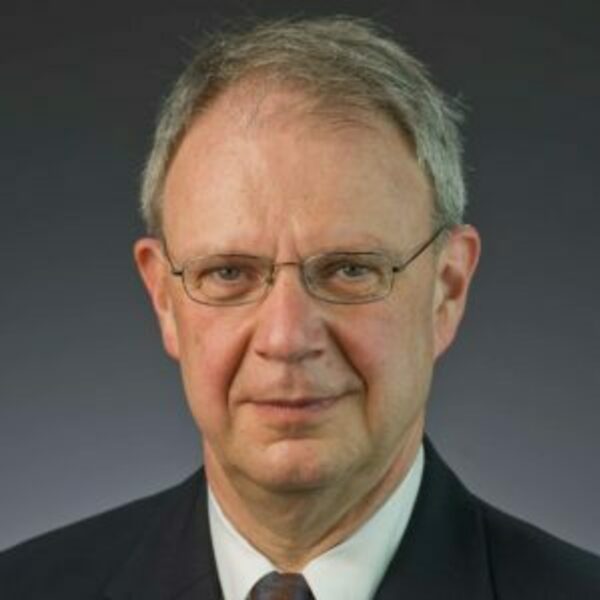
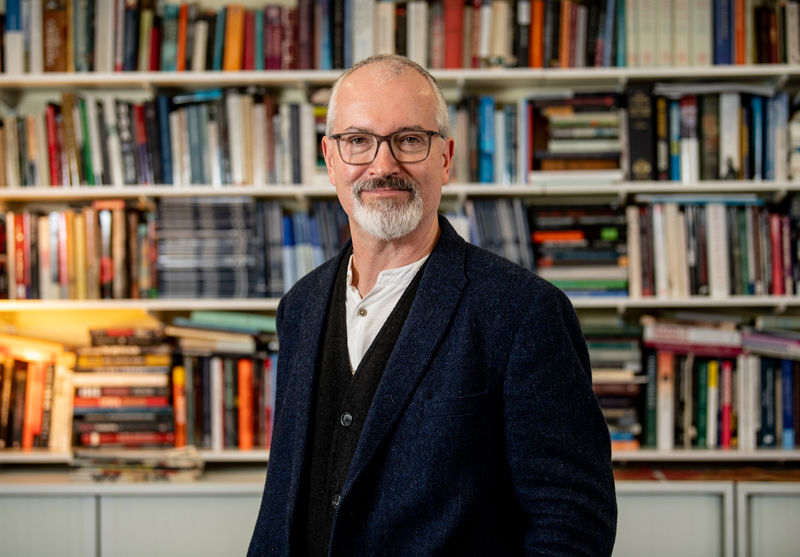
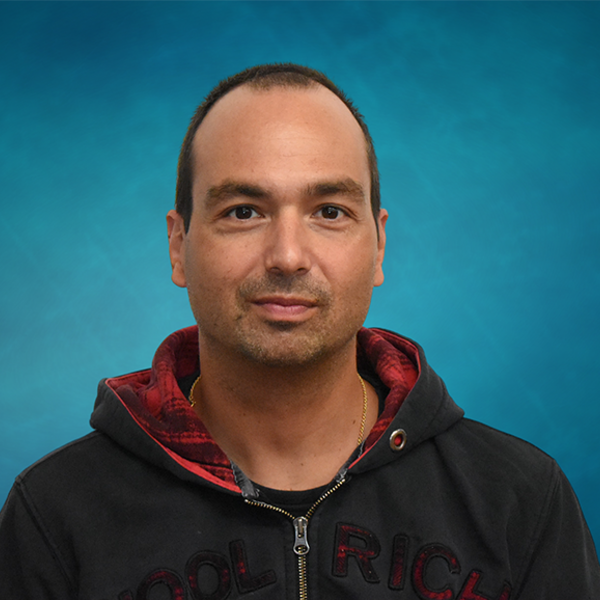
Dr. Páraic Carroll is a Lecturer in Transport Planning at the University of Melbourne's Faculty of Architecture, Building and Planning, with a concurrent Visiting Professorship at University College Dublin. His expertise combines policy analysis, behavioral modeling, and infrastructure planning, with recent focus on sustainable mobility transitions. Research examines travel behavior and decarbonization pathways, including: Equitable EV charging infrastructure deployment Agent-based modeling of mode-shift interventions Airport access policy optimization Energy-transport nexus in rural contexts Publications (2022-2025) highlight three themes: 1) Micromobility integration (30% of recent works), analyzing e-scooter adoption and first/last-mile solutions; 2) Rural transitions (25%), evaluating public transport expansion and EV microgrids; and 3) Behavioral interventions (20%), applying stage-based models to mobility change. He advises Irish climate policy through the Climate Change Advisory Council and consults for local governments on micro-mobility regulation. No awards or funded studentships are documented in available sources.
Max Zhang is the Irving Porter Church Professor at Cornell University's Sibley School of Mechanical and Aerospace Engineering, with joint affiliation to the Cornell Atkinson Center for Sustainability. His research focuses on energy-environment interactions, renewable energy systems, and IoT applications for sustainable development. His educational background includes: B.S. in Thermal Engineering, Tianjin University (1998) B.A. in English Language, Tianjin University (1998) Ph.D. in Mechanical Engineering, University of California-Davis (2004) Dr. Zhang leads research in: Air pollution modeling using the CTAG framework Sustainable solar farm design integrating energy/ecosystem dynamics Distributed energy resource management Development of statewide IoT networks for environmental monitoring Community-engaged solutions for food security and STEM education His recent publications (2023) demonstrate strong focus on renewable energy optimization, air quality improvement, and sustainable infrastructure design through computational modeling and experimental validation. Significant honors include: Cornell Town-Gown Achievement Award (2022) EPA Scientific Achievement Award (2015) Engaged Scholar Prize (2017) He directs the Energy and Environment Research Lab (EERL) and has secured major grants from NSF and NYSERDA for projects including agrivoltaic system development and hyperlocal weather forecasting systems for rural communities.
Martha Tsigkari serves as an Associate Professor at The Bartlett School of Architecture, University College London (UCL), where she bridges architectural practice with cutting-edge computational research. Her position situates her at the forefront of digital transformation in the built environment, with institutional affiliations spanning UCL's Faculty of the Built Environment and direct contributions to UN Sustainable Development Goals 4 (Quality Education), 11 (Sustainable Cities), and 13 (Climate Action). Her research program critically examines the integration of artificial intelligence, machine learning, and cognitive psychology into architectural design processes. Key investigations include spatial and visual connectivity analysis, XR-enhanced collaborative design environments, and AI-driven optimization of building performance. She explores how digital tools reshape creativity, professional identity, and sustainability outcomes in architecture, with particular focus on data commoditization, skills evolution, and human-AI collaboration in design workflows. Her interdisciplinary approach connects architectural theory with computational neuroscience and industrial digitalization trends. Tsigkari's publication trajectory reveals a clear evolution from computational structural analysis (2012-2017) toward AI ethics and professional transformation (2022-2024). Early work established foundations in performance-driven facades and material systems, while recent output confronts existential questions about architectural practice in the AI era. Her scholarship consistently addresses the tension between technological capability and human-centered design values, with growing emphasis on sustainable development frameworks and educational implications. Scientific Awards: No major awards are documented in the available records. Advising and Grants: While specific supervisees and funding mechanisms aren't detailed in current sources, her extensive collaborative network across 30+ publications indicates active mentorship and research leadership. Co-authorship patterns suggest involvement in multi-institutional projects addressing AECO industry digitalization, with potential ties to UK research councils and industry partnerships like RIBA. Labs and Teams: Tsigkari operates within The Bartlett's digital research ecosystem through recurring collaborations with Kosicki, Tarabishy, and Psarras. Her work manifests in experimental toolsets including Glaucon (XR design environment), HYDRA (optimization framework), and SandBOX (conceptual design system), indicating leadership in UCL's computational design labs focused on human-AI interaction and sustainable building technologies.
Roel Loonen is an Associate Professor at the Unit Building Physics and Services within Eindhoven University of Technology's Department of the Built Environment. Since October 2024, he has joined the EIRES Management Team, leading the Energy Transition in the Built Environment focus area alongside Lenneke Kuijer. His work emphasizes integrating energy efficiency with occupant comfort through advanced building simulation techniques. Academic Affiliation: Eindhoven University of Technology Management Role: EIRES Management Team Research Focus: Adaptive facades, building-integrated renewable energy, and occupant behavior modeling Loonen’s research explores modeling and simulation strategies for buildings that reconcile high indoor quality with minimal environmental impact. Key projects include collaborations with eyrise on solar shading glass and TNO on the ZIEZO project, which experiments with insulated glazing units that combine solar shading with bifacial photovoltaics at the SolarBEAT facility. His work spans computational methods for urban irradiation, occupant-facade interaction frameworks, and multi-domain thermal comfort modeling. The ZIEZO project exemplifies his approach to energy-efficient design by redirecting reflected light to enhance photovoltaic output while maintaining daylight comfort. His publications address challenges in adaptive façade systems, PV integration, and sensitivity analysis for heating demand. Loonen advocates for interdisciplinary collaboration to bridge technical innovation with societal implementation needs. Loonen’s educational contributions include co-teaching the interdepartmental master course Sustainable Energy Technology and developing interactive simulation-based teaching tools. He emphasizes connecting energy-related research to practical implementation through stakeholder engagement with municipalities, building companies, and grid operators. Key facilities involved in his research include SolarBEAT (for testing solar technologies) and TU/e’s simulation laboratories. His work addresses urban energy transitions by combining building physics with grid interactions, occupant behavior, and scalable PV system optimization.
Torbjörn Thiringer is a Professor in Electrical Engineering at Chalmers University of Technology. His research focuses on electrical systems for wind turbines and electric vehicles, with particular emphasis on system-level analysis and component-level studies of electrical machines, power electronics, and battery systems. Key research areas: Wind turbine systems, Electric vehicle drives, Battery degradation, Power electronics optimization Recent work explores graphene-based thermal management, fuel cell hybrid vehicles, and direct current building distribution efficiency His publications demonstrate interdisciplinary engagement with topics spanning: Finite element analysis of motor designs Life cycle assessment of energy systems Thermal modeling of SiC inverters Wave energy converter optimization Core loss measurement techniques Hydrogen fuel cell integration Professor Thiringer's collaborations span multiple institutions and industry partners, focusing on both theoretical modeling and practical implementation of advanced energy systems.
Joannes J. Westerink is the Joseph and Nona Ahearn Professor in Computational Science and Engineering at the University of Notre Dame, concurrently holding professorships in Aerospace and Mechanical Engineering, Applied and Computational Mathematics and Statistics, and Computer Science and Engineering. He leads the EFM Laboratory, focusing on computational fluid mechanics, finite element methods, and coastal ocean modeling. His research emphasizes storm surge prediction, tidal hydrodynamics, and geophysical turbulence modeling. Westerink holds a Ph.D. from MIT (1984). His work integrates advanced numerical techniques with real-world applications, such as NOAA's STOFS-2D-Global system for global water level forecasting and the UFS-Coastal modeling framework. He has developed high-resolution unstructured mesh models for coastal regions, enhancing predictions of hurricane impacts and compound flooding. His scientific contributions include over 150 peer-reviewed articles, with recent focus on machine learning corrections for operational models, probabilistic storm surge guidance, and global hindcasting. He received the endowed Ahearn Professorship for his transformative work in computational science and engineering. Key grants and collaborations involve NOAA, NASA, and NSF, advancing coastal resilience and climate modeling. His research spans academic, governmental, and industry partnerships, with applications in disaster risk reduction and environmental policy.
Richard English is currently Professor of Politics at Queen’s University Belfast (QUB) and serves as Director of the Senator George Mitchell Institute. He held leadership roles including Pro Vice-Chancellor for Internationalisation and Engagement (2016–2021) and Wardlaw Professor of Politics at the University of St Andrews (2011–2016). His research focuses on radicalism, political violence, nationalism, and Irish/British politics. A Fellow of the British Academy and recipient of the Royal Irish Academy Gold Medal (2019), he has authored influential works such as Armed Struggle: The History of the IRA and Irish Freedom: The History of Nationalism in Ireland . Research Trends: His recent publications (2022–2025) address energy systems, building simulations, and sustainable urban infrastructure, with keywords spanning Building Simulation , Sustainable Energy , and Smart Grids . Subfields include District Heating , Thermal Modeling , and Machine Learning in Energy Management . Honors: CBE (2018) Gold Medal, Royal Irish Academy (2019) Fellow, British Academy (2009) Ewart-Biggs Memorial Prize (2007)
Associate Professor Iain MacGill at the University of New South Wales leads interdisciplinary research at the intersection of renewable energy integration , electricity market design , and policy frameworks for low-carbon transitions. As a core member of the Centre for Energy and Environmental Markets , he develops computational models for coordinating distributed energy resources in restructured power systems. PhD in Electrical Engineering (UNSW) B.Eng. & M.Eng.Sci. (University of Melbourne) His work examines technical-economic-commercial challenges of renewable integration, with recent focus on: 24/7 zero-emission energy tracking frameworks Temporal matching in renewable procurement Open-source tools for green hydrogen value chains Residential solar-battery interaction dynamics Current research projects involve smart grid technologies , community microgrid economics , and climate-resilient energy systems . He collaborates with institutions like ARENA , CSIRO , and ARC on grants addressing grid stability, cost allocation, and policy innovation.
Arne Harms is a Senior Research Fellow at the Max Planck Institute for Social Anthropology, specializing in the Department of Anthropology of Politics and Governance. His work bridges environmental anthropology, ethics, and science and technology studies through fieldwork in East India, the Indian Himalayas, and Europe. Focus on environmental displacement and climate change Expertise in disaster studies and infrastructure analysis Current project examines regeneration practices in European climate activism Editorial role at Social Anthropology/Anthropologie Sociale Liaison officer for Hans-Böckler-Stiftung Research spans coastal erosion, market-based conservation, and the socio-political dimensions of environmental challenges. Publications analyze carbon forestry economies, climate anxiety mitigation strategies, and the paradoxes of green neoliberalism. Active in environmental anthropology since 2010, his work explores the intersection between ecological crises and human adaptation. Key themes include temporality, displacement ethics, and the material politics of climate responses.
Giorgio Scorzelli is a researcher at the University of Utah, serving as Director of Software Development for the Center for Extreme Data Management, Analysis, and Visualization (CEDMAV) and the National Science Data Fabric (NSDF) . He specializes in extreme data management, scientific visualization, and computational topology, with a focus on scalable solutions for climate science, materials science, and neuroscience datasets. His work emphasizes democratizing data access through platforms like OpenVisus , enabling efficient analysis of petascale and exascale data. Key contributions include orchestrating cyberinfrastructure, optimizing parallel I/O, and developing real-time visualization systems for heterogeneous resources. Notable scientific contributions include the NSF Grant #2127548 for NSDF development . His projects integrate cloud computing, geo-distributed storage, and FAIR digital objects to lower barriers to data democratization. Giorgio's research spans multi-resolution algorithms , computational topology , and 3D geometric modeling , with applications in infrastructure security, archaeological reconstruction, and biomedical imaging. His work bridges abstract mathematical frameworks (e.g., Boolean algebras, chain complexes) with practical software solutions.
Prof. Dr.-Ing. Bastian Welsch serves as a Professor in the Department of Civil and Environmental Engineering at Bochum University of Applied Sciences, where he holds key leadership roles including Head of the Renewable Energy Systems program, Chairman of the Renewable Energy Systems Committee, and member of both the Departmental Council and founding board of the Energy Transition Institute (EnWI). His academic focus centers on geothermal energy systems and renewable energy integration within sustainable infrastructure frameworks. Welsch's research expertise spans medium-deep borehole thermal energy storage, geothermal probe modeling, and renewable energy system optimization. His work addresses critical challenges in seasonal heat storage, district heating integration, and groundwater interaction with geothermal systems. He has pioneered simulation tools like BASIMO for optimizing borehole heat exchanger arrays and investigated permeability changes affecting regulatory approvals. His research bridges technical engineering with environmental and economic sustainability assessments. Analysis of his 15 most recent publications (2015-2020) reveals a strong trajectory toward practical implementation of geothermal storage solutions, with increasing emphasis on economic viability, environmental impact metrics, and integration with 4th generation district heating grids. His work consistently combines numerical modeling with real-world system design, demonstrating growing sophistication in optimization algorithms and multi-system coupling approaches. As an educator, Welsch teaches across both bachelor's and master's programs, covering foundational courses like Geology and Georesources alongside specialized subjects including Geothermal Energy Systems, Renewable Energies and Energy Supply, and advanced Geothermal Systems courses focusing on heating/cooling storage and electricity generation. He maintains regular consultation hours for students during academic terms.
Professor Li Tian (b. 1982) is a full professor and PhD supervisor at the Department of Civil Engineering, School of Civil Engineering, Shandong University. He serves as Director of the Shandong Green Building Intelligent Construction Center and was selected into Shandong University's Youth Scholar Future Plan (2017-2022). His research focuses on seismic and wind resistance of civil infrastructure, with 38 SCI publications and 56 patents (26 inventions). Research Interests Structural Earthquake and Wind Resilience Vibration Control Systems Smart Material Applications Multi-hazard Structural Analysis Long-span Transmission Tower Dynamics Publications Overview His 15 most recent works (2018-2019) demonstrate expertise in seismic/wind vulnerability of power infrastructure, vibration control devices (particularly SMA-TMD systems), and multi-hazard structural analysis. Key contributions include probabilistic seismic demand modeling, bidirectional damping mechanisms, and collapse failure simulations. Scientific Awards Multiple Shandong Electric Power Science and Technology Progress Prizes (2018, 2015) Shandong University Teaching Awards (2017, 2012, 2014) National and Regional Academic Paper Prizes Academic Engagement He actively participates in structural engineering societies, serves on NSFC review panels, and acts as reviewer for over 30 journals including Engineering Structures and Earthquake Engineering and Engineering Vibration .
James Bain is a Professor in the Electrical and Computer Engineering (ECE) Department at Carnegie Mellon University, with a courtesy appointment in the Department of Materials Science and Engineering. He serves as Associate Director of the Data Storage Systems Center (DSSC) within the College of Engineering. B.S. in Materials Science and Engineering from the University of Pennsylvania (1988) M.S. (1991) and Ph.D. (1993) in Materials Science and Engineering from Stanford University His research spans magnetic, optical, electrical, thermal, and mechanical devices for information storage. Current programs focus on heat-assisted magnetic recording and resistive switches for memory and reconfigurable electronics, with interdisciplinary applications in energy security, industrial decarbonization, and nanofabrication. His work intersects materials science , electrical engineering , and nanotechnology . Scott Institute Seed Grant (2018) for energy research Member of Materials Research Society and IEEE Magnetics, Electron Devices, and Photonics Societies Bain has co-authored over 225 publications and leads research at the interface of data storage and energy systems . He actively contributes to multiphysics modeling, nanoscale thermal transport, and phase-change materials. His lab is affiliated with Carnegie Mellon’s Data Storage Systems Center, advancing technologies for grid-interactive and high-performance buildings.
Helleik Rosenvinge Syse is a PhD researcher at the University of Stavanger , affiliated with the Faculty of Science and Technology and the Department of Energy and Petroleum Technology . His work in the Future Energy Hub group focuses on integrating the human dimension into energy use in buildings , supervised by Associate Professor Homam Nikpey and Professor Emeritus Harald Røstvik. He previously studied at the University of Strathclyde and has held roles in startups like Gwing, NablaFlow, and bitUnitor. Academic journey: MSc in Renewable Energy Systems and the Environment (University of Strathclyde) Visiting scholar: University of New South Wales's Artificial Intelligence Institute (2023/24) His research spans techno-economic analysis of renewable energy systems and interdisciplinary exploration of human-engineering interactions . Recent work includes simulation studies of MyBox Energy Lab and data accessibility frameworks for smart city energy systems , emphasizing scalable solutions for urban sustainability. Scientific recognition includes: Nominated '30 under 30 ledestjerner' (Dagens Næringsliv, 2020) Awarded 'young energy talent' (Stavanger Chamber of Commerce, 2022) As an educator, he taught sustainability courses at BI Business School and actively participates in energy transition advocacy through Stavanger Chamber of Commerce groups. His multidisciplinary approach bridges technical systems analysis with behavioral science to address energy efficiency challenges.
Meng Yuan is a Marie Skłodowska-Curie Fellow at Chalmers University of Technology , affiliated with the Control Engineering department. Previously, he was a Research Fellow at the Rehabilitation Research Institute of Singapore, Nanyang Technological University, and earned his PhD in Electrical and Electronic Engineering from the University of Melbourne. Research Focus: Control theory, energy systems, rehabilitation engineering, robotics, and industrial automation. Notable Projects: Integration of reinforcement learning and predictive control for energy management in smart homes (SmartHOME), funded by the European Commission (EU). His recent publications explore machine learning for industrial load forecasting, deep reinforcement learning in manufacturing optimization, and safety-critical control systems for assistive robots. A 2024 Advanced Engineering Informatics paper highlights his work on steel logistics, while a 2023 IEEE Transactions on Cybernetics article details wheelchair speed control using robust MPC. Awards: Marie Skłodowska-Curie Fellowship Collaborative Networks: Active in smart home energy projects and industrial robotics teams at Chalmers. Supervises research in control algorithm development but no specific students are listed in the provided data.