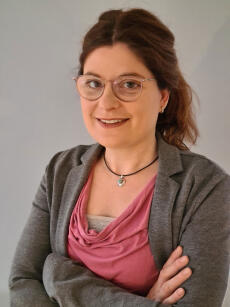
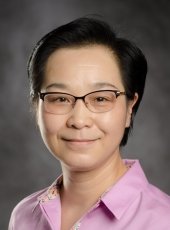
Stavrakakis Ioannis is a Professor at the Department of Informatics and Telecommunications, School of Science, University of Athens, where he has served since 2002. He previously held academic positions at Northeastern University (1994-1999) and University of Vermont (1988-1994). Ph.D., Electrical Engineering (1988), University of Virginia Diploma, Electrical Engineering (1983), Aristotle University of Thessaloniki His research focuses on network resource allocation algorithms , cooperative content dissemination , mobile ad hoc networks , and privacy-aware protocols . He leads the Advanced Networking Research (ANR) Group. Recent publications highlight trends in AI-driven network optimization , edge computing for VR , drone-assisted sensor networks , and privacy in vehicular systems . Key themes include game theory applications, energy-efficient protocols, and distributed learning frameworks. Contact: ioannis@di.uoa.gr
Dr. Richard Molyet is a Senior Lecturer and Undergraduate Director in the Department of Electrical Engineering and Computer Science at the University of Toledo's College of Engineering. After retiring as Associate Professor in 2002, he returned to academia in 2005 as Visiting Professor and transitioned to Associate Lecturer in 2008. Education: Ph.D. in Engineering Science (1981) from University of Toledo His research spans Automatic Control , Robotics , Smart-Grid Systems , and Biomedical Applications . Recent publications focus on deep learning for medical diagnostics and hybrid power network optimization , while earlier work explored repetitive control algorithms and microprocessor-based motion analysis . Scientific Recognition: IEEE Third Millennium Medal (2000) IEEE-USA Professional Achievement Award (2002) University of Toledo Outstanding Teacher Award (2016) Currently advising 3 PhD students and multiple Master’s candidates, Dr. Molyet has served on numerous academic committees since the 1980s. He maintains an active role in IEEE Toledo Section's executive board for 39 years .
Per Lynggaard is a Professor of Electronics at the Technical University of Denmark (DTU) , leading the B.Eng. program in Electronics. Previously, he held an Associate Professor role at Aalborg University, combining academic excellence with a robust industrial career in technical-scientific research and development. Education: M.Sc. in Electrical Engineering and Information Technology (EE and IT) Ph.D. in Electronics from Aalborg University Research Interests: Focus on Integrated Circuit Design, Wireless Sensor Networks (WSN), Machine Learning, IoT, and Smart City Technologies . His work emphasizes energy-efficient systems, cybersecurity in IoT, AI-driven interference mitigation, and sustainable energy harvesting solutions. He has contributed to UN Sustainable Development Goals through projects addressing smart infrastructure and environmental monitoring. Projects & Collaborations: Leads and participates in EU-funded initiatives such as InnoTech (2023–2025) for green transition solutions and TransportTech (2023–2026) for Industry 4.0 logistics. Active in cybersecurity research via projects like Jamming Against Critical Wireless Communication , aiming to protect critical infrastructure. Awards: Recognized with multiple honors and rewards during his industrial career, though specific names are not listed. His work has been cited widely, with notable impact in IoT security and energy-efficient systems. Advising & Grants: Supervises Turnip T.N. in a PhD project on 6G security protocols. Engaged in securing funding for projects like F2D2: The Community for Dynamic Data (2021–2030), focusing on dynamic data systems and cybersecurity. Labs & Teams: Collaborates in interdisciplinary teams such as the InnoTech TaskForce and F2D2 Community , advancing IoT and AI integration. His research bridges academia and industry, with outputs spanning smart cities, healthcare IoT, and sustainable energy systems.
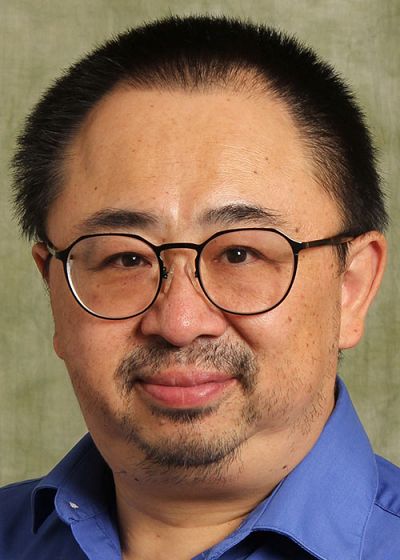
Yu Chen is a Professor in the Department of Electrical and Computer Engineering at Binghamton University, State University of New York. He leads the Ubiquitous Smart & Sustainable Computing (US2C) Lab and serves as Director of the Center for Information Assurance and Cybersecurity (CIAC). His research focuses on Trust, Security, and Privacy in Edge-Fog-Cloud Computing, IoT, and Smart Cities. Dr. Chen holds a PhD from the University of Southern California (2006), with prior research under Professors Kai Hwang and Anthony F. J. Levi. His work has been funded by NSF, DoD, AFOSR, and industrial partners, yielding over 200 publications. He is a Senior Member of IEEE and SPIE, and a member of ACM. Education: PhD in Electrical Engineering, University of Southern California (2006) Affiliations: Director, US2C Lab Associate Director, CIAC Research Interests: Smart Cities, Intelligent Surveillance, Edge-Fog-Cloud Computing, IoT Security, and Privacy-Preserving Technologies. His work emphasizes real-time systems, resilient edge architectures, and decentralized consensus protocols for IoT. Grants & Awards: Funded by NSF, DoD, AFOSR, NYS MDPI Computers 2019 Best Paper Award Best Student Poster Award (IEEE AIPR 2014) Students & Labs: Advised 19 students (PhD/Master’s). Key projects include secure edge video processing, ENF-based authentication, and blockchain for IoT. The US2C Lab explores smart city applications and edge computing resilience.
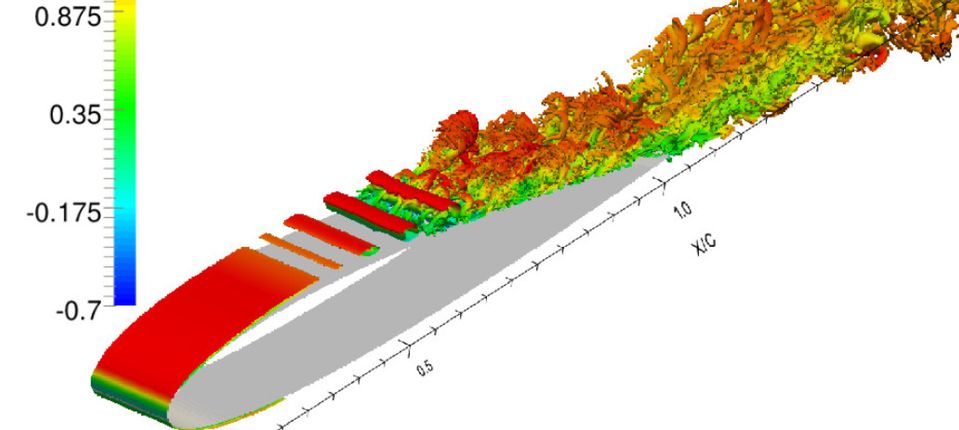
Professor George Papadakis is a Professor of Aerodynamics at the Department of Aeronautics, Faculty of Engineering at Imperial College London. His research focuses on fundamental analysis and manipulation of transitional or turbulent flows, with applications in aerodynamics, flow control, and mixing enhancement. He leads the Papadakis Lab, which develops computational methods and optimization algorithms for fluid dynamics problems. Education: PhD in Mechanical Engineering (National Technical University of Athens, 1996), BEng in Mechanical Engineering (National Technical University of Athens, 1990). Professional history includes roles as Lecturer at King's College London (1999–2011) and Reader at Imperial College (2011–present). Research interests include turbulence enhancement/suppression, sensitivity analysis of chaotic systems, and DNS/LES simulations. His group is funded by EPSRC, European Union, Leverhulme Trust, and the President's Scholarship Fund. Key affiliations include the Energy Futures Lab and Flow Control networks. Advising and grants: Supervised numerous PhD students (e.g., Dandan Xiao, Felipe Alves Portela) and secured funding from multiple agencies. Current students include Hanxun Yao, Karim Shawki, and others. Research outputs span flow control, vortex dynamics, and industrial mixing applications. Labs/teams: Papadakis Lab focuses on aerodynamics, turbulence, and computational methods. Collaborations include Temasek Labs (Singapore) and Prof. J.C. Vassilicos (Imperial College).
Diego F. Aranha is an Associate Professor in the Department of Computer Science at Aarhus University . His research focuses on cryptographic systems, cybersecurity, and privacy-preserving technologies with applications in voting systems, post-quantum cryptography, and secure computation. He has contributed extensively to homomorphic encryption, secure multiparty computation (MPC), and cryptanalysis of cryptographic implementations. Key projects include: MPCC (2025-2028) : Multi-Party Computation in the Confidential Cloud SCI (2024-2027) : Secure Computation Infrastructures for the Retail Industry RENAIS (2021-2026) : Residue Number Systems for Cryptography His work emphasizes practical efficiency and formal verification of cryptographic protocols. Recent publications highlight advancements in lattice-based cryptography, secure voting schemes, and mitigating side-channel vulnerabilities in post-quantum algorithms. He actively collaborates on open-source cryptographic libraries and standards, with a focus on bridging theoretical security and real-world implementation challenges.
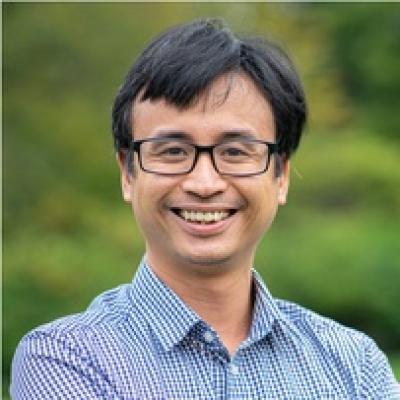
Hung Le is an Associate Professor in the College of Information & Computer Sciences at the University of Massachusetts Amherst. He leads research in theoretical computer science with a focus on graph algorithms, spanners, and metric embeddings. He is a member of the UMass Theory Group and serves as Chair of PhD Admissions. PhD in Computer Science, Oregon State University, 2018 BS in Computer Science, Hanoi University of Science and Technology Hung Le's research centers on algorithm design for graph problems, especially understanding structural properties of graphs in theoretical settings. His work spans approximation algorithms, spanners, fault tolerance, metric embeddings, and computational geometry. He has made significant contributions to light spanners, tree covers, and distance oracles, particularly in planar and doubling metrics. His recent publications show a strong trend in designing efficient, sparse, and light structures for geometric and minor-free graphs, with a focus on optimal tradeoffs and lower bounds. Key themes include locality-sensitive orderings, shortcut partitions, and tree covers with constant stretch and size. NSF CAREER Award Google Research Scholar Program (2024) PIMS Postdoctoral Fellowship Hung Le has advised numerous students and postdocs, including An La and Cuong Than, whose work has led to STOC and FOCS publications. His research is funded by multiple NSF grants (CCF-2121952, CCF-2237288, CCF-2517033) and a Google Research Scholar Award. He has served on program committees (e.g., WADS 2025) and co-chaired SOSA 2021. He is actively involved in the theoretical computer science community, maintains a technical blog 'Rambling on Graphs', and contributes to open problems in graph theory and algorithm design.
Yacine Atif is a Professor of Information Technology at the University of Skövde, affiliated with the School of Informatics and Department of Information Technology. He maintains an active research profile with numerous publications spanning from 2002 to the present, demonstrating sustained academic contribution in his field. His research interests focus on Internet of Things (IoT), Cybersecurity, Cyber-Physical Systems, Digital Transformation, Cloud Computing, and Educational Technologies. Professor Atif's work bridges theoretical research with practical applications, particularly in smart city technologies, critical infrastructure protection, and educational innovations. His research has evolved from early work in e-commerce trust (2002) to contemporary work on metaverse learning experiences (2023) and vehicle collision prediction (2025). Analysis of his recent publications (2018-2025) reveals a strong focus on cybersecurity applications for cyber-physical systems, particularly in critical infrastructure protection. His work demonstrates a progression from foundational IoT concepts toward sophisticated integration of machine learning and cognitive approaches in security analysis. The research portfolio shows consistent collaboration with both academic and industry partners across multiple countries. Professor Atif leads or contributes to significant research projects including the ongoing 'Intelligent Driver Support Systems and Safety Enhancement' (I2Connect) project (2023-2026) focused on developing next-generation Advanced Driver Assistance Systems for trucks, and previously led the 'Infrastructure Resilience – ELVIRA' project (2017-2020) which developed time-based infrastructure dependency analysis for power-grid risk assessment. His teaching responsibilities include multiple courses at both bachelor's and master's levels, with course credits ranging from 3 to 7.5 credits across various technology domains. His office is located in room PA420K at the University of Skövde, and he can be contacted at yacine.atif@his.se or by phone at 0500-448312.
Professor Anne Remke leads the safety-critical systems group at the Faculty of Mathematics and Computer Science at Westfälische Wilhelms-Universität Münster since October 2014. She is also affiliated with the Design and Analysis of Communication Systems group at the University of Twente, where she served as assistant professor from June 2010 and became associate professor in March 2016. Her research focuses on dependability and security in critical infrastructures, particularly electrical power systems and telecommunication networks. Her educational background includes a PhD (2008) and MSc (2004) in Computer Science from the University of Twente and RWTH Aachen respectively. Her doctoral research focused on 'Model Checking Structured Infinite Markov Chains,' for which she publicly defended her thesis in June 2008. Professor Remke's research interests center on cyber-physical systems, with particular focus on evaluation of charging strategies for local energy storage in smart homes and security of control networks (SCADA) in smart grids. Her work bridges theoretical model checking techniques with practical applications in critical infrastructure protection. She has made significant contributions to the analysis of hybrid Petri nets, stochastic models, and the development of tools for dependability evaluation. Her recent publications demonstrate a strong trend toward integrating machine learning with formal verification methods for cyber-physical systems. The research spans stochastic hybrid systems, reachability analysis, and security evaluation of smart grid infrastructures, showing consistent growth in both theoretical foundations and practical applications of dependability analysis. Veni award from Dutch Science foundation (NWO) for 'Counting on a reliable water supply' GI/ITG MMB prize for best diploma thesis in computer and communication systems Best Paper Award at Valuetools 2023 conference Best Repeatability and Artifact Evaluation Award at QEST21 Teaching award from Fachschaft FB10 (2019) Professor Remke has successfully secured multiple research grants including the DFG project 'RealyST: Reachability Analysis for Stochastic Hybrid Systems' in collaboration with RWTH Aachen. She has supervised numerous students including Katharina Sichma, Pauline Blohm, Joanna Delicaris, Verena Menzel, Mathis Niehage, Jonas Stübbe, and Lisa Willemsen. Her research group actively participates in international collaborations and standardization efforts in critical infrastructure security. The safety-critical systems group maintains several research tools including HYPEG (for simulation and analysis of hybrid Petri nets), TimeNET (a GUI for modeling hybrid Petri nets), and a Smart Neighbourhood Simulation Tool for community energy storage and trading. These tools support their research in modeling and evaluating complex critical infrastructures through both analytical methods and simulation techniques.
Alex Rashkovan is a Visiting Assistant Professor in the Department of Engineering Physics at McMaster University. His academic work focuses on computational fluid dynamics (CFD), nuclear reactor thermal hydraulics, and heat transfer, with a strong emphasis on modeling fluid behavior in reactor containment systems and experimental validation of CFD simulations. His research spans turbulent jet dynamics, stratified layer erosion, mixed convection, and vortex analysis, as evidenced by publications in journals such as Nuclear Engineering and Design , Physics of Fluids , and Progress in Nuclear Energy . Key trends in his scholarly activity include the optimization of gas-coolant channels, scaling considerations for reactor experiments, and the thermal and fluid dynamic analysis of complex geometries like wavy walls and rotating containers. His work often bridges numerical simulations with empirical validation to enhance reactor safety and efficiency.
Sriramkrishnan Muralikrishnan is a Research Staff member at the Department of Mathematics and Education within the Jülich Supercomputing Center (JSC) at Forschungszentrum Jülich, Germany. His work focuses on developing advanced computational methods for high-performance scientific computing, particularly in plasma physics and related multi-physics applications. Dr. Muralikrishnan's research spans several key computational domains: Numerical Analysis and High-Order Methods High Performance Scientific Computing for Exascale Architectures Plasma Physics Simulations Fast Solvers and Preconditioners Parallel-in-Time Integration Techniques Performance Portable Programming His recent publications demonstrate a strong focus on particle-based computational methods, particularly Particle-in-Cell and Particle-in-Fourier techniques. His work consistently addresses challenges in energy conservation, scalability across architectures, and noise reduction in plasma simulations. A significant portion of his research involves developing performance-portable frameworks that can efficiently leverage modern supercomputing hardware from different vendors without code rewrites. Dr. Muralikrishnan is actively involved in open-source scientific software development: Lead developer of IPPL (a performance portable library for grids and particles) Developer of OPAL (an open-source particle accelerator library) His research has direct applications in plasma physics, fusion energy research, and advanced accelerator design, with a strong emphasis on making computational methods accessible through open-source development and advocating for diversity in scientific computing.
Andrea Simonetto is a Research Professor at the Applied Mathematics Unit (UMA) , ENSTA Paris, Institut Polytechnique de Paris. His work spans optimization, control theory, and learning algorithms for large-scale and streaming data , with applications in smart grids, intelligent transportation, personalized health, and quantum computing. Current research focuses on online algorithms for time-varying optimization , personalized optimization for cyber-physical systems , and variational quantum algorithms . Past contributions include theoretical and algorithmic advances in convex/non-convex optimization, distributed optimization (robotic networks, smart grids), and signal processing for sparse reconstructions and parallel computing in particle filtering. Key application domains include renewable energy integration , quantum state preparation , and human-in-the-loop control systems . His research is published in journals like ACM Transactions on Quantum Computing , IEEE Control Systems Letters , and Automatica .
Ghyslain Gagnon is a Professor in the Department of Electrical Engineering at École de technologie supérieure (ÉTS) in Montreal, Canada. He leads research activities within the LACIME – Communications and Microelectronic Integration Laboratory, focusing on cutting-edge developments in microelectronics, sensors, and communication systems. His work bridges theoretical research and practical applications across multiple domains including health technologies, wireless communications, and quantum engineering. Education: B.Ing. from École de technologie supérieure M.Ing. from École de technologie supérieure Ph.D. from Université de Carleton Professor Gagnon's research spans several interconnected domains with emphasis on Radiofrequency circuits and antennas, Microelectronics, Wireless communications, Sensors and monitoring systems, Machine learning applications, Health technologies, and Quantum engineering. His work demonstrates a strong commitment to translating theoretical concepts into practical solutions with real-world impact, particularly in the areas of health monitoring systems and advanced communication technologies. His recent publications reveal a clear trajectory toward increasingly interdisciplinary research, combining traditional electrical engineering with machine learning, health monitoring, and quantum technologies. The trend shows growing emphasis on practical applications in automotive safety systems, wireless communications for next-generation networks, and health monitoring technologies that leverage flexible electronics and novel sensor designs. Professor Gagnon has successfully supervised numerous graduate students through their doctoral and master's research, with recent theses focusing on smart hearing protection devices, machine learning applications, energy monitoring systems, and flexible sensor technologies. His supervision record demonstrates consistent productivity and relevance to contemporary engineering challenges. He is an active member of the LACIME research laboratory, which focuses on six key areas: Functional materials, Micro- and nanofabrication processes, Conception and design of integrated circuits, Design and fabrication of hybrid components, Photonic and electronic microsystems, and Signal processing and communication. This environment provides students with access to cutting-edge tools and fosters innovation through interdisciplinary collaboration.
Alberto Oliveri is an Associate Professor at the University of Genoa in the Department of Naval, Electrical, Electronic and Telecommunications Engineering. He teaches courses including Circuits and Systems, Nonlinear Circuits and Systems, Power Management, and Elements of Electrical Technology for undergraduate and graduate programs in Electronic Engineering, Information Engineering, Industrial Technologies, and Chemical Engineering. His research focuses on advanced topics in power electronics and control systems, with particular emphasis on: Modeling and optimization of magnetic components (inductors) for switch-mode power supplies FPGA implementation of nonlinear model predictive control algorithms Synthetic inertia solutions for renewable energy grid integration Embedded control systems for power converters Advanced modeling of ferrite-core and amorphous-core inductors His recent publications (2022-2025) demonstrate a consistent focus on improving power conversion efficiency through advanced control strategies and hardware implementation. Research themes include predictive control optimization, magnetic component characterization under saturation conditions, renewable energy grid support functions, and embedded algorithm development for real-time power system monitoring.
Bo Chen is a Professor in the Department of Mechanical Engineering – Engineering Mechanics and the Department of Electrical & Computer Engineering at Michigan Technological University. She directs the Intelligent Mechatronics and Embedded Systems (IMES) Laboratory, focusing on advanced controls, optimization, and artificial intelligence for connected and autonomous vehicles, electric vehicle–smart grid integration, and smart mobility. PhD in Mechanical and Aeronautical Engineering from the University of California, Davis (2005) Visiting Professor at Argonne National Laboratory (2014–2015, 2016) Sabbatical at Oak Ridge National Laboratory (2022–2023) Dr. Chen's research spans Mechatronics , Embedded Systems , Hybrid Electric Vehicles , and Cyber-Physical Systems . Her work includes vehicle-to-grid integration , battery control systems , and cybersecurity for automotive systems . Recent publications highlight advancements in predictive control algorithms for hybrid vehicles, consensus-based frequency regulation , and plausibly deniable encryption systems for mobile devices. Funded by the National Science Foundation, Department of Energy, and industry partners, her research has secured over $10 million in grants. ASME Fellow Best Paper Award (2008 IEEE/ASME MESA Conference) Top Cited Article Award (Journal of Computers & Graphics) Best Survey Paper Award (IEEE Transactions on ITS) Co-recipient of four Best Student Paper Awards Dr. Chen has held leadership roles as Chair of the Technical Committee on Mechatronics and Embedded Systems (IEEE ITS Society), Chair of the ASME Design Engineering Division's Technical Committee, and Associate Editor for IEEE Transactions on Intelligent Transportation Systems (2012–2019). She organized multiple international conferences and co-edited special issues on intelligent transportation systems.