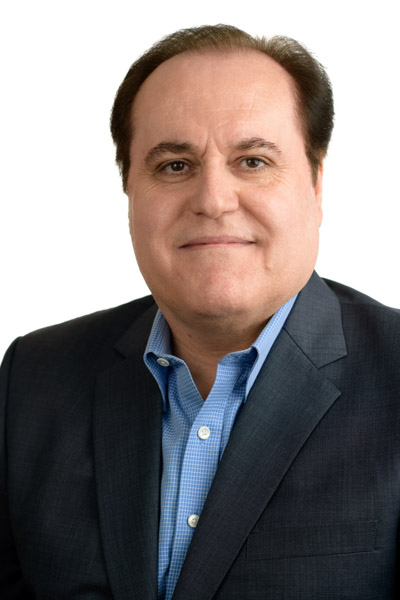
Dr. Zomaya is the Chair Professor of High Performance Computing & Networking and Founding Director of the Centre for Distributed & High Performance Computing at the University of Sydney, Australia. He has held leadership roles including Deputy Head of School and Head of School at The University of Western Australia and the University of Sydney. A Fellow of AAAS, IEEE, and IET, he leads research in distributed computing systems, sustainable computing, and edge intelligence. His research spans parallel/distributed computing, energy-efficient systems, and cloud/edge technologies. He has published over 600 papers, authored/edited 20+ books, and secured $22M+ in funding from ARC, Cisco, IBM, and others. He currently supervises 12 PhD students and has mentored 35 PhD completions. Key awards include the ACM MSWIM 2017 Fessenden Award and IEEE Technical Achievement Award (2014). He serves as Editor-in-Chief of IEEE Transactions on Sustainable Computing and has chaired over 700 conferences. His current projects focus on data analytics over cloud/edge platforms and holistic energy-aware scheduling for distributed systems.
Christoph Veigl is a Senior Lecturer at Technikum Wien, focusing on assistive technology and accessibility engineering. His work emphasizes developing open-source solutions for individuals with disabilities, such as the AsTeRICS platform and the FLipMouse input device. He leads research in smart home accessibility, IoT integration, and user-centered design methodologies. Veigl's research interests include assistive technologies for communication, environmental control, and motor impairment solutions. His team develops tools like the Universal Access Panel for IoT-enabled smart homes and the AsTeRICS Grid framework for AAC systems. He collaborates internationally on projects addressing accessibility in gaming, embedded systems, and cross-cultural education. Veigl's publications highlight innovations in eye-tracking calibration, middleware for application integration, and standards for assistive technology design. His work bridges electrical engineering, biomedical engineering, and computer science to create inclusive technologies. Key contributions include over 24 peer-reviewed articles since 2001, with recent focus on democratizing AAC through open-source software and enhancing accessibility in emerging technologies.
Adrian Vulpe-Grigorasi is a Junior Researcher at the Center for Digital Health and Social Innovation , affiliated with the Institute of Health Sciences at FH Steyr (FHSTP.ac.at). He holds BEng and MEng degrees and specializes in interdisciplinary research at the intersection of machine learning, cognitive science, and biomedical engineering. His research focuses on: Cognitive load assessment using VR systems and biosensors Development of multimodal machine learning frameworks for health monitoring Applications of GANs in ECG analysis and synthetic data generation Energy systems optimization through data-driven approaches Key projects include: Realistic clinical XR training systems Attention performance classification via eye tracking Smart grid forecasting with GAN data augmentation Adrian has published in conferences such as IEEE Informatics, CGI, and ACM MUM. His work bridges theoretical machine learning advancements with practical healthcare and energy applications.
Andreas Buttinger-Kreuzhuber is affiliated with the Department of Engineering Hydrology at TU Wien. His research focuses on advanced hydrodynamic modeling, GPU-accelerated flood simulations, and integrating geospatial data for flood risk assessment. He contributed to projects like HORA 3.0, a national flood risk mapping initiative, and developed frameworks for high-resolution simulations of urban and rural flash floods. His work bridges computational science and environmental engineering, emphasizing real-world applications in disaster management and urban planning. Education: Dipl.-Ing. (FH) in Civil Engineering, Dr.techn. (PhD) in Technical Sciences, and BSc in a related field. Notable research themes include shallow-water schemes optimization, interactive visualization tools for flood management, and nanopore fluid dynamics. His interdisciplinary approach combines hydraulic modeling with geomatics and computational fluid dynamics. Collaborations include work with Prof. Günter Blöschl and the Network Lab at TU Wien. Recent efforts focus on accelerating hydrodynamic simulations using GPU technology and improving regional-scale flood modeling accuracy.
Eranda Dragoti-Cela is an Associate Professor at the Department of Optimization and Discrete Mathematics, Graz University of Technology. She specializes in combinatorial optimization, focusing on polynomially solvable special cases of NP-hard problems like the Quadratic Assignment Problem (QAP), portfolio optimization, and algorithmic graph theory. Education: M.Sc. in Applied Mathematics, University of Tirana (1992) Ph.D. in Technical Sciences, Graz University of Technology (1995) Habilitation in Applied Mathematics (2001) Her research spans combinatorial optimization (QAP, assignment problems, location problems), portfolio optimization (risk-return models, ordinal information integration), and graph theory (edge intersection graphs, network flows). Recent work includes linearization of quadratic shortest path problems and data arrangement on trees. She supervises bachelor's and master's theses in discrete mathematics and teaches courses like Combinatorial Optimization 1 and Risk Theory and Management , emphasizing algorithmic rigor and practical applications in finance and engineering.
Gabriele Kotsis is a Full Professor at the Institute of Telecooperation, Johannes Kepler University Linz, with extensive contributions to Artificial Intelligence research. Her institutional presence spans multiple departments through interdisciplinary projects while maintaining her primary affiliation with JKU's engineering-focused research units. Her research expertise encompasses: Natural Language Processing and Neural Machine Translation systems Reinforcement Learning applications for Smart Grid optimization Mobile Computing and Multimedia Intelligence frameworks Big Data Analytics and Database Systems innovation Human-centered AI development methodologies Recent publications (2024-2025) reveal a strategic focus on practical AI implementations addressing multilingual communication barriers and energy efficiency challenges. Her work consistently bridges theoretical AI advances with real-world applications across multiple domains. Professor Kotsis maintains an active supervision record with thesis guidance and leads multiple funded research initiatives. Her current portfolio includes: 'Enhancing Neural Machine Translation' project (2025-2026) for Southeast Asian languages 'INTES' regulatory compliance ecosystem (2023-2026) 'Human-centered Artificial Intelligence' initiative (2022-2026) Through her leadership in international conferences (iiWAS, MoMM, DEXA) and editorial roles for major proceedings, she maintains significant influence in the global computer science research community while advancing JKU's research profile.
Wieland Schwinger serves as Associate Professor in the Department of Cooperative Information Systems at Johannes Kepler University Linz (JKU), where he leads research at the intersection of information systems and critical infrastructure protection. His work addresses urgent challenges in operational technology monitoring for industrial control systems, energy data governance across European markets, and volunteer coordination during disasters. Current projects include iREDUCE (2025-2026), where he serves as Principal Investigator developing intelligent alarm flood reduction systems for critical infrastructure. His research program centers on three interconnected pillars: semantic relationship awareness frameworks for operational technology monitoring, data governance solutions for fragmented European energy markets, and goal-oriented recommender systems for crisis volunteering. Recent publications demonstrate consistent innovation in translating theoretical advances—particularly in data spaces and semantic modeling—into practical applications for smart cities and critical infrastructure. This work bridges computer science with energy engineering and social computing, yielding deployable solutions for urban microgrids and disaster response systems. Prof. Schwinger's 2024-2025 publications reveal a strategic focus on data accessibility challenges in critical domains, with 60% addressing operational technology monitoring through semantic frameworks and digital shadows. His energy governance research tackles European market fragmentation through comparative analysis of regulatory models, while volunteering systems explore novel data space integrations. These outputs reflect an interdisciplinary methodology combining empirical validation with framework development, consistently targeting real-world implementation in Austrian and European contexts. He received dual recognition in 2025 for sustained scholarly impact: SoSyM Most Influential (theme section) Paper award (September 2025) Ten-year most influential theme section paper award (October 2025) These honors specifically acknowledge his foundational work on model-to-model transformation languages, demonstrating research influence extending over a decade. As an active grant recipient, Prof. Schwinger currently leads the FFG-funded iREDUCE project (€ project value) and contributes to Civolunteer and FFG-KIRAS CERTIFIER initiatives. His project portfolio shows strong continuity in critical infrastructure research since 2021, with increasing leadership responsibilities including Principal Investigator roles. International engagement includes the ASEA-UNINET network for disaster management and European energy governance collaborations, supported by both FFG and EU funding mechanisms like Erasmus+. Research activities occur within JKU's Department of Cooperative Information Systems, where Prof. Schwinger collaborates closely with colleagues including Kapsammer, Retschitzegger, and Pröll. The group maintains strong industry ties through FFG projects with Austrian critical infrastructure operators, focusing on deployable monitoring solutions and data governance frameworks. Students gain hands-on experience with industrial datasets and real-time operational technology environments, preparing them for careers at the technology-policy interface in critical sectors.
Jonas Ries is a Professor at the University of Vienna, affiliated with the Department of Structural Biology and Computational Biology. His research focuses on super-resolution microscopy, cryo-electron microscopy, and structural analysis of cellular components. Department: Structural Biology and Computational Biology Specialization: Nuclear pore complex architecture, MINFLUX nanoscopy, fluorescent labeling. His recent work includes 2025 projects on mitochondrial fission during apoptosis via SMLM and MINFLUX, and developing a cost-effective MINFLUX microscope. He collaborates internationally, with a focus on nuclear pore complexes and artificial intelligence applications in microscopy. 2024 contributions highlight advancements in 3D MINFLUX excitation, dynamic structural biology, and synaptonemal complex analysis in C. elegans. His projects often involve computational modeling and high-throughput imaging. Research Trends Recent publications emphasize super-resolution techniques (MINFLUX, SMLM), PSF inverse modeling for microscope calibration, and nuclear pore complex dynamics. Subfields include apoptosis mechanisms, clathrin coat bending, and AI-driven image analysis. Academic Engagement He participated in the Dies Academicus event at the University of Vienna in 2024, indicating active involvement in academic community activities.
Maximilian Jakob Schirl serves as a Junior Researcher at the Centre for Secure Energy Informatics within the Department of Computer Science, Faculty of Natural and Mathematical Sciences at Paris Lodron University of Salzburg. His work focuses on cybersecurity, energy informatics, and data-driven solutions for smart energy systems, contributing to multiple funded research projects including FTZ CyberSec and ECOSINT. His research spans cybersecurity in energy infrastructure, smart meter data analytics, industry 4.0 adoption, and digital readiness assessment. He employs advanced techniques like reinforcement learning and privacy-preserving algorithms to address challenges in local energy communities, supply chain resilience, and sociodemographic profiling from energy consumption patterns. Key methodologies include microaggregation for data anonymization, load profile analysis, and interoperability frameworks for Austrian energy systems. Recent publications demonstrate a strong trend toward machine learning applications in energy informatics, particularly reinforcement learning for production systems and privacy risk assessment in smart grids. His work bridges theoretical algorithms with practical industrial implementations, emphasizing data-driven optimization of low-voltage networks and secure energy community integration. Dr. Schirl actively participates in major funded projects including FTZ CyberSec (2025-2028) for cybersecurity evaluation, DAWN (2025-2026) for data-driven network optimization, ECOSINT (2021-2024) for energy community integration, and DIH West (2019-2023) supporting SME digitalization. These initiatives involve cross-institutional collaborations with researchers like G. Eibl and D. Radovanovic across Austria. As a core member of the Centre for Secure Energy Informatics, he contributes to developing secure, interoperable energy community frameworks through the ECOSINT project and advances privacy-preserving techniques for smart meter data within the FTZ CyberSec initiative.
Sarah Riedmann is a Junior Researcher at the Information Technologies and Digitalisation Centre for Dependable Systems Engineering, Salzburg University of Applied Sciences. She actively contributes to the Josef Ressel Centre for Dependable System-of-Systems Engineering (DeSoS) and Research Campus Schloss Urstein (RCSU), advancing Industry 4.0 implementation through reference architectures and simulation modeling. Education: Information Technology and Systems Management, Dipl.-Ing., Salzburg University of Applied Sciences GmbH (2021) Research Focus: Her work centers on RAMI 4.0 integration, resource capability modeling, and stakeholder-specific reference architectures. She investigates reinforcement learning applications in production systems and dependable system-of-systems engineering, addressing critical gaps in smart manufacturing resilience and design principle compliance. Publication Analysis: 2024 outputs reveal concentrated innovation in Industry 4.0 architecture frameworks, with dual emphasis on theoretical extensions (domain-specific languages for RAMI 4.0) and practical implementations (smart campervan retrofits). Her research consistently bridges reference architecture theory with production system validation, demonstrating cross-domain applicability from embedded systems to smart grids. Scientific Awards: No awards documented in source materials. Research Leadership: As Co-Investigator on major initiatives: RCSU: Research Campus Schloss Urstein (2023-2025) focusing on applied Industry 4.0 campus development DeSoS: Josef Ressel Centre for Dependable System-of-Systems Engineering (2020-2025) advancing methodology for complex industrial systems Collaborative Ecosystem: Operates within Salzburg University's digitalisation centre alongside interdisciplinary teams from engineering, computer science, and industrial partners, driving Austria's Josef Ressel Centre research agenda in dependable systems engineering.
Dominik Vereno is a Researcher at the Information Technologies and Digitalisation Centre for Dependable Systems Engineering, specializing in co-simulation techniques and smart grid integration. His work directly contributes to UN Sustainable Development Goals through advancements in energy system reliability and cybersecurity. His research profile shows dominant expertise in Co-simulation (100%) and Smart Grid technologies (98%), with significant contributions to Model-based Systems Engineering (38%), Artificial Intelligence (38%), Quantum Power Flow (23%), and System of Systems (21%). This fingerprint reveals a strategic focus on solving interoperability challenges in complex energy infrastructures through architectural modeling and simulation frameworks. Recent publications (2024-2025) demonstrate a clear trajectory toward sector-coupled energy systems, with increasing emphasis on retrieval-augmented generation for transportation architectures and computational models for electric vehicle integration. The research consistently bridges automotive and power grid domains while addressing scalability in distributed energy resources. Scientific recognition includes: Best Paper Award (2024) Best Paper Candidate (May 4, 2024) As Co-Investigator in the Josef Ressel Centre for Dependable System-of-Systems Engineering (2020-2025), Vereno leads critical work on smart grid interoperability and co-simulation frameworks with an international research consortium. His grant portfolio demonstrates sustained funding in dependable systems engineering. He operates within a dense research network spanning co-simulation, smart grid cybersecurity, and low-temperature anergy systems, with active collaborations visible across European energy research initiatives and conference circuits.