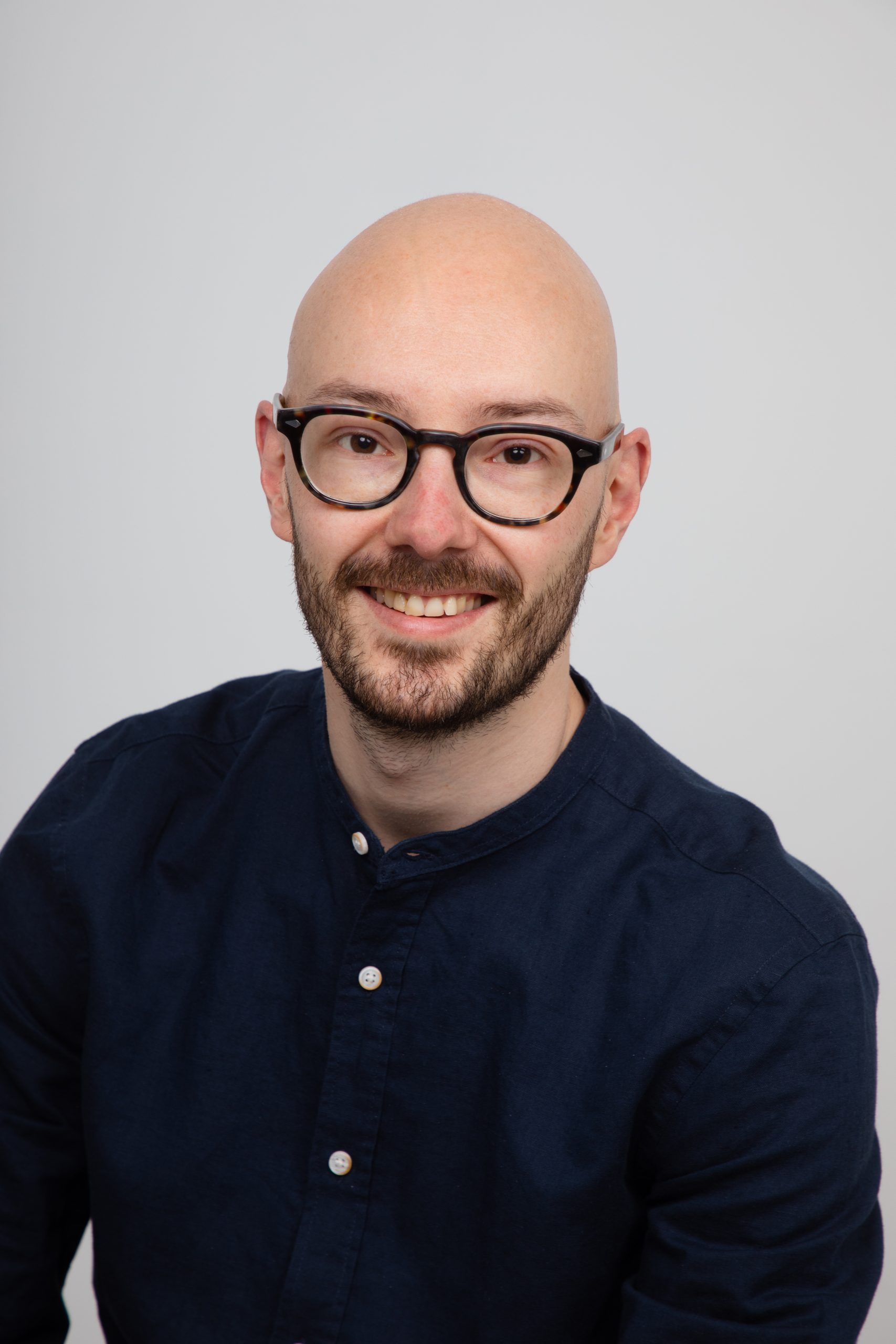
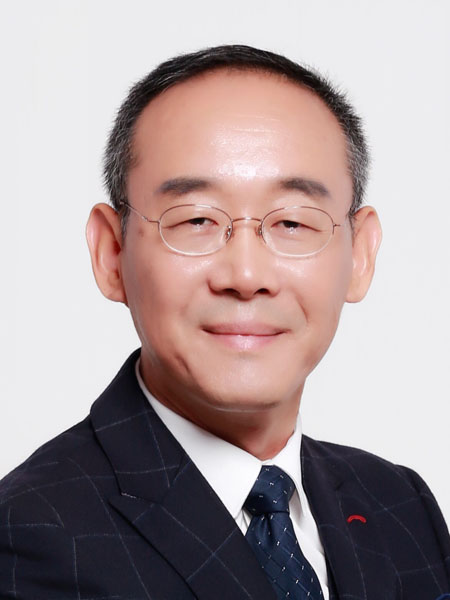
Jules Wulms is a researcher at the Institute of Logic and Computation, Vienna University of Technology (TU Wien), within the Faculty of Informatics. His work focuses on computational geometry, algorithm design, and visualization techniques. He has contributed to areas such as graph drawing, geometric algorithms, and dynamic data structures. Wulms' research emphasizes theoretical foundations with applications in spatial data analysis and information visualization. His academic contributions include studies on planar graph modifications, dynamic point labeling, and reconfiguration problems in modular robotics. Wulms collaborates frequently with institutions like TU Wien and international conferences, publishing in venues like the Journal of Computational Geometry and ACM Transactions on Spatial Algorithms and Systems. His doctoral thesis, available online, further details his foundational work in algorithmic complexity and geometric computing. Key themes in his publications include optimizing geometric structures (e.g., minimizing corners in grids), developing efficient algorithms for dynamic datasets, and exploring stability in kinetic frameworks. While no specific awards are listed, his extensive publication record highlights his impactful contributions to theoretical computer science and computational geometry.
Petter E. Bjørstad is a Professor of Computer Science and Mathematics at the University of Bergen, Norway, where he has served as Head of the Department of Informatics since 2010. Previously, he was Director of the Bergen Center for Computational Science (2000-2010) and Professor in both the Department of Mathematics (2006-2010) and Department of Informatics (1985-2005). He also held a position as Professor of Mathematics at the University of Minnesota during 1996-1997 on unpaid leave from Bergen. Dr. Bjørstad earned his PhD in Computer Science from Stanford University in 1980, following which he completed a postdoctoral fellowship at the Courant Institute of Mathematical Sciences at New York University. Before entering academia, he worked as a Principal Engineer at Det Norske Veritas from 1981-1985. Dr. Bjørstad's research focuses on numerical analysis and high-performance computing, with particular expertise in domain decomposition methods, parallel algorithms for elliptic partial differential equations, and scientific computing. His work bridges theoretical mathematics with practical computational challenges, especially in industrial applications. He has led significant research projects including 'Multiscale Domain Decomposition: Algorithms and Analysis' (2010-2014), funded by the Research Council of Norway and the University of Bergen. His publication record demonstrates consistent contributions to the field of numerical methods and parallel computing over several decades. The research trends show a strong focus on developing efficient algorithms for solving partial differential equations through domain decomposition techniques, with applications spanning structural analysis, reservoir simulation, semiconductor device modeling, and other industrial contexts. His work increasingly emphasizes practical implementation on modern parallel architectures including SIMD and MIMD systems. Large number of research grants from Norway and the European Union Dr. Bjørstad has been actively involved in mentoring students and collaborating with industry through projects like the Europort effort, where industrial codes were ported to parallel computing platforms. His laboratory for parallel computing (Parallab) has been instrumental in advancing practical applications of high-performance computing since its establishment in 1985 with Europe's first 64-processor Intel hypercube. The lab has evolved to include multiple MIMD machines including an Intel Paragon, Parsytec GC/Power-Plus, and DEC α-cluster. As Head of the Department of Informatics, Dr. Bjørstad leads one of Norway's premier computing research units with expertise spanning theoretical computer science, numerical methods, and practical applications in various scientific domains. His leadership has helped establish Bergen as a significant center for computational science in Europe.
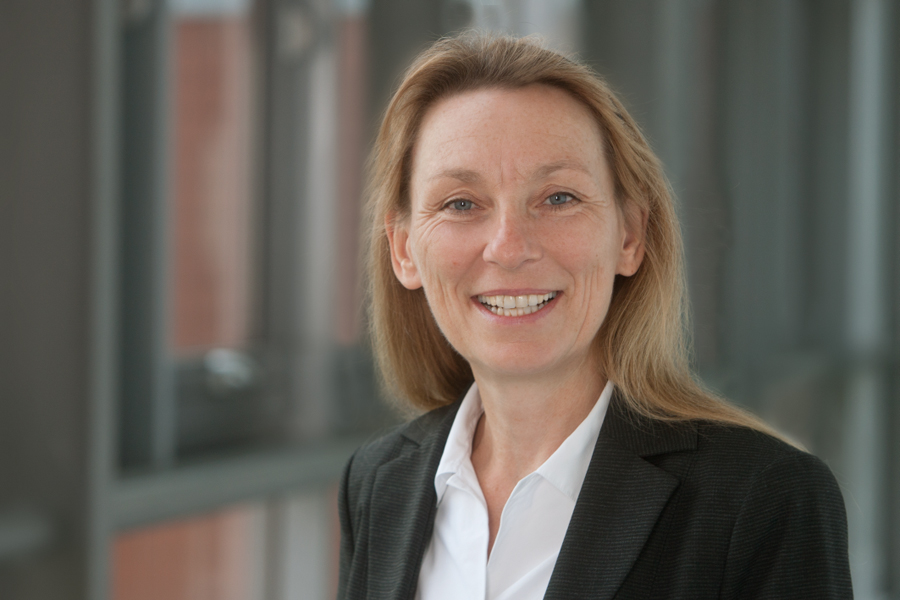
Fantz Ursel is a Professor and academic leader in plasma physics, holding dual roles as Division Head of ITER Technology & Diagnostics at the Max-Planck Institute for Plasma Physics (IPP) and Head of the Experimental Plasma Physics Group at the University of Augsburg's Institute for Physics. His research focuses on fusion energy, plasma technology, and advanced diagnostics for negative ion sources critical to ITER and DEMO projects. He has pioneered developments in radio-frequency-driven plasma sources and Cs-free alternatives for negative ion production. Education and career milestones include a PhD in low-temperature plasma physics from the University of Stuttgart (1996), followed by research roles at Stuttgart and IPP. He has held visiting professorships at NIFS, Japan (2006), and serves on international committees such as the DFG Grants Committee and EUROfusion’s Heating and Current Drive Project Board. His research interests span plasma diagnostics, beam extraction optimization, and plasma modeling, with notable contributions to plasma surface interactions and fusion technology. Awards include the Erwin Schrödinger Prize (2006) and the International Symposium Award (2014) for innovations in negative ion physics. He is an active contributor to fusion initiatives through roles in the German Physical Society (DPG) and the European Physics Society (EPS). Ursel’s work integrates experimental and computational approaches, including 3D PIC simulations and code benchmarking (e.g., NINJA, ONIX). His publications address challenges in plasma expansion dynamics, beam characterization, and ITER-compatible technologies.
Dr. Martin Charles Golumbic is a Professor of Computer Science and former Director of the Caesarea Edmond Benjamin de Rothschild Institute for Interdisciplinary Applications of Computer Science at the University of Haifa. He previously held positions at IBM Research, Columbia University, Bar-Ilan University, and others. His research focuses on algorithmic graph theory, combinatorial mathematics, and artificial intelligence. PhD in Mathematics (Columbia University, 1975) M.A. and B.S. in Mathematics (Pennsylvania State University, 1970) Research interests include perfect graphs, temporal reasoning, constraint scheduling, and discrete applied mathematics. He has authored influential books such as *Algorithmic Graph Theory and Perfect Graphs* and *Fighting Terror Online*. His work bridges theoretical computer science with real-world applications in AI and security. Awards include the EurAI Fellowship (2005), Lifetime Achievement Award from the Israeli AI Association (2019), and membership in Academia Europaea (2013). He has supervised 5 PhD students and 21 M.Sc. students, along with 18 postdocs. Key contributions include editorial roles at *Annals of Mathematics and Artificial Intelligence*, patents in instruction scheduling, and leadership in over 50 international conferences. His interdisciplinary work at the Caesarea Rothschild Institute integrates computer science with other fields.
Costas Synolakis serves as Professor of Civil Engineering at the University of Southern California and Professor at the Technical University of Crete, while holding leadership roles at Greece's Academy of Athens as Secretary of the Natural Sciences Division since 2019. His career spans foundational theoretical work and practical applications in tsunami science, supported by directorship of USC's Tsunami Research Center since its 1998 founding. Educated at Caltech with BSc, MSc, and PhD degrees, Synolakis pioneered critical insights into wave physics and tsunami dynamics. His research integrates hydrodynamics, coastal resilience, and emergency management, with seminal contributions to runup theory and hazard assessment that inform global disaster preparedness standards. This work bridges mathematical modeling and real-world implementation through extensive field surveys. Analysis of his publication record reveals consistent focus on tsunami mechanics since the 1980s, evolving from solitary wave theory to complex hazard modeling. Recent work emphasizes nuclear safety implications (Fukushima analysis) and paleotsunami reconstruction, demonstrating interdisciplinary reach across engineering, geology, and policy. His major recognitions include: International Coastal Engineering Award (2019) Sergey Soloviev Medal (2014) Moffatt and Nichol Award (2015) Presidential Young Investigator Award (1989) Membership in Academy of Athens (2016) Mentoring over 50 graduate students with emphasis on diversity, Synolakis secured €6+ million in research grants while leading 23 international tsunami surveys. His Tsunami Research Center drives innovation through collaborations with agencies worldwide, producing influential documentaries and media outreach that translate complex science for public safety. Current initiatives focus on enhancing tsunami warning systems through real-time modeling and expanding coastal resilience frameworks in vulnerable regions, leveraging his dual academic appointments for transnational impact.
Christoph Lang-Muhr is Professor and Academic Director of the Information Security Master's program at the Department of Computer Science and Security, University of Applied Sciences St. Pölten. Since 2010, he has served as researcher at the Centre of Competence in IT Security, leading projects in cyber defense, mobile security, and digital forensics education. His educational background includes: Master of Information Security (2011-2013), University of Applied Sciences St. Pölten Bachelor of IT Security (2009-2011), University of Applied Sciences St. Pölten Master of Telecommunications and Media (2007-2009), University of Applied Sciences St. Pölten Bachelor of Telecommunications and Media (2004-2007), University of Applied Sciences St. Pölten HTL Hollabrunn in Control and Regulation Technology (1995-2000) Lang-Muhr's research centers on practical cybersecurity applications with emphasis on mobile device security, digital forensics, and business continuity. He has pioneered simulation-based educational methods for disaster recovery training and conducted extensive iOS forensic analysis. His work bridges technical implementation with organizational security policies in enterprise mobility contexts. Publications from 2014-2022 reveal consistent focus on mobile security challenges, particularly iOS vulnerabilities and biometric authentication, alongside critical infrastructure protection for smart grids. His educational simulation games represent innovative approaches to holistic cybersecurity training, addressing both technical and human factors in incident response. Lang-Muhr leads the Centre of Competence in IT Security and directs projects including AIR LAB, CDCNÖ (Cyber Defense Center NÖ), and DuS (Digitization and Security). His applied research has produced security solutions for school networks, smart metering systems (SmartMeterIDS), and mobile device management frameworks deployed in Austrian public infrastructure.
Professor Keqin Li is a globally recognized academic holding concurrent professorships at Hunan University (China) and State University of New York (USA). He has held distinguished titles including National Distinguished Professor and SUNY Distinguished Professor. His research focuses on computer networking, heterogeneous systems, energy-efficient computing, and distributed systems. He has authored over 800 publications with an h-index of 64 and secured major grants from Chinese National Science Foundation and Ministry of Science and Technology. Education: PhD in Computer Science from University of Houston (1990), B.S. from Tsinghua University (1985). Research Interests: Includes parallel computing architectures, cloud-edge computing integration, energy-efficient algorithms, and task scheduling optimization. His work spans foundational studies to applied solutions in distributed systems, with notable contributions to network function virtualization and secure cloud data sharing. Awards: Ranked top globally in distributed computing by Scopus citation metrics (2020-2021) IEEE Fellow (2015) Recipient of 1000 Plan Chinese Talent Program (2013) Professional Activities: Editorships at ACM Computing Surveys, IEEE Transactions on Parallel and Distributed Systems, and over 190 conference organizing roles. Principal Investigator of 12+ major research projects (2013-2025). Labs/Teams: Leads research groups focused on parallel computing, cloud-edge systems, and energy-efficient architectures across multiple institutions.
Erich Schikuta is an associate professor at the University of Vienna's Faculty of Computer Science and heads the Research Group Workflow Systems and Technology. He has held multiple administrative roles, including Vice Dean and Curricular Commission Head. His research focuses on Cloud Computing, Parallel/Distributed Systems, Neural Networks, and Database Systems, with over 200 peer-reviewed publications. Education: Studied Computer Science, Business Informatics, and Mathematics at the University of Technology Vienna and University of Vienna. Holds titles including Dipl.-Ing., Dr., and Berufstitel Universitätsprofessor (2009). Research interests emphasize Utility Computing, Cloud Resource Optimization, and Neural Network Simulation. Notable contributions include ranking 25th globally in Cloud Computing productivity and developing frameworks like N2Sky for neural network-as-a-service. Key awards include the 2011 Best Paper Award and 2010 Best Teacher Award. Active in international collaborations, he serves as a European Commission evaluator (FP5-FP7/H2020) and chairs program committees. Labs/Teams: Leads the Research Group Workflow Systems and Technology. Involved in projects like BIG-Business (Grid Infrastructure) and 'Änderung in kollab.Prozessen' (2011-2016).
Armin Veichtlbauer is a researcher at the ASiC Center of Excellence Energy Networks and Mobility, part of the Upper Austria University of Applied Sciences. His work focuses on smart grids, renewable energy integration, and collaborative engineering frameworks for energy systems. Key Projects: Principal Investigator for PowerTeams (collaborative smart grid applications) and contributor to InterGrid (interoperability stack development). Research Themes: Grid stability in low-voltage networks, prosumer household flexibility, cluster-based energy storage, and software-defined networking for ICT infrastructures. He has published extensively on smart grid technologies, with recent work emphasizing decentralized energy management and decarbonization efficiency. Peer-review activities include journals like World Electric Vehicle Journal and IEEE Journal of Emerging and Selected Topics in Industrial Electronics.
Dominik Engel serves as Head of Department for Information Technologies and Digitalisation, Rector, and Managing Director at Salzburg University of Applied Sciences. As a Professor with over 70 publications and leadership in multiple research projects, he bridges academic administration with active scholarly contributions in energy informatics and smart grid technologies. His research centers on Smart Grid infrastructure, Smart Metering systems, and Blockchain applications for energy management. Key interests include privacy preservation in electric vehicle charging ecosystems, consumer participation in demand response programs, and analysis of load profiles from smart meter data. His work directly supports UN Sustainable Development Goal 7 (Affordable and Clean Energy) through innovations in energy informatics and grid modernization. Recent publications reveal accelerating focus on anomaly detection in cyber-physical energy systems using streaming data architectures, alongside strategic reorientation of applied research methodologies. His work consistently integrates computer science fundamentals with practical energy system challenges, emphasizing privacy-by-design and real-world deployment scenarios. His scientific recognition includes: Best Paper Award (2016) Best Paper Award at DACH+ Conference on Energy Informatics (2020) As principal investigator, Engel directs major projects including SCC (Salzburg Collaborative Computing), ECOSINT (Energy Community System Integration), 5G-EXPS (5G Exploration Space Salzburg), DET (Digital Energy Twin), and FNT (Future Network Tariffs). These initiatives secure substantial external funding for applied research in 5G-enabled energy systems, digital twins, and next-generation grid tariffs. He maintains active research collaborations across Austrian institutions, particularly within Salzburg's energy innovation ecosystem, coordinating interdisciplinary teams of computer scientists and energy engineers to address grid integration challenges.
Johannes Schmidt serves as Associate Professor and Deputy Institute Leader at the Institute for Sustainable Economic Development within the Department of Economics and Social Sciences at the University of Natural Resources and Life Sciences, Vienna (BOKU). He concurrently holds the position of Deputy Group Leader in the Land and Energy Economics Group, while contributing to the cluster of excellence Circular Bioengineering. His institutional affiliations extend to the Austrian Young Academy of Sciences and the Austrian Academy of Sciences, where he leads the working group on Defossilization and carbon neutrality of European Energy Systems. His research centers on advancing climate-neutral energy and land system transitions through sophisticated optimization modeling frameworks that integrate high-resolution climate data. He investigates socioeconomic externalities of renewable energy expansion using geospatial analysis and economic valuation techniques, with particular emphasis on wind and solar integration challenges. Current projects include the ERC Starting Grant reFUEL and the pioneering netzero2040 initiative that established Austria's first academic climate neutrality scenarios. Analysis of his 2023-2025 publications reveals dominant trends in renewable energy land-use requirements, hydrogen strategy viability, and wind power efficiency dynamics. His work consistently bridges computational energy modeling with socioeconomic impact assessment, increasingly focusing on spatial conflicts in renewable deployment and policy mechanisms for equitable transitions. His scientific recognition includes: ERC Starting Grant for the reFUEL project Membership in the Austrian Young Academy of Sciences Professor Schmidt actively supervises master's theses and teaches advanced courses including Computer Simulation in Energy & Resource Economics, Operations Research & Systems Analysis, and Energiewirtschaftspolitik at both bachelor and master levels. He co-organizes the EGU session on spatio-temporal renewable energy modeling and operates the energy dashboard energie.wifo.ac.at with Peter Reschenhofer. His research group within the Land and Energy Economics framework focuses on interdisciplinary solutions for sustainable energy transitions, with ongoing work examining agrivoltaics potential, hydrogen import dependencies, and socio-technical barriers to wind expansion.
Stephan Winkler serves as a Professor at the University of Applied Sciences Upper Austria (Hagenberg Campus), affiliated with the Research Center Hagenberg and multiple centers including the Bioinformatics Center of Excellence, Medical Engineering/TIMed Center, Center of Excellence for Smart Production, and Computed Tomography. His work spans ICT and Materials focal areas with active research output through 2025. Winkler's research centers on evolutionary computation and bioinformatics , specializing in Genetic Programming , Symbolic Regression , and Evolutionary Algorithms for medical applications. His work bridges computational intelligence with healthcare challenges including predictive modeling for postoperative outcomes, gene identification in leukemia, and infection modeling, demonstrating strong interdisciplinary collaboration between computer science and medical domains. Recent publications (2025) reveal a clear trajectory toward biomedical applications of evolutionary algorithms, with key contributions in symbolic regression for algorithm comparison, adaptive genetic programming for energy systems, and translational medical research. This reflects his strategic focus on solving complex healthcare problems through computational innovation. Winkler has secured significant research funding through 6 major projects including PROTrEIN (2021-2024), TDE (2019-2020), and SESAM (2013-2016), and has supervised 5 students. His project portfolio spans transplant medicine, nano-detection systems, and trauma care innovation. He maintains active leadership within the Bioinformatics Center of Excellence and Medical Engineering/TIMed Center, driving interdisciplinary collaboration between computational researchers and medical practitioners to advance data-driven healthcare solutions.
Wolfgang Schreiner is an A.Univ.-Prof. (Associate University Professor) at the Research Institute for Symbolic Computation (RISC), Johannes Kepler University Linz, Austria. His research focuses on formal methods, parallel and distributed computing, and symbolic computation. He leads projects in automated reasoning, programming language semantics, and educational software tools. His work emphasizes practical applications of formal methods, including the development of tools like RISCAL for model checking and the RISC ProgramExplorer for program reasoning. He collaborates on interdisciplinary projects, such as analyzing queueing systems using probabilistic model checking and designing grid computing frameworks for medical applications. Key research interests include semantics-based language design, theorem proving, and educational technology. He has authored textbooks like *Concrete Abstractions* and *Thinking Programs*, emphasizing foundational concepts in computer science. His contributions span theoretical advancements and practical implementations, with notable work in distributed systems, formal verification, and computational logic.
Sibylle Guenter is a prominent physicist and scientific director at the Max-Planck Institute for Plasma Physics. She has held key leadership roles, including Head of the Research Unit of the EURATOM Association IPP and Chair of the Steering Committee of the European Fusion Development Agreement (2011-2013). Currently, she co-leads the Max-Planck/Princeton Research Center on Plasma Physics since 2012, focusing on tokamak physics and magnetohydrodynamic stability. Education : Bachelor of Physics, Rostock University (1982-1987) PhD in Theoretical Physics, Rostock University (1990) Habilitation in Theoretical Physics, Rostock University (1996) Research interests center on plasma spectroscopy, magnetohydrodynamics, and transport phenomena in strongly magnetized plasmas. Her work includes modeling heat transport in fusion reactors, analyzing error field penetration, and studying MHD instabilities in tokamaks, particularly focusing on sawtooth crashes and plasmoid formation. Scientific awards : Elected Member of the National Academy of Science and Engineering of Germany (ACATECH) 2015 Federal Cross of Merit of the Federal Republic of Germany on the Ribbon 2013 Honorary Professor at Technical University of Munich (TUM) 2006 Adjunct Professor at Rostock University 2001 Leadership roles extend to international academic bodies: Vice-Chair of the EUROfusion Consortium General Assembly, former Chair of the European Fusion Development Agreement, and member of the International Fusion Research Council (IAEA) since 2004. Her publications reflect expertise in computational plasma physics and fusion technology.
Drury Luke O'Connor is a Senior Professor at the Dublin Institute for Advanced Studies (DIAS) since 1986. He was elected to the Academy of Europe in 2005 and serves as a member of the Royal Irish Academy, having served as its President from 2011 to 2014. His research focuses on particle acceleration mechanisms, plasma astrophysics, and computational modeling of cosmic phenomena. O'Connor holds a PhD in Astrophysics from the University of Cambridge (1979) and previously worked as a Research Assistant at the Max Planck Institute for Nuclear Physics in Heidelberg (1979-1986). His work explores the origin of cosmic rays, interstellar gas dynamics, and shock acceleration processes. Notable contributions include studies on gamma-ray visibility of supernova remnants and diffusive shock acceleration theories. He received the Shakti P Duggal Award for his contributions to cosmic ray research. Publications span computational methods for astrophysical simulations, theoretical models of particle acceleration, and observational interpretations of cosmic ray escape processes. His research bridges theoretical astrophysics with computational techniques, emphasizing interdisciplinary approaches to understanding high-energy astrophysical systems.