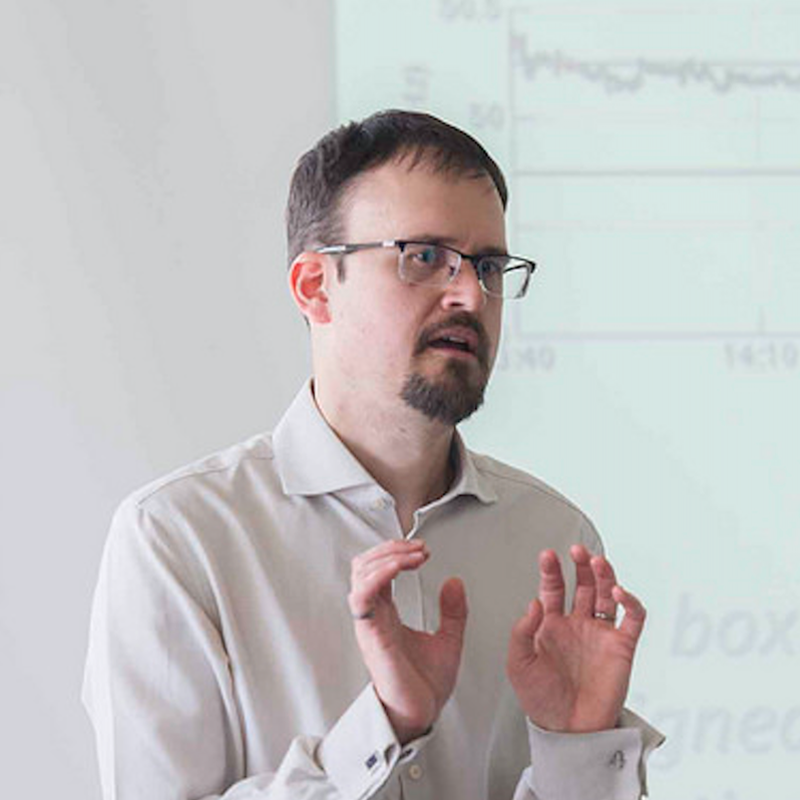
Mike Barnes is Professor in the Power Conversion group at the University of Manchester's School of Electrical and Electronic Engineering. He holds a BEng and PhD from the University of Warwick and is a Fellow of IET, IEEE, and HEA. His research focuses on power electronics applications in HVDC transmission, offshore wind energy integration, smart grids, and energy storage optimization. He has supervised over 24 doctoral students and serves as Associate Editor for IEEE Transactions on Energy Conversion. Barnes investigates high-voltage power conversion technologies to enhance renewable energy utilization and grid stability. His work spans semiconductor-based systems, advanced control strategies, and multi-scale modeling to reduce costs and improve efficiency in energy infrastructure. Current projects include grid-scale storage interfacing and power electronic transformers. Recent publications demonstrate his focus on real-time simulation of energy storage, stability analysis of HVDC systems, and thermal management of power modules. This research addresses critical challenges in renewable integration and grid resilience. IEEE Transactions Prize Paper (2012-13) IEEE Transactions Energy Conversion Best Paper (2018-19)
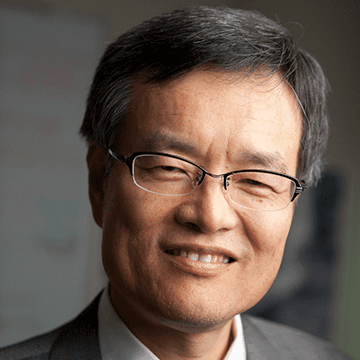
Hsiao-Dong Chiang is a Professor in the School of Electrical and Computer Engineering at Cornell University. He holds a Ph.D. in Electrical Engineering from the University of California, Berkeley, and has made significant contributions to nonlinear system theory and power system stability. His research spans theoretical development and practical applications in electric power systems, nonlinear optimization, and machine learning. B.S., Electrical Engineering, National Taiwan University, 1979 M.S., Electrical Engineering, National Taiwan University, 1981 Ph.D., Electrical Engineering, University of California, Berkeley, 1986 Chiang's research interests focus on nonlinear system theory , power system stability and control , nonlinear optimization , and their applications to modern power grids with high penetration of inverter-based resources. He is renowned for developing the BCU method and TRUST-TECH methodology , which have enabled fast direct stability assessment and global optimization in complex systems. His work bridges fundamental theory with industrial deployment through his companies, Bigwood Systems, Inc. and Global Optimal Technology, Inc. His recent publications (2024–2025) reflect a strong trend toward integrating machine learning and deep neural networks with power system analysis , particularly in state estimation, optimal power flow, and voltage control. There is a clear emphasis on handling uncertainty, non-convexity, and multi-scale dynamics in active distribution networks and integrated energy systems . His work increasingly focuses on resilience , real-time control , and user-centered methodologies for modern grid operations. Chiang has received numerous scientific honors, including: IEEE Fellow (1997) United States Presidential Young Investigator Award (1989) Multiple DOE Grid Optimization Challenge Awards (2020–2023) Best Paper Awards from IEEE Transactions and Conferences Outstanding Education Award, Cornell University (1990) He has successfully managed over 100 research projects and holds 28 U.S. and international patents. As the founder of Bigwood Systems, Inc., he has commercialized advanced software for utility companies across the U.S. and Japan. His team has published over 480 refereed papers and received more than 17,500 citations. He advises a large research group and leads innovations in computational methods for energy systems. His lab is actively involved in developing next-generation tools for grid security, optimization, and machine learning integration.
Igor Simone Stievano is a Full Professor at the Polytechnic University of Turin , affiliated with the Department of Electronics and Telecommunications (DET) and the Interdepartmental Center Ec-L - Energy Center Lab . He holds a PhD in Electrical Engineering and has supervised numerous students in disciplines spanning electromagnetic compatibility, machine learning, and multi-energy networks. His research interests include: Modeling and simulation of integrated circuits Machine learning for signal integrity Multi-energy network resilience Stochastic analysis of electrical systems Electromagnetic compatibility Key projects include the EU-funded SHIMMER initiative on hydrogen injection in gas networks and commercial contracts for high-speed I/O macromodeling. He serves as a chair and committee member at major conferences like the IEEE Workshop on Signal and Power Integrity. Scientific recognitions : IEEE Senior Member Recipient of the 2013 Futuro in Ricerca grant Editorial Board member of ENERGIES (2020-) Stievano actively participates in PhD college evaluations for Mathematical Sciences and Metrology programs at Politecnico di Torino, while teaching courses in Electrical Engineering and Digital Technologies across biomedical, computer, and media engineering curricula.
Debargha Brahma is a Researcher in the Department of Electrical and Electronic Engineering at Imperial College London, affiliated with the Faculty of Engineering. He holds a PhD in Power Systems from IIT Delhi (2023). His primary research focuses on stability analysis and dynamic studies of power grids dominated by inverter-based resources (IBRs), particularly addressing grid inertia, dynamic flexibility, and RoCoF (Rate of Change of Frequency) challenges. He is involved in the Leverhulme-funded project 'Essential Services for a 100% Renewables Transformation of the Global Power System' and contributes to the UK-EPICS Center for carbon-free power systems. Education: PhD in Power Systems, Indian Institute of Technology Delhi (2023); Thesis: 'Dynamic Flexibility Studies in Power Systems' analyzing the impact of location-specific power fluctuations on system inertia and flexibility. Research Interests: Power grid resilience, renewable energy integration, inverter-driven oscillations, and real-time grid stability solutions. His work bridges theoretical modeling (e.g., matrix perturbation theory) with practical applications for grid optimization. Awards: 2024 Grid-India Power System Award (GIPSA) for doctoral thesis excellence. Grants/Projects: Active in Leverhulme and UK-EPICS initiatives focusing on 100% renewable power systems. His research aligns with global decarbonization goals, emphasizing grid stability in high-IBR environments. Labs/Teams: Member of the Control and Power Research Group and UK-EPICS Center at Imperial College London.
Willem Leterme is a Professor of High Voltage Technology at RWTH Aachen University, specializing in advanced power systems engineering. His research focuses on high-voltage direct current (HVDC) grids, fault protection mechanisms, and grid integration challenges. His work addresses critical issues such as DC fault mitigation, converter control strategies, and system resilience under fault conditions. He leads projects on HVDC grid protection algorithms, cable aging analysis, and interoperability solutions for multi-vendor systems. Key research themes include: DC grid protection and fault detection Modular multilevel converter (MMC) control High-frequency insulation testing Renewable energy grid integration Recent studies (2023-2025) emphasize: Advanced DC fault response modeling Hybrid AC/DC grid stability Multi-terminal HVDC interoperability Transformer insulation under harmonic stresses Publications highlight contributions to protection system design, DC cable testing methodologies, and grid-forming wind turbine applications. He collaborates on EU-funded initiatives for HVDC infrastructure development and standardization efforts.
Daniel M. Liberzon is the Richard T. Cheng Professor in the Department of Electrical and Computer Engineering and a Professor at the Coordinated Science Laboratory at the University of Illinois Urbana-Champaign . He is also an affiliate professor in the Department of Mathematics . His career spans theoretical and applied research in control systems, with a focus on hybrid control, nonlinear systems, and communication constraints. Education : Ph.D. in Mathematics (Brandeis University, 1998), advised by Roger W. Brockett (Harvard). Undergraduate studies in Mathematics at Moscow State University (1989-1993). Research Interests include: Switched and Hybrid Systems with stability criteria and control design. Nonlinear Control Theory covering Lyapunov functions, ISS, and synchronization. Control with Limited Information focusing on quantized control and entropy-based methods. Uncertain/Stochastic Systems with applications in power grid synchronization and networked control. Article Trends show a focus on stability analysis, entropy metrics, and hybrid control algorithms across nonlinear and switched systems. Key themes include robust observer design, synchronization under disturbances, and quantized feedback. Scientific Awards : ACM SIGBED HSCC Best Paper (2019) IFAC Fellow (2016) IEEE Fellow (2013) AACC Donald P. Eckman Award (2007) NSF CAREER Award (2002) Advising and Grants : Collaborates with students and researchers like Sayan Mitra, Hyungbo Shim, and others. Leads NSF projects on Nonlinear Systems with Fast/Slow Dynamics and AFOSR MURI on Hybrid Dynamics . Labs and Teams : Directs the Decision and Control group at the Coordinated Science Lab, contributing to interdisciplinary projects in control theory and power systems.
Diego F. Aranha is an Associate Professor in the Department of Computer Science at Aarhus University . His research focuses on cryptographic systems, cybersecurity, and privacy-preserving technologies with applications in voting systems, post-quantum cryptography, and secure computation. He has contributed extensively to homomorphic encryption, secure multiparty computation (MPC), and cryptanalysis of cryptographic implementations. Key projects include: MPCC (2025-2028) : Multi-Party Computation in the Confidential Cloud SCI (2024-2027) : Secure Computation Infrastructures for the Retail Industry RENAIS (2021-2026) : Residue Number Systems for Cryptography His work emphasizes practical efficiency and formal verification of cryptographic protocols. Recent publications highlight advancements in lattice-based cryptography, secure voting schemes, and mitigating side-channel vulnerabilities in post-quantum algorithms. He actively collaborates on open-source cryptographic libraries and standards, with a focus on bridging theoretical security and real-world implementation challenges.
Alberto Oliveri is an Associate Professor at the University of Genoa in the Department of Naval, Electrical, Electronic and Telecommunications Engineering. He teaches courses including Circuits and Systems, Nonlinear Circuits and Systems, Power Management, and Elements of Electrical Technology for undergraduate and graduate programs in Electronic Engineering, Information Engineering, Industrial Technologies, and Chemical Engineering. His research focuses on advanced topics in power electronics and control systems, with particular emphasis on: Modeling and optimization of magnetic components (inductors) for switch-mode power supplies FPGA implementation of nonlinear model predictive control algorithms Synthetic inertia solutions for renewable energy grid integration Embedded control systems for power converters Advanced modeling of ferrite-core and amorphous-core inductors His recent publications (2022-2025) demonstrate a consistent focus on improving power conversion efficiency through advanced control strategies and hardware implementation. Research themes include predictive control optimization, magnetic component characterization under saturation conditions, renewable energy grid support functions, and embedded algorithm development for real-time power system monitoring.
Daniel Bejmert, PhD is an academic researcher at the Department of Electrical Power Engineering, Faculty of Electrical Engineering, Wrocław University of Science and Technology. His work focuses on power system protection with advanced signal processing and artificial intelligence techniques. Institution: Wrocław University of Science and Technology Faculty: Faculty of Electrical Engineering Department: Electrical Power Engineering Email: daniel.bejmert@pwr.edu.pl Research interests include: Analog and digital signal processing in power systems Multicriterial adaptive protection systems Digital simulation of transient phenomena Artificial intelligence applications for protection algorithms His publications demonstrate expertise in: Power system protection and control Transformer differential protection Islanding detection techniques Current transformer saturation analysis Frequency stabilization methods Neural network applications in power systems Contact details: Office: Building D-20, Room 418 Phone: +48 71 3493 Address: Janiszewskiego 8, 50-372 Wrocław
Tomasz Kozlowski is an Associate Professor and Associate Head for Undergraduate Programs at the University of Illinois at Urbana-Champaign's Grainger College of Engineering, Department of Nuclear, Plasma, and Radiological Engineering (NPRE). He holds additional positions as Associate Professor at Poland's National Centre for Nuclear Research (NCBJ) and Affiliated Professor in Computational Science and Engineering at UIUC. His research focuses on multi-physics modeling, reactor design/safety, computational methods, and thermal-hydraulics. He has taught courses like NPRE 200 (Mathematics), NPRE 455 (Neutron Transport), and advanced modeling topics. Education: B.S., M.S., and Ph.D. in Nuclear Engineering from Purdue University (2000–2005), followed by a Docent Habilitation in Nuclear Power Safety from the Royal Institute of Technology (KTH, 2011). He has collaborated on a $2M DOE grant for fuel storage solutions and contributed to UIUC's submission for a micro-reactor license application. His work includes advanced reactor design, uncertainty quantification, and computational tools like TRACE and MCNP-ORIGEN. Research emphasizes reactor analysis methods, numerical solver development, and inverse uncertainty quantification. Over 100 publications span topics like TRISO fuel performance, BWR instability, and hydrogen production integration with microreactors. He serves as Associate Editor for Nuclear Technology and actively engages in international benchmarks (e.g., BEAVRS, OECD/NEA).
Nilanjan Ray Chaudhuri is an Associate Professor of Electrical Engineering at Pennsylvania State University , affiliated with the Institute of Energy and the Environment (IEE) . His research focuses on power system dynamics and control , including wide-area monitoring systems, power electronics integration, renewable energy systems, and grid resilience. He has been recognized as an IEE Fellow and has contributed to projects like Smart Traction Systems for Weak Power Grids . Research Interests : Power system dynamics and control Wide-area monitoring systems Renewable energy integration (wind, solar) FACTS and HVDC systems Cascading failure analysis Cyber-physical security Recent Contributions : His work emphasizes grid stability in high-renewable systems, cascading failure mitigation , and frequency support from grid-forming converters. Publications (2023–2025) highlight advancements in control strategies for inverter-dominated grids, cyber-physical attack resilience, and fast simulation methods for dynamic failures. Grants & Awards : Selected grants include DOE-funded projects on grid modernization and resilience. Awards include IEE Fellow (2024) and recognition for student mentorship (e.g., 2020 Department of Energy Collegiate Wind Competition). Labs & Teams : He leads research in power grid resilience and collaborates with industry partners on MTDC grid control and wide-area monitoring solutions.
Barry Rawn is an Associate Teaching Professor in Electrical and Computer Engineering at Carnegie Mellon University (CMU), affiliated with the College of Engineering. He focuses on stressed centralized electricity infrastructure and off-grid energy systems, particularly in Nigeria. His research contributes to the IEEE Working Group on Sustainable Energy for Developing Communities and emphasizes renewable energy integration, grid stability, and smart grid technologies. Education: All degrees from the University of Toronto: Ph.D. in Electrical Engineering MASc in Electrical Engineering BASc in Engineering Science Research Interests: Rawn explores the interplay between centralized grids and decentralized energy solutions in developing regions. His work spans transmission/distribution system optimization, renewable energy modeling, and circular economy frameworks for plastics in Africa. He also investigates battery reuse and smart grid innovations, often collaborating with industry and international partners. Key Article Trends: Recent work emphasizes circular plastics economies in Africa, vehicle-to-grid integration, and Nigerian grid modernization. Earlier research focused on wind power integration, grid stability under reverse power flows, and HVDC transmission planning. Awards: No specific awards listed, though his work aligns with IEEE sustainability initiatives. Advising/Grants: No grant details provided; maintains affiliations with CMU Africa and Brunel University London’s Smart Power Networks Theme. Collaborative activities include industrial partnerships and cross-sectoral projects in Africa. Labs/Teams: Engaged with the Institute of Energy Futures (UK) and leads fieldwork in Nigeria/Rwanda. Active in IEEE committees and African energy policy dialogues.
Summary Adam Szymkiewicz is a full Professor and Vice-Dean for Scientific Research at the Faculty of Civil and Environmental Engineering, Gdańsk University of Technology. He leads the Department of Geotechnics and Water Engineering and holds academic positions since 2021. His research focuses on groundwater flow, contaminant transport, and numerical modeling in porous media. Key roles include Head of Department (2022–present) and Vice-Dean (2024–present). Education includes a PhD from Joseph Fourier University (2004) and habilitation from Gdańsk University of Technology (2013). Research Interests: Hydraulic properties of porous media, multiphase fluid flow, climate change impacts, and integrated hydrological modeling. Notable projects include AQUIGROW (HORIZON EUROPE) and SOILPROM. Publications: Over 50 peer-reviewed articles on topics like PFAS migration, groundwater recharge, and MODFLOW coupling. Recent work emphasizes climate change effects on aquifers and coastal hydrogeology. Awards: Multiple Rector awards (2012–2022) and Polish Academy of Sciences Award (2013). Membership: AGU, EGU, InterPore, and Polish Hydrogeologists Society. Editorial roles include Associate Editor of Acta Geophysica .
Adam Dysko is a Reader (equivalent to Associate Professor) in the Department of Electronic and Electrical Engineering at the University of Strathclyde, Faculty of Engineering. He has been with the university since 1994, progressing from PhD student to research fellow and then to academic staff. Since 2007, he has served as a lecturer and continues to be an active faculty member. Doctor of Philosophy (PhD), University of Strathclyde, 1998 Master of Science (MSc), Łódź University of Technology, 1990 His research focuses on power system protection, particularly unconventional fault detection methods, stability and control of future power systems with high renewable penetration, power system modelling and simulation (including real-time), and power quality. His expertise includes dynamic and transient simulation, protection system modelling, and performance assessment. The recent publications highlight a strong trend in developing and validating advanced protection schemes for modern power systems, especially those integrating distributed and renewable generation. Key themes include loss-of-mains protection using satellite communication, coordinated PSS design for stability enhancement, and addressing protection challenges in UK distribution networks. The work spans both theoretical development and practical hardware validation, often in collaboration with industry. The IET Best Paper Award 2025 (DPSP APAC 2025) Dr Dysko is actively involved in multiple research projects, often as a co-investigator, collaborating with principal investigators like Dr Qiteng Hong and Prof Campbell Booth. These projects, such as SETTLE-INSIGHT (NIA), Shell-iCase, and SIF BLADE, are funded by industry partners including SSE and Shell, focusing on protection system innovation. He has delivered short courses to industry and contributes to industrial working groups like the Grid Code Review Panel (GCRP), Distribution Code Review Panel (DCRP), and Energy Networks Association (ENA). He also participates in international organizations such as CIGRE, IET, and IEEE, serving on programme committees and as an invited speaker. He is actively engaged in research leadership through participation in international conferences, journal peer review, and advisory roles, such as in the CIGRE Joint Working Group B5-C4.79. His work bridges academia and industry, contributing directly to the evolution of grid codes and engineering standards for safe and reliable power system operation in a renewable-rich future.
Eduard Massaguer Colomer is an Assistant Professor in the Department of Mechanical and Industrial Construction Engineering at the University of Girona, where he is part of the School of Engineering. He is a Serra Húnter Fellow, reflecting his strong research and academic trajectory. He is affiliated with the Research Group in Fluids, Energy and Environmental Engineering (GREFEMA) and leads research in thermoelectric energy harvesting and waste heat recovery. His research focuses on improving the efficiency of thermoelectric generators for heat recovery in automotive, industrial, and renewable energy systems. Key areas include: Thermoelectric generator design and optimization Waste heat recovery from exhaust gases and industrial processes Integration with solar, biomass, and marine systems Dynamic modeling and experimental validation Technology transfer and spin-off development His recent publications reveal a consistent focus on energy conversion efficiency, transient thermal behavior, and practical applications of thermoelectric systems across transportation, industrial, and domestic sectors. He has contributed significantly to hybrid energy systems and low-cost solutions for rural electrification. His scientific awards include: Extraordinary Doctoral Award 2016 (UdG) Volkswagen Think Blue Award 2015 Seal of Excellence 2019 (European Commission) Multiple awards from Repsol Foundation, Iberdrola Foundation, and La Caixa He has supervised two doctoral theses and led multiple competitive research projects, securing over €320k as Principal Investigator and €500k in total funding. His work has led to four patents and five technology transfer contracts. He co-founded the spin-off Nabla Thermoelectrics SL (2016–2021), demonstrating strong industry collaboration and innovation impact. He is actively involved in research leadership, having served as guest editor for a special issue on Solar Thermoelectric Generators in MDPI Energies. His lab work centers on the Heat and Cold Laboratory at the University of Girona, where experimental validation and prototype development are conducted.