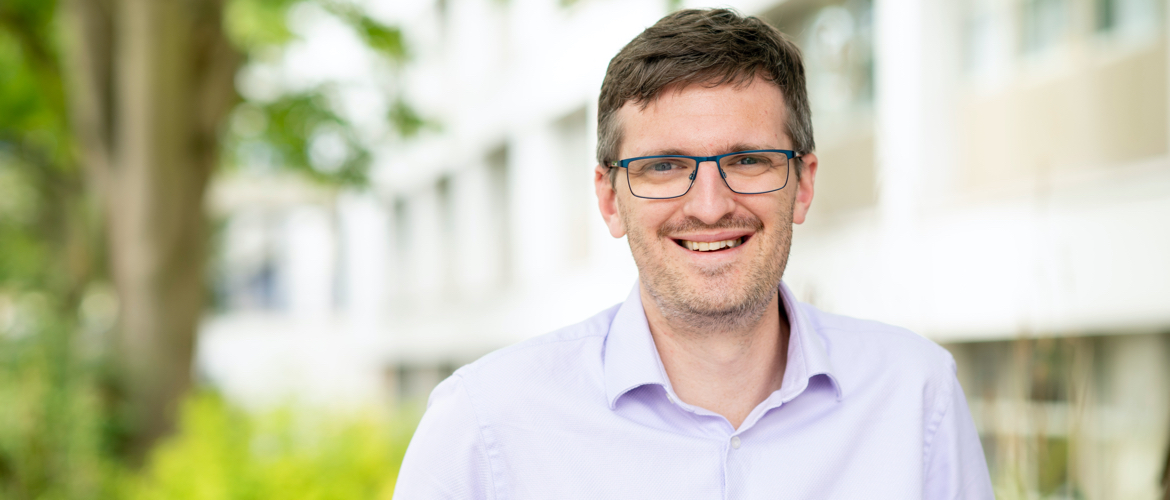
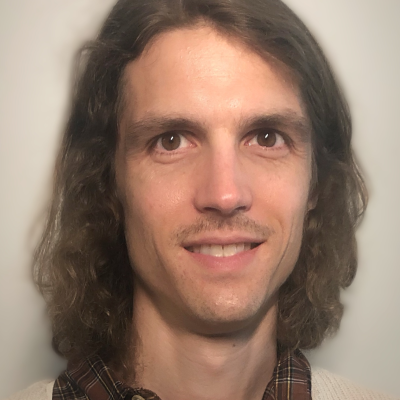
Severin Nowak is a Lecturer at the Institute of Electrical Engineering (IET) within the Lucerne School of Engineering and Architecture at Lucerne University of Applied Sciences (HSLU). He holds a Ph.D. in Electrical Engineering from the University of British Columbia, Canada, focusing on electric power systems, and a federal diploma in electrical engineering from the University of Applied Sciences and Arts Western Switzerland. His research integrates industrial experience with academic rigor, emphasizing data-driven approaches for modernizing power grids, renewable energy integration, and sustainable energy systems. Research Interests: Grid Modernization and Digitalization Renewable Energy Deployment Electric Vehicle Integration AI and Machine Learning in Energy Systems Decarbonization Strategies Key Projects: FIT4GRID: Integration of electric trucks into grid design EVFlex: Aggregation of electric vehicle flexibility for grid services AISOP: AI-assisted grid operational planning Publications span topics like fault detection in distribution networks, federated learning for load forecasting, and vehicle-to-grid systems. His work bridges academia and industry, addressing challenges in sustainable energy transition and grid resilience.
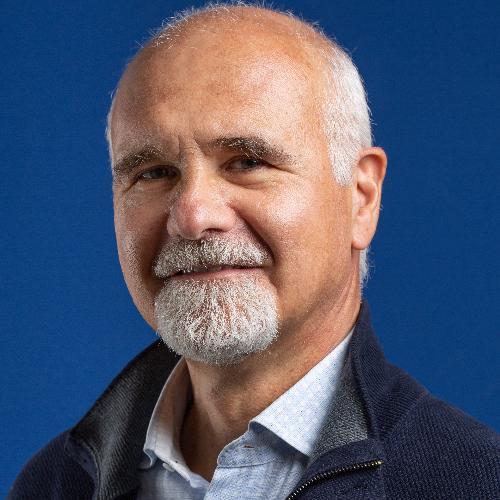
Professor Peter Gammon is a leading researcher in Silicon Carbide (SiC) power electronic devices at the University of Warwick’s School of Engineering, serving as faculty since 2012. He holds a MEng and PhD, alongside prestigious fellowships like SMIEEE, MIET, and SFHEA. His work focuses on advancing SiC technology for electric vehicles, satellites, renewable energy, and grid applications. He leads the REWIRE Innovation and Knowledge Centre (UKRI-funded £11m), aiming to commercialize wide-bandgap semiconductors with over 30 industrial partners. Research Interests include optimizing SiC MOSFET design, radiation-hard devices for space, and high-voltage architectures. His team collaborates across the SiC supply chain, ensuring lab-to-market transitions. Key grants include the £2.5m EPSRC-funded UP-SiC project (2024-2027) and the EPSRC Centre for Power Electronics Switch Optimisation Theme (2018-2021). Facilities include the Science City Cleanroom, SiC CVD reactor, and packaging cleanroom. Notable awards include the Royal Academy of Engineering Research Fellowship (2012-2017). His research group, the PEATER Group, specializes in SiC device development with global recognition. Advising PhD students in areas like neutron testing and rad-hard devices, Gammon also delivers industry-focused tutorials on SiC power electronics. Recent projects include SiCSat (EPSRC £746k) for satellite applications and AdvanSiC (Horizon Europe £988k) for medium-voltage grids. His work bridges academia and industry, addressing challenges in SiC yield, cost, and reliability while exploring emerging applications like space and high-voltage grid systems.
Dr. Lenos Hadjidemetriou is a Research Lecturer at the KIOS Research and Innovation Center of Excellence, University of Cyprus. He holds a Diploma in Electrical and Computer Engineering from NTUA (2010) and a Ph.D. in Electrical Engineering from the University of Cyprus (2016). His research focuses on renewable energy integration, energy storage systems, power electronics control, and smart grid cyber-security. He leads projects like OneNet, Smart5Grid, and national initiatives such as EMPOWER, collaborating with entities like the Cyprus Transmission System Operator. Research interests include grid resilience, digital twins, and ancillary services. He developed advanced research labs at the University of Cyprus for power systems testing and renewable energy applications. Current projects explore energy storage systems for grid ancillary services and cyber-security defenses against man-in-the-middle attacks. He has published over 75 papers, emphasizing smart grid challenges such as voltage management, harmonic mitigation, and 5G-enabled grid monitoring. His work bridges theoretical advancements with practical implementations, such as demonstrating 5G solutions for real-time grid control and developing thermal models for inverter reliability. Ongoing efforts include pilot projects for battery and flywheel storage systems to enhance grid stability. Grants and collaborations span European (Horizon 2020) and national funding, industry partnerships, and KIOS CoE’s complementary support from Imperial College London. His contributions address both technical and systemic challenges in transitioning to sustainable energy systems.
Dr. Muhammad Amjad is a Lecturer in Computer Science at the University of Wolverhampton's School of Engineering, Computing and Mathematical Sciences. He holds a PhD from the University of Essex and is a Fellow of the Higher Education Academy (FHEA) and Senior Member of IEEE. His expertise spans 6G, uRLLC, wireless communications, and cognitive radio networks. Prior roles include KTP Associate with SEA-KIT International and Tutor at Swansea University. Dr. Amjad's research focuses on advancing wireless communication technologies, including NOMA, 5G/B5G systems, and energy-efficient networks. Notable achievements include a Best Paper Award (2016) and Top Peer Reviewer recognition (2019). His work has been featured in prestigious venues like IEEE Transactions on Vehicular Technology and IEEE Communications Surveys & Tutorials. Key research themes: Non-Orthogonal Multiple Access (NOMA) in finite blocklength regimes Ultra-reliable low-latency communications (uRLLC) Cognitive radio networks and spectrum management Wireless sensor network algorithms Electric vehicle charging optimization Professional contributions include over 20 peer-reviewed publications, numerous conference presentations, and active engagement with industry through KTP collaborations. He currently supervises PhD candidates in wireless communication domains.
Dr Hamish Beath is a Research Associate at the Centre for Environmental Policy within the Faculty of Natural Sciences at Imperial College London. He is affiliated with the Hitachi-Imperial Centre for Decarbonisation and Natural Climate Solutions and works within Professor Joeri Rogelj's research group, focusing on climate science, policy, and litigation. His position involves analyzing societal transitions and their impacts on climate mitigation outcomes. Hamish completed his PhD at the Grantham Institute for Climate Change and the Environment as part of the Science and Solutions for a Changing Planet doctoral training partnership. His doctoral research developed open-source software tools for sustainable electricity access (SDG7), supervised by Professor Jenny Nelson, Dr Ajay Gambhir, and Dr Sheridan Few. Prior to this, he held a postdoctoral position in Imperial's Department of Physics where he developed open-source research software and conducted agrivoltaics research in sub-Saharan Africa. His research centers on climate change mitigation scenario assessment, examining feasibility implications of societal transitions including energy demand shifts, dietary changes, and alternative energy systems. Current interests include analyzing AI's energy demand impacts on climate pathways, agrivoltaics potential for improving energy-food-water security, and understanding low-income country energy demand dynamics. His work bridges climate science with practical policy applications through quantitative modeling. Analysis of his 10 most recent publications (2021-2025) reveals consistent focus on sustainable energy systems and climate policy, with strong emphasis on decentralized solutions in Global South contexts. His research integrates modeling frameworks with real-world applications in refugee camps, farming communities, and low-income regions, highlighting the interplay between technological innovation, resource constraints, and policy mechanisms for achieving climate goals. Hamish actively contributes to the Nelson Group and Hitachi-Imperial Centre collaborative networks, developing open-source tools like CLOVER for community-scale energy analysis. His current projects address universal energy access challenges and solar mini-grid optimization, with research implications extending to climate litigation and decarbonization pathways through his work in Professor Rogelj's group.
Malathi Veeraraghavan is a Professor in the Department of Computer Science at the University of Virginia . Her research focuses on Computer Networks , Optical Networking , Software-Defined Networking (SDN) , and Data Transfer Protocols , with applications in Grid Computing and High-Performance Computing . Recent work includes the PORTFILER system for malware detection via network profiling, SnF scheduling for inter-datacenter optical networks, and reliable multicast protocols over multi-domain SDNs. She has contributed to congestion control frameworks and network function virtualization surveys. Key collaborations span institutions like the University of Virginia, Universiti Teknologi Malaysia, and Bell Labs. Her publications appear in journals such as IEEE Transactions on Cloud Computing and conferences like GLOBECOM and INFOCOM .
Gavin Serge is a Researcher at the School of Engineering and Management of the Canton of Vaud (HEIG-VD), part of the University of Applied Sciences Western Switzerland (HES-SO). He holds two BSc degrees from HES-SO: one in Energy and Environmental Techniques and another in Electrical Engineering, specializing in Power Electronics. Research Interests: Power Electronics Modular Multilevel Converters (MMC) High Voltage Engineering Energy Storage Systems Smart Grids and Renewable Integration Electric Resonance Applications Plasma Physics in Industrial Devices Key Contributions: 2024: Repetitive 10 kV nanosecond pulse generator for medical/biological applications 2022: 70 kV power supply for industrial X-ray with 0.01% stability 2021: 50 kVA Soft Open Point (SOP) converter for low-voltage grid interconnection 2019: Supercapacitor sizing analysis for hybrid vehicle efficiency 2017: Acoustic resonance-based plasma confinement in sulfur lamps 2015: Contactless speed control system for multiphase linear motors Collaborations: Mauro Carpita Simon Kissling Patrick Favre-Perrod Mario Marchesoni Massimiliano Passalacqua
Nathaniel Daw holds the Huo Professorship in Computational and Theoretical Neuroscience at the Princeton Neuroscience Institute , Princeton University. His research integrates computational, neural, and behavioral approaches to study decision-making through trial-and-error learning and reward/punishment processing. Research Interests: Computational Neuroscience Decision-Making Under Uncertainty Model-Based and Model-Free Learning Neural Mechanisms of Self-Control Publications (2025-2019) explore intersections of machine learning and neuroscience, focusing on reward-guided behavior, memory systems, and psychiatric implications like anorexia nervosa and obsessive-compulsive disorder. Key themes include neural replay, cognitive effort allocation, and predictive modeling of human and animal learning. Scientific Awards: Princeton-Rutgers $16M Research Grant for mental illness studies Grants and Collaborations: Highlighted by a major interdisciplinary grant with Rutgers University to advance understanding of mental illness through computational frameworks. Labs and Teams: Leads the Daw Lab at Princeton Neuroscience Institute, focusing on neurocomputational models of decision-making and self-control.
Dr. Sumit Kothari is a Research Fellow at University College London's Bartlett School of Environment, Energy and Resources, specializing in climate finance and low-carbon transition dynamics. His work bridges financial systems analysis with environmental sustainability, leveraging industry experience from Morgan Stanley and entrepreneurial background in Indian investment startups to address real-world climate finance challenges. His educational foundation includes: PhD in Sustainable Resources and Climate Policy (UCL, 2019-2024) MSc Economics and Policy of Energy and the Environment (UCL, 2016-2017) Post Graduate Diploma in Management (IIM Calcutta, 2002-2004) Bachelor of Commerce (University of Mumbai, 1998-2001) Dr. Kothari's research centers on Climate Finance and Energy Transition Dynamics , employing Complexity Economics to analyze investment networks and risk underwriting in developing countries. His work on Technology Scaling examines financial mechanisms for accelerating renewable adoption, while his expertise in Computational Statistics informs analysis of environmental resource economics and policy design. Key contributions address financial tipping points, equity in climate finance flows, and fossil fuel finance phase-out challenges. His publication record (2021-2025) reveals three dominant trends: 1) Systemic analysis of financial mechanisms driving sustainability transitions, 2) Critical examination of equity gaps in international climate finance, particularly for developing nations, and 3) Application of complexity theory to low-carbon finance markets. These works, published in Nature Communications, Nature Climate Change, and Earth System Dynamics, demonstrate increasing impact with multiple papers exceeding 100 citations. No major scientific awards were identified in the source materials, though his research has influenced policy discussions and been covered by numerous news outlets including Financial Times and Bloomberg. Dr. Kothari's advisory activities focus on sustainable development goals 7, 11, and 13, with collaborations spanning UCL, University of Strathclyde, and industry partners. Current research grants investigate: Financial tipping points for accelerated decarbonization Equity frameworks for international climate finance Complexity modeling of low-carbon investment networks He contributes to UCL's Climate Finance and Technology Scaling research cluster, collaborating with environmental economists and complexity scientists to develop practical financial instruments for the low-carbon transition while maintaining industry connections through his private investment startup cofounding role.
Raffaele Bolla is a Full Professor at the Department of Naval, Electrical, Electronic and Telecommunication Engineering (DITEN) within the University of Genova, School of Engineering. He specializes in telecommunications, with research focusing on energy efficiency, 5G/6G networks, network virtualization, and green technologies. He coordinates the Master's Degree program in Telecommunications Engineering and teaches courses including Cyber Security , Internet and Multimedia Engineering , and Wireless Networks (5G) and Cloud/Edge Computing . Research Interests: Energy-efficient network design 5G/6G network virtualization Machine learning for network optimization Sustainable telecommunications Human-machine interaction in industrial networks Smart grid technologies His recent publications address container scaling, network observability, and power consumption in next-generation networks. He leads projects like RESTART and contributes to standards in energy-efficient networking.
Dr. Md Rabiul Islam is an Associate Professor at the School of Electrical, Computer and Telecommunications Engineering at the University of Wollongong (UOW), Australia. His research focuses on renewable energy technologies, power electronics, smart grids, and electrical machines. He holds a Ph.D. in electrical engineering from the University of Technology Sydney (2014) and has over 400 publications including 130 IEEE Transactions papers and 9 authored/edited books. He has secured $5.48M in ARC grants, including leadership in the ARC Training Centre in Energy Technologies for Future Grids. Dr. Islam's research interests span renewable energy systems, power electronic converters, grid stability, and hydrogen energy integration. He leads projects on solid-state transformers, grid resilience, and high-frequency magnetic links. His work has been recognized with IEEE Best Paper Awards and over 20 conference awards. He serves as Associate Editor for IEEE Transactions on Industrial Electronics and Energy Conversion, and as Book Series Editor for Taylor & Francis. His academic contributions include pioneering advancements in multiport converters, grid-connected inverters, and energy storage systems. Current supervision focuses on advanced control techniques for grid stability and inverter performance optimization.
Yehia Abd Alrahman is a Senior Lecturer at the Department of Formal Methods within the University of Gothenburg. His work focuses on formal methods, model checking, and reconfigurable systems, with particular emphasis on multi-agent systems and attribute-based communication. He develops verification tools like R-CHECK and contributes to theoretical foundations for collective adaptive systems. His research integrates formal verification techniques with practical applications in distributed systems and energy grids. Key research interests include formal verification of reconfigurable systems, attribute-based communication models, and correct-by-design teamwork plans for multi-agent systems. He has published extensively on topics such as bisimulation theory, distributed coordination frameworks, and protocol analysis. His work often bridges theoretical computer science with practical implementation in domains like power grid control and system resilience. Academic contributions span programming language design for CAS, verification frameworks, and pedagogical approaches to formal methods education. Collaborations include projects on runtime verification, distributed API design, and adaptive system coordination protocols. Current research trends emphasize enhancing system correctness through automated synthesis and rigorous formal methods.
Dr. Maher Al-Greer is an Associate Professor (Research) at Teesside University's School of Science, Engineering and Design Technology (SCEDT), specializing in electrical engineering with a focus on power electronics, battery management systems, and smart grids. He holds a PhD from Newcastle University (2012) and has extensive academic and industry experience, including roles as a post-doctoral researcher and senior lecturer. Education: PhD in Control of Power Electronic Converters (Newcastle University, 2012) Key Roles: Associate Editor of IET Power Electronics, Co-Chair of UPEC 2021 Conference, External Examiner for multiple universities Awards: Best Paper Award (IEEE UPEC 2022), Fellow of the Higher Education Academy (FHEA) Research Interests: Battery Management Systems, Renewable Energy Integration, Smart Grids, Signal Processing, and AI-driven solutions for energy systems. His work emphasizes translating research into practical applications, such as battery health monitoring and grid stability. Grants & Projects: Over £100K secured from UKRI, Lloyd’s Register Foundation, and others. Notable projects include solar-PV hybrid systems, battery recycling frameworks, and adaptive fast-charging for EVs. Research Highlights: 70+ publications, 8 supervised PhD students, and collaborations with global institutions like the Technical University of Munich and Middle East Technical University. Consulting: Advised companies on maritime HVDC systems and portable battery solutions.
Nathan Dahlin is an Assistant Professor in the Department of Electrical and Computer Engineering at the University at Albany's College of Nanotechnology, Science, and Engineering. He holds a BS, MS, and PhD in Electrical Engineering and an MA in Applied Mathematics from the University of Southern California. Prior to joining UAlbany, he was a Postdoctoral Research Associate at the University of Illinois Urbana-Champaign and a senior audio DSP research engineer at Audyssey Laboratories. Dr. Dahlin's research focuses on fundamental problems in machine learning, stochastic control, optimization, and microeconomics, with applications in developing computationally efficient decision-making approaches for smart energy systems. His work emphasizes reliability in uncertain environments and risk management. His recent publications demonstrate strong focus on machine learning applications in control systems, energy management, and algorithm design. Articles frequently address topics like imitation learning, economic dispatch optimization, neural network transformation, and kernel-based learning methods, often with practical implementations in energy systems and smart grids. Dr. Dahlin is active in professional organizations including the Institute of Electrical and Electronics Engineers (IEEE) and the Association for the Advancement of Artificial Intelligence (AAAI). He serves as a reviewer for leading conferences and journals including AAAI Conference on Artificial Intelligence, IEEE Transactions on Control of Network Systems, IEEE Transactions on Power Systems, and IEEE Transactions on Smart Grid.
Dr. Yacine Chakhchoukh is Associate Professor in Electrical and Computer Engineering at the University of Idaho. He teaches energy systems, power systems analysis, and cybersecurity courses, including sustainable energy and resilient infrastructure control. Research focuses on cybersecurity for critical power infrastructure , particularly smart grid state estimation under cyber threats. Specializations include Phasor Measurement Unit (PMU) integration, false data injection detection, and resilient estimation methods. His work combines statistical robustness with power system dynamics. Publications develop algorithms for attack detection in smart grids, outlier diagnosis in PMU networks, and decomposition methods for resilient estimation. Methodologies integrate machine learning, robust statistics, and dynamic system modeling. Industry experience includes research with French Electrical Transmission System Operator (RTE). International collaborations span Japan (Tokyo Tech), Germany (TU Darmstadt), and Arizona State University.