Professor Poul Alberg Østergaard is affiliated with Aalborg University's Department of Sustainability and Planning, focusing on sustainable energy planning and smart energy systems. His work aligns with UN Sustainable Development Goals, emphasizing energy transition, renewable integration, and decarbonization strategies. Professor in Energy Planning Expertise: Energy Systems Analysis, District Heating, Renewable Energy Transition Key Projects: Sustainable Heating Roadmaps, Municipal Energy Planning (e.g., Aalborg 2020-2050 Strategy) Research interests include 100% renewable energy systems, smart grids, energy storage, and policy frameworks. He has contributed to over 287 publications and 25 projects since 1996, with notable work on island energy transitions, hydrogen pathways, and district heating optimization. Media engagements highlight his role as an advisor on energy pricing, district heating dynamics, and nuclear energy debates. He organizes international conferences like the Smart Energy Systems series and collaborates globally on energy policy and modeling tools like EnergyPLAN. Labs/Teams: Member of the Sustainable Energy Planning Research Group and contributor to initiatives like the Smart Island Energy Systems (SMILE) project.
Andreas J. Kassler is a Full Professor of Computer Science at Karlstad University, Sweden, where he has been since 2005. He co-chairs the Distributed Systems and Communication (DISCO) group and focuses on networking, cloud computing, and wireless networks. His research includes software-defined networking, future internet architectures, and network optimization. He has authored/co-authored over 130 peer-reviewed publications, holds 6 patents, and serves on editorial boards of journals like Journal of Internet Engineering . Education : Ph.D. in Computer Science, Universität Ulm (2002) Docent (Habilitation), Karlstad University (2007) M.Sc. in Mathematics/Computer Science, Universität Augsburg (1995) Research Interests : Software Defined Networking (SDN) Programmable Dataplanes Wireless Mesh Networks Time-Sensitive Networking (TSN) Edge Computing Machine Learning for Network Optimization Recent Directions : His work spans TSN scheduling, hybrid P4 solutions for 5G, and explainable AI in energy communities. He explores network resilience, latency optimization, and multi-objective control in microgrids. Service Contributions : Track co-chair for VTC 2015 General chair for Wired/Wireless Internet Communications (WWIC) 2013 Editor-in-Chief of IARIA Journal on Advances in Internet Technology Labs/Teams : Leads DISCO group at Karlstad University. Collaborates with global teams on projects like mmWave backhaul networks and SDN-enabled industrial control systems.
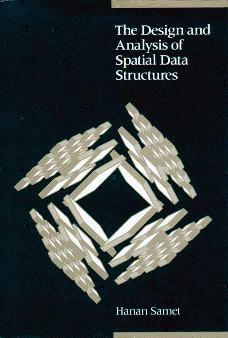
Hanan Samet is a Distinguished University Professor at the University of Maryland's Computer Science Department, affiliated with the Institute for Advanced Computer Studies (UMIACS) and the Center for Automation Research. He holds a Ph.D. from Stanford University (1975) and specializes in spatial databases, data structures, and geographic information systems. His research bridges computer science and geospatial analytics, with applications in image databases, computer vision, and spatio-temporal data management. Education: Ph.D., Computer Science, Stanford University, 1975 Research Interests: Focuses on spatial data structures, GIS, spatio-textual systems like NewsStand and CoronaViz, trajectory analysis, and metric indexing. His work emphasizes scalable algorithms for spatial networks and multimedia databases. Notable Projects: CoronaViz : Tracks disease spread via spatio-temporal data visualization NewsStand : Maps news articles geospatially SAND: Spatial browser for digital government Awards: ACM Paris Kanellakis Award (2014), IEEE McDowell Award (2015), UCGIS Research Award, and Fellowships in ACM/IEEE/AAAS. Recognized for advancing spatial database theory and practice. Grants/Advising: Leads NSF-funded projects on spatio-textual extraction and similarity search. Advises graduate students (e.g., Nicole Schneider, Montana Hoover) and undergraduate researchers. Labs/Teams: Active in UMIACS and the Center for Automation Research, collaborating on projects like VASCO (spatial visualization tools) and MARCO (image database systems).
Prof. Dr. Dr. hc Jörg Becker is a Senior Professor at the University of Münster, leading the Chair of Business Informatics and Information Management. He holds prominent roles such as Director of the European Research Center for Information Systems (ERCIS) and former Pro-Rector for Strategic Planning. His expertise spans e-government, process management, and digital transformation. Becker earned his habilitation and doctorate from Saarland University, specializing in information systems and material flow control. Research focuses include hybrid value creation, trade information systems, and smart energy business models. He has advised numerous institutions and served on national committees like the Plattform 'Digitale Verwaltung' and the National E-Government Competence Center (NEGZ). His editorial roles include Business & Information Systems Engineering and Information Systems and e-Business Management. Becker has authored over 200 publications, with recent work on digital government competencies, citizen involvement in smart cities, and trust in information systems. Awards include Fellow of the German Informatics Society (GI) and honorary doctorates. His grants include projects on digital middle-tier towns and IT requirements for social security digitization.
Hsiao-Dong Chiang is a Professor in the School of Electrical and Computer Engineering at Cornell University. He holds a Ph.D. in Electrical Engineering from the University of California, Berkeley, and has made significant contributions to nonlinear system theory and power system stability. His research spans theoretical development and practical applications in electric power systems, nonlinear optimization, and machine learning. B.S., Electrical Engineering, National Taiwan University, 1979 M.S., Electrical Engineering, National Taiwan University, 1981 Ph.D., Electrical Engineering, University of California, Berkeley, 1986 Chiang's research interests focus on nonlinear system theory , power system stability and control , nonlinear optimization , and their applications to modern power grids with high penetration of inverter-based resources. He is renowned for developing the BCU method and TRUST-TECH methodology , which have enabled fast direct stability assessment and global optimization in complex systems. His work bridges fundamental theory with industrial deployment through his companies, Bigwood Systems, Inc. and Global Optimal Technology, Inc. His recent publications (2024–2025) reflect a strong trend toward integrating machine learning and deep neural networks with power system analysis , particularly in state estimation, optimal power flow, and voltage control. There is a clear emphasis on handling uncertainty, non-convexity, and multi-scale dynamics in active distribution networks and integrated energy systems . His work increasingly focuses on resilience , real-time control , and user-centered methodologies for modern grid operations. Chiang has received numerous scientific honors, including: IEEE Fellow (1997) United States Presidential Young Investigator Award (1989) Multiple DOE Grid Optimization Challenge Awards (2020–2023) Best Paper Awards from IEEE Transactions and Conferences Outstanding Education Award, Cornell University (1990) He has successfully managed over 100 research projects and holds 28 U.S. and international patents. As the founder of Bigwood Systems, Inc., he has commercialized advanced software for utility companies across the U.S. and Japan. His team has published over 480 refereed papers and received more than 17,500 citations. He advises a large research group and leads innovations in computational methods for energy systems. His lab is actively involved in developing next-generation tools for grid security, optimization, and machine learning integration.
Dr. Tao Hong is the Duke Energy Distinguished Professor and NCEMC Faculty Fellow at the Department of Systems Engineering and Engineering Management, University of North Carolina at Charlotte. He directs the Big Data Energy Analytics Laboratory (BigDEAL) and has been a Founding Chair of the IEEE Working Group on Energy Forecasting (2011-2019). Ph.D., Electrical Engineering & Operations Research (2010), NC State University M.S., Operations Research & Industrial Engineering (2008), NC State University B.Eng., Automation (2005), Tsinghua University His research focuses on Energy Forecasting with applications in power systems operations, renewable integration, risk management, and cross-sector forecasting for healthcare, transportation, and sports. He has led major Delivery point level load analysis (2017-present) Short-term probabilistic forecasting (2016) Demand response modeling using smart meter data (2014-2015) Dr. Hong's scientific contributions include 9+ journal articles on energy forecasting methodologies and 3 major forecasting competitions (GEFCom2012-2017, BigDEAL Challenge 2022). His work has been cited in leading journals like International Journal of Forecasting and IEEE Transactions on Smart Grid . Charlotte Business Journal Energy Education Leader of the Year (2017) IEEE PES PSPI Technical Committee Prize Paper Award (2016) As a dedicated educator , Dr. Hong has advised multiple PhD and Master's students including Shreyashi Shukla (2023), Yike Li (2022), and Jordan McCorey (2021). He teaches specialized courses in energy systems planning and computational intelligence.
Professor James S. Cotton is a faculty member in the Department of Mechanical Engineering at McMaster University , specializing in Thermo-Fluid Sciences with a focus on energy sustainability and thermal management. Current research explores thermal energy harvesting , non-thermal plasma flue gas cleaning , and smart electrohydrodynamic heat exchangers . Active in community energy planning as a member of the Burlington Climate Action Plan (2019-2021) and Green Venture board (2016-2021). Research spans both fundamental and applied domains, including two-phase flow , electrohydrodynamic heat transfer modulation , and flow accelerated corrosion analysis. His work integrates modeling and experimental validation for real-world thermal systems. Scientific Contributions: Developed two novel patents for advanced thermal management and soot removal systems during his industrial career at Dana Corp. (until 2007). Current projects involve community energy corridors and next-generation sustainable energy solutions , including the 2025 Hamilton Energy Harvesting Study . Active mentor in graduate education, teaching courses like MECH ENG 4O04: Sustainable Energy Systems and MECH ENG 708: Two Phase Flow and Heat Transfer .
Dr. Daming Zhang serves as a Senior Lecturer in the School of Electrical Engineering and Telecommunications at the University of New South Wales (UNSW), Faculty of Engineering. His academic career spans over two decades with continuous scholarly contributions to power systems engineering. Dr. Zhang's research focuses on power systems, microgrids, and renewable energy integration , with particular expertise in constant-frequency microgrid operation, DC-AC conversion technologies, and energy storage applications. His work addresses critical challenges in grid stability, power system protection, and the integration of high-penetration renewable energy sources. He has developed innovative approaches for microgrid regionalization, load flow analysis in islanded systems, and fault detection in photovoltaic systems. His publication record shows a clear evolution from fundamental electromagnetic studies to applied power systems research, with recent work emphasizing practical solutions for decarbonized power systems. The majority of his recent publications appear in high-impact IEEE journals and conferences, demonstrating the significance of his contributions to the field. His research increasingly incorporates advanced computational methods including machine learning for fault detection and optimization techniques for energy system planning. While no specific awards are listed in the available information, Dr. Zhang's extensive publication record in top-tier journals indicates recognition within the academic community. His collaborative work with researchers across multiple institutions demonstrates his active engagement in the international power engineering community. Dr. Zhang's research has practical implications for modern power systems transitioning toward renewable energy integration. His work on constant-frequency microgrids, energy storage applications, and grid-forming converters addresses critical challenges in maintaining stability as power systems incorporate higher levels of inverter-based resources. His recent focus on long-duration energy storage and zero-carbon electricity systems reflects the evolving priorities of the power industry toward decarbonization.
Adonis Yatchew is a Professor in the Department of Economics at the University of Toronto , where he has held multiple roles including Vice President for Publications at the International Association for Energy Economics and Editor-in-Chief Emeritus of The Energy Journal (2006-2023). His research bridges econometric methodology with critical energy and environmental policy challenges. Ph.D., Harvard University (1980) M.A., University of Toronto (1975) B.A., University of Toronto (1974) Yatchew's research focuses on Econometrics and Energy Economics , particularly nonparametric regression techniques , energy market regulation , and carbon policy frameworks . His work on scalability in energy industries and empirical analysis of electricity distribution productivity has shaped modern regulatory approaches. Recent publications reveal a strong focus on energy transition dynamics , with technical contributions to nonparametric estimation and carbon pricing mechanisms . Notable works include analyses of Alberta's electricity futures market and Ontario's feed-in-tariff programs. Outstanding Contributions to the Profession , International Association for Energy Economics (2018) Senior Fellow , US Association for Energy Economics (2014) Teaching Award , University of Toronto (1987) As a teacher, Yatchew offers courses on Energy and the Environment and Energy and Regulation , exploring geopolitical impacts on energy markets and optimal government intervention strategies. His econometrics courses cover advanced topics like bootstrap inference and nonparametric methods.
Eduard Muljadi is the Danaher Professor in the Department of Electrical and Computer Engineering at Auburn University. He holds a Ph.D. in Electrical Engineering from the University of Wisconsin and a B.S. from Sepuluh Nopember Institute of Technology. His research focuses on power systems resilience, renewable energy integration, electric machines, and grid stability. Key areas include microgrid reliability, inverter-based resource control, and the optimization of renewable energy systems. Recent work emphasizes grid-forming inverters, hybrid AC/DC microgrids, and the impact of high renewable penetration on power quality and stability. His studies on cogging torque reduction in permanent magnet machines and thermal management of induction motors highlight his expertise in electric machine design. Muljadi also explores advanced pumped storage hydropower technologies and their role in stabilizing grids with high renewable integration. Publications from 2024-2025 reveal trends toward mitigating oscillations in power grids, enhancing frequency response via BESS coordination, and analyzing fault contributions of inverters. His research bridges theoretical advancements with practical grid solutions, such as optimizing wind farm layouts and improving protection systems in modern distribution networks.
Prof. Eric Loth is the Rolls-Royce Commonwealth Professor of Engineering and Director of the Fluids Research Innovation Lab (FRIL) at the University of Virginia. His research focuses on extreme-scale wind turbines, energy storage systems, multiphase flow, and aerospace propulsion. He has authored over 200 journal papers, holds 10 patents, and led $16M in research funding. His work has been covered by major media outlets and he has given invited talks at prestigious institutions like Harvard, MIT, and Cambridge University. Education: B.S. in Aerospace Engineering, West Virginia University M.S. in Aerospace Engineering, Pennsylvania State University Ph.D. in Aerospace Engineering, University of Michigan Research Interests: Loth’s work spans wind energy systems, aerodynamics of propulsion, turbulence mechanics, and fluid-solid interactions. He pioneered designs for 25–50 MW offshore turbines and co-developed energy storage frameworks integrating wind systems. His recent projects include icephobic coatings for turbine protection and novel particle separation technologies. Awards & Recognition: Fellow of ASME and AIAA Yip Visiting Fellow, Magdalene College, Cambridge Panel Chair for NAE Energy Research (IMECE) and NAE Aerospace Research (AIAA Sci Tech) Advising & Grants: Loth has advised numerous students and secured major grants from agencies like ARPA-E, NREL, and the Department of Energy. His lab (FRIL) collaborates with industry leaders like Rolls-Royce and the U.S. Navy. Labs & Teams: Director of the Fluids Research Innovation Lab (FRIL), co-leads the SUMR (Sustainable, Ultra-Mega-Rotor) initiative, and oversees the SpiderFLOAT offshore wind platform project. His team focuses on interdisciplinary challenges in renewable energy and fluid dynamics.
Enrico Macii is a Full Professor at the Politecnico di Torino, affiliated with the Interuniversity Department of Regional and Urban Studies and Planning (DIST) and the Department of Control and Computer Engineering (DAUIN). He leads the Electronic Design Automation (EDA) research group and holds key roles as Scientific Advisor for the Politecnico-STMicroelectronics partnership and Scientific Contact for the European Chips Joint Undertaking. Research Interests: His work spans digital circuits and systems, energy efficiency, smart cities, Industry 4.0, and smart manufacturing. He focuses on embedded and cyber-physical systems, low-power design, neuromorphic computing, AIoT, and sustainable urban development. Recent Publications: His recent research demonstrates strong trends in edge AI, neuromorphic computing, and smart energy systems. Articles highlight innovations in low-power hardware acceleration, federated learning, physics-informed AI, and digital twin applications for urban and industrial systems. There is a clear emphasis on deploying AI efficiently on constrained devices and integrating physical models with machine learning. J. William Fullbright Fellowship (1993) Best paper award IEEE European Design Automation Conference (1996) Best paper award ACM/IEEE Great Lakes Symposium on VLSI (2008) DAC Service Award (2014) IEEE Fellow (2006) DATE Fellow (2014) Advising and Grants: He has supervised over 25 PhD students in computer engineering, AI, and urban systems. His research is funded by major EU programs (Horizon 2020, PNRR, KDT JU), national (PRIN, FAR), and regional grants, as well as industrial contracts with STMicroelectronics, Michelin, and Cefriel. He leads numerous high-impact projects in smart manufacturing, energy efficiency, and digital twins. Labs and Teams: He is a core member of the EDA Group, an interdepartmental research team at Politecnico di Torino focusing on VLSI-CAD, bioinformatics, smart cities, and Industry 4.0. He also contributes to IAM@PoliTo (Integrated Additive Manufacturing) and leads multiple EU and national research consortia.
Dr. Miguel Ángel Sánchez Fornié is a Collaborating Researcher at the Instituto de Investigación Tecnológica (IIT), affiliated with the School of Engineering at Universidad Pontificia Comillas (ICAI). He has been actively involved with IIT since 1980, contributing to European research projects and teaching Smart Grids in Master's programs since 2002. His work bridges industry leadership and academic research, particularly in the digitalization and modernization of electricity systems. Electromechanical Engineering, ICAI (1974) Diploma in Nuclear Safety, MIT, Boston (1977) Postgraduate coursework in Electricity Sector Regulation, 2008 His research focuses on smart grids, electricity system regulation, power system planning and operation, asset management, telecommunications for power systems, cybersecurity, and the application of big data and artificial intelligence in energy systems . He has led and contributed to major European projects such as H2020 and Horizon Europe, focusing on grid resilience, digitalization, and workforce skills development. The recent publications reflect a strong trend toward the digital transformation of electricity distribution networks , with emphasis on metrics, investment analysis, and the integration of distributed energy resources. His work spans from foundational reliability modeling in the 1980s to contemporary policy and technical frameworks for smart grids, showing a lifelong commitment to evolving energy infrastructure. Dr. Sánchez Fornié has been involved in several funded research projects and educational initiatives, including EDDIE, CoordiNet, and Digital Twin for Europe. He has also contributed to workforce development through sectoral skills alliances in the energy domain. He holds leadership roles in external organizations such as FUTURED and the European Technology and Innovation Platform on Smart Energy Networks (ETIP SNET), where he serves as Honorary Co-Chair of WG4. He has organized and participated in numerous scientific conferences and seminars, particularly on digitalization and education in the energy sector. Member, Education for the Digitalisation of the Energy System (EDDIE ASBL), Brussels (2024–Present) Board Member, FUTURED, Zaragoza (2017–Present) Co-Chair (Honorary), WG4, ETIP SNET, Brussels (2017–Present)
Prof. Dr. Bernd Möller is a faculty member at Europa-Universität Flensburg, specializing in sustainable energy systems management for developing countries. His research focuses on renewable energy integration, spatial analysis, and environmental planning, leveraging GIS tools for energy system transformation. Current position: Professor at Department Energy and Environmental Management Alumni of Flensburg University of Applied Sciences and Aalborg University (PhD in Energy Planning) Research interests encompass wind/solar/biomass systems, energy atlas development, and climate-resilient infrastructure. His work bridges technology, economics, and spatial planning in renewable transitions. Publications highlight trends in offshore wind modeling, biomass logistics, district heating expansion, and GIS-driven energy solutions. Key themes include decarbonization, resource constraints, and regional energy equity. Teaching involves applied GIS science, energy planning frameworks, and development cooperation. He leads the PhD program in Energy and Environmental Management for Developing Countries.
Alexandre Barreto serves as an Associate Professor in the Department of Cyber Security Engineering at George Mason University, specializing in cybersecurity applications for transportation systems and critical infrastructure. His work integrates air traffic management expertise with advanced security protocols to address defense and infrastructure vulnerabilities. Education PhD, Instituto Tecnológico de Aeronáutica, Brazil Barreto's research centers on transportation security (particularly aviation), cyber impact assessment, and blockchain applications for critical infrastructure. He develops secure protocols for air traffic systems like ADS-B and creates decision support frameworks for defense scenarios. His methodology combines machine learning, network security, and risk modeling to enhance resilience in smart grids and urban air mobility systems. Analysis of his 15 most recent publications reveals dominant themes in aviation cybersecurity (ADS-Bsec frameworks, Cyber-ARGUS), energy infrastructure protection (SIAD-AERO), and blockchain integration for air traffic management. Over 60% of his work focuses on securing air traffic surveillance systems, while emerging research explores carbon emissions prediction and deep space navigation applications. Advising and Grants No specific student advisement records or grant funding details were documented in the source material, though his classroom activities span graduate and undergraduate cybersecurity education.