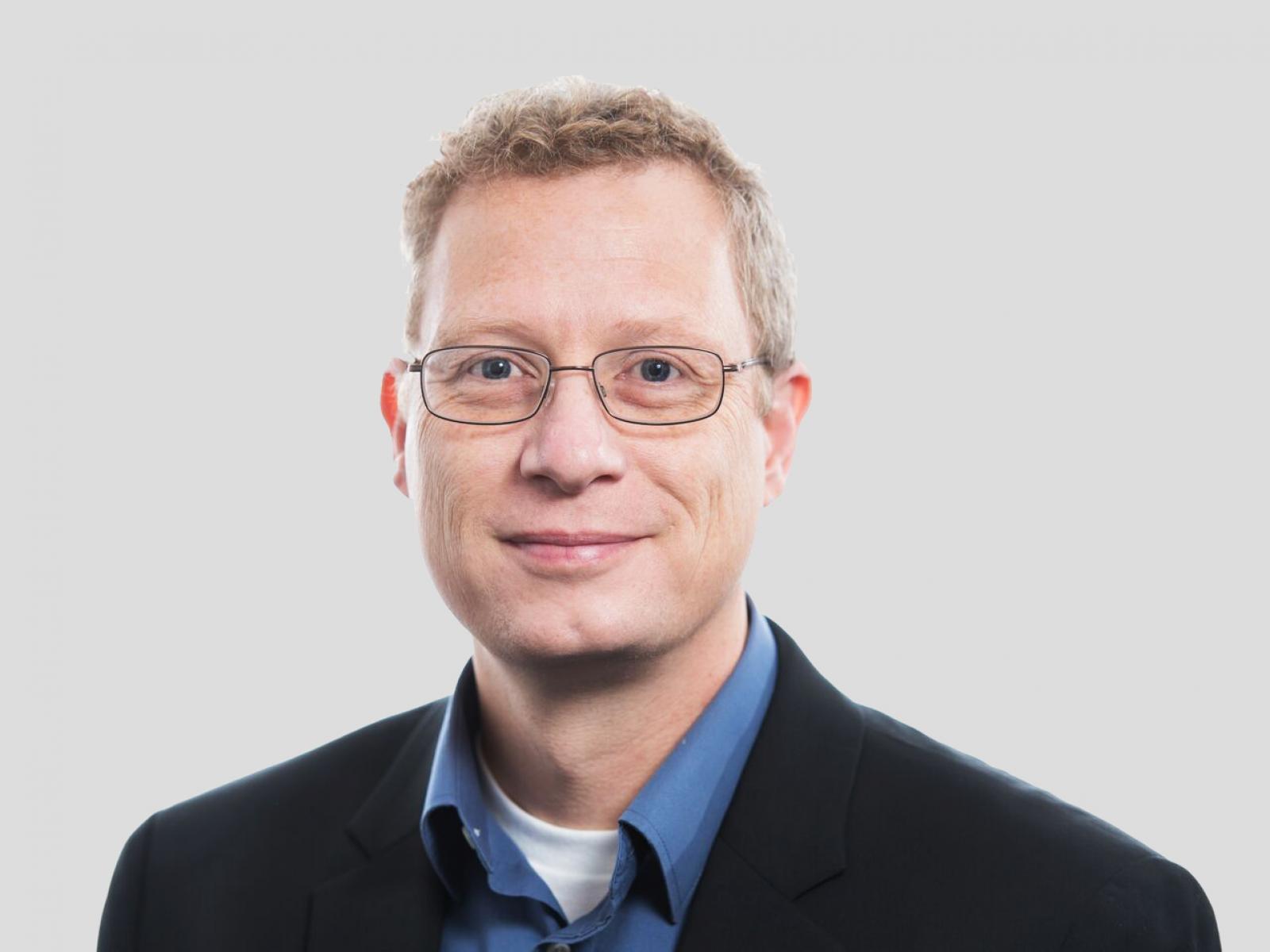
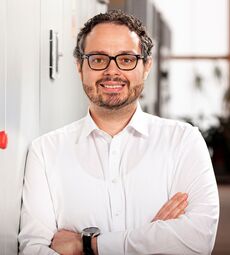
Antonello Monti is a Professor and Director of the Institute for Automation of Complex Power Systems at RWTH Aachen University. His research focuses on modern power systems, including smart grid technologies, hybrid AC-DC grids, and quantum computing applications in energy systems. Recent publications demonstrate innovations in grid resilience, EV charging optimization, quantum-assisted power system planning, and advanced simulation techniques. His team develops open-source tools like JuliaGrid for power system analysis and validates concepts through real-time testing platforms. Research addresses energy transition challenges including renewable integration, grid modernization, cyber-physical security, and next-generation optimization methods combining quantum computing with traditional power engineering approaches.
Yuanbo Xiangli is a postdoctoral researcher at Cornell University , advised by Prof. Noah Snavely. Previously, he obtained his Ph.D. from the Multimedia Lab in the Department of Information Engineering at the Chinese University of Hong Kong (CUHK) , supervised by Prof. Dahua Lin. His research focuses on 3D computer vision and deep generative modeling for urban scene reconstruction. 3D scene reconstruction from sparse images Neural rendering and Gaussian splatting Deep generative modeling for urban environments Multi-source geospatial data processing City-scale modeling and synthetic datasets His recent work includes advanced NeRF extensions (BungeeNeRF, GridNeRF), Gaussian splatting enhancements (GSDF, Scaffold-GS), and urban scene datasets (MatrixCity, OmniCity). A pioneer in combining classical vision techniques with modern deep learning approaches. ICLR 2020 Spotlight Award Collaborates with leading researchers in photorealistic rendering, including Noah Snavely and Dahua Lin. Develops systems enabling efficient 3D reconstruction from diverse data sources like satellite imagery and street-level panoramas.
Kevin Schneider is a Laboratory Fellow at Pacific Northwest National Laboratory (PNNL), a Research Professor at Washington State University (WSU), and an Affiliate Associate Professor at the University of Washington. As manager of PNNL's Office of Electricity Subsector, he leads business development, client relations, and strategic investments in R&D for the grid sector, overseeing portfolios in component design, system modeling, hierarchical controls, secure communications, and energy storage. Dr. Schneider is internationally recognized for his expertise in power system analysis, planning, and operations. His research focuses on improving grid reliability and system flexibility by harnessing advanced grid concepts at the edge of power systems, including microgrids, energy storage, electric vehicles, distributed energy resources, and smart home appliances. At WSU, he is a researcher for the WSU and PNNL Advanced Grid Institute (AGI), implementing layered control architectures to enhance operational flexibility of critical power systems. His work spans multiple disciplines within electrical engineering and power systems, with strong emphasis on practical applications for grid modernization, particularly in grid resilience, microgrid operations, and integration of distributed energy resources. Dr. Schneider is a Fellow of the Institute of Electrical and Electronics Engineers (IEEE), where he has served in multiple technical leadership roles. His scientific contributions have been recognized with significant awards: Presidential Early Career Award for Scientists and Engineers (PCASE), 2019 Fellow of the Institute of Electrical and Electronics Engineers (IEEE) Dr. Schneider earned his B.S. in Physics and M.S. and Ph.D. in Electrical Engineering from the University of Washington. He is a licensed Professional Engineer in Washington State. His research has resulted in numerous patents related to power grid technologies, including several focused on voltage and frequency stability of distribution systems. His work has substantial implications for grid modernization efforts and the development of more resilient power systems in the face of climate change and other challenges.
Prof. Florian Egli is a Professor at the Technical University of Munich (TUM), affiliated with the TUM School of Social Sciences and Technology. His research focuses on public policy for the green transition, climate finance, and labor market impacts of energy transitions. He examines topics such as green hydrogen trade, renewable energy investment risks, and fossil fuel phaseout politics. His work bridges academia and policy, addressing challenges like financing Africa’s energy transition, managing trade-offs in electric vehicle policies, and quantifying climate finance needs in developing nations. He critiques energy system models for oversimplifying financial dynamics and advocates for evidence-based policy design. Recent articles highlight themes like green industrial policy frameworks, labor market adaptation to low-carbon economies, and the geopolitical implications of renewable energy exports. Egli’s research emphasizes practical solutions to political and financial barriers in achieving global climate goals. No scientific awards or grants are explicitly listed in the provided text. He advises no students or teams in the given data.
Prof. Dr. Stefan Eicker is a Professor and Chairholder of Business Information Systems and Software Engineering at the Faculty of Computer Science, University of Duisburg-Essen, Germany. He has held this position since April 2004, following previous academic appointments at the Technical University of Clausthal, the University of Essen, and other German institutions. His research spans multiple domains within information systems and software engineering, with a particular focus on digital transformation and emerging technologies. Prof. Eicker's research interests center around Smart Products , Service Systems , Internet of Things , and Platform Economics . His work explores how digital technologies transform traditional business models and create new value propositions. He has developed taxonomies for smart services and investigated quality factors in self-tracking solutions, demonstrating his interdisciplinary approach that bridges technical and business perspectives. His research particularly emphasizes the integration of physical and digital components in modern products and services. His recent publications (2019-2024) reveal a strong focus on digital platform economies, smart services, and IoT applications. The research shows a clear trajectory toward understanding value creation mechanisms in digital ecosystems, with increasing attention to practical applications in energy systems, self-tracking technologies, and business model innovation. His work often involves collaboration with colleagues like Gero Strobel and Tobias Brogt, indicating an active research group focused on digital transformation. Prof. Eicker has contributed significantly to the academic community through his extensive publication record spanning nearly two decades, with work appearing in journals, conference proceedings, and edited volumes. His research bridges theoretical frameworks with practical applications in business contexts. He maintains an active role in academic administration and education at the University of Duisburg-Essen, where he has contributed to curriculum development and the implementation of systems for managing academic information. His work on the bolognaT3 system demonstrates his commitment to improving academic processes through technology.
Sriramkrishnan Muralikrishnan is a Research Staff member at the Department of Mathematics and Education within the Jülich Supercomputing Center (JSC) at Forschungszentrum Jülich, Germany. His work focuses on developing advanced computational methods for high-performance scientific computing, particularly in plasma physics and related multi-physics applications. Dr. Muralikrishnan's research spans several key computational domains: Numerical Analysis and High-Order Methods High Performance Scientific Computing for Exascale Architectures Plasma Physics Simulations Fast Solvers and Preconditioners Parallel-in-Time Integration Techniques Performance Portable Programming His recent publications demonstrate a strong focus on particle-based computational methods, particularly Particle-in-Cell and Particle-in-Fourier techniques. His work consistently addresses challenges in energy conservation, scalability across architectures, and noise reduction in plasma simulations. A significant portion of his research involves developing performance-portable frameworks that can efficiently leverage modern supercomputing hardware from different vendors without code rewrites. Dr. Muralikrishnan is actively involved in open-source scientific software development: Lead developer of IPPL (a performance portable library for grids and particles) Developer of OPAL (an open-source particle accelerator library) His research has direct applications in plasma physics, fusion energy research, and advanced accelerator design, with a strong emphasis on making computational methods accessible through open-source development and advocating for diversity in scientific computing.
Prof. Ferdinanda Ponci is a Professor at RWTH Aachen University, leading the Department of Monitoring and Distributed Control for Energy Systems. Her work focuses on smart grid technologies, renewable energy integration, and control systems for modern power networks. She actively contributes to advancing grid resilience, EV charging infrastructure, and cybersecurity in energy systems. Key research interests include hybrid AC-DC grids, distributed energy resources coordination, and application of AI in grid management. She has pioneered frameworks like datafev for EV charging management and SMU platforms for synchronized measurements. Her interdisciplinary approach also addresses diversity in engineering and societal impacts of energy systems. Prof. Ponci’s laboratory activities involve hardware-in-the-loop testing, blockchain-based grid solutions, and development of educational toolboxes for emerging technologies. She collaborates on projects such as submarine transmission systems and grid interoperability testing, contributing to both academic and industrial advancements in power systems engineering.
Vladimir V. Terzija is a prominent researcher specializing in power systems engineering with a focus on smart grid technologies, synchronized measurement systems, and power system protection. His extensive publication record spans over two decades, demonstrating continuous contributions to the field of electrical power engineering across numerous IEEE journals and conferences. Terzija's research primarily centers on advanced power system monitoring, protection, and control methodologies. His work has significantly contributed to the development of synchronized measurement technology applications, fault analysis algorithms, and state estimation techniques for modern power systems. He has pioneered approaches for wide-area monitoring systems, transmission line fault analysis, and integrating renewable energy resources into power grids while maintaining stability and reliability. His research spans from fundamental power system theory to practical implementations addressing contemporary challenges in grid operation. Analysis of his recent publications reveals a strong focus on integrating artificial intelligence and machine learning techniques into power system applications, particularly for condition monitoring, anomaly detection, and predictive maintenance. His work increasingly addresses challenges posed by the energy transition, including grid stability with high renewable penetration, multi-energy system integration, and advanced control strategies for low-inertia power systems. The interdisciplinary nature of his research connects power engineering with data science, optimization theory, and cybersecurity. Throughout his career, Terzija has collaborated extensively with researchers across Europe and internationally, as evidenced by his numerous co-authored publications with institutions worldwide. His work appears consistently in top-tier IEEE publications, indicating recognition by the power engineering community. While specific awards aren't documented in the available publication records, his sustained research productivity and influence in the field suggest significant professional recognition. Terzija has supervised numerous research projects focused on power system monitoring and control, with particular emphasis on practical implementations that bridge theoretical developments with real-world grid applications. His work on WAMS (Wide Area Monitoring Systems), fault location algorithms, and state estimation techniques has contributed to advancing grid operational capabilities. The research trajectory shows increasing focus on addressing challenges associated with renewable energy integration, grid digitalization, and maintaining stability in modern power systems. His research group appears to focus on developing advanced monitoring and control systems for power networks, with particular expertise in synchrophasor technology applications. The collaborative nature of his work suggests involvement in international research consortia addressing contemporary power system challenges, particularly those related to grid stability in systems with high renewable penetration and the development of intelligent monitoring solutions for power infrastructure.
Joachim Knebel is a Professor and head of Department 3 'Mechanical and Electrical Engineering' at the Karlsruhe Institute of Technology (KIT). As a mechanical engineer with a doctorate in mechanical engineering, he has held this leadership position since 2012 and oversees cross-disciplinary research on energy transition and future mobility. Prof. Knebel's research spans energy system transformation, with expertise in nuclear safety, fusion research, and electromobility. He focuses on redesigning Germany's energy infrastructure to increase efficiency, reduce CO 2 emissions, and integrate renewable energies. His work addresses the complex interaction between electrical, thermal, and chemical energy flows with modern information technologies to ensure reliable energy supply. He emphasizes the development of energy storage systems and integrated grids as critical components for the energy transition. As division head, he leads three major Helmholtz programs: Materials and Technologies for the Energy Transition (MTET), Fusion (FUSION), and Nuclear Waste Management, Safety, and Radiation Research (NUSAFE). His division comprises 32 scientific institutes with approximately 2,300 researchers, facilitating collaboration between engineering, natural sciences, and humanities. His notable recognition includes: Professor honoris causa from Saint Petersburg State University (2013) for contributions to future energy systems and Russian-European cooperation Prof. Knebel has played a significant role in nuclear safety research following the Fukushima disaster, heading the 2011 task force that established six working groups to analyze the incident. He remains a sought-after expert for research, industry, and political stakeholders, actively translating scientific findings into practical applications for Germany's 2050 energy system goals through initiatives like the Energy Lab 2.0 demonstration project.
Prof. Dr.-Ing. Thomas Stetz is a Professor for Electrical Power Engineering at the Technical University of Mittelhessen (Gießen, Germany), specializing in Smart Grids and Energy Storage . He is a Scientific Director of the Institute for Transformation Tasks in Energy Economics and Energy Technology (ITEE) and Project Group Leader at TransMIT GmbH, Gießen. PhD in Electrical Power Engineering (University of Kassel, 2013) Former Research Group Leader at Fraunhofer IWES (Kassel, Germany) His research focuses on technical and economic aspects of voltage control , grid integration of photovoltaics , and smart grid technologies . He has led international projects with partners like the University of Costa Rica and Ingolstadt University of Applied Sciences, funded by BMBF , BMWi , and DFG . Key article trends include reactive power optimization , automated grid planning , and storage system integration for renewable-heavy grids. His scientific awards highlight his contributions to global PV grid integration research. Best Presentation Award (CIER 2017, Havana) Science Award (German Chamber of Industry and Commerce Kassel, 2014) Prof. Stetz supervises PhD and undergraduate students and contributes to industry-standard guidelines through collaborations with Stadtwerke Gießen AG and Bayernwerk. His work bridges technical innovation and policy development for the energy transition.
Prof. Dr. Walter Commerell serves as Professor at Technische Hochschule Ulm (THU) , holding the role of International Representative for the Faculty of Production Engineering and Production Management. He is the Spokesperson for ASIM (Simulation of Technical Systems Division) and Head of Steinbeis Transfer Center System Design , while also being a member of the International Energy Competence Center (IECN) and Institutes for Energy and Drive Technology/Vehicle Systems Technology.
Dr. Jan Kurkofka is an Assistant Professor in the Department of Mathematics at Freiberg University of Mining and Technology. His research focuses on graph theory, particularly in areas such as Graph Minor Theory, Connectivity Theory, Topological Graph Theory, and Infinite Graph Theory. He actively contributes to the academic community through publications, conference presentations, and organizing the Research Seminar in Discrete Mathematics and Algebra. Dr. Kurkofka completed his Master's thesis in 2017 with a grade of 1.0 on "On the tangle compactification of infinite graphs." He earned his Ph.D. in 2020 summa cum laude with the dissertation "Ends and tangles, stars and combs, minors and the Farey graph." In 2023, he completed his habilitation, further establishing his expertise in graph theory. Dr. Kurkofka's research interests span Graph Minor Theory, Connectivity Theory, Topological Graph Theory, and Infinite Graph Theory. His work explores structural aspects of graphs, including explicit structure theorems for low connectivity, local-global invariants of graphs and groups, and the role of the Farey graph in infinite edge-connectivity. He has made significant contributions to understanding the connectivity properties of graphs and their applications across various mathematical fields. His publication record demonstrates a strong focus on connectivity theory and graph minors. Dr. Kurkofka has published in prestigious journals including Mathematische Annalen, Journal of Combinatorial Theory, and Transactions of the American Mathematical Society. His work often involves collaborations with leading researchers in the field, such as Johannes Carmesin and Reinhard Diestel, reflecting the interdisciplinary nature of modern graph theory research. Dr. Kurkofka has received research funding from the Deutsche Forschungsgemeinschaft (DFG, German Research Foundation) under grants 566118291 and 546892829. He serves as an organizer for the Research Seminar in Discrete Mathematics and Algebra alongside Professors Johannes Carmesin and Friedrich Martin Schneider, fostering academic exchange in his field. Dr. Kurkofka teaches courses including Algorithmic and Structural Graph Theory II and has been involved in various teaching activities across multiple semesters. He supervises Master's theses through his seminar on infinite graph theory, preparing students for advanced research in the field. His teaching spans from undergraduate to graduate levels, including specialized topics like Bass-Serre Theory and Graph Minors.
Dr. Norma Osterberg-Kaufmann is a Researcher at the Institute of Social Sciences, Humboldt-Universität zu Berlin, within the Faculty of Humanities, Social Sciences and Education. Her work focuses on empirical social research, comparative democracy, and legitimacy studies. Institution: Humboldt-Universität zu Berlin Department: Institute of Social Sciences Role: Women's representative and Scientific Associate Her research explores democratic configurations, regression, and dysfunctionality across regions like Southeast Asia, Europe, and Africa. She investigates public perceptions of democracy, legitimacy in the EU, and methodological innovations such as repertory grid analysis. Recent work includes comparative studies of Singapore, Ghana, and Ireland, alongside analyses of patronage systems in Albania. Key trends in her publications include cross-national democratic challenges, empirical measurement techniques, and the intersection of political knowledge with legitimacy. Awards include the Gero Erdmann-Preis for comparative area research (2020). Scientific Awards Gero Erdmann-Preis für vergleichende Area-Forschung (2020) Her institutional roles involve committee participation and advocacy for gender representation, with contributions to book reviews and academic conferences.
Prof. Giovanni De Carne is a Professor at the Department of Electrical Engineering and Information Technology (ETIT) at the Karlsruhe Institute of Technology (KIT). His research focuses on real-time systems in power engineering, energy storage systems, smart grid technologies, and advanced power electronics. He specializes in developing innovative solutions for grid integration of renewable energy sources, including solid-state transformers, DC microgrids, and hybrid energy storage systems. His work addresses challenges in grid stability, load management, and cybersecurity for modern power systems. De Carne leads research initiatives such as KARA, KITTEN, and EL2.0, which explore digital twins for particle accelerators and sustainable energy management. His contributions include advancements in power hardware-in-the-loop testing, voltage and frequency control strategies, and the application of machine learning in superconductivity. He has published extensively on topics like energy storage optimization, DC fast charging infrastructure for electric vehicles, and fault-tolerant grid operations. Key areas of expertise include: Smart transformer design and grid integration DC/AC converter technologies Real-time system simulation and validation Renewable energy system modeling Grid stability and resilience enhancement His research has been applied to improve grid-edge control, mitigate disturbances in power systems, and optimize energy storage solutions for high-renewable grids. De Carne's work bridges theoretical advancements with practical implementation, contributing to sustainable energy infrastructure and grid modernization efforts.
Olaf Spinczyk is a Professor in the Department of Computer Science 12 at Technische Universität Dortmund, leading the Embedded System Software Group. Previously, he held positions at Friedrich-Alexander-Universität Erlangen-Nürnberg and the University of Magdeburg. His research focuses on embedded systems, aspect-oriented programming, and operating system design. Affiliations: Technische Universität Dortmund: Head of Embedded System Software Group Former roles: University of Erlangen-Nürnberg (Dept. of Computer Science 4) and Magdeburg University Research Interests Spinczyk specializes in tailor-made operating systems , embedded systems , and aspect-oriented programming . His work emphasizes software product lines for embedded environments, fault tolerance, and energy-efficient system design. Key projects include: CiAO: Aspect-oriented OS product line AspectC++: AOP extension for C++ FAME-DBMS: Database management system family FAIL*: Fault-injection framework Recent Work Recent research explores energy-aware device drivers, cyber-physical system reliability, and virtualization strategies for industrial applications. He has contributed to frameworks like vGridLab for smart grid testing and PhyNetLab for IoT-based warehouses. Awards & Activities No explicit awards listed, but notable contributions include leadership roles in EuroSys and conference organization (e.g., PLOS workshops, AOSD tutorials). Active in academic service, including program committees for AOSD and MMB. Labs & Teams Leads the Embedded System Software Group at TU Dortmund, collaborating on projects involving automotive systems, real-time computing, and cloud federation strategies.