Paul Boniol is a researcher at Inria, affiliated with the VALDA project-team—a collaboration between Inria Paris, École Normale Supérieure, and CNRS. His work focuses on time series analytics, anomaly detection, and machine learning applications. Ph.D. in Computer Science and Applied Mathematics (University of Paris, EDF R&D) Visiting Ph.D. at University of Chicago Education: Grenoble INP ENSIMAG Engineering School Research interests span: Unsupervised anomaly detection in large time series Time series management systems Machine learning for predictive maintenance Graph-based time series analysis Explainable AI for temporal data Recent publications emphasize advancements in: Weakly supervised anomaly localization Graph embedding techniques Model selection frameworks Interactive visualization tools Smart meter data analysis Scientific recognition: Paul Caseau Thesis Prize 2022 Lambdamu Congress Research-Industry Prize 2022 BDA & INFORSID Ph.D. Prizes 2022
Federica Cappelluti is an Associate Professor in the Department of Electronics and Telecommunications (DET) at Politecnico di Torino (Polytechnic University of Turin) . She serves as the Director of the Open Science Study Center , a Member of the Coordinating Committee of the Polito for Social Affairs , and a Scientific Advisor for the European Open Science Cloud (EOSC) Association . Her academic roles include leadership in Non-commercial collaborative agreements (Italian Computing and Data Infrastructure, Italian Association for Open Science) Research projects funded by EU and national grants (FEDRA, CLAIRE, Skills4EOSC, MIRACLE, TFQD) Research Interests: Federica specializes in Nanophotonics , Optoelectronics , Photovoltaics , and Semiconductor Device Modeling . Her work focuses on Radiative cooling for solar cells Perovskite/silicon tandem solar cells High-speed semiconductor devices Applied photonics for energy efficiency Article Trends: Recent publications highlight her innovations in Photovoltaic radiative cooling using cement-based materials 3-terminal tandem solar cell architectures Quantum dot and intermediate band solar cell engineering Thermal management of multi-junction cells Modeling and simulation of photonic devices Cost-effective photovoltaic materials Scientific Awards: She holds an International Patent for Cement composites for radiative cooling (co-inventor with Matteo Cagnoni) Advising and Grants: Federica supervises PhD students in Artificial Intelligence (Giacomo Fantino) Electrical, Electronics, and Communications Engineering (Antonio Fronteddu, Pietro Testa) Completed PhD research (Gemma Giliberti: 3-Terminal Perovskite/Silicon Tandems) She leads competitive projects including FEDRA : FAIR data lake for research assessment CLAIRE : Perovskite/silicon solar cells MIRACLE : Photonic Metaconcrete for energy savings Labs and Teams: She collaborates with the Microwave and Optoelectronics Group (MOG) at DET and contributes to the PhotoNext Interdepartmental Center for applied photonics. Her work intersects with Nexa Center for Internet & Society in open science initiatives.
Milan Predojević is a senior assistant (equivalent to Assistant Professor) at the Department of Computer and Information Sciences, Faculty of Science and Mathematics, University of Banja Luka, where he has been employed since January 2021. Previously, he served as an assistant professor at the same institution from March 2017 to January 2020. He holds a Master of Informatics from the Faculty of Science and Mathematics, University of Novi Sad (2020), and a degree in Mathematics and Computer Science from the Faculty of Natural Sciences and Mathematics, University of Banja Luka (2016). He is currently pursuing doctoral studies at the Faculty of Mathematics in Belgrade, University of Belgrade. Dr. Predojević's research focuses on the intersection of computer science and biology, particularly in bioinformatics and computational biology. His work explores protein-protein interaction networks, combinatorial optimization problems, and the application of machine learning techniques to biological data analysis. He teaches courses including Databases, Compiler Construction, Algorithms, and Introduction to Artificial Intelligence. His recent publications demonstrate a strong emphasis on applying computational methods to solve biological problems, particularly in protein complex identification and analysis. His research often involves collaboration with colleagues like Milana Grbić, Dragan Matić, and Marko Đukanović. Dr. Predojević is actively involved in multiple research projects related to bioinformatics, machine learning applications in biology, and combinatorial optimization. His work bridges theoretical computer science with practical applications in biological data analysis.
D. (Dimka) Karastoyanova is a Professor of Information Systems at the University of Groningen , Faculty of Science and Engineering, Computer Science Department. She leads the Information Systems Group and serves as vice-chair of the Bernoulli Institute Board since 2024. Previously, she was Head of the Computer Science Department (2020-2024) and a member of the Informatics Europe Board since 2023. Dimka's research focuses on data-driven, service-based process automation for cross-organizational collaboration, emphasizing runtime adaptability, security, and sustainability . Her work spans applications in manufacturing, logistics, healthcare, and eScience , integrating Scientific Workflows, Cloud Computing, and Middleware Systems to enhance process flexibility. Her scientific contributions include 15+ publications on topics like Choreography Lifecycle Management, BPEL Adaptation, and Cloud Migration Frameworks , reflecting her expertise in Service-Oriented Computing, Workflow Technologies, and Distributed Systems . She received the Rosalind Franklin Fellowship and has served on program committees for IEEE, ICWS, and BPM conferences . Dimka holds a PhD in Computer Science (TU Darmstadt, 2006), an MSc in Computational Engineering (University of Erlangen-Nuremberg), and MSc/BSc in Industrial Engineering (Technical University of Sofia). She previously held roles as Associate Professor of Data Science at KLU Hamburg and Senior Researcher at Hasso Plattner Institute, University of Potsdam.
Euan Bain is a Senior Lecturer in the School of Engineering at the University of Aberdeen , where he has been employed since 2008 (Lecturer, 2008-2016; Senior Lecturer, 2016-present). He previously held roles at Brown University (Postdoctoral, Visiting Assistant Professor) and the University of Strathclyde (Research Fellow). His research spans energy and environmental engineering, focusing on: Direct carbon fuel cells Electrosorption for water treatment CO2 geological storage Supercapacitor electrode materials Zero-valent iron (ZVI) systems for arsenic remediation Electrochemical monitoring in fuel cells Key trends in his recent publications include applying chemical engineering principles to sustainable energy (e.g., fuel cells) and water purification technologies. His work aligns with UN Sustainable Development Goals for clean energy and water. Scientific awards include: ExxonMobil Excellence in Teaching Award (2011-2013) Grants and funding: GREEN CONCRETE (2012-2013, £2.8M, Qatar Foundation) Electrochemical waste decomposition diagnostics (2011-2012, £13k, Royal Society) UK-US Travel Grant (2010, £1.5k, British Council) He teaches undergraduate and postgraduate chemical engineering courses and supervises PhD students. He has engaged in public science outreach (e.g., Bright Club Aberdeen, PechaKucha lectures).
Professor Damiano Varagnolo is affiliated with the Department of Engineering Cybernetics at the Norwegian University of Science and Technology (NTNU), where he conducts research spanning control systems, robotics, power systems, and data-driven modeling. His work bridges theoretical advances with practical applications in underwater vehicles, medical rehabilitation, and energy infrastructure. His research focuses on: Development of formation control algorithms for autonomous underwater vehicles (AUVs) and snake robots Transient stability enhancement for grid-forming converters in renewable energy systems Data-driven modeling of physiological signals for wheelchair propulsion and industrial processes Distributed optimization for underwater communication networks Recent publications (2024-2025) demonstrate strong emphasis on: Underactuated vehicle control using hand position concepts Energy expenditure estimation through physiological signal processing Consensus protocols for JANUS-based underwater networks Educational innovation through control-themed outreach initiatives like the Advent Calendar project He actively collaborates with NTNU colleagues across engineering disciplines and contributes to curriculum development through graph-theoretic approaches for educational coherence.
Abbas Kouzani is a Professor of Engineering at the Deakin University School of Engineering , with a focus on cutting-edge biomedical engineering and AI applications. His work bridges 3D/4D printing and clinical challenges , particularly in dysphagia management and neurological disorders.
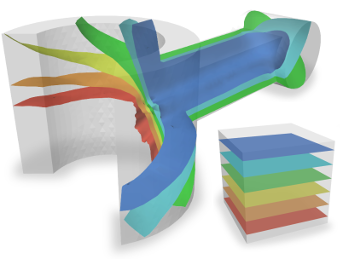
Dr Chennakesava Kadapa is a Lecturer in the School of Computing, Engineering and the Built Environment at Edinburgh Napier University. He previously held a Lecturer position at the University of Bolton (2020-2022) and completed his PhD in Mechanical Engineering at Swansea University (2010-2013) with a Zienkiewicz Scholarship. Bachelor of Technology in Mechanical Engineering (2002-2006) Master of Technology in Machine Design (2006-2008) PhD in Mechanical Engineering (2010-2013) His research focuses on computational mechanics , multiphysics modelling , and smart materials , with expertise in finite element methods, computational fluid dynamics, and high-performance computing. Current projects explore magnetoactive polymers, cerebral blood flow dynamics, and energy harvesting systems. Recent publications highlight machine learning integration with fluid-structure interaction and magnetomechanical coupling . Articles span hyperelasticity , biomechanics , and smart composite materials . Scientific recognitions include: Zienkiewicz Scholarship (Swansea University) Software Carpentry Instructor Certification (University of Manchester, 2019) Fellowship of the Higher Education Academy (FHEA) He has supervised students and collaborated on industry-funded projects. His Computational Multiphysics Lab develops open-source simulation tools for complex engineering and biomedical applications.
Dr.-Ing. Reinhold Lehneis is a Scientist and Group Leader at the Department of Microbial Biotechnology, Helmholtz Centre for Environmental Research (UFZ), Leipzig, Germany. His work focuses on Energy system analysis for renewable electricity supply in electrobiorefineries Spatiotemporal modeling of renewable energy production Climate change impacts on wind and solar power generation Developing simulation tools like ReSTEP (Renewable Spatial-Temporal Electricity Production) models His research integrates environmental biotechnology with energy transition strategies, emphasizing Biomass power plants Wind and photovoltaic systems Run-of-river hydropower Municipal contributions to Germany’s energy goals Selected publications demonstrate expertise in High-resolution energy modeling Climate-adapted renewable systems Spatial equity in energy deployment and have appeared in journals like Energies , Renewable Energy , and Resources .
Earl Barr is a Professor of Software Engineering at the Department of Computer Science, University College London. His research focuses on software engineering, data management and data science, and neural software engineering approaches. Research Interests: Dr. Barr's work bridges traditional software engineering with modern machine learning techniques. He explores automated program repair, code summarization, log anomaly detection, and the application of neural models to software development workflows. His studies often address both practical challenges in industry and theoretical aspects of code analysis. Article Trends: His recent publications emphasize the integration of large language models (LLMs) into software engineering tasks, including fact selection for program repair, semantic prompt augmentation, and grid-based code representation. Other recurring themes include empirical studies of development practices, fuzzing techniques for program analysis, and the use of surprisal theory in issue tracking systems. Scientific Awards: ACM Sigsoft Distinguished Paper Award (2013) Best Paper Award - IEEE Conference on E-Commerce Technology (2005) I3P Fellowship (2009-10) Professional Activities: Dr. Barr has served as a visiting assistant professor at the University of California Davis (2013) and as a reviewer for top software engineering conferences and journals including ICSE, ISSTA, FSE, SAS, TOSEM, TSE, and the DARPA MURI Program. He also contributed to commercialization efforts through a patented approach leveraging statistical analysis from large software corpora for engineering tools.
Marcel Campen is a Professor at Osnabrück University specializing in Computer Graphics and Geometry Processing. His research focuses on surface parametrization, quad mesh generation, and computational geometry. He has made significant contributions to the field of geometry processing, particularly in developing algorithms for quad layout generation, surface mapping, and mesh repair. His research interests span Computer Graphics, Geometry Processing, Surface Parametrization, Quad Mesh Generation, 3D Modeling, and Mesh Repair. Campen's work addresses fundamental challenges in representing and processing complex geometric shapes, with applications ranging from animation and simulation to reverse engineering and meshing. His research often combines theoretical insights with practical implementations, resulting in algorithms that are both mathematically sound and computationally efficient. Campen's publications demonstrate a strong focus on developing robust and efficient methods for geometry processing. His work on quad layout generation, parametrization techniques, and surface mapping has resulted in several award-winning papers, including Best Paper Awards at SGP 2021 and 2022. His research often bridges theoretical concepts with practical implementations, making his contributions highly influential in both academic and industrial settings. Best Paper Award (1st place) at SGP 2022 Best Paper Award at SGP 2021 Campen has made significant contributions to the field through his doctoral thesis on quad layout generation and numerous publications in top-tier conferences including SIGGRAPH, Eurographics, and SGP. His work on directional field synthesis, similarity maps, and bijective mappings has advanced the state of the art in geometry processing. He has also contributed to practical tools like libQEx for robust quad mesh extraction, demonstrating his commitment to making theoretical advances accessible to practitioners.
Professor Peter Quinn is a distinguished astrophysicist at the University of Western Australia , serving as Chairman of the Board at the International Space Centre and affiliated with the International Centre for Radio Astronomy Research (ICRAR) and the Office of DVC Research . He received his BSc(Hons) in Mathematics and Physics from the University of Wollongong in 1978 with the University Medal in Physics, and his PhD in astronomy and astrophysics from the Australian National University (ANU) in 1982. His research centers on galaxy formation and evolution , dark matter dynamics , and the Epoch of Reionization . He has pioneered computational astrophysics, particularly through the discovery of the Quinn-Goodman effect and contributions to the MACHO Dark Matter Search Project . He has led major initiatives in the European Southern Observatory (ESO) , including the Very Large Telescope (VLT) data flow system and the Astrophysical Virtual Observatory (AVO) project. His scholarly work spans radio astronomy , supercomputer simulations , and data-intensive science , with a strong focus on the Square Kilometre Array (SKA) and gravitational wave detection . His work has earned him several prestigious accolades including a NASA High Performance Computing Award and a Computerworld 21st Century Achievement Award . He is a Fellow of the Australian Academy of Science (FASA) and a Fellow of the Australian Institute of Physics (FTSE) . His research also extends to large-scale international infrastructure projects and planning for the Square Kilometre Array and gravitational wave observations . He has served as Division Head at ESO and as a Chief Investigator for numerous grants, including the Australian SKA Regional Centre and ICRAR core funding .
Dr. Matthew Lewis is an Honorary Senior Research Fellow at Bangor University's School of Ocean Sciences, specializing in physical oceanography with applications to blue economy industries and coastal flood risk. His research employs computer models to simulate marine processes, including wave-tide interactions, estuarine dynamics, and future changes to coastal hazards. With affiliations spanning multiple research projects and international collaborations, Dr. Lewis plays a significant role in advancing marine renewable energy and coastal resilience science. Dr. Lewis's research interests focus on numerical modeling of marine systems, with particular expertise in wave-tide interactions, estuarine flood risk, marine renewable energy resource assessment, and marine plastic pollution. His work combines physical and biological processes to better understand marine systems, with applications ranging from coastal flood risk mitigation to optimizing offshore renewable energy deployment. His research bridges the gap between fundamental oceanographic processes and practical applications for coastal communities and industries. His recent publications demonstrate a strong focus on tidal and wave energy resource assessment, coastal flooding mechanisms, and the environmental impacts of marine renewable energy. The research shows increasing emphasis on interdisciplinary approaches, combining physical oceanography with ecological and social considerations, particularly in addressing compound flooding events and marine plastic pollution. His work has evolved from fundamental process studies toward more applied research with direct policy and industry relevance. Dr. Lewis actively supervises PhD and MRes students, with current projects covering renewable energy resource assessment, microplastic dispersal, coastal flooding mitigation, and estuarine dynamics. He teaches the ocean modeling module at Bangor University and serves as an Associate Editor for Frontiers in Marine Science and Guest Editor for Elsevier's Renewable Energy journal. His research is supported by multiple grants from NERC, EPSRC, and other funding bodies. As a member of the EPSRC Associate Peer Review College and the Digital Environment Expert Network, Dr. Lewis contributes significantly to the research community beyond his own projects. He has collaborated with numerous research partners including the UK Met Office, Deltares, CSIRO Australia, and NIWA New Zealand, demonstrating strong international engagement in marine science.
Carmen Gaina is a Professor at the Centre for Planetary Habitability, University of Oslo , specializing in tectonics, geophysics, and Arctic studies. Her research spans mantle dynamics, oceanic basin evolution, paleoclimate reconstruction, and lithospheric modeling. Recent publications focus on Arctic ocean bathymetry, lithosphere-asthenosphere interactions, and plume-induced subduction processes. She leads projects like DYPOLE (dynamics of polar basins), HOTMUD (hydrothermal systems), and SUBITOP (Arctic tectonics), often using multi-disciplinary approaches including seismic tomography and satellite gravity inversion. Scientific awards : No explicit awards listed in the provided text.
Amirmohammad Behzadi is a doctoral researcher at KTH Royal Institute of Technology, specializing in smart energy systems within the Fluid and Climate Technology group. His work focuses on designing, controlling, and optimizing sustainable heating, cooling, and electricity systems for buildings. His research spans Hydrogen-integrated microgrids Machine learning for energy management Thermal storage solutions Decarbonization of commercial/residential buildings Renewable energy hybridization and has been recognized in the World's Top 2% Scientists (2022-2024) by Stanford/Elsevier. Behzadi's peer-reviewed publications (15 most recent) demonstrate expertise in AI-driven optimization Fuel cell applications Hybrid ventilation systems Grid-connected renewable solutions Borehole thermal energy storage with a focus on cold climate adaptations. His scientific contributions include being selected as a top project by the Royal Swedish Academy of Engineering Sciences (IVA, 2024) and receiving the Best Researcher Award at the University of Tehran's 28th Research Festival (2021). His educational background includes an M.Sc. in Energy Conversion from the University of Tehran and a B.Sc. in Mechanical Engineering with top honors.