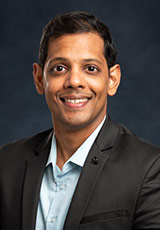
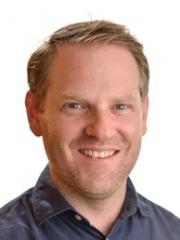
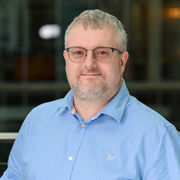
Shivam Saxena is an Assistant Professor in the Department of Electrical and Computer Engineering at the University of New Brunswick, located in Head Hall D65, Fredericton. His research focuses on smart grid technologies, including distributed energy resource integration, blockchain applications for energy trading, electric vehicle-grid interactions, and resilient microgrid design. This work addresses decarbonization challenges through technological and market innovations. Publications demonstrate a strong emphasis on real-world implementation, with field-tested solutions for V2X integration, blockchain-based transactive energy, and distributed control systems. Recent work explores novel applications in agricultural energy management and trust mechanisms for decentralized systems.
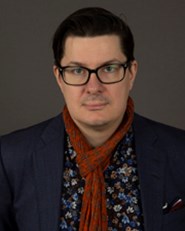
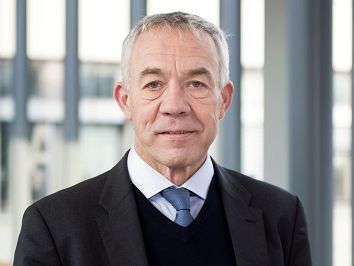
Jeppe Rich is a Professor at the Department of Technology, Management and Economics at the Technical University of Denmark (DTU). His primary research focuses on statistical and mathematical modeling applied to transport-related challenges, including transport demand modeling, discrete choice models, freight transport, cost-benefit assessments, and strategic long-term demand models. Rich holds a Mathematical Planning qualification from the University of Aarhus (1989–1995). He has held external positions as a Senior Consultant at Atkins A/S (2001–2002) and as a Researcher at the National Environmental Research Institute (1995–1998). His work aligns with UN Sustainable Development Goals related to sustainable cities and communities (SDG 11) and climate action (SDG 13). His research interests span transport policy, transportation science, and the application of advanced modeling techniques to address urban mobility challenges. Notable areas include EV infrastructure planning, bicycle network optimization, and cost-benefit analysis of transport projects. He supervises several PhD students in topics like electric freight transport, micromobility safety, and urban charging infrastructure. Rich has published extensively on transport policy, demand modeling, and sustainable mobility solutions. His work emphasizes interdisciplinary approaches to solving complex transport challenges, combining engineering, economics, and data science methodologies.
Joachim Sundqvist is Associate Professor at the Department of Food, Nutrition and Culinary Science of Umeå University, Sweden. With a dual commitment to teaching and research, he explores the sociological and cultural dimensions of food and meals, bridging theory and practice for gastronomy, dietetics, and food-science students. Research Focus: His work delves into the meal experience as a complex social phenomenon, integrating consumption value, social identity, cultural norms, and personal taste within everyday practices. Studies of business travel, outdoor dining, and Arctic hiking illuminate how context shapes eating behaviors. Research Groups & Projects: Member, Sustainable Food Transitions Member, Sympoietic Collaboratory Project lead (2024-2027) Providing evidence-based insights on alternative proteins for EU sustainability Project lead (2023-2026) LOCALITY Project lead (2020-2022) Off-grid gastronomy Project lead (2016-2017) Eating out – visitors’ food-related activities Publications Overview: Since 2015, Sundqvist has published extensively on gastronomic experiences, business-travel meals, outdoor food practices, and sustainable restaurant strategies, appearing in International Journal of Gastronomy and Food Science , Journal of Outdoor Recreation and Tourism , and multiple Swedish academic reports.
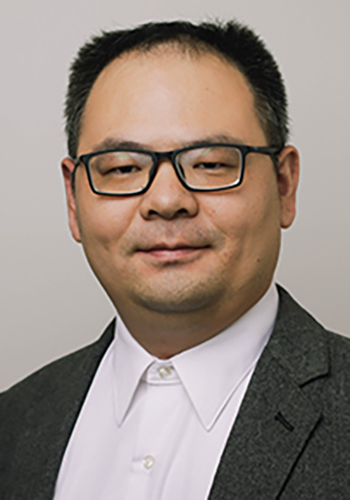
Teng Wu is a Professor and Director of Graduate Studies in the Department of Civil, Structural and Environmental Engineering at the School of Engineering and Applied Sciences, University at Buffalo . His research focuses on wind engineering, hurricane risk assessment, and climate change adaptation in infrastructure systems. PhD, Civil Engineering, University of Notre Dame (2013) MS, Civil Engineering, University of Notre Dame (2012) MS, Bridge Engineering, Tongji University (2010) BS, Civil Engineering, Tongji University (2007) Minor, Financial Engineering, Fudan University (2006) Teng Wu's research spans multiple domains including Wind Engineering , Hurricane Engineering , Structural Engineering , and Climate Change Adaptation . He specializes in nonlinear aerodynamics, performance-based wind design, and computational fluid dynamics applications to infrastructure resilience. His recent publications focus on machine learning applications for storm surge prediction, wind-induced structural response analysis, and climate change-informed infrastructure recovery frameworks. Key methodologies include hierarchical deep neural networks, knowledge-enhanced models, and reinforcement learning-based control systems. Contact: tengwu@buffalo.edu | Office: 226 Ketter Hall, Buffalo, NY 14260
Brendan Englot is the Anson Wood Burchard Endowed Professor and Director of the Stevens Institute for Artificial Intelligence (SIAI) at Stevens Institute of Technology. He holds a Ph.D., S.M., and S.B. in Mechanical Engineering from MIT. His research focuses on perception, navigation, and decision-making algorithms for mobile robots in complex environments, particularly underwater and autonomous systems. He has held roles such as Professor (2024–present), Associate Professor (2020–2024), and Assistant Professor (2014–2020) at Stevens, and previously worked at the United Technologies Research Center and Yale University. Education: Ph.D., Mechanical Engineering, MIT, 2012 S.M., Mechanical Engineering, MIT, 2009 S.B., Mechanical Engineering, MIT, 2007 Research Interests: Englot’s work emphasizes robust autonomy for unmanned vehicles in degraded conditions, leveraging AI to enhance situational awareness and decision-making under uncertainty. Key areas include navigation algorithms for underwater, aerial, and ground vehicles, sensor fusion, and multi-agent systems. Awards: AMiner’s Top 100 Robotics Scholars (2023, 2024) Provost’s Award for Research Excellence (2021) NSF CAREER Award (2017) ONR Young Investigator Award (2020) Grants & Advising: Englot has secured over $5M in grants as PI, including projects on underwater exploration, reinforcement learning for navigation, and robotic inspection systems. He mentors students in robotics, autonomy, and AI applications. Labs & Teams: Leads the SIAI and collaborates on projects involving autonomous vehicles, SLAM systems, and marine robotics through Stevens’ interdisciplinary initiatives.
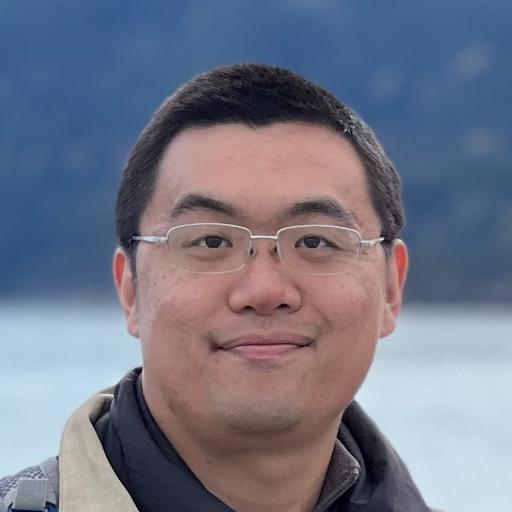
Dr. Lei Fan is an Assistant Professor in the Department of Engineering Technology at the University of Houston, with a joint appointment in the Electrical and Computer Engineering (ECE) Department. His research focuses on power system operations, optimization algorithms, quantum computing, and energy storage systems. He holds a Ph.D. from the University of Florida and a B.S. from Hefei University of Technology. Education: Ph.D., University of Florida B.S., Hefei University of Technology Research Interests: Dr. Fan’s work bridges theoretical optimization and practical energy systems, including quantum algorithms for power grid management, battery storage planning, and distributed quantum computing architectures. His LORE (Learning & Operations Research & Energy) lab explores cutting-edge applications in teleoperation, satellite networks, and environmental monitoring. Publications: Recent work emphasizes quantum computing’s role in solving complex optimization problems, such as entanglement routing in satellite networks and distributed hydrogen-power systems. His research also integrates machine learning for methane plume detection and hyperspectral imaging. Labs/Teams: He leads the LORE lab, advancing interdisciplinary research in energy systems and quantum technologies.
Dr. Mohamed Ibnkahla is a Full Professor and NSERC/Cisco Senior Industrial Research Chair in Sensor Networks for the Internet of Things (IoT) at Carleton University's Department of Systems and Computer Engineering. He holds a Ph.D. and HDR from the National Polytechnic Institute of Toulouse (INP), France. His research focuses on IoT, wireless sensor networks, cognitive radio systems, and adaptive signal processing, with applications in smart cities, healthcare, energy, and transportation. He has led numerous industry and government-funded projects, including the Carleton-Cisco IoT Testbed. Education: Ph.D. and HDR (INP Toulouse, 1996/1998), Engineering and MSc in Electronics/Signal Processing (INP Toulouse, 1992). He previously served at Queen’s University (2000–2015) and INP Toulouse (1996–1999). Research Interests: IoT security, energy harvesting, cognitive radio networks, smart grid communication, and machine learning for wireless systems. His work spans theoretical contributions (e.g., 5 books on signal processing and IoT) and applied innovations (e.g., sensor network architectures for environmental monitoring). He has published over 150 peer-reviewed papers, 4 books, and supervised ~40 graduate students. Awards include the INP Leopold Escande Medal (1997) and Ontario’s Prime Minister’s Research Excellence Award (2000). His lab develops solutions for IoT trust management, edge computing, and decentralized access control using blockchain. Key Projects: Cisco-funded IoT sensor networks for smart cities, NSF-funded cognitive radio projects, and collaborations on eHealth systems. His research addresses IoT security challenges in healthcare, transportation, and energy grids, emphasizing scalable, energy-efficient solutions.
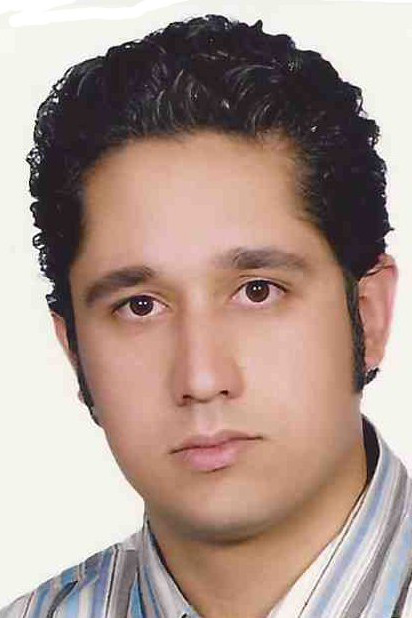
Reza Tourani is an Assistant Professor in the Department of Computer Science at Saint Louis University since Fall 2018. He earned his Ph.D. (2018) and M.S. (2012) in Computer Science from New Mexico State University, preceded by a B.S. in Computer Engineering from Islamic Azad University of Tehran (2008). His career includes prior work in the telecommunications industry in Iran. University: Saint Louis University School: School of Science and Engineering Department: Department of Computer Science Academic Rank: Assistant Professor Dr. Tourani’s research focuses on security and privacy in resource-constrained environments, including: Internet of Things (IoT) : Secure communication protocols and edge computing Information-Centric Networking (ICN) : Access control and request flooding mitigation Cyber-Physical Systems : Smart grid and UAV swarms Private Communication : Anonymity in distributed systems Networked Systems : DDoS defense and caching optimization His recent articles explore trends in: DDoS mitigation in Named Data Networking (PERSIA framework, 2020) Secure UAV swarm communications (2020) Attribute-based encryption for edge computing (APECS, 2021) Collaborative caching mechanisms (MuNCC, 2016) Smart grid data security (iCASM, 2020) Dr. Tourani has secured research grants from Saint Louis University and Intel Labs to advance projects on privacy-aware contact tracing and edge computing security . He actively mentors students in cybersecurity, IoT, and networked systems.
Jun Yan is an Associate Professor and Concordia University Research Chair in Artificial Intelligence in Cyber Security and Resilience at the Concordia Institute for Information Systems Engineering (Concordia University). His research focuses on cybersecurity, smart grid systems, and AI-driven solutions for energy and communication networks. He supervises graduate students in programs such as Information Systems Security (MASc), Computer Science (MCompSc), and Information and Systems Engineering (PhD). Research Highlights : Cybersecurity of distributed energy systems, AI penetration testing frameworks, and resilient transactive energy markets. Awards : Holds a prestigious university research chair in AI-driven cybersecurity. His work integrates machine learning with domain-specific challenges in smart grids, IoT security, and multi-agent systems. Notable contributions include frameworks for detecting adversarial attacks on power systems, optimizing renewable energy integration, and developing AI tools for penetration testing. His articles reflect a strong emphasis on interdisciplinary solutions blending cybersecurity, energy systems, and advanced computing. Yan’s research also addresses policy and infrastructure challenges in sustainable energy systems, including waste management policy analysis and optimal configuration of hybrid renewable systems. He has pioneered open-source co-simulation platforms like PEMT-CoSim and Quantum-Sim for secure energy trading and quantum communication in grids. He actively engages in grant-funded projects and advises on both academic and applied aspects of cybersecurity and intelligent systems.
Claudio Franzius is a Professor of Public Law, Administrative Law, and Environmental Law at the University of Bremen, where he also serves as Director of the Research Centre for European Environmental Law. He holds a habilitation in public law and has extensive experience in legal research and teaching. His academic career includes roles at Humboldt University Berlin, Free University Berlin, and the University of Hamburg. Franzius specializes in environmental law, climate policy, transnational legal frameworks, and European Union law. Education highlights include a PhD (1999) from Humboldt University Berlin and state legal examinations in Germany (1992, 1995). He has led major research projects, such as the DFG-funded 'Transnational Climate Protection Law' and the BMBF's 'Kompetenznetzwerk Zukunftsherausforderungen des Umweltrechts,' focusing on climate governance, legal instruments for environmental protection, and transnational policy challenges. His teaching includes courses on energy transition law, European law, administrative law, and climate policy planning. Recent courses (2023–2025) address climate litigation, technology-driven climate solutions, and transformative climate law. He supervises research projects and student assistants focusing on environmental law, climate policy, and transnational legal structures. Research interests span climate litigation, EU environmental law, legal responses to climate change, and transnational governance mechanisms. He collaborates with institutions like the Friedrich-Ebert-Stiftung and the UFZ Department for Environmental Law. His publications emphasize interdisciplinary approaches to environmental law, climate policy frameworks, and legal innovations for sustainability.
Lesia Mitridati is an Assistant Professor at the Department of Wind and Energy Systems, Technical University of Denmark (DTU). Her research focuses on optimizing energy systems, particularly in renewable energy integration, energy market design, and prosumer behavior modeling. She leads and collaborates on projects involving smart grids, distributed energy resources, and privacy-preserving market mechanisms. Her work contributes to UN Sustainable Development Goals related to affordable and clean energy. Key projects include AI-driven electricity market optimization, hydrogen-wind trading strategies, and risk-aware energy communities. She supervises multiple PhD students in areas like VPP bidding strategies and market-based heat-electricity coordination. Dr. Mitridati has published widely on energy communities, grid services, and reinforcement learning applications. Notable contributions include dynamic pricing frameworks for grid services and privacy-preserving market mechanisms. She co-organizes annual DTU summer schools on future energy systems and AI-driven optimization. Her research integrates machine learning with operational research techniques to address challenges in renewable energy integration, market design, and system resilience. Current initiatives focus on electrolyzer plant bidding strategies and feature-driven trading of renewable resources.
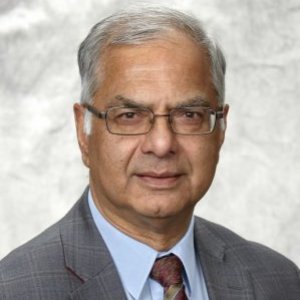
Dr. Vijay K. Sood is a Professor in the Department of Electrical, Computer and Software Engineering at Ontario Tech University. He holds a PhD in Power Electronics from Bradford University (UK), and has extensive experience in power systems, power electronics, and renewable energy integration. His research focuses on High Voltage Direct Current (HVDC) systems, Flexible AC Transmission Systems (FACTS), power electronics converters, and grid protection. He has received numerous awards, including Life Fellow of IEEE, Emeritus Fellow of the Canadian Academy of Engineers, and the 2000 IEEE Third Millennium Medal. Dr. Sood has authored/co-authored over 100 publications, including peer-reviewed articles in top journals like IEEE Transactions on Power Electronics and International Journal of Electrical Power & Energy Systems. His work addresses challenges in grid stability, renewable energy integration, and advanced control strategies for power systems. Education: PhD (Power Electronics), Bradford University, UK (1977) MASc (Electrical Machines), Strathclyde University, Scotland (1969) BSc (Electrical Engineering), Nairobi University, Kenya (1967) Awards: IEEE Third Millennium Medal (2000) Canadian Pacific Railway Engineering Award (2002) IEEE Regional Activities Board Achievement Awards (2001, 2006) His research emphasizes practical solutions for modern power systems, including HVDC controller design, synthetic inertia control for renewable grids, and advanced fault detection techniques. He has collaborated internationally on projects like the Energy System Observatory of Honduras and grid architecture models for multi-terminal DC systems.
Mike Barnes is Professor in the Power Conversion group at the University of Manchester's School of Electrical and Electronic Engineering. He holds a BEng and PhD from the University of Warwick and is a Fellow of IET, IEEE, and HEA. His research focuses on power electronics applications in HVDC transmission, offshore wind energy integration, smart grids, and energy storage optimization. He has supervised over 24 doctoral students and serves as Associate Editor for IEEE Transactions on Energy Conversion. Barnes investigates high-voltage power conversion technologies to enhance renewable energy utilization and grid stability. His work spans semiconductor-based systems, advanced control strategies, and multi-scale modeling to reduce costs and improve efficiency in energy infrastructure. Current projects include grid-scale storage interfacing and power electronic transformers. Recent publications demonstrate his focus on real-time simulation of energy storage, stability analysis of HVDC systems, and thermal management of power modules. This research addresses critical challenges in renewable integration and grid resilience. IEEE Transactions Prize Paper (2012-13) IEEE Transactions Energy Conversion Best Paper (2018-19)
Associate Professor Archie Chapman is an Associate Professor in Computer Science and Deputy Director (Teaching and Learning) at the School of Electrical Engineering and Computer Science, The University of Queensland. His research focuses on applying artificial intelligence, game theory, optimization, and machine learning to address challenges in future power systems, including renewable energy integration and battery storage optimization. Prior to UQ, he held roles as a Research Fellow in Smart Grids at the University of Sydney (2011-2019) and a postdoc at the University of Southampton (2009-2010), where he completed his PhD in 2004. Research interests include: - Large-scale optimization for energy systems - Demand response and peer-to-peer energy trading - Renewable energy integration and grid stability - Battery storage strategies for smart grids - Algorithmic game theory for energy market design Notable projects: - Bruny Island battery trial for network congestion management - Analysis of tariff impacts on solar households - Development of decentralized energy management frameworks Publications span over 100 articles, with recent work focusing on: - Prosumer battery systems and capacity firming (2025) - Unbalanced optimal power flow benchmarks (2024) - P2P energy trading mechanisms (2021-2023) Expertise includes: - Techno-economic analysis of energy systems - Distributed optimization algorithms - Policy and market design for renewable integration
Professor Martin Foster is a faculty member at the University of Sheffield's School of Electrical and Electronic Engineering, specializing in energy storage and power electronics. He holds a PhD from the University of Sheffield (2003) and has been a Professor since 2016. His research focuses on power electronic energy conversion, battery management systems, thermal modeling, and grid-connected energy storage. Notable projects include the FEVER initiative for off-grid EV charging and the Willenhall Energy Storage Systems facility. He has collaborated with industry partners like Nissan and Siemens, contributing to innovations in EV power electronics and wind energy technologies. He leads the Power Devices & Systems research group and teaches courses in power electronics and analog/digital electronics. His work spans EPSRC-funded projects such as FPET (piezoelectric resonant power supplies) and TransEnergy (railway energy storage). He is a founder of the Centre for Research in Electrical Energy Storage and Applications. His research interests include multilevel converters, piezoelectric transformers, and high-voltage power supplies for plasma chemistry applications. Recent publications highlight advancements in resonant converter design, battery energy storage systems, and condition monitoring for power devices. Awards and recognitions are not explicitly listed, but his extensive industry collaborations and leadership roles reflect his expertise. He advises on energy storage integration, grid technologies, and sustainable transportation systems. His contributions to both academic and applied research bridge theoretical advancements and practical industrial solutions in electrical engineering.