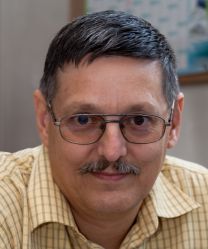
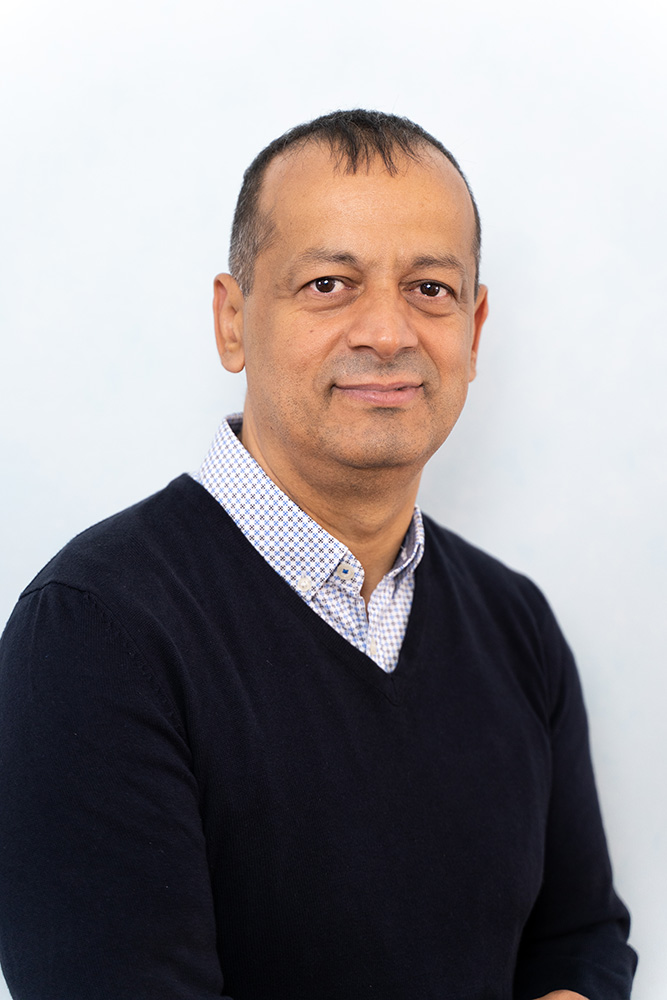
Prof. Victor Grigoras is a faculty member at the Technical University of Iași, holding the rank of Professor. He specializes in electrical engineering and computer science, focusing on signal processing, parallel architectures, and nonlinear dynamics in power systems. His research interests include smart grid technologies, renewable energy integration, and data-driven methodologies for grid optimization. He teaches courses such as 'Semnale, Circuite și Sisteme' and 'Algoritmi și Structuri Paralele de Calcul.' His research spans over 15 recent articles (2021–2025), emphasizing advancements in smart grid automation, machine learning applications in voltage quality analysis, and optimal power flow solutions for renewable integration. Notable trends include SCADA system improvements, energy storage strategies for prosumer grids, and IoT-based energy management. His work addresses challenges in grid reliability, power quality, and future urban grid resilience under high EV adoption scenarios. Prof. Grigoras has contributed to frameworks for electric vehicle charging station placement, hydropower plant optimization via data mining, and demand response mechanisms using smart metering. His methodologies often combine clustering techniques with fuzzy logic or metaheuristic algorithms to solve complex grid problems.
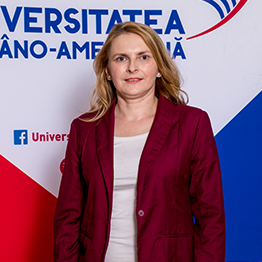
Lavinia Stănică Justina is a university lecturer at the Faculty of Managerial Informatics, Romanian-American University (URA), with 18 years of teaching experience in software programming and e-learning domains. Holding a PhD in Cybernetics and Economic Statistics since 2011, she teaches courses in Romanian and English at both bachelor's and master's degree programs. Her research focuses on ICT's role in innovation, educational technologies, and data analysis for energy consumption, with over 30 publications and multiple coordinated research projects. Faculty: Managerial Informatics University: Romanian-American University Academic Rank: Lecturer Teaching Experience: 18 years PhD: Cybernetics and Economic Statistics (2011) Her research interests include: e-Learning systems and technology integration Artificial Intelligence applications in education ICT's impact on innovation performance Mathematical content modeling Energy consumption data analysis Internet of Things implementations Fractal techniques in imaging Recent publications highlight trends in: Comparative innovation-ICT readiness analysis AI education accessibility Smart energy systems Competitive programming metrics Neural network energy forecasting IoT cloud solutions Modular educational software As Erasmus coordinator since 2013 and Institutional Erasmus Coordinator since 2020, she actively promotes internationalization efforts and academic collaboration with partner universities across Europe.
Cătălin Petrea ION is an Associate Professor at the Department of Electrical Engineering and Applied Physics, Faculty of Electrical Engineering and Computer Science, Transilvania University of Brașov, Romania. His research focuses on rotating electrical machines, renewable energy systems, and micro-hydro power plant technologies. Key Research Areas: Rotating electrical machines, renewable energy sources, micro-hydro power plants Publications: 6 notable works (2011–2023) on induction generators, PMSM design, and microgrid integration His recent publications emphasize energy efficiency in electric machines, sustainable power generation from hydro sources, and integration of autonomous systems into modern grids. Despite no explicit awards or student mentoring details in the text, his work highlights technical contributions to renewable energy infrastructure and applied physics in electrical engineering contexts.
Lorand Szabo is a Full Professor at the Department of Electrical Machines and Drives , Faculty of Electrical Engineering , Technical University of Cluj-Napoca , Romania. He has been affiliated with this institution since 1990, transitioning from Research and Design Engineer to Lecturer (1999), Associate Professor (2007), and Full Professor (current). He also served as an Invited Professor at Pannon University (Hungary, 2007-2008) and University of Pavia (Italy, 2015). Teaching : Special Electrical Machines (1985-present), Electrical Machines and Drives (1996-present), Computer Aided Design of Electromechanical Systems (2009-present). Supervision : Ph.D. supervisor since 2007 for 8 students (6 completed). Research Focus : Linear and variable reluctance electrical machines, fault-tolerant designs, bearing fault detection in motors, and condition monitoring. His work extends to automotive applications (electric vehicles, hybrid systems), wind energy generators, and sustainable material sourcing for electrical machines. Recent Publications (2023-2025) address critical topics in sustainable mobility, including rare earth material dependency, deep-sea mining for electric technologies, battery management systems, and resource-efficient motor designs. These works reflect his interdisciplinary approach combining electrical machine innovation with environmental and industrial systems thinking. Technical Expertise : Finite element analysis (JMAG, ANSYS Motor-CAD), LabVIEW modeling, fault detection algorithms (wavelet transforms, kurtosis deconvolution), and modular motor construction for automotive and renewable energy applications.
Dr. Felix Fărcaş is a Romanian academic and researcher affiliated with both the National Institute for Research and Development of Isotopic and Molecular Technologies (INCDTIM) in Cluj-Napoca and the Technical University of Cluj-Napoca, where he holds the academic rank of Associate Professor. He manages the INCDTIM Grid site (RO-14-ITIM) and developed the itimcloud platform, integrated into European CDI networks. His work bridges advanced computing infrastructure with systems engineering. PhD in Systems Engineering (2010), Technical University of Cluj-Napoca Master in Industrial Informatics (2001), Technical University of Cluj-Napoca Bachelor in Systems Engineering (1998), Technical University of Cluj-Napoca His research focuses on Grid and Cloud Computing , with specialization in IPv6 networking, infrastructure monitoring, and Linux administration. At INCDTIM, he contributes to collaborative projects like CONDEGRID, while at his university role, he teaches postgraduate and Master's courses in Applied Informatics. He has led R&D projects for enterprises, participated in international peer-review activities, and developed institutional DATA CENTER infrastructure. Proficient in German (native) and English, his personal interests include tennis, skiing, and skating.
Dana Petcu is a Professor at the Computer Science Department of the Faculty of Mathematics and Computer Science at West University of Timisoara. She serves as Director of both the Institute for Advanced Environmental Research and Institute e-Austria Timisoara. With expertise in distributed and parallel computing, she has published over two hundred papers on Cloud, Grid, Cluster, and HPC computing. She is also the chief editor of the open-access journal Scalable Computing: Practice and Experience (SCPE) and has coordinated multiple European Commission-funded projects. Education: Ms. Degree in Computer Science Ph.D. in Numerical Analysis Dana Petcu's research focuses on distributed and parallel computing systems. Her current interests include Cloud & Grid computing, and HPC & Cluster computing. Previously, she worked on Mathematical software, Numerical methods, and Computer graphics. Her work bridges theoretical foundations with practical implementations, particularly in resource management, scheduling algorithms, and scalable computing architectures. She has developed significant expertise in applying these technologies to scientific computing, data-intensive applications, and multi-cloud environments. Her scholarly output demonstrates consistent focus on cloud and distributed computing evolution. Over the past decade, her research has shifted from foundational grid computing to modern cloud technologies, edge computing, and exascale systems. Key themes include resource management across heterogeneous environments, autonomic systems, security SLAs, and multi-cloud portability. Her work shows increasing interdisciplinary connections, particularly with AI/ML techniques applied to resource optimization and anomaly detection in large-scale systems. Scientific Awards: Maria Sibylla Merian-Award (2005) IBM Faculty Award (2009) MLNR Award "Spiru Haret" (2015) Romanian Academy Award "Gheorghe Cartianu" (2015) Dana Petcu has advised numerous graduate students through various master's programs in Distributed and Parallel Computing. She has secured substantial research funding as coordinator of FP7 projects HOST and SPRERS, and as scientific coordinator of mOSAIC. Her grant portfolio includes multiple European Commission-funded initiatives focused on cloud computing infrastructure, resource management, and multi-cloud environments. She has also contributed to EU Research Activities in Cloud Computing as an editor, demonstrating her leadership in shaping European research agendas in this field. She leads the Computer Science Research Center (CCI) and High Performance Computing Service Center (HPC-UVT) at West University of Timisoara. Her teams develop and maintain significant infrastructure for distributed computing research, including simulation environments like CloudSim and iFogSim. She has established strong connections between academic research and practical applications through Institute e-Austria Timisoara, fostering technology transfer and innovation in cloud computing solutions.
Gheorghe-Dan SOREA is a Lecturer in Electrical Engineering at the Department of Electrical Engineering and Applied Physics, Transilvania University of Brașov , under the Faculty of Electrical Engineering and Computer Science . His work bridges information technology with electrical engineering, focusing on sustainable energy systems. Research Interests Integration of renewable energy into power grids Monitoring and improving electrical power quality Optimizing energy efficiency in residential and industrial systems Application of IT tools in electrical engineering education Recent publications highlight his contributions to hybrid renewable energy systems and numerical modeling for electrical engineering challenges. His work spans both theoretical and applied domains, emphasizing practical solutions for standalone energy systems and educational software tools. His professional activities include collaborations on energy management strategies and the development of computational methods for electrical machine analysis. Contact Building N, Room NII 9 Phone: + 40 711 928 609 Email: gheorghe.sorea@unitbv.ro
Prof. Petru Adrian COTFAS holds a position as Professor in the Department of Electronic and Computers at the Faculty of Electrical Engineering and Computer Science, Technical University of Brașov (UNITBV). His work focuses on advancing renewable energy systems, hybrid energy technologies, and IoT-based monitoring solutions. He leads research on photovoltaic cell optimization, thermoelectric generator performance, and cybersecurity in smart energy systems. His contributions include developing virtual instrumentation frameworks (e.g., LabVIEW-based tools) and experimental setups like the RELab system for studying solar/wind energy dynamics. Research Interests: Characterization of renewable energy systems (hybrid photovoltaic-thermoelectric configurations) IoT integration for remote energy monitoring and control Metaheuristic algorithms for parameter extraction in solar cells Cybersecurity resilience for smart energy infrastructure Energy efficiency in industrial systems (e.g., AHU optimization) Key Contributions: Prof. COTFAS has pioneered studies on dust impact mitigation for solar panels, developed novel methods for concentrated solar power systems, and addressed cybersecurity vulnerabilities in IoT-enabled energy grids. His work bridges theoretical models (e.g., multi-junction solar cell theory) with practical implementations like FPGA-based remote laboratories. Over 60 peer-reviewed articles since 2016 showcase his interdisciplinary approach to energy sustainability and technological innovation.
Eugen Borcoci serves as a Full Professor in the Department of Telecommunications at the National University of Science and Technology Politehnica Bucharest. With an extensive publication record spanning networking technologies, he has established himself as a significant contributor to the field of telecommunications research. His work bridges theoretical networking concepts with practical implementations, particularly in next-generation network architectures. Professor Borcoci's research interests focus on advanced networking paradigms including Software Defined Networking (SDN), Network Function Virtualization (NFV), and 5G/6G network architectures. He has pioneered work in network slicing technologies, particularly for vehicular communications and Internet of Vehicles applications. His research demonstrates a consistent emphasis on practical implementations and validation of theoretical networking concepts through experimental frameworks and open-source platforms. His recent publication trajectory (2021-2025) reveals a strong focus on Open Source MANO for network automation, SDN controller optimization across different network topologies, and specialized applications of network slicing for electric vehicle infrastructure and vehicular communications. This work demonstrates a clear progression from theoretical networking concepts to practical deployment scenarios with industry relevance. Professor Borcoci actively collaborates with international researchers, particularly with Marius Vochin, Frank Y. Li, and Andra Ciobanu, indicating strong international research connections. His work appears primarily in networking conferences and journals focused on telecommunications infrastructure and next-generation network architectures.
Dan Mancas is an Associate Professor of Computer Science at the University of Craiova , affiliated with the Faculty of Automatic Control, Computers and Electronics. He teaches courses such as Data Communications, Computer Architecture, and Mobile Networks, focusing on advanced network technologies. Education Engineer in Computers (1985), Faculty of Electrical Engineering, University of Craiova PhD candidate in Computer Science since 2001, supervised by Prof. Dr. Eng. Nicolae Tăpuş at Politehnica University of Bucharest Research Focus Computer networks and distributed computing systems Resource allocation optimization in mobile networks Multimedia traffic congestion avoidance Projects & Collaborations Project Director for Grid Center Oltenia, POS-CCE (2009), CNCSIS Contracts 161 (2006) and 33451 (2002) Conference Chair at WSEAS, SISNTES, RoEduNet Industry collaborations with BMW AG, Siemens AG, NetDania SRL
Simona COMAN is an Associate Professor at the Department of Automation and Information Technology , part of the Faculty of Electrical Engineering and Computer Science at the University of Technical Education in Brașov (UNITBV). Her work focuses on advancing AI applications in medical diagnostics, fractional order systems, and adaptive control mechanisms. She leads research in areas such as cardiovascular signal processing, privacy-preserving AI, and precision medicine frameworks. Her research interests include developing robust systems for non-invasive diagnostics (e.g., heart murmurs detection via AI), enhancing cybersecurity in industrial AI deployments, and creating MATLAB-based tools for anesthesia control. She actively contributes to international conferences and collaborates on projects addressing biomedical systems modeling and stability analysis. Notable achievements include pioneering AI-driven CT scan analysis for pandemic response and co-authoring frameworks for validating AI in precision medicine. Her work bridges theoretical control systems with practical healthcare applications, emphasizing both innovation and rigorous validation standards. Dr. COMAN’s publications span journals in biomedical engineering, electrical systems, and control theory, reflecting her interdisciplinary approach to solving complex technical challenges. She maintains an active role in academic and industrial partnerships, fostering advancements in automation and information technology.
Nicolae Daniel Fîţă is a Professor and Head of Department at the Faculty of Mechanical and Electrical Engineering, University of Petroşani. He leads the Department of Automation, Computers, Electrical and Power Engineering and directs the Research Center for Strategic Energy Security Studies. His academic work focuses on energy security, critical infrastructure resilience, and risk management in electrical systems. He holds a Ph.D. in Engineering and has contributed extensively to Romania's energy security strategy, particularly regarding power grids, mining operations, and geopolitical energy dynamics. His research emphasizes safeguarding critical energy infrastructure against technical, environmental, and geopolitical threats. Recent studies address photovoltaic system cybersecurity, earthquake impacts on hydropower plants, and electricity storage solutions. He also explores Romania's energy policy within European and global contexts, analyzing Black Sea region energy dynamics and strategic resource management. Key publications include analyses of vulnerability management in underground mines, SWOT assessments of hydrocarbon resources, and resilience strategies for power substations. His work bridges technical engineering solutions with policy frameworks to enhance national and industrial safety standards. As Director of the Strategic Energy Security Studies Center, he coordinates interdisciplinary efforts to strengthen Romania's energy and national security through advanced risk assessment methodologies and infrastructure optimization.
Serhiy Serhiyovych Samoilyk is an Associate Professor at the Department of Radio Engineering and Telecommunications within the Faculty of Information Security and Electronic Communications at Zaporizhzhia National Technical University. He has been active at the university since 2007 and holds the academic degree of Candidate of Physical and Mathematical Sciences, which he obtained in 2019 with a thesis on waveguide-resonator systems. His primary research focuses on microwave resonator systems, mathematical modeling, and optimization of microwave systems. He teaches a diverse range of courses including Service platforms of information systems, Fundamentals of graphic and geometric modeling, Modeling and optimization of systems and networks, and Telemedicine. His expertise spans both theoretical and applied aspects of radio engineering and telecommunications. Samoilyk's recent publications (2016-2024) demonstrate a strong trajectory in electromagnetic theory, microwave engineering, and emerging applications in telecommunications. His work shows a progression from fundamental electromagnetic modeling to practical applications in radar systems, wireless communications, and even interdisciplinary areas like telemedicine and payment systems. The publications reveal consistent contributions to both Ukrainian and international scientific communities. He maintains active research collaborations, as evidenced by his co-authorship on numerous papers across different domains. His work bridges traditional radio engineering with modern applications in IoT, blockchain, and assistive technologies, demonstrating adaptability to evolving technological landscapes. Samoilyk has taught various courses related to radio engineering, circuit design, and communications technology, contributing to the education of future engineers at the university. His academic journey from graduation in 2004 to becoming an Associate Professor reflects dedication to both research and teaching in his field.
Cristina MARINESCU is an Associate Professor at the Politehnica University of Timisoara, Faculty of Automation and Computer Science. She holds a Dr. Eng. degree in Software Engineering from the same institution. Her research focuses on software quality assessment, empirical software engineering, and object-oriented design. She has contributed to projects like Methods and Tools for Continuous Quality Assurance in Complex Software Systems and Quality Assurance for Distributed Software Systems . Her academic roles include teaching Object-Oriented Programming and Algorithms for Parallel Computing labs. She has been involved in research groups like LOOSE and eAustria Institute Timisoara. Notably, she received the Best Reviewer Award at SCAM 2011. Her work spans publications in conferences like IEEE SCAM, ICSM, and WCRE, addressing topics from design flaws detection to cloud-based quality assessment. Her projects emphasize software evolution, design flaw mitigation, and distributed systems analysis. She has collaborated internationally, including with Swiss teams under the NOREX project. Her teaching and research activities reflect a commitment to advancing software engineering practices and education.
Prof. David Valeriu is a Professor at the Department of Electric Engineering, Technical University of Iasi. His research focuses on electromagnetic compatibility, biomedical instrumentation, and environmental monitoring of electromagnetic fields. He leads projects investigating the health effects of electromagnetic fields on humans, including effects on bioelectric signals and induced currents in the body. His work also involves developing advanced measurement systems and materials for electromagnetic shielding. Key research areas include: Electromagnetic field measurements in hospitals, power substations, and residential areas Biomedical signal processing (ECG, PPG, brain activity) Development of low-cost embedded platforms for medical applications Electromagnetic interference mitigation in medical devices and imaging systems His recent studies address: Long-term magnetic field surveys in laboratories and hospitals Exposure assessment of mobile phone and power line emissions Omni-directional shielding materials for high-frequency radiation Integration of biosignal monitoring systems with ambient assisted living Prof. Valeriu has contributed to over 50 peer-reviewed publications, with a focus on electromagnetic field characterization and biomedical engineering applications. His work frequently explores the intersection between environmental safety and medical technology.