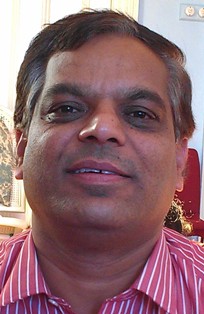
Dr. Rajkumar Buyya is a Redmond Barry Distinguished Professor at the University of Melbourne and Founder & CEO of Manjrasoft , a spin-off commercializing cloud innovations. He has held visiting roles at Imperial College London , University of Birmingham , and Tsinghua University . Research Interests : His work spans Cloud Computing , Edge Computing , Grid Systems , and Energy-Efficient Computing , focusing on utility-driven resource allocation, simulation tools, and scalable IoT application frameworks. He pioneered the CloudSim toolkit and Aneka Cloud technologies. Scientific Awards : IEEE Fellow (2015), Web of Science Highly Cited Researcher (2016-2021) Khwarizmi International Award (2020), Scopus Researcher of the Year (2017) Frost & Sullivan New Product Innovation Award (2010), IEEE TCSC Medal (2009) Impact : Authored over 850 publications, including the widely adopted textbook Mastering Cloud Computing . Graduated 54 PhD students now in leadership roles at institutions like Newcastle University and companies such as IBM , Google , and Amazon . His research has driven global adoption of cloud/edge technologies in 50+ countries.
Xu Jinchao is a Professor of Applied Mathematics and Computational Sciences at King Abdullah University of Science and Technology (KAUST) and the Verne M. Willaman Professor of Mathematics at Penn State University. He has held distinguished roles, including Director of the Center for Computational Mathematics and Applications at Penn State since 1997 and is an Affiliated Faculty member of the College of Information Sciences and Technology at Penn State. His research focuses on numerical partial differential equations (PDEs), multigrid methods, machine learning, finite element methods, and domain decomposition methods. He is renowned for pioneering contributions such as the Bramble-Pasciak-Xu (BPX) preconditioner, Hiptmair-Xu (HX) preconditioner, Xu-Zikatanov (XZ) identity, and Morley-Wang-Xu (MWX) element. His work bridges computational mathematics and machine learning, including the development of MgNet, which unifies multigrid methods with convolutional neural networks. Xu has been recognized with numerous awards, including Fellowships from SIAM, AMS, AAAS, and the European Academy of Sciences. Notable accolades include the 2008 DOE Top 10 Breakthroughs for his HX preconditioner and the 1995 Feng Kang Prize for Scientific Computing. He has organized over 100 conferences and serves on editorial boards of top journals such as Mathematics of Computations and Numerische Mathematik . His leadership includes directing research centers and advancing computational science through collaborative efforts.
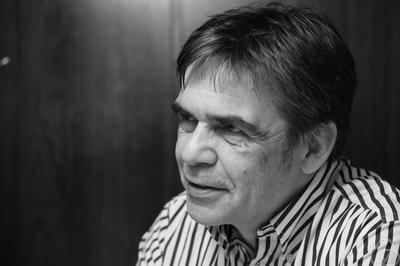
Endre Süli is a Professor of Numerical Analysis at the University of Oxford, affiliated with Worcester College and Linacre College. He has held various academic roles since 1985, including Fellowships and Tutorships in Mathematics. University Education: B.Sc. in Mathematics, University of Belgrade (1974-1978) M.Sc. in Mathematics, University of Belgrade (1978-1980) Ph.D. in Mathematics, University of Belgrade (1985) M.A., University of Oxford (1985) British Council Visiting Student, Reading University and University of Oxford (1983/84) Süli's research focuses on numerical methods for partial differential equations (PDEs), with expertise in finite element methods, adaptive algorithms, error control, and computational modeling of fractures and non-Newtonian fluids. His work bridges mathematical theory and practical applications in fluid dynamics and material science. His recent publications emphasize finite element approximations, nonlinear PDEs, and stochastic models for polymer dynamics. Themes include multiscale methods, tensor-sparsity for high-dimensional problems, and compressible flow simulations. Scientific Awards: Fellow of the Royal Society (2021) London Mathematical Society Naylor Prize and Lectureship (2021) Pro Urbe Prize, City of Subotica (2021) SIAM Fellow (2016) Member, Academia Europaea (2020) Foreign Member, Serbian National Academy of Sciences and Arts (2009) IMA Service Award (2011) Fellow, European Academy of Sciences (EurASc) (2010) Fellow, Institute of Mathematics and its Applications (2007) London Mathematical Society/New Zealand Mathematical Society Forder Lecturer (2015) Professor Hospitus, Charles University, Prague (2012) Distinguished Visiting Chair Professor, Shanghai Jiao Tong University (2013) Invited Speaker, International Congress of Mathematicians, Madrid (2006) Süli has supervised numerous research projects and held visiting appointments globally. His contributions to numerical analysis span foundational work on error estimation, nonlinear stability, and advanced computational frameworks for complex physical systems.
Viktor Prasanna is the Charles Lee Powell Chair in Engineering and Professor of Electrical and Computer Engineering and Computer Science at the University of Southern California. He holds courtesy appointments in Computer Science and leads the Center for Energy Informatics, focusing on interdisciplinary research linking energy technologies, computer science, and engineering. Education: BE in Electronics (Bangalore University), ME (Indian Institute of Science), PhD in Computer Science (Pennsylvania State University) His research spans reconfigurable computing, FPGA accelerators, parallel and distributed systems, and big data applications. He has pioneered high-performance architectures and algorithms using FPGAs, impacting domains like networking, security, HPC, and machine learning. Prasanna has published over 600 papers, received 22 best paper awards, and secured >$50M in grants. His work emphasizes energy-efficient computing, with recent grants totaling $12.9M (2016–2021). His h-index is 73, with 23,454 total citations. Scientific Awards: IEEE Fellow, ACM Fellow, AAAS Fellow, W. Wallace McDowell Award, multiple Distinguished Alumnus Awards He has advised over 70 doctoral students and led major centers including CiSoft (Big Data in oilfield tech) and CAST. His editorial roles include Editor-in-Chief of IEEE Transactions on Computers and Journal of Parallel and Distributed Computing.
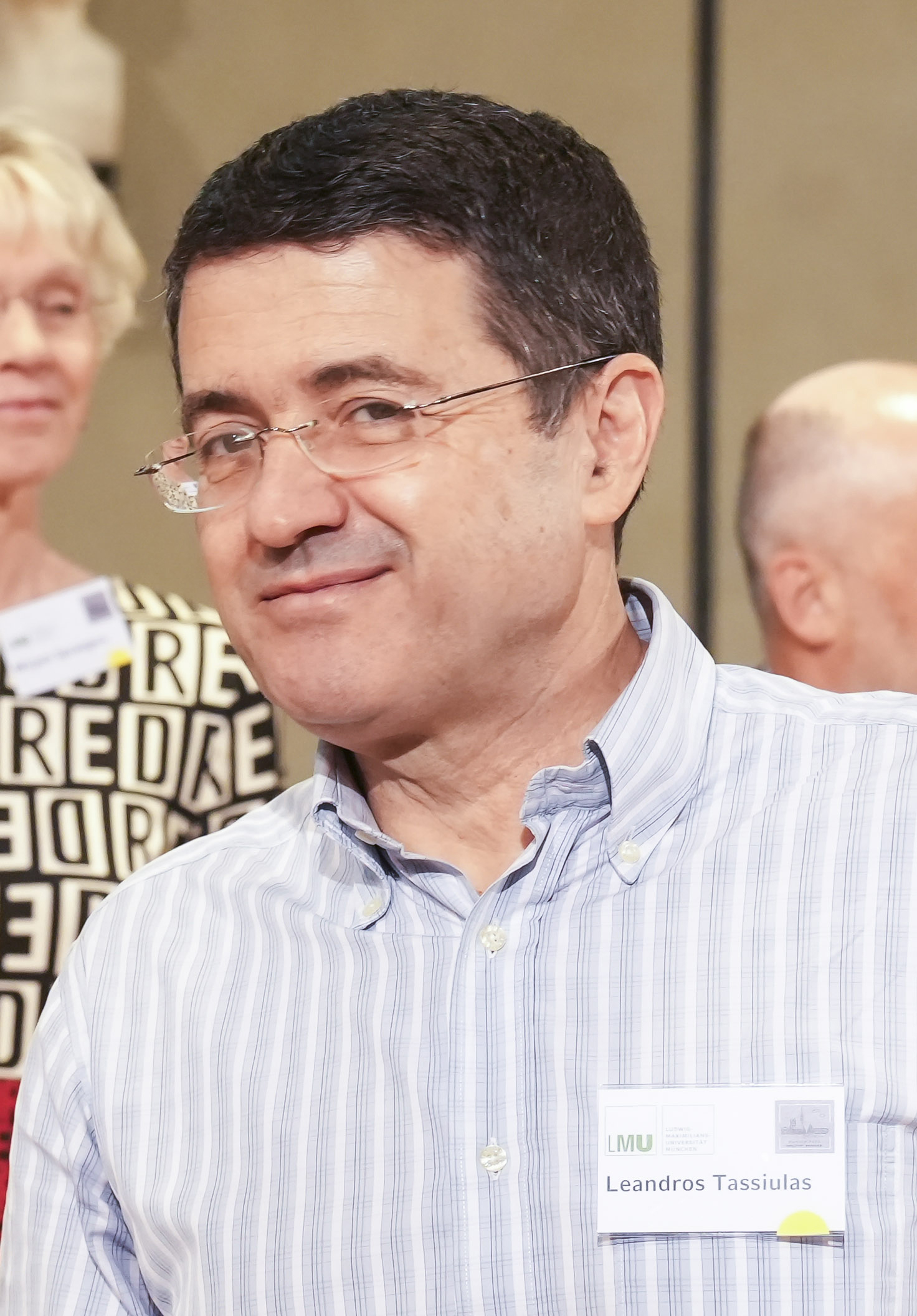
Leandros Tassiulas is the John C. Malone Professor of Electrical Engineering at Yale University, with additional appointments in Computer Science. His career spans faculty positions at the University of Thessaly, University of Maryland, University of Ioannina, and Polytechnic University. A Fellow of both IEEE (2007) and ACM (2020), he is renowned for contributions to network control theory, including the max-weight scheduling algorithm and back-pressure network policy. PhD in Electrical Engineering (1991) from the University of Maryland, College Park His research focuses on computer and communication networks , emphasizing mathematical models for complex networks , wireless system architectures , stochastic systems , and energy-efficient network design . Recent work explores quantum networking (Pant et al., 2019) and federated learning in edge environments (Jiang et al., 2022). Key publication trends include stability analysis (earlier works), mobile edge computing (2019), software-defined networking (2021), and smart grid optimization (2012-2013). The list includes monographs on network theory and patents for distributed bandwidth allocation (2011) and directional antenna protocols (2002). Scientific Awards ACM Fellow (2020) for network control contributions IEEE Koji Kobayashi Award (2016) for scheduling/stability analysis IEEE INFOCOM Achievement Award (2007) for resource allocation Bodossaki Foundation Prize (1999) for distributed systems NSF CAREER, ONR Young Investigator, and multiple best paper awards His work has been funded by the NSF, ONR, and IBM. Current projects bridge AI , quantum communication , and next-generation network architectures .
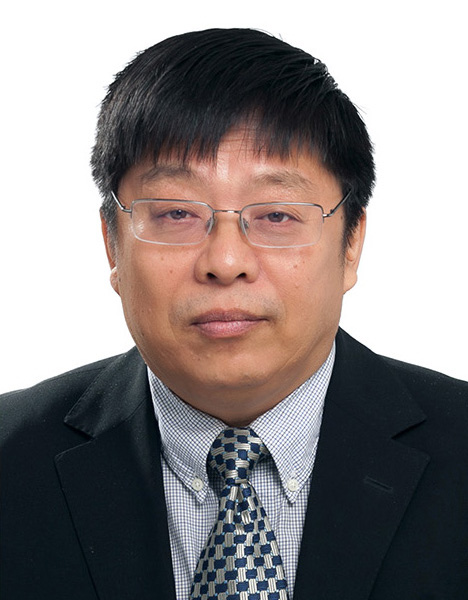
Liu Derong is a distinguished academic holding the position of Chair Professor at Southern University of Science and Technology (Shenzhen, China) since 2022. He is also a Full Professor at the University of Illinois at Chicago (UIC) since 2006. His academic journey includes roles as Professor at Guangdong University of Technology (2017–2022) and the Chinese Academy of Sciences' Institute of Automation (2008–2016). He earned his Ph.D. in Electrical Engineering from the University of Notre Dame (1994), M.S. from the Chinese Academy of Sciences (1987), and B.S. from Nanjing University of Science and Technology (1982). His research focuses on neural networks, reinforcement learning, intelligent control, and adaptive dynamic programming. He has authored 19 books and 260+ journal papers, contributing significantly to computational intelligence and control systems. Notable works include Adaptive Dynamic Programming with Applications in Optimal Control (2017) and co-editing volumes like Frontiers of Intelligent Control and Information Processing (2014). Liu Derong has held leadership roles in professional societies, including Editor-in-Chief of Artificial Intelligence Review , Deputy Editor-in-Chief of the IEEE/CAA Journal of Automatica Sinica , and President of the Asia Pacific Neural Network Society (2018). He has organized major conferences such as the IEEE World Congress on Computational Intelligence (2014) and received prestigious awards like the Dennis Gabor Award (2018) and membership in Academia Europaea (2021). His contributions span theoretical advancements and practical applications in control systems, with a focus on optimization, robotics, and energy systems. He has also served on editorial boards of leading journals and as a keynote speaker at 30+ international conferences.
Sonja Wogrin is a University Professor (Univ.-Prof.) at Graz University of Technology (TU Graz), where she has been heading the Institute for Electricity Economics and Energy Innovation since August 2021. She holds a Dipl.-Ing. in Technical Mathematics from TU Graz (2008), a Master of Science in Computation for Design and Optimization from MIT (2008), and a doctorate in Electricity Systems from Universidad Pontificia Comillas (2013). Her educational background includes: Doctorate in Electricity Systems, Universidad Pontificia de Comillas (June 2013) Dipl.-Ing. in Technical Mathematics, Graz University of Technology (October 2008) Master of Science in Computation for Design and Optimization, MIT (June 2008) Professor Wogrin's research focuses on decision support systems in the energy sector, optimization methodologies, and particularly the problem of generation capacity expansion. Her work spans several key areas including bilevel programming, capacity expansion planning, energy storage systems, and time series aggregation for energy system optimization. She has made significant contributions to understanding how to integrate renewable energy sources into power systems while maintaining economic efficiency and grid stability. Her research often addresses the challenges of decarbonizing electricity systems through advanced mathematical modeling and optimization techniques. Her recent publications demonstrate a strong focus on improving the computational efficiency of energy system models while maintaining accuracy, with particular attention to the integration of renewable energy sources, energy storage systems, and the development of resilient energy communities. She has pioneered work on time series aggregation methods that balance computational tractability with model accuracy, which is crucial for long-term energy planning under uncertainty. Professor Wogrin has received several prestigious awards and fellowships including: 4th EASE Student Award for "Co-Optimisation of energy storage technologies in tactical and strategic planning models" (2019) Beca de movilidad para investigadores "NILS Ciencia y Sostenibilidad" (2015) Beca Erasmus "Personal Docente/Investigador" de formación (2016) Beca Iberdrola de ayuda a la investigación en energía y medio ambiente (2020) She leads multiple significant research projects including EU - NetZero-Opt, RINGs, iKlimET, V2G-QUESTS, and CIDEAL, which focus on optimizing energy systems for net-zero emissions, resilient energy networks, climate and energy system modeling, vehicle-to-grid integration, and industrial decarbonization. Her work has substantial practical implications for energy policy and grid operations in Austria and beyond. Professor Wogrin collaborates extensively with industry partners including Austrian Power Grid AG, KELAG, and Netz Niederösterreich, ensuring her research addresses real-world energy challenges. Professor Wogrin leads the research group at the Institute for Electricity Economics and Energy Innovation, which develops advanced optimization models for energy systems. Her team has created the LEGO (Low-carbon Expansion Generation Optimization) model, an open-source tool for energy system optimization that has gained international recognition. The group's work spans from fundamental optimization methods to practical applications in energy system planning and operation, with a strong emphasis on computational efficiency and model accuracy.
Univ.-Prof. Katja Corcoran serves as Professor of Psychology and Vice Dean for Research at the University of Graz's Faculty of Natural Sciences, leading the Institute of Psychology. She directs the university's 'Smart Regulation' profile area and participates in the 'Brain and behavior' research network, with leadership roles including former Head of Psychology Institute (2017-2019) and Deputy Head of Doctoral School of Psychology (2021-2023). Her research centers on social psychological mechanisms in sustainability transitions, particularly: Energy citizenship frameworks and prosumer behavior Goal contagion dynamics in social networks Intergroup contact interventions in educational settings Regulatory psychology for sustainable systems Recent publications (2023-2025) demonstrate interdisciplinary integration of psychological, legal, and economic perspectives, featuring field experiments across Austria and multi-lab European collaborations examining energy citizenship scales, behavioral nudges for appliance usage, and prejudice reduction in schools. Honors include: Feodor Lynen Research Fellowship (Alexander von Humboldt Foundation, 2004) She currently directs major funded initiatives: EU: 'Energy Citizenship and Energy Communities for Clean-Energy Transition' (2021-2024) FFG: 'FIWARE Driven Energy Communities for the Future' (2023-2026) International: 'Active User Participation for Smart Energy Services' (2020-2023) Corcoran serves on editorial boards of Social Psychology (since 2016) and Social Cognition (since 2013), and her work operates within the 'Brain and behavior' network fostering neuroscience-psychology-economics collaborations for complex decision-making research.
Fajar Juang Ekaputra is a Tenure Track Assistant Professor at the Institute of Data, Process, and Knowledge Management (DPKM), WU Vienna and a part-time Postdoctoral Researcher at the Data Science research unit, TU Wien . With a focus on Semantic Web , Knowledge Graphs , and their integration with Machine Learning in Neurosymbolic AI systems, his work spans domains like Cyber-Physical Systems and Materials Engineering . Education: Dr.techn. (2018), TU Wien M.T. (2010) and S.T. (2008), Institute Teknologi Bandung (ITB) Research Interests center on hybrid AI systems combining Semantic Web and Machine Learning , with applications in Cyber-Physical Systems (e.g., smart grids, smart buildings), data privacy in smart cities, and materials engineering . His 102+ publications include frameworks like SWeMLS-KG and SHACL4Protege . Recent Articles (2024) address explainable AI in cyber-physical systems, privacy trust in data infrastructures, and neurosymbolic frameworks . Earlier works (2023–2022) explore ontology-based data management , auditable AI , and hybrid system architectures . Scientific Awards: Best Paper Awards (ICoDSE 2023, ICoDSE 2016) Best Poster Nomination (SEMANTiCS 2019) PhD Scholarship (Austria’s Agency for Education and Internationalisation, 2012) Advising includes supervising PhD students (e.g., Majlinda Llugiqi, Katrin Schreiberhuber) and master’s theses on topics like knowledge graph characteristics and data quality assessment . He leads projects such as FAIR-AI (FFG-funded, 2024–2026) and SENSE (Horizon Europe, 2023–2025).
Rafał Weron is a Full Professor at Wrocław University of Science and Technology, where he has held leadership roles since 2015, including Head of the Department of Operations Research and Business Intelligence and Chairman of the Scientific Discipline Council for Management and Quality Sciences. His expertise spans electricity price forecasting, computational economics, and risk management, with significant contributions to probabilistic forecasting methods. As a globally recognized scholar, he has received prestigious awards such as the Hugo Steinhaus Prize (2018) and the Tao Hong Award (2017). Key Affiliations : Wrocław University of Science and Technology; Polish Academy of Sciences (Statistics and Econometrics Committee); Polish Mathematical Society. Research Trends: Weron's work focuses on electricity price forecasting, leveraging machine learning and statistical models to enhance accuracy and reliability. His publications emphasize probabilistic forecasting frameworks, quantile regression, and hybrid modeling techniques, reflecting a commitment to methodological rigor and practical applications in energy markets. Scientific Awards: Top 1% globally ranked economist (IDEAS/RePEc, 2013-2022) World's Top 2% Most Widely Cited Scientist (2019-2021) 'Hugo Steinhaus' Prize (2018) Tao Hong Award (2017) Emerald Citation of Excellence (2017) Minister of Science & Higher Education Prize (2016) Commission of National Education Medal (2016)
Radu-Aurel Prodan is a full Professor in the Department of Computer Science at the University of Innsbruck, Austria. He is actively involved in teaching and research, with office hours from Monday to Friday, 09:00–13:00. His work is centered within the academic and technical framework of one of Austria's leading computer science departments. His research interests span key areas in modern computing systems, including distributed computing, parallel computing, workflow scheduling, high-performance computing, cloud computing, and grid computing. These domains reflect his contributions to scalable and efficient computing infrastructures. The publications in his body of work demonstrate consistent engagement with challenges in system efficiency, resource management, and scientific workflows across distributed environments. Broad themes include optimization, performance modeling, and large-scale data processing in parallel systems. Scientific awards: No specific awards mentioned in the provided text. There is no available information on student advising, research grants, or leadership in specific labs or teams within the provided content. His professional activities appear to be anchored in the Department of Computer Science at the University of Innsbruck.
Jozsef Csicsvari is a Professor at the Institute of Science and Technology Austria (ISTA), where he leads a research group focused on Systems Neuroscience since 2011. Prior to this, he held positions as MRC Senior Scientist at the University of Oxford (2003-2011) and Postdoctoral Fellow at Rutgers University (1999-2002). His academic journey began with a PhD in Behavioral and Neural Sciences from Rutgers University in 1999 and a Diploma in Informatics from the Technical University of Budapest. His research interests center on memory formation and neuronal circuit mechanisms , particularly how hippocampal networks implement spatial learning and memory stabilization . His group investigates the mnenomic role of neuronal populations in brain regions involved in spatial memory, using optogenetics and multi-neuronal recordings during spatial tasks and sleep. Key themes include hippocampal oscillations , cell assembly interactions , and neuronal plasticity . Scientific trends in his recent publications reveal a deep exploration of theta oscillations , hippocampal-prefrontal interactions , and spatial memory coding . His work employs optogenetic techniques to dissect neuronal circuit dynamics and memory reactivation mechanisms. Honors and Awards include the ERC Starting Grant (Consolidator level) and the Title of Professor in Neuroscience at the University of Oxford. His advisory role extends to 6 PhD students and postdoctoral researchers at ISTA. He also contributes to scientific governance as Head of IST Animal Welfare Council and Editorial Board member of PLOS Biology.
Chris Wojtan is a Professor at the Institute of Science and Technology Austria (ISTA) , leading the Visual Computing Group . His research focuses on geometric and numerical algorithms for computer animation and geometry processing , particularly in simulating solid and fluid dynamics , controlling physics simulations, and computing with 3D shapes. Research Interests : Computer Animation, Geometry Processing, Fluid Dynamics, Solid Mechanics, 3D Shape Processing. Notable Awards : ERC Consolidator Grant (2022) SIGGRAPH Significant New Researcher Award (2016) Eurographics Young Researcher Award (2015) ERC Starting Grant (2014) Education : PhD in Computer Science from Georgia Institute of Technology (2010). Funding : Recipient of NSF Graduate Research Fellowship (2005-2008), and principal investigator for ERC grants.
Univ.-Prof. Dr. Alexander Kendl is a Professor and Director of the Institute of Ion Physics and Applied Physics at the University of Innsbruck. His research focuses on computational plasma physics with critical applications to magnetic confinement fusion energy, particularly addressing challenges in plasma edge physics and turbulence modeling for next-generation fusion reactors. Dr. Kendl received his Doctorate from the Technical University of Munich in 2000, following his Abitur from Gymnasium Schrobenhausen in 1990. He was appointed Associate Professor at the University of Innsbruck in 2010 and promoted to University Professor in 2020. His academic journey reflects a deep commitment to advancing plasma physics through rigorous computational approaches. Dr. Kendl's research interests center on plasma turbulence in magnetically confined systems , with particular emphasis on gyrofluid modeling , edge-localized modes (ELMs) , zonal flow dynamics , and impurity transport in fusion plasmas. His work bridges fundamental plasma physics with practical applications for ITER and DEMO, addressing critical challenges in plasma confinement and stability. He has developed sophisticated computational tools including GREENY, GHW, and TIFF to simulate complex plasma phenomena with high fidelity. His recent publications reveal a strong focus on advancing full-f gyrofluid approaches that capture kinetic effects while maintaining computational efficiency. Dr. Kendl's research spans from fundamental investigations of plasma dynamics to direct applications for current fusion devices like ASDEX Upgrade, with particular attention to hysteresis phenomena, electron-positron plasmas as fundamental testbeds, and the development of novel numerical methods for plasma simulation. As Director of the Institute of Ion Physics and Applied Physics, Dr. Kendl leads a vibrant research group that contributes significantly to the international fusion community. His team develops cutting-edge simulation codes and collaborates extensively with major fusion facilities worldwide, advancing our understanding of plasma edge physics and turbulence.
Johanna Ullrich is a Professor at the University of Vienna's Faculty of Computer Science and a Key Researcher at SBA Research in Vienna. She leads the Research Group Communication Technologies and serves as Head of the Networks and Critical Infrastructures Security Group at SBA Research. Her academic journey includes positions as Principal Investigator & Manager of Third Party Funded Projects at the University of Vienna and Post-Doctoral Researcher at the Christian Doppler Laboratory for Security and Quality Improvement in the Production System Lifecycle. Her educational background includes a PhD sub auspiciis praesidentis in Computer Science from TU Wien (2013-2016), an MSc in Automation Engineering from TU Wien (2010-2013), and a BSc in Electrical Engineering from TU Wien (2007-2010). She also holds a Venia Docendi for Computer Engineering from the University of Vienna. Ullrich's research focuses on the intersection of computer science and classical engineering, with particular emphasis on network security, IPv6 measurement experiments, and critical infrastructure protection. Her groundbreaking work demonstrated vulnerabilities in the IPv6 Privacy Extension that led to modifications in major client operating systems, protecting millions of users. She is renowned for her research on cyber-physical attacks against power grids, showing how coordinated load attacks can destabilize electrical infrastructure. Her work spans both theoretical security frameworks and practical implementations with significant real-world impact. Her publication record reveals a consistent trajectory from fundamental network security research toward increasingly complex interdisciplinary investigations at the boundary of computer science and physical infrastructure. Recent work emphasizes AI/ML applications for network security, power grid resilience, and socio-technical approaches to cybersecurity. Her research demonstrates a progression from protocol-level security (IPv6) to system-level security (cloud, IoT) and now to infrastructure-level security (power grids, critical national infrastructure). 2nd in the Faculty of Computer Science's Best-of-the-Best Ranking 2024 Category Third Party Funding Nomination for the Hedy Lamarr Prize 2019 and 2020 Scholarship of Excellence 2018 Research Prize of the Dr. Maria Schaumayer Foundation 2018 Promotio Sub Auspiciis Praesidentis 2017 Diploma Thesis Award of the City of Vienna 2013 Ullrich actively contributes to the academic community through extensive grant acquisition and service. She has secured numerous research projects including SPyCoDe (Semantic and Cryptographic Foundations of Security and Privacy by Compositional Design), DynAISEC (Adaptive AI/ML for Dynamic Cybersecurity Systems), and Q-Crit (Quantum-Safe Critical Infrastructure for Austria). Her leadership extends to committee roles including Program Committee Member of IEEE Symposium on Security and Privacy (S&P) 2024 and Technical Program Chair of Network Traffic Measurement and Analysis Conference (TMA) 2023. At SBA Research, she leads the Networks and Critical Infrastructures Security Group, which investigates security challenges at the intersection of digital networks and physical infrastructure. The group conducts both theoretical research on security frameworks and practical measurements of real-world systems. Their work combines network measurement techniques with power systems engineering to develop comprehensive security approaches for critical infrastructure.