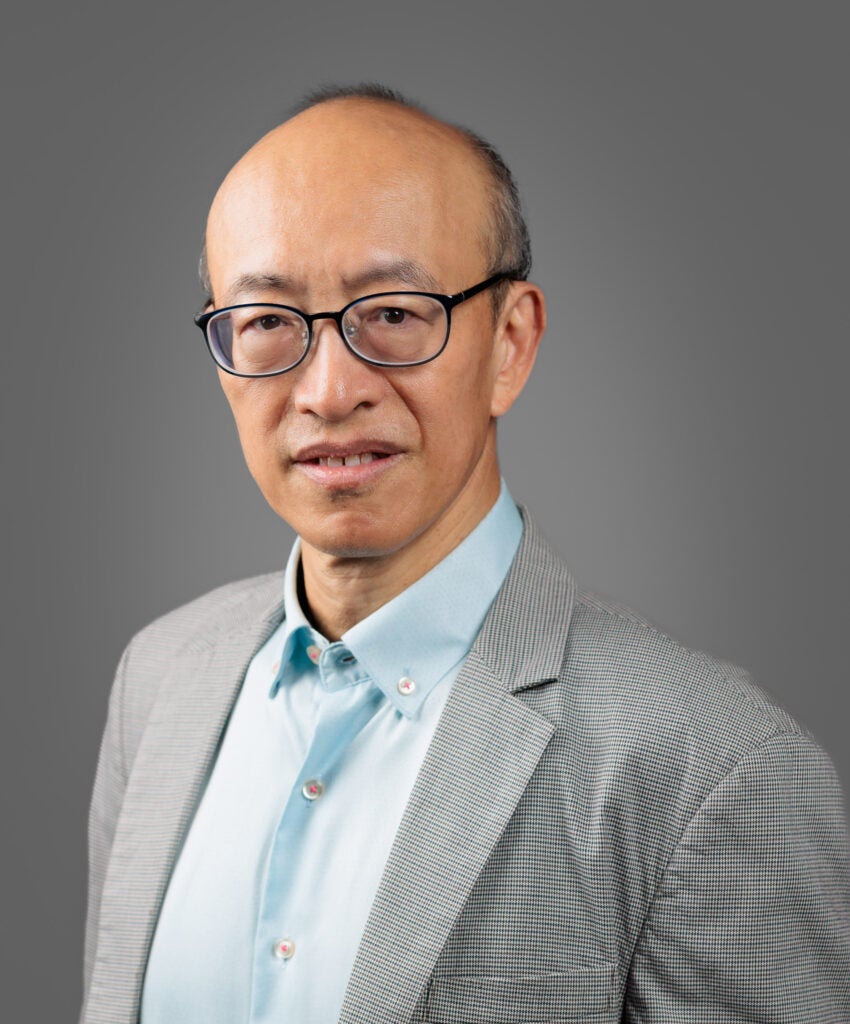
Hakan Basarir is a Professor in the Department of Mining Engineering at the Norwegian University of Science and Technology (NTNU), Trondheim, Norway. His research and teaching focus on mining rock mechanics, rock mass characterization, underground support systems, and the application of soft computing methods in mining engineering. PhD in Mining Engineering (2002) 20+ years of research and teaching experience 60+ publications in journals and conferences Research Interests include rock mass property prediction using measurement while drilling (MWD) techniques, numerical modeling of mining structures, optimization of mine support systems, and sustainable material development. His work integrates machine learning and computational methods to address challenges in mining geomechanics and backfill design. Recent Publications highlight advancements in AI-driven lithology prediction, eco-concrete formulation, and backfill mixture optimization. He has also contributed to tunnel stability analysis and seismic rock slope modeling. Teaching includes advanced courses in mining engineering, mineral production modeling, and specialization projects in geotechnology.
Patrick McNamara is an Associate Professor at the College of Engineering , Marquette University , specializing in the intersection of environmental engineering, antibiotic resistance, and wastewater treatment technologies. Ph.D., Civil Engineering, University of Minnesota (2012) M.S., Environmental and Water Resources Engineering, University of Texas at Austin (2008) B.S., Civil Engineering (Minor: Spanish for the Business Professions), Marquette University (2006) His research focuses on: Environmental antibiotic resistance dynamics PFAS mitigation via pyrolysis and electrochemical treatments Biosolids processing and reuse strategies Consumer chemical impacts on microbial water systems Recent publications analyze corrosion inhibitor effects on resistomes, QACs during pandemics, and electrochemical PFAS removal mechanisms. Grants from the National Science Foundation and industry partners fund his work on antibiotic resistance mitigation and contaminant removal processes. Scientific awards include: OCOE Outstanding Researcher Award (2022) Way Klingler Young Scholar Award (2018) Excellence in Review Award (2017) WEF Canham Graduate Studies Scholarship (2010) McNamara leads the McNamara Research Group , developing innovative treatment processes like electrocoagulation-peroxidation and pyrolysis systems. His work addresses: Activated sludge foaming challenges Greywater treatment optimization Stormwater resistome characterization UV-based resistance mitigation
Oktay Türetken is a Full Professor at Eindhoven University of Technology (TU/e) in the Industrial Engineering and Innovation Sciences school, specializing in Information Systems . He chairs the Industrial Engineering Bachelor Program and contributes to the European Research Center for Information Systems (ERCIS) in Münster, Germany. PhD in Information Systems Research Fellow at European Research Institute in Service Science (2008-2012) Adjunct Lecturer at METU’s Software Management program (pre-2008) His research focuses on digital innovation and collaborative business models , particularly in urban mobility. He develops methods for operational design , business process management , and data analytics maturity models . Key projects include MobilitEU and EU-funded initiatives in smart mobility. Recent publications address KPI frameworks for business models, platform design for shared mobility, and maturity models for organizational capabilities. He leads multi-disciplinary teams and has co-authored over 129 research outputs, including 2025 articles in Production Planning & Control and Business & Information Systems Engineering . 2021 : 1st Prize at DESRIST for paper prototype 2022 : 1st Prize for MaaS Platform Features research He supervises PhD candidates Ginger Korsten , Yasmin Rettab , and Stella Lo Giudice , and teaches courses like Digitalization and Enterprise Systems and Green and Digital Transformation . His work bridges academic research with industry consultancy via Cogniton Business Engineering Consultancy.
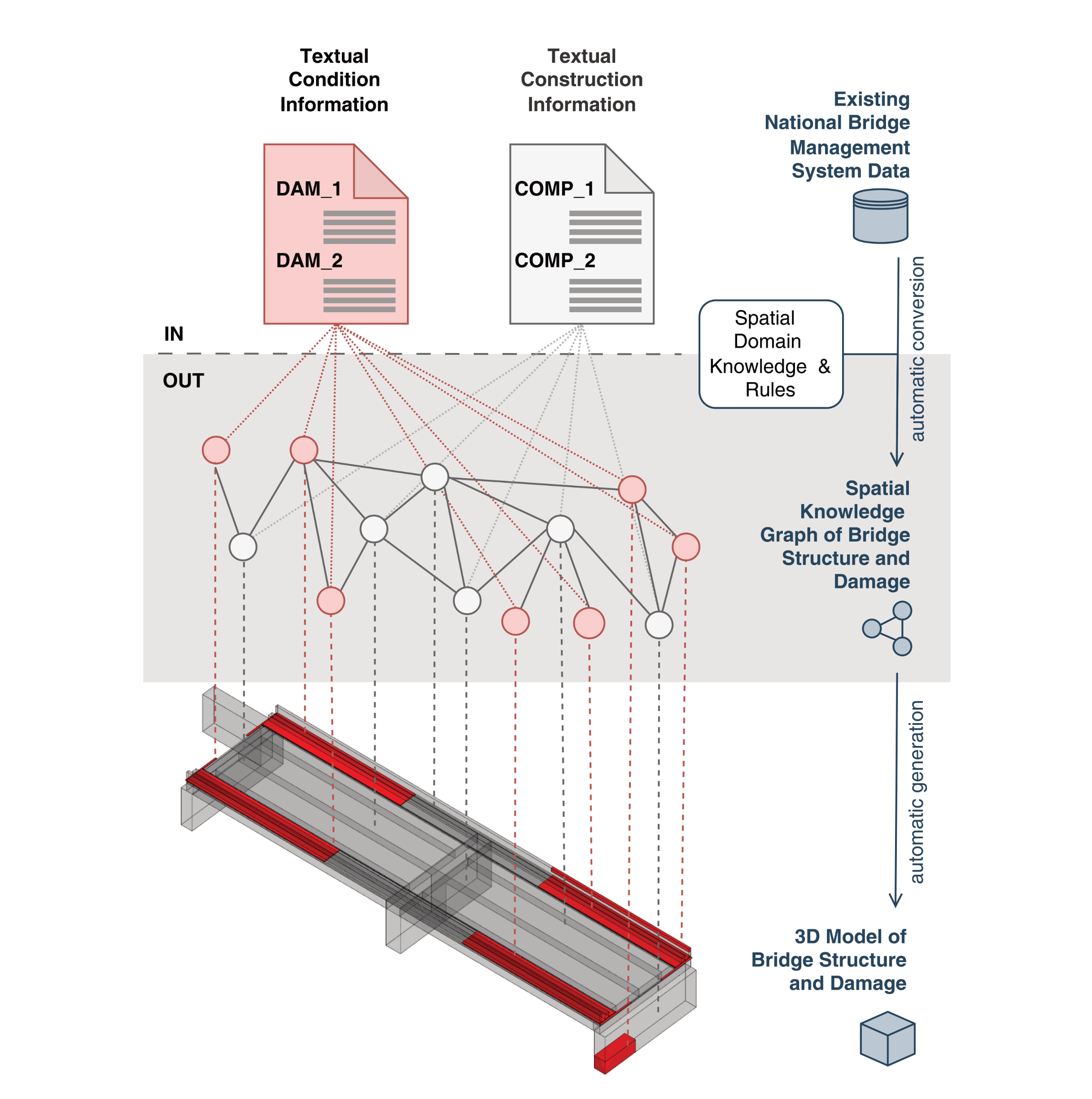
Prof. Dr. Jakob Beetz serves as a University Professor at RWTH Aachen University's Faculty of Architecture, leading the Design Computation (DC) research group. His work addresses critical challenges in sustainable built environments through digital innovation, focusing on integrating knowledge, information, and data across disciplines to reduce the sector's energy and material consumption—which accounts for over one-third of global totals—while advancing climate goals under the European Green Deal. His research spans Building Information Modeling (BIM), digital twins, and artificial intelligence, with emphasis on graph-based data federation, semantic web technologies, and large language models in construction. Key interests include evidence-based planning, parametric design optimization, building physics simulation, and networked knowledge modeling. Recent projects explore federated digital twin ecosystems for infrastructure management, intelligent damage assessment systems, and AI-driven solutions for wood structure preservation, directly contributing to sustainable development targets. Analysis of his 2024-2025 publications reveals a cohesive trajectory toward decentralized data environments and AI integration in Architecture, Engineering, and Construction (AEC). His work bridges theoretical foundations in knowledge representation with practical applications in bridge maintenance, road infrastructure, and timber construction, demonstrating consistent innovation in spatial data querying, federated issue management, and ontology-based process modeling. Prof. Beetz actively supervises PhD candidates, as evidenced by DC.Promotions 2024, and drives international collaboration through events like the Forum Construction Informatics 2025 and CIB W78 conferences. His research group engages with industry standards including Industry Foundation Classes (IFC) and Common Data Environments (CDEs), emphasizing open data principles and interoperability to transform construction workflows.
Juan Wachs is the James H. and Barbara H. Greene Professor at the Edwardson School of Industrial Engineering, Purdue University. He holds a courtesy appointment in Biomedical Engineering and is an Adjunct Professor of Surgery at the IU School of Medicine. His research focuses on the intersection of robotics, human-AI interaction, and healthcare systems, with a particular emphasis on surgical robotics, assistive technologies, and telemedicine. Education: PhD in Industrial Engineering (Intelligent Systems), Ben-Gurion University of the Negev MSc in Industrial Engineering (Information Systems), Ben-Gurion University of the Negev BEdTech in Electrical Education, ORT Academic College in Jerusalem Research interests include surgical telementoring via augmented reality, gesture-based interfaces for sterile environments, and semi-autonomous robotic systems for healthcare. His ISAT Lab develops solutions like the STAR telementoring system and robotic assistants like Gesturenurse and FIST-D for explosive ordnance disposal. Recent work emphasizes AI-driven medical decision support (Trauma THOMPSON), burn wound characterization, and robotic ultrasound automation. Key contributions include over 100 publications in robotics, medical AI, and human factors. Scientific Awards: James H. and Barbara H. Greene Professorship Purdue University Faculty Scholar Advising & Labs: Guides over 10 PhD/Master’s students in robotics and healthcare tech ISAT Lab fosters interdisciplinary projects in surgical robotics, human-robot interaction, and accessibility
Professor Ding Jun is a faculty member in the Department of Materials Science and Engineering at the National University of Singapore's College of Engineering. His research spans additive manufacturing and nanomaterials with applications in energy, environment, and healthcare. Contact details include office location E2-03-17 and phone 65164317. His primary research interests include: Additive Manufacturing for multi-material and multi-functional devices Nanomaterials fabrication for energy harvesting/storage, water purification, and sensor development 3D printing of metals, ceramics, and graphene-based structures Analysis of his 10 most recent publications reveals strong focus on practical applications of 3D printing across energy storage (Li-O 2 batteries, water splitting), environmental remediation (air filters, water purification), and advanced manufacturing techniques (robocasting, metallization). Key technological themes include hierarchical porous structures, multi-material integration, and performance optimization at high current densities. No scientific awards were mentioned in the source material. Professor Ding teaches core materials engineering courses including MLE3203 Engineering Materials, MLE3111 Materials Properties & Processing Laboratory, MLE4212 Advanced Structural Materials, and MLE5301 Advanced Metallic and Ceramic Materials in Additive Manufacturing. No information on research grants or student supervision was provided. His work demonstrates strong integration between novel 3D printing methodologies and real-world environmental/energy applications, with particular emphasis on creating functional architectures for electrochemical systems and pollution control.
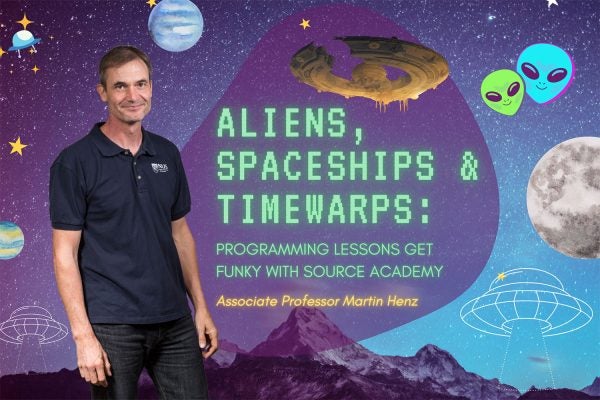
Martin Henz is an Associate Professor at the National University of Singapore , affiliated with the School of Computing and its Department of Computer Science . His academic journey includes an M.Sc. in Computer Science from Stony Brook University (1993) and a Dr.rer.nat. in Computer Science from Saarland University (1997). He has also worked as a Research Scientist at the German Research Centre for Artificial Intelligence. Research Focus : Scalable Experiential Learning, Systems for Teaching/Learning, AI in Education, Programming Languages, Algorithms, and Constraint Programming. Key Projects : Source Academy (immersive programming environment), Deep Teaching (LMS enhancements), and NUS Seafarers (maritime experiential learning). Publications span education technology, programming languages, and sustainable engineering, with recent works focusing on JavaScript-based pedagogy, automated question generation, and electric vehicle conversions. He supervised Rahul Singhal 's PhD, leading to the educational startup Cerebry, and co-founded Workforce Optimizer Pte Ltd with Alan Sevugan. Awards : NUS Annual Digital Education Award (2021) NUS Annual Teaching Excellence Award (2016/17) Fulbright Scholarship (1990) Startup @ Singapore Champion (2001)
Professor Muttucumaru Sivakumar is a faculty member at the University of Wollongong (UOW), holding the rank of Professor and serving as Academic Program Director for Environmental Engineering (ENVE) within the School of Civil, Mining, Environmental and Architectural Engineering. He has been with UOW since 1984, progressing through roles such as Lecturer, Senior Lecturer, and Associate Professor before becoming a full Professor in 2025. His academic career includes visiting positions at institutions worldwide, including the University of Minnesota, University of Heidelberg, and Indian Institutes of Technology. Education: He earned a BSc Eng from the University of Peradeniya (Sri Lanka, 1970–1974), an MEng from the Asian Institute of Technology (Thailand, 1976), and a PhD from the University of Newcastle (Australia, 1977–1981). Research Interests: His work focuses on water quality modeling of coastal reservoirs, sediment transport, membrane distillation for wastewater treatment, and environmental hydraulics. Current projects include coastal reservoir development for Jakarta, solar-powered desalination, and wastewater-based epidemiology for pathogen monitoring. Grants: Key funding includes the KONEKSI grant for Jakarta’s coastal reservoir development (2023–2024) and internal grants for geopolymer research and anaerobic co-digestion. He also secured equipment grants for nanopore sequencing platforms and low-vacuum electron microscopy. Advising & Students: He has supervised over 15 HDR completions since 1990, including notable PhD graduates such as San Rathviboon (2011) and Debashis Raha (2006). Current students focus on topics like methane control in wastewater systems and coastal reservoir sediment transport. Labs & Teams: His research groups collaborate on interdisciplinary projects involving water resource management, environmental engineering, and sustainable infrastructure development. He leads initiatives in the International Association for Coastal Reservoir Research (IACRR).
Paul Shrivastava is a Professor of Management and Organizations at the Smeal College of Business, Pennsylvania State University. He served as Penn State's Chief Sustainability Officer and Director of the Sustainability Institute until July 2022. Previously, he led Future Earth as Executive Director and co-founded the David O'Brien Centre for Sustainable Enterprise at Concordia University. His expertise spans sustainability, transdisciplinary research, crisis management, and organizational strategy. Education: PhD in Strategic Planning and Policy from the University of Pittsburgh (1981), Post Graduate Diploma in Management from IIM Calcutta, and Mechanical Engineering from NIT Bhopal. Research focuses on sustainable development, corporate sustainability strategies, and integrating arts with science for environmental stewardship. Key contributions include foundational work on crisis management (e.g., Bhopal disaster analysis) and pioneering 'embodied learning' methods. He co-founded the Organizations and Natural Environment Division of the Academy of Management and chairs the UNESCO Art and Sustainable Enterprise initiative. Awards include the Academy of Management ONE Division Distinguished Scholar Award (2023) and IIM Calcutta Distinguished Alumni Award (2016). His advisory roles span global institutions like the Club of Rome and Hiroshima University's NERPS. Notable projects include Balance unBalance 2011 and Montreal Degrowth 2012 conferences, emphasizing artistic and transdisciplinary approaches to sustainability. He advocates for systemic integration of SDGs and resilience in urban systems, as highlighted in his work on 'sustainable cities' and climate governance.
Marianne Nyman is an Associate Professor in the Department of Civil and Environmental Engineering at Rensselaer Polytechnic Institute (RPI), affiliated with the School of Engineering and the Center for Biotechnology and Interdisciplinary Studies (CBIS). Her research focuses on environmental engineering, water quality, biochemical processes, and biomaterials, with a strong emphasis on remediation technologies for organic pollutants, including polycyclic aromatic hydrocarbons (PAHs), endocrine disruptors, and aromatic amines. She has pioneered studies on peroxy-acid treatment for contaminant degradation and explores applications in bioremediation and energy production. Her work spans laboratory-scale innovations to field-scale environmental solutions, addressing challenges in water treatment, sediment remediation, and agricultural systems. Notable contributions include optimizing LED wavelengths for plant growth optimization and investigating CO 2 enrichment effects on leafy greens. Nyman’s research integrates chemical engineering principles with ecological and agricultural systems, reflecting her interdisciplinary approach to solving complex environmental problems. Her publications highlight advancements in advanced oxidation processes, sorption dynamics, and predictive modeling of contaminant behavior. While no specific awards are listed, her sustained contributions to environmental engineering are evident through her prolific and impactful research output. Her lab collaborates with CBIS to bridge biotechnology and environmental science, addressing emerging contaminants and sustainable remediation strategies.
Lucia O'Sullivan is a Professor and Chair in the Department of Psychology at the University of New Brunswick. She holds a PhD in Experimental Psychology from Bowling Green State University, with postdoctoral research training in HIV at Columbia University. Her research focuses on the intersection of sexuality and intimate relationships, including digital technologies' impact on relationships and barriers to sexual health care. She has conducted international studies in South Africa, the UK, Guatemala, India, and the US. Dr. O’Sullivan has authored/co-authored over 175 peer-reviewed articles, a textbook on human sexuality, and serves on multiple journal editorial boards. She is currently not accepting graduate students. Education: B.A. (Hons.) and M.A. in Clinical Psychology from UNB; PhD in Experimental Psychology from Bowling Green State University; Postdoctoral training in HIV at Columbia University. Research interests include adolescent and young adult sexuality, sexual violence prevention, and the role of technology in relationships. Her work emphasizes global health perspectives and collaborative international research. Key contributions include co-editing a book on sexual coercion and developing measurement tools like the Short Sexual Subjectivity Inventory. Her recent studies explore sugar arrangements, bystander intervention in sexual aggression, and infidelity predictors.
Professor Tim Jones is a Professor of Sustainable Urban Mobility at the School of the Built Environment, Oxford Brookes University. His research focuses on how urban environments can be configured to support sustainable and healthy mobility, particularly walking, cycling, and electrically assisted mobility. His work aligns with UN Sustainable Development Goals 3 (Good health and wellbeing), 10 (Reduced inequalities), and 11 (Sustainable cities and communities). Dr. Jones' research interests center on sustainable urban mobility, with particular emphasis on walking, cycling, and electric micromobility. He investigates how urban environments can be designed to promote healthy, sustainable travel that minimizes environmental impact while improving health and wellbeing and providing equal access to opportunities. His work employs novel mixed-method approaches to understand the physical, social, and cultural factors that influence everyday travel decisions. His research spans contexts from the UK to Brazil, examining issues like mobility justice, 15-minute cities, and low traffic neighborhoods. His recent publications reveal a strong focus on the health impacts of active travel, particularly examining how walking and cycling affect mental health, wellbeing, and quality of life. His work increasingly addresses electric micromobility, including e-bikes and e-scooters, with several 2024-2025 publications on the HELMET project. He frequently collaborates with international researchers, particularly in Brazil, on comparative urban mobility studies. Royal Town Planning Institute (RTPI) Award for Research Excellence 2017 (Academic Award) for the project cycle BOOM Professor Jones has supervised numerous PhD students including Catherine Ross (current), Oscar Natividad Puig (current), Aline Moreira Fernandes Barata (completed 2023), and Daniela Wollrab (completed 2023), among others. He has secured significant research funding including the NIHR-funded HELMET project (2025-2026), the EU-funded ENACT 15mC project (2023-2026), and the Rees Jeffreys Road Fund's UMALTraN project (2023-2024). His current research portfolio demonstrates strong engagement with contemporary urban mobility challenges, particularly post-pandemic transport issues and the integration of new mobility technologies. Professor Jones is actively involved in multiple research networks including the Planning Policy and Government Group, the Sustainable and Resilient Futures Network, the Healthy Ageing and Care Network, and the Children and Young People Network at Oxford Brookes University. He serves as a Research Ethics Officer and contributes to professional organizations including the European Partnerships Driving Urban Transitions Programme.
Lucy Bastin is a Professor in the School of Computer Science and Digital Technologies at Aston University, part of the College of Engineering and Physical Sciences. She holds academic roles since 2003, including leadership in the Digital Observatory for Protected Areas (DOPA) project at the European Commission. Her research focuses on biodiversity informatics, remote sensing, and citizen science, with applications in conservation planning and sustainable development. She advises PhD students on topics like GIS, remote sensing, and citizen observatories. Education: BSc Zoology (University of Nottingham), MSc GIS (University of Leicester), PhD in Spatial Population Ecology (University of Birmingham). She also holds a Postgraduate Certificate in Teaching and Learning in Higher Education. Research Interests: Essential Biodiversity Variables, metadata standards for citizen science, uncertainty in conservation models, disease mapping (e.g., MRSA), and environmental policy support. She developed the DOPA toolkit for protected area monitoring and co-authored the Bari Manifesto for biodiversity variables. Key Projects: DOPA Explorer 2.0, FLIERS EU project, EuroGEOSS initiatives Recent Awards: Midlands Women in Tech Finalist (2021), Best Paper Award (2018) Teaching: Software Engineering, Professional Ethics in Computing, GIS modules Labs/Teams: Part of the Computer Science Research Group and Aston Centre for Artificial Intelligence Research and Application. Collaborates with global partners on initiatives like BIOPAMA and the Green Deal Data Space.
Kannan Srinivasan is the H.J. Heinz II Professor of Management, Marketing and Business Technology at Carnegie Mellon University's Tepper School of Business, a position he has held since 1999. Prior to joining CMU, he taught at the business schools of the University of Chicago and Stanford University. His academic career spans over three decades with significant contributions to marketing science and data analytics. His educational background includes: Ph.D. in Management from University of California Los Angeles (1986) MBA in Marketing/Finance from Xavier School of Management, Jamshedpur, India (1980) BA in Engineering from University of Madras, Chennai, India (1978) Srinivasan's research focuses on advanced data analytics models applied to marketing problems, with particular expertise in internet-generated large-scale data analysis. His work bridges the gap between theoretical marketing models and practical business applications, especially in the areas of algorithmic pricing, consumer behavior analysis, and AI-driven marketing strategies. He has pioneered research in dynamic pricing systems, location-aware marketing technologies, and the economic implications of AI in consumer markets. Analysis of his recent publications reveals a strong trend toward examining the intersection of artificial intelligence, consumer welfare, and market dynamics. His work increasingly focuses on ethical implications of AI in marketing, algorithmic bias, and the socioeconomic impacts of digital platforms across various sectors including real estate, social media, and e-commerce. His scientific achievements include: Elected Fellow of the Informs Society of Marketing Science (2013) for lifetime contribution to the field Served as President of the Informs Society of Marketing Science Holds multiple patents related to time and location aware dynamic push content, dynamic pricing, and online advertising Srinivasan has advised numerous doctoral students whose careers have led them to faculty positions at top institutions including Duke, Harvard, Columbia, Yale, University of Chicago, Wharton, University of Michigan, and Indian Institute of Management Bangalore. He has extensive consulting experience with large firms and startups, translating academic research into practical business applications. His professional service includes editorial roles at prestigious journals including Management Science, Marketing Science, and Quantitative Marketing and Economics, as well as significant committee service within CMU including the Elliott D. Smith Award Committee and various Dean's Advisory committees. His research is organized around several key initiatives focused on applying advanced analytics to solve complex marketing problems, with particular emphasis on developing interpretable AI models that balance business objectives with consumer welfare considerations.
Akshay Narayan is a Senior Lecturer (Educator Track) at the School of Computing, National University of Singapore (NUS), where he teaches senior undergraduate and graduate-level courses in AI Planning and Decision Making, as well as introductory and intermediate-level Software Engineering courses. Education: Ph.D. in Computer Science from National University of Singapore (completed in 2020) M.Tech. in Information Technology from International Institute of Information Technology Bangalore, India B.E. in Computer Science & Engineering from Visveswaraya Technological University, India Research Interests: Dr. Narayan's research spans multiple domains within computer science with a primary focus on artificial intelligence and its applications. His current research centers on transfer learning in reinforcement learning, multi-agent decision making, and AI planning. He has also made significant contributions to cloud computing research, particularly in areas such as smart metering, chargeback systems, power-aware cloud metering, and workload analysis for virtual machine sizing. His work bridges theoretical foundations with practical applications, addressing real-world challenges in computing systems. He has recently expanded his research to include technology in education, exploring how AI can be integrated into teaching and learning processes. Publication Trends: Dr. Narayan's publication record demonstrates a clear evolution from foundational work in cloud computing to more recent explorations in reinforcement learning and AI education. His early work focused on practical applications in cloud systems, including smart metering and QoS monitoring. More recently, his research has shifted toward AI planning, decision making, and the educational applications of AI. This progression shows his ability to adapt to emerging fields while maintaining a strong foundation in systems research. Awards and Recognition: Teaching and Mentoring: Dr. Narayan teaches a variety of courses at NUS including CS2113 Software Engineering & Object-Oriented Programming, CS3219 Software Engineering Principles and Patterns, CS3268 Responsible AI: From Algorithms to Impact, and IT5100F Industry Readiness: Data Analytics and AI in Practice. He has also taught CS4246/CS5446 AI Planning and Decision Making. His teaching approach integrates his research expertise with practical applications, providing students with both theoretical foundations and hands-on experience. He has taught these courses across multiple academic years from AY-2013/14 through AY-2020/21. Research Groups and Collaborations: Dr. Narayan has collaborated with researchers across multiple institutions, including work with Prof. Tze Yun Leong at NUS (his PhD advisor), Shrisha Rao, Zhuoru Li, and others. His research has often involved interdisciplinary collaborations that bridge theoretical computer science with practical system implementations.