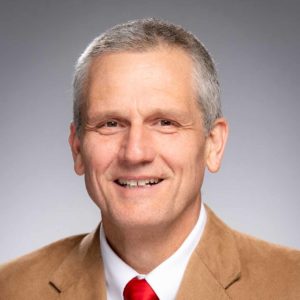
Rafael González Olmos is a Full Professor and current Head of the GESPA Group (Engineering and Simulation of Environmental Processes Group) at the Department of Chemical Engineering and Materials Science, Universitat Ramon Llull (IQS School of Engineering). He holds a PhD in Chemical Engineering (2008) and a Master’s in Environmental Engineering (2004) from URV (Rovira i Virgili University). His research focuses on CO2 capture and transformation Water reuse Circular economy Process simulation and optimization Life cycle analysis The recent publications highlight his work in advanced thermophysical characterization of sustainable refrigerants, zeolite-based adsorption systems for air pollution control, and innovative CO2 capture technologies. His research integrates theoretical-experimental approaches to address environmental sustainability challenges through chemical engineering solutions. Leadership Roles: Head of Department of Chemical Engineering and Materials Science (2022-present) Previous Academic Positions: Associate Professor (2022-2025), Assistant Professor (2014-2022) Research Projects: Leading initiatives like RE(F)CICLA (fluorinated gas recovery), FERTIDAC (CO2 capture for greenhouse fertilization), and RFC+PU (plasma-based carbon capture).
Regina Kratzer is an Associate Professor at the Graz University of Technology , affiliated with the Institute of Biotechnology and Bioprocess Engineering . Her academic work focuses on advancing CO₂-based biotechnology, enzyme engineering, and sustainable bioprocessing techniques. Her research emphasizes: Bioprocess optimization for Cupriavidus necator cultivation CO₂ utilization in microbial systems Enzyme engineering for industrial applications Integration of reaction engineering with protein design Development of sustainable chemical production systems Analysis of microbial growth dynamics and substrate interactions Recent publications highlight trends in microbial CO₂ fixation, bioplastic production, and enzymatic reduction mechanisms. She maintains a focus on practical implementation of green biotechnology solutions. Contact: regina.kratzer@tugraz.at Location: Room BC01124, 8010 Graz, Petersgasse 10-12/I
Christof Hamel is Professor and Head of the Department of Chemical Process Engineering at Anhalt University of Applied Sciences since 2022, with additional roles as Private Lecturer at Otto von Guericke University of Magdeburg (OvGU) and Deputy Director of the ILBQ (Institute for Food Technology, Biotechnology and Quality Assurance eV) Köthen. He serves as Vice Dean and member of the Senate Research Commission at Anhalt University. His academic qualifications: Diploma in Process Engineering, OvGU (2002, passed with distinction) Doctorate in Process Engineering, OvGU (2008, summa cum laude) Habilitation in Chemical Process Engineering, OvGU (2015) Prof. Hamel's research centers on multiphase reaction engineering with emphasis on catalytic kinetics across homogeneous, heterogeneous, and enzymatic systems. His work drives process intensification through integrated reactor design and sustainable chemical processes using renewable resources, following the strategic framework of "Reaction → Reactor → Process". He employs mechanistic kinetic modeling, operando spectroscopy, and dynamic reactor methodologies to optimize industrial reaction systems. Notable awards include: VDI Saxony-Anhalt Award for best diploma thesis (2003) OvGU Faculty Prize for best graduate (2002/2003) OvGU Faculty Prize for best dissertation (2008) National Winner "Trophelia" (2015) Multiple poster prizes (2014-present) He has secured extensive research funding including DFG projects HA 6762/1-1 through HA 6762/5-1 on cyclic distributor reactor control (2016-2027), BMBF initiatives on enzymatic prebiotic synthesis (2018-2024), and green chemical production projects (2023-2027). His grant portfolio spans catalytic reaction engineering, CO 2 reduction, and modular reactor systems for sustainable chemistry. Prof. Hamel's research group operates within the Chair of Chemical Process Engineering, maintaining strong industrial collaborations across Central Germany while developing advanced tools for kinetic analysis and reactor design in multiphase systems.
Professor Andrew Livingston, FREng, is a faculty member in the Department of Chemical Engineering at Imperial College London , where he has been since 1990. He serves as Director of the Barrer Centre and leads the Livingston Research Group, focusing on membrane technology for molecular separations. Professor, Department of Chemical Engineering Director, Barrer Centre Head of Department (2008-2016) Research Focus : Developing advanced membranes for organic solvent systems and pharmaceutical manufacturing, with expertise in nanofiltration, polymer synthesis, and sustainable chemical processes. His work bridges chemical engineering, materials science, and industrial applications. Scientific Achievements : Recipient of multiple awards including the President's Medal for Outstanding Research Team (2017) and Underwood Medal (2016). His 2018 ERC Advanced Grant for the EXACTYMER project has driven innovation in sequence-defined polymers. Academic Leadership : Supervises PhD students and postdocs in multidisciplinary research, with collaborations across Imperial's Institute for Molecular Science and Engineering and industry partners like GSK and Evonik.
Belén Martín-Matute is a distinguished Professor in the Department of Organic Chemistry at Stockholm University, where she has been conducting cutting-edge research since 2008 and was promoted to Full Professor in 2014. Her work spans multiple institutions including the University of Toronto, Boston College, and ICIQ research institute in Tarragona. Ph.D. from Autónoma University of Madrid, Spain Martín-Matute's research focuses on developing efficient catalytic processes for constructing carbon-carbon and carbon-heteroatom bonds, with applications in pharmaceutical and agricultural chemistry. She specializes in converting renewable resources like water and carbon dioxide into valuable chemical products using both metal catalysts and metal-free organocatalysts. Her work emphasizes sustainability, avoiding hazardous intermediates while achieving high selectivity in complex molecule functionalization. Her publication record demonstrates consistent innovation in catalysis, with recent work emphasizing sustainable chemistry, late-stage functionalization, and novel catalytic methodologies. The research trends show increasing focus on practical applications in pharmaceutical synthesis and greener chemical processes. Scientific Awards: Young Investigator Award from the Spanish Royal Society of Chemistry and Sigma-Aldrich (2007) Lindbomska Award from the Swedish Academy of Sciences (2013) Göran Gustafsson Prize from the Swedish Academy of Sciences (2017) Chemistry Europe Fellow (2022) Holmquist Award (2023) Martín-Matute serves as associate editor for Organic Letters since 2021 and on the advisory boards of ACS Sustainable Chemistry & Engineering and Chemistry- An European Journal . She is an Academy Member of The Royal Swedish Academy of Sciences, Class for Chemistry, reflecting her significant contributions to the field. Her teaching includes advanced courses in organometallic synthesis and sustainable organic chemistry. The Belén Martín-Matute Research Group operates from Room A 529 at Kemikum, Stockholm University, focusing on developing novel catalytic methodologies with practical applications in pharmaceutical and sustainable chemistry.
Professor William Kerr is a distinguished academic at the University of Strathclyde, holding the position of 1919 Professor of Organic Chemistry and serving as Associate Deputy Principal for Research & Knowledge Exchange. He leads the Department of Pure and Applied Chemistry within the Faculty of Science, where he has established himself as a world leader in metal-mediated synthetic organic chemistry. Professor Kerr's research spans multiple areas of organometallic chemistry, with particular expertise in organomagnesium, organoiridium, organocobalt, and organochromium chemistry. His work focuses on developing new preparative techniques, creating asymmetric processes, and applying these methods to total synthesis. His group has made significant contributions to hydrogen isotope exchange reactions, which have important pharmaceutical applications for labeling drug candidates and their metabolites. His research has been published in over 350 research outputs, with recent work focusing on iridium-catalyzed hydrogen isotope exchange, selective deuteration methods, and sustainable synthesis approaches. The trends in his publications demonstrate a consistent focus on developing practical, industrially relevant synthetic methods with applications in drug discovery and development. ICI Fine Chemicals Young Lecturer (1991) Glaxo Wellcome Prize for Innovative Organic Chemistry (1997) Elected to Fellowship of the Royal Society of Edinburgh (2014) Fellow of the Royal Society of Chemistry (2009) Professor Kerr has secured significant research funding from EPSRC, private funding bodies, and industrial collaborators including GlaxoSmithKline, AstraZeneca, Pfizer, and Merck. He directs the University of Strathclyde and GlaxoSmithKline Collaborative Doctoral Training Centre in Synthetic and Medicinal Chemistry, which has supported over 50 research students. His group has been instrumental in developing academic-industry partnerships that serve as exemplars for university-business collaboration, highlighted in Sir Tim Wilson's Review of University-Business Collaboration. Based in the Department of Pure and Applied Chemistry at the University of Strathclyde, the Kerr Research Group maintains strong collaborations with industrial partners and academic colleagues, particularly with Dr. Tell Tuttle on computational aspects of iridium-catalyzed reactions. The group's work contributes to Sustainable Development Goals related to industry, innovation, and infrastructure.
Jon Noble is a Lecturer in the Department of Chemical Engineering at the University of Bath, specializing in electromagnetic heating technologies for sustainable chemical processes. His research directly contributes to UN Sustainable Development Goals through electrification of industrial reactors and renewable chemicals manufacturing. Education: MEng Chemical Engineering, University of Surrey (2001-2005) Research Interests: Dr Noble's work bridges chemical engineering and electromagnetic physics, focusing on induction heating systems, magnetic hysteresis modeling, and in-situ measurement techniques for chemical reactors. He develops novel approaches for temperature inference in particle beds and contact-free impedanceometry, with applications in catalytic processes and fossil fuel displacement. Publication Trends: His recent publications demonstrate cohesive advancement in radio-frequency heating for green chemistry, emphasizing energy loss modeling, scale-up analysis, and magnetic material characterization. Key themes include sustainable reactor design, real-time temperature monitoring, and magnetic-zeolite catalyst development for renewable chemical synthesis. Grants and Projects: Principal Investigator for 'Novel dual-functional magnetic-zeolite catalysts for renewable chemicals manufacture' (2019-present) UK Science Festival Outreach project (2021) involving Swindon community engagement MRes project on advanced radio-frequency applications for continuous flow reactions (2018-2019) Collaborations: He maintains active research partnerships with the Department of Physics at Bath, particularly with Professors Simon Bending and Adrian Hill, and contributes to the Centre for Sustainable Chemical Technologies' mission.
Merlin L. Bruening is the Donald and Susan Rice Professor of Engineering and a full Professor in the Department of Chemical and Biomolecular Engineering at the University of Notre Dame . Leading the Bruening Lab , he oversees a multidisciplinary team of six graduate students, two postdocs, and two undergraduates. Education & Career Postdoc , NIH Fellow, Texas A&M University, 1995–1997 PhD in Chemistry, Weizmann Institute of Science, 1990–1995 MS in Chemistry, Brigham Young University, 1989–1990 BS in Chemical Engineering, Magna Cum Laude , Brigham Young University, 1983–1989 Assistant → Associate → Full Professor , Michigan State University (1997–2016) Full Professor , University of Notre Dame (2016–present) Research Interests The Bruening group develops functional thin films and membranes for: Protein purification via high-capacity affinity membranes. Ion separations using electrodialysis and counter-flow electromigration for battery, rare-earth, and salt recycling applications. Controlled proteolysis with enzyme-immobilized membranes to accelerate mass-spectrometry workflows for antibody characterization and glycosylation analysis. Microfluidic integration of membranes for point-of-care quantitation of therapeutic monoclonal antibodies in serum. Publication Trends Recent publications (2022–2025) emphasize electrically driven membrane processes for critical mineral recovery, rapid quantitation of therapeutic antibodies , and environmental contaminant detection (PFAS, opioids). The work spans analytical chemistry, membrane science, biopharmaceutical analytics, and environmental engineering , reflecting a commitment to both fundamental transport phenomena and translational applications. Awards & Honors Benedetti-Pichler Award, American Microchemical Society (2016) MSU Innovation of the Year (2015) MSU College of Natural Science Distinguished Faculty Award (2014) Society for Electroanalytical Chemistry Young Investigator Award (2000) Notre Dame College of Engineering Outstanding Teacher (2025) Funding & Collaborations Current research is supported by the U.S. Department of Energy (DE-SC0017618) , the National Science Foundation (CHE-1903967, 1916601, RAPID-IIP-2031090), and the NIH (1R21AG062144 with Prof. Amanda Hummon, OSU). These grants enable collaborative efforts in electrodialysis, membrane-based proteomics, and tissue imaging . Group & Alumni The lab has graduated >30 PhD and MS students and >35 undergraduates who now hold positions in industry (Dow, Janssen, Abbott, Intel) and academia worldwide. Active students include Chao Tang, Joshua Berwanger, Hui Yin Tan, and Dong Ding , among others.
William Schneider is the Dorini Family Chair of Energy Studies and Professor and Chair of the Department of Chemical and Biomolecular Engineering at the University of Notre Dame’s College of Engineering. He is also a Concurrent Professor in the Department of Chemistry and Biochemistry, reflecting his interdisciplinary expertise across chemical engineering and chemistry. Education: Ph.D., Ohio State University (1991) B.Sc., University of Michigan-Dearborn (1986) Research Interests: Professor Schneider’s research group employs state-of-the-art first-principles molecular simulations, primarily density functional theory (DFT), to investigate heterogeneous surface reactivity and catalysis. His work addresses critical challenges in energy production and environmental protection, including catalytic removal of NOx emissions, conversion of shale gas, fuel cell catalysis, and plasma-enhanced chemical transformations. The group bridges chemical engineering, chemistry, physics, environmental science, and materials science to deliver molecular-level insights that guide catalyst design and process optimization. Scientific Awards: Giuseppe Parravano Memorial Award for Excellence in Catalysis Research & Development (2018) Fellow, American Association for the Advancement of Science (AAAS) (2011) BP Foundation Outstanding Teacher Award for the College of Engineering (2009) Group & Collaborations: The Schneider Research Group operates within the Computational Environmental Catalysis theme at Notre Dame. The team collaborates broadly with experimental groups worldwide to validate predictions and accelerate technology deployment. Group resources include a GitHub organization hosting code repositories, standard operating procedures, and course materials, alongside a dynamic seminar schedule and open positions for graduate students and postdocs.
Prof. Dr.-Ing. Andreas Jupke is a University Professor at the Department of Fluid Process Engineering of the School of Mechanical Engineering , RWTH Aachen University, since September 2014. His research focuses on purification strategies for biotechnological processes and innovative approaches for intensifying extraction processes . He leads a team conducting interdisciplinary research in chemical engineering, biotechnology, and sustainable process design. Education: Studied Chemical Engineering at TU Dortmund (1988–1994) Diploma in Chemical Engineering (1994) Doctorate (Dr.-Ing.) in preparative chromatography at TU Dortmund (2003) His work spans liquid-liquid extraction , reactive extraction , electrochemical separations , and process modeling with applications in biofuels, bioproducts, and sustainable chemical synthesis. Recent publications emphasize solvent design , digital twins for extraction columns , and integration of microbial/enzymatic/organometallic catalysis . Scientific Trends: His research integrates thermodynamic modeling , computational fluid dynamics , and data-driven hybrid approaches to optimize extraction processes, crystallization, and biorefinery systems. Publications frequently address pH-shift separations , microbial product recovery , and process intensification via multiphase reactors . Students & Collaborations: While direct advisees are not explicitly listed, his work involves collaborations with researchers at TU Dortmund, Bayer Technology Services, and interdisciplinary teams in projects like MIX-UP and Carbon2Chem.
Dr. Zheyu Jiang is an Assistant Professor in the Department of Chemical Engineering at Oklahoma State University , leading the Computational Laboratory for Advanced Manufacturing and Sustainability (CLAMS). His research bridges process systems engineering with digital agriculture and sustainability , focusing on industrial decarbonization , food-water-energy nexus , and explainable AI applications. Education : Ph.D. in Chemical Engineering from Purdue University (2018), B.Ch.E. (Hons) from University of Minnesota (2014) Research Expertise spans multi-scale modeling, physics-informed machine learning, and optimization techniques applied to: AI-driven digital agriculture solutions Decarbonization of chemical processes Advanced separation technologies Process monitoring through digital twins Scientific Contributions include: Pioneering physics-constrained machine learning for soil moisture estimation Developing MOLA (Multi-block Orthogonal LSTM Autoencoder) for industrial process monitoring Advancing decentralized optimization algorithms for renewable energy integration Research Recognition : 2025 NSF CAREER Award ($500k grant for digital agriculture) Featured in AIChE Journal Futures Issue (top 10% downloads) Multiple travel awards and Corteva Agriscience People's Choice Awards Laboratory : CLAMS trains students in computational sustainability, with members like graduate researcher Saba Ghasemi Naraghi and undergraduate success stories such as Tylee Kareck (offered Ph.D. positions at Texas A&M/UT Austin)
Prof. Koen Binnemans is a full professor at the Department of Chemistry of KU Leuven, Belgium, leading the SOLVOMET Group (Laboratory of Metallurgical Chemistry). His research centers on solvometallurgy, hydrometallurgy, and critical metal recovery through advanced solvent extraction techniques, with particular expertise in rare earth elements. His work pioneers circular hydrometallurgy principles to minimize waste in metal extraction, encompassing recovery from primary ores and secondary resources like electronic waste. Significant contributions include the 12 Principles of Circular Hydrometallurgy and medical radionuclide generators for targeted alpha therapy using actinium-225/bismuth-213 separation. His research integrates fundamental chemistry with process engineering for sustainable separation technologies. Recent publications (2023-2025) emphasize solvent extraction innovations for critical metals (rare earths, cobalt, nickel, lithium), circular economy integration, and advanced reactor designs like centrifugal contactors and millifluidic systems. Medical applications of metallurgical chemistry, particularly isotope production, represent a growing research frontier. Key recognitions include: ERC Advanced Grant (SOLCRIMET project) Elected member of the Royal Flemish Academy of Belgium for Science and the Arts (KVAB) As principal investigator, he coordinates major European projects including MSCA-ETN initiatives (EREAN, REDMUD, SOCRATES, DEMETER) and EU H2020 consortia (METGROW+, PLATIRUS, NEMO). These efforts train researchers in sustainable metallurgy while developing industrial-scale solutions for critical raw materials. The SOLVOMET R&I Centre, co-founded by Binnemans, drives translational research through industry-academia partnerships. The SOLVOMET Group operates within KU Leuven's Department of Chemistry, maintaining state-of-the-art facilities for solvent extraction, reactor engineering, and radiochemistry. The team collaborates globally on projects spanning fundamental speciation studies to industrial process demonstration, with strong ties to mining and recycling industries.
Professor Przemysław Jodłowski is a full professor and Vice-Dean for Organizational Affairs at the Faculty of Chemical Engineering and Technology of the Tadeusz Kościuszko Cracow University of Technology , Poland. He also leads activities in the Department of Organic Chemistry and Technology , where his group develops advanced catalytic materials and structured reactors for environmental protection and biomedical applications. Education: MSc Eng., Chemical Technology, AGH University of Science and Technology, Faculty of Energy and Fuels, 2009 PhD, Chemistry (Catalysis), Jagiellonian University, Faculty of Chemistry, 2013 DSc (habilitation), Chemical Technology, Tadeusz Kościuszko Cracow University of Technology, 2018 Full professorship (prof. dr hab. inż.), Engineering and Technical Sciences, 2025 Research interests are centered on the design, synthesis and characterization of catalytic and adsorbent materials. Key themes include metal-organic frameworks for detoxification of psychoactive substances, oxide catalysts for VOC and methane combustion, structured reactors (monoliths, foams, 3D-printed lattices), and in-situ/operando spectroscopy to unravel reaction mechanisms under real conditions. His work bridges chemical engineering, materials chemistry and translational medicine. Recent publications (2022-2025) reveal a strategic shift toward biomedical applications of MOFs , with several high-impact studies on drug detoxification (mephedrone, levofloxacin) and cancer therapy, alongside continued efforts in environmental catalysis (VOC abatement, biogas exhaust treatment). The integration of ultrasound-assisted synthesis throughout these works underscores his commitment to green, scalable manufacturing. Scientific awards & distinctions : START Scholarship, Foundation for Polish Science (2013) Scholarship of the Minister of Science and Higher Education for outstanding achievements (2012) Scholarship of the Rector of the Jagiellonian University for outstanding achievements (2012) Pro-quality grant scholarship for outstanding achievements (2012) Research funding & leadership: National Centre for Research and Development (NCBiR) LIDER grant (2016-2018) National Science Centre (NCN) SONATA 9 grant (2016-2018) NCN OPUS grant “MOF-antidote” (2022-2025) He collaborates with leading institutions worldwide, including the University of Bath (UK), Laboratoire Catalyse et Spectrochimie in Caen (France), Charles University (Czech Republic), and PSI Villigen (Switzerland). His group operates modern laboratories for catalyst synthesis, advanced characterization (in-situ IR/Raman, synchrotron XAS), and reactor testing.
Masahiko Matsukata is a Professor at the School of Advanced Science and Engineering of Waseda University, with a focus on Applied Chemistry . His academic credentials include a Doctor of Engineering from Waseda University. Education: Ph.D. in Applied Chemistry, Waseda University (1989) B.Eng. in Applied Chemistry, Waseda University (1984) Research Interests span multiple cutting-edge domains: Zeolite and metal-organic framework (MOF) membrane synthesis Catalytic processes for hydrocarbon conversion Energy-efficient separation technologies Hydrogen production and carbon dioxide utilization Plastic chemical recycling methods Advanced adsorption and diffusion mechanisms Article Trends reveal extensive work on zeolite membrane development for forward osmosis, isomer separation, and catalytic membrane reactors. His recent studies emphasize defect healing techniques, hierarchical pore architectures, and hybrid systems for energy-saving separations. Scientific Awards include: The Japan Petroleum Institute Award (2025) nano tech Prize (Green Nanotechnology Category, 2014) Japan Energy Society Progress Award (2001) Catalysis Society of Japan Award (1999) His work has been pivotal in advancing microporous membrane technology for industrial applications, as highlighted by his leadership in multiple research projects and contributions to chemical engineering journals.
Jean-Marie Aubry , a Professor at the University of Lille , is affiliated with the Colloids, Catalysis, and Oxidation (CISCO) team within the Catalysis and Molecular Chemistry Department at UCCS (Solid State Catalysis and Chemistry Unit, UMR CNRS 8181). His work integrates colloid science, catalysis, and green chemistry to develop sustainable surfactants, biocatalytic systems, and eco-friendly extraction methods. Key research themes: Surfactant design, Bio-based materials, Antioxidant mechanisms, Emulsion rheology Methodologies: COSMO-RS modeling, PIT-slope analysis, Hydrotropic extraction, Micellar catalysis Publication Trends (2010–2021): Focus on bio-derived surfactants (isosorbide, glycerol), green solvents (glycerol/ketal systems), and catalytic microemulsions . Recurring topics include phase behavior , amphiphilic properties , and environmental impact reduction . Collaborators include Véronique Nardello-Rataj and Marc Lemaire . Technological Impact : Developed solvent-free oxidation systems using Pickering emulsions, eco-biocidal formulations , and computational tools for sustainable chemical design. Applications span cosmetics, food preservation, and polymer processing.