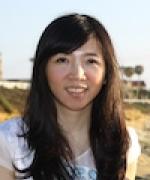
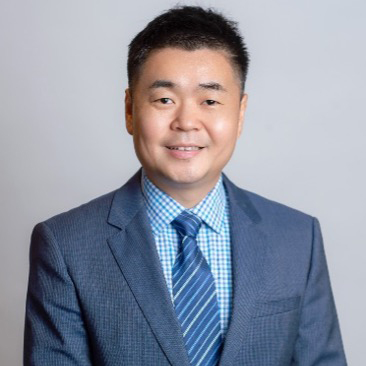
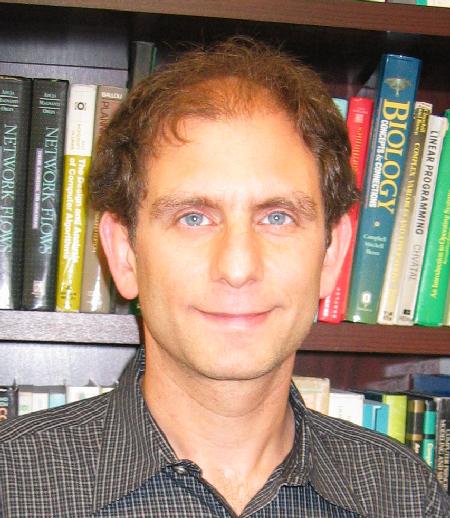
Yingyan (Celine) Lin is an Associate Professor in the School of Computer Science at Georgia Institute of Technology, leading the Efficient and Intelligent Computing (EIC) Lab. Her work focuses on cross-layer innovations in machine learning systems, from algorithms to chip design, aiming to advance green AI and ubiquitous machine learning. She holds a Ph.D. in Electrical and Computer Engineering from the University of Illinois at Urbana-Champaign (2017). Research interests include efficient machine learning, neural rendering (e.g., NeRF), hardware-software co-design for AI acceleration, and graph neural networks. Her lab has pioneered projects like RTML and 3DML, funded by NSF, NIH, DARPA, and industry partners (Qualcomm, Intel, Meta). Awards: NSF CAREER Award (2021), ACM SIGDA Outstanding Young Faculty (2022), Meta Faculty Research Award (2022) Grants: Multi-university projects funded by NSF, NIH, DARPA, SRC, ONR, and industry Recognition: First-place wins at DAC 2022 and TinyML Design Contest 2022, IEEE Micro Top Pick 2023 Her research bridges algorithmic innovation with hardware implementation, emphasizing energy efficiency and real-time performance for applications in AR/VR, computer vision, and neuro-symbolic AI systems.
Cicek Cavdar is an Associate Professor at the School of Electrical Engineering and Computer Science (EECS) at KTH Royal Institute of Technology , Sweden. She leads the Intelligent Network Systems research group and specializes in Telecommunication Networks , with a focus on Beyond 5G/6G Mobile Networks , Energy Efficiency , and AI-Assisted Network Management . PhD in Computer Science (2009) from University of California, Davis and Istanbul Technical University Her research spans Cell-Free Massive MIMO , Reconfigurable Intelligent Surfaces (RIS) , UAV Communication Systems , and Green Network Technologies . She actively contributes to 6G Network Architecture and Non-Terrestrial Networks , including satellite and aerial systems. Recent publications highlight AI-driven network optimization for handover management, energy-aware resource allocation , and multi-agent reinforcement learning in complex communication environments. She teaches advanced courses in Communication Systems , Machine Learning , and Software Engineering at KTH.
Sean Cao serves as Associate Professor (with tenure) at the Robert H. Smith School of Business, University of Maryland, where he is Director and Co-founder of the AI Initiative for Capital Market Research. He also holds an affiliation as professor at Harvard Business School's D 3 Institute. His academic journey began with a Ph.D. from the University of Illinois at Urbana-Champaign. Dr. Cao's research focuses on the intersection of artificial intelligence and capital markets, with particular expertise in how machine learning transforms financial analysis, corporate disclosure practices, and investment decision-making. His work examines the evolving relationship between human analysts and AI systems, blockchain applications in financial reporting, and the strategic adaptation of corporate communications for machine readership. He has pioneered research on the "AI divide" among investor groups and developed frameworks for human-AI collaborative stock analysis. His publication portfolio spans top journals including Journal of Financial Economics, Review of Financial Studies, Journal of Accounting Research, and Management Science. The research demonstrates consistent thematic progression toward increasingly sophisticated AI applications in finance, with recent work exploring distributed ledger technologies for auditing, machine learning for extracting private information from disclosures, and the economics of greenwashing in ESG funds. His studies frequently combine textual analysis with traditional financial metrics to uncover novel market insights. Fama-DFA Prize from Journal of Financial Economics for best paper in capital markets and asset pricing Michael J. Brennan Award from Review of Financial Studies Deloitte Initiative for AI and Learning award for developing trustworthy AI for social equity PanAgora Asset Management's Dr. Richard A. Crowell Memorial Prize Multiple best paper awards from Midwest Finance Association, Global AI Finance Conference, and Asian Finance Association Dr. Cao has delivered over 200 invited research talks at major institutions including the Central Bank of Japan, Central Bank of Thailand, and U.S. Securities and Exchange Commission. He serves as Guest Associate Editor for Management Science and has co-chaired Review of Financial Studies conferences on FinTech and Machine Learning. His educational initiatives include a widely adopted free AI textbook for finance and accounting that has been implemented at universities worldwide including Indiana University, UT Dallas, and University of Minnesota. As Director of the AI Initiative for Capital Market Research, Dr. Cao leads a multidisciplinary team exploring practical AI applications in finance. The initiative has secured significant funding including a $150,000 grant from GRF CPAs & Advisors. His research group maintains strong industry connections through partnerships with regulatory bodies, financial institutions, and technology companies, facilitating the translation of academic research into practical financial applications.
Dr. James McDonald serves as a Lecturer and Research Fellow at the University of New South Wales (UNSW) within the School of Civil and Environmental Engineering's Water Research Centre (WRC). His work at the Vallentine Annexe (H22), Room 102, Kensington Campus focuses on advancing water treatment technologies and understanding contaminant behavior in water systems. His position bridges academic instruction with cutting-edge research in environmental engineering. McDonald's research spans multiple critical areas in water science and engineering, with particular emphasis on trace organic contaminants, membrane technologies, and advanced water treatment processes. His work investigates the fate and removal of pharmaceuticals, personal care products, and industrial chemicals in various water treatment systems. He has made significant contributions to understanding disinfection by-product formation, chiral inversion of pharmaceuticals, and the development of novel membrane technologies for improved water purification. His research combines experimental approaches with computational modeling to address complex water quality challenges. Analysis of McDonald's recent publications reveals a strong focus on emerging contaminants, particularly PFAS compounds and chiral pharmaceuticals, and their behavior in water treatment systems. His work demonstrates expertise in both conventional and advanced water treatment technologies, with increasing emphasis on sustainable approaches including green infrastructure and novel membrane processes. The interdisciplinary nature of his research connects environmental engineering, chemistry, microbiology, and materials science to address contemporary water quality challenges. McDonald actively collaborates with researchers across multiple institutions and has contributed to numerous significant studies on water quality and treatment. His work supports the development of more effective water recycling systems and safer drinking water supplies. While specific grant information isn't detailed in the available text, his extensive publication record suggests sustained research funding in water treatment technologies and contaminant fate studies. As part of UNSW's Water Research Centre, McDonald contributes to one of Australia's leading water research facilities. The WRC provides a collaborative environment for addressing complex water challenges through interdisciplinary research that integrates engineering, chemistry, and environmental science perspectives.
Robert Ghrist is the Andrea Mitchell University Professor at the University of Pennsylvania with dual appointments in the Department of Mathematics and the Department of Electrical and Systems Engineering. He serves as Associate Dean for Undergraduate Education for Penn Engineering. His educational background includes a B.S. in Mechanical Engineering from the University of Toledo (1991), and M.S. and Ph.D. degrees in Applied Mathematics from Cornell University (1994, 1995). Ghrist's research bridges pure and applied mathematics, focusing on applied algebraic topology , dynamical systems , and geometric methods in data science. His work extends to network theory, topological data analysis, and computational geometry, with applications spanning robotics, neuroscience, and social dynamics. Key innovations include developing sheaf-theoretic approaches for networked systems and persistence homology techniques for high-dimensional data. Analysis of his recent publications reveals a strong emphasis on lattice-theoretic frameworks , topological robotics , and network dynamics , with emerging applications in neural data interpretation and geometric computing. His research consistently integrates category theory with real-world engineering challenges. Significant scientific recognition includes: Presidential Early Career Award (PECASE, 2004) Scientific American 'Top 50' Research Leader (2007) Mathematical Association of America's Chauvenet Prize (2013) University of Pennsylvania Lindback Award for Distinguished Teaching (2015) DoD National Security Science and Engineering Faculty Fellowship (NSSEFF, 2015) Ghrist leads multiple federally funded research initiatives supported by AFOSR, DARPA, NSF, and ONR. He directs the development of educational tools including the Calculus BLUE/GREEN Project video series and custom GPTs for mathematical pedagogy. His open online courses have reached over 100,000 learners globally.
Asaf Cidon is an Associate Professor at Columbia University, jointly affiliated with the Department of Electrical Engineering and Computer Science, and a member of the Data Science Institute. His research focuses on software systems , storage , large-scale machine learning , and cybersecurity . Stanford University - PhD in Electrical Engineering Stanford University - MS in Electrical Engineering Technion - BS in Computer and Software Engineering His work in distributed storage systems has been commercialized by companies such as Facebook, Tibco, and Rubrik. He has led projects like Sentinel and Forensics during his industry career. Recent publications highlight advancements in software-based radiation protection (ASPLOS'26), PCIe pooling with CXL (HotOS'25), and AI phishing detection (IMC'25). These reflect his expertise in system architecture , security , and networking . Scientific recognitions include best paper awards at OSDI, Usenix Security, CIDR, and ATC, along with NSF CAREER and ARO Young Investigator Awards . His papers Cookie Monster (SOSP'24) and Chablis (CIDR'24) received notable accolades. He has mentored numerous PhD and Master's students , including Edward Guo, Harry Wang, and Teng Jiang, many of whom now hold roles at Google, Meta, Amazon, and academic institutions. His lab at Columbia is actively recruiting CS and EE PhD students. Prior to Columbia, he founded and led the startup Sookasa to acquisition and served as Senior Vice President of Email Protection at Barracuda Networks , managing a $200M business with 100 engineers.
Syed Hani Hassan Abidi is an Associate Professor at the Department of Biomedical Sciences , School of Medicine , Nazarbayev University , Kazakhstan. His research integrates virology , immunology , viral oncology , and bioinformatics , with a focus on HIV molecular epidemiology , viral evolution , and drug resistance . He has led international projects across Pakistan, Kenya, Afghanistan, and Kazakhstan, and is recognized for innovative teaching and MOOC development. Education: PhD in Virology and Immunology Research Interests: His laboratory employs bioinformatics (machine learning, AI), genomics , and proteomics to study HIV phylodynamics , viral co-infections , and oncogenic viruses like EBV in prostate cancer. He also explores microbiome-immunity interactions and designs antiviral drugs/vaccines . Recent Research Trends: His 2025 publications emphasize COVID-19 immunopathology , HIV/syphilis epidemiology in Pakistan , and particle physics contributions via ATLAS , showcasing interdisciplinary impact. Awards & Recognition: Outstanding Teachers Award (2019, Aga Khan University) Fellowship of Higher Education (UK, 2022) Teaching & Grants: He pioneered Pakistan’s first MOOC on Computer-Based Drug Discovery (2014) and received a 2022 SoTL grant for MOOC-based molecular biology education. His teaching integrates animations , films , and flipped classrooms . Collaborations & Labs: Leads projects on HIV drug resistance , HCV genomics in Kazakhstan , and AI-driven dementia diagnostics (Kazakh Brain Atlas). His lab collaborates with global institutions to advance viral disease surveillance and therapeutic innovation .
Sarah Billington is the UPS Foundation Professor of Civil and Environmental Engineering at Stanford University and a Senior Fellow at the Woods Institute for the Environment. Her research program focuses on sustainable building design, human wellbeing, and ethical supply chain practices. Education: PhD, University of Texas at Austin, Structural Engineering (1997) MSE, University of Texas at Austin, Structural Engineering (1994) BSE, Princeton University, Civil Engineering & Operations Research (1990) Her lab employs interdisciplinary methods to study how built environments impact human physical, psychological, and social wellbeing. Current projects include developing tools to quantify nature exposure in buildings, exploring affordable housing's role in wellbeing, and using AI to assess forced labor risks in material supply chains. While no longer active in this area, her group previously pioneered research on sustainable construction materials like bio-based composites and ductile cement-based composites. Her recent publications address topics such as nature integration in architecture, workplace design optimization, and health impacts of building materials. The Billington Lab at Stanford fosters collaborative team science, welcoming partnerships to advance occupant-centric engineering solutions.
Clifford Stein is a Professor of Industrial Engineering and Operations Research (IEOR) and Computer Science at Columbia University, and Associate Director for Research at the Data Science Institute. He holds a Ph.D. (1992), M.S. (1989), and B.S.E. (1987) from MIT and Princeton University, respectively. His research focuses on algorithms, combinatorial optimization, operations research, scheduling, and computational biology. A co-author of the best-selling textbook Introduction to Algorithms , Stein has published widely in top venues and holds prestigious awards like ACM Fellow and NSF Career Award. His work includes foundational contributions to minimum cut algorithms, scheduling theory, and network optimization, supported by NSF and Sloan Foundation grants. Stein has advised over 40 graduate and undergraduate students, many now in academia and industry.
Sandro Carrara is a Full Professor at École Polytechnique Fédérale de Lausanne (EPFL), where he leads the Bio/CMOS Interfaces (BCI) laboratory. He is affiliated with the School of Engineering (STI), the Institute of Electrical Engineering (SCI-STI-SC), and the Integrated Systems Laboratory (LSI). His academic leadership spans teaching, doctoral supervision, and editorial roles in major journals including IEEE Sensors Journal and BioNanoScience. Education: Diploma in Electronics, National Technical Institute of Albenga, Italy Master in Physics, University of Genoa, Italy PhD in Biochemistry and Biophysics, University of Padua, Italy His research focuses on the integration of biological systems with CMOS technology, particularly in the development of nanoscale biosensors for health monitoring. Key areas include memristive biosensors, wearable and implantable sensors, electrochemical detection, and therapeutic drug monitoring. His work bridges electronics, nanotechnology, and biomedicine to enable point-of-care diagnostics and personalized medicine. His recent publications (2023–2025) show a strong trend toward sustainable printed electronics, machine learning for biosensing, in-memory computing for cancer diagnostics, and remote health monitoring. These works appear in high-impact journals such as IEEE Sensors Journal , Nanoscale , and Biosensors and Bioelectronics: X . Scientific Awards: IEEE Fellow (2015) IEEE Sensors Council Technical Achievement Award (2016) Distinguished Lecturer, IEEE Sensors Council (2017) Best Paper Award, IEEE MeMeA Symposium (2020) Multiple Gold and Bronze Leaf Prizes at PRIME and IEEE conferences Best Poster Awards at EMBEC and Nano-Tera meetings He actively advises PhD students and leads research projects involving CMOS-based biosensors, wireless implants, and smart sensor systems. His lab collaborates widely across disciplines and institutions, focusing on real-world applications in oncology, neurology, and environmental health. He has also contributed to the development of battery-free wearable devices, optical power transfer systems, and IoT-enabled telemedicine platforms. Laboratories and Teams: Bio/CMOS Interfaces (BCI) Laboratory, EPFL Integrated Systems Laboratory (LSI), EPFL Collaborations with IEEE Sensors Council and Circuits and Systems Society Editorial leadership in IEEE Sensors Journal and BioNanoScience
Larry Pileggi is the Coraluppi Head and Tanoto Professor of Electrical and Computer Engineering at Carnegie Mellon University (CMU). He is also the Department Head of CMU’s ECE Department and has held prior roles at Westinghouse Research and Development and the University of Texas at Austin. His work bridges academic research and industry innovation, with co-founding ventures like Fabbrix Inc., Extreme DA, and Pearl Street Technologies. Dr. Pileggi earned his Ph.D. in Electrical and Computer Engineering from CMU (1989), following an M.S. (1984) and B.S. (1983) in Electrical Engineering from the University of Pittsburgh. His research focuses on three core areas: secure integrated circuit hardware (mitigating supply-chain threats), integrated circuits design methodologies (supporting sub-20nm CMOS and heterogeneous technologies), and power systems simulation (developing robust grid analysis tools like SUGAR). He has been recognized with numerous awards, including the prestigious 2023 Phil Kaufman Award for contributions to electronic system design, and is an IEEE Fellow. His academic leadership includes fostering maker initiatives and interdisciplinary research programs to address future challenges in energy and computing systems. Pileggi’s advising record includes over 47 Ph.D. students, many of whom collaborate with him in industry ventures. Current and past grants support his work on resilient power grids and novel memory technologies, reflecting a commitment to both theoretical and applied research. His lab, the Pileggi Lab, develops cutting-edge solutions for energy and integrated systems, emphasizing scalable simulation, secure hardware design, and next-generation memory architectures. Collaborations span institutions like ETH Zurich and industry partners in EDA and semiconductor sectors.
Dr. K. Max Zhang is a Professor in the Sibley School of Mechanical and Aerospace Engineering at Cornell University. He is the director of the Energy and the Environment Research Laboratory (EERL) and a fellow at the Atkinson Center for a Sustainable Future. His research is deeply interdisciplinary, focusing on sustainable energy systems, air quality, and environmental justice, with significant impacts on policy and community development in New York and beyond. Ph.D., Mechanical Engineering, University of California-Davis, 2004 B.S., Thermal Engineering, Tianjin University, 1998 B.A., English Language, Tianjin University, 1998 Dr. Zhang’s research centers on the integration of energy and environmental systems. He investigates air pollution dynamics using advanced numerical models like CTAG, with applications in near-source pollution, indoor air quality, and environmental justice. His work on renewable energy systems includes designing sustainable solar farms and managing distributed energy resources such as heat pumps to enhance grid flexibility. He also leads a pioneering initiative to create the first statewide public IoT network in the U.S., enabling hyperlocal weather forecasting and microclimate monitoring. His recent publications reflect a strong trend toward agrivoltaics, peer-to-peer energy markets, and IoT-based environmental monitoring. These works demonstrate a consistent focus on data-driven modeling, community-scale energy solutions, and the integration of social considerations into technical systems. The keywords across his articles highlight expertise in sustainability, machine learning, air quality, and energy transition. Cornell Town-Gown Achievement Award (2022) Engaged Scholar Prize, Cornell University (2017) People's Choice Sign of Sustainability Award, Sustainable Tompkins (2016) Scientific and Technological Achievement Award, Environmental Protection Agency (2015) Fellow of the American Society of Mechanical Engineers Dr. Zhang is actively involved in mentoring students and securing research grants from agencies such as the National Science Foundation (NSF) and the New York State Energy Research and Development Authority (NYSERDA). His projects often involve interdisciplinary collaboration across eight Cornell colleges and 16 academic departments. He has led initiatives such as the Cornell Atkinson Academic Venture Fund projects and the development of a county-level energy roadmap for Tompkins County. He also teaches courses in engineering thermodynamics, future energy systems, and air quality, emphasizing experiential and community-based learning. Dr. Zhang leads the Energy and the Environment Research Laboratory (EERL) and collaborates with the Atkinson Center for a Sustainable Future. His lab functions as a hub for innovation in sustainable communities, combining advanced modeling with real-world applications. Through partnerships with community organizations, government agencies, and industry, his team develops science-driven solutions to urban and rural sustainability challenges.
Bradley Olsen is a Professor of Chemical Engineering at the Massachusetts Institute of Technology (MIT), holding the Alexander and I. Michael (1960) Kasser Chair in Chemical Engineering. He is affiliated with MIT's School of Engineering and directs research in the Plastics and the Environment Program. His academic career spans over two decades with numerous prestigious appointments and recognitions. Olsen earned his S.B. from MIT in 2003 followed by a Ph.D. from the University of California Berkeley in 2007. His educational background is complemented by postdoctoral fellowships including NIH and Beckman Institute Postdoctoral Fellowships (2008-2009) and the Hertz Fellowship (2003-2007). Research Interests Professor Olsen's research focuses on designing materials to address important challenges while understanding the fundamental science necessary for materials design. His primary research areas include block copolymers, soft condensed matter physics, protein-based materials, and bioelectronics. His group specializes in polymer networks, protein-polymer conjugates, self-assembly phenomena, and sustainable polymer development. The research has significant implications for biomaterials, sustainable polymers, and advanced materials design. Publication Trends Analysis of Professor Olsen's recent publications reveals a strong focus on polymer network topology, protein-polymer conjugates, and sustainable materials. His work increasingly integrates computational methods with experimental approaches, particularly in polymer characterization and data science applications to materials science. Recent publications show growing emphasis on biodegradable polymers, polymer informatics, and biomedical applications of advanced materials. Scientific Recognition Professor Olsen has received numerous prestigious awards throughout his career, including: American Physical Society (APS) Fellow (2023) Fulbright Amazonia Scholar (2023) Alexander and I. Michael Kasser Chair in Chemical Engineering (2021) ACS Macro Letters/Biomacromolecules/Macromolecules Young Investigator Award (2021) AIChE Owens Corning Early Career Award (2019) American Physical Society Dillon Medal (2018) Alfred P. Sloan Research Fellow in Chemistry (2014) Advising and Funding Professor Olsen has secured significant research funding from multiple federal agencies including NSF, NIH, AFOSR, and DOE. His group has produced numerous high-impact publications across top journals in polymer science, materials science, and chemistry. He has advised multiple graduate students and postdoctoral researchers who have gone on to successful careers in academia and industry. The MIT OGE's Committed to Caring Honor (2019) recognizes his excellence in graduate student mentoring. Research Infrastructure Professor Olsen leads a research group with capabilities spanning polymer synthesis, protein engineering, materials characterization, and computational modeling. His lab maintains strong collaborations with other MIT departments, national laboratories, and international research institutions. The group participates in several interdisciplinary initiatives including the Plastics and the Environment Program and has developed significant data infrastructure for polymer science through projects like CRIPT and BigSMARTS.
Haitong Li is an Assistant Professor in the School of Electrical and Computer Engineering at Purdue University's College of Engineering, joining the faculty in 2022. His research bridges nanoelectronic devices, integrated circuits, and nanotechnology-inspired AI hardware to address critical challenges in energy-efficient artificial intelligence systems. Education: Ph.D. in Electrical Engineering, Stanford University Research Interests: Dr. Li pioneers emerging memory technologies—particularly Resistive RAM (RRAM)—for in-memory computing and neuromorphic systems. His work focuses on 3D monolithic integration of RRAM and gain cell memory with CMOS to enable edge AI, with recent breakthroughs in hardware acceleration for large language models and sustainable computing. Key innovations include carbon footprint prediction for LLMs and zeroth-order fine-tuning techniques. Publication Trends: Dr. Li's 2023-2025 publications reveal a strategic shift toward sustainable AI hardware, emphasizing carbon-aware LLM inference and edge deployment. His research consistently targets data movement reduction through memory-centric architectures, spanning photonic accelerators, neuro-symbolic computing, and heterogeneous 3D integration. Awards: No scientific awards were documented in the provided sources. Advising and Grants: Current advisees and grant funding details were not specified in the available materials. Labs and Teams: Research group composition and laboratory facilities were not described in the source text.
Raffaele Ferrari is the Cecil & Ida Green Professor of Oceanography and Co-Director of the MIT Lorenz Center within the Department of Earth, Atmospheric, and Planetary Sciences (EAPS). He holds a BS/MS from Università di Torino and a PhD from Politecnico di Torino and Scripps Institution of Oceanography. His research focuses on ocean dynamics, climate modeling, and paleoclimatology, with emphasis on turbulence, carbon cycling, and climate system interactions. Key projects include the Climate Modeling Alliance (CliMA) and the Bottom Boundary Layer observational program. He has been recognized with awards such as the Harald Sverdrup Lecture (2022) and the Nicholas P. Fofonoff Award (2007). His work integrates high-resolution modeling, observational data, and theoretical frameworks to advance climate science. Education: BS/MS (Università di Torino), PhD (Politecnico di Torino/Scripps) Affiliations: MIT Lorenz Center, CliMA collaboration (Caltech/JPL), MIT-WHOI Joint Program Research spans ocean turbulence, paleoclimate dynamics (e.g., Last Glacial Maximum, Eocene), and climate model development using AI/ML. He advises numerous students across these themes, contributing to breakthroughs in submesoscale dynamics and ocean energetics.