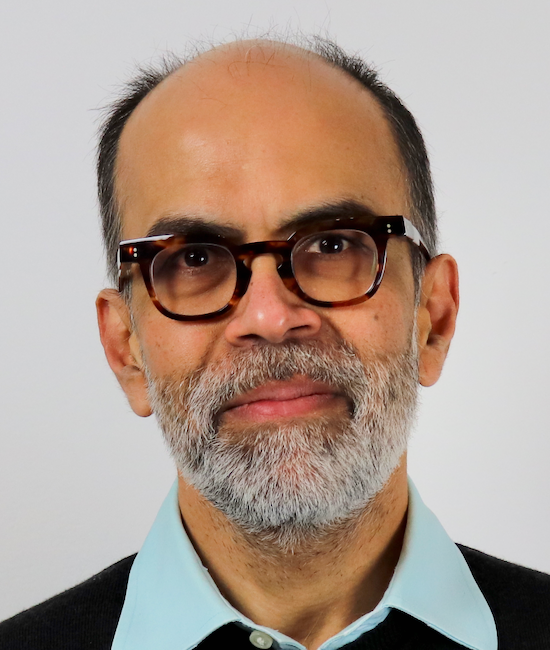
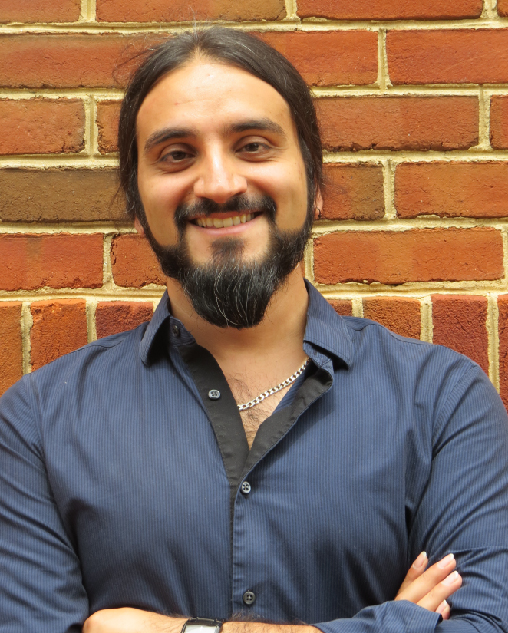
Hasan Sözer is a Professor at the Department of Computer Science , Ozyegin University , where he has worked since 2011. His research focuses on software engineering , particularly in software architecture recovery , fault tolerance , and distributed systems . Education: B.Sc. in Computer Engineering , Bilkent University (2002) M.Sc. in Computer Engineering , Bilkent University (2004) Ph.D. in Computer Science , University of Twente (2009) Research Interests include software architecture design , test automation , and self-adaptive systems . His work often combines genetic algorithms and heuristics for architecture recovery, with applications in blockchain security and embedded systems . Scientific Projects funded by the Scientific and Technological Research Council of Turkey include topics like automated web application testing , blockchain-based security solutions , and serverless function deployment . He collaborates with industry partners such as Turkcell Technology , Vestel , and Fibabanka . Students under his supervision include Hüseyin Yapıcı , who defended a thesis on evolutionary coupling metrics . He leads the Ozyegin University Software Research Lab (SRL) , which focuses on modular architecture recovery and test model refinement .
Liyi Gu is an Assistant Professor in the Department of Information System and Management Engineering at the School of Business, Southern University of Science and Technology (SUSTech). His research bridges operations management and computational methodologies. Education: M.Phil. in Computer Science and Engineering from Hong Kong University of Science and Technology (HKUST) in 2014; Ph.D. in Operations Management and Management Science from University of Maryland in 2019. Gu’s research focuses on operations management , empirical analysis , and stochastic optimization , with an emphasis on simulation and socially responsible operations. His work applies quantitative models to real-world problems, such as humanitarian logistics and competitive online gaming dynamics. The article he co-authored in 2014 explores vulnerabilities in TCP traffic within wireless LANs, combining network security and protocol analysis. This aligns with broader themes of cybersecurity and traffic optimization, though no recent publications are yet detailed in the dataset.
Professor Hisao Ishibuchi is Chair Professor of Computer Science and Engineering at Southern University of Science and Technology (SUSTech) in Shenzhen, China, a role he has held since April 2017. Previously, he spent nearly three decades at Osaka Prefecture University, progressing from Research Associate (1987-1993) to Assistant Professor (1993), Associate Professor (1994-1999), and full Professor (1999-2017). He is an IEEE Fellow , served as Vice-President of the IEEE Computational Intelligence Society (2010-2013) , and is currently President of the Japan Society for Evolutionary Computation (2016-2018) . He is Editor-in-Chief of IEEE Computational Intelligence Magazine (2014-2019) and the Journal of the Japan EC Society (2014-2018). Education: Ph.D. in Engineering, Osaka Prefecture University, 1992 M.S. in Engineering, Kyoto University, 1987 B.S. in Engineering, Kyoto University, 1985 Research Focus: Professor Ishibuchi is internationally recognised as a pioneer of computational intelligence , with seminal contributions to evolutionary multi-objective optimisation , evolutionary machine learning , fuzzy systems , neural networks , and hybrid intelligent systems . He introduced the first multi-objective memetic algorithm and early methods for multi-objective fuzzy rule-based classifier design that balance accuracy and interpretability. Publications & Impact: With over 100 journal papers in top-tier venues such as IEEE Transactions on Evolutionary Computation and nearly 500 conference papers, his work has attracted more than 24 000 Google-Scholar citations and an h-index of 68. His recent articles concentrate on many-objective optimisation, fuzzy machine learning, and transfer learning techniques. Honours & Awards: IEEE Computational Intelligence Society Fuzzy Systems Pioneer Award 2019 IEEE Fellow 2014 JSPS Prize 2007 (Japan’s most prestigious mid-career award) Multiple Best Paper Awards from GECCO, FUZZ-IEEE, SCIS & ISIS, WAC, ACIIDS, HIS-NCEI, and others Teaching & Mentoring: At SUSTech he teaches Advanced Algorithms and Advanced Optimization Algorithms , covering greedy algorithms, hyper-heuristics, memetic algorithms, multi-objective optimisation, and performance assessment. His research group actively recruits post-doctoral fellows and research assistants in evolutionary computation, fuzzy systems, and neural networks. Labs & Teams: He leads the Computational Intelligence Research Group at SUSTech, maintaining active collaboration networks across Asia, Europe, and North America, and supervising several post-doctoral researchers and graduate students working on next-generation intelligent systems.
Prof. Tal Raviv is an Associate Professor in the Department of Industrial Engineering at the Iby and Aladar Fleischman Faculty of Engineering, Tel Aviv University. He serves as head of the Shlomo Shmeltzer Institute for Smart Transportation and co-heads the Transportation and Logistics Lab. His educational background includes: BA in Economics from Tel Aviv University (1993) MBA from Recanati School of Business, Tel Aviv University (1997) PhD in Operations Research from Technion (2003) Postdoctoral fellowship at Sauder School of Business, University of British Columbia (2004-2006) Prof. Raviv's research focuses on operations research with emphasis on transportation and logistics, particularly smart transportation and sustainable logistics. His work develops optimization models for bike-sharing systems, vehicle routing, and urban mobility to enhance efficiency and user satisfaction while addressing sustainability challenges. Recent publications reveal a strong trend in shared mobility systems optimization, including inventory control and repositioning strategies for bike-sharing networks, analysis of user dissatisfaction due to unusable vehicles, and flexible delivery solutions using parcel lockers. His research bridges theoretical operations research with practical industry applications in transportation networks. Prof. Raviv has advised startup companies, applying his expertise to real-world business challenges. While specific grant details are not provided, his work demonstrates significant industry relevance through practical implementations. He leads the Transportation and Logistics Lab and the Shlomo Shmeltzer Institute for Smart Transportation, where his team develops innovative solutions for modern transportation challenges including data-driven routing, sustainable logistics, and smart infrastructure optimization.
Anupam Gupta is a Silver Professor at the Department of Computer Science, Courant Institute of Mathematical Sciences, New York University. Previously, he was affiliated with Carnegie Mellon University. His academic journey includes a Ph.D. from the University of California, Berkeley (2000) and a B.Tech. from the Indian Institute of Technology, Kanpur (1996). Education : Ph.D., University of California, Berkeley (2000) B.Tech., Indian Institute of Technology, Kanpur (1996) Research Interests : Anupam's research lies at the intersection of theoretical computer science and algorithm design. He focuses on approximation algorithms for stochastic and online environments, metric embeddings, and algorithmic problems in network design, clustering, and optimization. His work bridges theoretical insights with practical applications in uncertain and dynamic settings. Publications & Trends : His recent publications highlight advancements in online algorithms with adversarial corruptions, stochastic optimization, and approximation techniques for problems like k-server, set cover, and graph searching. Key trends include leveraging predictions, balancing adaptivity and robustness, and exploring the interplay between machine learning and classical algorithm design. Scientific Awards : ACM Fellow (2021) Alfred P. Sloan Research Fellowship NSF CAREER Award Herb Simon Award for Teaching Excellence (Carnegie Mellon University) Advising & Grants : He has mentored numerous Ph.D. students and postdoctoral fellows. His research is supported by grants from the National Science Foundation (NSF), including a CAREER Award, and collaborative funding for algorithmic initiatives like the Simons Institute program and the Joint Indo-US Networked Center for Algorithms under Uncertainty.
Prof. Niv Buchbinder is a faculty member in the Department of Statistics and Operations Research at the School of Mathematical Sciences, Tel Aviv University. His research centers on algorithmic solutions for combinatorial optimization in offline and online contexts, with significant contributions to primal-dual methodologies and algorithmic game theory. His academic background includes a Ph.D. in Computer Science from the Technion (2008) under Prof. Seffi Naor and an M.Sc. in Computer Science from the Technion (2003) under Prof. Erez Petrank. Key research areas encompass Combinatorial Optimization, Online Algorithms, Algorithmic Game Theory, Primal-Dual Methods, and Submodular Optimization, focusing on competitive analysis for problems like set cover, ad-auctions, and caching. Recent publications (2012-2015) reveal a concentrated effort in submodular optimization and online decision-making, with applications in advertising, resource allocation, and machine learning. These works consistently employ primal-dual frameworks to achieve strong competitive ratios in adversarial settings. Scientific recognition includes: Best Paper Award at ESA 2007 for “Online Primal-Dual Algorithms for Maximizing Ad-Auctions Revenue” Best Paper Award at FOCS 2011 for “A Polylogarithmic Competitive Algorithm for the k-Server Problem” No information is available regarding student advising or research grants. Similarly, details about laboratory facilities, research teams, or future projects are not provided in the source materials.
Cédric HERZET is a Permanent Member of CREST at INRIA Rennes, focusing on statistical learning theory, optimization, and inverse problems. His work bridges theoretical analysis with practical algorithm development. Primary affiliation: INRIA Rennes (French National Institute for Research in Digital Science) Research Interests: Statistical Learning Theory, Optimization algorithms, Operational Research, Inverse Problems. His work particularly addresses sparse approximation, compressed sensing, and iterative thresholding methods. Key Contributions: Development of Bayesian pursuit algorithms, geometric analysis of subspace clustering with outliers, and analysis of state evolution in dense graph message passing. His theoretical work has direct applications in signal/image processing and machine learning. Software: Created MATLAB implementations of sparse approximation algorithms and Bernoulli-Gaussian Lab toolbox for Bayesian pursuit simulation.
Kristóf Bérczi is a researcher at the Department of Operations Research, Eötvös Loránd University, Hungary. His work intersects computer science, mathematics, and operations research, focusing on theoretical and applied optimization problems. MSc and PhD in Operations Research, ELTE Postdoc at Hungarian Academy of Sciences Research Interests: Approximation algorithms Combinatorial optimization Matroid theory Submodular functions Algorithmic game theory Graph theory Recent Publication Trends: His 2024-2025 work explores matroid-constrained partitioning, inverse optimization algorithms, rainbow subgraph problems, and envy-free pricing models, often combining matroid theory with practical algorithm design. Scientific Contributions: Active in program committees (APPROX 2019, IPCO 2024, WALCOM 2025) Organized workshops on matroid optimization and matching theory Editorial board member of SIAM Journal on Discrete Mathematics Mentorship: Supervises PhD students Áron Jánosik, András Imolay, and others, with graduates now in postdoc/lecturer positions at institutions like CMM Chile and LSE UK.
Behtash Babadi is an Associate Professor in the Department of Electrical & Computer Engineering and a faculty member at the Institute for Systems Research and the Brain and Behavior Institute at the University of Maryland, College Park. He also holds affiliate appointments in the Program in Neuroscience & Cognitive Science and the Applied Mathematics & Statistics program. Education: Ph.D. in Engineering Sciences, Harvard University (2011) M.Sc. in Engineering Sciences, Harvard University (2008) B.Sc. in Electrical Engineering, Sharif University of Technology (2006) Research Interests: Dr. Babadi’s work focuses on statistical and adaptive signal processing frameworks for understanding neural systems. Key areas include: Neural signal processing and systems neuroscience Granger causality and functional connectivity analysis Dynamic modeling of neuronal assemblies Applications to auditory processing and cognitive recovery Scientific Contributions: His recent publications address cortical network dynamics, MEG source analysis, and robust causal inference. Notable methods include Network Localized Granger Causality (NLGC) for direct connectivity estimation and multitaper spectral analysis for neuronal spiking data. Awards: NSF CAREER Award (2016) E. Robert Kent Teaching Award (2019) GSAS Merit Fellowship (Harvard, 2010) Collaborations: Dr. Babadi collaborates with institutions like MIT, Harvard, and Massachusetts General Hospital, and participates in interdisciplinary initiatives such as the Brain and Behavior Initiative (BBI) and NIH BRAIN grants.
Professor Piotr Krysta is a faculty member in the Department of Computer Science, affiliated with the research groups on Algorithms, Complexity Theory and Optimisation, and Economics and Computation. His work spans theoretical and applied domains in algorithmic design and economic systems. University of Liverpool (implied by context, though not explicitly stated) His research interests include: Approximation Algorithms Combinatorial Optimization Algorithmic Game Theory Computational Complexity Optimization in Network and Economic Systems His recent publications focus on blockchain mechanisms, combinatorial constraints in delegation, and optimization techniques in graph theory. Funded by UK and German research councils, his work bridges computational hardness with economic applications. Scientific awards include: Best paper award for Track C of 39th ICALP (2012) Emmy Noether Fellow (DFG, 2004–2008) He has served on program committees for major conferences, collaborated internationally, and contributed to journals like Electronic Commerce Research and Applications . His teaching involves supervising theses on algorithmic challenges and mechanism design.
Mehdi Neshat is a Visiting Scholar at the Data Science Institute within the Faculty of Engineering and Information Technology at the University of Technology Sydney (UTS). He holds a PhD in Engineering from the University of Adelaide (2016-2020) and has extensive experience as a research data scientist specializing in computational optimization methods applied to complex engineering and healthcare problems. His educational background includes: PhD in Engineering, University of Adelaide (2016-2020) Neshat's research focuses on developing and applying advanced computational methods to solve real-world challenges. He specializes in evolutionary algorithms, swarm intelligence, and machine learning techniques for optimizing renewable energy systems, particularly wave and wind energy converters. His work extends to healthcare applications including genomic analysis and medical diagnostics, as well as structural engineering optimization and smart building energy management. His interdisciplinary approach bridges theoretical algorithm development with practical implementation across multiple domains, demonstrating exceptional versatility in computational problem-solving. Analysis of his recent publications reveals a strong trend toward sophisticated ensemble methods and hybrid optimization approaches that combine multiple algorithms to overcome limitations of single-method approaches. His research shows increasing sophistication in handling multi-objective optimization problems, particularly in renewable energy systems where trade-offs between power output, system stability, and cost must be balanced. The geographical focus of his energy research centers on Australian coastal regions, with practical applications for wave and wind farm deployment. Neshat has received significant recognition for his research contributions: Back-to-back Best Paper Prizes at the GECCO conference (2019 and 2020), a CORE A-ranked international optimization and machine learning conference His collaborative research spans multiple institutions and disciplines. Previously, he served as a Postdoctoral Research Associate with the Genomic analysis team at the Australian Centre for Precision Health, Cancer Research Institute, University of South Australia, and as a Senior Research Fellow at the Center for Artificial Intelligence Research and Optimization, Torrens University Australia. His work demonstrates consistent engagement with multidisciplinary teams across engineering, computer science, and healthcare domains, with a strong emphasis on practical implementation of theoretical methods. At UTS, Neshat contributes to the Data Science Institute's research agenda, focusing on applying advanced computational methods to complex real-world problems where traditional analytical approaches fall short. His current work continues to expand the boundaries of optimization techniques for renewable energy systems while exploring new applications in healthcare analytics and structural engineering.