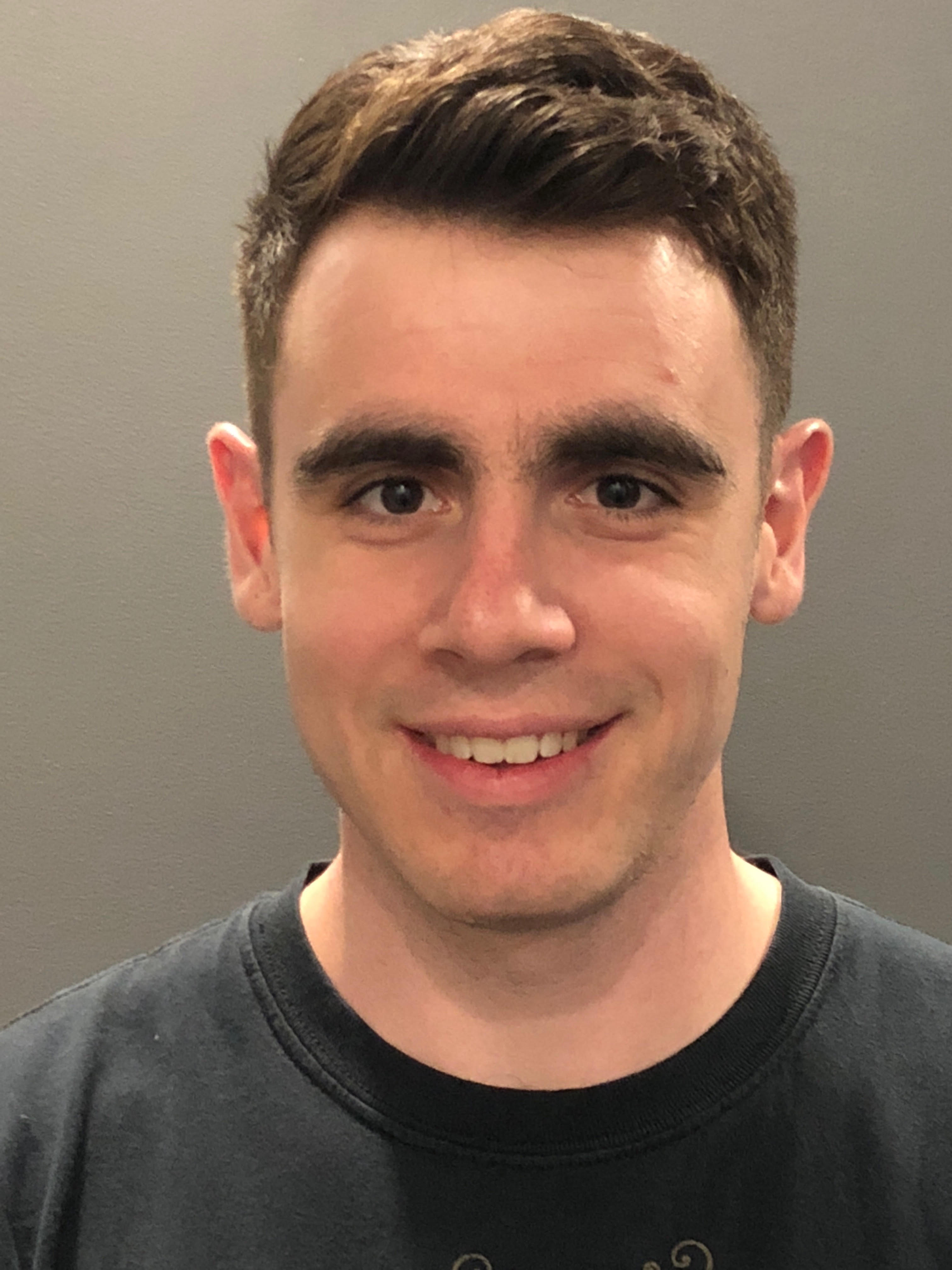
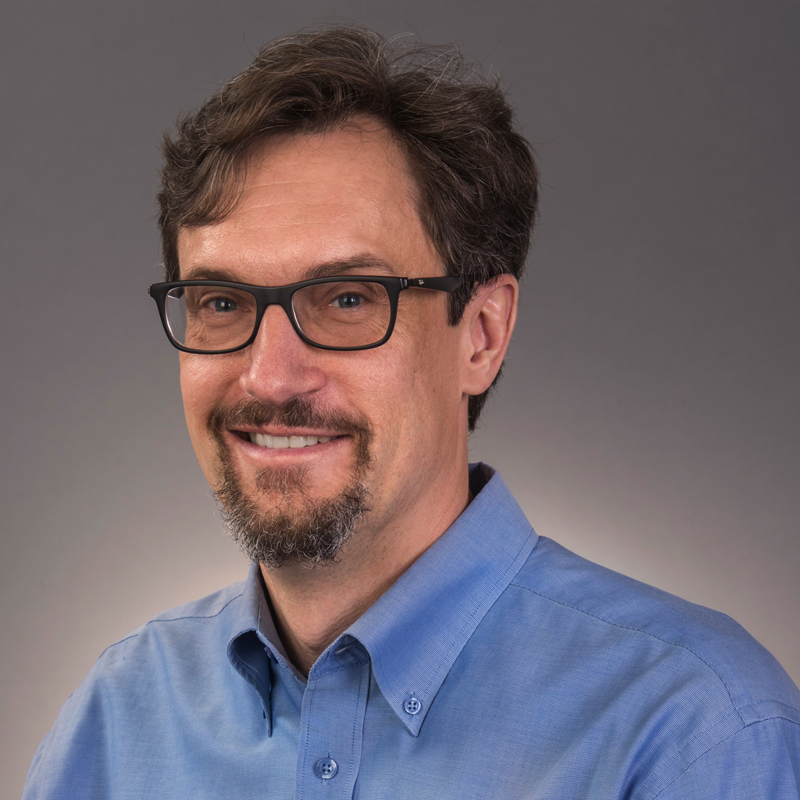
Koustubh Phalak is a researcher focused on quantum computing and machine learning applications. His work emphasizes optimizing quantum circuits, developing quantum machine learning architectures, and exploring educational frameworks for quantum computing. Collaborating closely with Swaroop Ghosh and other experts, his research spans fields such as quantum error correction, drug molecule prediction using neural networks, and hardware selection for quantum inferencing systems. Key contributions include advancements in parametric quantum circuit optimization and QRAM designs. Despite no formal institutional affiliation listed here, his publications reflect active engagement with academic and industrial challenges in quantum technologies.

Prof. Dr. Muhammet Nuri SEYMAN is a Professor of Electronics and Telecommunications at the Department of Electrical-Electronics Engineering, Faculty of Engineering and Natural Sciences, Bandırma Onyedi Eylül University. He has held academic positions since 2005, including Associate Professor at Kırıkkale University (2012–2019) and Professor at Bandırma Onyedi Eylül University (2019–present). He currently serves as the Head of the Department. His research focuses on communication systems, artificial intelligence, signal processing, and optimization algorithms. Key areas include MIMO systems, OFDM/MC-CDMA, cognitive radio, and emotion recognition using EEG signals. He has authored over 36 articles and supervised multiple theses. His work emphasizes adaptive neuro-fuzzy systems, evolutionary algorithms, and neural networks applied to communication challenges. Prof. SEYMAN has conducted projects on SDR-based wireless data transfer and AI techniques in MIMO-NOMA systems. He has served as a referee for journals like EURASIP Journal on Wireless Communications and NEURAL COMPUTING & APPLICATIONS. His teaching spans courses on embedded systems, digital communication, and microcontrollers.
Liang-Liang Xie is a Professor in the Department of Electrical and Computer Engineering at the University of Waterloo. His research focuses on network information theory, wireless relay networks, adaptive control systems, and systems biology. He holds a B.S. in Mathematics from Shandong University (1995) and a Ph.D. in Control Theory from the Chinese Academy of Sciences (1999). He completed postdoctoral research at Linköping University (Sweden) and the University of Illinois at Urbana-Champaign (USA). His work spans theoretical advancements in wireless communication protocols, including relay frameworks, compression techniques, and network coding. Recent articles emphasize omnidirectional relaying, throughput optimization in ad hoc networks, and information-theoretic scaling laws. He has advised over 25 graduate students, many co-supervised with senior faculty members. Current students include Shuyue Wang and Yuxi Zhang. Teaching responsibilities include courses in signals and systems, probability theory, and network information theory. His research has contributed to foundational understanding of transport capacity, channel coding, and multi-user wireless systems.
Professor Jean-Luc Guermond holds the Mobil Chair in Computational Science at Texas A&M University. His research focuses on numerical methods for partial differential equations (PDEs), computational fluid dynamics, and finite element approximation. He has made significant contributions to invariant-domain preserving schemes, high-order time integration methods, and the development of robust numerical techniques for hyperbolic systems and conservation laws. His work bridges theoretical advancements with practical applications in fluid dynamics, electromagnetics, and magnetohydrodynamics. Key research areas include the analysis of finite element methods, discontinuous Galerkin discretizations, and the design of algorithms that preserve physical invariants such as mass, momentum, and energy. Guermond’s publications often address challenges in simulating complex phenomena like vortex reconnection, turbulent swirling flows, and dynamo mechanisms in geophysical contexts. He has also contributed to the development of preconditioning strategies for Navier-Stokes equations and high-order Runge-Kutta schemes. His work emphasizes both mathematical rigor and computational efficiency, with applications ranging from engineering simulations to environmental modeling. Despite extensive contributions to the field, no specific awards are mentioned in the provided texts. Collaborative efforts with experimental teams highlight his interdisciplinary approach to solving real-world fluid dynamics problems.
Jonathan Siegel is Assistant Professor of Mathematics at Texas A&M University. His research bridges approximation theory, neural network mathematics, statistics, and numerical methods for PDEs, with applications to materials science. Funded by NSF and ONR grants, his work develops theoretical foundations for deep learning algorithms. Research areas include: Mathematical theory of neural networks High-order approximation rates for shallow networks Sparse neural network training Optimization on manifolds Structure-informed materials prediction Recent publications analyze spectral bias of neural networks, approximation rates for ReLU networks, and greedy training algorithms.
Hung Viet Chu is a Visiting Assistant Professor at Texas A&M University (TAMU), specializing in Mathematics with a focus on approximation theory, Banach space theory, combinatorics, and number theory. He earned his PhD from the University of Illinois Urbana-Champaign (UIUC) in 2023 and holds a double major in Mathematics and Economics from Washington and Lee University (W&L), 2019. Education: PhD in Mathematics, UIUC (2023) Bachelor of Arts, Mathematics & Economics, W&L (2019) Research Interests: Chu’s work includes nonlinear approximation in Banach spaces, combinatorial structures in number theory (e.g., divisor functions, MSTD sets), and interdisciplinary applications in economics and behavioral science. Teaching: At TAMU, he teaches Calculus II and Complex Variables. At UIUC, he was a Teaching Assistant for Calculus and Matrix Theory, earning top student evaluations. His average teaching score at UIUC was 4.4/5. Awards: Three-time UIUC “List of Excellent Teachers” Advising: Mentors undergraduate researchers, including students like Kevin Huu Le* and Uihyeon Lee*. Collaborates with leading mathematicians like Kevin Beanland and Thomas Schlumprecht. Labs/Teams: Engages in collaborative research across functional analysis and combinatorics, with over 30 peer-reviewed articles.
Tom Bohman is a Professor of Mathematical Sciences at Carnegie Mellon University, affiliated with the Mellon College of Science. His research focuses on extremal and probabilistic combinatorics, exploring discrete structures inspired by mathematics, information theory, statistical physics, and computer science. He holds a Ph.D. from Rutgers University and has held postdoctoral positions at MIT and the Mathematical Sciences Research Institute (MSRI). Bohman's work includes studies on random graph processes, such as the triangle-free process and Hamilton cycles in random graphs, as well as hypergraph coloring and Ramsey numbers. His publications span over three decades, addressing topics like coprime matchings, lonely runner conjectures, and dynamic concentration phenomena in combinatorial systems. He teaches advanced courses in combinatorics and discrete mathematics, including Graph Theory and Random Structures & Algorithms. His research has contributed to understanding phase transitions in random processes and the interplay between combinatorial structures and probabilistic methods. While no awards are explicitly listed, his extensive publication record and editorial roles (e.g., with Random Structures & Algorithms ) highlight his academic impact. Bohman's work often bridges theoretical foundations with algorithmic applications, influencing both pure and applied combinatorics.
Yannic Maus is a Professor at Graz University of Technology, affiliated with the Institute of Algorithms and Theory and the Institute of Software Engineering and Artificial Intelligence. His research focuses on distributed computing, graph algorithms, and theoretical computer science. He holds a PhD and multiple bachelor’s and master’s degrees in Computer Science. His work emphasizes distributed graph coloring, locality in algorithms, and massively parallel computing. He has contributed to foundational results in distributed algorithms, including optimal edge coloring and coloring hyperbolic random graphs. His research bridges theoretical insights with practical distributed systems challenges. Education: PhD in Natural Sciences (Dr.rer.nat.), B.Sc. and M.Sc. in Computer Science Key research interests include distributed algorithms for graphs, Lovász Local Lemma applications, and algorithmic efficiency in dynamic networks. His publications explore topics like ruling sets in trees, exponential speedups in MPC models, and adaptive coloring techniques for sparse graphs. He has also investigated the algorithmic small-world phenomenon and connectivity in forests using deterministic approaches. Yannic Maus’s work often addresses theoretical lower bounds and upper limits in distributed computing, with applications to real-world networked systems. His contributions span conferences like DISC and SoCG, focusing on both foundational problems and their algorithmic solutions.
Dr Banafsheh Khosravi is a Senior Lecturer in Operational Research at the University of Portsmouth, affiliated with the School of Mathematics and Physics. She is a member of the Logistics, Operational Research and Analytics Research Group (LORA) and the Centre for Operational Research and Logistics (CORL). Her research focuses on mathematical modelling, combinatorial optimization, and applications in transportation and healthcare. She holds a PhD in Management Science from the University of Southampton, with earlier degrees in Industrial Engineering. Before joining Portsmouth, she worked at the University of Southampton's CORMSIS Centre and the University of Westminster's Health and Social Care Modelling Group. Dr Khosravi teaches Operational Research, Modern Computational Methods, and Supply Chain Management courses. She has supervised numerous academic projects and led industry-funded research with EPSRC, ESA, NHS, RSSB, and Arriva. Her work addresses challenges like railway scheduling, routing optimization, and healthcare capacity planning. She is a Fellow of the Higher Education Academy and contributes to professional organizations including The OR Society and IAROR. Her research trends span transportation logistics (railway rescheduling, electric vehicle routing) and healthcare systems (NHS patient activity forecasting). Recent work emphasizes risk-based surveillance and digital performance analysis in undersea infrastructure and insurance sectors. Collaborations with industry partners ensure practical impact across sectors like rail networks and space operations. Awards: Fellow of the Higher Education Academy (FHEA) Labs/Teams: LORA Group, CORL Centre, Intelligent Transport Research Cluster Grants: Funded by EPSRC, ESA, NHS, RSSB, Arriva
Dr.-Ing. Steffen Steiner is a Doctoral Researcher at the Institute of Communications Engineering , University of Rostock, Germany, since 2018. His work focuses on communications engineering and sensor network optimization. Education : B.Sc. in Information Technology / Technical Computer Science from University of Rostock (2012-2016) M.Sc. in Information Technology / Technical Computer Science from University of Rostock (2016-2017) Research Interests : Sensor Networks Distributed Compression Information Bottleneck Method Quantization Optimization Data Transmission Efficiency Network Protocols Publication Trends : His recent work (2018-2023) centers on sensor network compression, information bottleneck applications, and algorithm optimization for distributed systems. Key themes include wireless communication, data transmission efficiency, and signal processing methodologies.
Ola Svensson is an Associate Professor at the School of Computer and Communication Sciences, EPFL. His research focuses on approximation algorithms, combinatorial optimization, computational complexity, and scheduling. He has been supported by grants including the ERC Starting Grant "OptApprox" (2014-2019), SNF grants, and the ERC Consolidator Grant "POTCO" (2023-). He teaches courses such as Advanced Algorithms and Approximation Algorithms and Hardness of Approximation. Education: PhD from IDSIA - Universita della Svizzera italiana (2009) and Master's from Uppsala University (2005). Research Interests: Design and analysis of approximation algorithms for NP-hard problems, scheduling, and computational complexity. He explores limitations of approximation techniques through hardness results and contributes to theoretical computer science. Publications span clustering, scheduling, and graph problems like the Traveling Salesman Problem. Recent work includes learning-augmented algorithms and robust optimization. Awards: I&C teaching award and best paper awards at FOCS (2017) and STOC (2018). Over a dozen PhD students advised, many entering postdocs or industry roles. Labs/Teams: Part of the theory group at EPFL, collaborating on academic projects and course development.
Oscar Defrain is an Associate Professor at Aix-Marseille University, affiliated with the Laboratoire d’Informatique et Systèmes (LIS UMR CNRS 7020) and the ACRO team. He holds a Ph.D. from Université Clermont Auvergne (2020) and completed a postdoc at the University of Warsaw. His research focuses on algorithms and combinatorics in graphs, hypergraphs, and lattice structures, with expertise in minimal dominating sets, maximal independent sets, and Boolean function dualization. Education : Ph.D. in Computer Science, Université Clermont Auvergne (2020) Research Interests : Defrain specializes in structural graph theory, hypergraph dualization, and algorithmic enumeration. His work spans combinatorial optimization, parameterized complexity, and lattice theory, with recent contributions to geometric graph certification, metric graph problems, and XOR-CNF signature enumeration. He coordinates the ANR JCJC PARADUAL project and participates in ERC Cutacombs and ANR DISTANCIA. Recent Publications (2024-2025) examine quasi-optimal bounds for induced paths, polynomial-delay isomorphism generation, hypergraph dualization with FPT-delay, and geometric graph certification. These works intersect graph algorithms, combinatorics, and theoretical computer science. Teaching : Defrain teaches graph theory, algorithmic enumeration, and programming (Java/Python) at Aix-Marseille University (M1, L1, L2) and Université Clermont Auvergne (M1, L3). He uses platforms like Moodle and AMeTICE for course materials.
Bart M.L. Smeulders is an Assistant Professor at Eindhoven University of Technology within the Mathematics and Computer Science school, specializing in Combinatorial Optimization . His research spans: Healthcare policy modeling for organ allocation systems Algorithmic game theory in transplantation markets Robust optimization techniques for medical logistics Key research outputs include: 2025: Policy evaluation simulator for Eurotransplant 2024: Kidney exchange complexity and optimization approaches 2025: Gender disparity analysis in liver allocation His work intersects computer science, operations research, and medical decision-making, contributing to UN Sustainable Development Goal 3 (Good Health and Well-being).
Dr. Kateryna Czerniachowska is a Lecturer at the Department of Process Management, Wrocław University of Economics. She specializes in logistics optimization, heuristic algorithms, and supply chain management. Her work focuses on solving complex problems such as order-picking efficiency, shelf space allocation, and inventory distribution in retail and warehouse systems. She is fluent in English, Polish, Russian, and Ukrainian. Her research emphasizes mathematical modeling for retail networks and warehouse layouts, incorporating innovative heuristics like Flower Cutting and Mushroom Picking algorithms. Recent studies address sequence-dependent constraints in conveyor systems and multi-axial product categorization. She actively collaborates with industry to apply these methods in practical settings. Her publications span optimization frameworks for space allocation, scheduling TV advertisements via genetic algorithms, and predicting public transportation delays using machine learning. She maintains active profiles on ResearchGate and ORCID. Consultations are available via Microsoft Teams upon prior arrangement via email. She contributes to pedagogical activities focused on operational research and logistics systems design.
Başak Esin KÖKTÜRK-GÜZEL is an Assistant Professor at İzmir Democracy University's Electrical and Electronics Engineering Department and Co-Founder of Zoi Data. Her research focuses on Image Processing, Machine Learning applications in Marketing AI, and interdisciplinary projects in biotechnology and healthcare. She actively collaborates on initiatives like the ERA-NET NEURON project (Brain-Body interactions) and the INSECTAI Annual Meeting (insect conservation). Recently published work combines statistical methods and machine learning to optimize xylanase production in Fermentation (MDPI). Education: Unspecified in text. Affiliations: İzmir Democracy University, Zoi Data. Research Interests include Statistical Learning Theory, Signal Processing, and real-world applications like Sales Prediction and Customer Segmentation. She emphasizes translating machine learning into practical tools for clinicians and researchers through Zoi Data. Key Projects: Participated in the 2025 ERA-NET NEURON kick-off meeting and presented at the Workshop on Advancing Medical Imaging. Active in COST Action CA22129 for insect monitoring. Grants/Awards: None explicitly mentioned. Collaborative projects highlighted instead. Zoi Data focuses on automated bioanalytical imaging solutions, aligning with her mission to drive healthcare innovation through AI-driven tools.