David Friedman is a Researcher affiliated with the Faculty of Classics at the University of Cambridge and serves as Director of Studies in Classics at St Edmund's College. His research focuses on Judaism in the Greco-Roman world, particularly through the lens of ancient historians like Josephus. Fields of Interest: Judaism in the Greco-Roman world, Ancient History, Josephus Studies, Roman Imperialism, Religious Studies, Historiography, Classical Literature, and Cultural Exchange. Email: daf39@cam.ac.uk His recent work includes the 2024 edited volume Looking in, looking out: Jews and non-Jews in mutual contemplation , studies on Dionysius of Halicarnassus and Augustan Rome (2020), and analyses of Josephus's accounts of Jewish origins in Egypt (2017, 2014). No scientific awards or students are mentioned in the provided texts.
Matthew V. Novenson is a Professor of Biblical Criticism and Biblical Antiquities at the University of Edinburgh, where he also serves as Director of the Centre for the Study of Christian Origins. He holds honorary fellow status and has held visiting roles at Dartmouth College, Duke University, and Durham University. Novenson specializes in ancient Mediterranean religions, focusing on early Judaism and Christianity within Greco-Roman contexts. His research emphasizes Pauline epistles, early Christology, and the socio-political dimensions of messianic discourse. Qualifications include a BA, MDiv, ThM, and PhD. Teaching responsibilities span undergraduate courses on biblical languages, Second Temple Judaism, and New Testament themes, as well as postgraduate seminars on biblical exegesis and ancient religious texts. He actively supervises PhD students exploring topics like messianism in Pauline letters, ancient Christology, and eschatological frameworks. Novenson’s scholarship is reflected in major publications such as Christ among the Messiahs (2012), The Grammar of Messianism (2017), and Paul, Then and Now (2022), alongside edited volumes like The Oxford Handbook of Pauline Studies . His work interrogates the linguistic and ideological nuances of religious terminology in antiquity, particularly around concepts of messiahship, monotheism, and divine agency. Service roles include Associate Editor of New Testament Studies and co-editor of Edinburgh Studies in Religion in Antiquity . Past and current PhD advisees (listed above) reflect his commitment to mentoring rigorous research in early Christian origins and biblical interpretation.
Kimberly Stratton is an Associate Professor in the Department of Religion at Carleton University within the College of the Humanities. She holds a Ph.D. in the History of Religions in Late Antiquity from Columbia University (2002), following degrees from Barnard College and Harvard University. Her research focuses on religion, violence, and social identity in antiquity, ancient magic, and gender studies. She has authored Naming the Witch: Magic, Ideology, and Stereotype in the Ancient World (2007), which won the F. W. Beare Book Award, and co-edited volumes such as Daughters of Hecate: Women and Magic in Antiquity (2014). Her work examines intersections between religion, power, and identity in Greco-Roman, early Christian, and Rabbinic Jewish contexts. Recent projects include exploring violence and Exodus narratives in early religious identity formation, as seen in her 2017 article in History of Religions . She has presented widely on topics like Roman imperialism and apocalyptic literature at venues such as the Society of Biblical Literature. Her research highlights how ancient societies used religious discourse to construct social boundaries and authority. Awards include recognition from students and scholarly societies for her impactful contributions. Education: B.A. Barnard College (1991), M.T.S. Harvard (1995), Ph.D. Columbia (2002) Affiliations: Canadian Society of Biblical Studies, American Academy of Religion Office: 2A47 Paterson Hall | Email: kim.stratton@carleton.ca
Clinton E. Arnold is a Research Professor of New Testament and former Dean of Talbot School of Theology at Biola University. He specializes in New Testament studies, particularly the letters of Paul and the Acts of the Apostles, with a focus on historical and cultural contexts. Arnold is renowned for editing the Zondervan Illustrated Bible Backgrounds Commentary and authoring works like Powers of Darkness and The Colossian Syncretism . He holds a Ph.D. from the University of Aberdeen and has published extensively in journals such as New Testament Studies and Journal for the Study of the New Testament . Education: Ph.D., University of Aberdeen; M.Div., Talbot Theological Seminary; B.A., Biola University. His research interests include early Christian practices, spiritual warfare, and biblical exegesis. He served as President of the Evangelical Theological Society (2011) and contributes to translation oversight for the ESV. Arnold’s work bridges academic rigor and pastoral application, emphasizing the relevance of biblical scholarship for contemporary faith communities. He has led Talbot’s extension programs in Kyiv and New York and advocates for the inerrancy of Scripture. His writings often address theological challenges in modern contexts, such as mental health, biblical authority, and missional theology. Awards include leadership roles in major theological societies and recognition for editorial contributions to biblical resources. His legacy includes shaping evangelical scholarship through commentaries, teaching, and mentoring future theologians.
Dr. Harry O. Maier is Professor of New Testament and Early Christian Studies at Vancouver School of Theology since 1994, with ongoing fellowships at the Max Weber Center for Advanced Cultural and Social Studies at the University of Erfurt since 2017. His academic career spans over 25 years with significant contributions to understanding early Christianity within the context of the Roman Empire. His educational background includes a D. Phil from Oxford University (1987), Master of Divinity from Lutheran Theological Seminary (1989), and B.A. from Pacific Lutheran University (1981). Maier's research focuses on the intersection of New Testament studies, early Christianity, and spatial theory within the Roman Empire. His work examines how early Christian communities navigated urban spaces, constructed religious identity, and engaged with imperial ideologies. He has pioneered approaches that analyze biblical texts through spatial theory, examining how geography, urban structures, and neighborhood dynamics shaped early Christian thought and practice. His research particularly emphasizes the Book of Revelation, the Shepherd of Hermas, and Pauline literature, with attention to how these texts engaged with Roman imperial culture. His scholarly contributions include significant publications such as New Testament Christianity in the Roman World (Oxford University Press, 2018) and Picturing Paul in Empire (Bloomsbury, 2013), which won recognition for their innovative approaches to understanding early Christian texts within their socio-spatial contexts. Canadian Christian Writers Association Award for Best Book in Philosophy and Christian Leadership (2003) for Apocalypse Recalled: The Book of Revelation after Christendom Canadian Corportation of Religion Award for Best Dissertation in Religion (1990) for The Social Setting of the Ministry as Reflected in the Writings of the Shepherd of Hermas, Clement and Ignatius Maier has organized numerous academic conferences including "The Shepherd of Hermas and Religious Experience" (2018), "Religion of Quarters" (2018), and "Locating Martyrs and Space/Time" (2017). He serves on editorial boards for several prestigious publications including as associate editor for the Bryn Mawr Classical Review since 2016 and co-editor of the Christian Religion and Public Life book series since 2020. His external reviewing work includes major academic presses such as Oxford University Press and Cambridge University Press. As founder and co-organizer of The Greater Vancouver Biblical Colloquium since 2008, Maier has fostered interdisciplinary dialogue among scholars of biblical studies and related fields. His academic leadership extends to professional societies including the Society of Biblical Literature and the North American Patristics Society.
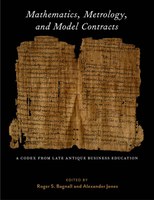
Alexander Jones is a Professor of the History of the Exact Sciences in Antiquity at New York University's Institute for the Study of the Ancient World (ISAW). He holds a Classics degree from the University of British Columbia and a PhD in the history of ancient mathematical sciences from Brown University. Previously, he served for sixteen years at the University of Toronto in the Classics Department and the Institute for the History and Philosophy of Science and Technology. His research focuses on the history and transmission of mathematical and astronomical knowledge across ancient cultures, with particular emphasis on Babylonian, Greek, and Roman contexts. Key areas include the Antikythera Mechanism, Ptolemaic astronomy, and the cultural exchanges between Mesopotamia and the Greco-Roman world. He has curated major exhibitions such as Before Pythagoras (2011) and Time and Cosmos in Greco-Roman Antiquity (2016-17). Education: B.A. Classics, University of British Columbia PhD History of Mathematical Sciences, Brown University His publications include groundbreaking editions of ancient scientific texts, such as Pappus of Alexandria's commentary on geometrical methods and fragments from the Oxyrhynchus papyri. His current research involves reconstructing ancient Babylonian chronology through the NEH-funded Shanati project. Awards: Guggenheim Fellowship Francis Bacon Award in the History of Science Membership in the Académie Internationale d'Histoire des Sciences As Principal Investigator of the Shanati project, he leads efforts to synchronize Babylonian calendars with the Julian calendar. His work bridges material culture and textual analysis, often involving interdisciplinary collaboration with archaeologists and historians of technology.
Rhenish Friedrich Wilhelm University of BonnGermany
Christian Weigel serves as a Researcher at the Department of Ancient History within the Institute for Historical Science at the University of Bonn, a position he has held continuously since October 2016. His academic career includes prior roles as a lecturer (2014-2016) and research associate in the DFG-Graduiertenkolleg 1878 on pre-modern economic spaces (2013-2016), demonstrating deep institutional integration at Bonn. His educational foundation includes: Magister degree (2012) in Ancient History, Political Science, and Public Law from the University of Bonn Advanced studies (2005-2012) in Ancient History, Political Science, and Public Law Foundational studies (1999-2005) in Medieval/Modern History, Political Science, and Law Weigel's research interrogates Greek family structures through ancient novels while examining economic and social frameworks of antiquity. His focus on demographic patterns, ancient international law, and literary sources reveals innovative methodological approaches to social history. Recent work analyzes how ancient novels function as socioeconomic mirrors, particularly regarding slavery, migration, and gender dynamics in Greco-Roman societies. His publication trajectory (2015-2019) demonstrates consistent exploration of antiquity's socioeconomic textures through diverse lenses—from piracy in ancient fiction to Cold War-era science fiction's classical reception. This body of work establishes connections between ancient economic mentalities and modern cultural productions while maintaining rigorous historical analysis of demographic patterns and legal frameworks. As an active conference participant, Weigel has presented at major venues including the German Historians' Congress and German Sociological Association meetings. His teaching portfolio reveals substantive engagement with students through specialized courses on Homer's society, Roman slavery, Greek federalism, and ancient demographics, often incorporating field components like Adriatic coast excursions.
Simon Swain is Professor of Classics and Greco-Arabic at the University of Warwick, concurrently serving as Vice-President (Engagement) at the university and Vice-President (Research and Higher Education Policy) at the British Academy. His leadership roles include former positions as Pro-Vice-Chancellor (International), Chair of the Faculty of Arts, and multiple terms as Head of the Department of Classics. His educational background includes: MA, Oxford (Pembroke College), 1980-1984 D.Phil., Oxford (Wolfson College), 1987 Swain's research centers on the reception of Greek thought in the Islamic Middle Ages and the social-cultural history of the Greek East during the Roman period. He investigates the transmission of ancient Greek science, medicine, and political thought into Islamic scholarship, employing interdisciplinary approaches that bridge Classics, History, and Islamic Studies. His work emphasizes textual transmission, cultural adaptation, and the socio-political contexts of knowledge transfer. Analysis of his publications reveals consistent engagement with Greco-Roman intellectual history and its Islamicate legacy. Key thematic trajectories include the evolution of medical knowledge from Galen to medieval Arabic texts, political theory in imperial contexts, and sociolinguistic dynamics of bilingualism. His editorial projects demonstrate increasing focus on cross-cultural transmission, particularly through critical editions of foundational texts like Ibn Abī Uṣaybiʿah's medical biographies. His honors include: Fellow of the British Academy (2015) Wellcome Trust Collaborative Investigator Award Swain supervises postgraduate research in Greek world studies, late antiquity, and Greco-Arabic scholarship. He has secured major funding from AHRC, Leverhulme, Wellcome, and EU bodies for collaborative projects examining ancient knowledge systems. Current initiatives like the "Streamlining Galen" project support early-career researchers while investigating how canonical medical texts were adapted for medieval Islamic pedagogy. He actively leads research collectives including the "Streamlining Galen" project team, which analyzes condensed medical texts that facilitated the teaching of Galenic medicine in medieval Islamic institutions. His collaborative approach extends to mentoring networks that connect Warwick with international scholars across Classics and Islamic Studies disciplines.
J. Albert Harrill is a Professor of History at The Ohio State University , where he has been affiliated with the Department of History since at least 2010. Holding a Ph.D. in New Testament and Early Christian Literature from the University of Chicago , Harrill specializes in the intersection of New Testament , early Christianity , and Roman social history , particularly focusing on ancient slaves and marginalized communities . Education: Ph.D., New Testament and Early Christian Literature, University of Chicago His research explores social and cultural dynamics in early Christian texts, with significant contributions to slavery studies through works like Slaves in the New Testament (2006) and The Manumission of Slaves in Early Christianity (1995). He also investigates ethnic fluidity in Ephesians, exegetical methodologies , and classical literary topoi in patristic writings. Recent Publications examine: Ephesians as a circular letter 1 Corinthians 7:21 and evolving scholarship on Pauline slavery Atheist catalogues in classical and Christian contexts Architectural ekphrasis in Roman culture Origen's exegetical techniques Scientific Awards: 2021 Sphinx and Mortar Board Outstanding Faculty 2019 Honors Faculty Service Award in Arts and Sciences 2017 Clio Award for Distinguished Teaching in History 2012 Distinguished Teaching Award in Religious Studies (Indiana University) With nearly 35 years of teaching experience , Harrill has received consistent recognition for courses on Paul's apostleship , historical Jesus , Greek/Roman slavery , and ancient Roman religion . He maintains active academic engagement through the Graduate Interdisciplinary Specialization in Religions of the Ancient Mediterranean World .
Yiqun Zhou serves as Associate Professor of East Asian Languages and Cultures and, by courtesy, of Classics at Stanford University. Holding dual appointments since 2013, Zhou is actively engaged in teaching and research within Stanford's Department of East Asian Languages and Cultures and the Department of Classics, with program affiliations at the Center for East Asian Studies. Research interests span Chinese and comparative women's history, early Chinese literature, Ming-Qing fiction, China-Greece comparative studies, and the reception of classical antiquity in modern China. Zhou's scholarly approach emphasizes cross-cultural analysis between ancient Chinese and Greek civilizations, particularly examining gender relations, literary traditions, and the modern Chinese reception of classical antiquity. Zhou's publications demonstrate consistent scholarly output with recent works appearing in 2024, focusing on imperial performance, gender dynamics, and intellectual history. The research trajectory reveals a sustained engagement with comparative methodologies, particularly examining intersections between Chinese and Greco-Roman civilizations across historical periods. Zhou actively mentors graduate students through multiple roles including Doctoral Dissertation Advisor for Xiaoyi Huang and Bingxiao Liu, Master's Program Advisor for Helen Bovi and Yuan Wei, and Doctoral Program advisor for ZiFan Yang. Teaching responsibilities include courses such as Beginning Classical Chinese, Heroes and Heroism (co-listed with Classics), Proseminar in East Asian Humanities, and The Use of Classical Antiquity in Modern China. Academic background includes a Ph.D. in Comparative Literature from the University of Chicago (2004). Zhou maintains an active research agenda with publications spanning journal articles and book chapters, primarily focusing on comparative approaches to Chinese literature and history with Greco-Roman antiquity.
Giulia Maltagliati serves as a College Associate Professor in Classics and Fellow at Downing College, University of Cambridge, where she also holds the position of Director of Studies for Prelims and Part IA in Classics. Additionally, she is an Honorary Research Fellow at the Centre for Oratory and Rhetoric, Royal Holloway, University of London. Her academic background includes an MA from the University of Pisa and a PhD from Royal Holloway, University of London. She is an Associate Fellow of the Higher Education Academy (AFHEA). Dr. Maltagliati specializes in Greek prose, with a particular focus on Attic oratory, rhetorical theory, and ancient medical texts. Her research interrogates the role of rhetoric at the junction between knowledge and ignorance, positioning rhetoric not as a mere accessory but as a fundamental medium for articulating knowledge and its limits. Current projects include her monograph The Rhetoric of Exemplarity in Attic Oratory: Time, Knowledge, and Persuasion and the co-edited volume Not Knowing in Antiquity: Discourses of Ignorance in the Greco-Roman World , which is the first study of its kind on ignorance in antiquity. Her recent scholarly output (2020-2023) demonstrates a consistent engagement with the interplay of rhetoric, knowledge, and historical examples in ancient texts. Articles span topics from transparency in medical and forensic texts to the emotional dimensions of historical exemplarity in deliberative oratory, reflecting a broad interdisciplinary approach that bridges Classics, Rhetoric, and the History of Science. She has been recognized with the George Grote Prize in Ancient History from the Institute of Classical Studies (London) for her doctoral research. In her teaching role, Dr. Maltagliati supervises undergraduate students in Greek and Latin language and literature, and delivers lectures on Greek literature (including Gorgias’ Encomium of Helen ) and history (such as "Constructing Sex and Gender") for the Cambridge Faculty of Classics. She also contributes as an invited lecturer to the Royal Holloway MRes programme in Ancient Rhetoric. As an Honorary Research Fellow at the Centre for Oratory and Rhetoric, Royal Holloway, she is actively involved in research networks focused on ancient rhetoric.
Dr. Mona Tokarek LaFosse serves as Assistant Professor of New Testament and Sacred Literature Studies (Teaching Stream) at the University of Toronto's Faculty of Divinity through a joint appointment at Emmanuel College and Victoria College. She teaches across undergraduate, basic-degree, and graduate programs at Victoria University, specializing in New Testament studies and early Christian history through interdisciplinary lenses. Her educational background includes a PhD from the University of Toronto's Department for the Study of Religion (2011), MA in Religion and Culture from Wilfrid Laurier University (2001), Honors BA in Anthropology from the University of Waterloo (1998), and Biblical Studies certificate from Columbia Bible College (1994). She previously taught at Martin Luther University College, Wilfrid Laurier University, Huron University College, and the University of Toronto. Dr. LaFosse approaches New Testament scholarship through cultural anthropology, storytelling theory, and age studies. Her research examines early Christian communities through the lens of age structure, intergenerational dynamics, and oral storytelling practices. She explores how life course stages shaped social relationships in the ancient Mediterranean, particularly focusing on 1 Timothy's treatment of age hierarchies. Her innovative teaching methodology emphasizes 'embodied story'—integrating performance and physical engagement with texts influenced by Indigenous storytelling traditions. Her recent publications reveal a strong focus on aging in early Christianity, with 2024 articles examining age demographics and comparative gerontology. She also maintains active scholarship in oral tradition studies, particularly regarding the Gospel of Mark and Shepherd of Hermas, while contributing to academic discourse through society leadership and book reviews. Dr. LaFosse holds significant leadership roles including current service on the Canadian Society for Patristic Studies Nominating Committee (2025–26) and co-chairing the Society of Biblical Literature's Social-Scientific Criticism of the New Testament section (2025–27). She actively participates in the Canadian Society of Biblical Studies, Society of Biblical Literature, and KW Biblical Colloquium. Her distinctive teaching portfolio includes innovative courses like 'Zombies, the Bible and the End of the World' and 'Gospel of Mark as Embodied Story,' reflecting her commitment to interdisciplinary engagement with biblical texts through contemporary cultural frameworks and physical performance.
Valentina Calzolari Bouvier is Full Professor of Armenian Studies at the University of Geneva , holding the first and only Armenian Studies chair in Switzerland. She directs Bachelor's and Master's programs in Armenian Studies (ancient and modern) and doctoral training, while serving as President of the International Association for Armenian Studies and a corresponding member of the Academy of Inscriptions and Belles-Lettres . Key affiliations: Pembroke College (Oxford), Hebrew University, École Pratique des Hautes Études Current research: Christian apocrypha in Armenian, Greco-Armenian philosophical transmission, Soviet-era Armenian literature Her recent publications focus on Armenian apocryphal texts (2022's The Apocryphal Acts of the Apostles in Armenian ), medieval Armenian historiography, and Armenian diaspora literature. She co-directs the LABEAC research laboratory on Central Europe-Orient and Central Asia, and has received the Movses Khorenatsi Medal (2023) and honorary doctorate from Armenia (2007). Scientific distinctions include: Movses Khorenatsi Medal (2023) Accademia Ambrosiana membership (2010) Honorary Diploma from Republic of Armenia (2012) Leverhulme Visiting Professor (Oxford, 2021-2023)
Dr. Shane Wallace is the Walsh Family Assistant Professor in Classics and Ancient History at Trinity College Dublin. He specializes in Hellenistic history, Greek epigraphy, and historiography, with a focus on the relationship between cities and kings in the Hellenistic period. Born in Limerick, he holds a BA from NUI Galway, an MA from University College Dublin (UCD), and a PhD from the University of Edinburgh. His research explores the political dynamics of Hellenistic monarchies, particularly mainland Greece, the Aegean, and western Asia Minor. He has held prestigious fellowships, including a Marie Curie Research Fellowship at the École Normale Supérieure in Paris and an Erasmus Studentship at Aristotle University of Thessaloniki. Dr. Wallace currently directs the MPhil in Classics program and edits Classics Ireland . His recent projects include editing a monograph on The Politics of Freedom: Kings and Cities in the Hellenistic Age and co-editing volumes such as The Antigonid Empire in Greece and Beyond Athenocentrism . His research bridges epigraphical analysis with broader historical narratives, emphasizing the complexities of Hellenistic political and cultural networks. His publications span Hellenistic political history, Alexander the Great's legacy, and ancient empires. He teaches modules on Greek history, historiography, and language, including courses on 'Kings and Cities in the Hellenistic Period' and 'Athens from Macedon to Rome'. His work highlights the intersection of power, communication, and identity in the ancient world.
Claire Bubb is an Assistant Professor of Classical Literature and Science at New York University's Institute for the Study of the Ancient World (ISAW). She holds a Ph.D. in Classical Philology from Harvard University and an A.B. in Classics from Brown University. Her research focuses on medicine, biological sciences, and their intersection with Greco-Roman literature and law. Notable works include Dissection in Classical Antiquity (2022), which received major awards, and co-edited Medicine and the Law under the Roman Empire (2023). Her work examines topics like dietetics, ancient dissection practices, and the cultural contexts of medical knowledge. She co-curated ISAW's digital exhibition The Empire’s Physician (2020/21) and is preparing a book on diet and digestion in classical thought. Recent talks address Galen’s aesthetics, medical experimentation subjects, and Aristotle’s biological writings. Teaching includes graduate seminars on Galen, Hippocrates, Aristotle’s zoology, and ancient science’s social contexts. She regularly instructs NYU’s core curriculum course The Body in the Ancient Mediterranean .