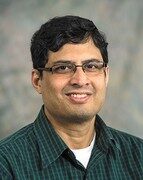
Maarten van de Meent is an Associate Professor at the Niels Bohr Institute, University of Copenhagen, specializing in Theoretical High Energy, Astroparticle, and Gravitational Physics. His research focuses on gravitational wave astronomy, black hole dynamics, and waveform modeling for compact binary systems. Recent collaborative studies (2023–2025) highlight his work on Extreme Mass Ratio Inspirals (EMRIs) , Effective One-Body Formalism , Kerr Spacetime Perturbations , and Spin-Orbit Precession . His publications emphasize gravitational self-force calculations , orbital resonance treatments , and LISA/Einstein Telescope waveform models . Key collaborations include researchers like Alessandra Buonanno (Max Planck Institute), Niall Warburton (University College Dublin), and Guillaume Faggioli (University of Bern). His work addresses Gravitational wave detection Post-Newtonian theory Numerical relativity Space-based observatories
Ka Lok Lo is a Postdoctoral Fellow at the Niels Bohr Institute, University of Copenhagen, specializing in Theoretical High Energy, Astroparticle and Gravitational Physics. His research primarily focuses on gravitational waves, black hole physics, and gravitational lensing phenomena. Dr. Lo's research interests span multiple areas of theoretical astrophysics with emphasis on gravitational wave detection , gravitational lensing , and black hole physics . His work involves developing and applying advanced mathematical frameworks to analyze gravitational wave signals, particularly those affected by strong gravitational lensing. He has made significant contributions to the identification of lensed gravitational wave events through phase consistency tests and Bayesian statistical frameworks. His publication record shows a strong focus on gravitational wave astronomy with particular attention to lensed signals. Dr. Lo's work bridges theoretical physics with observational astronomy, developing methods to extract cosmological information from gravitational wave data. His recent publications demonstrate expertise in gravitational lens catalogs, waveform analysis for binary coalescence events, and theoretical studies of black hole perturbations. Dr. Lo collaborates extensively with international research teams including the LIGO Scientific Collaboration and works within the vibrant gravitational physics community at the Niels Bohr Institute. His research contributes to advancing our understanding of strong-field gravity and developing new methods for gravitational wave astronomy.
Will Handley is an Associate Professor at the Institute of Astronomy , University of Cambridge, and a Royal Society University Research Fellow. His work bridges cosmology , Bayesian statistics , and machine learning to address fundamental questions about the Universe's origin and fate. Faculty member at the University of Cambridge Co-investigator on the REACH radio telescope project Convenor of the GAMBIT cosmology working group Research Interests : Specializing in Bayesian machine learning and nested sampling , Handley develops tools to analyze complex astrophysical datasets. His group's algorithms enable constraints on dark matter , dark energy , and inflationary models , with applications to gravitational wave detection , exoplanet discovery , and even protein folding . Recent Publications highlight a focus on 21cm cosmology , cosmological tensions , and AI-driven inference . His work spans high-dimensional parameter estimation , nonparametric dark energy modeling , and machine learning for parity violation detection in large-scale structure. Scientific Awards : Royal Society University Research Fellowship Advising & Collaborations : PhD student: Wei-Ning Deng Collaborations: REACH , GAMBIT , Flatiron Institute Labs & Teams : Leads the Handley Research Group , which develops open-source tools like PolyChord , anesthetic , and GLOBALEMU . Actively involved in 21cm signal extraction and gravitational wave data analysis .
Dr. Kai Zhou is a Research Fellow at the Frankfurt Institute for Advanced Studies (FIAS) in the Theoretical Sciences division, where he leads the 'Deepthinkers' research group. Born in China in 1987, he completed his B.Sc. in Physics from Xi'an Jiaotong University in 2009 and earned his PhD with 'Wu You Xun' Honors from Tsinghua University in 2014. After postdoctoral research at Goethe University Frankfurt's Institute for Theoretical Physics, he joined FIAS in August 2017 as a Research Fellow focusing on Deep Learning applications in physics. Frankfurt Institute for Advanced Studies (FIAS), Theoretical Sciences (2017-present) Goethe University Frankfurt, Institute for Theoretical Physics (Postdoc) Tsinghua University, Physics (PhD, 2014) Xi'an Jiaotong University, Physics (B.Sc., 2009) Dr. Zhou's research bridges artificial intelligence and theoretical physics, with a focus on applying machine learning techniques to complex physical systems. His work spans heavy-ion collisions, lattice quantum field theory, seismology, and renewable energy systems. He has developed innovative deep learning approaches to extract physical insights from complex data, including constructing an Equation-Of-State meter for heavy ion collisions. His research demonstrates how physics can inform AI development while AI enhances our understanding of physical phenomena. Analysis of Dr. Zhou's recent publications reveals a strong trend toward integrating physics principles with machine learning architectures. His work increasingly focuses on Bayesian inference methods applied to QCD phase transitions, physics-informed neural networks for solving inverse problems in nuclear physics, and developing specialized architectures that preserve physical symmetries. The interdisciplinary nature of his research is evident in applications spanning from heavy-ion collisions to neutron star physics and industrial process optimization. Wu You Xun Honors (PhD) Third party funding through Samson AG: AI for science BMBF funding within ErUM data program: Deep Learning for CBM computing DAAD exchange program Xidian-FIAS International Joint Research Center: AI for science BMWI: AI for energy Nvidia: GPU Grant Dr. Zhou actively mentors doctoral and master's students, currently advising seven graduate students across multiple institutions. His research group 'Deepthinkers' has secured significant third-party funding from diverse sources including industrial partners (Samson AG), government agencies (BMBF, BMWI), and international collaborations (DAAD, Xidian University). His approach combines theoretical physics with cutting-edge AI techniques to address complex problems in both fundamental science and industrial applications. The 'Deepthinkers' research group operates at the intersection of AI and physics, developing novel methodologies that leverage physical principles to enhance machine learning and vice versa. Their work on applying deep learning to heavy-ion collisions represents a significant advancement in extracting meaningful physical insights from complex collision data. The group maintains strong international collaborations, particularly with Chinese institutions through the Xidian-FIAS International Joint Research Center.
Stephen R. Green is a UKRI Future Leaders Fellow and theoretical physicist based at the University of Nottingham’s School of Mathematical Sciences, where his research focuses on gravitational waves, black hole perturbation theory, and machine-learning-enhanced data analysis. Education: PhD in Physics, 2012 – University of Chicago SM in Physical Sciences, 2006 – University of Chicago BSc in Mathematics and Physics, 2005 – University of Toronto Research Interests: Green’s research integrates advanced mathematical techniques with cutting-edge machine-learning methodologies to address fundamental questions in gravitational physics. His primary focus lies in black hole perturbation theory , particularly the nonlinear behavior of perturbations around Kerr black holes, and the development of probabilistic deep-learning frameworks for rapid and reliable inference from gravitational-wave detector data. He is actively engaged in improving waveform models for extreme mass-ratio inspirals detectable by LISA, exploring superradiant instabilities, and understanding spacetime turbulence. Key Scientific Contributions: Across more than two dozen peer-reviewed publications since 2011, Green has advanced our understanding of quasinormal-mode orthogonality in Kerr spacetime, pioneered neural-importance-sampling techniques that accelerate Bayesian parameter estimation for LIGO-Virgo detections, and developed new formalisms for nonlinear metric perturbations sourced by point particles. His 2022 works on conserved currents and neural inference have already garnered significant attention within the gravitational-wave and machine-learning communities. Awards & Funding: UKRI Future Leaders Fellowship (2022 – present) – includes £25,000 per annum research funding. Current & Past Positions: Nottingham Research Fellowship (Nov 2022 – present) – University of Nottingham, School of Mathematical Sciences, UK Senior Scientist (Jul 2021 – Oct 2022) – Max Planck Institute for Gravitational Physics, Potsdam, Germany Postdoc / Junior Scientist (Sep 2017 – Jul 2021) – Max Planck Institute for Gravitational Physics, Potsdam, Germany Postdoctoral Fellow (Sep 2014 – Aug 2017) – Perimeter Institute for Theoretical Physics, Waterloo, Canada CITA National Postdoctoral Fellow (Sep 2012 – Aug 2014) – University of Guelph, Canada Labs, Teams & Collaborations: Green is a member of the LIGO Scientific Collaboration and has collaborated extensively with researchers at the Albert Einstein Institute, Perimeter Institute, and various international partners. While the text does not specify a named lab, his work is closely tied to the gravitational-wave and theoretical-physics groups within the School of Mathematical Sciences at the University of Nottingham.
David Chernoff is a Professor in the Department of Astronomy at Cornell University's College of Arts and Sciences. He is also affiliated with the Carl Sagan Institute, CCAPS, and the Physics Department. His work bridges cosmology, quantum mechanics, and advanced statistical methods to explore fundamental physics through astrophysical observations. Research Interests: Chernoff's research spans a wide range of theoretical and computational topics. He focuses on cosmology, quantum mechanics, and the development of statistical and numerical methods for solving complex problems in physics. A key area of his work involves using astrophysical data to constrain fundamental theories of physics and cosmology, particularly over the past two decades. His publications reflect a deep engagement with both theoretical frameworks and observational data, including studies on cosmic strings, helium wave functions, and ultra-high energy cosmic rays. These works highlight his expertise in applying advanced computational techniques to astrophysical problems. Contact: dfc8@cornell.edu Office: 602 Space Science Building, Cornell University Phone: 607-255-4755
Lamberto Rondoni serves as a Full Professor in the Department of Mathematical Sciences (DISMA) at the Polytechnic University of Turin, where he also participates in the Interdepartmental Center PolitoBIOMed Lab - Biomedical Engineering Laboratory. His academic profile spans theoretical mathematical physics with practical applications across multiple scientific domains, reflecting a distinguished career in statistical mechanics and dynamical systems. Professor Rondoni's research primarily focuses on Nonequilibrium phenomena , Biophysics , and Nanotechnology , with particular emphasis on disequilibrium processes in nano and biosciences, climate and environmental problems, and astrophysical observations. His work bridges fundamental mathematical theory with real-world applications through ERC sectors including Mathematical Physics (PE1_12), ODE and dynamical systems (PE1_10), and applications in sciences (PE1_20). His scientific approach integrates rigorous mathematical frameworks with computational methods to address complex physical phenomena across multiple scales. The trajectory of Rondoni's recent publications reveals a consistent focus on nonequilibrium statistical mechanics, with increasing interdisciplinary applications. His 2023-2025 works demonstrate sophisticated mathematical treatments of transport phenomena, fluctuation relations, and phase transitions across diverse physical systems - from gravitational wave detection to cellular dynamics and anomalous heat transport. This body of work shows a sophisticated integration of theoretical development with practical applications, particularly in biomedical contexts through the PolitoBIOMed Lab. Gordon Godfrey Professorship conferred by University of New South Wales, Australia (1999) Nonlinearity High-Profile Articles conferred by Nonlinearity, IOP (2008) Physica Scripta Highlights 2014 conferred by The Royal Swedish Academy of Sciences (2014) Highly Cited Paper awarded by Web of Science (2016) Professor Rondoni actively supervises approximately ten PhD students across multiple doctoral programs at both the Polytechnic University of Turin and University of Turin, spanning Mathematical Sciences, Pure and Applied Mathematics, and Engineering disciplines. His research leadership extends to numerous competitively funded projects including ANATOMY (2023-2026), MECCANICA STATISTICA DEL DISEQUILIBRIO A PICCOLE SCALE (2011-2013), and RARENOISE (2008-2013), demonstrating sustained research productivity and relevance. His organizational contributions include chairing major international conferences such as the 17th European Turbulence Conference (2019) and multiple workshops on nonequilibrium statistical mechanics. As a member of the Interdepartmental Center PolitoBIOMed Lab, Professor Rondoni contributes to interdisciplinary research at the mathematics-physics-biomedical engineering interface. His research aligns with UN Sustainable Development Goals 4 (Quality education), 9 (Industry, Innovation, and Infrastructure), and 13 (Climate action), reflecting the societal relevance of his work on mathematical applications in industry and environmental science.
Vuk Mandic is a Distinguished McKnight University Professor at the School of Physics and Astronomy , University of Minnesota. His research spans gravitational wave physics and dark matter detection , with leadership roles in major experiments like LIGO, SuperCDMS, and the Deep Underground Gravity Lab (DUGL). Current projects focus on noise suppression in gravitational wave detectors and next-generation dark matter searches. Collaborative Research: Local gravity disturbances, Cosmic Explorer site evaluation Training Initiatives: Multi-messenger Astrophysics programs Research Interests Dr. Mandic investigates the early Universe through gravitational waves and dark matter. Key areas include: Advanced LIGO noise modeling and detection methods SuperCDMS WIMP dark matter detector development Deep underground seismology for Newtonian noise suppression LISA space antenna background analysis Scientific Awards Distinguished McKnight University Professor Grants & Collaborations NSF-funded projects include: Stochastic Gravitational Wave Background (2024–2027) Multi-messenger Astrophysics Training (2019–2025) International LIGO-Virgo-KAGRA collaborations Labs & Teams Leads the Deep Underground Gravity Lab (DUGL) at Homestake mine, SD, and contributes to SuperCDMS and LIGO teams. Collaborations extend to geophysicists and detector engineers globally.
Chung-Pei Ma is the Judy Chandler Webb Professor in Physical Sciences and Professor of Astronomy and Physics at the University of California, Berkeley. She received her undergraduate and Ph.D. degrees in physics from the Massachusetts Institute of Technology. Before joining Berkeley in 2002, she was a postdoctoral fellow at Caltech and held faculty positions at the University of Pennsylvania. Her research spans theoretical cosmology and observational astrophysics, with core interests in dark matter, dark energy, supermassive black holes, galaxy formation, gravitational lensing, and large-scale cosmic structures. She leads the MASSIVE Survey investigating the most massive galaxies in the local universe and is involved in gravitational wave detection through the NANOGrav collaboration. Recent publications demonstrate her focus on supermassive black hole dynamics, galaxy evolution modeling, and gravitational wave astrophysics. Her team develops advanced triaxial orbit models and analyzes data from Keck, Hubble, and other telescopes to measure black hole masses and galaxy properties. Awards and honors include: Lindback Award for Distinguished Teaching Member of the National Academy of Sciences Member of the American Academy of Arts and Sciences Fellow of the American Physical Society Fellow of the American Astronomical Society Fellow of the American Association for the Advancement of Science She advises graduate students and postdoctoral researchers in her group, with many alumni in academia and industry. Her work utilizes major facilities including Keck Observatory, Hubble Space Telescope, and supercomputing resources.
Maya Fishbach is an Assistant Professor at the Canadian Institute for Theoretical Astrophysics (CITA), University of Toronto. Her research focuses on gravitational-wave astronomy, cosmology, and the astrophysics of compact objects like black holes and neutron stars. She utilizes data from gravitational-wave observatories such as LIGO, Virgo, and KAGRA to study binary systems, stellar evolution, and cosmic phenomena. Her work integrates astrostatistics and computational methods to analyze gravitational-wave signals, constrain cosmological parameters, and explore the origins of compact binaries. Fishbach collaborates on projects involving multi-messenger astronomy, linking gravitational-wave observations with electromagnetic counterparts and theoretical models. Recent research highlights include studies of black hole spin dynamics, hierarchical mergers, and the connection between binary black holes and globular clusters. She contributes to open-source tools like tBilby for gravitational-wave data analysis and actively participates in observational campaigns to detect transient events. Her academic affiliations include the CITA community and collaborations with international gravitational-wave detector networks. Fishbach’s research spans theoretical astrophysics, observational cosmology, and computational methods, making significant contributions to understanding the dynamic universe through gravitational waves.
Sukanta Bose is a Professor in the Department of Physics and Astronomy at Washington State University , affiliated with the College of Arts and Sciences . His research focuses on Gravitation and Cosmology , particularly the nature of black holes, neutron stars, gravitational-wave detection, and multi-messenger astronomy. He contributes to projects like the Institute for Shock Physics and collaborates with facilities such as Advanced LIGO and Virgo. Research interests include: Gravitational-wave signal analysis and detection Black hole and neutron star dynamics Multi-messenger astronomy methods Gravitational lensing effects on wave signals Recent articles highlight advancements in: Bayesian frameworks for cosmological parameters Machine learning for signal classification Stochastic background search tools Horizon flux modeling in binary black holes No scientific awards are listed. Advising and grant details are not explicitly provided in the text. He is part of collaborative efforts in gravitational-wave astronomy and maintains an active research group.
John Whelan is a Professor at the Rochester Institute of Technology (RIT) in the School of Mathematical Sciences within the College of Science . He serves as a PI for the RIT group in the LIGO Scientific Collaboration and is Co-Chair of both the Continuous Waves Observational Group and the Elections and Membership Committee . His academic journey includes a BA in Astronomy (Summa Cum Laude) from Cornell University (1991) and a PhD in Physics from the University of California, Santa Barbara (1996). Education 1980-1987: Secondary, Poughkeepsie Day School (HS Degree) 1987-1991: BA in Astronomy, Cornell University 1991-1996: PhD in Physics, University of California, Santa Barbara Whelan specializes in Gravitational Wave Data Analysis , Bayesian Inference , and Computational Relativity . His research focuses on continuous gravitational wave searches (e.g., from Scorpius X-1 ), stochastic backgrounds , and compact binary coalescence . Recent publications (2025-2024) address LIGO-Virgo-KAGRA data analysis , supernova gravitational wave emission , and dark matter detection using gravitational wave observatories. His scientific awards include induction into RIT's PI Millionaires for securing over $1 million in research funding. He mentors students in gravitational wave astrophysics and statistical signal processing , including Yuanhao Zhang , Gabriel Phelan , and Anthony Castiglia . Whelan contributes to open science through the Gravitational-Wave Open Science Center and has pioneered Jupyter Notebook integration in graduate statistics education .
Nicolas Yunes is a Professor of Physics at the University of Illinois and a member of the National Center for Supercomputing Applications (NCSA). His research focuses on gravitational wave physics, black hole dynamics, and testing general relativity in extreme environments. Yunes leads efforts in modeling neutron star structure, analyzing gravitational wave data from LIGO/Virgo/KAGRA, and exploring modified gravity theories using astrophysical observations. He is a recipient of the APS Fellow award (2022) for contributions to theoretical and computational astrophysics. His work includes developing the MUSES framework for neutron star calculations, advancing parametrized post-Einsteinian tests of GR, and investigating dark matter effects on compact objects. Yunes collaborates extensively with international teams on projects like pulsar-timing arrays and next-generation gravitational wave detectors. Recent research highlights include studies on gravitational parity violation probes, systematic biases in waveform models, and constraints on dark-sector interactions via compact binary inspirals. His interdisciplinary approach bridges fundamental physics, computational methods, and observational astronomy.
Frederick Lamb is a Research Professor of Physics at the University of Illinois Urbana-Champaign, with a distinguished career spanning astrophysics and international security. He holds the Brand and Monica Fortner Endowed Chair of Theoretical Astrophysics Emeritus and is a core faculty member in the Program in Arms Control and Domestic & International Security since 1982. Lamb earned his B.S. in Physics from Caltech (1967) and D.Phil. in Theoretical Physics from Oxford University (1970), where he was a Marshall Scholar. His research focuses on astrophysics , particularly neutron stars , black holes , and high-energy phenomena , using data from NASA missions like NICER and the defunct Rossi X-ray Timing Explorer . He developed foundational theories for X-ray pulsar modeling and boost-phase missile defense analysis. His work bridges relativistic astrophysics with national security studies. Recent publications (2018-2024) analyze neutron star interiors via X-ray timing , equation of state modeling, and NICER mission data, alongside arms control and missile defense policy reports. Lamb's scientific awards include the 2022 Bruno Rossi Prize , 2021 Five Sigma Physicist Award , and 2005 Leo Szilard Award . He contributes to public education through lectures and courses like 'Nuclear Weapons, Nuclear War, and Arms Control' since 1981.
Dr. Guillermo Franco Abellán is a Postdoctoral researcher at the University of Amsterdam's Faculty of Science, affiliated with the Institute for Theoretical Physics (ITF). His research focuses on cosmology, particle physics, and astrophysics, particularly addressing observational tensions in cosmology, early universe physics, and dark matter models. He employs advanced computational methods for cosmological inference and simulation. Key research interests include probing cosmological parameters through CMB observations, analyzing dark radiation and dark matter models, and exploring implications of modified gravity theories. His work often intersects with cutting-edge observational facilities like Planck, ACT, and SPT. Recent publications highlight contributions to resolving the Hubble tension through novel physics models, developing fast sampling techniques for cosmological initial conditions, and investigating the interplay between neutrino physics and cosmological constraints. His interdisciplinary approach spans theoretical frameworks and data-driven analysis. Abellán collaborates on large-scale projects such as the CosmoVerse initiative, aiming to synthesize multi-messenger data and address fundamental cosmological questions. His work emphasizes rigor in statistical methodologies, including Bayesian inference and machine learning applications.