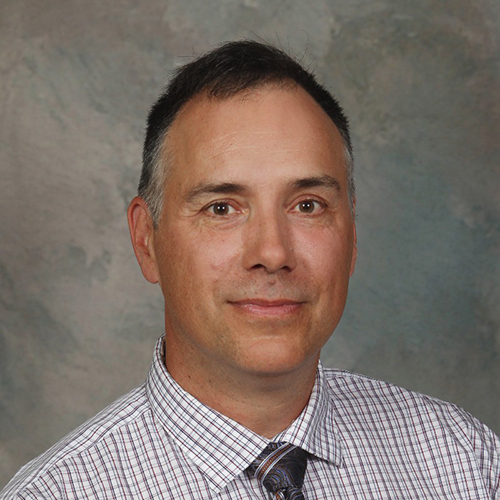
Jonathan Winghong Luk is a Professor in the Department of Mathematics at Stanford University. His research focuses on nonlinear partial differential equations, general relativity, and mathematical physics, with a particular emphasis on gravitational wave dynamics, shock formation, and high-frequency spacetime solutions. Contact: Email: jluk@stanford.edu Office: 382-Z, Building 380, Stanford, CA 94305 Research Trends: His recent publications examine nonlinear wave equations on dynamic spacetimes, gravitational phase mixing, impulsive gravitational wave interactions, and stability of black hole interiors. He frequently collaborates with experts like C. Huneau, S.-J. Oh, and J. Speck. Academic Activities: Luk organizes the Analysis and PDE seminar at Stanford with Eugenia Malinnikova and Ryan Unger. He has developed lecture notes on nonlinear wave equations and Fourier analysis, complemented by example sheets.
Douglas Stanford is an American theoretical physicist and Associate Professor of Physics at the Stanford Institute for Theoretical Physics, Stanford University. His work focuses on the intersection of quantum mechanics, gravity, and black hole physics. Dr. Stanford's educational background includes: B.S. in Physics and Mathematics from Stanford University (2009) M.S. in Mathematics from the University of Cambridge (2010), where he was a Marshall Scholar Ph.D. in Physics from Stanford University (2014), supervised by Leonard Susskind Stanford's research primarily explores the connections between quantum gravity, quantum field theory, and string theory. His groundbreaking work has focused on understanding the quantum mechanics of black holes through the lens of chaos theory, particularly examining the butterfly effect in black hole systems. He has made significant contributions to the ER=EPR conjecture, which proposes a deep connection between quantum entanglement (EPR) and wormholes (ER bridges), potentially resolving the black hole information paradox. His research often bridges theoretical physics with concepts from information theory and quantum computing. Stanford's publications reveal a strong focus on quantum chaos, black hole physics, and the connections between quantum mechanics and gravity. His work frequently examines the Sachdev-Ye-Kitaev model, traversable wormholes, and the mathematical structures underlying quantum gravity. The progression of his research shows an evolution from foundational work on black hole chaos to more complex explorations of quantum information in gravitational systems. Dr. Stanford has received several prestigious awards for his contributions to theoretical physics: Blavatnik Awards for Young Scientists (2017) for work in quantum gravity and condensed matter physics New Horizons in Physics Prize (2018) for improving understanding of quantum mechanics of black holes via chaos theory Gribov Medal (2019) for work on quantum chaos and its relation to near-horizon dynamics of black holes After completing his Ph.D. under Leonard Susskind at Stanford, Stanford conducted postdoctoral research at the Institute for Advanced Study in Princeton from 2014 to 2019. During this time, he collaborated extensively with leading physicists including Juan Maldacena and Edward Witten. He joined Stanford University as an assistant professor in 2019 and was promoted to associate professor by 2020. While specific grant information isn't detailed in the provided text, his prestigious awards suggest significant research funding support for his work in quantum gravity and black hole physics. Stanford is affiliated with the Stanford Institute for Theoretical Physics, where he continues his research on quantum gravity, black holes, and quantum information. His work is deeply connected to the broader theoretical physics community at Stanford, which has a strong tradition in string theory and quantum gravity research.
Thomas Hartman is a Professor of Physics in the College of Arts and Sciences at Cornell University. He received his A.B. in Physics from Princeton University in 2004 and his Ph.D. in Physics from Harvard University in 2010. His professional journey includes being a Member of the School of Natural Sciences at the Institute for Advanced Study (2010-2013), Research Associate at the Kavli Institute for Theoretical Physics, UCSB (2013-2014), Assistant Professor at Cornell University (2014-2020), Associate Professor at Cornell University (2020-2022), and Professor at Cornell University (2022-present). Hartman's research focuses on theoretical aspects of quantum gravity and quantum field theory, with particular emphasis on black hole information and strongly interacting quantum fields. His work explores four major interconnected areas: gauge/gravity duality (examining how quantum field theory degrees of freedom organize into fluctuating spacetime), black hole information paradox (investigating the relationship between classical black hole solutions and quantum statistical systems), new approaches to quantum field theory using dualities and entanglement dynamics, and the physics of de Sitter space with implications for early universe cosmology. His research employs techniques from string theory, holographic duality, general relativity, and quantum information theory. Analysis of Hartman's publication record reveals a strong focus on resolving fundamental questions in quantum gravity, particularly through the development of replica wormhole techniques that address the black hole information paradox. His work spans both highly mathematical approaches to quantum gravity and connections to potentially observable phenomena, with increasing emphasis on connections between quantum information science and gravitational physics in recent years. Member, School of Natural Sciences, Institute for Advanced Study, 2010-2013 Hartman has advised graduate students including Jeevan Chandra Namburi and Wan Zhen Chua, contributing to the next generation of theoretical physicists. His research group actively investigates the emergence of spacetime from quantum information principles and develops new mathematical frameworks for understanding quantum gravity. The group maintains strong connections with other leading institutions through collaborative projects and participates in major theoretical physics initiatives including Snowmass planning for future research directions in high energy physics. Hartman's research program represents a vital bridge between abstract theoretical concepts in quantum gravity and potential experimental tests, working to develop frameworks that could ultimately connect quantum gravity to observable phenomena in both high-energy physics and cosmological observations.
Hidetoshi Katori is a Japanese physicist and Professor at the University of Tokyo , renowned for his pioneering work in optical lattice atomic clocks and quantum metrology . Since 2011, he has served as Chief Scientist at the Quantum Metrology Laboratory, RIKEN , advancing precision measurements and ground-breaking experiments in fundamental physics. Key Achievements : Invention of the Magic Wavelength Technique , enabling ultra-precise optical lattice clocks; measurement of gravitational redshift using transportable strontium clocks on Tokyo Skytree. Education : University of Tokyo (alma mater). Research Interests : Katori’s work spans atomic physics , quantum optics , and metrology , focusing on high-precision timekeeping, quantum state control, and testing general relativity via experimental physics. Publications highlight his contributions to optical clocks , quantum technologies , and precision measurement , with recent advancements in cryogenic lattice clocks and transportable clock systems. Scientific Awards : I. I. Rabi Award (2008) Asahi Prize (2012) Nishina Memorial Prize (2013) Medal with Purple Ribbon (2014) Japan Academy Prize (2015) Micius Quantum Prize (2020) Breakthrough Prize in Fundamental Physics (2022) Honda Prize (2022) Katori leads the Katori & Ushijima Laboratory at the University of Tokyo, collaborating on quantum metrology projects and mentoring researchers. His work has been recognized in the Asian Scientist 100 and through grants supporting advanced clock development.
Steven L. Manly is a Professor of Physics at the University of Rochester within the College of Arts, Sciences and Engineering. He has been affiliated with the University of Rochester since 1998, following a decade at Yale University as both a postdoc and faculty member. Professor Manly received his BA in chemistry, mathematics, and physics from Pfeiffer College in 1982 and his PhD in experimental high-energy physics from Columbia University in 1989 under Charles Baltay. His research spans high energy, nuclear, and gravitational physics, with a current focus on neutrino physics across multiple major experiments. His primary research interests include neutrino interactions and oscillations, with significant contributions to the T2K experiment (for which he shared the 2016 Breakthrough Prize in Fundamental Physics), the MINERvA experiment at Fermilab, and the Deep Underground Neutrino Experiment (DUNE). His work aims to understand neutrino properties, measure oscillation parameters, and investigate potential connections to matter-antimatter asymmetry in the universe. The recent publications reflect a strong focus on neutrino cross-section measurements, detector calibration techniques, and data analysis methods for the T2K and DUNE experiments. His research group contributes significantly to advancing our understanding of neutrino properties and interactions through precision measurements. NY State Professor of the Year (2003) Mercer Brugler Distinguished Teaching Professor (2002-2005) American Association of Physics Teachers (AAPT) Award for Excellence in Undergraduate Teaching (2007) Breakthrough Prize in Fundamental Physics (2016, shared as member of T2K) Professor Manly has authored or co-authored numerous publications in leading physics journals, with recent work focusing on neutrino interaction measurements, detector development, and data analysis techniques. His research has involved collaborations with major international facilities including Fermilab, J-PARC in Japan, and Brookhaven National Laboratory. While specific grant information isn't detailed in the provided text, his participation in large-scale international collaborations suggests significant research funding support.
Prof. Waldemar Kolanus leads the Molecular Immunology and Cell Biology department at the University of Bonn's Life & Medical Sciences Institute (LIMES) . His research bridges immunoregulation , stem cell dynamics , and metabolic stress responses in immune cells. Unit 2 member at LIMES Principal investigator in SFB 704 and ImmunoSensation Cluster Leads a multidisciplinary lab with postdocs, PhD students, and technical staff His work focuses on intracellular signaling pathways connecting immune activation to tissue homeostasis, particularly through: Cytohesin proteins in integrin-mediated adhesion and migration TRIM71 in stem cell regulation and congenital hydrocephalus High-salt environments affecting macrophage function Publication trends show expertise in immune cell migration , genetic models , and chemical inhibition , with frequent use of mice and zebrafish for in vivo studies. Key articles explore: TRIM71's dual role in auditory development and germ cell maintenance Cytohesin family's Golgi regulation and insulin signaling Ruxolitinib's off-target migration inhibition of dendritic cells Contact details: Address: LIMES Institute, Carl-Troll-Straße 31, Bonn Email: kolanus.sekretariat@uni-bonn.de Phone: +49 228 73-62788
Stefan Helmreich is the Elting E. Morison Professor of Anthropology at MIT, where his research examines how scientists conceptualize fundamental phenomena—especially waves—across oceanography, biology, acoustics, and computing. His interdisciplinary work bridges anthropology, science studies, and media theory. Core research themes include: Cultural and scientific constructions of ocean waves Marine microbial ecologies and alien oceans Sound studies and transduction theories Multispecies ethnography Scientific visualization practices Helmreich's publications demonstrate consistent engagement with wave phenomena as both physical forces and cultural symbols, exploring how scientific representations of waves shape environmental understanding. His award-winning books trace connections between marine science, cosmology, and media technologies. He has received numerous prestigious awards including a Guggenheim Fellowship and multiple book prizes from anthropological associations. Helmreich maintains creative collaborations through projects like 'Wave Count'—a musical exploration of wave representations across genres.
David Al-Attar is a Professor at the University of Cambridge's Department of Earth Sciences, actively involved in theoretical and computational geophysics research. He serves as a supervisor within the Cambridge NERC Doctoral Landscape Awards (Training Partnerships) program, particularly in the CREATES initiative focusing on climate and environmental science. Education: While specific educational details aren't provided in the text, his extensive publication record and professorial position at Cambridge indicate advanced training in geophysics and applied mathematics. Research Interests: Professor Al-Attar's work spans several interconnected areas within geophysics. His primary focus includes theoretical and computational problems in geophysics, with particular emphasis on continuum mechanics as applied to Earth systems. He develops new physical and mathematical theories for understanding Earth processes, including rigorous function space methods for inverse problems and uncertainty quantification. His sea level change research aims to constrain ice sheet evolution during the last glacial period to better understand modern contributions to sea level rise. Additionally, he investigates solid Earth dynamics including seismic free oscillations, body tides, and Earth rotation, contributing to our understanding of deep Earth structure and mantle dynamics. Research Themes: His publications demonstrate expertise in adjoint methods, glacial isostatic adjustment, mantle viscosity, planetary seismology, and computational methods for geophysical problems. Recent work emphasizes 3-D Earth modeling, sensitivity analysis, and the integration of satellite observations with theoretical models. Current Projects: Potential projects for students include inverse problems related to deglacial sea level change with focus on uncertainty quantification, modern sea level monitoring using satellite data, and solid Earth dynamics particularly regarding outer core viscosity in tidal and rotational dynamics. Contact: He can be reached at da380@cam.ac.uk for research inquiries and collaboration opportunities.
Dana Z. Anderson is a Professor and Fellow at JILA at the University of Colorado Boulder, holding the Glen Murphy Endowed Chair in the Department of Physics within the College of Engineering and Applied Science (CEAS) . His research focuses on nonlinear optics , atom optics , and optical precision measurements . Key projects include advancing atomtronics (quantum analogs of electronic systems), neutral atom quantum computing , and ultracold atom gyroscopes . He leads the Anderson Optical Physics (AOPy) group , pioneering applications like shaken lattice interferometry for space navigation and quantum sensor development . Anderson's work bridges fundamental physics and applied technologies. His group develops window atom chip technology for ultracold atom manipulation and in-situ imaging systems . Collaborations include NASA's Cold Atom Laboratory (CAL) mission for microgravity experiments on the International Space Station (ISS). Notable contributions include demonstrating matterwave transistor oscillators and optical lattice-based quantum devices . His research has been recognized in high-impact journals like Physical Review Letters and Review of Modern Physics . He actively engages in public outreach and industry partnerships , serving as Chief Strategy Officer at ColdQuanta, a quantum tech startup spun from his lab's innovations.
Professor Oscar Dias is a faculty member in the Department of Mathematical Sciences at the University of Southampton. His research focuses on Einstein's gravity, black holes, holographic dualities, and gravitational aspects of string theory. He actively supervises PhD students in mathematical sciences and holds grants from the Science and Technology Facilities Council (STFC), including projects like 'New Frontiers in Particle Physics, Cosmology and Gravity.' His work explores topics such as cosmic censorship, black hole dynamics, and numerical general relativity, with recent contributions published in journals like Physical Review Letters and Journal of High Energy Physics . Key research interests include the study of black hole binaries in de Sitter space, the stability of charged black holes, and the interplay between holographic dualities and quantum field theories. His projects often involve collaborations with leading institutions, addressing foundational questions in theoretical physics and cosmology. Professor Dias is a member of the Southampton Theory Astrophysics and Gravity (STAG) Research Centre and the String Theory and Holography group. His articles highlight advancements in understanding gravitational wave phenomena, quasinormal modes, and the behavior of black holes under various physical conditions. He currently accepts PhD applications and can be contacted via O.J.Campos-Dias@soton.ac.uk.
Prof. Jorge Piekarewicz is a Professor of Physics at Florida State University (FSU), affiliated with the College of Arts and Sciences. He earned his Ph.D. in theoretical nuclear physics from the University of Pennsylvania in 1985, followed by postdoctoral research at Caltech and Indiana University. Since 1990, he has been a faculty member at FSU. Education: Ph.D. in Theoretical Nuclear Physics, University of Pennsylvania (1985) Postdoctoral Fellowships: California Institute of Technology and Indiana University Research Interests: His work focuses on extreme-density nuclear matter in neutron stars, bridging terrestrial experiments and astrophysical observations. Key areas include: Neutron star structure and equation of state Weak interaction probes (e.g., parity-violating electron scattering) Multi-messenger astronomy insights from neutron star mergers Covariant energy density functionals and symmetry energy constraints Articles Trends: Recent work emphasizes refining the nuclear equation of state using PREX-CREX experiments, gravitational wave data (e.g., GW170817), and Bayesian methods. Key themes include neutron skin thickness, crust-core interactions, and symmetry energy sensitivity. Service & Outreach: Nuclear Science Advisory Committee (2012–2015) FRIB Theory Alliance Director (2017–2021) INT National Advisory Committee Chair (2018–2020) OLLI Lecturer on stellar evolution and neutron stars Collaborations: Active involvement with CERN, FRIB, JLab, and the Facility for Rare Isotope Beams (FRIB). Research leverages facilities like the Relativistic Heavy Ion Collider and the National Superconducting Cyclotron Laboratory.
Dr. Jonathan Gair is a Group Leader in the Astrophysical and Cosmological Relativity Division at the Max Planck Institute for Gravitational Physics (Albert Einstein Institute) in Potsdam, Germany. Previously, he served as Professor of Astrostatistics at the University of Edinburgh (2018-2019) and as Reader (Associate Professor) in Statistics at the same institution (2015-2018). Dr. Gair's research focuses on gravitational wave data analysis and its applications to cosmology and fundamental physics. His work spans multiple areas of gravitational wave astronomy, with particular emphasis on: Developing and applying new methodologies for gravitational wave data analysis Using gravitational wave observations to derive cosmological parameters, particularly the Hubble constant Developing data analysis tools for the LISA space-based gravitational wave detector Exploring the scientific potential of gravitational wave observations for testing general relativity Creating computationally efficient techniques for parameter inference in gravitational wave astronomy Dr. Gair plays a leading role within the LIGO/Virgo collaboration in deriving cosmological constraints from gravitational wave observations. He currently chairs the LISA Science Group, overseeing the development of data analysis tools for the planned ESA-led LISA mission. His research has significantly contributed to our understanding of how gravitational wave observations can serve as "standard sirens" for measuring cosmic distances and probing the expansion history of the universe. Dr. Gair's work involves both theoretical development and practical application of data analysis techniques. He has developed methods for handling selection effects in rate estimation of gravitational wave events, techniques for mapping gravitational wave backgrounds using methods adapted from cosmic microwave background analysis, and approaches for incorporating model uncertainties into gravitational wave parameter estimation.
Professor Dejan Gajic is a mathematician specializing in mathematical physics and general relativity at Leipzig University's Faculty of Physics and Earth Sciences. He leads research on black hole dynamics, particularly extremal black holes, and was awarded a €1.5M ERC Starting Grant (2023) to study their mathematical properties. His work bridges partial differential equations and theoretical physics. Education: PhD in Mathematics from the University of Cambridge (201?), followed by research positions at Imperial College London, the University of Cambridge, and Radboud University. His research focuses on Einstein’s equations, black hole stability, and gravitational collapse. Research Interests: Mathematical theorems on extremal black holes’ dynamical properties, wave equations in curved spacetime, and asymptotic behavior of gravitational fields. Current projects include the ExBHGravRad initiative, exploring rapid-rotation black holes’ physical phenomena. Key Achievements: ERC Starting Grant (2023), selection from >2600 applicants. Plans include establishing a research group in Leipzig and enhancing the Center for Mathematical Physics (joint with Max Planck Institute for Mathematics in the Sciences). Labs/Teams: Leading the new black hole mathematics research group at Leipzig, collaborating with the Max Planck Institute. Aims to host international scholars and elevate Leipzig’s global profile in mathematical physics.
Paul Wiegert is a Full Professor in the Department of Physics and Astronomy at the University of Western Ontario , where he has been since 1996 after positions at York University and Queen's University. He is a member of the Institute for Earth and Space Exploration (IESX) and the Centre for Planetary Science and Exploration (CPSX) . His research spans asteroid dynamics , exoplanet systems , and celestial mechanics , with notable work on Earth co-orbital asteroids like (3753) Cruithne and Earth's first Trojan asteroid 2010 TK7. Education : PhD in Astronomy (University of Toronto, 1996) Research Domains : Planetary Science, Astronomy, Big Data Analytics His recent publications focus on interstellar transport mechanisms , asteroid impact risks , and exomoon detection . Key findings include quantifying risks from asteroid 2024 YR4's potential lunar impact and demonstrating the feasibility of detecting alpha Centauri-origin material in our solar system. He actively supervises graduate students like Cole Gregg and participates in NSERC-funded summer research programs for undergraduates. For planetary defense, he has analyzed collision probabilities for Apophis and developed meteoroid hazard models for spacecraft. His work appears in Planetary Science Journal , Nature Astronomy , and Astrophysical Journal Letters , with media coverage in 60+ outlets and 126 X (Twitter) mentions .
Professor Jean Alexandre is a Professor of Physics at King's College London, affiliated with the Department of Physics within the Faculty of Natural, Mathematical & Engineering Sciences. His research focuses on non-perturbative quantum field theory, tunnelling phenomena, exact renormalization methods, and Lorentz symmetry violation. He has held positions including a Leverhulme Trust postdoc and temporary lectureship before his current role. Education: Doctor of Science in Theoretical Physics from University Louis Pasteur, Strasbourg (1998) Master of Physics in Theoretical Physics from École Normale Supérieure de Lyon (1994) Research Interests: Non-perturbative effects in QFT (dynamical mass generation, exact functional methods) Lorentz symmetry violation in particle physics and modified gravity Tunnelling mechanisms, cosmic bounce models, and null energy condition studies Non-Hermitian extensions of the Standard Model and PT-symmetric field theories Key contributions include work on magnetic monopole searches with the MoEDAL experiment at the LHC, finite volume effects in quantum field theory, and dynamical mass generation mechanisms. His recent articles explore topics like scalar high-electric-charge objects, vacuum decay rates, and cosmic bounce scenarios. He has supervised PhD theses on topics such as Lifshitz-type theories and gravitino condensation. Grants and Collaborations: Principal Investigator on Leverhulme Trust project 'Saving the Universe with finite volume effects in Quantum Field Theory' Co-Investigator on EPSRC and STFC-funded projects in particle physics and cosmology Labs/Teams: Active collaborator in the MoEDAL experiment and the Theoretical Particle Physics & Cosmology group at King's College London.