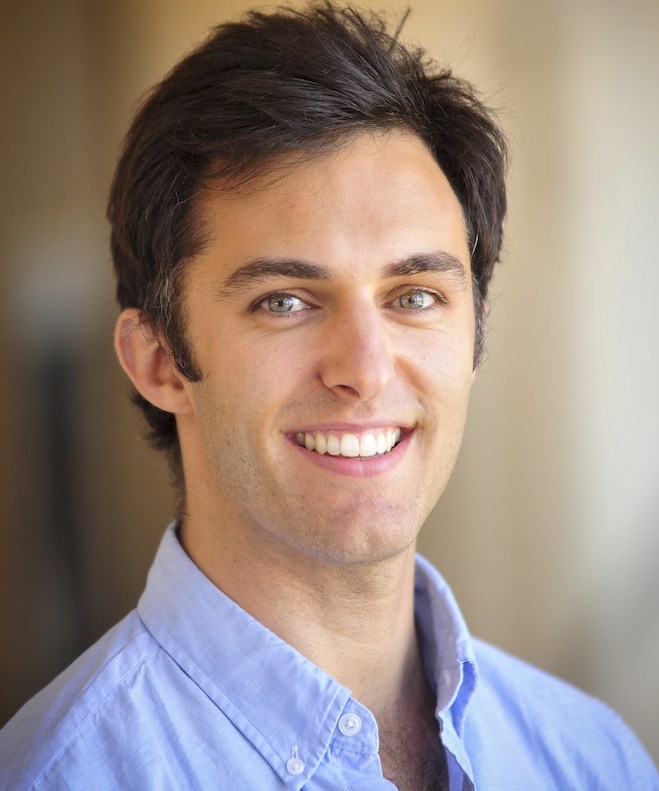
Daniel M. Roy is a Full Professor at the University of Toronto, with cross-appointments in the Department of Computer Science, Department of Statistical Sciences, and Department of Electrical and Computer Engineering. He serves as Research Director at the Vector Institute and holds the CIFAR Canada AI Chair. Research Focus: Foundational principles of prediction, inference, and decision-making under uncertainty across machine learning, statistics, mathematical logic, applied probability, and computer science. Scientific Contributions: Key work in learning theory, statistical network analysis, probabilistic programming, and information-theoretic frameworks for generalization. Awards: ICML 2024 Best Paper Award for "Information Complexity of Stochastic Convex Optimization" and promotion to Full Professor in 2024. Student Advising: Actively mentors Ph.D. candidates and postdoctoral researchers with strong quantitative backgrounds, particularly at the intersection of machine learning, statistics, and computer science. Email: daniel.roy@utoronto.ca
Zaid Harchaoui is an Adjunct Professor in the Department of Statistics at the University of Washington. His research focuses on machine learning, generative AI, and algorithmic optimization, with applications spanning ecology, neuroscience, and artificial intelligence. He explores learning under distributional shifts and develops tools for scalable generative models in language and vision domains. University: University of Washington Department: Statistics Research Focus: Learning from data with computational, inferential, and mathematical rigor; distributional shift adaptation; generative model scaling Email: zaid@uw.edu His recent work emphasizes generative AI applications in ecology and neuroscience, stochastic optimization for robustness, and algorithmic efficiency in large-scale learning. Key contributions include techniques for distributionally robust optimization, interpretable authorship obfuscation, and uncertainty quantification in behavior classification. Scientific awards and honors are not explicitly mentioned in the provided text. Collaborative efforts often intersect with nonlinear control algorithms, spectral analysis, and privacy-preserving machine learning frameworks.
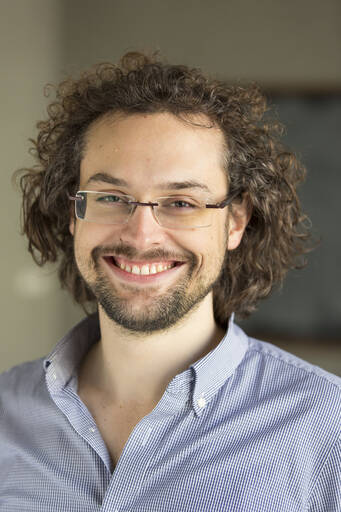
Will Perkins is an Associate Professor in the School of Computer Science at Georgia Institute of Technology. Previously, he held faculty positions at the University of Illinois at Chicago, the University of Birmingham (UK), and was an NSF Postdoc at Georgia Tech. He earned his PhD in 2011 from New York University's Courant Institute under Joel Spencer. His research focuses on algorithms, statistical physics, and discrete mathematics, particularly exploring algorithmic tractability of random computational problems, statistical physics spin models, and combinatorial methods derived from algorithmic intuition. Research Interests : Algorithms, statistical physics, combinatorics, phase transitions, random graphs, and Gibbs measures. His work bridges theoretical computer science and statistical mechanics, addressing questions about sampling, phase coexistence, and algorithmic barriers. Recent Activities : Director of the Algorithms and Randomness Center at Georgia Tech, Managing Editor of Combinatorial Theory , and Associate Editor of Random Structures and Algorithms and SIAM Journal on Discrete Mathematics . Upcoming engagements include the Rocky Mountain Summer Workshop (2024), Park City Mathematics Institute (2024), and conferences on Random Structures and Algorithms (2025). Teaching : Courses include Design and Analysis of Algorithms (CS 3510), Advanced Algorithms (CS 4540), and specialized topics like Statistical Physics in Algorithms and Combinatorics (CS 8803). He has taught across institutions, including at the University of Birmingham and University of Illinois at Chicago. Key Contributions : His work on phase transitions in combinatorial structures, algorithmic sampling in statistical physics models, and rigorous analysis of Gibbs measures has been published in top venues like FOCS, STOC, and Communications in Mathematical Physics. Notable results include hardness of sampling for anti-ferromagnetic Ising models and novel contour methods for Pirogov-Sinai theory.
Erhan Bayraktar is a Professor of Mathematics at the University of Michigan, holding the Susan Smith Chair. He serves as Director of the Quantitative Finance and Risk Management Masters Program, which he established in 2015. His academic career at the University of Michigan spans since 2004, progressing from T. H. Hildebrandt Research Assistant Professor to his current full professorship. Professor Bayraktar earned his Ph.D. from Princeton University in 2004, following dual Bachelor's degrees in Electrical Engineering and Mathematics from Middle East Technical University in Turkey. His academic journey reflects a strong foundation in both theoretical and applied mathematical disciplines. Bayraktar's research focuses on mathematical finance, applied probability, machine learning, mean field games, stochastic analysis, stochastic control, and optimal stopping. His work bridges theoretical mathematics with practical applications in finance and risk management. He has developed sophisticated mathematical frameworks for analyzing complex financial systems, market behaviors, and optimal decision-making under uncertainty. His contributions to mean field games have provided new insights into large-scale interacting systems, while his work on stochastic control has advanced methodologies for optimal decision processes. His publication record demonstrates a consistent trajectory of high-impact research, with recent work focusing on Wasserstein space analysis, graphon particle systems, and applications of machine learning to financial mathematics. His research shows increasing interdisciplinary connections between traditional mathematical finance and modern computational approaches. Susan M. Smith Professorship (2010-present) National Science Foundation CAREER Grant (2010-2016) SIAM Activity Group on Financial Mathematics and Engineering Early Career Prize (2010) Professor Bayraktar has mentored 14 Ph.D. students (13 graduated) and approximately 40 post-doctoral researchers. His students hold prestigious positions in academia and industry, including tenure-track positions at Boston University, University of Colorado, University of Sydney, and University of Toronto. He has secured continuous funding from the National Science Foundation, including the current grant DMS-2507940 (2025-2028) and previous grants totaling over 15 years of continuous NSF support. As Director of the Quantitative Finance and Risk Management Masters Program, Bayraktar has built a robust academic community through the Financial/Actuarial Math seminar series, which hosts about 10 outside speakers annually, and by organizing international workshops in stochastic analysis for finance and insurance in Ann Arbor.
David Steurer is an Associate Professor in the Department of Computer Science at ETH Zurich, where he leads the Institute for Theoretical Computer Science. His research bridges theoretical computer science, mathematics, and practical applications in machine learning and statistics. Steurer has made significant contributions to the understanding of sum-of-squares methods, semidefinite programming, and high-dimensional estimation problems. Steurer earned his B.Sc. & M.Sc. in Computer Science from Saarland University in 2006, followed by a Ph.D. in Computer Science from Princeton University in 2010 under the supervision of Sanjeev Arora. His doctoral dissertation, "On the Complexity of Unique Games and Graph Expansion," received an Honorable Mention for the ACM Doctoral Dissertation Award in 2011. Steurer's research focuses on algorithm design through mathematical programming relaxations, particularly semidefinite programming and the sum-of-squares method. His work addresses computational complexity of high-dimensional estimation problems including tensor decomposition, clustering, Gaussian mixture models, and stochastic block models. He also investigates algorithmic aspects of robustness and differential privacy, especially for estimation tasks. His theoretical contributions have practical implications for machine learning and data analysis in the presence of noise and adversarial conditions. Analysis of Steurer's recent publications reveals a consistent trajectory in advancing the sum-of-squares framework for high-dimensional estimation and robust statistics. His work demonstrates how sophisticated mathematical programming techniques can provide certifiable guarantees for challenging problems in machine learning. The research spans theoretical foundations while maintaining relevance to practical applications, particularly in scenarios involving corrupted or noisy data. A notable trend is the extension of sum-of-squares methods to handle increasingly complex statistical models while providing rigorous performance guarantees. ERC Consolidator Grant (2019) Michael and Sheila Held prize (2018, with Raghavendra) Invited speaker at International Congress of Mathematicians (2018) STOC Best Paper Award (2015) Alfred P. Sloan Research Fellowship (2014) NSF CAREER Award (2014) Microsoft Research Faculty Fellowship (2014) FOCS Best Paper Award (2010) Steurer has advised numerous PhD students and postdocs who have gone on to prominent positions, including Sam Hopkins (now faculty at MIT), Jonathan Shi, and Aaron Potechin. His research is supported by multiple prestigious grants, including an ERC Consolidator Grant, an NSF CAREER Award, and a Microsoft Research Faculty Fellowship. He has served on numerous program committees for top theoretical computer science conferences and has been recognized for his service to the community through roles such as internal member of the Scientific Advisory Committee of the Institute for Theoretical Studies at ETH Zurich. As head of the Institute for Theoretical Computer Science at ETH Zurich, Steurer leads a research group focused on advancing the theoretical foundations of computer science with particular emphasis on mathematical optimization methods. His team explores the boundaries of what can be efficiently computed in high-dimensional settings, with applications spanning machine learning, statistics, and data science. The group maintains strong connections with both theoretical and applied researchers across ETH and the broader academic community.
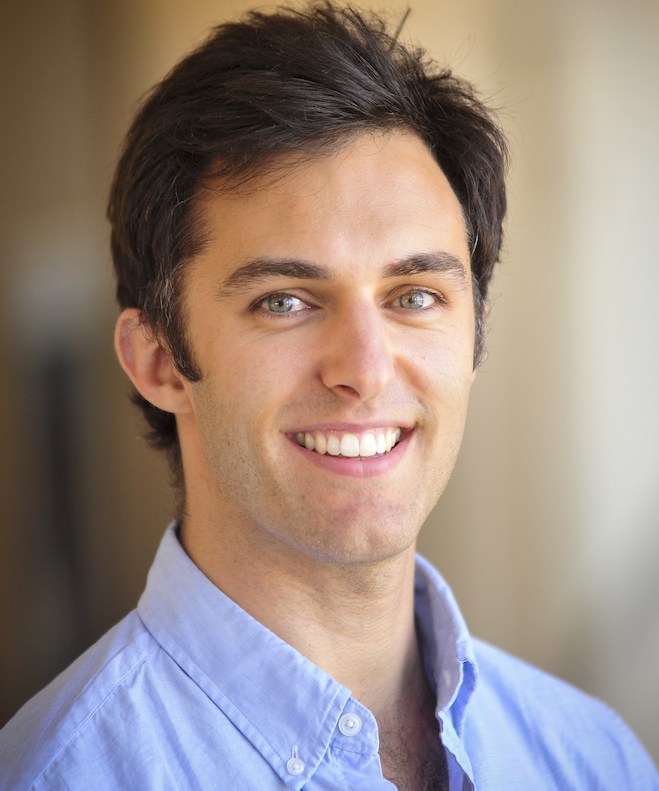
Daniel Roy is a Full Professor at the University of Toronto, holding cross-appointments in the Department of Statistical Sciences, Computer Science, Electrical and Computer Engineering, and the Department of Computer and Mathematical Sciences at UTSC. He is also a Canada CIFAR AI Chair and Research Director at the Vector Institute, reflecting his leadership in AI and machine learning research. His educational background includes a PhD, MEng, and BSc in Computer Science from MIT, where his doctoral work earned the MIT EECS Sprowls Award. Prior to joining Toronto, he was a Newton International Fellow at the Royal Society and a Research Fellow at Emmanuel College, University of Cambridge. His research centers on foundational principles in machine learning, statistics, and probabilistic reasoning. Key interests include statistical learning theory, Bayesian nonparametrics, probabilistic programming, and information-theoretic generalization. His work bridges theoretical computer science, mathematical logic, and applied probability. His recent publications, appearing in ICML, NeurIPS, COLT, and JMLR, reflect a strong focus on theoretical advances in generalization, online learning, and stochastic optimization. Themes include minimax rates, conditional mutual information, and the role of data in PAC-Bayes bounds. His group has made foundational contributions to probabilistic programming, including work on Church and the computability of conditional probability. NSERC Discovery Accelerator Supplement Ontario Early Researcher Award Google Faculty Research Award Newton International Fellowship MIT EECS Sprowls Award Daniel Roy advises numerous PhD students and postdoctoral researchers, many of whom have gone on to prestigious positions in academia and industry. His group actively collaborates with leading researchers in machine learning and statistics. He is also an Action Editor for the Journal of Machine Learning Research and Transactions of Machine Learning Research, underscoring his role in shaping the field. He leads a vibrant research group focused on theoretical machine learning and probabilistic modeling, and maintains active collaborations with institutions such as MIT, Cambridge, and the Vector Institute. He is also the founder and maintainer of the probabilistic-programming.org wiki, a key resource in the community.
Shuangping Li is an Assistant Professor in the Department of Statistics and Data Science at Yale University. She was previously a Stein Fellow in the Department of Statistics at Stanford University (2022–2025). Her research lies at the intersection of probability theory, high-dimensional statistics, theoretical machine learning, and the theory of algorithms. Ph.D. in Applied and Computational Mathematics, Princeton University (2022) B.Sc. in Mathematics, University of Hong Kong Her research interests include probability theory , high-dimensional statistics , theoretical machine learning , and theory of algorithms . She investigates foundational aspects of random constraint satisfaction problems, neural networks, spectral methods, and phase transitions in high-dimensional models. Her work often draws from statistical physics and combinatorics to explain algorithmic behavior. The recent articles highlight a strong focus on binary perceptrons , clustering in network models , and algorithmic phase transitions . Keywords across publications include probability, theoretical computer science, machine learning, and statistical inference. Subfields reveal deep engagement with spin glass theory, discrepancy minimization, spectral embedding, and information-computation gaps. Scientific awards include: Stein Fellow, Department of Statistics, Stanford University (2022–2025) She has advised and taught at both Stanford and Yale, including courses such as Advanced Probability , Theory of Probability , and Stochastic Processes . She has organized seminars at Stanford and has delivered invited talks at institutions including Cornell, Duke, UC Berkeley, and Princeton. Her collaborative research involves prominent scholars such as Allan Sly, Emmanuel Abbe, and Tselil Schramm. There is no mention of external grants, but her postdoctoral fellowship suggests research funding support. She is involved in academic service through organizing the Stanford Statistics and Probability Seminars. She maintains an active research presence with publications in top venues like STOC, FOCS, COLT, ICLR, and journals such as Annals of Probability and Annals of Statistics .
Jennifer Chayes is Dean of the College of Computing, Data Science, and Society and a Professor at the University of California, Berkeley, with appointments in Electrical Engineering and Computer Sciences, Mathematics, Statistics, and Information. She co-founded Microsoft Research New England, New York City, and Montreal, leading interdisciplinary research for 23 years before joining Berkeley in 2020. Previously, she was a Professor of Mathematics at UCLA, where she received the Distinguished Teaching Award. Education PhD in Mathematical Physics (1983), Princeton University BA in Biology and Physics (1979), Wesleyan University Her research spans network science , machine learning , and theoretical computer science , focusing on phase transitions in networks, graphons for large-scale network modeling, and applications in cancer immunotherapy , ethical AI , and climate change . Her work on graph limits and exchangeable graphs has foundational implications for network analysis. Recent publications highlight trends in sparse graph theory , privacy-preserving algorithms , and fairness in AI . Awards include the Anita Borg Institute Women of Vision Leadership Award (2012), SIAM John von Neumann Lecture Prize (2015), and ACM Distinguished Service Award (2020). She is a member of the National Academy of Sciences and a Fellow of multiple academic societies. Chayes actively promotes Diversity in STEM and serves on advisory boards for institutions like MIT’s Schwarzman College of Computing, the Howard Hughes Medical Institute, and the National Science Foundation’s Institute for AI and Fundamental Interactions.
Dr Peter Braunsteins serves as a Lecturer in Statistics within the School of Mathematics and Statistics at the University of New South Wales (UNSW Sydney), operating under the Faculty of Science. His academic appointment focuses on advancing theoretical and applied probability through rigorous mathematical research. He completed his PhD at the University of Melbourne in 2018, followed by postdoctoral positions at the University of Amsterdam and King Abdullah University of Science and Technology (KAUST) before joining UNSW. His scholarly background bridges European and Middle Eastern research institutions with Australian academia. Braunsteins' research centers on stochastic processes , with pioneering contributions in three interconnected domains: branching processes (modeling population dynamics and extinction events), random graphs (analyzing network evolution and structural properties), and spatial extremes (studying rare events in geographical contexts). His work combines deep theoretical insights with applications in epidemiology, insurance risk modeling, and network science, often employing large deviation principles and parameter estimation techniques for complex systems. Analysis of his 15 most recent publications reveals a sustained focus on branching process theory, particularly population-size-dependent models and extinction probabilities, while simultaneously developing novel frameworks for dynamic random graphs. His research demonstrates increasing interdisciplinary reach, connecting probability theory with actuarial science through adaptations of the Cramér-Lundberg model and with network science through graphon analysis. No scientific awards or major honors are documented in the available materials. His collaborative network includes prominent researchers such as Sophie Hautphenne, Frank den Hollander, and Michel Mandjes across multiple continents. Professional activities include manuscript review for leading probability journals and participation in academic seminars at UNSW, though specific advising roles or grant funding details remain undisclosed in the source material. His office is located in Room 2056 of the Anita B. Lawrence Centre at UNSW Sydney.
Luana Ruiz is an Assistant Professor in the Department of Applied Mathematics and Statistics at Johns Hopkins University (JHU), affiliated with the Mathematical Institute for Data Science (MINDS) and the Data Science and Artificial Intelligence Institute (DSAI). She earned her Ph.D. in Electrical Engineering from the University of Pennsylvania (2022), and dual B.Sc. and M.Eng. degrees in Electrical Engineering from the University of São Paulo (Brazil) and École Supérieure d’Electricité (France, now CentraleSupélec) in 2017. Her research focuses on machine learning, signal processing, and network science, particularly scalable algorithms for non-Euclidean domains like graphs and data manifolds. She has pioneered work on graph neural networks (GNNs), graph sampling, and theoretical limits of transferability and generalization in graph-based learning. Notably, she has developed methods for efficient GNN training on large graphs and stability analysis of neural networks on manifolds. Affiliations: Johns Hopkins University, MINDS, DSAI Education: Ph.D., University of Pennsylvania (2022); B.Sc./M.Eng., University of São Paulo & CentraleSupélec (2017) Her research interests include large-scale graph machine learning, manifold learning, physics-informed ML, and combinatorial optimization. She has received awards such as the iREDEFINE Fellowship (2019), MIT EECS Rising Star (2021), and Best Student Paper Awards at EUSIPCO (2019, 2021). Her work bridges theoretical foundations and practical applications, with contributions to GNN architecture design, signal processing on graphs, and stability guarantees for neural networks on manifolds. Recent publications highlight advances in graph sampling for scalable GNNs, stability of manifold neural networks, and theoretical analysis of GNN expressivity. She collaborates with institutions like MIT and the Simons Institute, and her interdisciplinary approach addresses challenges in graph data analysis and AI efficiency. She advises on grants related to graph signal processing and has contributed to the development of graphon-based frameworks for large-scale graph analysis. Awards: Eiffel Excellence Scholarship (2013–2015), Best Paper Awards at EUSIPCO (2019, 2021) Grants/Advising: METEOR and FODSI postdoctoral fellowships, Google Research Fellowships
Louis Theran is a Lecturer in Mathematics at the University of St Andrews , School of Mathematics and Statistics. His research bridges geometry, combinatorics, and algorithmic problems, with applications in physics, materials, and machine learning. Education: Ph.D. in Computer Science, University of Massachusetts, Amherst (2010) M.S. in Computer Science, University of Massachusetts, Amherst (2007) B.S. in Computer Science and Mathematics, University of Massachusetts, Amherst (2006) Theran’s research focuses on the rigidity theory of frameworks , exploring how geometric and combinatorial properties determine structural stability. He investigates discrete geometry, sparse hypergraphs, and pebble game algorithms, connecting these to machine learning (e.g., low-rank matrix completion) and materials science (e.g., auxetic metamaterials, sticky disks). His recent work analyzes rigidity transitions in random graphs , universal rigidity in one-dimensional frameworks, and maximum likelihood thresholds via graph rigidity. Collaborations span computational geometry, algebraic statistics, and physics, emphasizing interdisciplinary applications. Scientific Awards: Heilbronn small grants scheme (2021) NSF/KOSEF East Asia and Pacific Summer Institutes Fellowship (2006) Theran has supervised numerous BSc, MMath, and PhD projects , including topics like tensegrities, graphons, and geometric constraint systems. He has also contributed to Gaussian graphical models and universality theorems for Delaunay triangulations.
Rajat Hazra is an Associate Professor at the Mathematical Institute of Leiden University, specializing in Probability Theory. He is affiliated with the NETWORKS consortium, which received a COFUND grant from the European Commission in 2020. Institution: Leiden University Academic Unit: Mathematical Institute Rank: Associate Professor Email: r.s.hazra@math.leidenuniv.nl His research focuses on theoretical probability, particularly in large deviation principles, random graphs, and spectral graph theory. A 2021 publication analyzed maximal eigenvalues of inhomogeneous Erdos-Renyi graphs using variational methods in graphon space. Scientific Awards: COFUND grant from European Commission (2020)
Dr. Robert Lunde is an Assistant Professor in the Department of Mathematics and Statistics at Washington University in St. Louis. He holds a PhD in Statistics and Data Science from Carnegie Mellon University and completed postdoctoral research at the University of Michigan and University of Texas at Austin. His research encompasses statistical inference for network data, resampling methods, and distribution-free inference. Key areas include conformal prediction for network-assisted regression, bootstrap methods for streaming algorithms, and theoretical analysis of network resampling techniques. His work bridges high-dimensional statistics with computational efficiency in network analysis. Dr. Lunde has taught courses including Mathematical Statistics at Washington University and Probability Theory at Carnegie Mellon. His instructional approach emphasizes foundational theory and practical applications of statistical methods.
Can M. Le is an Associate Professor in the Department of Statistics at the University of California, Davis, within the College of Letters and Science. His research lies at the intersection of statistics, network science, and high-dimensional data analysis, with a focus on theoretical and applied aspects of network modeling and inference. Ph.D. in Statistics, University of Michigan, Ann Arbor His research interests include network analysis, random graph theory, community detection, high-dimensional statistical inference, and regularization of network data. He develops methods for analyzing noisy, complex network structures and has contributed significantly to spectral methods and low-rank approximations in network science. His work bridges theoretical statistics with practical applications in social and biological networks. The recent publications demonstrate a strong trend in modeling and inference for network-linked data, with emphasis on robustness, adaptivity, and concentration properties of random graphs. His work combines deep probabilistic analysis with statistical methodology, particularly in community detection and network estimation under noise and heterogeneity. His research is supported by the National Science Foundation (NSF) grant DMS-2015134, indicating active funding and ongoing contributions to the field. While no formal list of advisees is provided, his collaborative work with leading statisticians such as Elizaveta Levina and Roman Vershynin suggests an active research group and mentoring role. He has no listed scientific awards in the provided text. However, his consistent publication record in top journals (JASA, JRSSB, Annals of Statistics, JMLR) underscores his scholarly impact. Dr. Le's work is closely tied to theoretical and applied statistical research on networks, likely involving a research lab or team focused on network data science, though specific lab names or team structures are not mentioned in the text.
Bhaswar B. Bhattacharya is an Associate Professor of Statistics and Data Science at The Wharton School of the University of Pennsylvania, with a secondary appointment in the Department of Mathematics. His research spans several interconnected areas at the intersection of statistics, probability, and computational geometry. Dr. Bhattacharya received his Ph.D. in Statistics from Stanford University in 2016 under the supervision of Persi Diaconis. Prior to that, he earned both his Bachelor of Statistics (2009) and Master of Statistics (2011) from the Indian Statistical Institute in Kolkata. His research interests focus on three main pillars: nonparametric statistics (including distribution-free inference, nearest-neighbor methods, and inference on networks), combinatorial probability (covering counting problems in random graphs, random colorings, and graph limit theories), and discrete and computational geometry (including facility location problems, Voronoi games, and geometric Ramsey problems). His work often bridges theoretical developments with practical applications in network analysis, statistical learning, and geometric optimization. Recent publications demonstrate a strong trajectory in developing distribution-free methods for network analysis, with significant contributions to understanding fluctuations in graphon-based random graphs and developing optimal tests for inhomogeneous random graph models. His work also shows increasing focus on higher-order network structures through hypergraph models and applications to real-world problems like vaccination site optimization. NSF Career Award (2021-2026) Alfred P. Sloan Research Fellowship (2021) Probability Dissertation Award, Stanford University (2016) Sabyasachi Roy Memorial Gold Medal for best master's thesis, Indian Statistical Institute (2009-2011) Dr. Bhattacharya teaches advanced courses in mathematical statistics at both undergraduate and graduate levels at Wharton. His research program involves collaborations across multiple institutions and disciplines, with recent work applying statistical methods to public health challenges such as optimizing vaccination site locations. He maintains active research collaborations with colleagues in statistics, computer science, and applied mathematics departments.