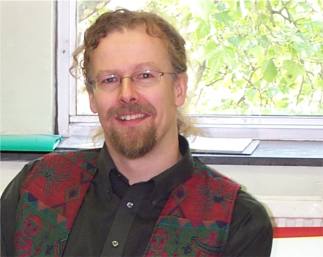
Lasse Thurmann Jørgensen is a postdoctoral researcher at the Department of Health Technology, Technical University of Denmark. He specializes in ultrasound imaging and biomechanics, with a focus on synthetic aperture ultrasound, pressure gradient estimation, and volumetric imaging techniques. His work involves advanced signal processing, computational fluid dynamics, and GPU-accelerated algorithms for real-time medical imaging applications. Research Interests : Ultrasound imaging, biomechanics, synthetic aperture ultrasound, pressure gradient estimation, computational fluid dynamics, volumetric beamforming. Key Collaborations : Collaborates with researchers in Denmark and internationally on ultrasound technology and biomedical engineering projects. Patents : Co-inventor of an ultrasound imaging apparatus patent addressing intravascular pressure measurement.
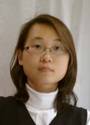
Yakun Sophia Shao is an Associate Professor in the Department of Electrical Engineering and Computer Sciences (EECS) at the University of California, Berkeley. She holds a Ph.D. (2016) and M.S. (2014) in Computer Science from Harvard University, alongside a B.E. in Electrical Engineering from Zhejiang University, China. Her research focuses on computer architecture , particularly domain-specific accelerators , heterogeneous systems , and agile VLSI design methodologies . Key research centers: Agile Design of Efficient Processing Technologies (ADEPT), Berkeley Emerging Technologies Research (BETR), Berkeley Wireless Research Center (BWRC), SpeciaLIzed Computing Ecosystems (SLICE) Her work explores hardware-software co-design for efficiency in AI and robotics, including projects like Simba (chiplet-based AI accelerators) and Virgo (GPU matrix units). Notable tools developed include WIICA (workload characterization) and Chipyard (SoC frameworks). Selected honors include: 2024 CRA-WP Anita Borg Early Career Award 2023 NSF CAREER Award 2022 IEEE TCCA Young Computer Architect Award 2022 Intel Rising Star Faculty Award She teaches courses including EECS 151 (Digital Design & ICs) and EECS 251A (Advanced Digital Design).
Zuofu Cheng is a Teaching Associate Professor in the Department of Electrical and Computer Engineering at the University of Illinois at Urbana-Champaign. His research focuses on parallel computing, FPGA-based machine learning acceleration, GPU optimization, and innovative engineering pedagogy. He has contributed to curriculum development in computer engineering education and advanced mesh optimization algorithms for heterogeneous computing systems. Research interests include: Hardware acceleration for AI/ML systems Parallel algorithm design for multi-core architectures Interactive engineering education methodologies Real-time acoustic simulation engines Publications highlight trends in FPGA/GPU optimization, IoT applications of machine learning, and computational thinking integration in undergraduate curricula. Over 75 citations reflect notable impact in hardware-accelerated computing domains. Active collaborations include work with IEEE conferences and HPC training initiatives.
Ryszard Kozera holds the position of Adjunct Associate Professor in the Department of Computer Science and Software Engineering at The University of Western Australia (UWA). He is affiliated with the School of Physics, Maths and Computing. His research focuses on computational mathematics, machine learning, and applied computer vision. Key research interests include spline interpolation, trajectory estimation, neural networks, and their applications in microbiology and hardware optimization. He has contributed to projects like 'Smoothness in geometry and computer vision' funded by ARC Small Grants. Recent work explores machine learning applications in soil microorganism identification and Apple Silicon performance analysis. Collaborations span international conferences such as ICCS and ESM.
Woo-Chan Park is a Professor in the Department of Computer Science and Engineering at Sejong University, specializing in high-performance GPU hardware/software, VR/AR technologies, and AI-driven mobile systems. He leads the eXtended Reality Research Center and actively contributes to computational hardware innovation. Education Ph.D. (2000), M.S. (1995), B.S. (1993) from Yonsei University His research focuses on real-time graphics processing, embedded systems for VR/AR, and energy-efficient AI hardware. Recent work includes advancements in mobile GPU architectures and sound propagation algorithms for immersive environments. Key publication trends highlight expertise in GPU design, ray tracing optimization, and FPGA/ASIC implementations for VR/AR applications, with a strong emphasis on latency reduction and power efficiency. Scientific Awards Recognized in 'Hot start-up to watch: silicon 60' by EE Times Park founded SiliconArts Inc. in 2001 and maintains an active research laboratory at Sejong University, accessible via his personal website . His work spans 28 years (1996-2024) with 70+ research outputs.
Eduardo Corral Abad is an Associate Professor in the Department of Mechanical Engineering at Carlos III University of Madrid, specializing in multibody dynamics, railway systems, and contact mechanics. His research spans industrial heritage, vibration analysis, and educational technology. Railway axle monitoring and crack detection using advanced signal processing Dynamic modeling of mechanical systems with nonlinear contact and friction forces Development of interactive teaching applications for engineering education Use of parallel computing and GPU acceleration in mechanical simulations His contact email is eduardo.corral@uc3m.es . Recent work includes publications on railway diagnostics, helical gear transmissions, and Android-based educational tools.
Dr. Eishi Arima is a researcher at the Chair of Computer Architecture and Parallel Systems within the Department of Informatics at the Technical University of Munich (TUM). His work focuses on cutting-edge computer architecture and high-performance computing systems, with particular expertise in power-aware computing, resource management, and heterogeneous systems. He actively contributes to numerous international conferences and collaborative research projects addressing challenges in modern computing infrastructure. Dr. Arima's research spans multiple critical areas in computer architecture including memory and storage systems, performance modeling and optimization, hardware/software codesign, and processor microarchitectures. His work demonstrates particular strength in addressing energy efficiency challenges in high-performance computing environments, with numerous publications on power capping, resource partitioning, and sustainable computing approaches. His research bridges theoretical concepts with practical implementations, often incorporating machine learning techniques to optimize system performance under various constraints. Analysis of Dr. Arima's publication record reveals a strong focus on addressing the energy efficiency challenges in modern computing systems. His work consistently targets the intersection of hardware architecture and system-level resource management, with particular emphasis on heterogeneous computing platforms combining CPUs, GPUs, and emerging memory technologies. Over time, his research has evolved from traditional cache and memory system optimizations toward more holistic approaches incorporating machine learning for resource management in power-constrained environments. Recent publications demonstrate increasing attention to sustainability aspects of computing, reflecting broader industry trends toward greener computing solutions. Dr. Arima has served in various organizational capacities for major international conferences including as Program Committee member for SC, IPDPS, and Cluster conferences, and as Program Co-Chair for ACM CF'20. His journal review activities span multiple prestigious publications including IEEE TPDS and Elsevier FGCS. This extensive service demonstrates his recognition as a respected member of the international computer architecture research community. Dr. Arima has mentored numerous students through bachelor's theses, master's theses, and guided research projects. His students have produced research on topics including reinforcement learning for resource management, job scheduling optimization, memory system improvements, and power-aware computing techniques. Several student projects have resulted in publications at reputable conferences, indicating the high quality of research conducted under his supervision. His mentoring covers both theoretical aspects of computer architecture and practical implementation challenges in real-world systems. Dr. Arima is actively involved in multiple research projects including SEANERGYS (EuroHPC), PlasmaPEPS, OpenCUBE, DaREXA-F, ScalNEXT, PDexa, MUNIQC-ATOMS, BB-KI_Chips, QuaST, and Q-DESSI. These projects address various aspects of high-performance computing, from energy efficiency to quantum computing integration. His work contributes to the development of next-generation computing infrastructure that balances performance requirements with sustainability concerns.
Sun-Jeong Kim is a Professor at the Department of Computer Science within the School of Computer Science at Korea University . Her research focuses on real-time rendering techniques, GPU programming, and game engine optimization. Specializes in procedural modeling and interactive visualization Develops efficient rendering algorithms for virtual reality Active in graphics hardware acceleration and collision detection Her research has produced 15+ publications on topics including tessellation strategies, skeletal animation systems, and particle effect optimizations. While specific awards and students aren't detailed in the current text, her work demonstrates consistent contributions to real-time graphics and game development.
Steven Hayward is a Professor of Computational Biology at the School of Computing Sciences , University of East Anglia. He serves as Director of Research and is affiliated with the Computational Biology Group , Centre for Japanese Studies , and Visual Computing and Signal Processing units. His work bridges computational methods with biological questions. Education: BSc(Hons) in Physics from University of Bristol, Diplom in Physics from Johannes-Gutenberg University, Mainz, and PhD in Molecular Biology from University of Edinburgh. Hayward's research focuses on protein structure and conformational changes , particularly their relationship to function. He employs biogeometry , molecular dynamics , and bioinformatics to investigate: DynDom software and its database for protein domain movements α-sheet structure in amyloid formation for diseases like Alzheimer’s and Parkinson’s Interactive docking tools (e.g., DockIT) using VR and haptic devices Recent articles show his expertise in HDAC6 inhibition , amyloid protofilament modeling , and GPU-accelerated molecular visualization . His 15 most recent works span 2017–2025 and include collaborative projects with European and Japanese institutions. Scientific awards include: Biophysics and Physicobiology Editors' choice award (2017) Great Britain Sasakawa Foundation Fellowship (2024) JSPS Bridge Fellowship (2015) Hayward collaborates with Professor Akio Kitao (Tokyo Tech), Professor James Milner-White (Glasgow), and Dr Stephen Laycock (UEA). He has secured grants from ELIXIR Europe , Daiwa Anglo-Japanese Foundation , and JSPS for projects including PDBe-KB database development and VR-based education tools. Current initiatives involve creating a system for studying protein conformational landscapes and interactive docking platforms.
Antonio González Colás is a Full Professor at the Universitat Politècnica de Catalunya (UPC), affiliated with the Facultat d'Informàtica de Barcelona (FIB) and the Department of Computer Architecture. He leads the ARCO research group (Microarchitecture and Compilers) and focuses on advanced computer architecture, including GPUs, compilers, and embedded systems. In 2024, he received the ICREA Acadèmia distinction for his research on future computer systems integrating cognitive tasks and autonomous decision-making. His work emphasizes energy-efficient architectures, memory optimization, and hardware acceleration for AI and real-time applications. He holds a Doctorate in Computer Science and has over 1000+ publications, including top-tier journals and conferences. His research spans topics like GPU microarchitecture, compiler-assisted caching, DNN acceleration, and autonomous driving hardware. Major awards include the HiPEAC 2024 Paper Award and EU-funded projects under Horizon 2020. He advises numerous PhD students on topics such as point cloud processing for autonomous systems, GPU rendering optimizations, and neural network efficiency. His contributions bridge theoretical computer architecture with practical hardware-software co-design, addressing challenges in modern computing systems.
Paul H J Kelly is a Professor of Software Technology at Imperial College London, leading the Software Performance Optimisation research group. He serves as co-Director of the Centre for Computational Methods in Science and Engineering and Director of Industrial Liaison for the HiPEDS Centre for Doctoral Training in High-Performance Embedded and Distributed Systems. Research Interests His research focuses on: Compiler technology for computational science Performance portability across heterogeneous architectures Domain-specific languages (DSL) for scientific computing Optimization of finite element methods and PDE solvers Data locality and parallelism trade-offs Computer vision algorithms and SLAM systems He actively collaborates with hardware vendors and application developers in computational science, robotics, and quantum chemistry. Article Trends Recent publications emphasize: Temporal and spatial tiling for PDEs and stencil computations Quantum circuit simulation optimization Distributed SLAM systems Performance portability frameworks (e.g., Firedrake, Devito) Compiler techniques for GPUs and custom accelerators Memory hierarchy optimization Scientific Awards Senior Member of the ACM (2021) Imperial College Engineering Faculty Teaching Excellence Award (2013) Best Robotics Paper at 18th Conference on Robots and Vision (2021) Student Mentoring He has mentored numerous PhD and postdoctoral researchers now in academic positions including: Luigi Nardi - Assistant Professor at Lund University Sajad Saeedi - Assistant Professor at Ryerson University Lawrence Mitchell - Assistant Professor at University of Durham Current students include Renato Salas-Moreno , David Ham , and Miklos Homolya .
Erwan Leria is a Doctoral Researcher in the Department of Information Technology at Mid-Sweden University (2021–2025). His research focuses on real-time rendering techniques, multi-GPU computing, and light field technologies. Key interests include optimizing path tracing algorithms for high-performance graphics processing units (GPUs), developing scalable open-source rendering solutions, and advancing real-time applications in virtual/augmented reality environments. His work emphasizes interdisciplinary collaboration, with contributions to projects like the Tauray open-source path tracer for stereo and light field displays. Research topics span multi-source spatial reprojection, denoising techniques, and parallel computing architectures. Publications highlight trends in next-generation rendering systems, particularly in balancing computational efficiency with visual fidelity. Collaborations involve international teams exploring emerging technologies for immersive display systems.
Jeffrey D. Blanchard is a Professor in the Department of Mathematics and Statistics at Grinnell College. He also holds the endowed Donald L. Wilson Professor of Enterprise and Leadership title and directs the Donald and Winifred Wilson Center for Innovation and Leadership. His academic journey includes a Ph.D. from Washington University in St. Louis (2007), followed by a VIGRE Postdoctoral Fellowship at the University of Utah (2007–2009) and an NSF International Research Fellowship at the University of Edinburgh (2010). His research focuses on applied and computational harmonic analysis, particularly compressed sensing, matrix completion, composite dilation wavelets, and GPU-accelerated scientific computing. These areas intersect with digital signal processing, high-dimensional geometry, and random matrix theory. He has developed efficient algorithms for sparse recovery and large-scale data processing, often leveraging graphical processing units for performance gains. The recent publications reflect a consistent trend in algorithmic development for compressed sensing and sparse approximation, with increasing emphasis on GPU implementations and structured sparsity. His work bridges theoretical analysis with practical computational solutions, often resulting in open-access software tools like GAGA, GGKS, and GGMS. NSF International Research Fellowship (2010) NSF Grants: DMS 1112612, DMS 1620390, OISE 0854991 Harris Faculty Fellowship (2013–2014) MAA Project NExT Fellow (2008–2009) Department of Homeland Security Fellowship (2003–2006) Blanchard has advised numerous undergraduate research projects in areas such as GPU-based k-selection, joint sparsity, and composite dilation wavelets. His research has been supported by multiple National Science Foundation grants focused on algorithm analysis and high-performance computing. He has taught a wide range of courses including Calculus, Numerical Analysis, and Wavelet Applications. He leads a research group that develops GPU-accelerated algorithms for compressed sensing and sparse recovery. His software packages—GAGA, GGKS, and GGMS—are publicly available and used for high-performance computing tasks such as greedy pursuit and order statistics selection on GPUs.
Jianting Zhang is an Assistant Professor of Computer Science at the City College of New York (CUNY). His research focuses on geospatial data management, parallel computing, and GPU acceleration techniques for handling large-scale spatial datasets. He specializes in optimizing spatial query processing, indexing methods for moving objects, and high-performance computing frameworks for web-based GIS applications. His work bridges theoretical algorithm design with practical implementations in distributed and cloud environments. Key research interests include parallel indexing of geospatial rasters and trajectories, efficient spatial join algorithms, and GPU-based acceleration of data compression and visualization. He has explored applications in biodiversity analysis, urban mobility (e.g., NYC taxi data), and query-driven web-GIS systems. His contributions emphasize scalable solutions for big data challenges in geographic information systems. His publications highlight advancements in GPU-accelerated spatial processing, including novel approaches to quadtree construction, sparse matrix operations, and top-K trajectory similarity queries. While no scientific awards are explicitly mentioned, his active publication record reflects sustained contributions to the field of geospatial computing.
João Frazão is a researcher active in the field of quantum cryptography, with a focus on experimental continuous-variable quantum key distribution (QKD) systems. His work explores the application of QKD over free-space optical channels, addressing challenges such as turbulence, noise power, and real-time signal processing. He collaborates with institutions like Optica Publishing Group and has contributed to advancements in secret key generation, error correction, and adaptive reconciliation protocols. 2021: Active in the NGF - Integration ECO1 project as a project member. 2024: Published multiple conference papers on QKD optimization and real-time quantum communication systems. 2025: Released a significant article on rate-adaptive reconciliation techniques for free-space QKD. His research interests span quantum cryptography, secure communication protocols, optical engineering, and quantum information theory. João's work frequently involves graphics processing units (GPUs) and local oscillator technologies to enhance QKD performance in turbulent environments. João's publications highlight his expertise in quantum key distribution, continuous-variable systems, and free-space optical communication. His projects often collaborate with researchers such as C. M. Okonkwo, K. Gümüş, and A. Albores-Mejia, contributing to the development of practical QKD implementations. He is currently affiliated with institutions involved in the Optical Fiber Communication Conference (OFC) and works on cutting-edge quantum communication technologies.