Professor Hans Gellersen is a faculty member at the Department of Computer Science, Aarhus University. His research focuses on human-computer interaction, virtual/augmented reality, eye tracking, and multimodal interaction. He leads projects exploring gaze-based interfaces, natural input techniques, and XR applications. Key interests include improving interaction efficiency in 3D environments and addressing accessibility challenges in extended reality systems. Recent work emphasizes dynamic eye dominance analysis for foveated rendering, multimodal input cascades (hand-head-eye), and gaze-assisted 3D object manipulation. He investigates user performance in VR/AR systems, calibration methods for eye tracking, and collaborative mixed reality tools. Notable contributions include frameworks for spatial interfaces, gesture fusion, and accessibility adaptations for users with movement disorders. His publications span top venues like CHI, IEEE VR, and ACM Transactions on Computer-Human Interaction. Research themes include gaze-hand coordination, implicit calibration systems, and reconfigurable collaboration spaces. Current projects explore seamless interaction techniques that combine gaze with physical movements and environmental cues.
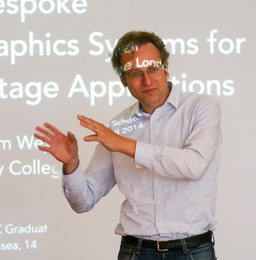
Tim Weyrich is Professor of Visual Computing (part-time) at University College London and Professor of Digital Reality at Friedrich-Alexander University Erlangen-Nürnberg. He leads the Digital Reality Lab and has affiliations with the Virtual Environments and Computer Graphics group at UCL, Eurographics, and the EPSRC Doctoral Training Centre (SEAHA). Previously, he held a Postdoctoral Teaching Fellowship at Princeton University. Research Interests: Content creation and computational photography Appearance modeling and fabrication Point-based graphics and cultural heritage analysis Digital humanities and 3D printing Article Trends: Recent work focuses on neural radiance fields (FruitNeRF++), 3D Gaussian splatting, mmWave radar inverse rendering, and texture anomaly detection. Applications span autonomous systems, cultural heritage, and medical imaging. Scientific Awards: Best Paper Honourable Mention (BMVC 2022) Best Student Paper Award (EG Workshop on GCH 2014) Honorable Mention (Eurographics 2011) Best Student Paper Honourable Mention (BMVC 2018) ACM SIGCHI Best Paper Honourable Mention (CHI 2013)
Dr. Maxime Cordeil is a Senior Lecturer in Human Centred Computing at the School of Electrical Engineering and Computer Science, The University of Queensland. His research focuses on Virtual and Augmented Reality technologies for data interaction, interactive visualization systems, and AR interfaces for industry applications. He has authored over 60 publications in top-tier venues such as ACM CHI and IEEE VR, and was nominated as Australia's Field Leader in Computer Graphics in 2021 and 2022. Research Interests: Data visualization, immersive analytics, medical imaging, collaborative systems, and human-computer interaction. Current Projects: Includes embedded visualizations for sports performance, interactive machine learning in 3D environments, and mixed-reality applications in forensic science. PhD Supervision: Actively guiding students in topics like immersive gesture exploration, AR for digital health, and collaborative VR systems. His work bridges theory and practice, with tools like IATK (Immersive Analytics Toolkit) and the MADE-Axes hardware system. He collaborates with industry partners like Raytracer and CSIRO, focusing on applications in space exploration, underwater training, and remote operations. Awards: Multiple best paper recognitions at ISS and CHI, plus industry-driven research grants. Labs: Leads the Immersive Analytics research group at UQ, specializing in embodied interaction and spatial computing.
Johannes Schöning is a Professor of Human-Computer Interaction (HCI) at the University of St. Gallen and leads the Ubiquitous Media Technology Lab . His research focuses on developing user interfaces that empower individuals and communities through data-driven decision-making, with interdisciplinary applications in geographic information science, public health, medical contexts, and extreme environments like space missions. He emphasizes methodological rigor from AI, computer graphics, and cognitive psychology. Organizes AlpCHI 2026 Chair of ACM Eugene Lawler Award Committee Editorial Board, AI Perspectives (Springer Nature) Research Trends : His publications from 2025–2024 reveal a focus on Mixed Reality (autoethnography, weight perception), Accessibility (visual impairment support), Environmental HCI (CO2 eco-feedback), and Geospatial Technologies (navigation externalities, map analytics). Interdisciplinary work appears in journals like Nature and PLOS ONE . Scientific Recognition : ACM Distinguished Member Best Paper & Accessibility Awards (Interact 2019, MobileHCI 2015) Junior Fellow, Gesellschaft für Informatik (2013) Academic Service : Active in conference leadership (SIGCHI Switzerland Chair 2021–2023, ISS 2016 Program Chair) and reviewing for top venues including ACM CHI , Ubicomp , and IEEE VR . Regular reviewer for European science foundations and DFG/BMBF proposals.
Prof. Dr.-Ing. Stefan Kopp is a faculty member at Bielefeld University's Faculty of Engineering and serves as Research Group Leader of the Cognitive Systems and Social Interaction Group . He also holds administrative roles as Vice Dean and Deputy CITEC Coordinator . His work focuses on Artificial Intelligence , Cognitive Systems , and Socio-Technical World research areas. Research Group Leader: Cognitive Systems and Social Interaction Group Vice Dean: Faculty of Engineering Deputy Coordinator: Center for Cognitive Interaction Technology (CITEC) Project Manager: TRR 318 "Constructing Explainability" subprojects His research explores human-agent interaction , multimodal conversational agents , and social AI through projects like 39-Inf-11 Human-Machine Interaction and 39-M-Inf-VKI Virtual Humans and Conversational Agents . Publications address topics including adaptive explanation generation , gesture synthesis , and social cognition in dynamic environments. Current research topics span cooperative AI , explainable decision-making , and sensorimotor grounding in artificial systems.
Doug Bowman is the Frank J. Maher Professor in the Department of Computer Science at Virginia Tech and Director of the Center for Human-Computer Interaction. His work focuses on advancing virtual reality (VR), augmented reality (AR), and 3D user interfaces, with a strong emphasis on human-computer interaction and immersive environments. Education: Ph.D., Computer Science, Georgia Institute of Technology (1999) M.S., Computer Science, Georgia Institute of Technology (1997) B.S., Mathematics and Computer Science, Emory University (1994) Research Interests: Bowman explores the design and evaluation of immersive technologies, including VR/AR interfaces, 3D interaction techniques, and the application of these technologies in fields like healthcare, education, and collaborative work. His work often addresses challenges in spatial awareness, gaze-driven systems, and context-aware interfaces. Recent publications highlight trends in collaborative AR/VR systems, glanceable interfaces, and adaptive techniques for immersive analytics. His research emphasizes real-world applications, such as medical training through AR and improving productivity in virtual workspaces. Lab Affiliation: Director of Virginia Tech’s Center for Human-Computer Interaction, which focuses on interdisciplinary research in interactive technologies.
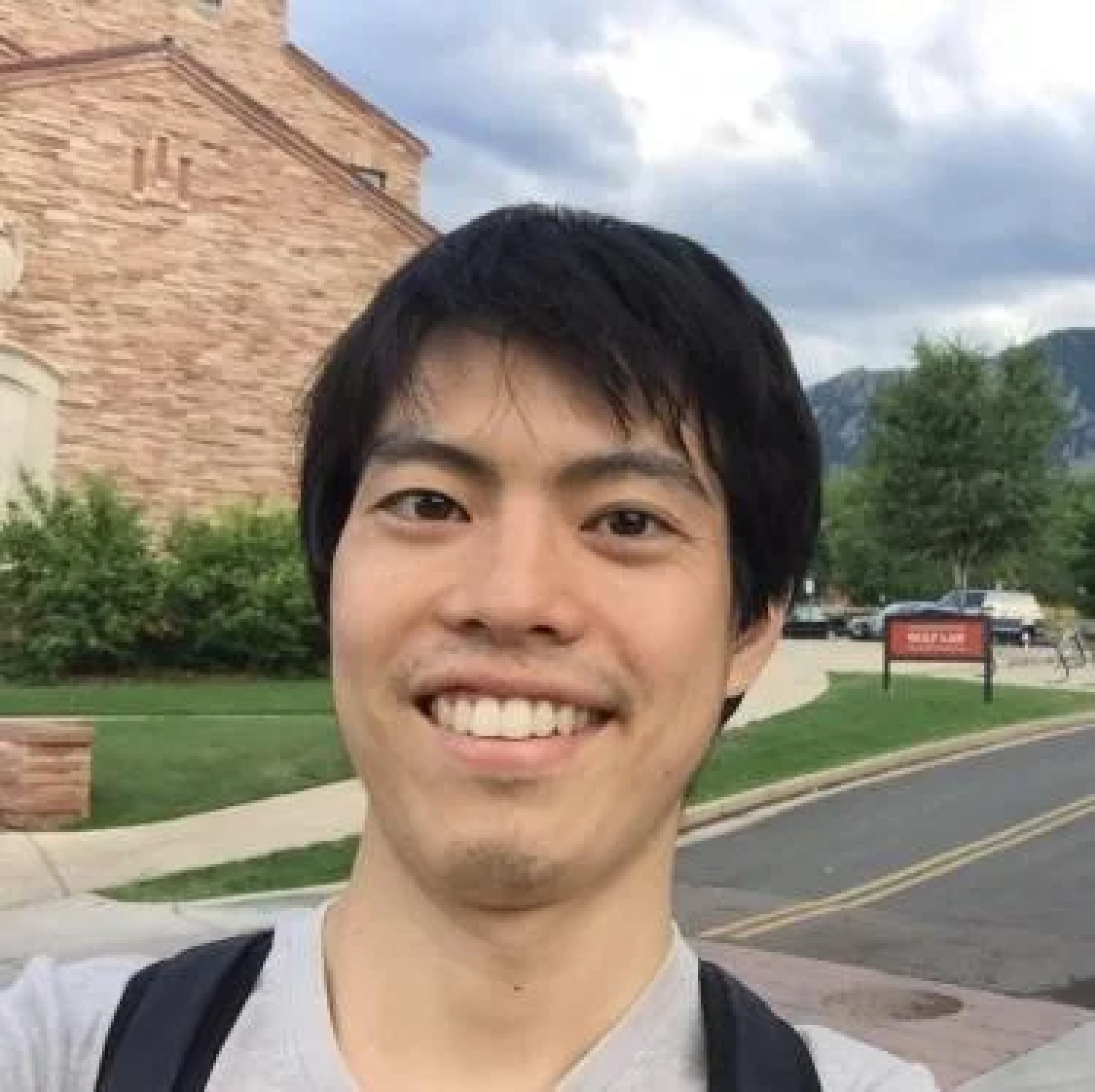
Ryo Suzuki is an Assistant Professor at the ATLAS Institute within the University of Colorado Boulder's Computer Science department. His research focuses on innovative intersections of Human-Computer Interaction (HCI), Augmented Reality (AR), and robotics. He explores systems that blend AI, haptics, and shape-changing interfaces to create enriched user experiences. Key areas of investigation include embedding interactivity into static educational materials (e.g., textbooks), developing AI-driven AR tools for procedural instruction, and creating shape-changing robotics for tactile feedback. His work often emphasizes practical applications in education, remote collaboration, and creative industries. Recent projects include MapStory (LLM-driven map animation), RealityEffects (3D volumetric video augmentation), and HoloDevice (holographic cross-device collaboration).
Olga Vitek is a Professor at Northeastern University's Khoury College of Computer Sciences, with affiliated faculty status in the Department of Chemistry and Chemical Biology. Her research bridges statistical science and machine learning with mass spectrometry-based proteomics and systems biology, focusing on developing open-source software tools like MSstats and Cardinal for quantitative proteomic analyses and imaging. Education: PhD in Statistics (Purdue University), Postdoc at the Ruedi Aebersold Lab (Institute for Systems Biology) Leadership: Director of the Barnett Institute for Chemical and Biological Analysis Her work emphasizes: Statistical experimental design Signal detection in complex mass spectrometry data Causal inference in biomolecular networks Reproducible computational infrastructure Recent publications highlight advancements in quantitative proteomics , mass spectrometry imaging , and causal modeling , with applications spanning cancer research, immunology, and clinical diagnostics. Notable trends include deep learning integration for image analysis and open-source tool development for scalable, transparent workflows. Scientific accolades: Elected Fellow of the American Statistical Association 2021 Gilbert S. Omenn Computational Proteomics Award NSF CAREER award Chan-Zuckerberg Essential Open-source Software award Senior Member, International Society for Computational Biology
Prof. Dr. Enkelejda Kasneci is a Distinguished Professor at the Technical University of Munich (TUM), leading the Chair of Human-Centered Technologies for Learning. She holds dual affiliations within TUM School of Social Sciences and Technology and TUM School of Computation, Information and Technology. Her research integrates AI, eye-tracking, and immersive technologies to advance educational paradigms. She directs the TUM Center for Educational Technologies and chairs the MSc program 'AI in Society.' Education: PhD in Computer Science from University of Tübingen (2013), M.Sc. from University of Stuttgart (2007). Earlier roles include Assistant Professor and Dean of Studies at University of Tübingen. Research Focus: Human-centered AI applications in education, multimodal interaction design, and privacy-preserving eye-tracking. Her work bridges technology and pedagogy through projects like AI tutor PEER, VR Classroom, and Privacy-Preserving Eye-tracking. Key Projects: Leads EU-funded projects VIVA (€1.125M), DigiProMIN (€163K), and SARA Kids (€244.8K). Active in policy initiatives like Europe’s AI Imperative. Awards: TUM Heinz Maier-Leibnitz Medal (2024), Liesel Beckmann Distinguished Professorship (2022), and Südwestmetall Research Prize (2014). Grants & Advising: Over €5M in secured funding across 12+ projects. Supervises 14+ PhD researchers and mentors postdocs in AI education and HCI. Labs & Teams: IT-Stiftung EdTech Lab houses advanced VR/eye-tracking setups. Research group includes 20+ members spanning AI, HCI, and educational technology.
Andrea Bunt is a Full Professor and Associate Head (Graduate) in the Department of Computer Science at the University of Manitoba, where she co-directs the HCI lab. She has established herself as a leading researcher in human-computer interaction with significant contributions to software learnability, rural computing, and technologies for children and families. Her work bridges theoretical and practical aspects of HCI, with strong community engagement through student supervision and collaborative projects. Dr. Bunt completed her B.Sc. at Queen's University, followed by an M.Sc. in 2001 and Ph.D. in 2007 at the University of British Columbia. Prior to joining the University of Manitoba, she was a Postdoctoral Fellow at the University of Waterloo in the Human-Computer Interaction Lab. This educational trajectory has provided her with a strong foundation for her interdisciplinary research approach. Her research interests span multiple areas within human-computer interaction, with particular focus on software learnability for diverse user groups, improving computing experiences in rural and remote communities, and designing technologies specifically for children and families. Her work on explainable AI, gender inclusivity in technology, and collaborative learning dynamics represents cutting-edge contributions to the field. Recent projects include Stream Assistant for live streamers, digital interventions for adolescent tech disengagement, and gender-inclusive approaches to online question-and-answer platforms. Analysis of her recent publications reveals a strong emphasis on user-centered approaches to technology design, particularly focusing on vulnerable or underserved populations. Her work consistently bridges theoretical HCI principles with practical applications, demonstrating how technology can be made more accessible, inclusive, and effective for diverse user groups. There's a clear trajectory toward addressing societal challenges through HCI, with increasing focus on ethical considerations in AI systems. CS-Can | Info-Can Young Researcher Award (2018) NSERC Accelerator Supplement (2015-2018) Multiple Best Paper Awards at premier conferences including CHI, Graphics Interface, and FDG Consistent recognition for methodological innovation and impactful research contributions Dr. Bunt actively mentors a diverse group of students at all levels, from undergraduate research assistants to Ph.D. candidates. Her lab receives funding from NSERC Discovery Grants and other sources to support research on intelligent interactive systems. She has successfully guided numerous students through their academic journeys, with many going on to impactful careers in academia and industry. Her collaborative approach extends to interdisciplinary partnerships across computer science, education, and social sciences. The HCI lab she co-directs serves as a vibrant research hub focusing on real-world applications of human-computer interaction principles. Current projects address critical challenges including technology use in rural communities, digital wellbeing for adolescents, and inclusive design practices. The lab fosters a collaborative environment where students and researchers work together to develop innovative solutions to complex HCI problems.
Leah Findlater is an Associate Professor in the Department of Human-Centered Design & Engineering at the University of Washington (College of Engineering). She also holds adjunct and affiliate appointments in Computer Science & Engineering and Disability Studies, respectively, and serves as Associate Director of UW CREATE (Center for Research and Education on Accessible Technology and Experiences). Since 2021, she has led a research team in AI and accessibility at Apple. Her research focuses on creating adaptive technologies that accommodate individual needs, particularly for people with disabilities. Key areas include touchscreen personalization, machine learning interfaces, and sound recognition systems for deaf and hard-of-hearing users. Funding sources include NSF, DoD, and major tech companies. Recent work explores AI-driven tactile graphics, visual privacy management for blind users, and sound recognition systems. Her research combines lab studies, field deployments, and qualitative methods. NSF CAREER Award (2014) She advises through the Inclusive Design Lab, emphasizing mixed-methods research and collaborations with disability communities.
Kede Ma is an Associate Professor in the Department of Computer Science at City University of Hong Kong (CityUHK). He received his B.E. from the University of Science and Technology of China (USTC) in 2012, and MASc and Ph.D. degrees from the University of Waterloo in 2014 and 2017, respectively. From 2018 to 2019, he was a Research Associate with the Howard Hughes Medical Institute and New York University. Prof. Ma has been named to the Highly Cited Researchers list by Clarivate Analytics in 2024 and currently serves on the editorial boards of IEEE Transactions on Image Processing, IEEE Transactions on Information Forensics and Security, and IEEE Signal Processing Letters. Prof. Ma leads the Multimedia Analytics (MA) Laboratory, an interdisciplinary research group focused on computational vision, computational modeling of human visual perception, perceptual multimedia signal processing, quality assessment, and multimedia forensics. His research spans computational photography, high dynamic range imaging and rendering, omnidirectional video analysis, camera processing pipeline design, and artificial intelligence safety in multimedia systems. His work integrates machine learning techniques including reinforcement learning, generative modeling, self-supervised learning, and continual learning for multimedia signal processing applications. His recent publications demonstrate a strong focus on image quality assessment, deep learning for multimedia processing, and multimedia forensics. His work bridges theoretical computer vision principles with practical applications in multimedia systems. The research trends show increasing integration of foundation models with specialized multimedia processing tasks, particularly in quality assessment and security applications. Highly Cited Researchers list by Clarivate Analytics (2024) Best Paper Award at IEEE International Conference on Virtual Reality and Visualization (2021) Best Paper Runner-Up at International Joint Conference on Artificial Intelligence Workshop (2021) Top 10% Award at IEEE International Conference on Image Processing (2015) Finalist for the Governor General's Gold Medal, University of Waterloo (2017) Spotlight presentation at NeurIPS (2022) Highlight paper at ICCV (2025) Oral presentation at ICLR (2025) Prof. Ma advises numerous PhD students and postdoctoral fellows in the MA Laboratory. His research is supported by various grants enabling work in multimedia analytics, image processing, and computer vision. The laboratory maintains active collaborations with researchers at institutions including SUSTech, ZJU, and HIT. Current projects focus on advancing image quality assessment methodologies, developing more robust deep learning techniques for multimedia forensics, and exploring new approaches to HDR imaging and omnidirectional video processing. The Multimedia Analytics Laboratory maintains a strong focus on both theoretical foundations and practical applications of multimedia processing. Current research directions include integrating large language models with image quality assessment, developing more robust deepfake detection methods, and advancing techniques for continual learning in multimedia applications. The lab emphasizes rigorous evaluation methodologies and maintains multiple datasets for multimedia quality assessment research.
Prof. Dr. sc. techn. ETH Oliver Staadt is Full Professor of Computer Science and Chair of Visual Computing at the University of Rostock , Germany. Since 2023 he also serves as Director of the Institute for Visual and Analytic Computing within the Faculty of Computer Science and Electrical Engineering . Previously he was Dean (2016–2018) and Vice Dean (2010–2016) of the same faculty. Education Ph.D. in Computer Science, ETH Zürich (2001) M.Sc. in Computer Science, TU Darmstadt (1994) Research Interests Prof. Staadt’s research spans virtual and augmented reality , computer graphics , visualization , telepresence , immersive analytics , and human–computer interaction . A particular focus lies on real-time rendering and display technologies for large high-resolution display systems, depth-image enhancement for RGB-D sensors, and interaction techniques that leverage spatial cognition and eye-tracking. His work is frequently applied to collaborative settings and microgravity environments, including experiments aboard parabolic flights and the International Space Station. Recent Publication Trends Between 2019 and 2021 his output centers on foveated rendering , AR viewpoint guidance , collaborative analytics on wall-sized displays , and embodied interaction metaphors . Earlier work addressed bandwidth-efficient telepresence, depth-image filtering, and physically-based animation. The corpus reveals a steady evolution from fundamental graphics algorithms toward applied immersive systems. Scientific Awards & Honors Fellow of the Eurographics Association Associate Editor, IEEE Transactions on Visualization and Computer Graphics (past) Associate Editor, Computers & Graphics (past) Associate Editor, Computer Animation and Virtual Worlds (past) Associate Editor, Frontiers in Virtual Reality (current) Chair, Expert Group on Virtual & Augmented Reality, German Informatics Society (2013–2020) Advising & Funding He has successfully supervised more than ten PhD graduates whose dissertations range from collision detection and physically-based animation to 3D interaction in microgravity and predictive user modeling. Current PhD researchers include Bipul Mohanto, Mana Takhsha, and Sven Kluge. His projects are supported by national and EU programs such as EVOCATION, SMOOTH, ARGuide, 3DPick, DIVA, and Telepresence. Labs & Teams Prof. Staadt leads the Visual Computing Group at Rostock, operating state-of-the-art facilities including large tiled display walls, VR/AR laboratories, and motion-capture systems. The institute hosts interdisciplinary collaborations with partners in visualization, computer vision, psychology, and aerospace engineering.
Professor Jyh-Hone Wang holds a faculty position in the Department of Mechanical, Industrial and Systems Engineering at the University of Rhode Island (URI). His research focuses on transportation human factors, driving safety, and intelligent transportation systems, with particular emphasis on variable message sign (VMS) design, driver behavior analysis, and automation technology acceptance in elderly drivers. He has conducted studies on dynamic message sign efficacy, traffic flow management, and roadway safety improvement strategies. Education: Ph.D. and M.S. in Industrial Engineering from the University of Iowa (1989 and 1986), and B.S. in Industrial Engineering from Tunghai University, Taiwan (1980). Recent grants include a 2020 National Institute for Undersea Vehicle Technology grant (Co-PI) on stress monitoring via wearable devices, and a 2017 Rhode Island Department of Transportation grant (PI) assessing sidewalk quality compliance. His work bridges engineering principles with human factors to enhance traffic safety and transportation efficiency. Key research contributions include optimizing VMS message design for clarity, analyzing driver responses to automation levels, and addressing tailgating issues through behavioral interventions. He has advised multiple graduate students and collaborated on interdisciplinary projects involving traffic data analysis and manufacturing process optimization.
Dr. Mike Seymour is a Senior Lecturer at the University of Sydney Business School, specializing in Human-Computer Interaction (HCI), Digital Humans, and AI ethics. He holds a BSc, MBA, and PhD from the University of Sydney. His research focuses on photorealistic digital faces for immersive interfaces, blockchain socio-technical systems, and agile project management in creative industries. Dr. Seymour is a member of the Sydney Nano Institute and leads the Motus Lab. He has published in top journals like *Harvard Business Review*, *Communications of the ACM*, and *Information Systems Research*. His current projects include ARC-funded research on digital humans for anti-racism initiatives and adaptive AI for brain injury patients. He has received awards such as the SOAR Prize and ECR Researcher of the Year. His teaching spans CX, UX, and project management courses (e.g., INFS2040, INFS3080). Media engagements include ABC News, Sky News, and *The Australian Financial Review* for commentary on AI ethics and film industry trends. Education: BSc (University of Sydney) MBA (University of Sydney) PhD (University of Sydney) Research Themes: Real-time photorealistic avatars Deepfake ethics Agile methodologies in VFX Grants: A$450K ARC DP25 grant for anti-racism digital humans Earned $200K in industry partnerships (e.g., Epic Games) Labs/Teams: Leads the Motus Lab and collaborates with the Digital Human Research Group.