Silvia BOZZAمشاهده پروفایل
دانشیار
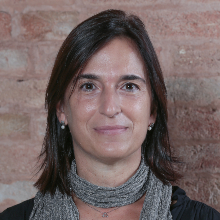
Silvia BOZZA is an Associate Professor in the Department of Economics at Ca' Foscari University of Venice, where she also serves as Department Delegate for Teacher Training for High Schools. Her academic profile is centered around Statistics (SSD STAT-01/A), with a strong focus on forensic applications of statistical methods. She maintains dual institutional affiliations, working within both the Department of Economics (based in San Giobbe) and the Interdepartmental School of Economics, Languages and Entrepreneurship for International Exchanges (located in Treviso - Palazzo San Paolo). Professor BOZZA's research primarily explores the application of Bayesian statistics to forensic science and legal evidence evaluation. Her work demonstrates a consistent trajectory from early publications on spatio-temporal models to her current specialized focus on forensic statistics. She has developed expertise in probabilistic graphical models, Bayes factors, and statistical decision theory as applied to evidence interpretation. Her research addresses critical questions in forensic science regarding how to properly evaluate and communicate statistical evidence in legal contexts, with particular attention to handwriting analysis, DNA evidence, and authorship attribution. Her publication record shows remarkable consistency and productivity, with over 90 publications spanning from 2001 to 2025. Recent work (2022-2025) demonstrates her ability to address contemporary challenges, including AI authorship discrimination using Bayesian methods for distinguishing human from ChatGPT-generated text. Her articles frequently appear in high-impact forensic and statistical journals including Law, Probability & Risk, Forensic Science International, and Annual Review of Statistics and its Application. Professor BOZZA actively supervises undergraduate and graduate theses involving data analysis, requiring knowledge of statistical software including the R programming language used in the Statistics for Economics Laboratory course. She encourages students to propose topics while offering guidance to refine research questions. Her office hours show she maintains regular availability for student consultations, indicating active engagement in academic mentoring.