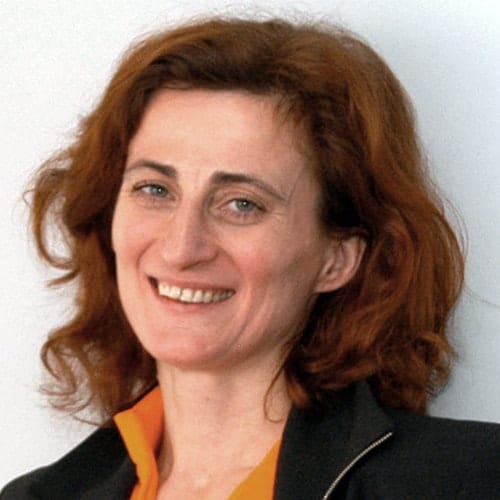
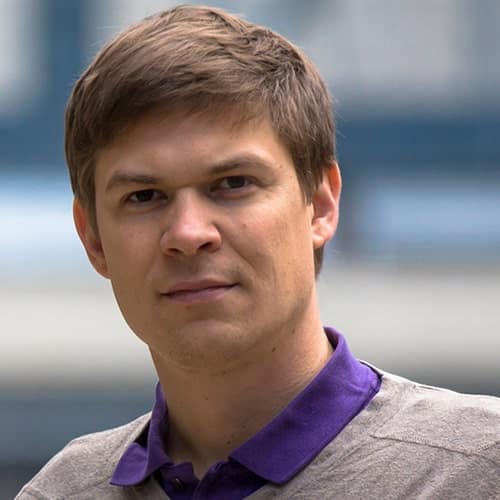
Ute Hahn is an Associate Professor at the Department of Mathematics, Aarhus University . Her research bridges Statistics, Biostatistics, and Neuroscience , with a focus on neurodegenerative diseases like ALS and advanced microscopy techniques . Research Interests: Statistical modeling in ALS and genetic research Stochastic geometry and spatio-temporal analysis Super-resolution microscopy (PALM, STED) Medical statistics and clinical epidemiology Functional data analysis and methodological innovations Selected Publications highlight her interdisciplinary work, including studies on ALS mouse models , microscopy artifacts , and spatio-temporal patterns in medical and environmental contexts . Collaborative Projects: Ute is actively involved in the MechanoGeometry research initiative, which began in 2022 and continues into 2023.
Professor J. Andreas Bærentzen is an Associate Professor at the Department of Applied Mathematics and Computer Science, Technical University of Denmark (DTU), where he has held academic positions since 2001. His research focuses on computer graphics, shape modeling, real-time rendering, and geometry processing. He holds a MSc Eng (1998) and PhD (2003) from DTU. His work emphasizes topological adaptability in shape representation and efficient geometry processing, with notable contributions to structural topology optimization, 3D reconstruction, and virtual reality applications. Education: MSc Eng, Technical University of Denmark, 1991–1998 PhD, Technical University of Denmark, 1998–2003 Research Interests: Interactive 3D modeling and real-time graphics Topology optimization and structural infill design Shape modeling using distance fields and deformable hypersurfaces Applications in biomedical imaging (e.g., white matter dynamics) and environmental engineering (e.g., tree geometry simulation) His recent publications highlight advancements in neural network-based shape representation, skeletonization for tree reconstruction, and inverse-designed structural infill for engineering. He supervises multiple PhD students and leads projects on robotic manufacturing and virtual reality visualization. Bærentzen collaborates internationally, including visits to Stony Brook University (USA) and Padova University (Italy). Advisees & Projects: PhD Students: Rui Cui, Thomas D. V. Christiansen, Elias Theil Gæde Key Projects: 'Generative Methods for Brain Tissue Phantoms', 'Neural Form Representation', 'Graph Algorithms with Geometric Applications' His work bridges theoretical geometry processing with practical applications in architecture, biomedical engineering, and environmental science, leveraging DTU's interdisciplinary research ecosystem.
Søren Højsgaard is an Associate Professor in the Department of Mathematical Sciences at Aalborg University, Faculty of Engineering and Science. His work bridges statistical theory, computational methods, and pedagogical innovation, with a strong focus on graphical models, Bayesian networks, and computer algebra systems in R. His research interests lie at the intersection of statistics, machine learning, and software development. He is particularly known for developing R packages such as caracas , gRbase , and sparta , which facilitate symbolic computation and efficient inference in probabilistic models. His work supports both advanced research and accessible teaching in data science. The recent publications highlight a consistent trend toward integrating symbolic mathematics with statistical computing, improving scalability in Bayesian network predictions, and enhancing statistics education through tools like Quarto and R. His contributions span theoretical algorithms, software implementation, and educational applications. Active contributor to open-source statistical software Focus on model-based prediction and symbolic computation Emphasis on teaching innovation using computational tools He has been involved in academic outreach through conference presentations and media engagement, discussing topics ranging from R programming to workplace safety modeling. His leadership role in the Department of Mathematical Sciences was recently highlighted in university communications. Søren Højsgaard leads and contributes to projects that combine rigorous statistical methodology with practical implementation, supporting both research and education in modern data science.
Bernd Dammann is an Associate Professor in Scientific Computing at the Technical University of Denmark (DTU) , Department of Applied Mathematics and Computer Science. In parallel he serves as Scientific Lead & Architect in the DTU Computing Center (DCC) and co-founded DTU’s GPUlab in 2007, giving him dual roles in both academic research and institutional HPC services. Education Dipl.Phys. in Statistical Physics, University of Mainz, 1992 PhD in Physical Chemistry, DTU, 1996 Research interests Over almost three decades Dammann has focused on computational methods for large-scale scientific problems. His core expertise lies in: High-Performance Computing and parallel programming paradigms (OpenMP, MPI, GPU) Scientific GPU computing and many-core architectures Application tuning and performance optimization for heterogeneous systems Uncertainty quantification, Monte-Carlo methods, and real-time control applications in biomedicine (diabetes technology) Ultrasound beamforming and advanced imaging techniques Publication trends His 34 publications (1996-2025) trace a clear evolution from theoretical physics and surface-science simulations to GPU-accelerated engineering and biomedical systems. Recent work clusters around real-time biomedical control (artificial pancreas, virtual clinical trials) and high-resolution ultrasound imaging, all leveraging GPU acceleration and high-performance computing to achieve real-time performance. Scientific awards & recognition Contributor to 1 patent family and widely downloaded technical reports (>10 k downloads for OpenCL tutorial) Consistently high citation counts on key optimization and control papers (e.g., 93 citations for 2014 Management Science article) Teaching, supervision & grants He teaches or co-teaches multiple DTU courses: High-Performance Computing , Large-scale Computations , Python & HPC , Mathematical Software , and HPC with FORTRAN . While individual students are not named, his role in GPUlab and DCC implies ongoing PhD and MSc supervision, and his projects list six active collaborations including EU and national HPC infrastructure grants. Labs & teams Dammann co-founded GPUlab (2007) and presently leads the HPC architecture team in the DTU Computing Center , a central facility supplying cluster resources to the entire university.
Titus Theodorus Robroek is a Postdoctoral Researcher at IT University of Copenhagen, working within the Data, Systems, and Robotics section. His research focuses on resource-aware data systems and data-intensive systems and applications, with affiliations to both the Resource-Aware Data Systems group and the Center for Climate IT. Dr. Robroek's research interests span multiple areas in machine learning systems, including: Resource-aware Machine Learning Deep Learning Training Optimization GPU Computing and Collocation ML Benchmarking Frameworks Data Management for Machine Learning Scientific Visualization for Training Systems His recent publications demonstrate a strong focus on optimizing machine learning workflows, particularly in resource-constrained environments. His work addresses critical challenges in data selection, pipeline orchestration, and efficient utilization of hardware resources for deep learning training. The research shows a progression from foundational work on data management to more comprehensive frameworks for resource-aware machine learning. Dr. Robroek has received research funding through two major projects: MOTH: Machine Learning on Tiny Hardware (Novo Nordisk Foundation, 2023-2026) RAD: Extremely Parallel and Incredibly Diverse Data Processing on Many Heterogeneous Cores (Independent Research Foundation of Denmark, 2021-2025) His PhD thesis "Resourceful Learning: Training More Models with Fewer Resources" (2024) represents a significant contribution to the field of efficient machine learning systems.
Eric Bautista Farrerons is a researcher at the Department of Health Technology , Technical University of Denmark . His work focuses on computational tools for genome editing and data analysis. Specializes in CRISPR and gene editing simulations Active in interdisciplinary research combining computational methods with molecular biology In 2023, he co-authored a pivotal publication in PLOS Computational Biology on CRISPR-Analytics (CRISPR-A), addressing challenges in precise gene editing analytics. Recent collaborations highlight his engagement in engineering-driven biomedical research, with a focus on CRISPR technology and homology-based genomic methods.
Hang Yin is a Tenure Track Assistant Professor at the Department of Computer Science, University of Copenhagen. His research focuses on Image Analysis, Computational Modelling, and Geometry, with applications in robotics, motion capture, and multimodal learning. Research interests: Geometric representations in robotics Motion capture artifact removal Diffusion-based motion style transfer Human-robot interaction analysis Research output trends show significant contributions in AI-driven robotics (2025), motion capture optimization (2024), and multimodal human movement analysis (2023). His work combines computational geometry with machine learning for practical applications in autonomous systems. Contact: hayi@di.ku.dk
Kenny Erleben is a Professor and Head of the IMAGE research section at the Department of Computer Science, University of Copenhagen . His work integrates physics-based simulation with data-driven approaches, advancing fields like robotics, machine learning, and computer graphics. He leads a team of 10 within IMAGE, a section housing 10 faculty, 2 postdocs, and 20 PhDs, with research foci in computer vision, medical image analysis, and numerical methods. Education: PhD in Computer Science, University of Copenhagen (2005) Erleben’s research interests span physics-based modeling and simulation , robotics automation , data-driven modeling , and digital twins . His team develops numerical methods for interactive simulation, bridging real-world data with synthetic models for applications in surgical simulators and computer games. Scientific production trends include differentiable simulation pipelines, collision detection algorithms, and friction modeling. Key applications involve NVIDIA’s PhysX/Isaac engines, surgical robotics, and medical imaging. His awards include four best paper prizes, reflecting his impact on simulation and robotics. Supervision: 15 PhDs, 8 Postdocs, and 170+ theses Grants: HORIZON-RIA (€6.19M), EU MSCA-ITN RAINBOW (€4M+), and other Innovationsfond/DFF awards Erleben’s community leadership includes coordinating the Danish Academy of Digital Interactive Entertainment (DADIU) and reviewing for 300+ scientific papers. He has held roles like Deputy Head of Department (2012-2015) and Scientific Advisor at Alexandra Institute.
Alberto Lluch Lafuente is a Professor in the Department of Applied Mathematics and Computer Science at the Technical University of Denmark (DTU). He leads research in formal methods, cybersecurity, and software systems engineering. His work emphasizes model checking, blockchain protocols, and security risk modeling. He has supervised multiple PhD students and serves as Editor-in-Chief of the Journal of Logical and Algebraic Methods in Programming . Research interests include formal verification, attack-defense trees, distributed systems, and quantitative analysis of adaptive systems. Recent efforts focus on process mining for security analysis, liquidity-saving protocols in DeFi, and human-centered AI in software engineering. Key Projects: IoT security risk modeling, formal analysis of DeFi protocols, reduction techniques for biological systems Tools Developed: ERODE (Boolean network reduction), QFLan (quantitative analysis tool) His interdisciplinary work bridges theoretical computer science with practical applications in finance, cybersecurity, and distributed systems.
Claus Dethlefsen is an Adjunct Professor at the Department of Mathematical Sciences, Aalborg University, within The Faculty of Engineering and Science. His research focuses on biostatistics, health informatics, and diabetes-related studies, particularly leveraging Bayesian networks and graphical models in medical applications. Key research contributions include projects such as 'Learning Bayesian networks in R' and 'Prediction of insulin sensitivity index using Bayesian networks.' He has collaborated on initiatives like 'Modelling variation in morbidity' and 'State space models in R.' Recent publications emphasize telemonitoring in diabetes care, adherence to antidiabetic drugs, and behavioral patterns in type 2 diabetes management. His work frequently integrates statistical methodologies with clinical data analysis. He has served as an external examiner for PhD programs, organized conferences, and reviewed manuscripts for journals like BMC Public Health. His activities include presenting at Novo Nordisk on statistical methodologies and participating in international biostatistics conferences.
Silvia Miksch is a University Professor and head of the Research Center for Visual Analytics Science and Technology (CVAST) at the Institute of Software Technology & Interactive Systems, Vienna University of Technology (TU Wien). She previously served as University Professor and head of the Department of Information and Knowledge Engineering at Danube University Krems (2006–2010) and founded the Laura Bassi Centre of Expertise "CVAST" in 2010, funded by the Austrian Federal Ministry of Science, Research, and Economy. Her research focuses on Visualization and Visual Analytics , particularly Focus+Context techniques , interaction design , and time-oriented data analysis . She has made significant contributions to the development of systems that support the exploration of complex temporal and networked data in domains such as economics and finance. The recent publications highlight her work in guidance-enriched visual analytics for economic networks and modeling financial data over time with incremental domain knowledge. These works reflect a strong trend toward integrating user guidance, temporal reasoning, and domain-specific knowledge into visual analytics frameworks. Scientific Awards and Recognition: Established the awarded Laura Bassi Centre of Expertise "CVAST – Center for Visual Analytics Science and Technology" Advising and Service: While no formal students are listed, Silvia Miksch has played a major leadership role in shaping the research landscape. She has served as conference paper co-chair for IEEE VAST 2010 and 2011, EuroVis 2012, and has been on the editorial boards of top journals including Artificial Intelligence in Medicine , IEEE TVCG , Computer Graphics Forum , and Journal of Biomedical Informatics . She actively contributes to the strategic direction of the field through roles in the VAST steering committee and the VIS Executive Committee (VEC). Labs and Teams: She leads CVAST (Center for Visual Analytics Science and Technology), a research center dedicated to advancing visual analytics through interdisciplinary collaboration and innovation.
Thomas Pock is a Professor of Computer Science at Graz University of Technology, holding the AIT Stiftungsprofessur for Mobile Computer Vision. He is affiliated with the Institute for Computer Graphics and Vision (ICG) within the Faculty of Computer Science and serves as a principal scientist at the Austrian Institute of Technology (AIT), Center for Vision, Automation & Control. He leads the Vision, Learning and Optimization (VLO) research group, which focuses on mathematical modeling and optimization in computer vision. His research interests lie at the intersection of computer vision, image processing, and mathematical optimization. Specifically, he develops mathematical models for computer vision and efficient convex and non-smooth optimization algorithms , particularly for mobile scenarios. His recent work increasingly integrates variational methods with deep learning, especially in solving inverse problems in imaging such as medical reconstruction and deblurring. The trends in his recent publications show a strong emphasis on deep learning for inverse problems , variational networks , and learned optimization . His group explores how to combine classical mathematical models with data-driven deep learning approaches to achieve stable, interpretable, and high-performance solutions in image reconstruction and processing. His scientific achievements have been recognized with several prestigious awards: START Prize, Austrian Science Fund (FWF), 2013 German Pattern Recognition Award, DAGM, 2013 ERC Starting Grant, European Research Council, 2014 Thomas Pock actively mentors students and leads a research group of 10 PhD students and 2 postdocs. He has secured significant research grants, including the ERC Starting Grant, which supports his foundational work. He is also engaged in scientific communication, giving invited talks at international venues such as SIAM and co-organizing the IMAGINE One World seminar series to foster global collaboration in imaging and inverse problems. He leads the Vision, Learning and Optimization (VLO) group at the Institute for Computer Graphics and Vision. The group develops mathematical models and efficient algorithms for computer vision and image processing, with a focus on mobile applications. The team includes multiple PhD students and postdoctoral researchers and has produced notable software and publications in top venues.
Sebastian Weichwald is an Associate Professor at the Department of Mathematical Sciences , University of Copenhagen. He leads the Copenhagen Causality Lab (CoCaLa) and co-leads the Causality and Explainability (CX) collaboratory at the Pioneer Centre for AI. His academic journey includes a PhD at ETH Zurich (2019) and postdoctoral work at the University of Copenhagen. Research Interests: Causal Modelling, Causal Discovery, Structural Equation Models, Time Series Analysis, Neuroimaging, Biomedical Data Analysis. Awards: Best student paper at CIP 2014, Winner of Causality 4 Climate NeurIPS 2019 competition. Collaborations: Active in interdisciplinary projects with applications in cardiology, neuroscience, and biomedical imaging. Software Tools: Developed open-source libraries including CausalDisco , coroICA , tidybench , and Pymanopt for causal discovery, signal processing, and manifold optimization.
Dr. Rodrigo Labouriau is an Associate Professor at the Department of Mathematics, Aarhus University, within the Faculty of Natural Sciences. He leads the Applied Statistics Laboratory (aStatLab), focusing on statistical modeling and consultancy for natural and technological sciences, particularly biology, agriculture, and environmental sciences. Research Focus : Generalized linear mixed models (GLMMs), graphical models, and their multivariate/semiparametric extensions for complex data analysis. Teaching : Courses like 'Study Design and Analysis' for Master’s students, and PhD-level courses in R programming, generalized linear models, and mixed models. Consultancy : Provides free statistical support to Faculty of Natural Sciences members through ad hoc projects, thesis supervision, and daily consultations. Research Trends : His work bridges statistical theory with applied solutions for environmental monitoring (e.g., ammonia emissions), agricultural productivity (e.g., intercropping systems), and biomedical challenges (e.g., malaria detection via DNA sensors). Projects often involve interdisciplinary collaborations in agricultural, environmental, and health sciences. Key Projects : NATEF (2020–2023), MAG (2019–2025), and others tackling soil mechanics, aviation de-icing, and bull fertility.
Torben Tvedebrink is a Postdoctoral Researcher at Aalborg University's Department of Mathematical Sciences within the Faculty of Engineering and Science, specializing in the Section of Forensic Genetics. His work integrates advanced statistical methodologies with forensic applications, primarily focused on genetic data analysis for ancestry inference and identification. His research interests include Forensic Genetics , Biostatistics , Ancestry Inference , Bayesian Networks , Genetic Markers , and Bioinformatics . He develops computational tools for efficient genetic analysis, such as the jti and sparta packages for Bayesian network modeling, and contributes to biogeographic panels like the Okinawa Panel for population studies. Analysis of his 2020-2024 publications reveals consistent emphasis on forensic biostatistics, with key themes in ancestry prediction using tools like GenoGeographer, outlier detection in genetic data, and non-invasive melanoma diagnostics. His work demonstrates strong interdisciplinary collaboration, particularly with forensic institutions in Copenhagen. No scientific awards were mentioned in the available information. Details regarding students advised or research grants are not provided in the source material. Dr. Tvedebrink actively participates in international forensic genetics networks, evidenced by co-authorship with researchers from the University of Copenhagen and global teams on ancestry panels and forensic methodology validation.