Humberto Martinez Barbera is an Associate Professor at the University of Murcia's Faculty of Informatics, affiliated with the Department of Information and Communication Engineering. His research focuses on robotics, control systems, and telematics engineering. He holds a PhD from the University of Murcia (2001) with a thesis on distributed architectures for autonomous mobile robots. His work emphasizes robotics navigation, sensor fusion, and autonomous systems. Notable projects include the MIMICS project (intelligent transport systems) and contributions to RoboCup robotic football. He has supervised research on AGV coordination, fuzzy logic applications, and underwater robotics. His recent publications span multi-GPU acceleration, underwater grasping, and sensor calibration. He has contributed to international collaborations like the French-Spanish L3M SPL Team. Key technical areas include distributed control architectures, Kalman filtering for attitude estimation, and fluid-structure interaction in sailing vessels. His work bridges theoretical advancements with practical applications in autonomous vehicles and industrial automation.
Idoye Zabala is a Professor in the Department of Applied Economics I at the University of the Basque Country (UPV/EHU) and a researcher at HEGOA, the Institute for Development and International Cooperation Studies. Her work focuses on analyzing gender dynamics within international development frameworks, particularly critiquing institutions like the World Bank. She has contributed significantly to understanding decentralized cooperation models in the Basque Country and their effectiveness. Education: Holds a PhD in Applied Economics from the University of the Basque Country. Her academic background aligns with her research on economic structures and gender integration in policy. Research Interests: Zabala's key areas include women in the international economy, gender and development, decentralized cooperation mechanisms, and evaluating the role of global institutions. She emphasizes feminist methodologies to assess policy impact and advocates for coherent development strategies across local and international levels. Collaborations: She has co-authored studies with institutions like HEGOA and the UPV/EHU, focusing on Basque Country development policies, World Bank gender approaches, and local-based cooperation initiatives. Notable projects include analyses of 25 years of Basque cooperation and methodology proposals for policy evaluation. Labs/Teams: Active in HEGOA’s research groups on Development Policy Analysis and Evaluation, collaborating with scholars like Koldo Unceta and María José Martínez Herrero to produce multidisciplinary studies.
Jesús Tordesillas Torres is an Assistant Professor in the Department of Electronics, Automation, and Communications at the School of Engineering, Comillas Pontifical University. He joined the institution in June 2024, bringing extensive experience from postdoctoral research at MIT and ETH Zurich, and prior academic training from MIT and the Polytechnic University of Madrid. Education: PhD in Aeronautics and Astronautics, Massachusetts Institute of Technology (MIT), 2022 MS in Aeronautics and Astronautics, MIT, 2019 MS in Industrial Engineering, Polytechnic University of Madrid, 2019 BS in Industrial Engineering, Polytechnic University of Madrid, 2016 His research focuses on robotics, particularly autonomous navigation, trajectory planning, and optimization under uncertainty. He integrates deep learning and control theory to develop systems capable of safe, fast, and perception-aware navigation in dynamic and unknown environments. His work spans aerial and ground robots, multiagent systems, and challenging terrains, with strong emphasis on real-world deployment and robustness. The recent publications highlight a consistent trend in trajectory optimization, perception-aware planning, and multiagent coordination. His work bridges theoretical advances in optimization and learning with practical robotic applications, especially in safety-critical and communication-constrained scenarios. Scientific Awards: Best Paper Award, IEEE ICRA 2023 1st Place, Urban Circuit, DARPA Subterranean Challenge (2020) 2nd Place, Tunnel Circuit, DARPA Subterranean Challenge (2021) Finalist, Best Paper, IEEE IROS 2019 Jesús Tordesillas Torres has been actively involved in research grants and projects, including the ADS FERRARI WP-2 Project funded by Airbus Defence and Space (2025–2025). He mentors students and collaborates with leading institutions such as MIT, ETH Zurich, and the University of Pennsylvania. He also serves as a reviewer for top-tier journals including IEEE Transactions on Robotics , International Journal of Robotics Research , and IEEE Robotics and Automation Letters , as well as major conferences like ICRA and IROS. He leads and participates in research teams focused on autonomous systems, with affiliations to the Institute for Research in Technology (IIT) at Comillas. His invited talks at ETH Robotics Summer School and University of Pennsylvania reflect his growing influence in the robotics community.
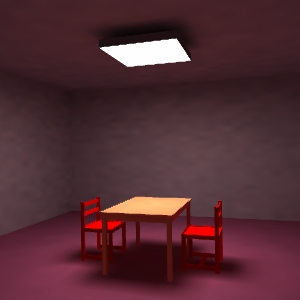
Gonzalo Besuievsky is Associate Professor at the Department of Computer Science and Applied Mathematics of the University of Girona , Spain. He leads research on physically-based rendering and global illumination, with particular emphasis on Monte-Carlo methods and dynamic radiosity environments. Education: PhD in Computer Science, Universitat Politècnica de Catalunya , 2001 — Dissertation: "A Monte Carlo Approach for Animated Radiosity Environments" Research Interests: His work spans several inter-related domains: Global Illumination & Radiosity: developing algorithms for realistic light transport in synthetic scenes. Monte Carlo Techniques: adaptive and hierarchical sampling to accelerate rendering. Dynamic Environments: efficient update schemes for animated lighting and moving light sources. Daylighting Simulation: integrating sunlight models into architectural 3-D workflows. Motion Blur & Temporal Coherence: novel methods to render motion-blurred radiosity images. Publication Trends: Across his 1993–2006 publications, a clear evolution is visible from foundational stochastic ray-tracing work toward sophisticated Monte-Carlo radiosity frameworks that handle dynamic lighting, daylighting, and frame-to-frame coherence for animations. Labs & Groups: He is affiliated with the Girona Graphics Group , a research team devoted to advanced graphics and visualization technologies.