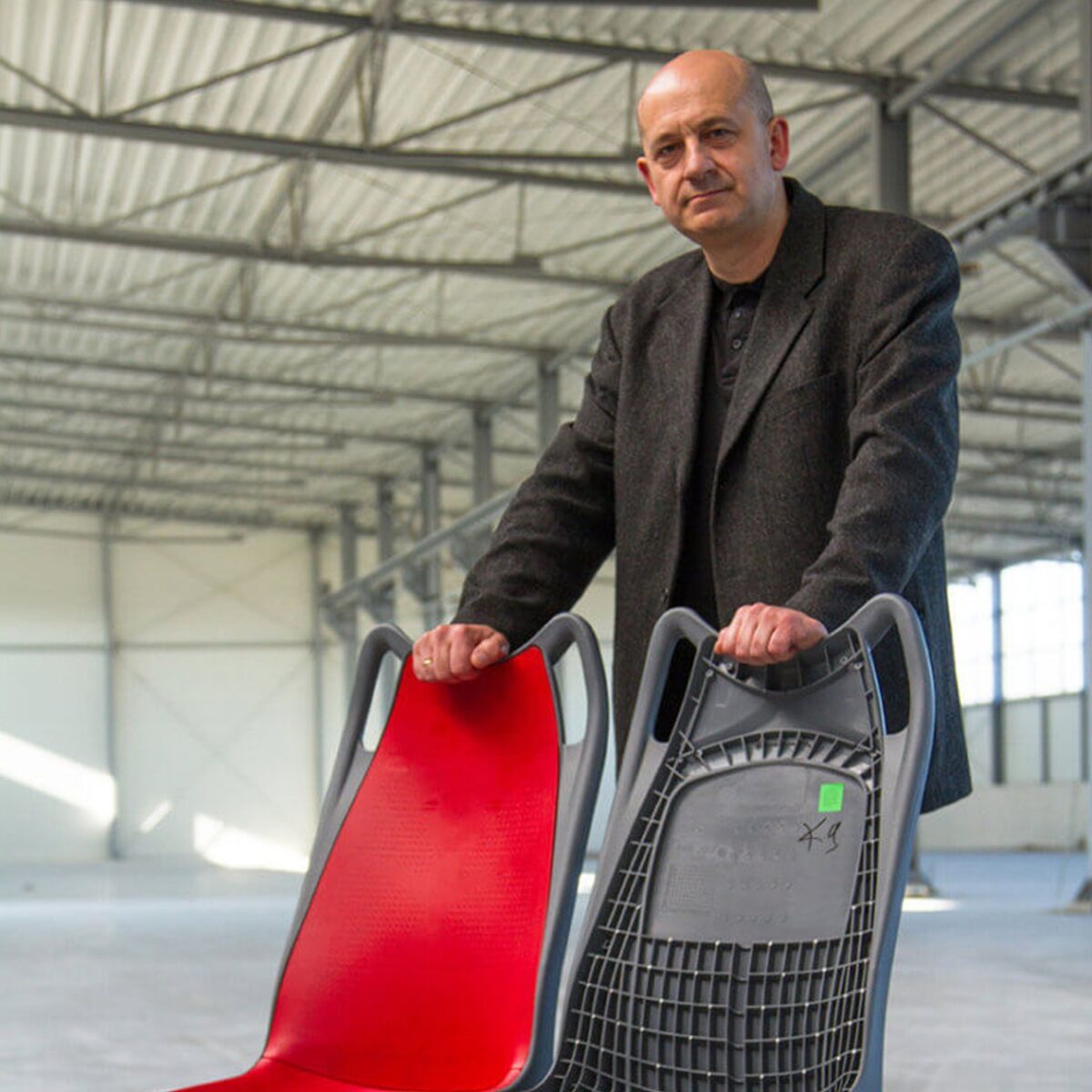
Dr. Krzysztof Kwiatkowski is an Assistant Professor at the University of Arts in Poznań, specializing in industrial design with a focus on ergonomics, 3D modeling, and paper engineering. He leads the Packaging Design Studio and brings extensive industry experience from collaborations with Ster (public transport seats) and Jan Drozdowicz's organ company. Industrial Design Ergonomics 3D Modeling Packaging Design Stereoscopy His recent projects include the Wrocław organ casing (2022) and Moderus Gamma tram seating (2016) , emphasizing interdisciplinary teamwork and technological innovation. Key trends in his work involve merging aesthetics with functional design across diverse domains like furniture, public infrastructure, and cultural heritage reconstruction. Contact: krzysztof.kwiatkowski@uap.edu.pl
Radovan Kukobat is an Associate Professor at the Faculty of Technology, University of Banja Luka. He specializes in nanomaterials, graphene-based systems, and advanced material engineering. His research focuses on applications in drug delivery, environmental engineering, and sustainable materials synthesis. He holds a prominent role in interdisciplinary projects involving nanotechnology, carbon materials, and biomedical applications. Key research interests include nanoporous materials, carbon nanotube engineering, zeolite modification, and the development of eco-friendly industrial solutions. He has contributed to over 50 peer-reviewed articles and holds leadership roles in national and international projects such as 'Samoregenerativne membrane na bazi grafena' and 'Recikliranje PET boca primenom nanotehnologije.' His work bridges fundamental material science with practical applications, including hydrogen separation membranes, CO2 sensors, and waste-derived lubricant additives. He collaborates with institutions globally, such as the University of Tokyo and EIT RawMaterials, advancing both academic and industrial frontiers.
Livieris Ioannis is an Assistant Professor in the Department of Statistics and Insurance Science at the University of Piraeus. He holds academic positions including Adjunct Professorships at the University of the Peloponnese and Technological Educational Institute of Western Greece. His research focuses on optimization methods for neural networks, machine learning, ensemble techniques, and their applications in healthcare, finance, education, and environmental science. Education: Ph.D. in Mathematics (2012), University of Patras M.Sc. in Computational Mathematics & Informatics in Education (2008), University of Patras B.Sc. in Mathematics (2006), University of Patras Research Interests: Dr. Livieris specializes in developing optimization algorithms for neural networks, semi-supervised learning, and ensemble methods. His work emphasizes practical applications such as time series forecasting (financial, environmental), medical image analysis (cancer detection, X-ray classification), and educational data mining (student performance prediction). He also explores explainable AI frameworks to enhance transparency in deep learning models. Key Contributions: He has contributed to over 50 peer-reviewed articles, including work on weight-constrained neural networks, gradient-based optimization, and CNN-LSTM models for cryptocurrency forecasting. His research has been recognized with inclusion in Stanford’s top 2% scientists (2020–2023) and a best paper award at HERCMA ’09. Awards & Roles: Associate Editor, Evolving Systems (Springer) Reviewer for 50+ journals including Neurocomputing and IEEE Transactions on Neural Networks Grants & Projects: Principal investigator in EU-funded projects like NEUROCLIMA (climate resilience via AI), ORBIS (democratic participation via AI), and PVAdapt (sustainable energy systems). He also leads initiatives in explainable AI for medical imaging and causal effect estimation in social science. Labs & Teams: Active in interdisciplinary teams at the University of Piraeus, focusing on AI-driven solutions in education, healthcare, and environmental monitoring. Collaborates with institutions like the IEEE and the Hellenic Association of ICT in Education.
Mitchel DE LARA is a Professor at École des Ponts ParisTech (part of Institut Polytechnique de Paris), specializing in Mathematical and Computer Engineering. His research focuses on control theory, stochastic optimization, and their applications in energy systems, environmental modeling, and sustainable resource management. He holds a PhD in Mathematics and Applied Computer Science (1991) and a Habilitation to Supervise Research (2000). Education: PhD in Mathematics and Applied Computer Science, 1991 Habilitation à Diriger des Recherches (HDR), 2000 Research Interests: Optimization under uncertainty, viability theory, energy management systems, smart grids, and applications to natural resource sustainability. Recent work includes stochastic multi-stage optimization for clean energy transition and robust viable control of ecosystems. Teaching & Outreach: Leads international courses on stochastic optimization, including winter schools at CIRM and IMCA. Authored books like Stochastic Multi-Stage Optimization and Control Theory for Engineers . Serves on scientific committees for PGMO, INERIS, and the Institute for Energy Transition EFFICACITY. Labs & Teams: Researcher at CERMICS (Centre d'Enseignement et de Recherche en Mathématiques et Calcul Scientifique), collaborating on projects like SESO (Smart Energy and Stochastic Optimization) and Optim'Planet.
Jinchi Lv is the Department Chair and Professor in the Data Sciences and Operations Department at the Marshall School of Business , University of Southern California , with a joint appointment in the Department of Mathematics at USC. He earned his Ph.D. in Mathematics from Princeton University in 2007. Specializes in Statistics , Data Science , and Artificial Intelligence . Focuses on Large Language Models (LLMs) , High-Dimensional Statistics , and Blockchain applications. His research spans interdisciplinary domains, including Computer Science , Economics , and Bioinformatics . Recent work emphasizes Network Analysis , Statistical Inference , and Machine Learning in diverging dimensions. Dr. Lv has received prestigious honors such as Fellow of the Asia-Pacific Artificial Intelligence Association (2024) , NSF Grants (2023, 2020, 2008), and the Royal Statistical Society Guy Medal in Bronze (2015) . He has advised over 20 Ph.D. students and Postdoctoral Scholars, many of whom have secured academic or industry leadership roles. Currently, he leads the USC Marshall Stats Group and contributes to editorial boards of top journals like Operations Research and JASA . His teaching includes courses on Deep Learning and High-Dimensional Statistics .
Dr. Emi Tanaka is a Senior Lecturer at the Australian National University (ANU), affiliated with the Biological Data Science Institute and the Research School of Finance, Actuarial Studies and Statistics. She holds dual roles as Deputy Director and Executive Editor of the R Journal. Her research focuses on experimental design, mixed models, bioinformatics, and statistical software development. She is a leader in open science and reproducible practices, contributing numerous R packages and educational resources. Education: PhD in Statistics (University of Sydney, 2015), BSc (Adv Maths) with Honours (University of Sydney, 2010). Affiliations: ANU Biological Data Science Institute, R Consortium, Statistical Society of Australia (ACT Branch Council Member). Her research interests span experimental design, data visualization, and applications in plant breeding and bioinformatics. She actively bridges statistical methods with interdisciplinary fields through workshops and open-source tools. Notable achievements include the SSA President’s Award for Leadership and recognition in Significance magazine. Grants & Projects: Lead investigator in the $1.5M ‘Analytics for the Australian Grains Industry’ project. Collaborates with institutions like Monash University and the University of Sydney. Labs/Teams: Core member of the ANU Statistical Support Network and rOpenSci Champions Program, advancing reproducible research and software engineering.
Laurent El Ghaoui is a Professor in the Department of Industrial Engineering and Operations Research at the University of California, Berkeley. He joined the faculty in 1999 after serving as Acting Associate Professor. Prior to Berkeley, he held academic positions at the École Nationale Supérieure de Techniques Avancées (Paris) and part-time roles at École Polytechnique and Université de Paris-I. His research focuses on robust optimization, decision-making under uncertainty, statistical estimation, and applications in air traffic management, bioinformatics, and finance. He is affiliated with the Berkeley Artificial Intelligence Research Lab (BAIR), Berkeley Center for New Media (BCNM), and CLIMB. El Ghaoui holds a Ph.D. in Aeronautics and Astronautics from Stanford University (1990) and a B.S. in Mathematics from École Polytechnique (1985). He has been recognized with prestigious awards, including the SIAM Optimization Prize (2008) and the CNRS Bronze Medal (1998). His work integrates optimization theory with real-world challenges, such as robust filtering, dynamic routing, and financial risk modeling. His research spans machine learning, control systems, and stochastic processes. Notable contributions include algorithms for sparse graphical models, distributionally robust optimization, and air traffic flow scheduling. He has collaborated on projects involving microarray data analysis and MEMS design. His academic career combines teaching and industry experience, including a leave at SAC Capital Management (2003–2006).
Carlos Cinelli is an Assistant Professor in the Department of Statistics at the University of Washington. He is also a Data Science Fellow at the eScience Institute and Affiliate Faculty at the Center for Statistics and the Social Sciences. He obtained his Ph.D. in Statistics from the University of California, Los Angeles, where he was advised by Chad Hazlett and Judea Pearl. His research focuses on developing new causal and statistical methods for transparent and robust causal claims in empirical sciences. Key interests include: Causal inference challenges in social and health sciences Intersections of causality with machine learning and AI Sensitivity analysis for omitted variable bias Robust statistical methods for observational studies Instrumental variables and Mendelian randomization Generalizability of experimental findings His publications demonstrate a consistent focus on developing practical sensitivity analysis tools and advancing causal methodology, with recent work emphasizing applications in machine learning and econometrics. Honors include: Best Paper Award at SBE 2024 in Econometrics UCLA Dissertation Year Fellowship (2020) He actively advises PhD students and has received research funding from: NSF/MMS Royalty Research Fund He leads development of several open-source software packages for sensitivity analysis and maintains active collaborations with researchers at UCLA and other institutions.
Armeen Taeb is an Assistant Professor in the Department of Statistics at the University of Washington . Previously, he was a postdoctoral fellow at ETH Zürich under the ETH Foundations of Data Science, mentored by Peter Bühlmann. He earned his PhD in Electrical Engineering at Caltech under Venkat Chandrasekaran's supervision. Research Interests : His work bridges optimization and statistics , focusing on Graphical and latent-variable modeling Provably optimal causal model learning False positive error control in non-traditional settings Domain adaptation Applications in physical sciences Article Trends : His publications span causal inference (2022-2025), graphical models (2017-2025), convex optimization (2018-2025), and statistical robustness (2020). Recent work (2025) addresses extremal graphical modeling and selective inference challenges. Scientific Awards : ETH Zürich Foundations of Data Science Postdoctoral Fellowship (2019-2021) Caltech Resnick Institute Fellowship (2016-2018) W. P. Carey & Co. Prize for Applied Mathematics (2020) Caltech Graduate Fellowship (2013-2014) Grants : National Science Foundation DMS-2413074 (PI), University of Washington Royalty Research Fund (PI). Service : President of the Institute of Mathematical Statistics New Researcher Group; co-organized IMS New Researchers Conferences (2024-2025).
Mei-cheng Wang is a Professor in the Department of Statistics at the University of California, Berkeley. Her research focuses on advanced statistical methodologies including causal inference, graphical models, and high-dimensional data analysis. She has contributed significantly to biostatistics, particularly in regression analysis with selection-biased dependent variables. Education: Ph.D. in Statistics (Graduated 1985), advised by Nicholas Jewell Research Areas: Biostatistics, Causal Inference, Graphical Models, High Dimensional Data Analysis, Non-Parametric Inference
Dr. Sofya Poger is an Associate Professor in the Department of Computer Science at Felician University's School of Business and Information Sciences. With over 15 years of teaching experience, she led the establishment of the university's Master of Science in Computer Science program. PhD in Computer Science, Stevens Institute of Technology MA in Computer Science, Montclair State University BSEE, Moscow Institute of Technology Dr. Poger's research focuses on Computer Vision , Pattern Recognition , Artificial Intelligence , and Machine Learning . Her work explores Temporal Weighted Data Models , Graph Theory , and Multispectral Sensor Design . Her recent publications (2001-2017) span topics in Computer Science Education , Software Engineering , and Computer Vision . Key trends include leveraging Web-Based Systems for educational assessment and developing algorithms for Planar Grid Graphs .
Minsi Chen is a Researcher at the University of Huddersfield , affiliated with the School of Computing and Engineering and the Department of Computer Science . They serve as Subject Area Leader (CIS - U/G) and are a member of the Centre for Industrial Analytics and Centre for Sustainable Computing . Their work spans interdisciplinary research with a focus on computer science, augmented reality, and medical applications. Research Interests : Minsi Chen's research expertise includes real-time rendering , volume rendering , augmented reality , multimodal sensing data fusion , and visualization of large datasets . They have contributed to advancements in medical imaging , hybrid system modeling , and graph neural networks , with applications in trauma surgery simulation , automotive systems , and industrial analytics . Collaborative Activity : Recent research outputs indicate strong collaborations with institutions such as University of Huddersfield , CERN , and University of Leeds . Their work intersects with UN Sustainable Development Goals related to good health , industry innovation , and climate action through sustainable computing initiatives.
Leslie Hankey is a Lecturer of Technical Communication in the Department of Technical Communication and Interactive Design at Kennesaw State University . With a PhD in Technical Communication and Rhetoric from Texas Tech University, her research centers on user experience (UX) and UX journey maps . She has taught courses such as Foundations of Graphics, Visual Design, Information Design, and Typography for Interactive Designers. Education: PhD in Technical Communication and Rhetoric – Texas Tech University MS in Information Design and Communication – Kennesaw State University BBA in Marketing – University of Georgia Leslie’s research explores the intersection of technical communication , design , and education . Her work emphasizes interdisciplinary collaboration , student engagement , and multimodal composition , often leveraging digital tools like 3D scanners and littleBits. She has presented at conferences including CPTSC , ATTW , DCA , CCCC , FATE , and ISSOTL , focusing on topics such as cohort models for online learning and inclusive design practices. Her publications highlight applications of 3D technology in art and engineering, strategies for virtual field trips , and innovations in multimodal composition . While no specific scientific awards are explicitly mentioned, her work has been competitively selected for presentations at prestigious academic events.
Dakota W. Cintron is an Assistant Professor in the Division of Behavioral and Organizational Sciences at Claremont Graduate University. He specializes in advanced quantitative methods in psychology, focusing on latent variable modeling, measurement theory, and causal inference. Education: BS MS EdM PhD Research interests include studying how psychosocial factors influence well-being and health outcomes over time, particularly in at-risk populations. He applies methods like growth mixture modeling, alignment optimization, and natural language processing to analyze social disparities, emotional dynamics, and long-term health trends. Selected publications highlight his work on heterogeneous treatment effects in social policies, intersectional measurement invariance, and the use of big data for psychological modeling. His methodological contributions address classification accuracy in mixture models and enhance policy evaluation frameworks. Teaching: Psych 315E: Multilevel Modeling Psych 315NN: Bayesian Statistics Psych 302: Research Methods (PhD)
Bartosz Kołodziejek is an Associate Professor at the Faculty of Mathematics and Information Science, Warsaw University of Technology. His research lies at the intersection of probability theory and mathematical statistics, with a focus on stochastic fixed point equations, free probability, and graphical models. He actively publishes in top-tier journals and maintains a strong collaborative network. His research interests include: Stochastic fixed point equations and their applications Characterizations of probability distributions on symmetric and homogeneous cones Free probability and free convolution Graphical models and high-dimensional statistics Symmetry in Gaussian models and model selection Perpetuities and tail behavior of stochastic recursions The analysis of his recent publications reveals a consistent trend in theoretical probability and statistical methodology, particularly in high-dimensional inference, random matrix theory, and invariant models. His work often involves deep analytical techniques and connections across fields such as convex analysis, exponential families, and stochastic processes. He has no listed scientific awards on his homepage. While no students or grants are explicitly mentioned, his active publication record and software contributions (such as the gips R package) suggest ongoing research leadership. He collaborates with prominent researchers in probability and statistics across Europe. He is involved in the development of statistical software, notably contributing to the theoretical foundations of the gips package for Gaussian models with permutation symmetry, used in high-dimensional data analysis.