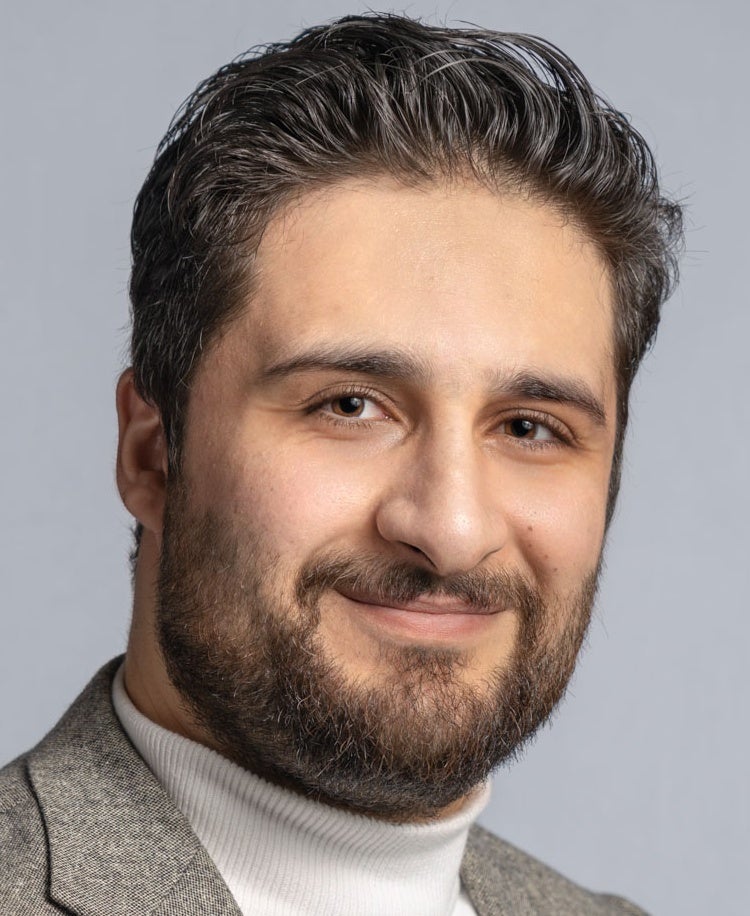
Sanad Aburass serves as Assistant Professor of Computer Science at Luther College, Decorah, Iowa, with office located in Olin 322. Contactable via phone at 563-387-1717 or email saburass@luther.edu, he maintains active academic engagement through cutting-edge research and institutional contributions. His research spans artificial intelligence, machine learning, and computer vision with significant applications in medical imaging, military technology, and ethical frameworks. Key innovations include Cubixel for three-dimensional pixel representation and volumetric feature extraction from 2D images. His work bridges technical advancement with societal implications, particularly in AI governance and digital rights. Recent publications (2023-2025) demonstrate consistent output across healthcare (skin cancer classification, gene mutation analysis), agricultural technology (barley leaf disease detection), and security systems (digital image transmission). The research portfolio reveals strong emphasis on transformer architectures, optimization algorithms, and ethical considerations in AI deployment across military and civilian contexts.
Fernando António Pinto da Silva Santos serves as Assistant Professor at ISCTE Business School (ISCTE - University Institute of Lisbon) since March 2019, following postdoctoral research at Cass Business School (2018) and Aalto University (2018), where he also worked as Researcher from 2012-2017. His professional trajectory bridges academic research with industry experience in marketing and design across Portugal, Angola, and Hong Kong. His educational credentials include a Doctorate in Management Studies (International Business) from Aalto University (2017), Master's in Marketing Management from IPAM (2010), Master's in Design and Graphic Production from University of Barcelona (2006), Postgraduate in Marketing (2004), and Bachelor's in Accounting and Administration from ISCAP (2002). PhD: Being different while being similar: Entrepreneurial ventures and the pursuit of legitimacy Master's: Semiotics applied to brands: the molecular semiotic model (Claus Porto case) Bachelor's: Communication in Marketing Dr. Santos' research integrates brand semiotics with organizational legitimacy theory, pioneering the molecular semiotic model for brand analysis. His seminal work examines corporate heritage branding dynamics (e.g., Ach. Brito case) and visual legitimation strategies for new ventures. Recent scholarship pivots to educational innovation, investigating transdisciplinary problem-based learning frameworks, creativity in marketing pedagogy, and community-integrated graduate teaching methodologies. This dual focus bridges theoretical brand studies with practical educational applications. Publication analysis reveals two distinct research phases: foundational contributions to brand semiotics (2013-2016) followed by educational innovation (2019-2022). His recent articles emphasize blended reality approaches, community-school partnerships, and faculty perspectives on transdisciplinary learning, reflecting adaptation to contemporary educational challenges while maintaining theoretical grounding in semiotics. The shift demonstrates responsiveness to evolving pedagogical needs within business education. No scientific awards or fellowships were documented in the provided materials. While specific doctoral advisees aren't listed, Dr. Santos has taught Commercial Management and Marketing for the Portuguese Association of Women Entrepreneurs (2010) and currently instructs at ISCTE. Grant history isn't detailed, though postdoctoral positions suggest prior competitively funded research. His collaborative publications indicate active participation in research teams focused on educational innovation. Dr. Santos collaborates within interdisciplinary networks at ISCTE, particularly in projects connecting community engagement with marketing education. His recent conference presentations on problem-based learning and creativity suggest leadership in pedagogical development teams, though dedicated laboratory affiliations aren't specified in the curriculum vitae.
Dr. Henry Melki serves as a Lecturer in Animation and VFX at the Belfast School of Art, Ulster University, where he co-directs the undergraduate animation course. With extensive industry experience working with studios across Qatar, Dubai, Saudi Arabia, and Beirut on graphic design and 3D modeling projects for television and advertising, he brings practical expertise to his academic role. His office is located in Room BA-03-020 at 2-24 York Street, Belfast campus. Henry completed his PhD in 2019 with research developing models to enhance creative processes in generating believable characters for film and VFX. His academic journey progressed from lecturing at the University of Balamand to his current position at Ulster University, reflecting a deepening commitment to animation education and research. His research focuses on character design and development, 3D modeling techniques, photorealism, virtual production, and visual effects, with particular interest in how perception theory and aesthetic principles influence character believability. His work bridges technical innovation with creative practice, exploring how digital tools can enhance artistic expression while maintaining authenticity. Analysis of his recent publications reveals a strong trajectory toward applied research in virtual production pipelines, particularly for theater applications, and digital heritage projects. His work increasingly integrates high-performance computing, digital twins, and real-time rendering technologies with creative practice, demonstrating a commitment to interdisciplinary research that connects digital arts with environmental and cultural concerns. Best Poster Award (May 2018) Henry actively contributes to curriculum development in animation and supervises student projects. He participates in significant research initiatives including the AHRC-funded Green Transition Ecosystem: Future Island-Island project and leads the EPSRC-funded Development and Full Integration of VP Pipelines Adapted for Theatre Affordances. His grant portfolio demonstrates successful collaboration across arts, humanities, and technology disciplines. He maintains strong community connections through outreach initiatives like 3D Dojo, which teaches computer animation basics, and Toody Threedy, a local animation community group. His recent workshop on IAA Maritime Trail 3D Scanning demonstrates his commitment to sharing digital skills with broader audiences beyond the university setting.
Alistair Burleigh serves as a Senior Research Fellow at Cardiff Metropolitan University's Cardiff School of Art & Design. He is a multi-disciplinary professional with expertise spanning art, design, research, technology, and entrepreneurship, bringing significant commercial experience from the digital media and audio-visual industries. Burleigh's research centers on the fusion between physical and digital spaces, visual perception mechanisms, and the development of virtual technologies that authentically replicate human experience. His work bridges artistic creativity with scientific rigor, particularly in the field of fovography - a naturalistic imaging approach that better matches human visual perception. His publications demonstrate consistent exploration of how humans perceive spatial relationships, object properties, and visual fields across different media formats. As an entrepreneur, Burleigh co-founded Wrap3, a projection mapping company that delivered projects for high-profile clients including James Bond Quantum of Solace, Chanel, and the United Arab Emirates Pavilion Expo 2010. His second venture, Fovotec, emerged from research conducted within Cardiff Metropolitan's Fovolab, developing the FovoRender technology that led to the university's first spin-out company, now partnered with Unity3D. Burleigh serves as the technical architect for Cardiff Metropolitan University's Perceptual Experience Laboratory. Since 2018, he has been seconded to Fovotec as Co-Founder and Technical Director, demonstrating his ability to translate academic research into commercially viable technology solutions that push the boundaries of visual computing.
Matt Burgess serves as Associate Professor and Department Chair of English and Creative Writing at Macalester College, where he teaches courses exploring narrative forms across literary and visual media. His office is located in Old Main Room 205, and he actively engages students through workshops and collaborative learning approaches. Education: Dartmouth College (Undergraduate) University of Minnesota, MFA Program Research and Creative Focus: Professor Burgess specializes in cross-cultural narrative traditions, with primary expertise in Fiction, International Storytelling, and Visual Narratives. His creative practice extends to Mythology and Folklore reinterpretation, Genre Writing innovation, and hybrid forms blending Creative Nonfiction with Poetry. His critically acclaimed literary crime novels demonstrate applied research in narrative structure and voice development, directly informing his pedagogical philosophy of nurturing authentic student expression through directed exercises and textual analysis. Teaching Practice: He employs co-taught interdisciplinary courses like Graphic Novel (with Megan Vossler) and Baseball: History and Literature (with Ernesto Capello) to examine storytelling conventions through multiple disciplinary lenses, emphasizing historical context and formal experimentation in student work.
Mgr. Zuzana Fonioková, Ph.D. serves as Deputy Head of Institute at the Institute of Czech Literature within the Faculty of Arts at Masaryk University in Brno, Czech Republic. She holds the academic rank of Assistant Professor and maintains an active research and teaching profile in narrative theory, life writing, and contemporary literature. Dr. Fonioková's research primarily focuses on the intersection of autobiography and fiction, with particular expertise in autofiction as a contemporary literary phenomenon. Her work examines narrative strategies of self-representation, identity construction in life writing, and the evolving boundaries between factual and fictional storytelling. In recent years, she has expanded her research to include graphic narratives and autobiographical comics, analyzing how visual elements contribute to self-presentation in non-traditional literary forms. Analysis of her 72 publications reveals a consistent scholarly trajectory examining unreliable narration, narrative performance, and the construction of authorial identity. Her most recent work (2023-2025) demonstrates increasing attention to visual narratives and contemporary Czech literary production, while maintaining her foundational interest in narrative theory and life writing traditions. She frequently explores how contemporary writers navigate the space between factual and fictional self-representation, with particular attention to Czech authors like Jan Němec. As Deputy Head of Institute and an active supervisor (as indicated by the 'Supervisor' section in her profile), Dr. Fonioková plays a significant role in both the administrative and academic life of the Institute of Czech Literature. Her teaching responsibilities, while not detailed in the provided materials, likely reflect her research interests in narrative theory and contemporary literature.
Mitch Goldstein is an Associate Professor in the School of Design at Rochester Institute of Technology's College of Art and Design. With over twenty years of teaching experience, he has previously taught at Rhode Island School of Design, Virginia Commonwealth University, and Maryland Institute College of Art. BFA from Rhode Island School of Design (2006) MFA in Design and Visual Communications from Virginia Commonwealth University (2012) MFA in Furniture Design from Rochester Institute of Technology (2023) Goldstein's research interests center on graphic design, motion design, and design pedagogy. His creative practice spans graphic design, wet darkroom photography, sculpture, and furniture design. He approaches his work at the intersections of anxiety and calm, chaos and clarity, often creating sculptures that synthesize disparate materials. His educational philosophy emphasizes practical approaches to design education, focusing on student development and creative practice. His publication output shows consistent engagement with design education theory and practice, with his 2023 book "How To Be A Design Student (And How To Teach Them)" representing a significant contribution to the field. His work spans both theoretical explorations of design education and practical applications in studio settings, with recent projects including the "Fragment" series of visual art pieces and the collaborative "RABBET" exhibition focusing on joinery methodologies. Author of "How To Be A Design Student (And How To Teach Them)" (2023) Featured in FastCompany's "Design Education is Ready For a Revolution" Regular contributor to design education podcasts and video content Active participant in Rochester's art community including the Rochester Fringe Festival As an educator, Goldstein teaches across the design curriculum including 2D and 3D design foundations, motion design, graphic design studios, and capstone projects. His advising work includes supervising internships and independent studies, guiding students through professional development and creative exploration. He maintains an active creative practice that informs his teaching approach, regularly exhibiting and selling original artwork. Goldstein collaborates with fellow RIT faculty member Rebecca Aloisio on artistic projects exploring methodologies of joinery through collage, appropriation, and assemblage. Their work creates visual tension through the combination of flat and spatial elements, colors, and patterns that exist in a space between reality and invention.