Jia Liang is a researcher at Henan Polytechnic University's School of Electrical Engineering and Automation, with a focus on Machine Learning , Compressed Sensing , and Privacy-Preserving Techniques . His work bridges Computer Science and Signal Processing , particularly in Radar Imaging and Medical Image Analysis . Key Collaborations: Di Xiao, Ying Luo, Qun Zhang, Hui Huang Technical Expertise: Federated Learning, SAR Imaging, Compressive Sensing, Adversarial Learning His research emphasizes secure data processing in IoT and cloud environments, with recent innovations in cross-disciplinary applications like biosignal analysis for cysticercosis diagnosis . Publications span top venues including IEEE Transactions on Aerospace Systems and Remote Sensing . Notable trends include privacy-preserving machine learning for federated systems and 3D radar imaging of rotating targets, alongside medical imaging solutions for chest radiographs and optical coherence tomography .
Dr. Paweł Ignaczak is a researcher affiliated with the Academy of Fine Arts in Warsaw. His work focuses on Polish art history, graphic arts, and museum studies, with particular emphasis on 18th-century Polish artists like Jan Piotr Norblin and the cultural heritage preserved in institutions like the Polish Library in Paris. His research interests span historical art techniques, multicultural aspects of the Polish-Lithuanian Commonwealth, and contemporary art criticism. Notable projects include studies on Rembrandt's influence on Polish printmaking and analysis of royal art collections from the Stanisław August Poniatowski era. Articles collectively explore themes of cultural preservation, artistic workshop practices, and cross-cultural exchanges in Central Europe. No scientific awards or grants are explicitly mentioned in the provided texts.
Paul Harrigan is a Professor of Marketing and Deputy Dean at the UWA Business School, The University of Western Australia. He has been at UWA since 2012 and also holds an adjunct position at IESEG School of Management since 2011. Previously, he was at The University of Southampton from 2008-2012. His current leadership roles include Deputy Dean of the Business School, former Head of the Marketing department (2019-20), and Deputy Head (2023-25). Education: PhD in Marketing, Ulster University (2005-2008) MSc in Marketing & Entrepreneurship, Ulster University (2004-2005) BSc in Management with French, Queen's University Belfast (2001-2004) Professor Harrigan's research expertise centers on digital marketing, with a specific focus on harnessing big data to understand social media engagement and its impacts. His work spans multiple critical areas including branding, misinformation, political polarisation, and influencer marketing. He has published over 60 international journal articles and books, and presented at more than 50 international conferences. His research has significant implications for understanding how social media shapes consumer behavior, political views, and brand relationships in the digital age. His recent publications reveal a strong focus on contemporary digital challenges, particularly examining misinformation spread and political polarisation on social media platforms, influencer marketing effectiveness, and the application of emerging technologies like VR in marketing contexts. The research shows an interdisciplinary approach combining marketing theory with insights from information systems, political science, and consumer psychology. Scientific Awards: UWA Student Guild's Student Choice Award (2018) Best paper award from Australia and New Zealand Marketing Academy (ANZMAC) conference digital marketing track (2014) Highly commended paper award from the Journal of Business and Enterprise Development (2010) As an academic leader, Professor Harrigan serves as incoming Editor in Chief of the Australasian Marketing Journal (2026-) and previously served as Vice President of the Australia and New Zealand Marketing Academy (ANZMAC) from 2019-24. He chaired the ANZMAC conference in Perth in 2022 with 608 international attendees. His current research includes two major active grants: 'Truth on social. Implementing interventions to combat misinformation' (2025) and 'Beyond Unrealistic Standards: Regulating Social Media Ads for Body Image' (2025-2027), demonstrating his continued leadership in addressing pressing social issues related to digital marketing.
Jeff Beck is an Associate Professor at the School of Hospitality Business, Michigan State University. His expertise spans Event & Meeting Management and Sales & Sales Management within the hospitality industry. He holds leadership roles, including serving as the 73rd president of the International Council on Hotel, Restaurant, and Institutional Education (ICHRIE). Beck actively engages with industry through events like the Hilton Hackathon and has been recognized with the Stevenson W. Fletcher Award for his contributions. His research bridges hospitality management with interdisciplinary work in cognitive neuroscience and machine learning, as evidenced by publications exploring probabilistic inference, neural computation, and decision-making processes. Beck’s work also extends into healthcare quality analysis and food chemistry, showcasing a unique academic profile that integrates business and scientific domains. Education details are not explicitly provided in the text, but his professional trajectory indicates advanced training in both hospitality management and quantitative disciplines. His research interests combine practical hospitality challenges with computational models of human behavior, reflected in collaborations such as the 'How To Build A Brain' white paper and studies on Bayesian predictive coding in neural systems. Beck’s academic service includes mentorship roles and industry partnerships, exemplified by his classroom collaboration with Walt Disney Parks and Resorts executive Gregg Chapman. His scholarly contributions span diverse fields, with recent work focusing on machine learning applications in wine authentication, predictive modeling of sensory systems, and the neurobiological underpinnings of decision-making. These articles collectively highlight methodological innovations in probabilistic modeling and their implications for understanding both natural and artificial intelligence systems. Beck’s leadership in ICHRIE underscores his commitment to advancing academic-practice linkages in hospitality education.
George Wolberg is a Professor of Computer Science at the City College of New York (CCNY), affiliated with the Computer Engineering program. His research focuses on computer graphics, image processing, 3D modeling, and multimedia surveillance, with contributions to digital image warping, feature extraction, and algorithmic art. He holds an office at North Academic Center 8/202G and can be reached at wolberg@ccny.cuny.edu. Over his career, Wolberg has explored interdisciplinary applications such as medical imaging for hypertension analysis and robotic page-turning mechanisms for musicians. His work bridges theoretical foundations with practical implementations, including contributions to 3D urban modeling and sensor fusion systems. Notable trends in his publications include advancements in 3D reconstruction techniques (e.g., RGB-D camera calibration), interactive media systems (e.g., smart picture frames), and medical imaging applications. His research also extends to educational resources like Introduction to Image Processing . No scientific awards or major grants were explicitly listed in the provided materials. While no formal advisees are documented here, his extensive publication record reflects collaborative research efforts in computer vision and graphics.
Caterina Mercè Picornell Belenguer is a Professor at the University of the Balearic Islands within the Department of Catalan Philology and General Linguistics . Her work bridges Comparative Literature , Subaltern Studies , and Catalan Cultural Analysis , with a focus on poetic experimentation and interdisciplinary methodologies . Key research areas: Affect Theory, Post-Franco Cultural Production, Experimental Narratives Her recent publications analyze 21st-century Catalan literature , exploring testimonial ethics , subaltern voice construction , and posthumanist approaches to ruin aesthetics . Collaborative projects include co-editing Incidències: Poesia catalana i esfera pública (2016) and directing the thesis Literatura i immigració internacional a la cultura catalana del segle XXI (2023). While no specific scientific awards are documented, her work has been instrumental in redefining Catalan literary theory through glocalization frameworks and transnational affect studies . Her teaching connects linguistic preservation with critical cultural analysis , particularly in working-class narratives and poetic resistance .
Roberto Marmo is a Professor of Computer Science at the University of Pavia since the 2022/23 academic year. His research spans multiple domains including Artificial Intelligence , Computer Vision , and Social Media Mining . He earned his PhD in Information Engineering at Pavia's Computer Vision and Multimedia Lab after completing a Computer Science degree at the University of Salerno. Core Expertise: Data Science, AI Algorithms, Scientific Visualization Industry Applications: Anti-fraud Systems, Tourism Analytics, Transportation Sign Recognition His academic work demonstrates consistent interdisciplinary innovation: 2020: Encyclopedia contributions on Cybersecurity and Social Engineering 2017: Market analysis through social media mining 2010: Social network architecture research Key collaborations include: IBM's Web 2.0 Security Encyclopedia Italian Tourist Railways Association (application of IT to heritage tourism) Academic-Industry Partnerships in transportation sign recognition His technical contributions include: Neural network applications in geological analysis Operational risk visualization frameworks SOS gesture recognition systems e-learning performance dashboards Available for consulting and training services in AI, data analysis, and scientific visualization.
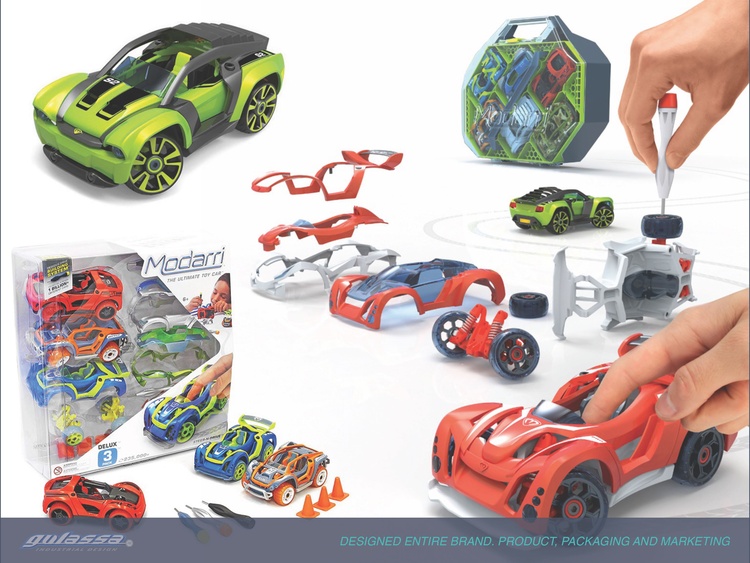
Brian Gulassa is a Senior Adjunct in the Industrial Design Program at California College of the Arts (CCA), where he has taught for nearly a decade. He holds a BFA from CCA and brings over 35 years of professional experience in product, toy, and industrial design. Position: Senior Adjunct, Industrial Design Program Institution: California College of the Arts Location: Berkeley, CA His teaching includes courses such as Design Drawing, Toy Design, Industrial Design, and Play Culture, emphasizing innovation and real-world design practices. Brian’s research and creative interests revolve around the intersection of design and play. He believes that play is essential across all ages and integrates this philosophy into both his professional work and pedagogy. His design approach emphasizes authenticity, narrative, and user experience, focusing on how products naturally convey their function and purpose. While no formal academic articles are listed, his professional case studies—such as the redesign of Blackburn bicycle accessories—demonstrate innovation in product development, user-centered design, and brand integration. His work often combines aesthetic refinement with functional improvements, such as enhancing LED visibility and reengineering assembly processes for better usability. Brian has received design awards and holds multiple patents, with hundreds of products on the market through collaborations with companies like Mattel, Disney, Tyco, Green Toys, and Wild Planet. Design Awards (unspecified) Multiple Product Patents Recognition for innovative design solutions in consumer goods He is actively involved in mentoring students and shares design tutorials through his YouTube channel ( ProfessorGulassa ). His professional practice, Brian Gulassa Design, offers end-to-end design services from concept to production, emphasizing creativity, brand identity, and manufacturing feasibility. Brian maintains strong ties to CCA as both an alumnus and educator, contributing to the next generation of designers through hands-on instruction and industry insights. He also runs a professional design studio focused on innovation in toys, sports equipment, and consumer products.
Kingsley Nwosu is an Associate Professor in the Department of Computer Science at Norfolk State University's College of Science, Engineering and Technology. His research spans artificial intelligence, biometric systems, and security frameworks, with a focus on healthcare, campus safety, and low-resource environments. Email: kcnwosu@nsu.edu Research Themes: AI-driven emotion recognition and facial recognition systems Biometric authentication for security and privacy Blockchain applications in e-voting and data integrity Urban mobility optimization via embedded systems Public policy evaluation for social enterprises Data partitioning strategies for machine learning Publication Trends: His work since 2012 highlights interdisciplinary applications of AI and biometrics in healthcare, security, and economic development, with recent emphasis on scalable solutions for developing economies and proactive cybersecurity measures.
Lexi Vay serves as a Lecturer at Otis College of Art and Design, teaching comprehensive 2D animation courses from foundational frame-by-frame techniques to advanced visual development. Her pedagogical approach emphasizes skill-building while nurturing students' unique artistic identities, informed by extensive industry experience including five-plus years at Hallmark eCards. Educationally, she earned a BFA in Digital Media from Otis College of Art and Design (2008-2012), graduating as Class Valedictorian in 2012. Her core expertise spans Animation, 2D Animation, Illustration, Visual Development, Motion Graphics, and Digital Art. She actively engages in the full animation pipeline—from gifs to short films—and experiments with diverse styles using traditional methods, After Effects, and Photoshop, prioritizing creative exploration and technical mastery. Lexi's publications focus on children's literature with Tibetan cultural narratives. Her illustrated books demonstrate consistent excellence in visual storytelling, blending character design with cultural authenticity, and have established her prominence in artistic children's media through award-winning contributions. Awards and Honors: Silver Nautilus Book Award for Children's Illustrated Fiction (2023) for 'Dekyi's Dream' Gold Special Honors Nautilus Book Award for Best Children’s Book (2020) for 'Dorje the Yak' First Place Purple Dragonfly Book Award for Best Children’s Picture Book (2019) for 'Dorje the Yak' Otis College Class Valedictorian (2012) With over five years of professional animation experience at Hallmark eCards creating 50+ digital shorts, she mentors undergraduate students in animation while maintaining industry collaboration practices. The text provides no evidence of research grants or graduate student advising. Her collaborative work includes teams at Hallmark eCards where she animated alongside talented artists, and she actively shares creative output through her website and Instagram. Personal projects extend to tarot, astrology, and crafting, reflecting multidisciplinary artistic engagement.
Current teacher at the Academy of Fine Arts in Gdańsk, Sławomir Witek is affiliated with the Faculty of Sculpture and Intermedia (Intermedia program) and the Faculty of Graphic Arts. He is also a member of the Interdisciplinary Department of Small Forms in Film and Video. Contact: slawomir.witek@asp.gda.pl . Graduate of the University of Gdańsk and Gdynia Film School (2012, directing/cinematography). Member of the Polish Filmmakers Association. His work focuses on documentary and observational filmmaking, emphasizing the capture of authentic moments. He combines cinematography, feature filmmaking, and intermedia art, often exploring interdisciplinary approaches to small film forms. His films have been screened at prestigious festivals like Cannes, Camerimage, and Hot Docs Toronto, earning critical acclaim and awards.
Glenn Van Wallendael is an Associate Professor at Ghent University's Faculty of Engineering and Architecture , affiliated with the Department of Electronics and Information Systems . He leads research in video coding, digital watermarking, and immersive media technologies. Academic Focus: Video compression standards (HEVC, H.266), AI for multimedia, virtual reality Key Collaborations: iMinds, imec, European research consortia Research Interests include: Video compression algorithms (HEVC, SVC, MV-HEVC) Digital watermarking for copyright protection Machine learning applications in image/video analysis Quality of Experience (QoE) in immersive environments Recent Publications (2024-2025) show expertise in: Deepfake detection using vision transformers Medical image landmarking tools Lightweight geometric approximation methods AI-driven video quality assessment Doctoral Mentorship includes supervising: 2021: Hannes Mareen (video forensics) 2020: Vasileios Avramelos (light field coding) 2017: Johan De Praeter (adaptive video encoding)
Manuel Alejandro Pajuelo González is a researcher at the Universitat Politècnica de Catalunya (UPC), affiliated with the Department of Computer Architecture and the School of Computer Science. His research focuses on Performance measurement Operating systems Virtualization Thread assignment in multithreaded processors Recent publications show strong trends in RISC-V architectures, cybersecurity, and performance optimization. Key themes include Hardware virtualization Intrusion detection frameworks Statistical thread assignment approaches Spin-lock overhead analysis Scientific awards include BDigital Global Congress 15ª Edició Computación de Altas Prestaciones VI HiPEAC Paper Award He participated in multiple competitive R&D projects, including the DRAC project focused on RISC-V accelerators for next-generation computing.
Karolina Jakaitė is a Lithuanian design historian and Research Fellow at the Institute of Art Research within the Vilnius Academy of Arts since 2019. She specializes in 20th-century Lithuanian design history, focusing on themes like design identity, Soviet-era design, and international exhibition practices. PhD (2012): "Lithuanian graphic design in the 1950s–1970s: between national and international" at Vilnius Academy of Arts. Postdoctoral Research (2017–2019): "Lithuanian Design at International and Baltic Exhibitions 1966–1985: Origins, Influences, Tensions and Identities" under Prof. Giedrė Jankevičiūtė. Her research spans: 20th-Century Design: Soviet design, Baltic connections, and Cold War-era exhibitions. Design Policy: National pavilions as tools for cultural diplomacy. Graphic Design: Analysis of poster art, book design, and industrial product aesthetics. Her work highlights Lithuanian design's international networks, particularly with Estonia and the UK, and emphasizes archival recovery of underdocumented design practices. She has led projects like: Design Foundation Networking and Mobility (2020–2021) Design Foundation Digitization (2020) Lithuanian Design History Documentation (2017–2021) Karolina Jakaitė's editorial contributions include the Acta Academiae Artium Vilnensis journal and co-edited exhibition catalogues like Stories of Things. Lithuanian Design 1918–2018 (2018). Her curatorial projects frequently explore Soviet-era Lithuanian design through national pavilions and individual designer retrospectives.
Prof. PhD Miroslav Nikolov Galabov is a Professor at the Faculty of Mathematics and Informatics, St. Cyril and St. Methodius University of Veliko Turnovo in Bulgaria. His academic career spans several decades with significant contributions to computer science, particularly in the areas of 3D visualization, virtual and augmented reality, and image processing. He maintains active research collaborations and participates in multiple funded projects at the university. Professor Galabov's research interests focus on cutting-edge technologies including: Image processing and computer vision 3D visualization and modeling Virtual and Augmented Reality systems Microprocessor systems and embedded computing System programming and software architecture Multimedia systems and publishing technologies E-business applications and social network technologies His scholarly output demonstrates a clear evolution from foundational work in digital signal processing and image compression toward contemporary research in cloud infrastructure, semantic web technologies, and digital twin applications. Recent publications show a strong emphasis on practical implementations of AWS infrastructure, microservices architecture, and blockchain solutions for IoT systems. His work consistently bridges theoretical computer science with real-world applications across multiple domains including education, business, and cultural heritage preservation. Professor Galabov actively participates in significant research projects including: "Изследване и анализ на приложението на технологични инструменти и инфраструктура като креативна среда за трансфер на знания" (2025-2025) "Изследване, анализ и популяризиране на мобилни технологии и софтуерни приложения в полза на студенти със специални потребности" (2025-2025) "Изследване възможностите на технологиите за виртуална и добавена реалност за атрактивно представяне и популяризиране на българското фолклорно наследство" (2023-2023) Multiple projects related to 3D visualization, e-learning, and digital infrastructure development