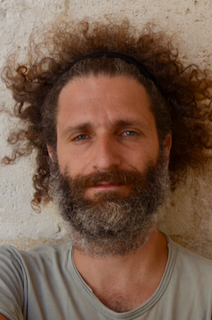
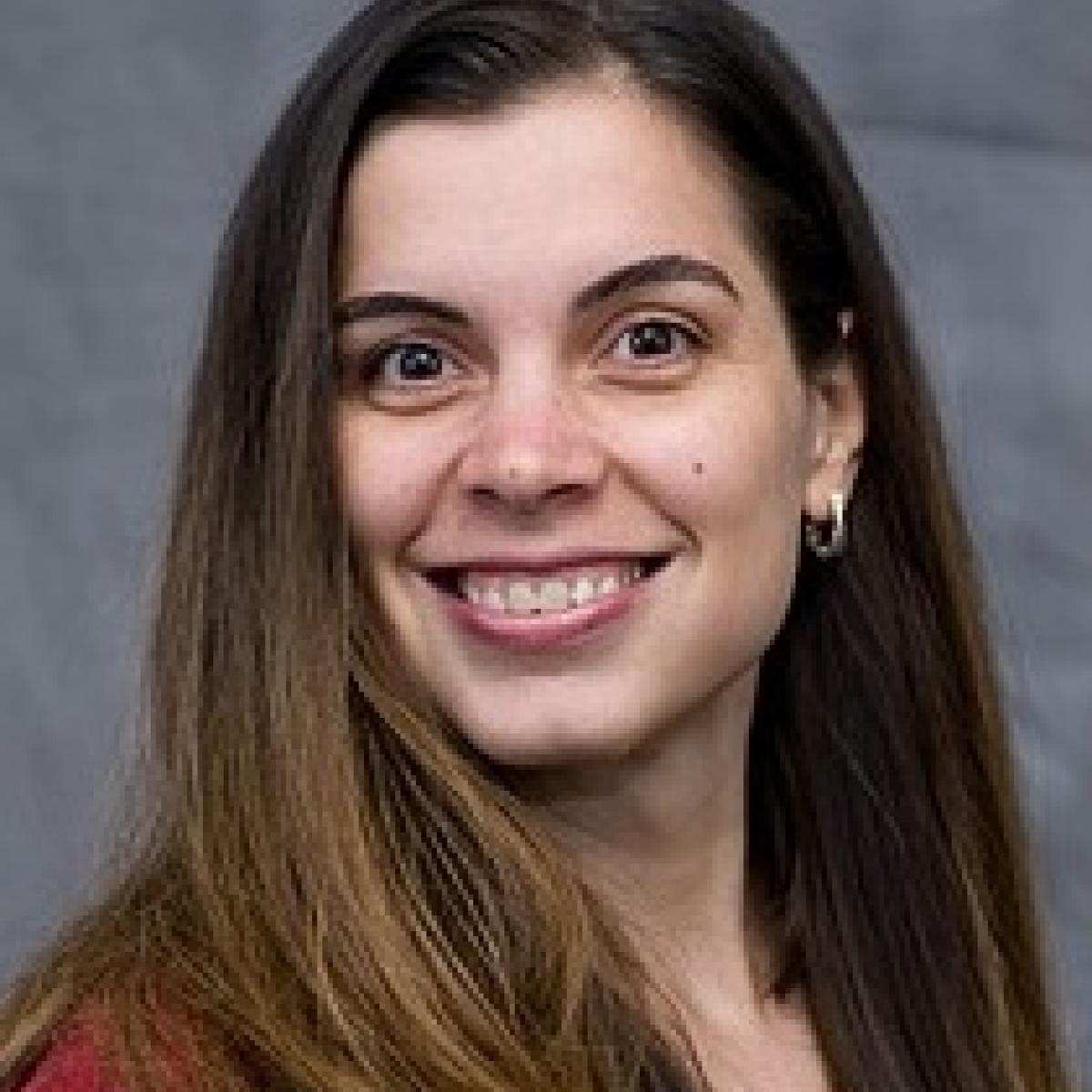
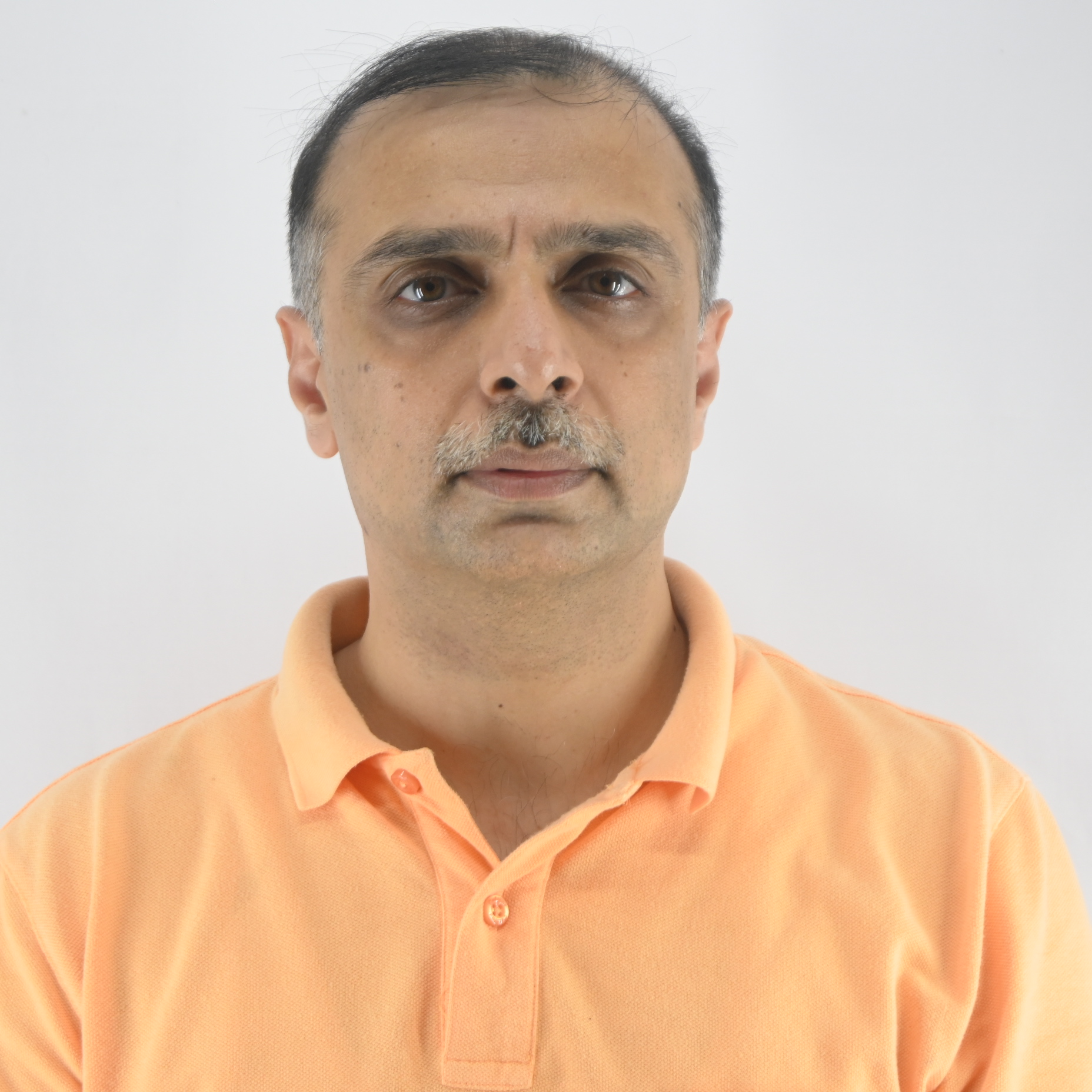
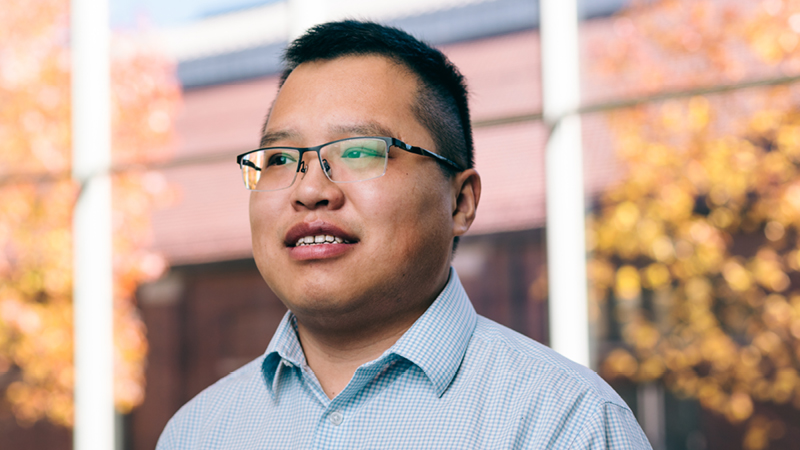
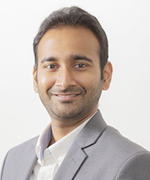
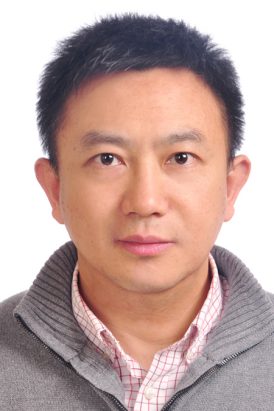
Hadi Meidani is a Clinical Associate Professor at the Carle Illinois College of Medicine , specifically within the Department of Biomedical and Translational Sciences at the University of Illinois at Urbana-Champaign . He teaches courses in Civil and Environmental Engineering, including topics like Systems Engineering & Economics , Machine Learning in CEE , and Uncertainty Quantification . Ph.D., Civil Engineering, University of Southern California (2012) M.S., Electrical Engineering, University of Southern California (2012) M.S., Structural Engineering, Sharif University of Technology (2005) B.S., Civil Engineering, K.N. Toosi University of Technology (2002) Dr. Meidani's research focuses on uncertainty quantification , scientific machine learning , and optimization under uncertainty for engineering systems. His work spans stochastic multiscale analysis , physics-informed machine learning , and model reduction techniques. His recent publications emphasize machine learning for infrastructure systems , graph neural networks , physics-informed models , and traffic assignment . Key trends include deep learning , multi-fidelity modeling , and neural operator transformers applied to metamaterial design , seismic reliability , and autonomous freight delivery .
Bei Wang Phillips is an Associate Professor in the School of Computing and a faculty member at the Scientific Computing and Imaging (SCI) Institute at the University of Utah. She holds a Ph.D. in Computer Science from Duke University and an undergraduate degree from the University of Bridgeport. Her research focuses on Topological Data Analysis (TDA), data visualization, computational topology, and machine learning, with applications in scientific data exploration and analysis. She has received prestigious awards including the NSF CAREER Award (2022) and the PECASE Award (2025). Her work spans projects funded by NSF, NIH, and DOE, including multiparameter TDA and topology-aware data compression. She advises numerous students and collaborates on interdisciplinary initiatives in astrophysics, climate science, and AI fairness. Education: Ph.D. in Computer Science, Duke University (2010) B.S. in Computer Science and Mathematics, University of Bridgeport (2003) Research Interests: Topological techniques for large-scale data analysis Integration of topological, geometric, and machine learning methods Applications in visualization, bioinformatics, and network analysis Key Projects: NSF-funded TDA research (DMS-2301361, OAC-2313124) DOE project on topology-preserving data compression Collaborations with NASA, Argonne National Lab, and Carnegie Institution of Washington Awards: Presidential Early Career Award for Scientists and Engineers (2025) NSF CAREER Award (2022) DOE Early Career Research Program (2020) Advising and Grants: Mentored over 30 students and postdocs Recipient of multiple NSF and DOE grants totaling millions
Daniel Dominic Kaplan Sleator is a Professor of Computer Science at Carnegie Mellon University's School of Computer Science. He maintains an office in the Gates-Hillman Center (7205 Gates-Hillman) and teaches various courses in algorithms and theoretical computer science. Professor Sleator's research spans several areas of theoretical computer science and algorithms. His primary interests include: Algorithms and Data Structures Amortized Analysis and Competitive Analysis Persistent and Self-Adjusting Data Structures Computational Geometry and Combinatorial Optimization Combinatorial Game Theory and Mathematical Games Music Analysis using Computational Methods His extensive publication record shows a consistent focus on efficient data structures and algorithms. Over the years, his work has evolved from foundational data structures like splay trees and skew heaps to applications in diverse areas such as music analysis and combinatorial games. A notable trend in his work is the development of self-adjusting data structures that achieve excellent amortized performance without maintaining explicit structural constraints. His papers on splay trees, skew heaps, and persistent data structures have become classics in the field. Professor Sleator has made significant contributions across multiple domains of computer science. His work on competitive algorithms for paging and list update problems has been particularly influential, establishing fundamental results in online algorithms. His research extends beyond traditional computer science into interdisciplinary areas like computational music theory, demonstrating the broad applicability of algorithmic thinking. He teaches a variety of courses including Algorithms 15-451/651, Competition Programming 15-295, and specialized topics like mathematical games.
Florentina Bunea is a Professor in the Department of Statistics and Data Science at Cornell University’s Bowers College of Computing and Information Science, and an active member of the Graduate Fields of Statistics, Applied Mathematics, and Computer Science. She also serves on the Diversity and Inclusion Council of her college, championing workforce diversity in data-science disciplines. Education & Institutional Roles Professor, Department of Statistics and Data Science, Cornell University Member, Graduate Fields of Statistics, Applied Mathematics, Computer Science Member, Diversity and Inclusion Council, Bowers College of Computing and Information Science Research Interests Professor Bunea’s research lies at the intersection of statistical machine-learning theory and high-dimensional inference. She develops rigorous methodology supported by sharp theoretical guarantees to tackle core problems in modern data science. Recent themes include: Soft-max mixtures for understanding large-language-model/AI algorithms Optimal transport for high-dimensional mixture distributions Wasserstein-distance inference for sparse mixing measures in topic models Latent-space clustering and cluster-based inference in high dimensions Network modeling and hidden-structure inference Applications spanning genetics, systems immunology, neuroscience, sociology, and economics Research Funding & Awards Her work is supported by grants from the National Science Foundation (NSF-DMS). She is a Fellow of the Institute of Mathematical Statistics and a recipient of the IMS Medallion Award. Editorial & Service Contributions Associate Editor: Annals of Statistics, Bernoulli, JASA, JRSS-B, EJS, Annals of Applied Statistics Co-Editor: Chapman & Hall/CRC Statistics and Applied Probability Monograph Series Advising & Collaboration Professor Bunea has mentored numerous doctoral and post-doctoral researchers, including Xin Bing, Shuyu Liu, Seth Strimas-Mackey, and Yang Ning, among others. Collaborative projects extend across Cornell and external institutions, producing widely-used software packages and high-impact publications. Contact Office: 1184 Comstock Hall, Cornell University Email: fb238@cornell.edu Phone: (607) 255-8449
Andreas Vlachos is a Professor of Natural Language Processing and Machine Learning at the Department of Computer Science and Technology, University of Cambridge, and holds the Dinesh Dhamija Fellowship at Fitzwilliam College. His research spans dialogue modeling, automated fact-checking, imitation learning, semantic parsing, biomedical text mining, and trustworthiness in AI systems. PhD in Computer Science, University of Cambridge (supervised by Ted Briscoe and Zoubin Ghahramani) Lecturer at University of Sheffield Postdoctoral roles at UCL, University of Cambridge (NLIP group, Stephen Clark), and University of Wisconsin-Madison (Mark Craven) Current research focuses on evaluating and mitigating biases in language models, advancing fact-checking methodologies, and improving model robustness through interpolation, reinforcement learning, and causal reasoning. His work integrates natural logic, knowledge graphs, and multimodal evidence for verification tasks. Recent publications address uncertainty quantification, temporal planning benchmarks, and ethical framing of NLP artifacts. Grants from ERC, EPSRC, Facebook, Google, and the Alan Turing Institute fund his research team. Collaborations include Sebastian Riedel, Stephen Clark, and Mark Craven. Key projects explore disinformation detection, long-form generation, and confidence calibration in AI systems.
Nina Balcan is a Professor at Carnegie Mellon University and holds the Cadence Design Systems Professorship in Computer Science. She is affiliated with the School of Computer Science, specifically the Machine Learning Department (MLD) and Computer Science Department (CSD). Her research spans foundational aspects of machine learning, artificial intelligence, theoretical computer science, algorithmic game theory, and interdisciplinary connections in learning theory. Machine Learning Artificial Intelligence Theoretical Computer Science Algorithmic Game Theory Multi-Agent Systems Data-Driven Algorithm Design Her recent work focuses on advancing algorithm design through machine learning, robustness in adversarial environments, and economic modeling. Key contributions include Learning to Branch (JACM 2024), Regret Minimization in Stackelberg Games (NeurIPS 2024), and Learning Accurate Decision Trees (UAI 2024, Outstanding Student Paper Award). She has pioneered novel approaches to data-driven optimization, semi-supervised learning, and privacy-preserving clustering. Nina has received prestigious accolades including ACM Fellow AAAI Fellow Simons Investigator 2019 ACM Grace Murray Hopper Award Her teaching at CMU includes graduate courses on machine learning, advanced machine learning, and specialized topics like algorithmic game theory.
Ajit Rajwade is a Professor at the Department of Computer Science and Engineering , Indian Institute of Technology Bombay. His research spans Artificial Intelligence , Compressed Sensing , and Medical Imaging , with affiliations to the Centre for Machine Intelligence and Data Science and the Koita Centre for Digital Health . Education : PhD in Computer and Information Science and Engineering, University of Florida (2010) MSc in Computer Science, McGill University (2004) BTech in Computer Engineering, University of Pune (2002) His research interests focus on intelligent data acquisition, particularly in neural network analysis , graph signal processing , and medical imaging . He develops compressed sensing algorithms for inverse problems like tomography and MRI reconstruction , alongside applying group testing to pandemic response. Scientific awards include the Prof. S. P. Sukhatme Award (2024) and Departmental Teaching Excellence (2019). His publications demonstrate expertise in image restoration , noise modeling , and epidemiological algorithms . He has advised PhD students like Sabyasachi Ghosh and Jerin Geo James , with a focus on computationally efficient methods in medical imaging and machine learning .
Ian Goldberg is a Professor at the Cheriton School of Computer Science , University of Waterloo, Canada. He holds the Canada Research Chair in Privacy Enhancing Technologies and leads the Cryptography, Security, and Privacy (CrySP) group . He is affiliated with the Cybersecurity and Privacy Institute and the Institute for Quantum Computing . Research Focus: Security, privacy, and privacy-enhancing technologies (PETs) for the Internet, including Off-the-Record (OTR) Messaging , censorship resistance , private information retrieval , and zero-knowledge proofs . Recent Publications: His work addresses metadata protection , deniable authentication , and secure multi-party computation , with applications to anonymous communication and censorship resistance. Scientific Awards: Canada Research Chair in Privacy Enhancing Technologies Students: He advises current and former PhD/Master’s students in projects like Lox , PRSONA , Walkie-Talkie , and SkypeMorph . Notable advisees include Sajin Sasy (Privacy-Preserving Communications), Justin Tracey (PETs Development), and Tao Wang (Website Fingerprinting Defenses). Labs & Teams: Goldberg is a core member of the CrySP group and contributes to the Tor Project and Off-the-Record Messaging open-source initiatives. His research bridges theoretical and applied cryptography, with deployments in real-world systems like Tor and PIR protocols.
Jianguo Wang is an Assistant Professor in the Department of Computer Science at Purdue University, joining in Spring 2021. His research focuses on database systems for the cloud and large language models, including disaggregated databases and vector databases. He holds a PhD from the University of California, San Diego, and has worked at Zilliz (Milvus) and Amazon Web Services (AWS). Education: PhD in Computer Science (UC San Diego, 2019), MPhil (Hong Kong Polytechnic University), BSc (Zhengzhou University) Research interests include Disaggregated Databases, Vector Databases for Large Language Models, and cloud-native systems. Notable work includes OpenAurora (an open-source Amazon Aurora prototype) and contributions to Milvus. He has received grants like the NSF CAREER Award and honors such as the IEEE TCDE Rising Star Award. Advising a team of students in database systems and teaching courses like CS592 (Disaggregated Database Systems) and CS440 (Large-scale Data Analytics). Serves on program committees for SIGMOD, VLDB, and ICDE.
Lexing Xie is a Professor in Computer Science at the Australian National University. He leads the ANU Computational Media Lab ( http://cm.cecs.anu.edu.au ) and the ANU Integrated AI Network. His work focuses on the intersection of machine learning, social media analysis, and multimedia understanding. Dr. Xie's research broadly focuses on innovative design and use of machine learning algorithms, especially on large-scale graph data and collective behaviour. His recent work spans several key areas: Popularity in social media -- understanding, predicting, and optimization Multimedia knowledge graphs, vision and language integration Humanising machine intelligence through better understanding of social dynamics His publications reveal a strong trend toward understanding information diffusion patterns in social media, particularly through visual content. He has made significant contributions to the study of visual memes, popularity prediction using point processes, and multimodal learning that connects vision with language. His work often bridges theoretical machine learning with practical applications in social media analysis. Dr. Xie has received recognition for his research, including an Honourable Mention at CSCW 2019 for his work on attention flow in online video networks. His research has been supported by collaborations with major institutions including IBM Research and Columbia University. As an advisor, Dr. Xie has mentored numerous students who have gone on to contribute significantly to publications in top-tier conferences. His lab, the ANU Computational Media Lab, serves as a hub for interdisciplinary research connecting computer science with social sciences.
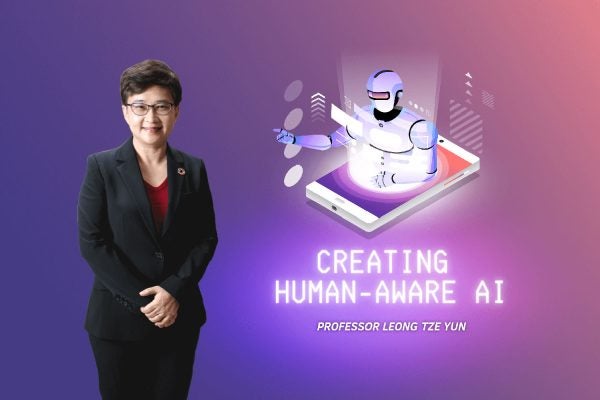
LEONG Tze Yun is a Professor in the Department of Computer Science at the School of Computing, National University of Singapore (NUS). She holds S.B., S.M., and Ph.D. degrees in Computer Science from the Massachusetts Institute of Technology (MIT). Her academic career spans both research and industry experience, with significant contributions to the fields of artificial intelligence and health informatics. Dr. Leong's educational background includes: Ph.D. in Electrical Engineering & Computer Science, Massachusetts Institute of Technology S.M. in Electrical Engineering & Computer Science, Massachusetts Institute of Technology S.B. in Computer Science & Engineering, Massachusetts Institute of Technology Her primary research interests focus on responsible AI, dynamic decision-making, neurocognitive modeling, reinforcement learning, artificial general intelligence, and biomedical and health informatics. Her work bridges the gap between theoretical AI development and practical healthcare applications, with an emphasis on ethical considerations and human-centered design. She directs the Medical Computing Laboratory at NUS, a multidisciplinary research program exploring human-aware decision modeling in complex environments. Analysis of her recent publications reveals a strong trend toward responsible AI development, with significant contributions to reinforcement learning techniques, causal inference methods, and applications of AI in healthcare. Her work increasingly integrates ethical considerations with technical AI development, particularly evident in her 2024 publications on medical AI and human values. Her scientific recognition includes: Fellow of the American College of Medical Informatics (ACMI) Founding Fellow of the International Academy of Health Sciences Informatics (IAHSI) Member of Eta Kappa Nu (Honor Society for Electrical Engineers) Dr. Leong has supervised numerous doctoral and master's students throughout her career, many of whom have gone on to prominent positions at institutions like Google, Netflix, Mayo Clinic, and academic institutions worldwide. Her advisory work extends to significant policy development, including contributions to WHO guidance on ethics and governance of AI for health. She currently serves on the World Health Organization (WHO) Expert Group on Ethics and Governance of AI for Health, the World Economic Forum (WEF) AI Governance Alliance, and the Advisory Council on AI in Uzbekistan. Her laboratory work focuses on developing adaptive systems that evolve with changing technical functionalities, system infrastructures, usage patterns, and operational contexts, with applications spanning prediction and decision analytics, human-aware robotics, game artificial intelligence, personalized education, and assistive care for elderly with neurocognitive disorders.
Pierre Vandergheynst is a Full Professor at the Swiss Federal Institute of Technology Lausanne (EPFL) in the Department of Electrical Engineering, with a courtesy appointment in Computer and Communication Sciences. He serves as EPFL’s Vice-Provost for Education since 2015 and leads the Signal Processing Laboratory 2 (LTS2). His research spans harmonic analysis, sparse approximations, mathematical data processing, and applications in signal/image processing, computer vision, machine learning, and graph-based data analysis. PhD in Mathematical Physics (1998), Université catholique de Louvain Postdoctoral Researcher at EPFL (1998-2001) Assistant Professor at EPFL (2002-2007) His research explores geometry/symmetry in high-dimensional data, redundant dictionaries for dimensionality reduction, and computational harmonic analysis on manifolds. Recent work focuses on protein structure modeling, geometric deep learning, and graph-based signal processing. Key article trends include graph neural networks for protein analysis, geometric deep learning in neuroscience, and structured knowledge priors in neural models. His 2023-2025 publications emphasize interpretable AI, long-range dependencies in graphs, and molecular representation learning. Scientific Awards: IEEE Signal Processing Magazine Best Paper Award (2023) Signal Processing Society Best Paper Award (2022) Apple ARTS Award (2007) De Boelpaepe Prize, Royal Academy of Sciences of Belgium (2009-2010) He has supervised over 30 PhD theses and contributed to foundational work in graph signal processing, compressive sensing, and geometric deep learning. His lab develops tools for data science on non-Euclidean structures, with applications in medicine, astronomy, and wireless systems.
Srijan Kumar is an Assistant Professor in the School of Computational Science and Engineering at Georgia Institute of Technology's College of Computing. His research focuses on data science, AI for security, and online safety, addressing challenges in detecting malicious users, misinformation, and enhancing AI robustness. His work has been deployed in platforms like Flipkart and Wikipedia, and recognized through awards such as the NSF CAREER and Forbes 30 Under 30. Education: B.Tech from Indian Institute of Technology, Kharagpur Ph.D. in Computer Science from University of Maryland, College Park Postdoctoral training at Stanford University Research Interests: Multi-modal/multi-lingual detection of harmful content and users Adversarial robustness of AI models Graph and network analysis for early detection Responsible recommender systems Awards & Grants: NSF CAREER Award (2023) Kavli Fellow (2022) Facebook/Adobe Faculty Awards NSF Convergence Accelerator Phase II grant ($5M) Advising & Labs: Leads the CLAWS Lab, advising over 20 students. Active in mentoring through conferences and NSF-funded projects.
Ji Zhu is the Susan A. Murphy Collegiate Professor of Statistics at the University of Michigan, Department of Statistics. He holds affiliations with the Michigan Institute for Data Science (MIDAS) and the Michigan Integrated Center for Health Analytics and Medical Prediction (MiCHAMP). His research focuses on statistical machine learning, network analysis, and health science applications. Education: B.Sc. in Physics (Peking University, 1996), M.Sc. and Ph.D. in Statistics (Stanford University, 2000 and 2003). Notable awards include the NSF CAREER Award (2008), Fellowships from the ASA (2013) and IMS (2015), and recognition as a Web of Science Highly Cited Researcher (2014–2020). Research interests span statistical methodologies for networks, survival analysis, and high-dimensional data. He co-authored influential papers on community detection, network cross-validation, and latent space models. Current editorial roles include Editor-in-Chief of the Annals of Applied Statistics and Action Editor for the Journal of Machine Learning Research. Advising: Supervised over 50 students and postdocs, many now in academia and industry. Notable former advisees include Tianxi Li (University of Minnesota), Yuan Zhang (Ohio State University), and Weijing Tang (Carnegie Mellon University). Labs/Teams: Active in interdisciplinary projects at MIDAS and MiCHAMP, focusing on healthcare analytics and predictive modeling for diseases like hepatitis and cardiovascular outcomes.
Arthur Gretton is a Professor at University College London (UCL), leading the Gatsby Computational Neuroscience Unit and serving as director of the Centre for Computational Statistics and Machine Learning. He also works as a Research Scientist at Google DeepMind. His research focuses on causal inference, representation learning, and nonparametric hypothesis testing with applications in machine learning and computational neuroscience. Academic Affiliations Gatsby Computational Neuroscience Unit, UCL Centre for Computational Statistics and Machine Learning, UCL Google DeepMind Arthur's research spans several key areas in modern machine learning, including: Kernel methods for causal effect estimation and two-sample testing Deep learning architectures for proxy causal learning with complex confounding Adaptive gradient flows for generative modeling Nonparametric statistical tests with theoretical guarantees Applications in distributional reinforcement learning and Bayesian inference His work addresses both methodological advancements and practical implementations, particularly for high-dimensional data settings. Recent publications demonstrate his focus on causal inference with hidden confounders (AISTATS 2025), deep learning adaptivity in instrumental variable regression (ICLR 2025), and novel approaches to two-sample testing with adaptive kernel selection (NeurIPS 2024). He has also contributed extensively to distributional reinforcement learning and hypothesis testing frameworks. As an advisor, he supervises multiple PhD students including Jakub Wornbard, Zikai (Steve) Shen, and Zonghao (Hudson) Chen, while co-supervising others. His methodological contributions are implemented in various software packages available at the Gatsby Unit, including tools for kernel-based covariate shift correction, independence testing, and maximum mean discrepancy calculations.