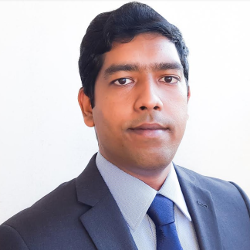
Ed Chien is an Assistant Professor at Boston University's Department of Computer Science within the College of Arts & Sciences. He specializes in applying differential geometry and topology to graphics, computational engineering, and machine learning. Previously, he was a postdoctoral researcher at MIT's CSAIL and Bar-Ilan University. His work focuses on mathematically rigorous solutions to problems in geometric data processing and optimal transport. Education PhD in Mathematics, Rutgers University (2015) A.B. in Mathematics & Physics, Dartmouth College (2009) Research Highlights Dr. Chien's research includes fundamental studies on hexahedral mesh topology for Finite Element Modeling, optimal transport applications in machine learning, and singularity-free geometric algorithms. His work bridges theoretical mathematics with computational tools for engineering and graphics. Publications span top venues like NeurIPS, Eurographics, and SIGGRAPH, reflecting contributions to geometry processing and machine learning intersections. Program committee roles include Eurographics SGP (2019) and AAAI (2020). Awards & Recognition No specific awards listed, but notable service includes program committee memberships and peer-reviewed contributions to leading conferences. Grants & Advising Active in mentoring through academic positions but no explicit grant details provided. Research focuses on advancing geometric algorithms and optimal transport methodologies.
Shuangping Li is an Assistant Professor in the Department of Statistics and Data Science at Yale University. She was previously a Stein Fellow in the Department of Statistics at Stanford University (2022–2025). Her research lies at the intersection of probability theory, high-dimensional statistics, theoretical machine learning, and the theory of algorithms. Ph.D. in Applied and Computational Mathematics, Princeton University (2022) B.Sc. in Mathematics, University of Hong Kong Her research interests include probability theory , high-dimensional statistics , theoretical machine learning , and theory of algorithms . She investigates foundational aspects of random constraint satisfaction problems, neural networks, spectral methods, and phase transitions in high-dimensional models. Her work often draws from statistical physics and combinatorics to explain algorithmic behavior. The recent articles highlight a strong focus on binary perceptrons , clustering in network models , and algorithmic phase transitions . Keywords across publications include probability, theoretical computer science, machine learning, and statistical inference. Subfields reveal deep engagement with spin glass theory, discrepancy minimization, spectral embedding, and information-computation gaps. Scientific awards include: Stein Fellow, Department of Statistics, Stanford University (2022–2025) She has advised and taught at both Stanford and Yale, including courses such as Advanced Probability , Theory of Probability , and Stochastic Processes . She has organized seminars at Stanford and has delivered invited talks at institutions including Cornell, Duke, UC Berkeley, and Princeton. Her collaborative research involves prominent scholars such as Allan Sly, Emmanuel Abbe, and Tselil Schramm. There is no mention of external grants, but her postdoctoral fellowship suggests research funding support. She is involved in academic service through organizing the Stanford Statistics and Probability Seminars. She maintains an active research presence with publications in top venues like STOC, FOCS, COLT, ICLR, and journals such as Annals of Probability and Annals of Statistics .
Fabrizio Falchi is a researcher at the Artificial Intelligence for Media and Humanities (AIMH) Lab of the Institute of Information Science and Technologies (ISTI) within Italy's National Research Council (CNR). He also maintains an associate position at the Biorobotics Institute of Scuola Superiore Sant'Anna. His work focuses on developing advanced multimedia retrieval systems, with the VISIONE platform being his most notable contribution, which has won international competitions including the Video Browser Showdown in 2024 and placed second in 2023. Falchi's educational background includes: Ph.D. in Information Engineering from University of Pisa (Italy) Ph.D. in Informatics from Faculty of Informatics of Masaryk University of Brno (Czech Republic) M.B.A. from Scuola Superiore Sant'Anna in Pisa His research spans deep learning, convolutional neural networks, deep features extraction, similarity search algorithms, distributed indexing systems, multimedia information retrieval, computer vision applications, and peer-to-peer systems. Falchi has made significant contributions to fine-grained visual understanding, cross-modal retrieval (particularly image-text matching), and robustness of deep learning systems against adversarial attacks. His work demonstrates a strong focus on practical applications of these technologies, particularly in video retrieval systems and safety monitoring solutions. Analysis of Falchi's recent publications reveals a strong focus on video and image retrieval systems, with the VISIONE platform being central to his work. His research shows increasing emphasis on fine-grained understanding in computer vision, cross-modal retrieval, and addressing practical challenges like cross-resolution face recognition. Recent work demonstrates innovation in making these systems more efficient through techniques like knowledge distillation (ALADIN) and leveraging virtual worlds for training data. His publications consistently bridge theoretical advances with practical applications in surveillance, safety monitoring, and multimedia search. Falchi's work has received significant recognition: Best paper award at CBMI 2024 for 'Is ClLIP the main roadblock for fine-grained open-world perception?' VISIONE 2024 won the Video Browser Showdown competition in Amsterdam VISIONE obtained second place at Video Browser Showdown 2023 in Bergen Best Paper Award for 'Learning Safety Equipment Detection using Virtual Worlds' at CBMI 2019 Falchi collaborates extensively with researchers at ISTI-CNR, particularly within the AIMH Lab. His work on VISIONE involves collaboration with Giuseppe Amato, Paolo Bolettieri, Fabio Carrara, Claudio Gennaro, Nicola Messina, Lucia Vadicamo, and Claudio Vairo. As co-chair of Ital-IA 2023, the 3rd National Conference on Artificial Intelligence, he plays an active role in the academic community. He is a member of ACM (since 2012), the Computer Vision Foundation, the Italian Association for Computer Vision Pattern Recognition and Machine Learning (CVPL), and the CINI Lab on Artificial Intelligence and Intelligent Systems. Falchi is a key member of the Artificial Intelligence for Media and Humanities (AIMH) Lab at ISTI-CNR, where he leads research on video retrieval systems. The lab has developed the award-winning VISIONE platform, which combines multiple scientific results in content-based video retrieval. His team focuses on developing systems that enable users to search for target videos using textual prompts, drawing objects and colors, or images as query examples. The lab's work demonstrates strong interdisciplinary collaboration, bridging computer science with practical applications in media, safety monitoring, and urban environments.
Yannic Maus is a University Professor at the Faculty of Computer Science and Biomedical Engineering at Graz University of Technology (TU Graz), Austria, where he heads the newly founded Institute of Algorithms and Theory (established in 2025). He also serves as co-leader of one of the five fields of expertise at TU Graz (FoE Information, Communication & Computation). His academic journey includes: PhD in Computer Science from University of Freiburg, Germany (2014-2018) MSc in Mathematics from RWTH Aachen, Germany BSc in Mathematics and Computer Science from RWTH Aachen, Germany (with a year at National University of Singapore) Professor Maus specializes in theoretical computer science and algorithm design, with a particular focus on distributed computing. His research spans distributed graph algorithms, efficient algorithms, data structures, complexity theory, and geometric algorithms. He approaches problems with both theoretical rigor and practical applications in mind, seeking clean mathematical solutions to questions motivated by real-world systems. His recent publications show a strong focus on distributed and parallel algorithms, particularly in graph theory. The research trends include distributed graph coloring, symmetry breaking, vertex cover problems, and massively parallel computing models. His work often bridges theoretical computer science with practical distributed systems considerations, with applications to large-scale networks and highly parallel systems. Professor Maus has received numerous accolades for his research: 2020 Principles of Distributed Computing Doctoral Dissertation Award Wolfgang-Gentner-Nachwuchsförderpreis 2019 GI Dissertationspreis 2018 Best Paper Awards at SIROCCO 2016, DISC 2016, and DISC 2017 Professor Maus actively mentors PhD students and has secured significant research funding, including FWF grants P36280-N (2023-2027), DOC 183 (2024-2028), I6915 (2024-2028), and FFG grant No. 59263962. His research group maintains strong international collaborations with institutions across Germany, Finland, Iceland, Israel, and beyond, providing students with opportunities for international research visits. He leads the Algorithms & Complexity research group at TU Graz, which includes PhD students Manuel Jakob, Florian Schager, Malte Baumecker, and Kritika Kashyap, as well as postdoc Tijn de Vos. The group is actively involved in theoretical computer science research with a focus on distributed and parallel algorithms, particularly for large-scale networks and highly parallel systems.
Alla Sheffer is a Professor and Associate Head of Faculty Affairs in the Department of Computer Science at the University of British Columbia, Faculty of Science. She is affiliated with multiple research centers including CAIDA (Centre for Artificial Intelligence Decision-making and Action), the Institute of Applied Mathematics, and ICICS (Institute for Computing, Information and Cognitive Systems). B.Sc., Hebrew University, Jerusalem (1991) M.Sc., Hebrew University, Jerusalem (1995) Ph.D., Hebrew University, Jerusalem (1999) Postdoctoral Research Associate, University of Illinois, Urbana-Champaign (1999-2001) Assistant Professor, Technion, Israel (2001-2003) Assistant Professor, University of British Columbia (2003-2008) Associate Professor, University of British Columbia (2008-present) Professor Sheffer's research focuses on geometry processing, addressing algorithmic challenges in digital shape modeling and manipulation. Her work primarily deals with discrete geometry representations, specifically meshes (polygonal model representations), with applications in computer graphics and computer-aided engineering. She utilizes tools from computational and differential geometry, discrete mathematics, and graph theory to generate, manipulate, and edit discrete geometric models. Her research spans virtual and augmented reality, visual computing, and 3D modeling, with significant contributions to sketch-based modeling, mesh processing, and cloth simulation. The 15 most recent publications reveal a consistent research trajectory in geometry processing, with recent work focusing on vector sketch processing, VR drawing tools, and advanced mesh manipulation techniques. Her work demonstrates a strong connection between human perception and computational methods, particularly in the interpretation of freehand sketches and the generation of perceptually-accurate geometric representations. The recurring themes across her publications include flowlines, curve networks, mesh parameterization, and the application of perceptual studies to improve algorithmic outputs. Eurographics Fellow ACM Fellow IEEE Fellow Royal Society of Canada Fellow SIGGRAPH Academy Member UBC Killam Research Prize NSERC Discovery Accelerator Supplement IBM Faculty Award Professor Sheffer has supervised numerous doctoral and master's students, with recent theses focusing on geometric mesh processing, vector sketch interpretation, VR drawing tools, and garment modeling. Her research group maintains strong connections with industry through various partnerships and has received substantial grant funding to support their innovative work in geometry processing and computer graphics. She teaches courses in computer graphics, geometric modeling, and video game programming, contributing significantly to both undergraduate and graduate education in computer science.
Noga Alon is a Professor of Mathematics at Princeton University, affiliated with the Mathematics Department. He is renowned for his contributions to Combinatorics, Graph Theory, and Theoretical Computer Science. His research emphasizes algebraic and probabilistic methods, with applications in circuit complexity and combinatorial geometry. Education & Affiliations Current position: Professor at Princeton University. Active in the Princeton Discrete Mathematics Seminar and has led conferences like the Noga60 Birthday Conference. Research Interests Focus areas include Combinatorics (e.g., Ramsey Theory, Graph Coloring), Theoretical Computer Science (e.g., Algorithms, Complexity), and probabilistic and algebraic methods in discrete mathematics. His work bridges combinatorial structures and algorithmic applications, with contributions to expander graphs, randomized algorithms, and extremal graph theory. Publications Over 300 papers, including foundational work on the probabilistic method, expander graphs, and combinatorial algorithms. Notable recent topics include graph coloring, path-finding algorithms (e.g., Color-coding), and spectral techniques for graph problems. Grants & Awards No specific grants or awards listed in available texts, though his academic stature implies prestigious recognition in combinatorics and computer science. Labs & Collaborations Involved in collaborative research through Princeton’s Mathematics Department and international conferences. Leads seminars and co-authors work with prominent researchers like M. Naor, J. Spencer, and others.
Meng He is a Professor in the Faculty of Computer Science at Dalhousie University. He obtained his PhD from the Cheriton School of Computer Science at the University of Waterloo in 2008 and held postdoctoral and research positions at Carleton University and the University of Waterloo before joining Dalhousie. He is affiliated with the Algorithms & Bioinformatics research cluster and is actively recruiting graduate students for master's and PhD studies, as well as supervising honors theses and USRA internships. His research focuses on the design and analysis of efficient algorithms and data structures, particularly in the areas of computational geometry, databases, text retrieval, and bioinformatics. His work often involves developing succinct and dynamic data structures for fundamental problems in graph theory, trees, and geometric data. His recent publications show a strong focus on path and distance queries in various graph types (especially interval graphs and trees), range counting, mode queries, and succinct representations. The research trend emphasizes theoretical foundations combined with practical efficiency, often addressing dynamic and space-constrained scenarios. Alberto Apostolico Best Paper Award of CPM 2017 Dr. He has supervised numerous PhD and master's students and collaborators, frequently co-authoring with researchers such as J. Ian Munro, Travis Gagie, Gonzalo Navarro, and Norbert Zeh. His research has been supported by grants from NSERC and other funding agencies, though specific grant details are not listed in the provided text. He has also contributed significantly to the academic community through editorial work for journals like Computational Geometry - Theory and Applications and Algorithmica , and by organizing major conferences such as CCCG and WADS. He leads a research group focused on algorithms and data structures, fostering collaborations both within Dalhousie and internationally. Future work is likely to continue exploring the theoretical and practical aspects of dynamic and succinct data structures, with applications in large-scale data processing and information retrieval systems.
Jilles Vreeken is a Professor of Computer Science at Saarland University and tenured faculty at the CISPA Helmholtz Center for Information Security, where he leads the Exploratory Data Analysis research group. He is also an ELLIS Fellow and Faculty of the Saarbrücken Unit on AI and ML. His work bridges theoretical foundations with practical applications in causal inference, unsupervised learning, and exploratory data analysis. Dr. Vreeken's research focuses on developing theory and algorithms for answering fundamentally exploratory questions about data: "what is going on in my data?", "what causes what and how?", and "what can we learn from this model?" without making unnecessary or unjustified assumptions. He takes a principled approach based on information theory to identify what is worth knowing, then develops efficient algorithms for extracting useful interpretable results. His work spans causal inference under realistic conditions (including hidden confounding, selection bias, and non-i.i.d. data), summarizing complex data and models in understandable terms, and combining these threads to create more robust and useful models across diverse data types. His recent publications demonstrate a strong trend toward causal discovery in increasingly realistic settings, including non-stationary time series, event sequences, and scenarios with hidden confounders. He has made significant contributions to federated learning, interpretable machine learning, and pattern mining. His work consistently applies information-theoretic principles to develop methods that are both theoretically sound and practically useful for extracting insights from complex data. Dr. Vreeken has received numerous prestigious awards including: IEEE ICDM'18 Tao Li Award for Excellence in Research IEEE ICDM'18 Best Paper Award UdS-CS'15 Busy Beaver Teaching Award ACM SIGKDD'11 Best Student Paper Award ACM SIGKDD'10 Doctoral Dissertation Runner-Up Award ECML PKDD'09 Best Student Paper Award As an advisor, Dr. Vreeken has mentored numerous doctoral researchers to completion, including Dr. Osman Ali Mian, Dr. David Kaltenpoth, Dr. Boris Wiegand, Dr. Sebastian Dalleiger, Dr. Janis Kalofolias, Dr. Jonas Fischer, Dr. Alexander Marx, Dr. Panagiotis Mandros, Dr. Kailash Budhathoki, Dr. Roel Bertens, Dr. Koen Smets, and Dr. Michael Mampaey. He has secured significant research funding as PI for multiple projects including "AI for Prediction and Therapy Guidance in Acute Stroke" (HAICU, 2025-2028), "Neuro-Explicit Models of Language, Vision and Action" (RTG, DFG, 2023-2028), and "Crushing Antimicrobial Resistance using Explainable AI" (HAICU, 2021-2024). Dr. Vreeken leads the Exploratory Data Analysis (EDA) research group at CISPA, which focuses on developing theory and algorithms for discovering novel insights from data, learning inherently interpretable models, and drawing reliable causal conclusions. The group has produced numerous influential algorithms and frameworks in causal inference, pattern mining, and exploratory data analysis, with applications spanning healthcare, materials science, and cybersecurity.
Sophie H. Yu is an Assistant Professor of Operations, Information and Decisions at the Wharton School of Business, University of Pennsylvania. She completed her postdoctoral work in the Department of Management Science and Engineering at Stanford University before joining Wharton. Her academic journey includes a Ph.D. in Decision Sciences from the Fuqua School of Business at Duke University (2023), an M.S. in statistical and economic modeling from Duke University (2017), and a B.S. in Economics from Renmin University of China (2015). Ph.D. in Decision Sciences, Fuqua School of Business, Duke University (2023) M.S. in Statistical and Economic Modeling, Duke University (2017) B.S. in Economics, Renmin University of China (2015) Sophie's research focuses on high-dimensional statistics, algorithm design, and performance evaluation in large-scale networks and stochastic systems . Her work draws inspiration from real-world business, engineering, and natural sciences problems that can be modeled into large and complex networks. She has explored fundamental limits and efficient algorithms on graph matching, online platform policy design with bounded regret, and data confidentiality protection. Her research spans the intersection of operations research, applied probability, statistics, and computer science, with particular emphasis on network science and information theory. Sophie's publications demonstrate a strong focus on matching problems in networks, with significant contributions to understanding random graph matching, network correlation testing, and online matching algorithms. Her work shows a progression from fundamental theoretical questions to practical applications in resource allocation and market design. Recent papers indicate increasing focus on practical implementations of theoretical concepts in real-world matching markets. Thomas M. Cover Dissertation Award from IEEE Information Theory Society (2024) Best Dissertation Award from Fuqua George Nicholson Student Paper Competition finalist, INFORMS 2022 Sophie has been actively involved in academic service, presenting her work at numerous prestigious institutions including University of Texas at Austin, University of Toronto, London School of Business, and MIT. She has taught graduate courses in decision modeling and served as a teaching assistant for various statistics and operations courses during her doctoral studies at Duke University. Her research has been supported through academic appointments and likely research grants related to her work in network science and matching algorithms.
Laura T. Perini is an Associate Professor of Philosophy at Pomona College and serves as the Coordinator of the Science, Technology, and Society program. She has been a member of the faculty since 2007 and is on leave during Spring 2026. Her office is located in Pearsons Hall 204, and she can be reached at laura.perini@pomona.edu. Education: Ph.D., University of California, San Diego Master of Arts, University of California, San Diego Master of Arts, University of California, Los Angeles Bachelor of Science, University of California, Los Angeles Laura Perini's research centers on the philosophical analysis of visual representations in science. Her work explores how diagrams, graphs, photographs, and imaging technologies such as MRI contribute to scientific reasoning, education, and public communication. She investigates the epistemic and aesthetic dimensions of scientific visuals, addressing questions about truth, explanation, and confirmation in pictorial forms. Her interdisciplinary approach draws from philosophy of science, philosophy of biology, cognitive science, and aesthetics. Her publications reveal a sustained focus on the role of two-dimensional representations in scientific practice. Key themes include the semiotics of pictures, the cognitive function of diagrams, and the use of visual evidence in theory confirmation. Her work bridges abstract philosophical analysis with concrete examples from biological and medical sciences. Scientific Awards: Philosophy of Science Association prize for best paper published in Philosophy of Science by a recent Ph.D., 2006 Visiting Fellow, Dartmouth College Humanities Institute (2005–2006, Spring 2006) Virginia Tech Humanities Symposium Award, 2006 Fellow, Center for Philosophy of Science, University of Pittsburgh, Fall 2004 Virginia Tech Humanities Summer Stipend, Summer 2004 NEH Summer Institute “Art, Mind, and Cognitive Science”, Summer 2002 Laura Perini has taught a range of courses including Aesthetics, Logic, Philosophy of Science: Historical and Topical Surveys, and Philosophy of Biology. While there is no public information about graduate students she may have advised or research grants she has led, her contributions to the philosophy of scientific representation are significant and widely cited. She has held multiple prestigious fellowships, reflecting the impact and quality of her scholarly work.
Michael J. Fischer is a Professor of Computer Science at Yale University, renowned for foundational contributions to distributed systems theory, cryptography, and parallel algorithms. His work includes the seminal impossibility result for distributed consensus with faulty processes and the development of the parallel prefix algorithm fundamental to modern parallel computing. His educational background: B.S. in Mathematics, University of Michigan (1963) M.A. in Applied Mathematics, Harvard University (1965) Ph.D. in Applied Mathematics, Harvard University (1968) Fischer's research spans theoretical and applied computer science with emphasis on distributed systems (consensus protocols, fault tolerance), cryptography (information-theoretic security, card-based protocols), and electronic voting systems . His work bridges abstract theory with practical security applications, particularly in trust modeling for e-commerce. Current investigations focus on algorithmic approaches to establishing trust relationships in distributed environments. His publication trajectory reveals evolving expertise from early parallel algorithms (1970-80s) to distributed consensus breakthroughs (mid-1980s), then cryptographic protocols and secure e-voting systems (1985-2000s), with recent work synthesizing these domains through trust frameworks. Key thematic threads include fault tolerance in unreliable networks and verifiable security mechanisms. Scientific recognition: ACM Fellow Fischer has held significant leadership roles including Editor-in-Chief of the Journal of the ACM , chair of the Max-Planck-Institute for Computer Science International Scientific Advisory Board, and founding member of the Computing Research Association's subcommittee on Women in Computer Science. His advisory work extends to the National Science Foundation and Wuhan University's State Key Laboratory on Software Engineering. Outside academia, he actively participates in the Yale Figure Skating Club, having served multiple terms as president. He maintains international collaborations as Guest Professor at Wuhan University and through editorial roles including Acta Informatica , while continuing to teach core computer science courses from data structures to cryptography at Yale.
Tobias Batik is a Researcher in the Department of Virtual and Augmented Reality at Technische Universität Wien . His work focuses on haptic devices for virtual reality and mixed metro map visualization, contributing to projects like Action-Origami Inspired Haptic Devices for Virtual Reality (2023) and Shiftly: A Novel Origami Shape-Shifting Haptic Device for Virtual Reality (2025). His research spans Human-Computer Interaction , Computer Graphics , and Interactive Systems , with a particular emphasis on origami-inspired design and shape-shifting interfaces. Recent publications highlight trends in Virtual Reality and Data Visualization , including metro map layout algorithms and user-specified motifs. Contact: tobias.batik@tuwien.ac.at .
Dr. Debajyoti Mondal is an Associate Professor in the Department of Computer Science at the University of Saskatchewan. His research focuses on algorithms, network visualization, computational geometry, and visual analytics. He holds a PhD from the University of Manitoba and has held postdoctoral positions at the University of Waterloo and Microsoft Research. Mondal's work spans interdisciplinary applications, including collaborations with Saskatoon Transit and academic medicine. He has authored over 100 peer-reviewed publications and secured grants such as NSERC Discovery, CFI, and Canada First Research Excellence grants. His awards include the 2023 New Scholar RSAW Award. Education: Ph.D. in Computer Science, University of Manitoba, 2016 MSc in Computer Science, University of Manitoba, 2012 BSc. Engg. in Computer Science, Bangladesh University of Engineering and Technology, 2009 Research Interests : Algorithms, graph drawing, computational geometry, visual analytics, and interdisciplinary applications in software engineering, transportation, and bioinformatics. His lab (VGA Lab) develops visualization systems for big data analysis. Key Contributions : Advanced theoretical foundations in computational geometry and graph drawing, developed practical visualization tools, and contributed to climate-related projects like Global Water Futures. Grants & Awards : NSERC Discovery Grant (2018-2024) CFI Grant (2021-2025) Microsoft Research Internship (2015-2016) New Scholar RSAW Award (2023) Labs/Teams : Leads the VGA Lab, collaborating with interdisciplinary teams on projects like Clone-World (software clone visualization) and SET-STAT-MAP (mixed data visualization).
Cory Simon serves as Associate Professor in the Department of Chemical, Biological, and Environmental Engineering within Oregon State University's College of Engineering. His research integrates machine learning, optimization, and chemical engineering to advance materials discovery and environmental sensing systems. His academic foundation includes a Ph.D. in Chemical Engineering from the University of California, Berkeley and a B.S. in Chemical Engineering from The University of Akron. Simon's work centers on Bayesian methodologies for scientific challenges, featuring: Bayesian optimization for adaptive materials synthesis Statistical inversion of physical systems with uncertainty quantification Computational design of nanoporous sensor arrays Stochastic algorithms for robotic environmental monitoring Recent publications demonstrate accelerating focus on multi-fidelity optimization for molecular design and atmospheric water harvesting, bridging chemical engineering with computational science through data-driven approaches. Leading The Simon Ensemble research group, Simon champions a versatile 'buffet-style' research philosophy—drawing from mathematics, statistical mechanics, and machine learning to address interdisciplinary problems across chemistry, materials science, and environmental engineering.
Maurizio Marco Bocconcino is an Associate Professor in the Department of Structural, Building and Geotechnical Engineering (DISEG) at Politecnico di Torino. He is a member of the Interdepartmental Center R3C (Responsible Risk Resilience Center) and serves as Coordinator of basic subjects for the 2nd year of Engineering. His academic work bridges civil engineering and architectural design, with a strong focus on representation and digital modeling. His research interests include engineering drawing, territorial and urban surveying, geographic information systems (GIS), Building Information Modeling (BIM), data representation, and tools for urban and social regeneration. He investigates methods for surveying historic buildings, urban resilience, and the integration of digital technologies in heritage and urban planning. His work is aligned with UN Sustainable Development Goals 11 and 17, emphasizing sustainable cities and collaborative research. Bocconcino's recent publications explore digital archives for academic heritage, analog artifacts in engineering education, urban form, LEAN-BIM integration, and the visualization of social impact. His research outputs span journals such as DISEGNO , International Archives of the Photogrammetry, Remote Sensing and Spatial Information Sciences , and AGATHÓN , as well as conference proceedings in representation and urban planning disciplines. He is actively involved in research projects, including the EU-funded MAINCODE project on urban climate shelters and multiple commercial consulting contracts as Scientific Manager, focusing on urban and social regeneration. His teaching responsibilities include courses in engineering drawing, digital modeling, and graphic language across Civil, Environmental, and Building Engineering programs. Bocconcino collaborates with researchers such as Mariapaola Vozzola, Giorgio Garzino, Martino Pavignano, and Fabio Manzone. His affiliations with ERC sectors highlight expertise in civil engineering, computational modeling in culture, computer graphics, design, and information systems.