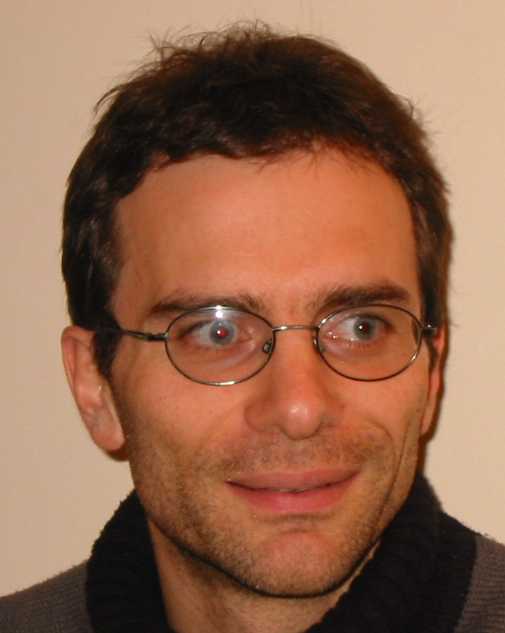
Luc Segoufin is a Research Professor at INRIA (French National Institute for Research in Computer Science and Automation), affiliated with the Department of Computer Science at École Normale Supérieure (ENS) in Paris. He leads the VALDA research team, focusing on theoretical computer science foundations. His research spans: Database theory: Query answering, consistency, and enumeration complexity Logic and automata: Finite model theory, automata over data structures Computational complexity: Fine-grained analysis and lower bounds Formal methods: Verification and logic-based modeling His recent publications (2022–2024) concentrate on: Dichotomy theorems for query answering under constraints Constant-delay enumeration algorithms for structured data Decidability in logic fragments over trees and graphs Connections between automata, algebra, and complexity No scientific awards are mentioned in available sources. He collaborates extensively within the VALDA team and international researchers on projects involving database theory, logic, and automata. No student advising details are provided.
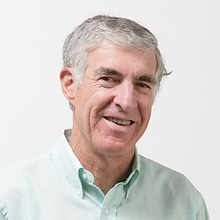
Yanlei Diao is a Professor of Computer Science at École Polytechnique (France) with a joint appointment at the University of Massachusetts Amherst. She received her PhD from UC Berkeley in 2005. Her research focuses on scalable data systems, particularly in big data analytics, cloud computing optimization, and real-time stream processing. Research Interests: Her work spans cloud infrastructure optimization (UDAO project), explainable anomaly detection in data streams (EXAD), interactive data exploration (AIDEme), genomic data analysis (GESALL), and uncertain data management (CLARO). She leads the CEDAR team at Inria/LIX focusing on cloud-scale data exploration. Awards & Honors: ERC Consolidator Grant (2017-2023) CRA-W Borg Early Career Award (2013) NSF CAREER Award (2008) Keynote speaker at ACM DEBS 2021 and SWIFT 2023 AI Forum Best Paper Award at SIGMOD 2011 ACM SIGMOD Dissertation Honorable Mention (2005) Advising & Leadership: Mentored over 20 PhD students and postdocs, currently supervising 7 researchers. Served as PVLDB PC Co-Chair (2025-2026) and ACM SIGMOD Editor-in-Chief (2014-2019). Leads multiple projects with industry partners including Alibaba Cloud.
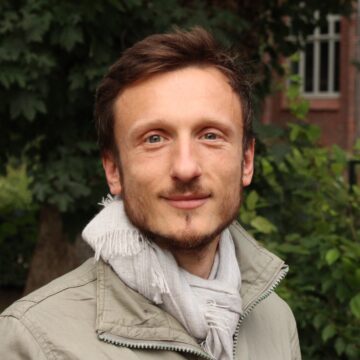
Romain Raveaux is an Associate Professor at the LIFAT Computer Science Laboratory, University of Tours, affiliated with Polytech Tours. His research focuses on Image Analysis, Machine Learning, Structural Pattern Recognition, Graph Matching, Graph Neural Networks, Discrete Optimization, Reinforcement Learning, and Transfer Learning . Email: romain.raveaux@gmail.com , romain.raveaux@laposte.net Address: 64 av. Jean Portalis, Tours, France, 37200 Phone: +33 (0)2 47 36 14 27 Research Interests Graph Matching and Neural Networks Discrete Optimization for Pattern Recognition Transfer Learning in Graph-Based Models Historical Document Analysis Scientific Trends His recent work bridges Graph Neural Networks with Mixed-Integer Programming , focusing on Image Semantic Segmentation and Graph Cycle Detection . Earlier studies emphasize Genetic Algorithms for graph classification and Graph Edit Distance optimization in pattern recognition.
Ahed Alboody is a Professor and Researcher at HESAM University Group, specifically affiliated with CESI and the Digital Innovation Laboratory for Businesses and Learning to Support Territorial Competitiveness (LINEACT) in Nice, France. He holds a specialized doctorate in computer science from the University of Toulouse 3 Paul Sabatier and has extensive experience in deep learning, computer vision, and remote sensing applications. His work bridges academic research with practical applications in environmental monitoring, human-computer interaction, and spatial reasoning systems. Education: Specialized Doctorate in Computer Science, University of Toulouse 3 Paul Sabatier (IRIT), 2011 Master 2 Research in Electronics, Automation and Systems Engineering, National Polytechnic Institute of Toulouse (INPT-ENSEEIHT), National School of Civil Aviation (ENAC), ISAE-SUPAERO, and University of Toulouse III, 2006 Engineering Diploma in Electronics and Telecommunications, University of Tishreen (Techrine), Lattakia, Syria, 2002-2003 Undergraduate studies in Electronics and Telecommunications, University of Tishreen (Techrine), Lattakia, Syria, 2002 Alboody's research focuses on advanced applications of deep learning and computer vision, particularly in the areas of 3D hand gesture recognition, hyperspectral and multispectral image processing, and semantic segmentation. His work combines theoretical advancements in mixture-of-experts architectures with practical applications in remote sensing and environmental monitoring. He has pioneered approaches in frugal learning and zero-shot learning for image segmentation tasks, with applications in digital twins and collaborative robot environments. His publication record demonstrates a clear evolution from foundational work in spatial reasoning systems (2008-2012) to current cutting-edge research in deep learning architectures for 3D gesture recognition and hyperspectral image analysis. Recent publications (2022-2024) show a strong focus on mixture-of-experts transformers, parallel architectures for efficient computation, and applications in environmental monitoring with drones and satellite imagery. Alboody actively supervises Master's level research projects (two M2 level projects mentioned) and serves as a reviewer for prestigious journals including IEEE Transactions on Neural Networks and Learning Systems and IEEE Transactions on Geoscience and Remote Sensing. He has also been a member of the Technical Program Committee for international conferences on databases and knowledge applications. His laboratory work centers around the Digital Innovation Laboratory for Businesses and Learning to Support Territorial Competitiveness (LINEACT), where he leads research in engineering and digital tools. Current projects include developing graph neural networks for 3D hand gesture recognition using depth and skeleton data, and implementing frugal learning approaches for semantic image segmentation in collaborative robot environments.
Hanan Samet is a Distinguished University Professor in the Computer Science Department at the University of Maryland, College Park. He holds affiliations with the Center for Automation Research and the Institute for Advanced Computer Studies (UMIACS). His academic journey includes a PhD from Stanford University (1975) in Computer Science, following degrees in Engineering (UCLA) and Operations Research/Computer Science (Stanford). Affiliations: University of Maryland, College Park (since 1975) Roles: Professor, Founding Editor-in-Chief of ACM Transactions on Spatial Algorithms and Systems, Founder of ACM SIGSPATIAL Samet's research focuses on spatial data structures, spatial databases, GIS, computer vision, and information retrieval. His seminal work includes the Foundations of Multidimensional and Metric Data Structures , an award-winning book addressing spatial indexing and query optimization. He pioneered frameworks like NewsStand for map-based news exploration and Coronaviz for pandemic visualization. Key contributions span spatial synonyms for approximate search, SAND spatial browser for digital government, and trajectory analysis systems for aviation safety and urban mobility. His work bridges theory and practice, influencing databases, graphics, and geographic systems. Education: B.S. Engineering, UCLA M.S. Operations Research, Stanford M.S./Ph.D. Computer Science, Stanford Samet has advised numerous students and led NSF-funded projects on spatio-textual data, similarity search, and spreadsheet analysis. His honors include the ACM Paris Kanellakis Award (2011), IEEE Wallace McDowell Award (2014), and UCGIS Research Award (2009). His labs and teams focus on spatial algorithms, visualization, and GIS applications. Notable projects include VASCO (spatial index demo), MARCO (image databases), and CHOLERA (disease tracking).
Mostafa BAMHA is an Associate Professor (Maître de Conférences) at the University of Orleans, affiliated with the LIFO Laboratory (Laboratoire d'Informatique Fondamentale d'Orléans). He leads research in parallel and distributed computing, focusing on MapReduce optimization , data skew handling , and scalable graph processing . Member of the PRV team (Parallelism, Virtual Reality, System Verification) Active in projects: HPIAF (High Performance computing for AI in Finance) INEx (Cloud Computing experiments) Girafon (Graph & BigData processing) Research Trends His publications from 2018–2024 show focus on: MapReduce optimizations for join operations and LSH similarity joins Graph processing challenges in Pregel with high-degree vertices Skew-insensitive algorithms across distributed architectures Academic Contributions Co-author in 15+ peer-reviewed publications (2000–2024) including International Journal of Parallel Programming , DEXA , and HLPP conferences. Key collaborators: Sébastien Rivault , Mohamad Al Hajj Hassan , Sophie Robert .
Jerry Lacmou Zeutouo is a Lecturer in the field of Networks and Data at Université de Picardie Jules Verne (UPJV), contributing to computer science research through advanced algorithm development and optimization. His work primarily focuses on parallel computing, dynamic programming, and computational biology. Academic Rank: Lecturer at UPJV Institution: Université de Picardie Jules Verne Research Interests: Dr. Zeutouo specializes in designing and optimizing parallel algorithms for dynamic programming and database security. His research spans: Coarse-Grained Multicomputer (CGM) architectures K-anonymity in distributed databases RNA folding and bioinformatics applications Longest Common Subsequence (LCS) constraints Publication Trends: His work emphasizes solving computational bottlenecks via parallelism, particularly in cloud environments, bioinformatics, and database security. Key themes include: Transformer-based models for cold start mitigation in FaaS Multicomputer algorithms for dynamic programming Four-splitting and Four-Russians techniques for optimization
François Briatte is an Assistant Professor in Political Science at the Catholic University of Lille , affiliated with the European School of Political and Social Sciences (ESPOL). He serves as Co-Director of International Mobility and has previously taught at Sciences Po Paris, Grenoble, Reims, the University of Lille 2, and the University of Edinburgh. His research focuses on legislative networks in European parliaments and comparative health policies . He combines methodologies from network analysis, political sociology, and digital politics to study legislative collaboration patterns, electoral behavior, and healthcare system reforms. His work often addresses Political polarization Electoral turnout dynamics Open data governance Health policy analysis Recent publications include empirical studies on Voting indecision in the 2022 French presidential election Covid-19’s impact on 2020 French local elections Network visualization tools for political science Comparative analysis of legislative cosponsorship He has developed open-source software packages like GGally and ggnetwork for network analysis in R, and actively participates in academic conferences across Europe and North America.
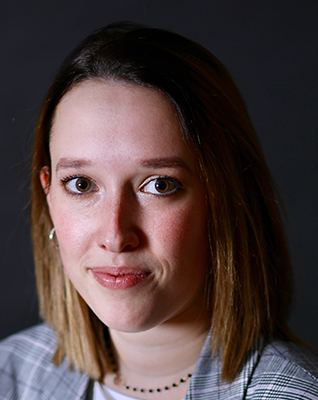
Louise Parkin serves as a Lecturer in the Department of Networks and Telecommunications at the University Institute of Technology of Blois (IUT Blois), University of Tours, with additional affiliations at the Polytechnic School of the University of Tours (EPU) and the Fundamental and Applied Computer Science Laboratory of Tours (LIFAT). Her academic profile centers on advancing cooperative methods for knowledge base interrogation and semantic data management. Her research specializes in Semantic Web technologies, focusing on resolving critical challenges in RDF and SPARQL query processing including plethoric answer sets, unexpected results, and scalability limitations. She develops cooperative frameworks that enhance user interaction with knowledge bases like Wikidata through query explanation mechanisms, adaptive result filtering, and on-demand analysis architectures. Her work bridges theoretical database concepts with practical knowledge engineering applications. Within LIFAT laboratory, Parkin contributes to cutting-edge research in semantic data management systems. Her recent projects include Rankingdom's cooperative architecture for Wikidata analysis and scalable techniques for knowledge base exploitation, demonstrating sustained innovation in query processing methodologies from 2020 through 2025 publications.
Dr. Arnaud Soulet is a researcher at the University of Tours , affiliated with the Polytechnic School of the University of Tours and the Department of Computer Science . He works at the intersection of the LIFAT Laboratory (UR 6300) and contributes to the fields of pattern mining and knowledge graph analysis. Research Focus: Data Mining, Knowledge Graphs, Sequential Pattern Mining, Distributed Databases, Cultural Heritage Informatics Publication Trends His recent publications emphasize knowledge graph analysis (e.g., Rankingdom architecture, structural modeling) and pattern mining (reservoir sampling, frequency constraints, sequential patterns). Applications span employee attrition analysis , cultural heritage data , and data stream processing .
Prof. Jean-Yves RAMEL is a faculty member at Savoie Mont Blanc University's Department of Computer Science (LISTIC laboratory). Previously, he served as a Professor at Polytech’Tours (2007–2023) and held roles at INSA Lyon (1997–2002). His research focuses on machine learning on graphs, medical and document image analysis, and interactive learning systems. He has published extensively in journals like Pattern Recognition and Medical Image Analysis . His work spans medical imaging segmentation, graph-based algorithms, and historical document processing. Notably, he contributed to projects like BVH (Bibliothèques Virtuelles Humanistes) and developed methods for graph edit distance and dynamic classification. He maintains active collaborations in digital humanities and has supervised numerous projects in computer science education. Education: PhD in Computer Science (1996), INSA Lyon: 'Interpretation automatique de documents graphiques' Maitre de conférences positions at INSA Lyon (1997–2002) and Polytech’Tours (2002–2023) Research Interests: Machine Learning on Graphs: Graph neural networks, graph embedding, and graph matching algorithms. Image Analysis: Medical imaging segmentation, historical document processing, and 3D texture analysis. Interactive Learning Systems: Dynamic classification, anytime algorithms, and one-class classifiers. Publications: Over 140 publications, focusing on graph-based methods, medical imaging, and document analysis. Recent work includes advancements in CNN/GNN pipelines for brain imaging and grammar-reinforcement learning for graphs (2025). Grants & Projects: Led the LIFAT lab (2018–2021) and contributed to the BVH digital humanities program. Active in collaborative projects involving medical imaging segmentation and historical document digitization. Labs/Teams: LISTIC laboratory (Savoie Mont Blanc University) and prior roles in LIFAT (Tours) and INSA Lyon's Interaction Collaborative lab.
Mirian HALFELD-FERRARI is a Professor at the University of Orleans , where she serves as Director of the Pamda Laboratory, member of the Sustainable Development Working Group, and International Relations Manager. Her research focuses on database systems, semantic web technologies, and graph data management. Key contributions include graph rewriting systems , RDF database evolution , and data consistency frameworks . Recent work explores clinical text-to-knowledge graphs , XML schema evolution , and context-driven urban data analysis . She collaborates with researchers across Europe on projects involving graph data science , service composition refinement , and semantic web sanitization . Her leadership roles include organizing workshops at conferences such as ADBIS and serving on editorial boards for international journals.
Khalid Belhajjame is a Lecturer at Paris Dauphine University, where he is a member of the LAMSADE research laboratory. His academic career spans multiple prestigious institutions, having previously worked as a researcher at the University of Manchester and completed his PhD at the University of Grenoble. His research focuses on information and knowledge management systems with applications across various scientific domains. Belhajjame's research interests center on information and knowledge management, with specific contributions to pay-as-you data integration, e-Science, scientific workflow management, provenance tracking and exploitation, and semantic web services. His work bridges theoretical computer science with practical applications in astronomy, biodiversity, and life sciences. He has developed innovative approaches to workflow management, data integration, and provenance tracking that enhance scientific reproducibility and data transparency. His publication record shows a clear trajectory of advancing scientific workflow systems and data management techniques. Recent work focuses on workflow validation, knowledge graph maintenance, bioinformatics data analysis, and privacy-aware workflows. His research demonstrates increasing sophistication in handling complex data provenance while maintaining usability and transparency. The interdisciplinary nature of his work is evident in applications spanning genomics, business process analytics, and cloud computing. Belhajjame actively contributes to the scientific community through multiple roles. He serves on the editorial board of the MethodX Elsevier journal and has participated in numerous European, French, and UK-funded projects. His leadership extends to co-leading ProvBench, a provenance benchmarking initiative, and participating in influential working groups including the W3C Provenance working group and the NSF-funded DataONE working group on scientific workflows and provenance. He has established himself as a key contributor to research object frameworks and scientific workflow standards. His collaborations span multiple continents and disciplines, reflecting the broad applicability of his work in data management and workflow systems. His current research continues to push boundaries in making scientific workflows more transparent, reusable, and privacy-preserving.
Sara Riva is an Associate Professor (Maître de Conférences) in Computer Science at Université de Lille, affiliated with the CRIStAL laboratory (UMR 9189). She is a member of the BioComputing research group and the MSV thematic group. Her academic journey includes a PhD jointly supervised by Université Côte d'Azur and Università degli Studi di Milano-Bicocca (2019-2022) and postdoctoral research at Université de Bordeaux (2022-2023). Her research explores Discrete Dynamical Systems , Cellular Automata , and Boolean Networks , with emphasis on equation solving, factorization methods, and dynamics modeling. She develops algorithmic approaches to analyze complex behaviors in computational and biological systems. Publications (2019-2023) demonstrate consistent focus on theoretical foundations of discrete systems, with applications in systems biology and complex modeling. Key themes include Boolean network dynamics, computational pipelines for equation solving, and sensitivity analysis in cellular automata. Awards: First prize for PhD students (Computer Science), STIC doctoral school Teaching: Extensive instructional experience at Université de Lille and Université Côte d'Azur covering: Algorithms & Programming (72+ lab hours) Databases (39+ lab hours) Logic, Graph Theory, Web Technologies (18+ lab hours each) IT Security and Information Coding (18 hours each) Academic Service: Member of CRIStAL's parity commission; Program Committee for AUTOMATA 2024; President of ADSTIC PhD association (2021-2022); Organized summer schools (EJCIM 2022).
Nicolas PRAT is an Associate Professor at ESSEC Business School specializing in Information Systems, Data Analytics and Operations. He serves as Head of the Information Systems Track at the Cergy campus and has been with ESSEC since 1995, progressing from Lecturer to his current position as Associate Professor since 2006. His academic credentials include: Accreditation to supervise research (Université Paris Dauphine-PSL, 2012) PhD in Information Systems (Université Paris Dauphine-PSL, 1999) Specialized Master in Information Systems (ESSEC Business School, 1991) MSc in Management (ESSEC Business School, 1990) International Teachers Programme (Stockholm School of Economics, 2004) PRAT's research focuses on conceptual modeling, design science research, business intelligence, and knowledge management with increasing attention to emerging technologies like AI and blockchain. His work bridges theoretical foundations with practical applications, examining how data and knowledge engineering can support organizational decision-making processes. He has made significant contributions to understanding the evolution of conceptual modeling and taxonomy development for complex technologies. His recent publications demonstrate a clear research trajectory toward exploring generative AI's impact on business intelligence, sustainability frameworks for design science research, and advanced methods for taxonomy development in complex emerging technologies. These works reflect his ongoing engagement with cutting-edge developments while maintaining strong theoretical foundations in information systems research. Scientific recognition includes: Qualification to the function of full Professor in the French University system (Computer Science, 2013) PRAT has supervised doctoral research, including Demigha S. at Université Paris 1 Panthéon-Sorbonne in 2005. His academic leadership includes serving as Academic Director for specialized programs and Head of the Information Systems Track. He actively contributes to the scholarly community through editorial board memberships for "Systèmes d'Information et management" (since 2022) and "Journal of Database Management" (since 2013).