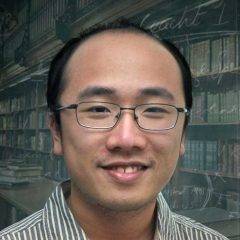
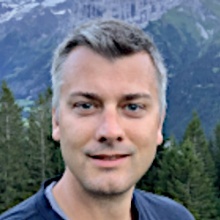
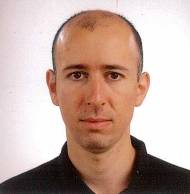
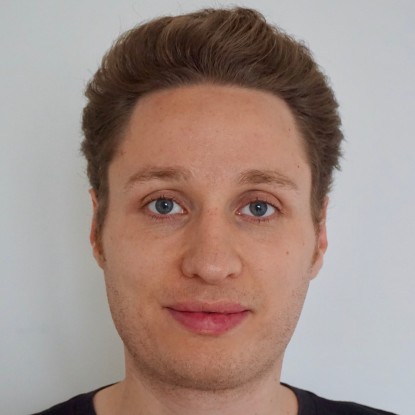
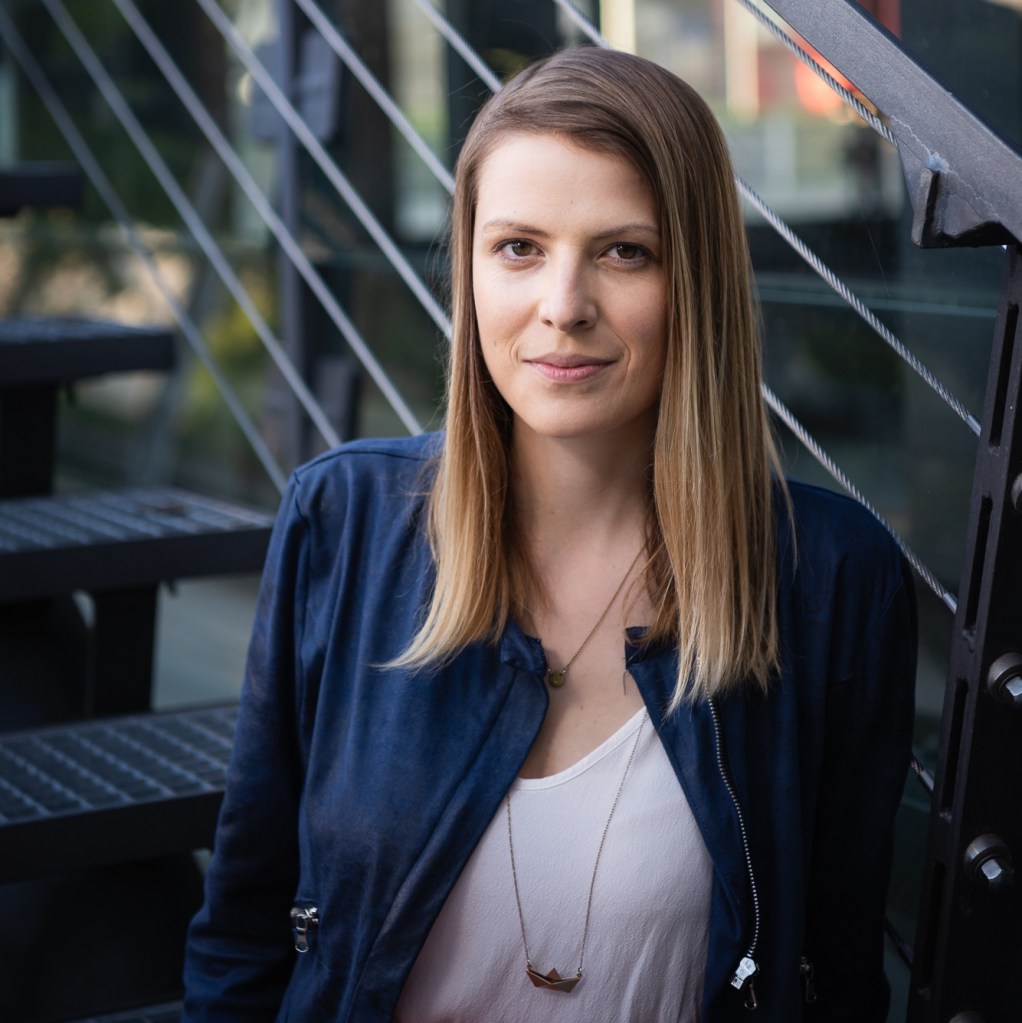
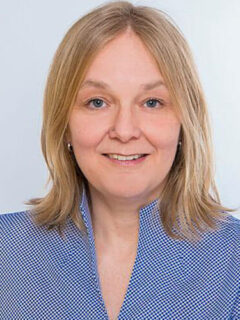
Yin Tat Lee is an Associate Professor at the Paul G. Allen School of Computer Science & Engineering , University of Washington, and a Senior Principal Researcher in Microsoft AI. His research spans convex optimization , convex geometry , graph algorithms , online algorithms , and differential privacy , with applications in machine learning and theoretical computer science.
Prof. Dr. Barbara Kraus is the Chair of Quantum Algorithms and Applications at the Technical University of Munich (TUM), affiliated with the TUM School of Natural Sciences. She previously held academic positions at the University of Innsbruck, where she founded her research group in 2010. Education : Physics and Mathematics at the University of Innsbruck; Post-doctoral work at MPI for Quantum Optics and University of Geneva. Her research focuses on foundational problems in quantum information theory, particularly entanglement in multipartite systems, quantum simulation, and verification of quantum processors. She develops theoretical tools for quantum many-body systems and explores applications in quantum computing, emphasizing error characterization and experimental validation. Recent publications highlight advancements in Hamiltonian learning, symmetry-resolved entanglement detection, and multipartite state transformations. Her work bridges theoretical quantum physics with practical implementations, including Rydberg platforms and quantum metrology. Key Awards : START Prize (2010), Ignaz L. Lieben Award (2013), Boltzmann Prize (2011), Südtiroler Sparkasse Research Prize (2019). She supervises doctoral students and postdocs in quantum information theory, with a focus on stabilizer states, quantum networks, and entanglement measures. Her courses at TUM include Quantum Information , Quantum Algorithms , and workshops on entanglement manipulation.
Mathias Niepert is a Professor at the Institute for Artificial Intelligence within the Faculty of Computer Science, Electrical Engineering and Information Technology at the University of Stuttgart. His research focuses on advancing machine learning techniques with applications in scientific computing, graph neural networks, and medical imaging. He is particularly known for contributions to physics-informed neural networks, equivariant models, and graph learning frameworks. Key research areas include: Scientific Machine Learning for PDEs and molecular modeling Graph neural networks and their theoretical limitations Medical vision-language models and multimodal learning Efficient neural network architectures (transformers, FNOs) Domain knowledge integration in deep learning His work often bridges theoretical foundations with practical applications, as evidenced by extensive publications (2018–2025) on topics like adaptive message passing, equivariant networks, and medical imaging systems. He has contributed to benchmark development through initiatives like PDEBench and pioneered methods for equivariant diffusion models and molecular representation learning. His current projects emphasize: Improving generalization in Fourier Neural Operators Addressing oversmoothing in graph networks Combining physics principles with neural architectures Medical AI applications through multimodal fusion
Günter Rote is a Professor in the Department of Computer Science at Freie Universität Berlin, specifically within the Theoretical Computer Science group (Arbeitsgruppe Theoretische Informatik). He holds a formal academic title of Professor Dr. and is affiliated with the Faculty of Mathematics and Computer Science. His research focuses on theoretical computer science, computational geometry, algorithms, and discrete mathematics. Key research interests include geometric algorithms, optimization problems (e.g., shortest paths, traveling salesman problems), and algorithm design for parallel computing systems. His work spans topics such as systolic arrays, convex hulls, and combinatorial optimization. Rote’s contributions include foundational studies on computational geometry problems, algorithmic complexity, and practical applications in energy equity and infrastructure design. Publications highlight contributions to solving extremal equations, polygon transformations, and the quadratic assignment problem. He has been active in academic leadership, mentoring students, and contributing to computational science communities. His email is rote@inf.fu-berlin.de, and his office is located at Takustraße 9 in Berlin.
Martin Grohe is a Professor at the School of Logic and Theory of Discrete Systems , part of the Department of Computer Science at RWTH Aachen University . His research spans Algorithms and Complexity , Logic , Database Theory , Graph Theory , and Machine Learning , with a focus on integrating logical frameworks into computational models. His recent work explores graph neural networks , Weisfeiler-Leman algorithms , and parameterized complexity , as seen in publications on isomorphism testing , database repairing , and probabilistic query evaluation . While no specific scientific awards are mentioned, his contributions to graph theory and machine learning are widely recognized through numerous peer-reviewed publications.
László Kozma is an Assistant Professor at the Theoretical Computer Science group of the Institute of Computer Science (Freie Universität Berlin). He obtained his PhD from Saarland University under Raimund Seidel, followed by postdoctoral positions at Tel Aviv University and TU Eindhoven. His research focuses on self-adjusting data structures , adaptive algorithms , and combinatorial optimization with applications to problems like the Traveling Salesman Problem, binary search trees, and geometric data structures. Academic Affiliation: Freie Universität Berlin (since 2018) Education: PhD in Computer Science (Saarland University, 2016); postdoc at Tel Aviv University and TU Eindhoven. His work explores the intersection of data structures, combinatorial algorithms, and geometric methods. He has made significant contributions to problems involving pattern-avoidance in inputs, saddlepoint detection , and self-adjusting heaps . Key areas include: Adaptive algorithms for pattern-avoiding inputs Optimal tree and heap structures Geometric and stochastic approaches to optimization Complexity analysis of classical algorithms Recent publications highlight efficient solutions for exponential cut problems (ESA 2025), balanced TSP partitioning (EuroCG 2025), and randomized saddlepoint algorithms (ESA 2024). His research often bridges theory and practice, exemplified by the smooth heap implementation and fun projects like Recursi and Cuckoo Hashing visualization.
Professor Yann Disser is a faculty member in the Department of Mathematics at TU Darmstadt since 2021. He previously held an Assistant Professor (tenure-track) position at TU Darmstadt (2016-2021), a PostDoc position at TU Berlin (2012-2016), and a Visiting Professor role at Augsburg University (2015). His research spans Combinatorial Optimization , Online Algorithms , Graph Exploration , Computational Complexity , and Robust Optimization . Current position: Professor (W2), TU Darmstadt Previous: Assistant Professor (2016-2021), TU Darmstadt PostDoc & Habilitation: TU Berlin (2012-2016) His research focuses on algorithmic approaches to optimization problems, including: Combinatorial Optimization for problems like Steiner trees and knapsack variants Online Algorithms with applications to scheduling and transportation Graph Exploration by mobile agents and complexity bounds Computational Complexity of linear programming pivot rules Network Flows and geometric reconstruction Recent publications analyze incremental maximization with greedy methods, lower bounds for active-set methods , and universal circuit designs . His work appears in top venues like IPCO , ESA , and SODA . He advises a team of researchers including David Weckbecker, Farehe Soheil, and Alexander Birx. Current and past advisees often focus on algorithmic theory, with placements at institutions like HPI Potsdam and Merck.
Piotr Micek is a professor in the Theoretical Computer Science Department at the Faculty of Mathematics and Computer Science, Jagiellonian University , Kraków, Poland. He is an active researcher in combinatorics, particularly in structural graph theory and poset combinatorics, and maintains extensive international collaborations. University: Jagiellonian University School: Faculty of Mathematics and Computer Science Department: Theoretical Computer Science Department Email: firstname.lastname@gmail.com Office: Room 3151, Łojasiewicza Street 6, 30-348 Kraków Phone: +48 12 664 7594 Duty hours: Wednesdays 11:00–13:00 His main research interests include structural graph theory, combinatorics of partially ordered sets (posets), geometric intersection graphs, graph coloring and choosability, and the entropy compression method. He also works on approximation and on-line algorithms and combinatorial geometry. His work often bridges deep theoretical insights with algorithmic applications. The recent publications highlight a strong focus on graph structure and coloring problems. Key themes include product structure of planar graphs, poset dimension and its relation to height and planarity, weak coloring numbers, and adjacency labelling. His work frequently appears in top venues such as Journal of the ACM , Combinatorica , SIAM Journal on Discrete Mathematics , and SODA, indicating sustained high-impact contributions. Associate Editor, SIAM Journal on Discrete Mathematics (2025–) Former Associate Editor, Discrete Mathematics (2010–2022) Former Associate Editor, Discrete Mathematics & Theoretical Computer Science (2012–2020) He has supervised numerous students at all levels, including PhD candidates Jędrzej Hodor , Marcin Briański , and Michał T. Seweryn , and has led major research grants such as OPUS 24 and WEAVE-UNISONO funded by NCN. He has also been involved in significant trilateral projects with researchers from Belgium and Germany. His recent talks include tutorials on product structure theory and centered colorings, reflecting his leadership in these areas. He actively participates in the academic community, having served on program committees (e.g., SODA 2021, WG 2022) and organized workshops such as the Order & Geometry series. His research is supported by substantial funding, including over 900,000 PLN for current projects.
Raimund Seidel is a Professor in the Department of Computer Science at Universität des Saarlandes, leading the Chair of Theoretical Computer Science. He is actively involved in research and teaching, focusing on foundational aspects of algorithms and data structures, particularly in computational geometry. His primary research interests include theoretical computer science , design and analysis of efficient algorithms , geometric data structures , randomized algorithms , and combinatorial geometry . His work addresses fundamental problems such as planar point location, convex hull computation, and efficient encoding of triangulations. He also investigates geometric algorithms under the transdichotomous model, leveraging word-level parallelism. The selected publications reflect a long-standing contribution to computational geometry and data structure theory , with a focus on randomized methods and exact complexity analysis. His research combines theoretical rigor with practical implications for algorithm design. Award or honor not found in the provided text. Prof. Seidel has advised several students, including Alexander Malkis , Ralf Osbild , Udo Adamy , Christian Sohler , and others, many of whom have gone on to academic and research careers. No explicit information about grants or funding is available in the text. He leads a research group within the Department of Computer Science at Universität des Saarlandes, mentoring current staff such as László Kozma , Giorgi Nadiradze , and Lavinia Dinu . The group maintains active research in theoretical computer science and computational geometry.
Manuel Penschuck is a Research Fellow at the Institute of Computer Science , Goethe University Frankfurt, Germany. His research focuses on algorithm engineering, graph theory, and scalable network generation, with emphasis on parallel computing, I/O-efficient algorithms, and random graph models. He actively contributes to conferences like ESA, SEA, and IPDPS, and has co-authored publications in top venues including LIPIcs , IEEE Transactions , and SIAM . His work includes engineering algorithms for non-linear preferential attachment , parallel shuffling , and hyperbolic graph generation . He has co-organized program committees for ESA, EuroPar, and SEA, and his collaborations span institutions such as MPI-INF, TU Darmstadt, and Australian National University. Recent publications highlight advances in uniform graph sampling, geometric network models, and distributed systems. His research integrates theoretical rigor with practical implementation, addressing challenges in big data and high-performance computing. He is a key contributor to the Networkit toolkit for large-scale network analysis.
Mordecai J Golin is a Professor in the Department of Computer Science and Engineering at The Hong Kong University of Science and Technology (HKUST), School of Engineering. His research lies at the intersection of theoretical computer science, algorithms, and discrete mathematics, with strong applications in information theory and computational geometry. His research interests include algorithms , computational geometry , data structures , dynamic programming , coding theory , and combinatorics . He has made significant contributions to the design and analysis of optimal search trees, prefix-free coding, and minmax regret optimization in dynamic flow networks. His work often combines probabilistic analysis with algorithmic efficiency. The recent publications highlight a sustained focus on optimization problems in graphs and trees, particularly in dynamic flow networks for applications like evacuation modeling, and in data compression via advanced Huffman and AIFV coding techniques. The research spans from theoretical foundations to algorithmic innovation, with recurring themes of efficiency, robustness, and structural analysis. Scientific Awards No specific awards mentioned in the provided text. Advising and Grants : While specific students and grants are not listed, Dr. Golin has an extensive record of collaborative research with colleagues at HKUST and internationally, suggesting active supervision and project leadership. His frequent publications in top-tier venues indicate sustained funding and research activity. Labs and Teams : Though not explicitly named, his work is likely conducted within theoretical computer science or algorithms research groups at HKUST, possibly associated with centers focusing on discrete mathematics or information sciences.
Dr. Lisa Kohl is a tenured Researcher in the Cryptology Group at CWI Amsterdam since October 2020. Her work focuses on secure computation and practical post-quantum secure protocols . Prior to CWI, she was a postdoctoral researcher at Technion with Yuval Ishai and completed her PhD at Karlsruhe Institute of Technology under Dennis Hofheinz in 2019. She also spent eight months at the FACT center, IDC Herzliya during her PhD and wrote her master’s thesis at CWI Cryptology Group as a visiting student in 2015. PhD in Cryptology (2019, Karlsruhe Institute of Technology) Postdoctoral Researcher (Technion, 2019-2020) Research Visit Fellow (FACT Center, 2015-2019) Visiting Student (CWI Cryptology Group, 2015) Her research spans secure multi-party computation , homomorphic secret sharing , post-quantum cryptography , and pseudorandom correlation generation . Articles demonstrate expertise in optimizing oblivious transfer , improving Σ-protocol efficiency , and constructing cryptographic primitives from lattice problems and LPN assumptions . Contact: Lisa.Kohl@cwi.nl
Jens Stoye is a Professor of Genome Informatics at the Faculty of Engineering , Bielefeld University, where he has held this position since 2002. He leads the Genome Informatics Working Group at CeBiTec and serves as Managing Director of the Bielefeld Institute for Bioinformatics Infrastructure (BIBI). Additionally, he is a member of the Board of Directors at the Center for Interdisciplinary Research (ZiF) and held numerous administrative roles, including Dean of the Faculty of Technology and Speaker of the DFG Research Training Group. Education: Diploma in Informatics in the Natural Sciences (1995) and PhD (1997) from Bielefeld University Current Roles: Full University Professor, Managing Director of BIBI, Executive Director of ZiF (2023-2025) His research focuses on computational genomics , including genome rearrangement, comparative genomics, and pangenomics. Recent work explores the double distance problem , natural genome phylogeny reconstruction, and efficient pangenome storage techniques. He has developed algorithms for genome assembly benchmarking (GABenchToB), rearrangement epidemiology (pling), and core genome detection. Scientific Contributions include best paper awards and editorial roles at IEEE/ACM Transactions on Computational Biology and Bioinformatics , BMC Bioinformatics , and Discrete Applied Mathematics . He has served on over 20 conference committees (WABI, ISMB, RECOMB) and advised 165+ theses (36 PhD, 71 Master/Diploma, 58 Bachelor). Leadership Roles: Vice-Speaker of German Bioinformatics Society (2002-2014) Dean of Faculty of Technology (2007-2009) Speaker of DFG Research Training Group (2013-2019) Member of DAAD Postdoc Fellowship Committee (2014-2025)
Prof. Dr. Frauke Liers holds the Professorship of Optimization under Uncertainty & Data Analysis at the Department of Data Science (DDS), Friedrich-Alexander-University Erlangen-Nürnberg. Her research focuses on robust and distributionally robust optimization, mathematical programming, and applications in energy systems, healthcare logistics, and quantum computing. Email: frauke.liers@fau.de ResearchGate: Frauke Liers Research Interests span optimization under uncertainty, data-driven mathematical programming, and interdisciplinary applications. Key areas include: Distributionally robust optimization with scenario reduction and chance constraints Quantum computing optimization for gate routing and noise suppression Energy system modeling (photovoltaics, gas networks, electricity networks) Healthcare logistics (patient transport scheduling under uncertainty) Nanoparticle technology and chemical process optimization Recent Publications emphasize: Advancements in quantum circuit optimization (2025) Explainable optimization methods (2024) Robust approaches for particle precipitation control (2024) Dynamic trajectory optimization (2023) Time-expanded models for network flows (2022)
Professor Melanie Schmidt is a faculty member in the Department of Computer Science at Heinrich-Heine-Universität Düsseldorf, where she leads the Algorithms and Data Structures research group. Previously, she was affiliated with the University of Bonn's Institute of Computer Science, where she completed her PhD under Prof. Dr. Heiko Röglin and headed a subgroup on "clustering for big data" within his research group. Current Position: Professor at Heinrich-Heine-Universität Düsseldorf Previous Position: Researcher and lecturer at University of Bonn PhD Advisor: Prof. Dr. Heiko Röglin Her research focuses on geometric data analysis, particularly k-means clustering in data streams, combinatorial optimization, and approximation algorithms. Her work bridges theoretical computer science with practical applications in big data processing. She has made significant contributions to understanding the theoretical foundations of clustering algorithms while developing efficient implementations for real-world applications. Professor Schmidt's publication record shows a consistent evolution from theoretical analysis of k-means to practical implementations for big data environments. Her recent work explores fairness in clustering, privacy-preserving techniques, and efficient algorithms for high-dimensional data. She has published in top-tier conferences including SODA, ICALP, ESA, and ITCS, demonstrating both theoretical rigor and practical relevance. Best Student Paper Award at ESA 2012 (joint work with Martin Groß, Jan-Philipp W. Kappmeier, and Daniel Schmidt) She actively supervises numerous Master's and Bachelor's students, with current advisees including Lena Carta, Lukas Drexler, and Anna Arutyunova. Her research group includes members such as Anja Rey, Julian Wargalla, and Annika Hennes. She teaches advanced courses in algorithms and data structures, with a focus on randomized algorithms and efficient algorithm design for big data problems. Professor Schmidt leads the Algorithms and Data Structures research group at Heinrich-Heine-Universität Düsseldorf, which focuses on developing and analyzing efficient algorithms for fundamental computational problems, with particular emphasis on clustering, geometric data analysis, and big data applications.