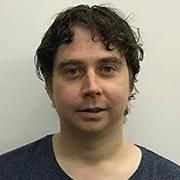
Prof. Oleg Ivrii is a Senior Lecturer in the Department of Theoretical Mathematics at Tel Aviv University's Faculty of Exact Sciences. He earned a B.Sc. in Mathematics from the University of Toronto (2009) and a Ph.D. in Mathematics from Harvard University (2014). Following postdoctoral research positions at the University of Helsinki (2014-2016) and California Institute of Technology (2016-2019), he joined Tel Aviv University in 2019. Research Focus: Complex analysis, conformal geometry, thermodynamic formalism, and geometric function theory. Key Contributions: Studies on analytic mappings of the unit disk, inner functions, quasiconformal homogenization, and Makarov's principle. His work explores critical structures of inner functions, stable convergence, and applications to dynamical systems. He has advised Emanuel Sygal (Master's thesis) and collaborated with Artur Nicolau, Mariusz Urbański, and Vladimir Marković. Ivrii's publications appear in journals like Inventiones Mathematicae , Journal of Differential Geometry , and Analysis & PDE .
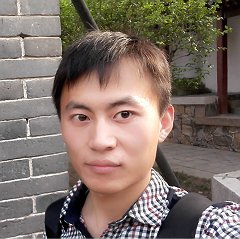
Xiang Gao is a Pre-tenure Associate Professor in the School of Software at Beihang University, China. His research focuses on applying program analysis, test generation, and formal methods to improve software quality through automated bug fixing and program synthesis. He has established significant collaborations with Fujitsu Laboratories of America, Microsoft Research, and other leading institutions in the software engineering field, demonstrating strong industry-academia connections. Dr. Gao received his Bachelor's degree in Computer Science (Elite Class) from Shandong University in 2016, followed by a Ph.D. from the School of Computing at the National University of Singapore, where he also served as a Postdoctoral Fellow until December 2021. His educational background spans both Chinese and Singaporean academic institutions, providing him with a global perspective on software engineering research. His primary research interests span multiple cutting-edge areas of software engineering: Program Analysis techniques for detecting and fixing software bugs with formal methods Software Security vulnerabilities with focus on automated repair methods Automated Program Repair systems that generate high-quality patches without overfitting Program Synthesis for creating transformation rules from examples Software Engineering for Artificial Intelligence (SE4AI) to improve AI model reliability and security Mobile Software Engineering with particular attention to UI testing and automation Deep Learning Security including model protection and obfuscation techniques Dr. Gao's recent publication trajectory shows a strategic evolution toward integrating large language models with traditional software engineering approaches, particularly in test generation and program repair. His work on DNN modularization (NeMo, CNNSpliter, SeaM) represents an innovative approach to enhancing model reusability and security in resource-constrained mobile environments, addressing critical challenges in deploying AI on edge devices. His scientific contributions have been recognized with multiple prestigious awards: ACM SIGSOFT Distinguished Paper Award for "ProveNFix: Temporal Property guided Program Repair" at FSE'24 IEEE TCSE Distinguished Paper Award for "Investigating and Detecting Silent Bugs in PyTorch Programs" at SANER'24 ACM SIGSOFT Distinguished Paper Award for "Modularizing while Training: A New Paradigm for Modularizing DNN Models" at ICSE'24 Distinguished Artifact Award for "Automated Patch Backporting in Linux (Experience Paper)" at ISSTA'21 Dr. Gao actively mentors students at various levels, seeking "self-motivated Ph.D, master, undergraduate students and interns with strong programming skills" for his research projects. He serves on numerous program committees for top software engineering conferences including ICSE, ASE, ISSTA, and FSE, demonstrating his growing influence in the academic community. His research has been supported through collaborations with industry partners including Microsoft Research and Fujitsu Laboratories of America, translating theoretical advances into practical applications. His laboratory focuses on several key research projects including Automated Software Vulnerability Repair (with techniques like Fix2Fit, VulnFix, and ExtractFix that address the overfitting problem in program repair), Program Synthesis for Program Transformation (including Semi-supervised synthesis and FixMorph for automated patch backporting in Linux), and Software Engineering for Artificial Intelligence (with projects like CNNSpliter, SeaM, and Sensei that apply software engineering principles to improve AI model usability and robustness). These projects represent cutting-edge work at the intersection of traditional software engineering and modern AI techniques, addressing critical challenges in software reliability and security.
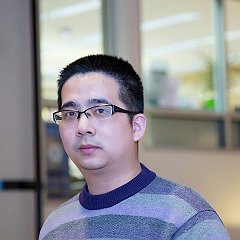
Xin Xia is a Qiushi Distinguished Professor at the College of Computer Science and Technology, Zhejiang University. Previously, he served as the Chief Expert and Director of the Software Engineering Application Technology Lab at Huawei Technologies, China from 2021 to 2025. His academic career spans software engineering research with a focus on AI applications in the field. Ph.D. from Zhejiang University (2014) Supervised by Prof. Xiaohu Yang and Prof. Jianling Sun Visiting student at Singapore Management University (2012-2014) under Prof. David Lo Xin Xia's research primarily focuses on applying data science techniques to software engineering problems. His work spans AI for Software Engineering, Mining Software Repositories, Empirical Software Engineering, and Large Language Models for code understanding and generation. He employs data mining, information retrieval, natural language processing, search-based algorithms, and program analysis to transform software engineering data into automated tools and insights. His recent publications show a strong trend toward leveraging Large Language Models for various software engineering tasks, including code generation, vulnerability detection, and test generation. He has been exploring how to make these models more effective, reliable, and practical for real-world software development scenarios, with a particular focus on Java and Python ecosystems. ACM SIGSOFT Early Career Researcher Award (2022) ACM Distinguished Member 16 best or distinguished paper awards, including nine ACM SIGSOFT Distinguished Paper Awards Recipient of the IEEE Transactions on Software Engineering 2021 Best Paper Award Runner-Up Xin Xia has advised numerous students who have gone on to publish in top software engineering venues. His research has been supported by grants from both academic institutions and industry partners, particularly during his time at Huawei. He actively collaborates with researchers worldwide, especially with David Lo at Singapore Management University. At Zhejiang University, Professor Xia leads research in the intersection of AI and Software Engineering. His work has practical applications in improving developer productivity through automated tools that analyze software repositories and provide actionable insights.
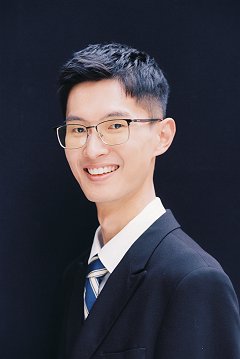
Shangwen Wang is an Assistant Professor in the School of Computer Science at National University of Defense Technology (NUDT) in Changsha, China. He earned his Bachelor's degree in June 2017, Master's degree in December 2019, and Ph.D. in December 2023, all from NUDT. During his graduate studies, he was supervised by Professor Xiaoguang Mao. From May 2022 to July 2023, he was a visiting student at Southern University of Science and Technology under Professor Yepang Liu. His educational background includes: Ph.D. in Software Engineering, NUDT (2020.3-2023.12), supervised by Prof. Xiaoguang Mao Visiting Scholar, SUSTech (2022.5-2023.7), supervised by Prof. Yepang Liu M.A. in Software Engineering, NUDT (2017.9-2019.12), supervised by Prof. Xiaoguang Mao B.A. in Software Engineering, NUDT (2013.9-2017.6) Wang's research focuses on program repair, program comprehension, mining software repositories, software maintenance and evolution, software testing, and AI for Software Engineering. His work bridges traditional software engineering techniques with modern AI approaches, particularly leveraging large language models for various software engineering tasks. He has made significant contributions to automated program repair, fault localization, vulnerability detection, and code generation. His research demonstrates a strong emphasis on empirical validation and practical applicability to real-world software development challenges. His recent publications show a clear trend toward integrating large language models with traditional software engineering tasks. The 15 most recent articles reveal a focus on applying LLMs to program repair, fault localization, vulnerability detection, and code generation, while maintaining strong empirical foundations. His work spans both theoretical advancements and practical tool development, with applications in software security, testing, and maintenance. His notable achievements include: CCF Outstanding Doctoral Dissertation (CCF优博) 2024 Outstanding Doctoral Graduates, NUDT, 2023 Multiple distinguished paper awards including ACM SIGSOFT Distinguished Paper Award (ISSTA'24) and IEEE TCSE Distinguished Paper Awards (ICSME'22, SANER'22) Prestigious scholarships from NUDT throughout his academic career As an active member of the software engineering community, Wang serves on numerous program committees for top conferences including ICSE, ASE, ESEC/FSE, and ISSTA. He has also contributed to teaching as a teaching assistant for courses such as Compiler, Python Programming, Discrete Mathematics, and C++ Programming. His research group appears to be actively mentoring students, as evidenced by his role as corresponding author on multiple student-led publications. Wang maintains an active research presence with collaborations across multiple institutions in China. His work demonstrates a clear trajectory from traditional program analysis techniques toward integrating cutting-edge AI approaches, particularly large language models, into software engineering practices.
Alexander Mitsos is a Professor at Forschungszentrum Jülich in Germany, where he leads research at the intersection of process systems engineering, chemical engineering, and computational methods. His work spans optimization theory, machine learning applications, and energy systems, with a focus on developing novel methodologies for complex engineering problems across multiple domains. Dr. Mitsos's research interests center on the application of advanced optimization techniques to chemical engineering problems. His primary areas of focus include: Process systems engineering and optimization Machine learning applications in chemical engineering Energy systems and hydrogen technologies Bioprocess engineering and control systems Ammonia energy storage and carbon capture His recent publications reveal a strong trend toward integrating machine learning with traditional chemical engineering approaches. He has pioneered work on graph neural networks for molecular property prediction, reinforcement learning for control systems, and bilevel optimization for energy systems. His research demonstrates a consistent focus on developing computationally efficient methods that bridge theoretical advances with practical engineering applications, particularly in sustainability-focused domains like hydrogen technologies and carbon emission reduction. The analysis of his 15 most recent publications shows a balanced portfolio between theoretical method development (e.g., optimization algorithms) and practical applications (e.g., cement production, hydrogen compression). Dr. Mitsos has mentored numerous graduate students and postdoctoral researchers, as evidenced by his extensive publication record with junior authors. His research has been supported by various grants focused on energy transition, process optimization, and sustainable chemical engineering solutions, with significant collaborations across European institutions. The funding landscape for his work appears to emphasize sustainability transitions and industrial decarbonization, particularly in energy-intensive sectors. His work appears to be conducted within a research group focused on process systems engineering, with strong connections to both computational mathematics and practical chemical engineering applications. The group maintains laboratories for experimental validation of computational models, particularly in bioprocess engineering and hydrogen technologies, while maintaining strong theoretical foundations in optimization and control theory.