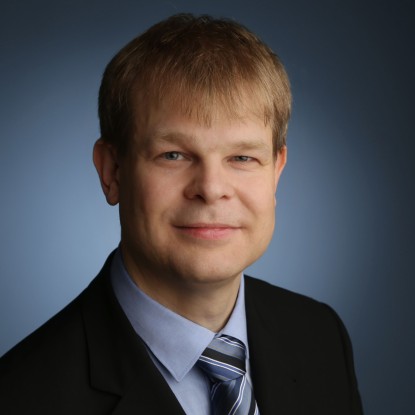
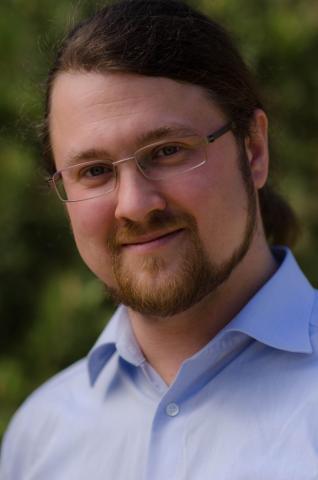
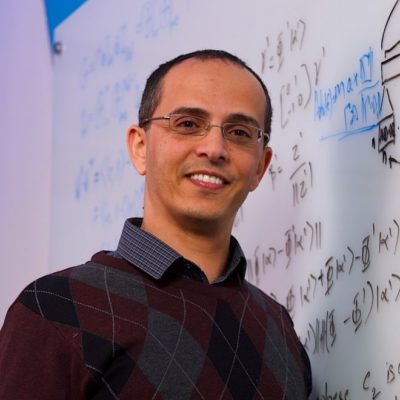
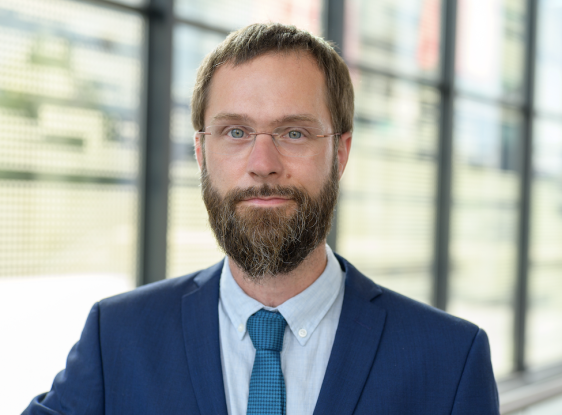
Amin Coja-Oghlan is Professor of Efficient Algorithms and Complexity Theory at TU Dortmund University's Department of Computer Science. His research integrates probabilistic combinatorics, information theory, and statistical physics to solve fundamental problems in theoretical computer science. Education includes a doctorate in Mathematics (University of Hamburg, 2002) and habilitation in Computer Science (Humboldt University Berlin, 2005). Research advances understanding of phase transitions in constraint satisfaction problems, optimization landscapes, and random structures. Recent publications analyze SAT thresholds, group testing, and sparse matrix properties. Academic appointments include professorships at Goethe University Frankfurt and lectureships at Edinburgh and Warwick. Research contributions bridge discrete mathematics with computational complexity.
Prof. Dr. Marc Pfetsch is a full professor of Discrete Optimization at the Technical University of Darmstadt, holding the W3 chair since 2012. He leads the Optimization Group within the Department of Mathematics and has served as Dean of the Department from October 2022 to September 2024. His research focuses on optimization methodologies, particularly in gas network modeling, discrete and mixed-integer programming, and computational algorithms. He is a core developer of the SCIP Optimization Suite, a leading solver for mixed-integer programming problems. Education : Mathematics studies at the University of Heidelberg (1992–1997) Operations Research at Cornell University (1997–1998, via Fulbright Scholarship) PhD in Mathematics from TU Berlin (2002) Habilitation in Computational Aspects of Combinatorial Optimization (2008) Research Interests : Discrete and combinatorial optimization Gas network optimization and resilience design Symmetry handling in mixed-integer programming Algorithm development for SCIP and optimization software Key Projects : Transregio/SFB 154: Mathematical Modeling, Simulation, and Optimization of Gas Networks SCIP Optimization Suite development Clean Circles: Iron as an energy carrier for climate-neutral systems Awards : EURO Excellence in Practice Award 2016 for "Evaluating Gas Network Capacities" Grants and Labs : Principal investigator in multiple DFG projects (e.g., SPP 2298, Matheon) BMWi-funded projects on flexible heating networks and resilient systems
Florian Bossmann is an Associate Professor and Doctoral Supervisor at the School of Mathematics, Harbin Institute of Technology. His research focuses on applied signal processing with an emphasis on algorithm design and applications in inverse problems, sparsity, and compressed sensing. His work spans seismic exploration, ptychography, and video processing. Education: PhD (Mathematics, University of Göttingen, 2010-2013), Diploma in Mathematics (University of Duisburg-Essen, 2005-2009). Research interests include greedy methods, structured sparsity, and data denoising. His recent articles address topics like object reconstruction via K-approximation graphs and phase retrieval in ptychographic imaging. No scientific awards explicitly stated. Active in mentoring doctoral students and collaborations in applied mathematics and engineering. Labs/Teams: Engaged in interdisciplinary research groups focused on signal processing and mathematical modeling.
Robert Krauthgamer is the Harry Weinrebe Professor of Computer Science and currently serves as Department Head in the Department of Computer Science & Applied Mathematics at the Weizmann Institute of Science , within the Faculty of Mathematics and Computer Science . He is a leading researcher in theoretical computer science, particularly in the analysis of algorithms. Research Interests: His research focuses on Analysis of Algorithms , with deep expertise in Data Analysis and Massive Data Sets , Combinatorial Optimization , Approximation Algorithms , Hardness of Approximation , Embeddings of Finite Metrics , and Routing and Peer to Peer Networks . He also maintains a broad interest in Discrete Mathematics and High-Dimensional Geometry . His recent publications highlight work in graph algorithms, parameterized complexity, streaming algorithms, and metric embeddings. Publication Trends: His most recent work, including papers from SODA 2016, demonstrates a strong trend in the design and analysis of efficient algorithms for fundamental problems in graph theory, optimization, and data streams. Key themes include kernelization and sampling techniques for dynamic graph streams, subexponential parameterized algorithms, deterministic derandomization of the polynomial method, and structural results for graph modification problems. His research often bridges theoretical insights with applications in computational biology and network science. Service and Recognition: Journal Editorial: Editor-in-Chief of SIAM Journal on Computing (2019–2025), Associate Editor (2012–2017); Managing Editor of Theory of Computing (2007–2018), and current Editorial Board Member. Conference Leadership: Program Committee Chair for SODA 2016 and HALG 2018; Steering Committee member for SODA, ESA, and HALG; and committee member for the Gödel Prize (2019–2021). Workshops: Organizer of numerous workshops on sublinear algorithms, fine-grained complexity, and high-dimensional data. Teaching and Mentorship: He regularly teaches advanced courses such as Randomized Algorithms and Sublinear Time and Space Algorithms . He advises a large group of MSc and PhD students and hosts postdoctoral researchers, demonstrating a strong commitment to training the next generation of computer scientists. His former students have gone on to successful academic and research careers. Laboratories and Research Groups: He is a key member of the Foundations of Computer Science (theory) seminar at Weizmann and has organized the TheoryLunch and Reading Group in Algorithms, fostering a vibrant research community within the department.
K. Selçuk Candan is a Professor at Arizona State University, Tempe, Arizona, with an extensive research career spanning over two decades in database systems, data mining, and machine learning. His work demonstrates deep expertise in tensor decomposition, causal inference, spatio-temporal analysis, and time series modeling. Candan has maintained a prolific publication record with significant contributions to premier venues including SIGMOD, ICDE, VLDB, and CIKM. His research interests focus on the intersection of data management and machine learning, particularly in developing novel methods for tensor decomposition, causal discovery, and efficient data representation. Candan's work addresses critical challenges in handling high-dimensional data, building robust predictive models, and developing systems for complex decision-making scenarios. Recent research directions include spatio-causal modeling for environmental systems, causal benchmarks, and learned data mapping techniques that bridge traditional database systems with modern machine learning approaches. Analysis of Candan's recent publications reveals a strong trend toward causal inference applications across multiple domains including hydrology, environmental science, and healthcare. His work increasingly integrates deep learning techniques with traditional data management principles, as evidenced by research on diffusion models for time series imputation and learned data mapping for compression. The research demonstrates practical applications in wetland conservation, streamflow forecasting, building fault detection, and medical diagnostics, showing a commitment to solving real-world problems through advanced data science techniques. Candan has established significant collaborative relationships, particularly with Maria Luisa Sapino, Huan Liu, and several other researchers across multiple institutions. His work often appears in top-tier conferences and journals, reflecting the high impact and quality of his research contributions. While specific grant information isn't detailed in the available text, the scope and depth of his research suggest substantial research funding supporting his work in data science and causal inference.
Felix Ambellan is a researcher at the Zuse Institute Berlin (ZIB), working in the Visual and Data-Centric Computing department within the Mathematics of Complex Systems division. His research focuses on applying advanced mathematical and computational techniques to medical imaging problems, particularly in the context of knee osteoarthritis and neurological disorders. Dr. Ambellan completed his doctoral studies at Freie Universität Berlin, where he earned his PhD in 2022 with a thesis titled "Efficient Riemannian Statistical Shape Analysis with Applications in Disease Assessment," supervised by Christof Schütte and Christoph von Tycowicz. His primary research interests lie at the intersection of medical imaging, computational geometry, and machine learning. Ambellan specializes in statistical shape analysis using Riemannian geometry, developing novel approaches for disease assessment through anatomical shape variations. His work has significant applications in knee osteoarthritis diagnosis and Alzheimer's disease grading, where he applies graph neural networks and manifold-valued statistics to extract clinically relevant information from medical images. He has made substantial contributions to the field of statistical shape modeling, particularly through the development of the open-source Python library Morphomatics. Analysis of Ambellan's recent publications reveals a strong focus on advancing statistical shape modeling techniques within non-Euclidean spaces. His work bridges theoretical mathematics with practical medical applications, particularly in developing methods that can handle the complex geometry of anatomical structures. Many of his papers demonstrate how incorporating geometric awareness into machine learning models improves diagnostic accuracy for conditions like knee osteoarthritis. His research often involves large-scale medical image datasets, including thousands of knee MRI scans from the Osteoarthritis Initiative. Dr. Ambellan is actively involved in several research projects including "Manifold-Valued Graph Neural Networks," "Morphological Scoring of Disease States," and "Treating Osteoarthritis in Knee with Mimicked Interpositional Spacer," which reflect his commitment to translating theoretical advances into clinical applications. His work has been published in high-impact journals including Medical Image Analysis, Physics in Medicine and Biology, and BMC Medical Imaging, demonstrating both the theoretical rigor and practical relevance of his research.
Amir Kalev is a Lead Quantum Scientist at the Information Sciences Institute (ISI) of the University of Southern California (USC) and an Adjunct Research Professor in the Department of Physics and Astronomy at USC. He holds a Ph.D. in Physics from Technion - Israel Institute of Technology and a B.S. in Physics from Tel-Aviv University. His research explores multidisciplinary topics in quantum information science, including: Quantum simulations and optimization Quantum machine learning algorithms Quantum system characterization and verification Quantum signal processing and compressed sensing Foundations of quantum measurement theory His recent publications (15 most recent) demonstrate strong focus on quantum algorithms for practical applications, including Hamiltonian simulation, quantum machine learning, error mitigation, and quantum information processing. Theoretical and experimental works frequently intersect with statistical mechanics and computational physics. Awards & Fellowships: Hartree Postdoctoral Fellowship (University of Maryland) Research Leadership: Leads quantum research team at ISI-USC with 2 research staff and 4+ graduate students Current advisees: Devika Mehra, Naman Jain; Alumni: Arnav Sharma, Chitra Vadlamani, Charu Jain, Aakash Ravindra Active Grants: NSF PHY QIS: Solving Optimization Problems on NISQ Computers ($300K, 2020-2023) NSF CCF FET: Quantum information leakage detection ($200K, 2021-2023) NSF-BSF: Fast Quantum Optimal Control ($400K, 2022-2025)
Daniel Tenbrinck is an Academic Councilor and Acting Professor (W3) at the Department of Data Science, Faculty of Natural Sciences, Friedrich-Alexander-Universität Erlangen-Nürnberg (FAU Erlangen-Nürnberg). His career spans roles at the University of Münster, ENSICAEN (France), and FAU Erlangen-Nürnberg. He holds a PhD in Computer Science (2013) from WWU Münster. Research Focus: Data Science, Machine Learning, Biomedical Imaging, Variational Methods, Graph Theory, and Numerical Analysis. Recent Publications: Explore hypergraph p-Laplacians, Fourier neural operators for image classification, and Bregman learning frameworks for sparse networks. Awards: Received the 2022 Teaching Award from FAU's Faculty of Natural Sciences and a 2021 performance bonus for outstanding contributions. Secured significant third-party funding, including a €1.98M BMBF grant for "COMFORT" (2024) and a €915k Bavarian Digitalization grant (2023). Teaching: Offers courses in Numerics, Mathematical Image Processing, Inverse Problems, and Data Science seminars. Actively involved in academic program development through grants like the 2023 Innovation Fund for Teaching.
Stephan Eckstein is a junior professor in the Department of Mathematics at the University of Tübingen and a member of the university's machine learning cluster. His research bridges probability theory and machine learning with particular focus on stochastic optimization and numerical approximation. Research interests include: Optimal transport theory and its computational aspects Regularization techniques for high-dimensional problems Causal models and probabilistic structures Graphical models in machine learning Graph neural networks Recent publications analyze dimensional stability in optimal transport, exponential convergence rates for Sinkhorn algorithms, and causal modeling in financial time series generation. Contact: stephan.eckstein@uni-tuebingen.de
Farinaz Koushanfar is a Professor at the University of California, San Diego (UCSD), with a former affiliation at the University of California, Berkeley. Her research focuses on advancing security, machine learning, and hardware design through interdisciplinary approaches. Key areas include adversarial defense mechanisms, cryptographic systems, federated learning, and zero-knowledge proofs. She has collaborated extensively with institutions and researchers globally, contributing to over 360 publications. Her work emphasizes practical security solutions, such as watermarking for intellectual property protection and methods to counteract adversarial attacks in neural networks. Recent trends in her publications highlight innovations in cache compression, robust watermarking for large language models, and securing wireless communication systems against modality-agnostic attacks. Collaborations with industry and academia underscore her commitment to real-world applications of theoretical advancements. Awards and grants are not explicitly listed here, but her prolific publication record and leadership in high-impact projects indicate significant recognition in her field. Advising and mentoring students and junior researchers are central to her academic contributions, though specific student names are not detailed in the provided text. Her lab’s work often intersects with emerging technologies like blockchain, edge computing, and privacy-preserving machine learning.
Helen Möllering is a researcher at the Technical University of Darmstadt, Germany. She holds a PhD in Computer Science from the same institution, awarded in 2023 for her thesis titled "Towards Practical Privacy-Preserving Clustering and Health Care Data Analyses" . Her research focuses on privacy-preserving techniques in machine learning, cryptography, and healthcare data analysis. Key areas include federated learning, secure multiparty computation, and applications in medical data privacy. PhD: Technical University of Darmstadt (2023) Primary Affiliation: Technical University of Darmstadt Her work emphasizes balancing privacy and utility in data-driven systems, particularly in healthcare and epidemiological modeling. Notable collaborations include projects with Thomas Schneider, Benny Pinkas, and Hossein Yalame on secure aggregation protocols and privacy-preserving clustering algorithms. Recent publications highlight advancements in federated learning security, such as "ScionFL" and "BOLT" , which address robustness and efficiency in distributed machine learning systems. She also contributes to applications like secure kidney exchange problem solutions and epidemiological modeling under privacy constraints. Co-author networks include prominent researchers in cryptography and data security, reflecting her interdisciplinary approach to tackling privacy challenges in computational systems.
János Abonyi is a Professor at the Department of Process Engineering, Faculty of Engineering, University of Pannonia, Hungary. With over 118 publications spanning from 2000 to 2024, he has established himself as a leading researcher in process systems engineering, machine learning applications, and Industry 4.0 technologies. His work bridges theoretical computational intelligence with practical industrial applications, particularly in process optimization, fault detection, and smart manufacturing systems. Abonyi's research interests focus on applying machine learning and data mining techniques to industrial process systems. His work spans several key areas including soft sensor development, fault detection and diagnosis, optimization algorithms for manufacturing, and Industry 4.0/5.0 applications. He has pioneered approaches combining sequence mining with deep learning for alarm management, reinforcement learning for disassembly line optimization, and explainable AI for industrial applications. His research demonstrates a consistent trajectory from fundamental computational intelligence methods to their practical implementation in real industrial settings. His recent publications (2020-2024) show a strong emphasis on Industry 4.0 and 5.0 applications, with particular focus on human-machine collaboration, real-time locating systems, digital twins, and explainable AI for industrial applications. The interdisciplinary nature of his work is evident through collaborations across computer science, electrical engineering, and chemical engineering domains. His research group has produced significant contributions in optimization algorithms, particularly in reinforcement learning applications for manufacturing and process systems. Abonyi has supervised numerous PhD students who have become active researchers in their own right, including Tamás Ruppert, Ágnes Vathy-Fogarassy, and Balazs Feil. His collaborative network extends internationally, with publications in top journals including IEEE Access, Sensors, and Computers & Chemical Engineering. His work demonstrates strong industry relevance with practical implementations in manufacturing, process control, and industrial automation contexts.
Jia Liang is a researcher at Henan Polytechnic University's School of Electrical Engineering and Automation, with a focus on Machine Learning , Compressed Sensing , and Privacy-Preserving Techniques . His work bridges Computer Science and Signal Processing , particularly in Radar Imaging and Medical Image Analysis . Key Collaborations: Di Xiao, Ying Luo, Qun Zhang, Hui Huang Technical Expertise: Federated Learning, SAR Imaging, Compressive Sensing, Adversarial Learning His research emphasizes secure data processing in IoT and cloud environments, with recent innovations in cross-disciplinary applications like biosignal analysis for cysticercosis diagnosis . Publications span top venues including IEEE Transactions on Aerospace Systems and Remote Sensing . Notable trends include privacy-preserving machine learning for federated systems and 3D radar imaging of rotating targets, alongside medical imaging solutions for chest radiographs and optical coherence tomography .
Michael Muma is a Professor in the Department of Electrical Engineering and Information Technology at Technische Universität Darmstadt. His research focuses on robust data science theory and methods applied to signal processing and machine learning in biomedicine and engineering. He leads the ERC Starting Grant ScReeningData project, developing methods for reproducible information discovery in biomedical databases, and is a Principal Investigator in the LOEWE center emergenCITY and BMBF cluster curATime. Prior roles include Independent Junior Research Group Leader (Athene Young Investigator) and Lecturer at TU Darmstadt from 2017 to 2022, and Research Associate (Post-Doc since 2014) from 2009 to 2017. His research interests span robust statistical methods, high-dimensional data analysis, emergency response systems, and biomedical signal processing. Notable projects include FDR-controlled portfolio optimization, ECG delineation algorithms, and radar-based vital sign estimation. Muma has contributed to distributed sensor networks, robust clustering, and sparse regression techniques. His work addresses challenges in multi-source detection, financial data analysis, and genomics through interdisciplinary approaches combining signal processing, machine learning, and robust statistics. Recent publications emphasize scalable solutions for high-dimensional problems, including applications in robotics, cardiology, and financial index tracking.
Changho Suh is a Professor in the Department of Electrical Engineering at Korea Advanced Institute of Science and Technology (KAIST), College of Engineering. His research spans information theory, machine learning, and data science with significant contributions to matrix completion, fairness in AI, and network communications. Dr. Suh's research interests focus on the theoretical foundations of information processing and machine learning. He has pioneered work in matrix completion with graph side information, developing efficient algorithms that leverage hierarchical structures and similarity graphs. His recent work emphasizes fairness in machine learning systems, addressing correlation shifts and developing methods for fair training and generative modeling. He has also made significant contributions to information theory, particularly in interference channels, network coding, and quantum key distribution. Analysis of his recent publications reveals a strong trend toward addressing fairness challenges in AI systems while maintaining theoretical rigor. His work bridges information theory with practical machine learning applications, particularly in recommender systems and community detection. Suh's research demonstrates how graph structures can enhance data recovery and how theoretical insights from information theory can improve modern machine learning systems. Dr. Suh has received recognition for his scholarly contributions through numerous publications in top-tier venues including IEEE Transactions on Information Theory, NeurIPS, ICML, and AAAI. His work has influenced both theoretical understanding and practical implementations in data science. As an academic advisor, Suh has mentored numerous graduate students who have gone on to publish significant research in their own right. His collaborative approach is evident in the diverse range of co-authors across his publications, indicating strong research partnerships both within KAIST and internationally. His laboratory work appears to focus on information-theoretic approaches to machine learning problems, with particular emphasis on structured data analysis, fairness considerations, and efficient algorithm design for large-scale data processing tasks.