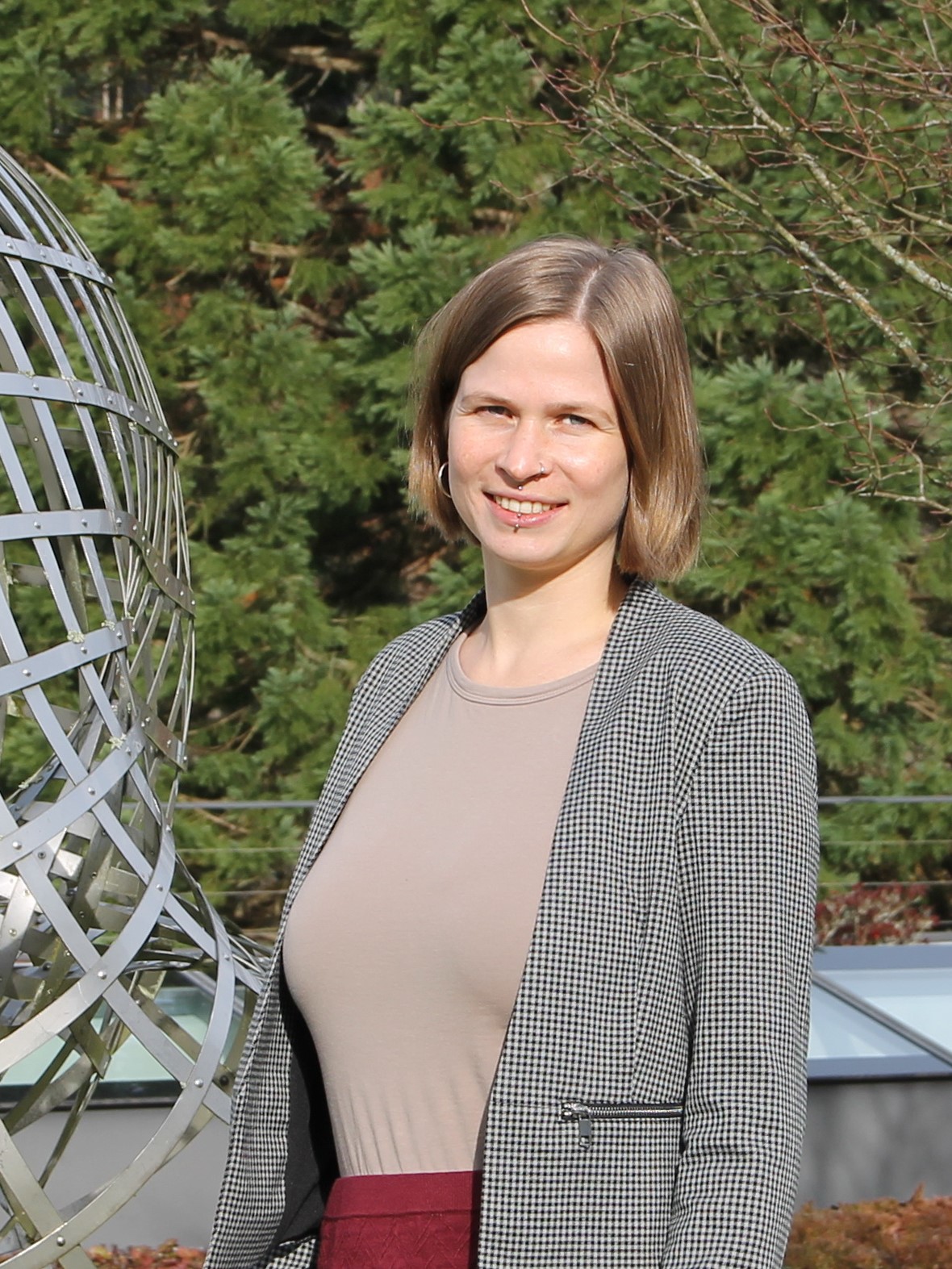
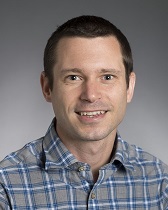
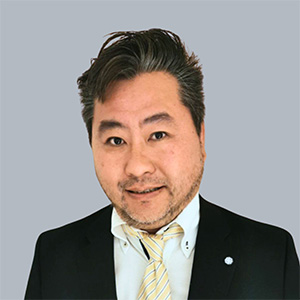
Prof. Bernd Gärtner is a Lecturer at the Department of Computer Science of ETH Zürich. His research focuses on algorithms, computational geometry, optimization, and theoretical computer science. He has contributed significantly to the study of unique sink orientations, combinatorial algorithms, and algorithm design. Gärtner teaches courses such as 'Algorithms, Probability, and Computing' and 'Geometry: Combinatorics and Algorithms,' reflecting his expertise in foundational computer science topics. His work bridges discrete mathematics and algorithmic theory, addressing challenges in linear programming, combinatorial optimization, and geometric algorithms. His recent research explores the realizability of structures in unique sink orientations, optimization techniques for symbolic visibility, and the analysis of opinion dynamics in networks. He has published extensively on topics including ARRIVAL game complexity, sampling algorithms, and high-dimensional learning models. His contributions also extend to the development of efficient algorithms for geometric problems and the study of cellular automata systems. Teaching: Courses include Algorithms, Probability, and Computing (252-0209-00L), Linear Algebra (401-0131-00L), and Geometry: Combinatorics and Algorithms. Research Interests: Algorithms, computational geometry, optimization, combinatorics, and theoretical computer science. Labs/Teams: Affiliated with the Institute of Theoretical Computer Science at ETH Zürich.
Jeff Erickson is the Sohaib and Sara Abbasi Professor at the University of Illinois Urbana-Champaign's Siebel School of Computing and Data Science. He has been a faculty member since 1998, with a focus on computational geometry, topology, algorithms, and computer science education. His research includes over 100 technical papers and a popular free algorithms textbook. He has held roles like chair of the SOCG steering committee and is a SafeTOC advocate. Erickson has advised numerous PhD students, many of whom have won NSF CAREER awards. His teaching awards include the Campus Award for Excellence in Undergraduate Teaching and the Everitt Award. He has taught courses like CS 473 (Algorithms) and developed tools like FSM Builder for autograded exercises. Education: PhD in Computer Science from UC Berkeley (1996), MS from UC Irvine (1992), and B.A. from Rice University (1987). Awards include the Sloan Fellowship, NSF CAREER, and multiple UIUC teaching honors. Research interests span algorithms, geometry, topology, and education innovation.
Sarah Morell is a Researcher at the University of Bremen, where she began her postdoctoral position in April 2025 under the mentorship of Prof. Dr. Nicole Megow. Previously, she completed her PhD at TU Berlin under Prof. Dr. Martin Skutella, focusing on Combinatorial Optimization. Her research emphasizes network flow problems, approximation algorithms, and diversity maximization in algorithms. She holds an M.Sc. in Mathematics from EPFL, Switzerland, with a minor in Theoretical Computer Science. Her master’s thesis, advised by Prof. Dr. Friedrich Eisenbrand, explored algorithms for diversity maximization. Key research contributions include work on the Submodular Santa Claus Problem (SODA 2025), unsplittable flows with arc constraints (Math. Program. 2022), and minimum-cost integer circulations in homology classes (SODA 2021). She has actively participated in workshops and summer schools on combinatorial optimization, theoretical computer science, and discrete mathematics. Professional activities include research stays at Maastricht University (2023) and TU Munich (2020), as well as presentations at institutions like MPI Saarbrücken and the University of Bremen. Her interdisciplinary work bridges discrete algorithms, optimization, and applications in fair resource allocation.
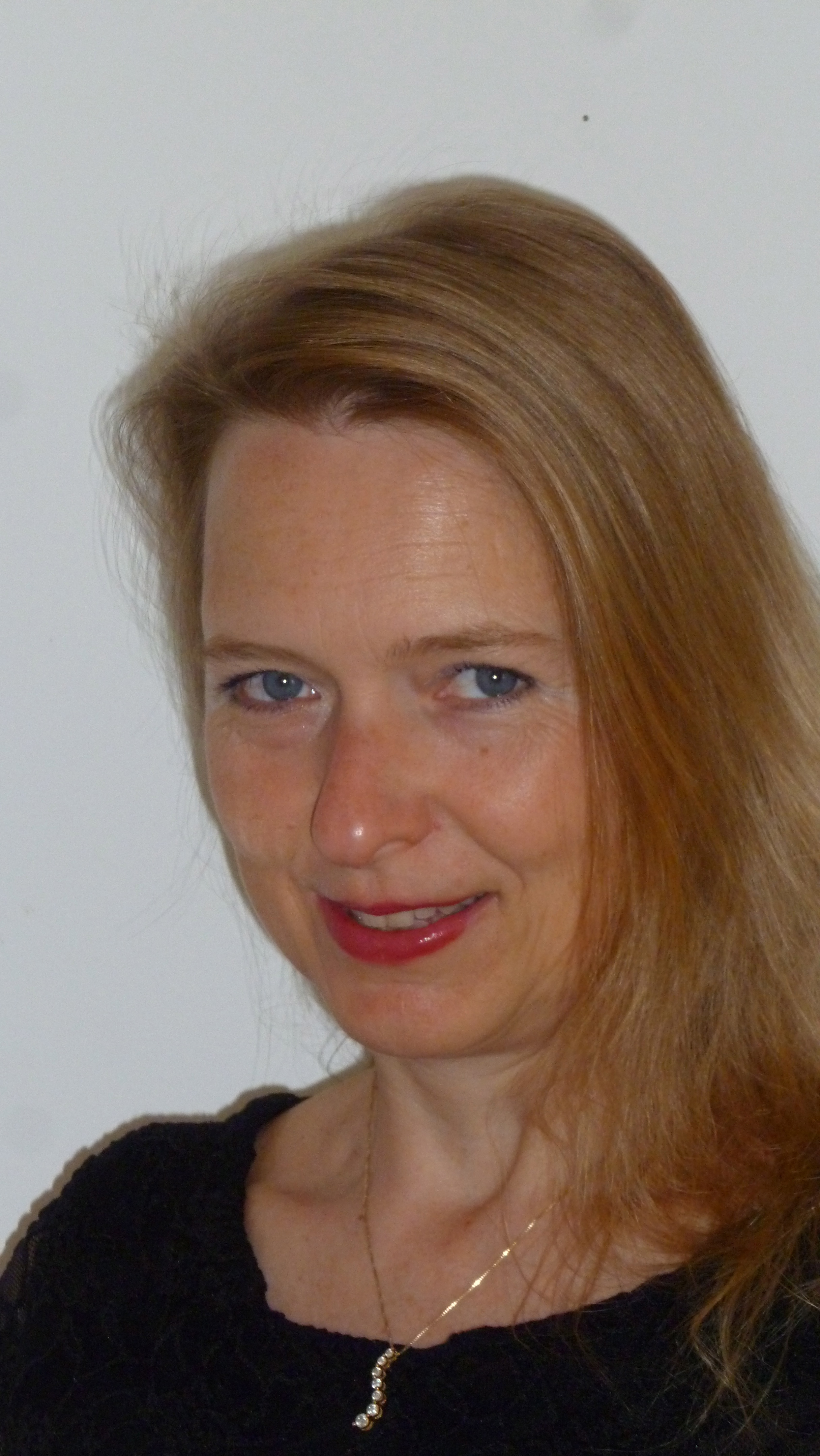
Prof. Manuel Bodirsky is a Professor of Algebra and Discrete Structures at Technische Universität Dresden since August 2014. He leads the Algebra and Discrete Structures group within the Faculty of Computer Science and is affiliated with the International Center for Computational Logic (ICCL). His research focuses on constraint satisfaction problems (CSP), algebraic methods in computer science, computational logic, Ramsey theory, model theory, and discrete mathematics. Notable projects include exploring the algebraic tractability of CSPs and applying universal algebra to classify computational complexity. His work frequently intersects with combinatorics, graph theory, and theoretical computer science. Recent publications address advanced topics like temporal CSPs, spectrahedral shadows, and resilience problems using valued CSP frameworks. He maintains active collaborations in computational algebra and logic, contributing to both theoretical foundations and algorithmic applications. Education: Not explicitly listed in provided texts but inferred to include advanced studies in mathematics and computer science. Research interests span foundational areas such as: Constraint satisfaction problem complexity classification Applications of universal algebra to computational problems Model theory and finite structures Combinatorial properties of graphs and tournaments Algorithmic approaches to algebraic and logical systems His recent articles emphasize methodological innovations, including reductions to semidefinite programming, Ramsey-theoretic techniques, and gadget-based transformations. Despite no listed academic awards in the provided data, his prolific publication record reflects significant contributions to theoretical computer science and discrete mathematics. No student advisees or grant details were explicitly mentioned, though his group likely engages in funded research projects given the institutional context.
Dejan Nickovic is an Associate Professor in the Department of Cyber-Physical Systems at TU Wien. His primary affiliation is with the Research Area Cyber-Physical Systems (E191-01). Nickovic's research focuses on formal methods, runtime verification, and fault localization in cyber-physical systems (CPS). He has contributed to automated testing frameworks, specification mining, and formal validation techniques for embedded and reactive systems. His work emphasizes bridging the gap between theoretical formalisms and practical CPS applications. Notable research directions include mining specifications from data (e.g., timing diagrams), developing tools like TD-Magic and DeepSTL, and advancing hypernode automata for complex system modeling. He has also explored fault-injection methods (FIM) for Simulink models and mutation testing strategies for improving CPS reliability. Nickovic collaborates extensively with industry partners, as evidenced by his work on production-test coverage analysis in simulation environments. His research has been published in top-tier conferences and journals, focusing on topics like information-flow interfaces, hyperproperties, and adaptive testing strategies. He advises graduate students on CPS-related theses, including those on fault localization, analog-mixed signal verification, and failure explanation in CPS models. His contributions have advanced both academic and industrial applications of formal methods in CPS design and validation.
Minghao Liu is a Postdoctoral Research Associate in the Department of Computer Science at the University of Oxford, working under the supervision of Prof. Marta Kwiatkowska and previously with Dr. Andrew Cropper. He is affiliated with the Artificial Intelligence and Machine Learning theme and the FAIR project at Oxford. His research integrates symbolic reasoning with machine learning, focusing on automated reasoning, constraint programming, and combinatorial optimization. PhD in Computer Science and Technology, University of Chinese Academy of Sciences (UCAS), 2023 BSc in Computer Science and Technology, Northeast Normal University (NENU), 2017 His research interests span automated reasoning, constraint programming, combinatorial optimization, and the integration of symbolic reasoning with machine learning. He develops novel algorithms for SMT solving, optimization modulo theories, and neural-symbolic systems, often leveraging machine learning to enhance classical reasoning systems. The recent publications show a strong trend in hybrid AI systems, particularly using graph neural networks to solve combinatorial problems like MaxSAT and Pseudo-Boolean Satisfiability. There is also a significant focus on improving solvers for nonlinear arithmetic and modal logics, often guided by reinforcement learning or probabilistic methods. His work bridges formal methods with deep learning, aiming to create more robust and scalable reasoning systems. Notable scientific awards include: ACM SIGSOFT Distinguished Paper Award at ISSTA 2023 Best Student Abstract Honorable Mention Award at AAAI 2023 2nd Place in SMT Competition (Nonlinear Real Arithmetic Track, 2022) Gold Medal in ACM-ICPC Asia Regional (2016) National Scholarship of China (2014) Minghao Liu has been actively involved in academic service and teaching. He has served as a Class Tutor for Logic and Proof and Knowledge Representation and Reasoning, a Practical Demonstrator for Design and Analysis of Algorithms, and a Student Project Supervisor for Group Design Practical at Oxford. He was also a Teaching Assistant for Theoretical Computer Science at UCAS. He has received multiple scholarships and honors, reflecting his academic excellence. His service includes being a PC member for AAAI (2023–2025), ECAI 2024, and ICTAI 2023, and a reviewer for IEEE TNNLS, IEEE TKDE, and CSSE. He is actively involved in research projects such as FAIR and maintains open-source implementations of his work on GitHub, including solvers for MaxSAT, SMT(NRA), and Holey Latin Squares, demonstrating strong software engineering and reproducibility practices.
Birgit Kaufmann is a Professor in the Department of Mathematics at Purdue University, serving as Associate Head of Graduate Studies. She organizes the Mathematical Physics seminar and holds a joint affiliation with the Department of Physics. Her research focuses on Mathematical Physics, Quantum Information Science applied to statistical physics, non-equilibrium systems, quantum wire networks (particularly those based on triply-periodic minimal surfaces like the gyroid), and finite-size scaling in atomic models. Her academic achievements include the 2017 University Faculty Scholar Award and multiple teaching honors such as the Spira Teaching Award and Teaching for Tomorrow Fellow/Mentor Awards. Her work is supported by grants including NSF CAREER (PHY-1255409), Simons Fellowship, Purdue Quantum Seed Grants, and an NSF grant on boundary effects in critical phenomena (PHY-0969689). Research interests span topological insulators, quantum phase transitions, and the interplay between geometry (e.g., wire networks) and physical properties. She has explored applications of K-theory and noncommutative geometry to material science, with recent studies on Majorana transitions and quantum annealing techniques for molecular modeling. Teaching contributions include courses ranging from differential equations to graduate-level quantum mechanics and honors college quantum computing. She has developed the IMPACT program for foundational mathematics instruction and contributed to interdisciplinary courses like Phys 29000 (Mathematical Methods for Physicists).
Ricky Liu is an Associate Professor at the University of Washington, following roles at North Carolina State University, the University of Michigan, and the University of Minnesota. He earned his Ph.D. in Mathematics from MIT (2010) under Alexander Postnikov. His research focuses on algebraic combinatorics, particularly its intersections with algebraic geometry, combinatorial geometry, and representation theory. He has taught advanced courses in combinatorics, algebraic structures, and problem-solving, including special topics on Schubert calculus, dynamical algebraic combinatorics, and Hopf algebras. Education: Ph.D. in Mathematics from MIT (2010), advised by Alexander Postnikov. Earlier coursework includes roles as a teaching assistant at MIT (2007–2008) and research mentor at the University of Minnesota Duluth’s REU (2006–2008). Research interests span algebraic combinatorics with a focus on Schubert polynomials, polytopes, and their connections to representation theory. Key areas include birational rowmotion dynamics, Gelfand-Tsetlin polytopes, Kronecker coefficients, and Fomin-Kirillov algebras. His work bridges abstract algebraic structures with geometric and combinatorial interpretations. Teaching highlights include courses on combinatorial game theory, algebraic combinatorics, and problem-solving strategies. He has been a regular instructor at the Mathematical Olympiad Summer Program since 2007.
Souvik Dhara is an Assistant Professor in Purdue University's Edwardson School of Industrial Engineering with a courtesy appointment in Mathematics. His research develops probabilistic frameworks and spectral algorithms for analyzing complex networks, addressing fundamental questions about hidden patterns and microscopic-to-macroscopic behavior in graph-structured data. Key research areas include: 1) Community detection in networks using spectral methods 2) Phase transitions in random graphs 3) Large deviation theory for network properties 4) Graph limit theory applications to non-parametric statistics. His work on spectral algorithms has established optimal recovery bounds for planted substructures under censored data conditions. Honors include the Stieltjes Prize for best mathematics PhD thesis in the Netherlands, Simons-Berkeley Fellowship, AMS-Simons Travel Grant, and multiple industry fellowships. He mentors students in random graph theory and stochastic processes, with upcoming transition to Georgia Tech as Tennenbaum Early Career Assistant Professor.
Kane Townsend is a Visiting Professor at the University of Technology Sydney (UTS), affiliated with the School of Mathematical and Physical Sciences. His research focuses on geometric group theory, automata theory, reflection groups, and representations of finite groups of Lie type. Townsend’s work bridges pure mathematics and computational approaches, exploring structural properties of groups and their applications in algebraic frameworks. His research interests include the study of geodesic paths in groups and graphs, as well as the classification of subgroups within reflection groups. He has contributed to understanding the normalizers of Sylow subgroups in finite reflection groups and the interplay between hyperbolic groups and graph theory. Townsend’s publications reflect his expertise in algebraic structures and their geometric interpretations. Currently, he maintains an active research profile, with outputs in journals such as Communications in Algebra and International Journal of Algebra and Computation . His work demonstrates a commitment to advancing theoretical foundations in group theory and related disciplines.
Igor Mineyev is a Professor in the Department of Mathematics at the University of Illinois at Urbana-Champaign (UIUC), part of the College of Liberal Arts & Sciences. His research focuses on geometric group theory, hyperbolic groups, metric geometry, homology/cohomology, and intersections with machine learning. He leads the Illinois Mathematics Lab (IML) projects ColorTaiko! and PathForms, which explore geometric group theory concepts through interactive games. His work includes contributions to the Hanna Neumann conjecture, Kaplansky conjectures, and applications of group theory to computational abstraction. Mineyev has collaborated extensively, involving students and postdocs in research projects and teaching courses like Math 501 (Algebra II) and IML project-based classes. Notable research trends in his articles include algebraic topology, geometric analysis, and interdisciplinary applications of group theory. His grants include NSF applications and UIUC funding. Mineyev advises numerous students and mentors graduate researchers through structured IML projects and informal study groups.
Matey Neykov is an Assistant Professor of Statistics and Data Science at Northwestern University, serving as Director of Graduate Studies. He holds a Ph.D. in Biostatistics from Harvard University (2015), with postdoctoral research at Princeton University and prior faculty positions at Carnegie Mellon University. His research focuses on high-dimensional statistics, nonparametric estimation, variable selection, and statistical applications in medical contexts such as electronic health records and personalized medicine. Education: Ph.D. in Biostatistics, Harvard University (2015) B.S. in Applied Mathematics, Sofia University Postdoctoral Research: Princeton University (Department of Operations Research and Financial Engineering) Research Interests: High-dimensional inference and dimension reduction Nonparametric methods under shape constraints Statistical machine learning applications in healthcare Graph property testing and conditional independence testing Publications Trends: Recent work emphasizes theoretical advancements in nonparametric regression, robust estimation under constraints, and optimal transport-based hypothesis testing. Key themes include minimax rate characterizations, adversarial noise resilience, and applications in biomedical data analysis. Labs/Teams: Engages with interdisciplinary teams in statistics, machine learning, and biomedical informatics, focusing on translating theoretical insights into practical methodologies for healthcare analytics.
Dr. István Kovács is an Assistant Professor in the Department of Physics and Astronomy at Northwestern University. He holds a PhD from Eötvös Loránd University (2013) and has been recognized with awards such as the NSF CAREER Award (2025) and the Karl Rosengren Faculty Mentoring Award (2023, 2021). His research focuses on bridging structure and function in complex systems, spanning quantum physics, biological physics, complex networks, and critical phenomena. He collaborates with experimental groups to develop methodologies predicting emerging patterns in systems like quantum communication networks and neural connectomes. Research Interests: Quantum Systems: Quantum entanglement, network models, and communication. Biological Physics: Protein interactomes and systems biology. Complex Networks: Topological analysis, network inference, and spatial constraints. Critical Phenomena: Phase transitions, disordered systems, and universality. Honors & Awards: NSF CAREER Award (2025) Karl Rosengren Mentoring Awards (2023, 2021) Nation’s Young Talents Scholarship (2017) Hungarian Academy of Sciences Prizes (2015, 2014) Advising & Labs: Leads the Kovács Lab at Northwestern, mentoring over 20 graduate and undergraduate students. Collaborations include institutions like the Rényi Institute, Dana-Farber Cancer Institute, and Northeastern University. Labs/Teams: Kovács Lab focuses on network science, quantum systems, and interdisciplinary applications in biology and physics.
Alexander Razborov is the Andrew McLeish Distinguished Service Professor at the University of Chicago's Department of Mathematics. He holds a B.S. from Moscow State University (1985) and a PhD (1987) and Doctoral Degree (1991) from the Steklov Mathematical Institute. His research spans logic, theoretical computer science (TCS), and combinatorics, with major contributions to proof complexity, continuous combinatorics (flag algebras), and quantum computing. Notable achievements include the Nevanlinna Prize (1990), Gödel Prize (for foundational work on 'Natural Proofs'), and election to the American Academy of Arts and Sciences (2020). His work on flag algebras revolutionized extremal combinatorics, while his research on proof complexity established fundamental limits of propositional reasoning systems. Razborov's recent focus includes continuous combinatorics (studying infinite graph limits) and refining proof complexity trade-offs. His collaborative projects with Leonardo Coregliano and others explore topics like Sidorenko's conjecture and neural network convergence guarantees. He is affiliated with the university's computational theory group and actively publishes across top journals like the Annals of Mathematics and Journal of the ACM.
Dong Jin Song is a full Professor at the National University of Singapore's School of Computing, Department of Computer Science. He joined NUS in 1998 and was promoted to Professor in 2016 after serving as Associate Professor (2005) and Assistant Professor. He has held various leadership roles including Deputy Head of CS Department (2023-2024), NUS Senate Member (2020-current), and Assistant Dean (Graduate Office, SoC). PhD, University of Queensland, Australia (1993-1995) BInfTech with First Class Honours, University of Queensland, Australia (1989-1992) - Major in Software Engineering Professor Dong's research spans formal methods, safety and security systems, probabilistic reasoning, sports analytics, and trusted machine learning. He is best known for co-founding the PAT verification system which has attracted thousands of registered users from over 150 countries and won the 20-year ICFEM Most Influential System Award in 2018. He also co-founded 'Silas: Trusted Machine Learning' and the Dependable Intelligence company. His work bridges formal verification with practical applications in security, AI, and even sports analytics where he developed Markov Decision Process models for tennis strategy analysis. His recent publications show a strong trend toward integrating formal methods with modern AI systems, particularly focusing on trustworthy AI, LLM verification, and security applications. The research spans multiple high-impact venues including ICML, NeurIPS, IEEE Transactions, and top security conferences like USENIX Security, reflecting his interdisciplinary approach that combines formal verification with machine learning, security, and practical applications. Professor Dong has received numerous honors including the ACM SIGSOFT Distinguished Paper Award for ICSE 2020, the 20-Year ICFEM Most Influential System Award (2018), and being named a Fellow of the Institute of Engineers Australia (2018). His awards reflect both theoretical contributions to formal methods and practical impact on software engineering. ACM SIGSOFT Distinguished Paper Award for ICSE 2020 NUS Research Recognition Award (2020) Fellow of Institute of Engineers Australia (2018) 20-Year ICFEM Most Influential System Award (2018) Best Paper Award at ICECCS (2015 and 2012) Professor Dong has successfully supervised 33 PhD students, many of whom have become tenured faculty members at leading universities worldwide including The University of Auckland, Aston University, Singapore Management University, and Monash University. His students have gone on to successful careers in both academia and industry at organizations like Google, Apple, HP Research Lab, and IBM. He has served on the editorial boards of prestigious journals including ACM Transactions on Software Engineering and Methodology and has been active in numerous conference organizing committees. Through his research group and commercial ventures (Dependable Intelligence), Professor Dong has built a strong team focused on formal verification, trusted AI systems, and practical applications of model checking. His work has evolved from foundational formal methods research to cutting-edge applications in AI safety and security, maintaining a consistent thread of rigorous verification throughout his career.