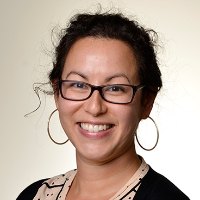
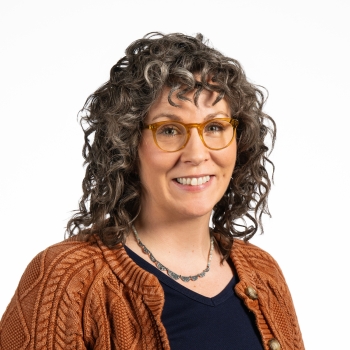
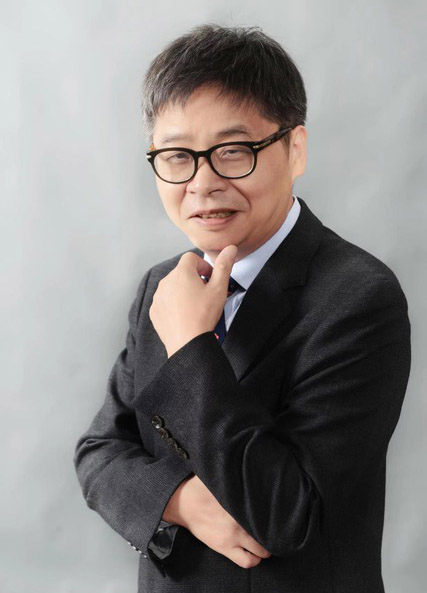
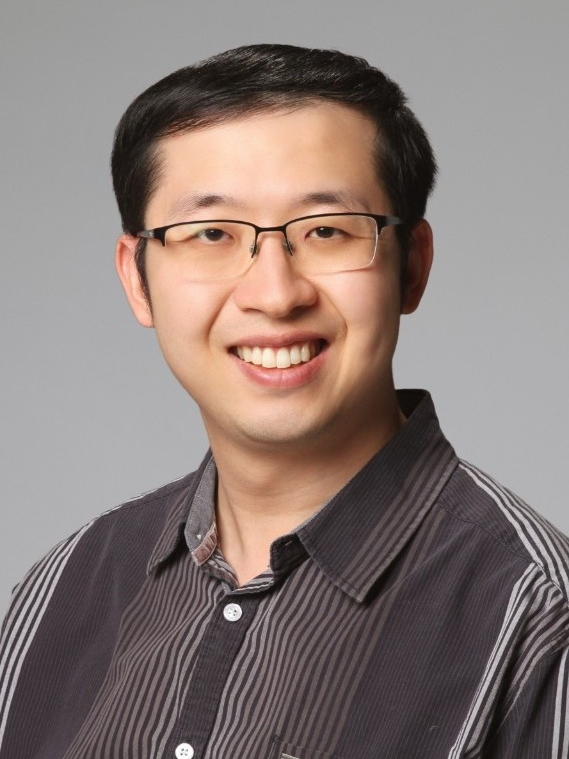
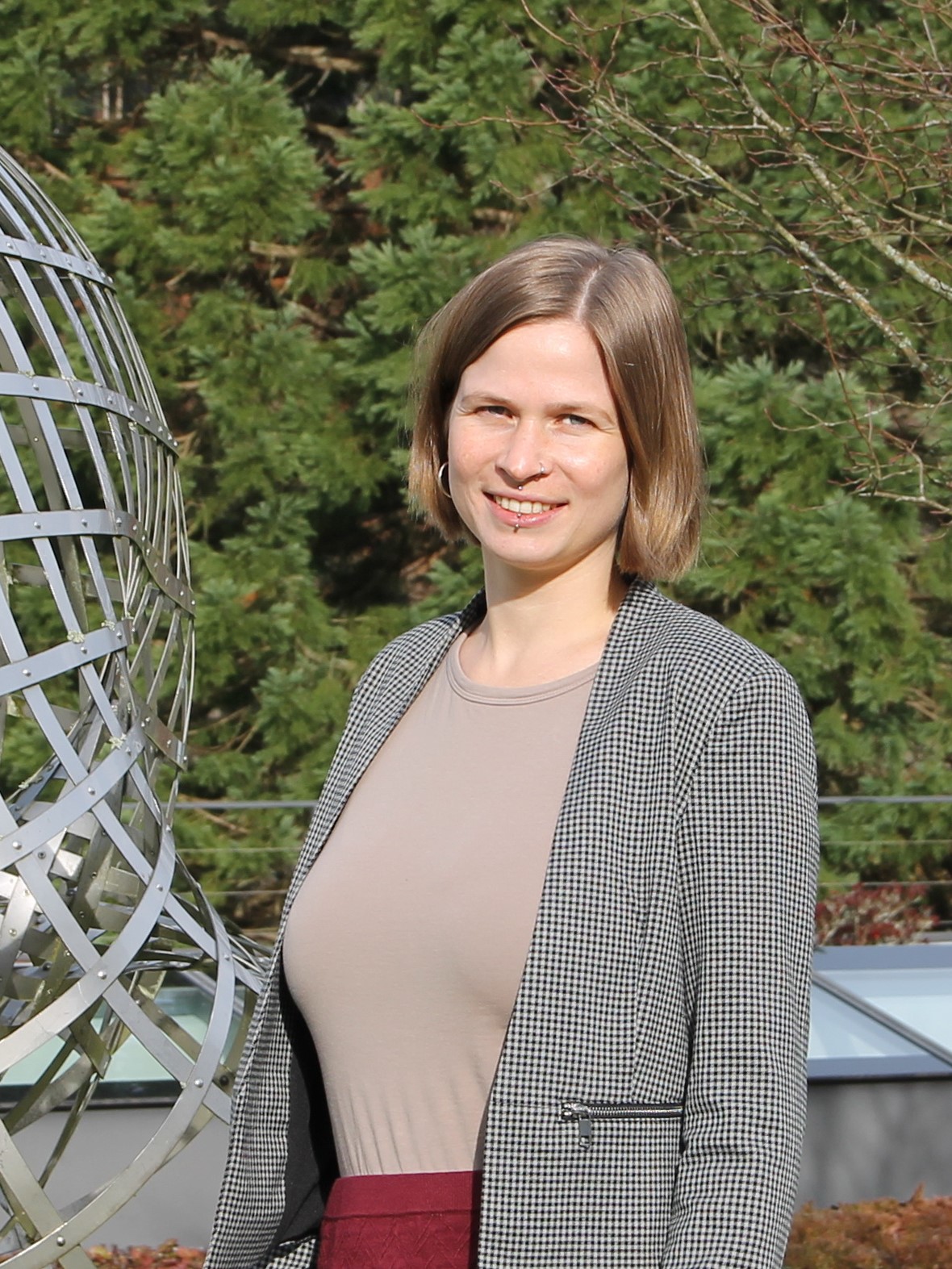
Augustine B. "Tina" O'Keefe serves as Associate Professor of Mathematics at Connecticut College, where she has been a faculty member since 2014. She is a core member of the Mathematics and Statistics Department located in Fanning Hall, teaching courses ranging from introductory calculus to advanced upper-level mathematics. Her educational background includes a Ph.D. from Tulane University, an M.A. from Wake Forest University, and a B.S. from James Madison University. O'Keefe's research focuses on the intersection of commutative algebra, combinatorics, and topology. She specializes in studying monomial and toric binomial ideals defined from combinatorial objects such as discrete graphs and simplicial complexes. This research approach connects algebraic structures with combinatorial and topological properties, making it particularly suitable for undergraduate research due to the concrete nature of the combinatorial examples. Commutative Algebra Topological Combinatorics Algebraic Structures from Graphs Simplicial Complex Analysis Binomial Ideal Theory Undergraduate Research Methodology The Mathematics and Statistics Department at Connecticut College provides a collaborative environment with small classes, accessible faculty, and numerous research opportunities for students. O'Keefe contributes to this community through her teaching and research mentorship.
Eric Malmi serves as an Adjunct Professor in the Department of Computer Science at Aalto University's School of Science. His research spans multiple domains within computer science, with a particular focus on network analysis, machine learning applications, and computational social science. His research interests include: Machine Learning and Neural Networks Network Science and Social Network Analysis Record Linkage and Entity Resolution Computational Genealogy Natural Language Processing Soft Skills Analysis in Job Markets Malmi's publication record shows consistent output since 2009, with increased productivity from 2018 onward. His recent work demonstrates strong interdisciplinary connections between computer science, social science, and historical data analysis. Notable research directions include computationally inferred genealogical networks and analysis of soft skill requirements in job advertisements. Among his professional recognitions: Best Paper Award (2018) for work on genealogical networks Malmi completed his doctoral thesis titled "Collective Entity Resolution Methods for Network Inference" at Aalto University in 2018. His work has been featured in media outlets, including coverage of research showing how Finnish society maintained a rigid class structure for 150 years.
Shelby Kimmel is an Assistant Professor of Computer Science at Middlebury College, where she works with undergraduate students in both classroom instruction and research projects. Previously, she was a Hartree Postdoctoral Fellow at the University of Maryland in QuICS (Joint Center for Quantum Information and Computer Science). She earned her PhD in physics from MIT and completed her undergraduate studies in astrophysics at Williams College. Dr. Kimmel specializes in quantum computing research, focusing on the design of quantum algorithms and proving their superiority over classical alternatives. Her work includes creating efficient methods for characterizing errors in experimental quantum computers, as well as exploring quantum complexity theory and quantum information theory. She has made significant contributions to the field of quantum query complexity, developing algorithms that solve problems with fewer queries than classical approaches. Her research spans multiple areas within quantum computing, with a particular emphasis on graph problems, connectivity algorithms, and process tomography. Analysis of her publication record shows a consistent focus on developing practical quantum algorithms with provable advantages over classical methods, while also addressing the experimental challenges of implementing these algorithms on real quantum hardware. Her work bridges theoretical computer science and experimental quantum physics. Dr. Kimmel actively mentors students and has advised numerous undergraduate researchers who have gone on to pursue PhDs at prestigious institutions. She also serves as an advisor to Middlebury College Women in Computer Science and has mentored women in physics through programs at University of Maryland and MIT. She maintains an active speaking schedule, presenting her research at major quantum computing conferences and institutions worldwide, from the Simons Institute to IBM research facilities. Her talks cover diverse aspects of quantum algorithms, including path detection, quantum connectivity, and error characterization techniques. Beyond her academic work, Dr. Kimmel enjoys playing and teaching traditional Korean drumming, demonstrating her commitment to cultural engagement alongside her scientific pursuits.
Abby Flynt serves as Associate Professor and Chair of the Mathematics & Statistics Department at Bucknell University in Lewisburg, Pennsylvania, having joined the institution in 2012 after completing her doctoral studies. Her academic credentials include: B.S. in Mathematics/Secondary Education from State University of New York at Fredonia M.S. in Statistics from Carnegie Mellon University Ph.D. in Statistics from Carnegie Mellon University Dr. Flynt's research program centers on statistical clustering as an unsupervised learning methodology for grouping unlabeled observations. She develops both theoretical frameworks and applied solutions with significant contributions to educational research, social justice initiatives, public health analytics, and sports statistics. Her recent publications demonstrate expertise in advanced clustering techniques including ensemble methods for social networks, growth mixture modeling with measurement selection, and probabilistic agreement metrics for class partitions across statistical and machine learning domains. No scientific awards or honors are documented in the provided materials. While actively mentoring students through statistics coursework and departmental leadership, specific details regarding graduate student supervision and external grant funding remain unreported in the available text.
Minyi Guo is a Chair Professor and Head of the Department of Computer Science and Engineering at Shanghai Jiao Tong University (SJTU), China. Previously, he served as Professor and Department Chair at the School of Computer Science and Engineering, University of Aizu, Japan. Dr. Guo received his BSc and ME degrees from Nanjing University, China in 1982 and 1986, and his PhD from University of Tsukuba, Japan in 1998. Dr. Guo's educational background includes: BSc in Computer Science, Nanjing University, China (1982) ME in Computer Science, Nanjing University, China (1986) PhD in Computer Science, University of Tsukuba, Japan (1998) Dr. Guo's research spans multiple areas in computer science, with a primary focus on parallel/distributed computing , compiler optimizations , cloud computing , database systems , and big data . He has published over 400 papers including approximately 150 in major journals and 250 in international conferences, with more than 60 papers in IEEE/ACM transactions and over 100 papers in prestigious conferences. Dr. Guo has also authored 7 books (4 in English, 3 in Chinese) and received 5 best/highlight paper awards from international conferences. Dr. Guo's publication record demonstrates strong contributions across multiple domains of computer systems research. His recent work shows particular emphasis on big data processing, edge computing, graph neural networks, and data center optimization. The publications reveal a consistent trajectory of impactful research in parallel and distributed systems, with increasing focus on AI/ML applications and blockchain technologies in more recent years. Dr. Guo has received numerous prestigious awards and honors: State Technological Invention Award of China (second class award, 2019) Shanghai Technological Invention Award (first class award, 2018) IEEE Technical Committee on Scalable Computing Award for Excellence in Scalable Computing (2018) Ministry of Education Natural Science Award (first class award, 2017) IEEE Fellow (2017) Chief Scientist of National Basic Research Project (973 Program, 2014) Recruitment Program of Global Experts (2010) Excellent Academic Leaders of Shanghai (2010) National Science Fund for Distinguished Young Scholars (2007) As an academic leader, Dr. Guo has served as Department Head for ten years, managing a department with over 100 faculty members and 1000+ students. Under his leadership, the department was promoted to the top tier in China and ranked among the top 40 in the world. He has secured significant research funding, including serving as Chief Scientist of the prestigious 973 Program in 2014 and receiving the National Science Fund for Distinguished Young Scholars in 2007. Dr. Guo has also been selected for the Recruitment Program of Global Experts in China (2010). Dr. Guo actively contributes to the academic community as an associate editor of IEEE Transactions on Parallel and Distributed Systems, IEEE Transactions on Cloud Computing, and Journal of Parallel and Distributed Computing. He has served as General/Program Chair for IEEE conferences and delivered keynote speeches at well-established conferences. His research group has developed practical technologies with industry impact, including 28 licensed patents, some of which have been transferred to companies like Alibaba.
Samira Khan is an Associate Professor in the Department of Computer Science at the University of Virginia (UVA), leading the ShiftLab research group. Her research focuses on computer architecture, high-performance computing, persistent memory systems, and processing-in-memory (PIM) technologies. Prior to UVA, she completed a postdoctoral fellowship at Carnegie Mellon University, supported by Intel Labs and an NSF GOALI award. She earned her Ph.D. in Computer Science from the University of Texas at San Antonio. Her work addresses challenges in memory and storage systems, including optimizing persistent memory reliability, enhancing PIM architectures, and mitigating security vulnerabilities in modern hardware. Notable projects include CRISP (a $29.7M initiative to tackle the 'memory wall'), and the development of tools like PiMulator and PIMProf for PIM emulation and profiling. Research trends in her articles emphasize advancing PIM efficiency, persistent memory security, and cloud-scale system optimization. She has pioneered techniques like NearPM for storage-class applications and EdgeRAG for edge device computing. Her work frequently intersects with real-world applications, such as improving data persistence in networks and enhancing fault tolerance in memory systems. Grants include NSF GOALI funding and Intel Labs support. She collaborates on multi-institutional projects and maintains an active open-source infrastructure (e.g., SoftMC for DRAM studies). Her lab focuses on bridging hardware-software gaps to deliver scalable, energy-efficient computing solutions.
Ke Li is an Assistant Professor at Simon Fraser University's School of Computing Science in Vancouver, Canada. He holds a PhD from UC Berkeley (2019) and a BSc from the University of Toronto (2014). His research focuses on machine learning, computer vision, and algorithms, with contributions to generative models, optimization algorithms, and fast nearest neighbor search. He organizes the IAS Seminar Series on Theoretical Machine Learning and has advised multiple students in MSc/PhD programs. Education: PhD in Computer Science, University of California, Berkeley, 2019 Bachelor of Science (Honors) in Computer Science, University of Toronto, 2014 Research Interests: Li's work spans generative modeling (e.g., IMLE framework), learning-to-optimize frameworks, and fast nearest neighbor search algorithms that overcome dimensionality challenges. His research emphasizes foundational problems in machine learning, blending theoretical insights with practical applications. Teaching: Li teaches graduate courses in machine learning and generative models. Recent courses include CMPT 726 (Machine Learning) and CMPT 983 (Special Topics in Generative Models). Labs & Teams: His research involves the Tangent Lab and collaborations with institutions like the Institute for Advanced Study (IAS) and Stanford University.
Bosung Kim is affiliated with the Ulsan National Institute of Science and Technology (UNIST), Republic of Korea . His research spans Machine Learning , Operations Research , Natural Language Processing , and Autonomous Systems , with a focus on practical applications in technology and data science. Key Research Areas: Machine Learning, Autonomous UAV Systems, Knowledge Graph Completion, Class Imbalance Solutions, Cognitive Radio Networks His work includes 15 recent publications (2021–2025) covering topics like on-device AI generation , zero-shot triplet extraction , and autonomous insect tracking . These contributions highlight interdisciplinary methodologies in robotics , language models , and signal processing .
Prof. Bernd Gärtner is a Lecturer at the Department of Computer Science of ETH Zürich. His research focuses on algorithms, computational geometry, optimization, and theoretical computer science. He has contributed significantly to the study of unique sink orientations, combinatorial algorithms, and algorithm design. Gärtner teaches courses such as 'Algorithms, Probability, and Computing' and 'Geometry: Combinatorics and Algorithms,' reflecting his expertise in foundational computer science topics. His work bridges discrete mathematics and algorithmic theory, addressing challenges in linear programming, combinatorial optimization, and geometric algorithms. His recent research explores the realizability of structures in unique sink orientations, optimization techniques for symbolic visibility, and the analysis of opinion dynamics in networks. He has published extensively on topics including ARRIVAL game complexity, sampling algorithms, and high-dimensional learning models. His contributions also extend to the development of efficient algorithms for geometric problems and the study of cellular automata systems. Teaching: Courses include Algorithms, Probability, and Computing (252-0209-00L), Linear Algebra (401-0131-00L), and Geometry: Combinatorics and Algorithms. Research Interests: Algorithms, computational geometry, optimization, combinatorics, and theoretical computer science. Labs/Teams: Affiliated with the Institute of Theoretical Computer Science at ETH Zürich.
Jeff Erickson is the Sohaib and Sara Abbasi Professor at the University of Illinois Urbana-Champaign's Siebel School of Computing and Data Science. He has been a faculty member since 1998, with a focus on computational geometry, topology, algorithms, and computer science education. His research includes over 100 technical papers and a popular free algorithms textbook. He has held roles like chair of the SOCG steering committee and is a SafeTOC advocate. Erickson has advised numerous PhD students, many of whom have won NSF CAREER awards. His teaching awards include the Campus Award for Excellence in Undergraduate Teaching and the Everitt Award. He has taught courses like CS 473 (Algorithms) and developed tools like FSM Builder for autograded exercises. Education: PhD in Computer Science from UC Berkeley (1996), MS from UC Irvine (1992), and B.A. from Rice University (1987). Awards include the Sloan Fellowship, NSF CAREER, and multiple UIUC teaching honors. Research interests span algorithms, geometry, topology, and education innovation.
Sarah Morell is a Researcher at the University of Bremen, where she began her postdoctoral position in April 2025 under the mentorship of Prof. Dr. Nicole Megow. Previously, she completed her PhD at TU Berlin under Prof. Dr. Martin Skutella, focusing on Combinatorial Optimization. Her research emphasizes network flow problems, approximation algorithms, and diversity maximization in algorithms. She holds an M.Sc. in Mathematics from EPFL, Switzerland, with a minor in Theoretical Computer Science. Her master’s thesis, advised by Prof. Dr. Friedrich Eisenbrand, explored algorithms for diversity maximization. Key research contributions include work on the Submodular Santa Claus Problem (SODA 2025), unsplittable flows with arc constraints (Math. Program. 2022), and minimum-cost integer circulations in homology classes (SODA 2021). She has actively participated in workshops and summer schools on combinatorial optimization, theoretical computer science, and discrete mathematics. Professional activities include research stays at Maastricht University (2023) and TU Munich (2020), as well as presentations at institutions like MPI Saarbrücken and the University of Bremen. Her interdisciplinary work bridges discrete algorithms, optimization, and applications in fair resource allocation.
Prof. Manuel Bodirsky is a Professor of Algebra and Discrete Structures at Technische Universität Dresden since August 2014. He leads the Algebra and Discrete Structures group within the Faculty of Computer Science and is affiliated with the International Center for Computational Logic (ICCL). His research focuses on constraint satisfaction problems (CSP), algebraic methods in computer science, computational logic, Ramsey theory, model theory, and discrete mathematics. Notable projects include exploring the algebraic tractability of CSPs and applying universal algebra to classify computational complexity. His work frequently intersects with combinatorics, graph theory, and theoretical computer science. Recent publications address advanced topics like temporal CSPs, spectrahedral shadows, and resilience problems using valued CSP frameworks. He maintains active collaborations in computational algebra and logic, contributing to both theoretical foundations and algorithmic applications. Education: Not explicitly listed in provided texts but inferred to include advanced studies in mathematics and computer science. Research interests span foundational areas such as: Constraint satisfaction problem complexity classification Applications of universal algebra to computational problems Model theory and finite structures Combinatorial properties of graphs and tournaments Algorithmic approaches to algebraic and logical systems His recent articles emphasize methodological innovations, including reductions to semidefinite programming, Ramsey-theoretic techniques, and gadget-based transformations. Despite no listed academic awards in the provided data, his prolific publication record reflects significant contributions to theoretical computer science and discrete mathematics. No student advisees or grant details were explicitly mentioned, though his group likely engages in funded research projects given the institutional context.
Tong Wu is a tenure-track Assistant Professor in the Department of Electrical and Computer Engineering (ECE) at the University of Central Florida (UCF). He received his Ph.D. in Information Engineering from The Chinese University of Hong Kong in 2021 and served as a Postdoctoral Associate at Cornell Tech, Cornell University from 2021-2024. He leads the Intelligent Control and Sustainable Energy Systems (ICSES) Lab at UCF, focusing on advanced control systems for sustainable energy applications. Research Interests: Dr. Wu's research spans several interconnected areas of electrical engineering and computer science, with particular emphasis on: Safe reinforcement learning for critical infrastructure systems Graph signal processing and neural network applications in power grids Distributed optimization techniques for smart grids Machine learning approaches for energy system security and stability Privacy-preserving methods for power system operations Publication Trends: His recent publications demonstrate a strong focus on applying machine learning techniques to power systems challenges. Key themes include reinforcement learning for grid control and optimization, graph neural networks for spatiotemporal power system data, privacy-preserving computation in distributed energy systems, and advanced control strategies for electric vehicle integration. His work consistently bridges theoretical AI advancements with practical power engineering applications. Professional Activities: Dr. Wu actively contributes to the academic community through journal and conference reviews for prestigious publications including: IEEE Transactions on Power Systems IEEE Transactions on Smart Grid IEEE Transactions on Signal Processing IEEE Internet of Things Journal IEEE PES General Meeting IEEE Conference on Decision and Control
Blair Sullivan is a Professor at the Kahlert School of Computing, University of Utah. Her research focuses on graph algorithms, parameterized complexity, and network analysis. She has contributed to theoretical advancements in clustering, graph decomposition, and algorithmic efficiency with applications in robotics, bioinformatics, and social networks. Education details are not explicitly stated in the provided text, but her affiliation indicates a terminal degree in Computer Science or a related field. Her work frequently intersects with interdisciplinary domains such as computational biology and quantum computing. Research interests emphasize algorithm design for large-scale networks, with a focus on graph-based problems such as clustering, coloring, and structural optimization. Recent publications explore hypergraph clustering, robotic motion planning, and fairness in network information access. Her work often bridges theoretical computer science with practical applications, including biomedical data analysis and quantum program compilation. Publications since 2023 reflect a sustained focus on graph-theoretic challenges such as parameterized complexity, edge augmentation for fairness, and decomposition techniques. Notable themes include algorithmic approaches to gerrymandering, genetic association analysis, and hyperbolicity in networks. No scientific awards or grants are listed in the provided text. She is affiliated with the University of Utah’s Kahlert School of Computing, where she contributes to research and education in computational theory and applications.
Yao Ma is an Assistant Professor in the Department of Computer Science at Rensselaer Polytechnic Institute (RPI). His research bridges graph machine learning, natural language processing, and trustworthy AI, with a focus on scalable and robust computational frameworks. He directs the Graph Machine Learning Lab at RPI, advancing methodologies for graph condensation, neural architecture robustness, and foundation models. Research Interests: Dr. Ma's work spans graph neural networks (GNNs), adversarial robustness, language model efficiency, and data-centric AI. Key innovations include techniques for graph condensation, trustworthiness in LLMs, and multi-agent learning systems. His recent surveys systematize advancements in small language models and graph foundation models, highlighting scalability and transferability challenges. Publication Trends: His 2024–2025 articles emphasize graph-based NLP, efficient data valuation, and adversarial defenses. Dominant themes include graph condensation (6 papers), LLM/GNN integration (4 papers), and robustness benchmarking (3 papers), reflecting a cohesive agenda in scalable, reliable graph AI. Awards & Advising: No awards or students are noted in available sources. Lab & Team: Leads the Graph Machine Learning Lab at RPI, focusing on theoretical and applied graph AI. Collaborative projects include cross-departmental initiatives in quantum computing and NLP.