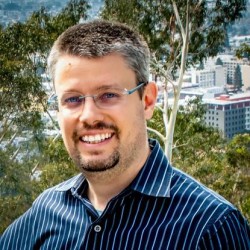
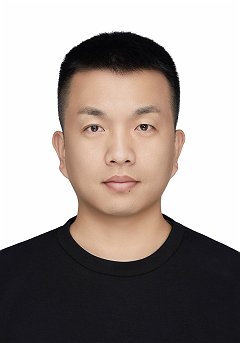
Caroline Brosse is a Lecturer at the University of Orléans, affiliated with the LIFO laboratory and the GAMoC research team since 2024. Her research focuses on graph theory, particularly enumeration algorithms for structures in graphs such as induced subgraphs, minimal completions, and deletions, with additional work on digraphs and location problems. Education : PhD in Computer Science (2019–2023) at LIMOS, Université Clermont Auvergne, supervised by Vincent Limouzy, Aurélie Lagoutte, and Lucas Pastor Research : Enumeration algorithms, graph theory, digraphs, directed graph problems Teaching : Undergraduate courses in graph theory, databases, programming (C/Python), mathematical writing (LaTeX/git) Her publications reflect trends in algorithmic graph theory, including reconfiguration graphs, combinatorial games on graphs, and structural enumeration. She actively participates in scientific outreach through workshops and public engagement initiatives like Terra Numerica and Maison des Mathématiques et de l'Informatique.
Philip Klein is a Professor of Computer Science at Brown University specializing in algorithms and combinatorial optimization. His work focuses on developing efficient algorithms for complex optimization problems, particularly those involving graphs and networks. He earned his BA in Applied Mathematics from Harvard University (1984), followed by an MS (1986) and PhD (1988) in Computer Science from MIT. After a postdoctoral fellowship at Harvard, he joined Brown University where he has established himself as a leading researcher in theoretical computer science. Professor Klein's research centers on approximation algorithms, combinatorial optimization, and graph theory with particular emphasis on planar graphs. His work includes foundational contributions to the Steiner tree problem, traveling salesperson problem, and network flow algorithms. He has developed polynomial-time approximation schemes for numerous problems in planar graphs, bridging theoretical computer science with practical applications in network design and geographic analysis. His recent publications reveal a continued focus on planar graph optimization, with significant contributions to sparsest cut problems, redistricting algorithms, and vehicle routing. The research demonstrates a consistent pattern of developing efficient approximation schemes for NP-hard problems in specialized graph classes. National Science Foundation Presidential Young Investigator Award Philip J. Bray Award for Teaching Excellence Fellow of the Association for Computing Machinery Hoopes Prize Professor Klein has secured substantial research funding throughout his career, including multiple NSF grants totaling over $600,000. His teaching portfolio includes foundational courses like CSCI 0170 (Computer Science: An Integrated Introduction) and advanced graduate courses focused on algorithms for planar graphs. His current research explores applications of graph algorithms to geographic clustering problems and redistricting, continuing his tradition of connecting theoretical computer science with real-world challenges.
Dr. Glenn Hawe is a Lecturer at Ulster University's School of Computing within the Faculty of Computing, Engineering and the Built Environment. He has been with the university since 2013 and is a member of the Artificial Intelligence Research Group. His work focuses on the intersection of machine learning, optimization, and emergency response systems. Education: MPhys in Mathematics and Physics (first class) from University of Warwick (2004) PhD in Electronics and Electrical Engineering from University of Southampton (2008) Dr. Hawe's research spans machine learning, multi-objective optimization, and agent-based simulation, with applications in emergency response systems, robotics, and autonomic computing. His work often explores how computational methods can address complex real-world problems, particularly in the context of resource allocation during major incidents. He has developed innovative approaches in Bayesian optimization and has made significant contributions to the field of autonomic pulse communications for robot swarms. Analysis of his recent publications shows a clear trajectory toward increasingly sophisticated applications of machine learning in robotics and emergency response systems. His work demonstrates growing integration of autonomic computing principles with swarm robotics, particularly for space applications and disaster response scenarios. The research shows increasing focus on explainability in AI systems alongside practical implementation in constrained environments. Scientific Recognition: Won two best paper awards at conferences during his PhD Work featured in 2009 'From recession to recovery' report by Universities UK as an example of successful academia-industry collaboration Dr. Hawe has been actively involved in multiple Knowledge Transfer Partnership (KTP) projects with industry partners and has served as a reviewer for prestigious journals including Journal of Simulation, International Journal of Machine Learning and Cybernetics, and IEEE Transactions on Magnetics. He is a member of the EPSRC peer review college and serves on the technical committee for the Science and Information Conference. His current projects include decarbonization of maritime transportation and autonomy for CubeSats. As part of the Artificial Intelligence Research Group, Dr. Hawe collaborates on projects involving agent-based simulation for emergency response and autonomic computing applications. His work on the REScUE project at Durham University laid the foundation for his current research in computational approaches to major incident management.
Giorgio Ausiello is a Full Professor at Sapienza University of Rome, where he is a member of the Algorithm Design and Engineering research group. His office is located in room A101, and his contact telephone number begins with 005. His research spans theoretical computer science with a strong emphasis on graph algorithms, online algorithms, and approximation techniques. Key contributions include foundational work on graph vitality, resilient graph spanners, and combinatorial optimization, particularly in planar and st-planar graphs. His methodological approach integrates theoretical rigor with practical network analysis applications. Analysis of his recent publications reveals dual research trajectories: ongoing technical innovation in graph algorithms (e.g., max-flow vitality computations) and significant historical contributions documenting the evolution of theoretical computer science in Italy and the EATCS society. This combination of algorithmic research and historical scholarship defines his unique academic profile. Scientific awards: No specific awards were mentioned in the provided source materials. Advising and grants: The source materials do not specify any graduate students, postdoctoral researchers, or external research grants. He actively participates in the Algorithm Design and Engineering research group at Sapienza University of Rome, which focuses on both theoretical foundations and practical implementations of algorithmic solutions for complex computational problems.
Chrysafis Vogiatzis is a Teaching Associate Professor and Director of Professional and Online Education in the Department of Industrial and Enterprise Systems Engineering at the University of Illinois Urbana-Champaign. He previously served as a Teaching Assistant Professor at UIUC (2019-2023), Assistant Professor at North Carolina A&T State University (2018-2019), and Assistant Professor at North Dakota State University (2015-2018). His educational background includes: Ph.D. in Industrial and Systems Engineering, University of Florida, 2014 M.S. in Industrial and Systems Engineering, University of Florida, 2012 Dipl. Eng. in Electrical and Computer Engineering, Aristotle University of Thessaloniki, 2009 Vogiatzis's research focuses on network optimization and combinatorial optimization with applications in socio-technical and biological systems. His primary research interests include network analysis and optimization, combinatorial optimization, decomposition techniques, and evacuation and disaster management. He has also become active in inclusive pedagogy and teaching, particularly in STEM classes and Operations Research, as a member of the UDL and Accessibility Research Group at Illinois. His recent publications demonstrate a strong focus on network centrality metrics, optimization techniques for humanitarian logistics, and accessibility in engineering education. His work spans theoretical contributions to operations research as well as practical applications in disaster management, transportation systems, and educational accessibility. Among his notable awards are: 2023 INFORMS Case Competition Runner-up 2023 ASEE IL/IN Teacher of the Year James Franklin Outstanding Teaching Award (2020) Multiple recognitions as Teachers Ranked as Outstanding and Excellent European Intelligence and Security Informatics Conference 2018 Best Paper Award IISE Outstanding Faculty Advisor (multiple years) MLK Jr. Champion (2024) Vogiatzis has been actively involved in mentoring students, serving as faculty advisor for the Institute of Industrial and Systems Engineers (IISE) Design Teams and the ISE Simulation Team. He has received significant research funding from the National Science Foundation, Army Research Lab, and Department of Homeland Security for projects related to supply chain networks, evacuation planning, and inclusive education. He is particularly active in diversity, equity, and inclusion initiatives, serving as Co-Chair of the INFORMS Diversity, Equity, and Inclusion Committee (2024-2025) and previously as Vice Chair (2021-2023).
Sophie Frisch is an Austrian mathematician and full professor at the Graz University of Technology (TU Graz), affiliated with the Institute of Analysis and Number Theory . She holds the senior academic rank Ao. Univ.-Prof. , reflecting her long-standing faculty status. Research Interests: Her work is rooted in algebra , with principal emphasis on commutative ring theory and the theory of integer-valued polynomials . Related interests span number theory , combinatorics , topology , and logic . Recurring mathematical objects in her research include commutative rings , polynomial mappings , and integer-valued polynomials . Publications & Trends: Over three decades (1995-2024) she has produced a substantial body of peer-reviewed articles (30+ listed) appearing in leading journals such as Journal of Algebra , Journal of Pure and Applied Algebra , Monatshefte für Mathematik , and Communications in Algebra . Themes evolve from foundational questions on polynomial parametrizations and interpolation to modern investigations of factorization properties, irreducibility criteria, and arithmetic in rings of integer-valued polynomials. Recent co-authored works explore primes and irreducibles in atomic domains, p-adic approximation techniques, and prime ideal structures in infinite products of rings. Contact & Location: Email: frisch@tugraz.at Institute: Institut für Analysis und Zahlentheorie (Institute 5010) Address: Kopernikusgasse 24, 8010 Graz, Austria Phone: +43 316 873-7133
David L. Olson holds the James & H.K. Stuart Chancellor's Distinguished Chair and Professorship in Supply Chain Management and Analytics at the University of Nebraska-Lincoln's College of Business since 2001. Previously, he served as a professor at Texas A&M University (1981-2001), where he held the Lowry Mays Professorship (1999-2001) and progressed from Assistant to Full Professor. His academic credentials include: Ph.D. in General Business, University of Nebraska–Lincoln (1981) M.B.A., Kearney State College (1978) B.S. in Mathematics, South Dakota School of Mines & Technology (1966) Professor Olson's research centers on decision making, simulation, quantitative analysis, data mining, and supply chain management. His work bridges theoretical models with practical business applications, particularly in risk analytics and predictive modeling. He has developed frameworks for vendor selection, risk matrices, and Monte Carlo simulation in supply chains, with recent emphasis on pandemic impact modeling and sustainability integration. His 2020-2025 publications reveal three dominant trends: (1) Healthcare analytics applications using multidimensional feature extraction, (2) Supply chain risk management enhanced by multiple criteria decision methods like TOPSIS, and (3) Big data techniques for social networks and O2O services. The corpus demonstrates consistent methodological rigor while expanding into conservation biology analytics. Major recognitions include: Risk Management Paper of Year 2010 (Journal of Human and Ecological Risk Management) Best Enterprise Information Systems Educator Award (2006) Decision Sciences Institute Fellow (1998) and multiple Vice Presidency terms James & H.K. Stuart Professorship (2001-present) and Lowry Mays Professorship (1999-2001) 12+ best paper awards across DSI conferences Professor Olson's scholarly leadership includes Co-Editorship of the International Journal of Service Sciences and Associate Editor roles for Decision Support Systems, Decision Sciences, and IEEE Transactions. His editorial stewardship spans 30+ journals with dozens of special issues. Endowed professorships and research fellowships reflect sustained funding support for his work in analytics and risk management. No laboratory or team affiliations are specified in source materials.
Dr. Ling Chen is a Professor at the University of Technology Sydney (UTS) , affiliated with the Faculty of Engineering and Information Technology and the Australian Artificial Intelligence Institute (AAII) , where she serves as Research Director. Her work bridges machine learning , representation learning , and reinforcement learning with large language models in interactive systems. PhD in Computer Engineering from Nanyang Technological University (NTU), Singapore Postdoctoral training at Leibniz University Hannover (L3S Research Centre), Germany Dr. Chen's research spans graph neural networks , time-series forecasting , and ethical AI . She develops zero/few-shot anomaly detection models and continual learning frameworks for dynamic environments. Her recent work includes trustworthy AI applications in medical imaging and fraud detection . Her 15 most recent articles focus on graph foundation models , contrastive learning , multimodal medical report generation , and temporal-sensitive question answering . These reflect trends in graph anomaly detection , curriculum learning for Transformers , and ethical AI development . Dr. Chen has received: ARC Future Fellowship (Level 3) COLING 2025 Best Short Paper Award She supervises 25 PhD students, 4 Master-by-Research, and 4 postdoctoral researchers as part of AAII's team of over 30 researchers and 200 HDR students. She holds the IEEE Task Chair for Data Science and Advanced Analytics and collaborates with industry leaders like Facebook and TPG Telecom .
Satoshi Murai is a Professor at the Faculty of Education and Integrated Arts and Sciences, Waseda University, since 2019. His research spans Commutative Algebra , Algebraic Combinatorics , and Combinatorial Topology , with a focus on the interplay between algebraic structures and combinatorial objects like simplicial complexes, polytopes, and graph theory. He has held previous positions at Osaka University (2014–2019) and Yamaguchi University (2009–2014). His work often involves Hilbert functions , Betti numbers , and Lefschetz properties , particularly in the context of Stanley-Reisner rings and Hessenberg varieties. Notably, his research connects algebraic invariants to geometric and topological properties of manifolds and pseudomanifolds. He has published extensively in top-tier journals, including Acta Mathematica , Journal of Algebraic Combinatorics , and Advances in Mathematics . Recent trends in his publications include studies on equivariant Hochster formulas , balanced neighborly polynomials , and log-concavity in matroid polynomials . He received the Mathematical Society of Japan Takebe Masahiro Encouragement Award in 2008. As an editor-in-chief for Algebraic Combinatorics since 2018, he contributes to the peer-review process. His research is funded by Japan Society for the Promotion of Science (JSPS) grants for projects on algebraic and combinatorial structures (2016–2020, 2021–2025). Murai is a member of the Mathematical Society of Japan and has presented at major conferences like Formal Power Series and Algebraic Combinatorics (FPSAC) and Algebra Symposium .
Patrick Totzke is a Professor in the Department of Computer Science at the University of Liverpool’s School of Electrical Engineering, Electronics and Computer Science. As a leading researcher at the intersection of mathematics and computer science, he specializes in the foundations of formal verification, algorithmic game theory, and infinite-state systems. Education: While specific degrees are not listed, his expertise and role as Professor strongly suggest advanced graduate training in computer science and mathematics. Research Interests: Algorithmic game theory, particularly strategy complexity and games on infinite graphs Decidability and complexity of verification problems such as bisimulation, language inclusion, model checking, and synthesis Counter automata, vector addition systems, Petri nets, and process algebras Computational logics with fixed-points, temporal or probabilistic modalities, and associated games Real-time systems including timed automata, timed Petri nets, and timed games His recent focus centers on timed automata and stochastic games on graphs. Research Grants: Below the Branches of Universal Trees – EPSRC (March 2023 – August 2024) Unambiguity in Infinite-state Systems – Royal Society (March 2021 – March 2023) COSTRA: The Cost of Winning Strategies – EPSRC (July 2021 – September 2024) Teaching: Module Co-ordinator for COMP122 Object-Oriented Programming (2024–25). Labs & Teams: While no specific lab names are provided, his grants and publications indicate active leadership of research teams in formal methods and verification.
Jack Deslippe serves as the Application Performance Group Lead at the National Energy Research Scientific Computing Center (NERSC), part of Lawrence Berkeley National Laboratory. He has held this position since joining the laboratory in January 2006, currently working as Computer Systems Manager 1 in the HPC Department within Computing Sciences. Dr. Deslippe earned his PhD in Physics from UC Berkeley in 2011, with research focused on materials physics and nano-science, specifically scaling many-body Green's function computational methods for studying optical properties of complex materials. His research spans multiple computational domains: Computer Software and Distributed Computing Artificial Intelligence and Image Processing Numerical and Computational Mathematics Pure Mathematics Materials Physics and Nano-science His publication record demonstrates expertise in high-performance computing optimization, particularly in GPU acceleration, parallel computing strategies, and performance modeling across physics simulations, materials science, and bioinformatics. He has made significant contributions to the BerkeleyGW software package for many-body physics calculations, focusing on scalability and performance optimization for leadership-class computing systems. As leader of NERSC's Application Performance Group, Dr. Deslippe plays a critical role in enabling scientific discovery through high-performance computing. His team works extensively with researchers to optimize computational workflows on NERSC's systems, including the transition to exascale architectures like the Cori system with Intel Knights Landing processors. His work bridges the gap between domain science and computer science, developing computational approaches that enable new scientific discoveries across multiple disciplines.
Xiang Ling is an Associate Professor at the Institute of Software, Chinese Academy of Sciences (ISCAS) in Beijing, specializing in software security, data-driven security, AI security, and network/web security. His research bridges theoretical computer science with practical security applications, focusing on malware analysis, vulnerability detection, and adversarial machine learning. His research interests span multiple security domains with emphasis on applying data-driven approaches to security challenges. He investigates how machine learning techniques can be both applied to security problems and themselves secured against adversarial manipulation. His work particularly focuses on Windows and Android security ecosystems, with significant contributions to malware detection systems and vulnerability analysis tools. His publication record shows consistent contributions to top software engineering and security venues including ICSE, USENIX Security, IEEE S&P, and Black Hat. His research demonstrates strong trends toward integrating deep learning with security analysis while addressing practical challenges in real-world security systems. Recent work increasingly incorporates large language models for security applications. ACM SIGSOFT Distinguished Paper Award at ICSE 2025 for 'FUTURE' paper Multiple papers accepted at premier venues including ESEM 2025, EASE 2025, and ICSME 2025 Research funded through collaborations with major academic institutions Dr. Ling actively mentors students and collaborates with researchers globally. He maintains an active research group at ISCAS focusing on code analysis, system security, deep learning, and fuzz testing. His team regularly publishes in top-tier conferences and journals while developing practical security tools that address real-world vulnerabilities. He is currently recruiting interns and graduate students through platforms like 实习僧 (intern recruitment website).
Dr hab. inż. Robert Janczewski serves as an Associate Professor at the Department of Algorithms and Systems Modelling within the Faculty of Electronics Telecommunications and Informatics at Gdańsk University of Technology. He simultaneously holds the position of Senior Specialist – Design Programmer at the Team for Development and Maintenance of Data Warehouses CUI, both positions located in Building A of the Faculty of Electronics, room EA 224. His academic journey includes obtaining a "dr inż." degree in 2001 and a higher doctoral degree "dr hab. inż." in Information Science (Technology) in 2015, both from the same faculty. His research focuses on the theoretical foundations of graph theory, with particular emphasis on various coloring problems including edge coloring, incidence coloring, and contrast coloring of graphs. His work spans both classical and signed graph theory, exploring chromatic indices, backbone coloring, and frequency allocation problems. Janczewski's research has significant applications in algorithm design, network optimization, and theoretical computer science, with many of his contributions addressing NP-hard problems and developing polynomial-time solutions for specific graph classes. Analysis of his recent publications (2022-2025) reveals a concentrated research trajectory on signed graph coloring problems, where he has made substantial contributions to understanding edge coloring of signed graphs and their products. His work demonstrates a progression from foundational coloring problems toward more complex signed graph structures, establishing classification systems for signed graphs based on their chromatic properties. The interdisciplinary nature of his research bridges pure mathematics with practical computational applications. Janczewski has maintained a consistent publication record in prestigious journals including Discrete Applied Mathematics, Theoretical Computer Science, and Discussiones Mathematicae Graph Theory. His collaborative work with researchers like Turowski, Wróblewski, and Obszarski indicates strong research partnerships within the graph theory community. His methodology combines theoretical proofs with algorithmic approaches, often providing both complexity analyses and practical solution strategies for graph coloring problems.
Christophe Goupil is a University Professor 1st Class at the University of Paris, where he teaches in the Faculty of Physics and conducts research at the Interdisciplinary Laboratory of Tomorrow's Energies (LIED), UMR 8236. He serves as Head of the DyCO (Dynamiques Couplées) research team and previously held the position of Deputy Director of LIED from 2015-2020. With research spanning three distinct periods—Supraconductivity (1991-2004), Thermoélectricity (2004-2012), and Interdisciplinary Energy Research (2012-present)—Goupil's work focuses on energy conversion, non-equilibrium thermodynamics, and the application of thermodynamic principles to biological and economic systems. His approach integrates physics, biology, and economics through the lens of coupled dynamics, with particular interest in bio-inspired energy systems and the thermodynamics of metabolic processes. His research has evolved from fundamental studies of vortex dynamics in superconductors to interdisciplinary applications examining the relationship between energy conversion and living systems. Goupil's recent publications reveal a growing trend toward interdisciplinary applications of thermodynamics, with approximately 40% focusing on biological systems, 30% on advanced thermoelectric materials and devices, 20% on fundamental thermodynamic theory, and 10% on economic applications. His work consistently applies Onsager's linear response theory to diverse systems, demonstrating the universality of thermodynamic principles across disciplines. Best Paper Award 2015 for Thermodynamics of Thermoelectric Phenomena and Applications in Entropy journal Co-director of the publication Manuel de la grande transition Co-editor of the exhibition catalog for the Biomimétisme exhibition at Cité des Sciences Professor Goupil has supervised 8 PhD theses and 5 post-doctoral researchers, while mentoring approximately 2 M2-level interns annually. His research has been supported by numerous projects including THETAGEN (FP7 CleanSky), ENERMAT (INTERREG), METABOLOCOT (CNRS), FLEXIGEN (Centre-Val de Loire), and several FUI projects. He has served on 17 thesis committees and 3 HDR committees, demonstrating his active engagement in academic mentorship and evaluation. As head of the DyCO research team at LIED, Goupil leads investigations into coupled dynamics across multiple domains. The team explores the thermodynamic foundations of energy conversion in both living and non-living systems, with particular focus on the interface between physical principles and biological organization. Their work bridges traditional disciplinary boundaries, examining how thermodynamic constraints shape system behavior across scales—from electronic transport to metabolic processes to economic systems.
Dr. Joanna Raczek serves as an Assistant Professor in the Department of Algorithms and Modeling Systems within the Faculty of Electronics, Telecommunications and Informatics at Gdańsk University of Technology. Her research bridges theoretical computer science with practical applications in network security and infrastructure design. Her primary research interests focus on Graph Theory and its applications, particularly in domination problems within networks. Dr. Raczek investigates certified domination models for social networks, vertex cover problems in bipartite graphs, and optimization of fire safety water networks. Her work demonstrates how theoretical graph concepts translate to real-world security and safety applications, with particular attention to algorithmic efficiency and computational complexity. Analysis of her recent publications reveals a consistent focus on domination variants in graph networks, with increasing emphasis on practical applications. Her research trajectory shows progression from theoretical foundations (2023) to social network security (2024-2025), demonstrating how abstract graph concepts solve concrete problems in community safety and infrastructure design. The interdisciplinary nature of her work spans computer science, mathematics, and engineering applications. Dr. Raczek actively contributes to academic literature through publications in reputable journals including IEEE Access, Scientific Reports, and Algorithmica, with several publications appearing in 2024 demonstrating her current research productivity. Her collaborative work with M. Kubale and M. Miotk indicates strong research partnerships within her department.