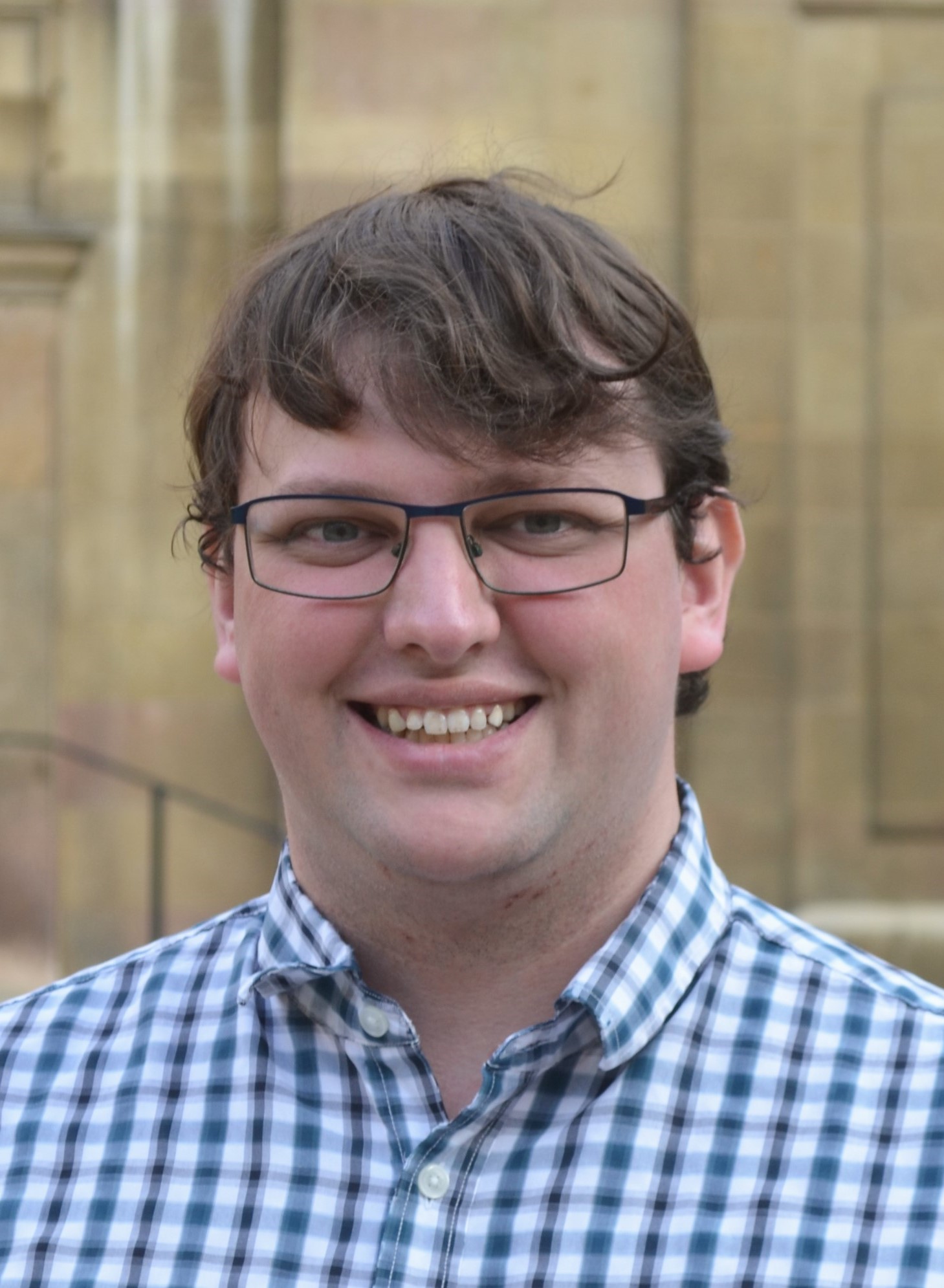
Dr. Gareth Wilkes is an Assistant Professor at the University of Cambridge, affiliated with Jesus College and Selwyn College. He holds positions as a Fellow at Jesus College and a Bye-Fellow at Selwyn College. His research focuses on the intersection of geometric group theory, geometric topology, and profinite groups, particularly exploring residual properties, profinite completions, and cohomological methods in these structures. Wilkes completed his doctoral studies at the University of Oxford in 2018 with a thesis titled Profinite Properties of 3-Manifold Groups . He is preparing a textbook Profinite Groups and Residual Finiteness (EMS, 2024), which provides a foundational treatment of profinite groups and their applications in residual finiteness studies. His work bridges algebraic and geometric perspectives, emphasizing group cohomology and profinite rigidity. His publications span topics such as profinite rigidity of 3-manifolds, cohomology theories for profinite groups, and the interplay between random groups and topological invariants like ℓ²-Betti numbers. Teaching materials, including lecture notes and exercises on profinite groups, are available for academic reference. Wilkes’ research also addresses accessibility of pro-p groups, profinite completions of geometric structures, and applications of finite quotients in distinguishing crystallographic groups.
Laurent Feuilloley is a junior CNRS researcher (Chargé de recherche) at LIRIS, Université de Lyon 1 since 2022. He previously held postdoctoral positions at LIRIS, Universidad de Chile, and LIP6 at Sorbonne Université. His research focuses on Distributed Computing , Graph Theory , and Local Certification , with applications in Fault-Tolerant Systems and Algorithm Engineering . He collaborates extensively with researchers like Nicolas Bousquet, Franck Petit, and José Correa. Education: PhD in Computer Science (2018) at IRIF, Université Paris Diderot, supervised by Pierre Fraigniaud. Research: Works on graph algorithms, certification, and robustness in dynamic networks, with a focus on maximal independent sets and self-stabilizing systems. Scientific Contributions: His publications include lower bounds for local certification, robustness refinements in dynamic networks, and space complexity for leader election algorithms. He has received multiple Best Paper Awards at SAND 2023 and SSS 2022 Best Student Paper at OPODIS 2021 Best Reviewer Award at DISC 2020 Advising: Currently supervising Sébastien Zeitoun's PhD (co-advised with Nicolas Bousquet and Éric Duchêne) and Antonin Kiladjian's M1 internship (with Théo Pierron). He has also advised Guillermo Dinamarca's master thesis in 2019-2020.
Sergey Kitaev is Professor of Mathematics in the Department of Mathematics and Statistics and Associate Dean (Research) in the Faculty of Science at the University of Strathclyde. He leads the Mathematical and Stochastic Analysis Group, the Applied and Discrete Analysis Group, and the Strathclyde Combinatorics Group. He is an editor of prominent journals including the Journal of Combinatorial Theory, Series A (JCTA), Proceedings of the Edinburgh Mathematical Society (PEMS), and Enumerative Combinatorics and Applications (ECA). University: University of Strathclyde School: Faculty of Science Department: Department of Mathematics and Statistics Leadership Roles: Associate Dean (Research), Head of multiple analysis and combinatorics groups His research centers on combinatorics, graph theory, discrete analysis, formal languages, and optimization. He is a pioneer in the theory of word-representable graphs and the study of patterns in permutations and words. His influential books Patterns in Permutations and Words (2011) and Words and Graphs (2015) are foundational in these areas. His recent work includes projects on optimal resource distribution and shortening universal words for DNA sequence assembly. The most recent articles reflect a strong focus on word-representable graphs, permutation patterns, enumeration, and their applications in computer science and bioinformatics. There is a consistent trend in exploring structural graph properties via combinatorial representations, with increasing application-oriented directions such as algorithm analysis and DNA assembly. Scientific awards and recognitions include: Best of Science award, University of Strathclyde Teaching Excellence Awards, 2025 Leverhulme Research Fellowship, 2023 Strathclyde Teaching Excellence Award, 2018 Most cited article in JCTA, 2018 “Abel Extraordinary Chair”, 2010 Kitaev has supervised several PhD students including Marc Glen, Kittitat Iamthong, and Najlaa Alalwan, and has mentored postdoctoral researchers such as Amy Glen and Vit Jelinek. He has secured substantial research grants, including £45,267 from the Leverhulme Trust and over £44,000 from various UK mathematical societies and EPSRC. He is actively involved in academic leadership, serving on research committees, editorial boards, and organizing major international conferences such as the Permutation Patterns Conference and the British Combinatorial Conference. He is a key figure in the Strathclyde Combinatorics Group , the Mathematical and Stochastic Analysis Group , and the Applied and Discrete Analysis Group , fostering collaborative research and international partnerships. His work is supported by strong computational tools developed by collaborators, such as software for verifying word-representability and finding graph representations.
Carlo Tomasi is the Iris Einheuser Distinguished Professor of Computer Science at Duke University's Trinity College of Arts & Sciences, with additional affiliations to the Duke Institute for Brain Sciences. His research integrates computer vision, machine learning, and applied mathematics, focusing on image motion analysis (NSF-funded), satellite image interpretation (IARPA-funded), computer-assisted diagnosis, and object recognition (Amazon-funded). Research interests span optical flow estimation, video processing, autonomous systems, medical imaging, and biological applications. Recent work emphasizes transformer architectures, unsupervised learning for motion analysis, semantic integration in computer vision, and applications in both autonomous driving and ecological studies. Publication trends show consistent focus on motion boundary detection (optical flow refinement, occlusion handling), multi-target tracking, and interdisciplinary applications in medical diagnostics and botany. Machine learning innovations include active learning strategies and noise-resistant network architectures. Awards & Honors: ACM Fellow IEEE Computer Society Helmholtz Prize (awarded twice) Significant grant support includes ongoing projects funded by NSF (image motion analysis), IARPA (satellite imagery), and Amazon (object recognition). Leads research groups focused on computer vision fundamentals and applied interdisciplinary collaborations with medical and biological researchers.
Shuichi Hirahara is an Associate Professor at the National Institute of Informatics (NII), Japan, within the Principles of Informatics Research Division. He holds a Ph.D. from the University of Tokyo and has held research positions at the University of Warwick and Nagoya University. His work lies at the intersection of theoretical computer science and cryptography, focusing on foundational questions in computational complexity. Educational Background: Ph.D. in Computer Science, Department of Computer Science, Graduate School of Information Science and Technology, The University of Tokyo (2016–2019) His research centers on meta-complexity , a field probing the complexity of problems about computational complexity itself, such as the Minimum Circuit Size Problem (MCSP). He investigates average-case complexity , Kolmogorov complexity , and circuit minimization , aiming to understand the limits of efficient computation and to establish secure cryptographic foundations. His work often reveals unexpected hardness results and bridges worst-case and average-case complexity. The recent publications highlight a strong trend toward using meta-complexity to understand cryptographic primitives such as one-way functions and to unify hardness conjectures like the Planted Clique problem. His results have significant implications for proving the security of cryptography based on average-case hardness. Scientific Awards: Young Scientists' Award from MEXT (2024) Yamato Scientific Award (2024) Microsoft Informatics Research Award (2024) Complexity Result of the Year 2022 Funai Research Encouragement Award (2022) Machtey Award (FOCS 2018) Academic Encouragement Award (IEICE, 2019) Hirahara has been actively involved in research funding and academic service. He is the principal investigator of a JSPS Challenging Research (Pioneering) grant on average-time NP-completeness and has participated in several JST and JSPS projects on complexity theory and quantum algorithms. He serves on the program committees of major conferences including STOC, FOCS, and CCC. He is a frequent invited speaker at international workshops and seminars, contributing to the global discourse on computational complexity and cryptography. While no formal advisees are listed, his leadership in research projects suggests an active mentoring role. Labs and Research Teams: He is affiliated with the Informatics Principles Research Division at NII, a leading center for theoretical informatics in Japan. His work is highly collaborative, involving researchers from institutions like JST, University of Tokyo, and international partners.
Francois Le Gall is a Professor at Nagoya University's Graduate School of Mathematics, where he leads the Quantum Algorithms and Complexity Group. His research focuses on quantum computation, complexity theory, and distributed algorithms. Research Interests: Quantum algorithms (including Grover's algorithm optimizations and Shor's algorithm generalizations), quantum complexity theory, communication protocols, and distributed computing frameworks. His work bridges theoretical computer science and practical quantum implementations. Publications: Recent articles explore quantum interactive proofs, distributed quantum advantage, and dequantization techniques. A consistent focus is observed on overcoming computational limits in quantum systems and establishing complexity boundaries. Awards: NISTEP Award 2017 ISSAC 2014 Distinguished Paper Award Teaching & Advising: Teaches courses in Linear Algebra, Quantum Computing, and Mathematical Perspectives. Mentors 11+ PhD/Master's students in quantum algorithms and complexity. Leads the QLEAP-AI project since 2020. Group Leadership: Heads a research team developing quantum algorithms for graph problems, matrix operations, and communication complexity, with collaborations across global institutions.
Patrick Totzke is a theoretical computer scientist at the University of Liverpool's Department of Computer Science. His research focuses on mathematical models of computation, formal verification, and the complexity of strategies in stochastic and temporal games. University of Liverpool (2018–present) Postdoctoral positions: LFCS Edinburgh (2016–2018), University of Warwick (2015), LaBRI Bordeaux (2014) Research Interests include automata theory, game theory, computational logic, and computer-aided verification. Recent work emphasizes history-deterministic systems, timed automata, and decision problems in infinite-state games. Key Publications (2024–2025) explore temporal graph explorability (PSPACE-complete), stochastic nondeterminism resolution (undecidability in NFAs), and bounded-memory strategies in partial-information games. Earlier works address energy-parity objectives (NP∩coNP) and the reachability problem in 2D vector addition systems (NL-complete). Awards Shortlisted for Teacher of the Year (2021) PI on EPSRC-funded project (2021) Co-PI on Royal Society grant (2021) Collaborations include Richard Mayr, Stefan Kiefer, Mahsa Shirmohammadi, and Sougata Bose (postdoc, 2021). He co-chaired Reachability Problems (RP'21) and contributes to open-source tools like alot and LaTeX beamer themes.
Milagros Izquierdo is a Professor in the Department of Mathematics at Linköping University , Sweden. She is affiliated with the research division of Algebra, Geometry and Discrete Mathematics (ALGD) , which conducts research in algebra, geometry, topology, combinatorics, and graph theory. Institution: Linköping University (LiU) Department: Department of Mathematics (MAI) Research Division: Algebra, Geometry and Discrete Mathematics (ALGD) Position: Professor Her research centers on the geometry and topology of Riemann surfaces, particularly focusing on automorphism groups, moduli spaces, Schottky groups, and equisymmetric strata. She investigates algebraic and geometric structures arising from group actions on surfaces, with connections to complex analysis and discrete mathematics. The recent publications (2021–2024) demonstrate a consistent focus on symmetry in Riemann surfaces, classification of automorphism groups, and stratification of moduli spaces. Her work lies at the intersection of algebra, geometry, and topology, often involving prime genus surfaces and cyclic or equisymmetric group actions. Scientific Awards: No awards explicitly mentioned in the provided text. Advising and Grants: There is no public information available in the provided texts regarding students advised, research grants, or funding. However, her active publication record suggests involvement in research projects and likely supervision of doctoral students within the Department of Mathematics. Labs and Research Teams: She is a key member of the Algebra, Geometry and Discrete Mathematics research group at Linköping University, which comprises around twenty academics and doctoral students. This group fosters collaborative research in pure mathematics, particularly in areas aligned with her expertise.
Jan Snellman is an Associate Professor (Docent) in the Department of Mathematics at Linköping University, affiliated with the Algebra, Geometry and Discrete Mathematics (ALGD) division. He holds a permanent academic position and is actively involved in teaching and research. PhD, Stockholm University, 1998 Postdoctoral positions at École Polytechnique (France) and University of Wales, Bangor (UK) Permanent faculty at Linköping University since October 2005 His research lies at the intersection of algebra and combinatorics, with a focus on algebraic combinatorics, commutative algebra, representation theory, and arithmetical functions. He has made significant contributions to the study of Gröbner bases, combinatorial structures in algebra, and convolutions on arithmetical functions, including the ternary convolution. His work often bridges abstract algebra with enumerative and discrete methods. The most recent publications and preprints (2024–2025) reflect ongoing research in poset probability, convolutions, blocking ideals, and generating functions, indicating sustained scholarly activity. Earlier works from 2003–2007 explore saturated chains, Laplacians on multicomplexes, and unitary convolutions, showing a long-standing interest in combinatorial algebra and number-theoretic functions. The research consistently engages with algebraic structures derived from combinatorial objects. Jan Snellman has supervised multiple graduate students, including PhD candidates Jonna Gill, Mikael Hansson, and Vincent Umutabazi. He has also guided numerous Master’s and candidate thesis projects in areas such as concave partitions, phylogenetic analysis, and Gröbner basis algorithms. His supervision spans both theoretical algebra and applied combinatorics. He has not received any explicitly mentioned scientific awards in the provided text. Jan Snellman is a member of the Algebra, Geometry and Discrete Mathematics (ALGD) research group at Linköping University, which focuses on algebra, geometry, topology, combinatorics, and graph theory. The group includes about twenty researchers and doctoral students, fostering a collaborative environment for advanced mathematical research.
Jakub Klikowski is an Assistant Professor in the Department of Computer Systems and Networks at the Faculty of Electronics, Wrocław University of Science and Technology. He has been employed since October 2018 and earned his PhD in engineering and technical sciences in March 2022 for his dissertation on ensemble methods for imbalanced data stream classification. He is actively involved in research and teaching, contributing to multiple research teams including the Machine Learning Team and Advanced Data Analysis Methods Team. Research Interests: Classification of imbalanced and streaming data Ensemble learning and one-class classification Natural language processing (NLP) Concept drift detection and adaptive learning Graph neural networks and spam/disinformation detection Multi-criteria optimization and evolutionary algorithms His research is primarily conducted within the IDSTREAM and GEOM projects, focusing on developing robust classifiers for challenging data environments. His recent work emphasizes hybrid preprocessing, ensemble weighting, and drift detection mechanisms. Publication Trends: His publications from 2019 to 2022 reveal a consistent focus on improving classification performance in imbalanced data streams using ensemble techniques, preprocessing strategies, and drift detection. Key themes include weighted bagging, Hellinger distance, centroid analysis, and genetic optimization, all applied to real-world decision-making tasks. Scientific Awards: Rector of Wrocław University of Science and Technology Award (2020) Distinction in the Secundus program for young scientists (2023) Honorable Mention for doctoral dissertation (2022) Advising and Grants: Dr. Klikowski supervises diploma theses on topics such as NLP, text summarization, hate speech detection, and graph neural networks. He is involved in research projects including IDSTREAM and GEOM, which support his work in data stream classification and optimization. He collaborates with leading researchers like Prof. Michał Woźniak and Prof. Robert Burduk. Labs and Teams: He is an active member of the Machine Learning Team, Advanced Data Analysis Methods Team, and other research groups at the Department of Computer Systems and Networks. These teams foster interdisciplinary research in AI, data science, and network optimization.
Jordan Harold is a Lecturer in Psychology at the School of Psychology, University of East Anglia (UEA) , with research focused on improving science communication, particularly in the context of climate change. He is also a member of the Tyndall Centre for Climate Change Research and ClimateUEA , contributing to interdisciplinary efforts in climate science and policy. His work bridges cognitive psychology and public decision-making, aiming to make scientific evidence more accessible and usable. Education: BSc in Psychology (First Class Honours), University of Warwick MSc in Science (with Distinction), Open University PhD, University of East Anglia – focused on cognition of data visuals and climate science communication at the science-policy interface His research investigates how individuals interpret scientific data, especially climate-related information, and how communication strategies can be optimized. He employs experimental methods, eye-tracking, surveys, and interviews. Key projects include co-designing IPCC report visuals and developing guidelines for communicating climatic uncertainties. His work supports policymakers and the public in making informed, evidence-based decisions. His recent publications center on data visualization in IPCC reports, assessing visual complexity, and improving accessibility. These works reflect a strong trend toward interdisciplinary science communication, cognitive psychology, and climate policy interface research. Scientific Contributions: Contributor and drafting author to IPCC Special Reports (Global Warming of 1.5°C, Climate Change and Land) Collaboration with InfoDesignLab and Future Climate for Africa programme Development of practical guidelines for climate data communication He has advised on communication strategies for major climate assessments and has been featured in media such as Carbon Brief. Jordan Harold has not supervised any named students in the provided texts and has not received any explicitly mentioned awards. He is actively involved in research but no lab or team leadership is specified beyond collaborative projects.
Tyler Genao is a Zassenhaus Assistant Professor (postdoc) at the Ohio State University. He completed his PhD in 2023 at the University of Georgia under advisor Pete L. Clark. His research focuses on Number Theory and Arithmetic Geometry, with emphasis on elliptic curves, modular forms, and algebraic structures. His work explores topics like torsion bounds, isogeny classes, and modular curves. Recent research trends include studying torsion subgroups of elliptic curves over number fields, properties of Shimura curves, and computational approaches to non-unitary partitions. His articles often intersect algebraic geometry and number theory, addressing questions in arithmetic dynamics and Galois representations. No awards or grants are explicitly mentioned in the provided text.
Thomas Schindler is an Assistant Professor at the University of Amsterdam , where he leads the ERC Starting Grant project "Generalisation into Sentence and Predicate Positions" (2023-2028). His academic journey includes Marie Curie Fellowship (2018-2020), Research Associate at University of Bristol (2020-2022), and Junior Research Fellow at Clare College, University of Cambridge (2015-2018). He earned his PhD summa cum laude from LMU Munich (2015) under Hannes Leitgeb. His research intersects logic, metaphysics, epistemology, philosophy of language, and philosophy of mathematics , with a focus on deflationism, abstract objects, semantic paradoxes, and type-free theories . Recent publications analyze the logical function of property talk, Gödelian solutions to paradoxes, and minimalist accounts of numbers. His work demonstrates that disquotational truth can simulate higher-order logic while addressing generalization problems. Scientific awards include ERC Starting Grant , Marie Curie Fellowship , DFG funding , and multiple scholarships from DAAD, Tilburg University, and LMU Munich. He actively contributes to academic communities through editorial work ( Dialectica 2020-2022), refereeing for journals like Mind and Journal of Philosophical Logic , and organizing workshops on abstract objects and paradoxes.
Chengcheng Xu is an active academic researcher focusing on computer science, mathematics, and environmental engineering domains. His recent publications highlight collaborative work with Jun Chen, Tianfeng Wang, Man Chen, and Zhisong Pan on advanced machine learning techniques applied to SAR image analysis and graph representation learning. Key research areas include: Graph contrastive learning frameworks (GRAIL) Class-aware graph Siamese networks Gradient-prior guided semi-supervised segmentation Synthetic Aperture Radar (SAR) ship detection His work appears in journals like IEEE Sensors Journal , Information Processing & Management , and Neurocomputing , emphasizing efficient annotation strategies and representation learning advancements.
Hualou Liang is a Professor of Biomedical Engineering at Drexel University's School of Biomedical Engineering, Science & Health Systems. He is also affiliated with the Computational Neuroscience Initiative at the University of Pennsylvania. His office is located in Monell 103 at Drexel University. Dr. Liang earned his PhD in Physics from the Chinese Academy of Sciences in China. His educational background in physics provides a strong foundation for his interdisciplinary research at the intersection of engineering, neuroscience, and data science. Dr. Liang is known for pioneering the application of causal functional connectivity measures, particularly Granger causality, to the analysis of complex, high-dimensional neuroscience data. His research spans biomedical data analysis, machine learning, cognitive and computational neuroscience. His lab explores neural mechanisms of visual perception during various cognitive tasks using computational approaches. Current research focuses include: development of software package (www.brain-smart.org) for analyzing brain circuits; neuronal oscillations and attentional control; development of advanced signal processing methods for nonstationary, multivariate neurobiological data (spikes, field potentials, EEG/MEG, fMRI etc); and algorithm development for brain-computer interface or brain-machine Interface. Dr. Liang's recent publications demonstrate a strong trend toward applying large language models and advanced machine learning techniques to biomedical problems, particularly in dementia prediction, drug analysis, and neural data interpretation. His work bridges traditional neuroscience with cutting-edge artificial intelligence approaches. Elected Fellow of the American Institute for Medical Biological Engineering (AIMBE) 1st and 2nd Place at the INTERSPEECH 2024 TAUKADIAL Challenge for Dementia Prediction Using LLMs Recipient of FDA Grant Extension for Machine Language Learning Based Research on Heterogeneous Treatment Effect Models 2020-2021 Pennsylvania CURE Grant Awardee 2016 Commonwealth Universal Research Enhancement (CURE) Program Grant Awardee Dr. Liang has successfully mentored students like Felix Agbavor, who has co-authored multiple publications and won awards with him. His research is supported by significant grants including NIH funding and FDA extensions. The Liang Lab is actively recruiting postdocs in biomedical deep learning and systems/computational neuroscience, indicating ongoing research momentum and funding. Dr. Liang has collaborated extensively with researchers across Drexel University and with colleagues at the University of Pennsylvania. The Liang Lab is a vibrant research group focused on problems at the intersection of machine learning and neuroscience. The lab collaborates with other research groups, including Vikas Bhandawat's lab, on projects studying neural control of movement. The lab has developed innovative approaches using data science to advance understanding of brain function, discover causal structures from observations, and apply deep learning and natural language processing to biomedical challenges. Recent notable work includes being the first to report using GPT-3 for early diagnosis of dementia, which was featured on the GPT-3 Wikipedia page.