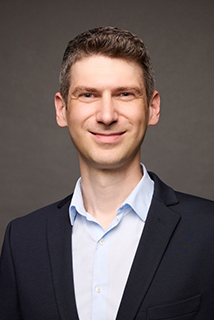
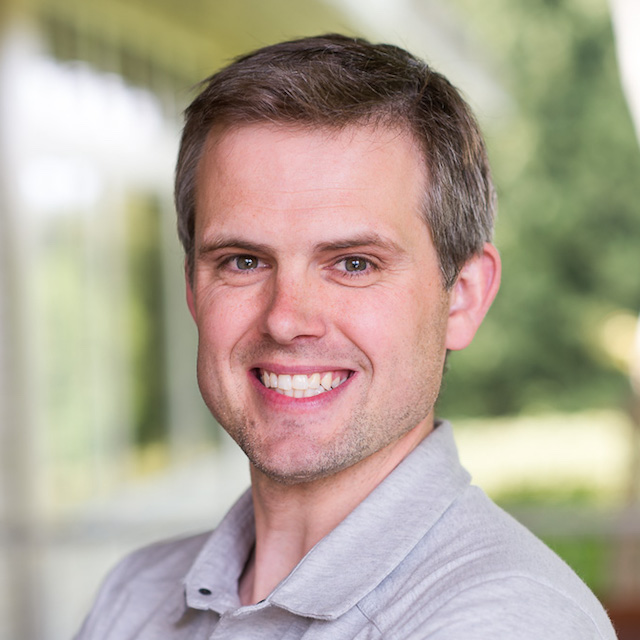
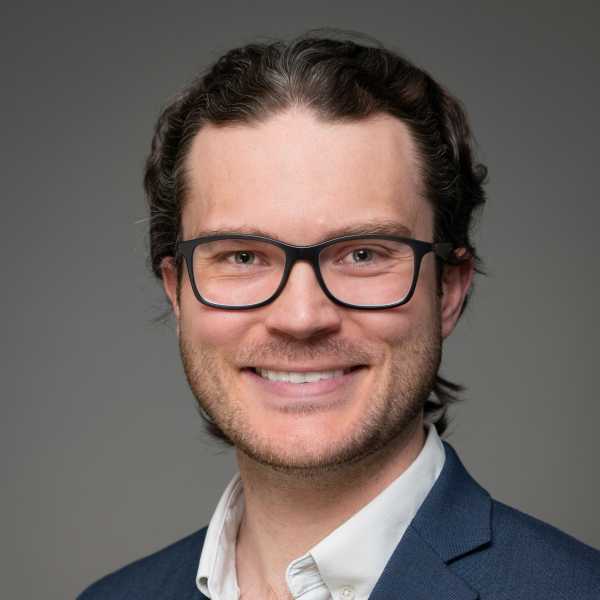
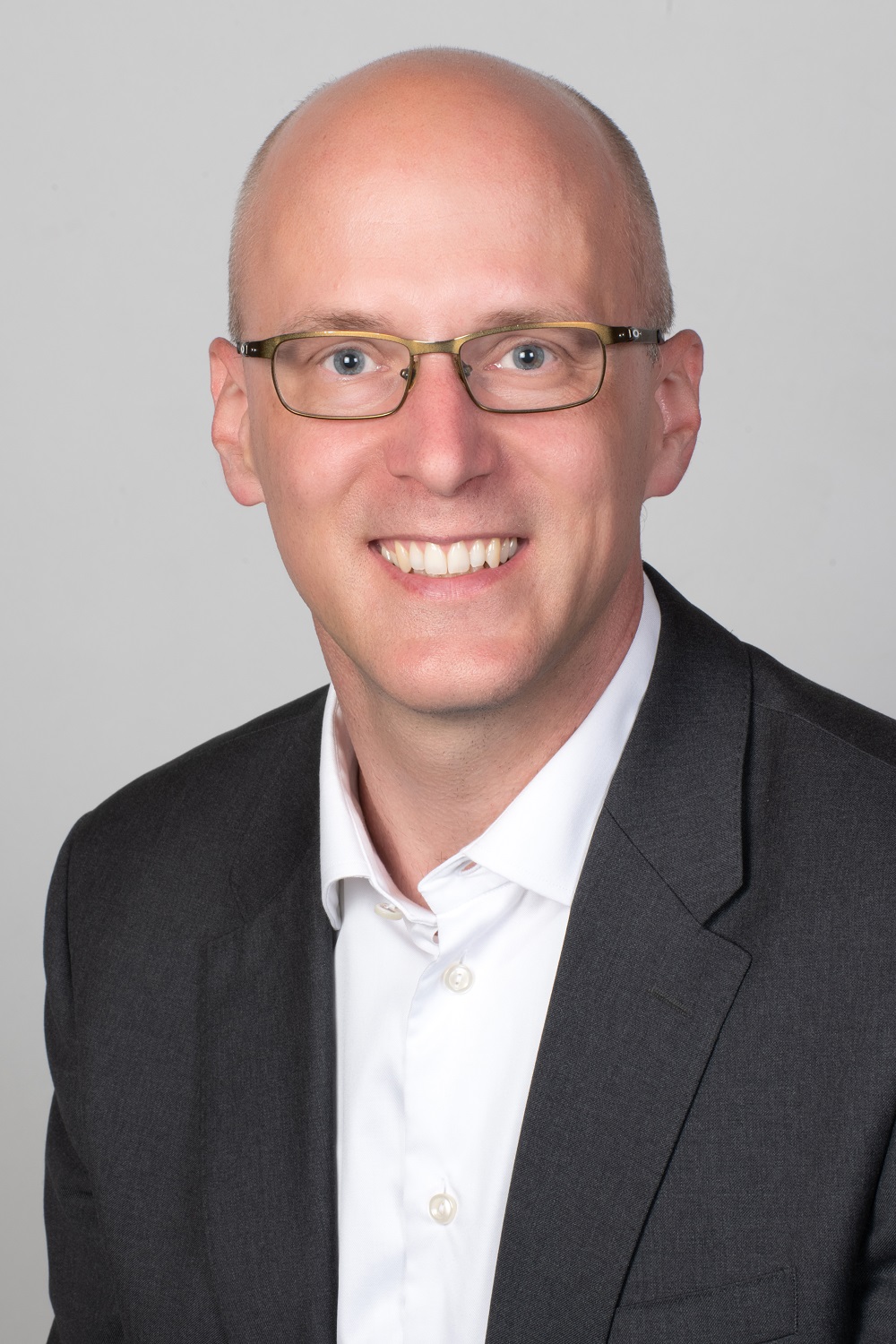
Sebastian Baltes is a Professor of Software Engineering at the University of Bayreuth, Germany, and an Adjunct Professor at the University of Adelaide, Australia. His research focuses on empirical studies of software developers' work habits, tool/process improvements, and bridging empirical research with industrial practice. He holds a PhD from the University of Trier and has industry experience at SAP and QAware. He teaches courses on Software Engineering, Advanced SE, and related topics across multiple universities, including University of Bayreuth, Trier, and Adelaide. His research emphasizes data-driven decision-making and has led to influential work on test flakiness, Stack Overflow code reuse, and developer demographics. His academic contributions span over 50 publications in venues like ICSE, FSE, and Empirical Software Engineering. He leads the Software Engineering Group at Bayreuth and actively contributes to the SE community through editorial roles and industry collaborations.
Stephen W. Thomas is an Assistant Professor & Distinguished Teaching Fellow of Management Analytics at the Smith School of Business, Queen’s University. He holds a PhD in Computer Science from Queen’s University and has expertise in Natural Language Processing (NLP), machine learning, and data analytics. His research focuses on practical and fair AI applications, including bias detection and ethical considerations in NLP models. He has held roles as Executive Director of Smith's Analytics & AI Ecosystem and directs the Master of Management Analytics and Master of Management in Artificial Intelligence programs. His work bridges academia and industry, with consulting experience in big data and AI. Education: PhD (Computer Science, Queen’s University 2012), M.S. (Computer Science, University of Arizona 2009), B.S. (Computer Science, New Mexico State University 2006). Research Interests: NLP applications in messy real-world data, fair AI, AutoML for NLP, temporal databases, and mining software repositories. He has published in IEEE Transactions journals and led initiatives like τBench for temporal benchmarking. Awards: Scotiabank Scholar, multiple Professor of the Year awards, Queen’s Graduate Award Scholarship, and Raytheon Advanced Scholarship Program recipient. He has advised over 15 students in analytics and AI projects. Teaching: Courses include Machine Learning & AI, Text Analytics, Big Data, and Mathematical Analysis across Smith’s programs. He is a frequent speaker on AI ethics and management applications.
Paweł Garbacz is an Assistant Professor at the Department of Computer Science Fundamentals within the Faculty of Philosophy at the Catholic University of Lublin. His work bridges formal logic, ontology, and their applications in computer science and philosophy. He has authored two books: Sentence Logic - One or Many and Logic and Artifacts . Research Focus: Formal logic, computational ontologies, philosophy of technical artifacts, and semantic interoperability. Publications: His recent work explores identity criteria, temporal logic, and the intersection of metaphysics with artificial intelligence. Collaborations: Active in interdisciplinary projects connecting philosophy with computer science, including contributions to the FOIS (Formal Ontology in Information Systems) conference series.
Reid Holmes is a Professor in the Department of Computer Science at the University of British Columbia , part of the Faculty of Science . His research focuses on improving software engineering practices, particularly in end-user programming, developer tool design, and empirical software engineering. He leads the Software Practices Lab and has contributed extensively to understanding developer workflows, testing methodologies, and educational tools for programming. Education: PhD in Computer Science, University of Calgary (2008) MSc in Computer Science, University of British Columbia (2004) BSc in Computer Science, University of British Columbia (2002) Research Interests: End-user programming environments, software testing, developer productivity tools, human-centered AI, educational technology, and empirical studies on software development practices. His work emphasizes bridging the gap between theoretical advancements and practical usability for both professional developers and novice programmers. Recent Article Trends: Focus on hybrid programming environments (e.g., block-based and graph-based systems), human-AI collaboration in testing/assertion generation, and age-inclusive IDE design. His research often involves empirical evaluations of tool effectiveness and developer workflows. Awards: FSE Most Influential Paper Award ICSE Most Influential Paper Award UBC Computer Science Teaching Award CS-Can/Info-Can Outstanding Research Prize Advising & Grants: Supervised over 30 graduate students and postdocs. Noted for collaborative projects with industry partners (e.g., Mozilla, Microsoft). Active in curriculum development for software engineering education. Labs/Teams: Leader of the Software Practices Lab , collaborating with industry and academic partners on tools like CodeShovel , AutoAssert , and Devy (conversational developer assistant).
Christopher McComb is an Associate Professor in the Department of Mechanical Engineering at Carnegie Mellon University's College of Engineering. He leads research in sociotechnical systems, machine learning for engineering design, and human-AI collaboration. He is affiliated with the Block Center for Technology and Society, Manufacturing Futures Institute, NextManufacturing Center, and Wilton E. Scott Institute for Energy Innovation. Previously, he was an assistant professor at Penn State, where he directed the Center for Research in Design and Innovation and led the Technology and Human Research in Engineering Design Group. Ph.D., Mechanical Engineering, Carnegie Mellon University M.S., Mechanical Engineering, Carnegie Mellon University B.S., Civil Engineering and Mechanical Engineering, California State University-Fresno His research centers on human-AI teaming , sociotechnical systems , and computational design , with applications in additive manufacturing, STEM education, and energy systems. He explores how machine learning can enhance engineering design processes, particularly through human-centered AI, generative design, and agent-based modeling. His work emphasizes the integration of human cognition and behavior into AI systems to improve collaboration and innovation. The 15 most recent publications (2025) demonstrate a strong trend in AI-driven design automation , neural surrogate modeling , human-AI interaction , and data generation for engineering simulations . Topics span from using large language models for material selection and design concept generation to developing datasets and benchmarks for advanced manufacturing and CAD systems. There is a clear emphasis on real-world applications in aerospace, finance, and global manufacturing, particularly in Africa. National Science Foundation Graduate Research Fellow McComb has received research funding from NSF, DARPA, and private corporations, and has collaborated with Boeing through their Visiting Professorship Program. He advises students in mechanical engineering and design, and leads the Human+AI Design Initiative and the Design Research Collective. His research has been applied in partnerships with NASA and in addressing manufacturing challenges in Africa. He leads or contributes to interdisciplinary research teams focused on AI in design, additive manufacturing, and energy systems. His labs and initiatives include the Human+AI Design Initiative and the Design Research Collective, which foster collaboration between human-centered design and artificial intelligence.
Prof. Dr. Matthias Tichy is a Full Professor and head of the Institute of Software Engineering and Programming Languages at Ulm University, Germany, since 2015. His research focuses on domain-specific languages (DSLs), model-driven engineering (MDE), self-adaptive software , and cyber-physical systems , with an emphasis on safety-critical applications and graph transformation formalisms. He employs empirical research methods to evaluate technical contributions and human factors in software engineering. University: Ulm University Role: Professor & Institute Head Research Interests span domain-specific languages for mechatronic systems, collaborative modeling , performance prediction in model transformations, and software evolution in industrial contexts. His work often bridges graph transformations and safety assurance for self-adaptive systems. Recent Publications highlight trends in model versioning (e.g., operation-based caching), DSL design (e.g., flowR for R code analysis), and automotive software testing (e.g., clustering test case specifications). He frequently collaborates with international institutions on topics like cyber-physical systems and IoT resilience . Key Collaborations include projects with Chalmers University, University of Gothenburg, and industrial partners like dSPACE GmbH. His grants and industry partnerships focus on automotive software , robotics , and self-healing systems .
Yiling Lou is an incoming Assistant Professor at the Siebel School of Computing and Data Science, University of Illinois Urbana-Champaign (starting Spring 2026), currently serving as a Pre-tenure Associate Professor at Fudan University. Previously a Postdoctoral Fellow at Purdue University under Prof. Lin Tan, Dr. Lou holds a Ph.D. and B.S. in Computer Science from Peking University supervised by Prof. Lu Zhang and Prof. Dan Hao. Research interests span Software Engineering synergized with Artificial Intelligence and Programming Languages , specifically focusing on LLM4Code, Agent&SE, Vulnerability Detection, and Software Testing/Debugging. Current projects include AgentIssue-Bench for agent system maintenance and INFERROI for enhancing static analysis with LLMs. Research trends show increasing integration of LLMs with traditional SE techniques, particularly in code generation (ClassEval, CodeGen4Libs), debugging (interactive runtime comparison), and vulnerability detection. Recent work emphasizes practical applications in agent systems and resource leak detection. ACM SIGSOFT Distinguished Paper Award (ESEC/FSE 2023) IEEE TCSE Distinguished Paper Award (ICSME 2021) Advises a large research group including 7 Ph.D. and 8 MS students at Fudan University, actively recruiting for UIUC starting Fall 2026. Leads the LLM4Code workshop series and serves on numerous program committees including ICSE, ASE, and FSE. Currently organizing research on Code Agents, Code LLMs, and AI&Security with strong industry relevance. Coordinates the Siebel School research group at UIUC focusing on the intersection of AI and Software Engineering, with particular emphasis on developing robust agent systems for code maintenance and security applications.
Yao Wan is an Associate Professor at the School of Computer Science and Technology, Huazhong University of Science and Technology (HUST) in Wuhan, China. He leads the ONE Lab, focused on empowering machines to interact with the physical world through unified natural language interfaces (Language + X paradigm). He obtained his Ph.D. from Zhejiang University and has research visiting experience at Chinese University of Hong Kong, University of Technology Sydney, and University of Illinois Chicago. His research bridges Artificial Intelligence and Software Engineering, with core interests in: Natural Language Processing for code intelligence Large Language Model applications Multimodal learning across code, vision, and UI domains Program analysis and code generation Software engineering automation His publications demonstrate strong focus on applying transformer-based models to software engineering challenges, with recent work expanding into multimodal applications. Research spans code model security, GUI generation, data visualization, and compiler understanding, predominantly using deep learning approaches. Awards: IEEE TCSE Distinguished Paper Award for SANER 2025 publication He actively mentors students through the ONE Lab and serves on program committees for top conferences including ASE, ISSTA, and ICSE. He is seeking highly-motivated undergraduate researchers to join his team. The ONE Lab conducts cutting-edge research at the intersection of programming languages and artificial intelligence, with ongoing projects in code intelligence, multimodal learning, and LLM applications for software engineering.